
S
sauerpeter29 Aug 2016 21:57Hello,
so our shed, about 60 sqm (645 sq ft), is getting a new roof. When we bought the property, the roof had collapsed. Now my question is, how do I secure the beams on top of the wall? At the front, they extend a bit beyond the wall. The shed is 4.68 m (15 ft 4 in) wide and the beams are 5.10 m (16 ft 9 in) long.
I rebuilt the top row of blocks with aerated concrete to create a level surface. Is it enough to just lay the beams on the walls and fasten them with metal brackets on the left and right sides? Or is that not sufficient? The brackets would be 105 x 105 x 90 mm (4 x 4 x 3.5 inches) and the roof beams are 80 x 160 mm (3 x 6 inches).
Or should I use joist hangers? Or can I screw the beams directly into the aerated concrete?
So many questions, and I just don’t know what would be best. It should also hold securely. Or should I embed the beams fully in the wall?
so our shed, about 60 sqm (645 sq ft), is getting a new roof. When we bought the property, the roof had collapsed. Now my question is, how do I secure the beams on top of the wall? At the front, they extend a bit beyond the wall. The shed is 4.68 m (15 ft 4 in) wide and the beams are 5.10 m (16 ft 9 in) long.
I rebuilt the top row of blocks with aerated concrete to create a level surface. Is it enough to just lay the beams on the walls and fasten them with metal brackets on the left and right sides? Or is that not sufficient? The brackets would be 105 x 105 x 90 mm (4 x 4 x 3.5 inches) and the roof beams are 80 x 160 mm (3 x 6 inches).
Or should I use joist hangers? Or can I screw the beams directly into the aerated concrete?
So many questions, and I just don’t know what would be best. It should also hold securely. Or should I embed the beams fully in the wall?
K
Knallkörper29 Aug 2016 22:14I would use joist hangers. This way, there is still some air circulation and the beams don’t push the walls apart. Don’t embed them directly in the masonry. Does the masonry appear to be structurally sound? I wouldn’t call in a structural engineer for every minor detail.
S
sauerpeter29 Aug 2016 22:40Yes, the wall is load-bearing. What type of joist hangers would you choose? There are different kinds, including some with a kind of "wing."
And should the joist hangers be screwed onto the aerated concrete, or should the beams be placed along the full length on the aerated concrete and then the joist hangers be nailed to the beams?
And should the joist hangers be screwed onto the aerated concrete, or should the beams be placed along the full length on the aerated concrete and then the joist hangers be nailed to the beams?
S
sauerpeter29 Aug 2016 22:43Sebastian79 schrieb:
In very few cases did I agree with the green forum – in this case, you don’t give advice but refer to a structural engineer or carpenter.
You don’t experiment and ask random people in random forums… I agree with you when it comes to residential buildings. But this is about a shed, which will basically only store stuff permanently. Since I don’t want to waste money unnecessarily, I’m just asking here for other experiences. Nothing more, nothing less.
K
Knallkörper29 Aug 2016 22:54I was thinking more of this option. If the beams are supposed to overhang, I would only install metal brackets on top of the wall. I wouldn’t support a beam underneath without a good reason. What kind of roof covering are you planning to use on top?

As already mentioned, embedding beams directly in masonry is not an option.
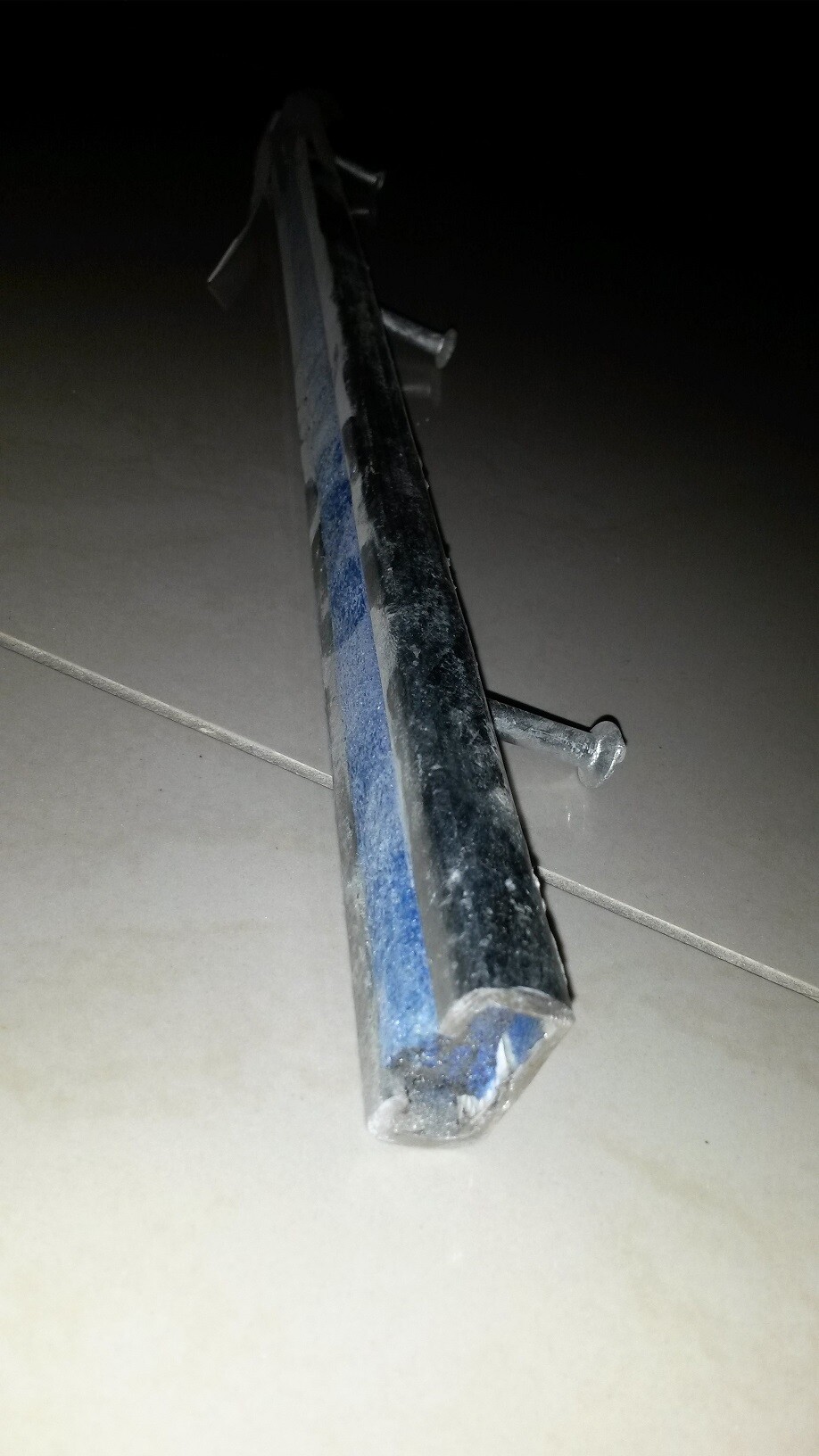
For a house, if there is no concrete slab ceiling, a ring beam is poured in which ledger strips (Halfenschienen) are embedded.
Then the beams are aligned and fixed to the ledger strips using nail-on connectors.
Whether joist hangers, angle brackets, or similar are sufficient for a shed depends mainly on the roof load.
For a house, if there is no concrete slab ceiling, a ring beam is poured in which ledger strips (Halfenschienen) are embedded.
Then the beams are aligned and fixed to the ledger strips using nail-on connectors.
Whether joist hangers, angle brackets, or similar are sufficient for a shed depends mainly on the roof load.
Similar topics