
Hello community,
with our first post, we would like to ask for help regarding our building project and would appreciate any suggestions and advice.
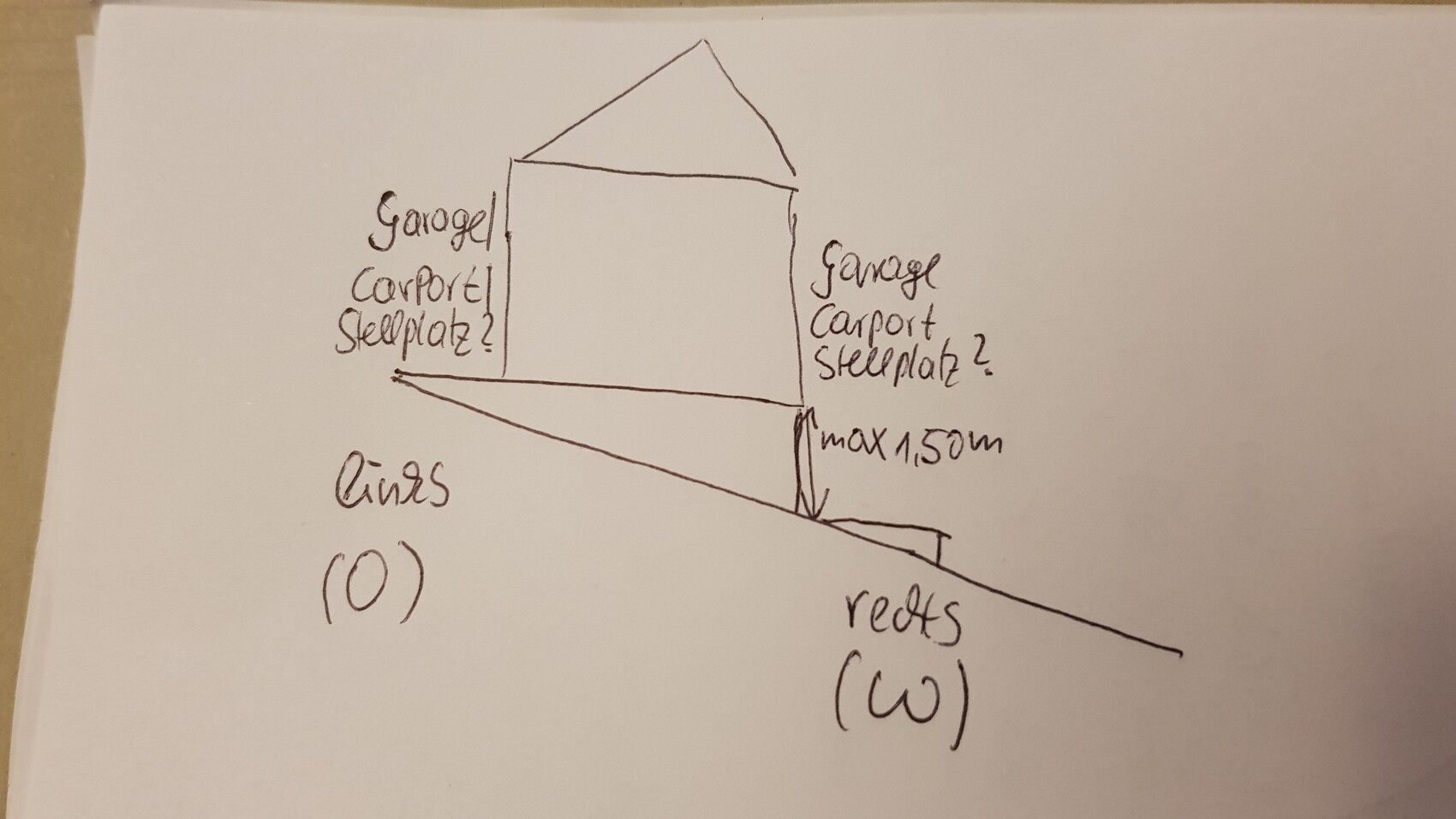
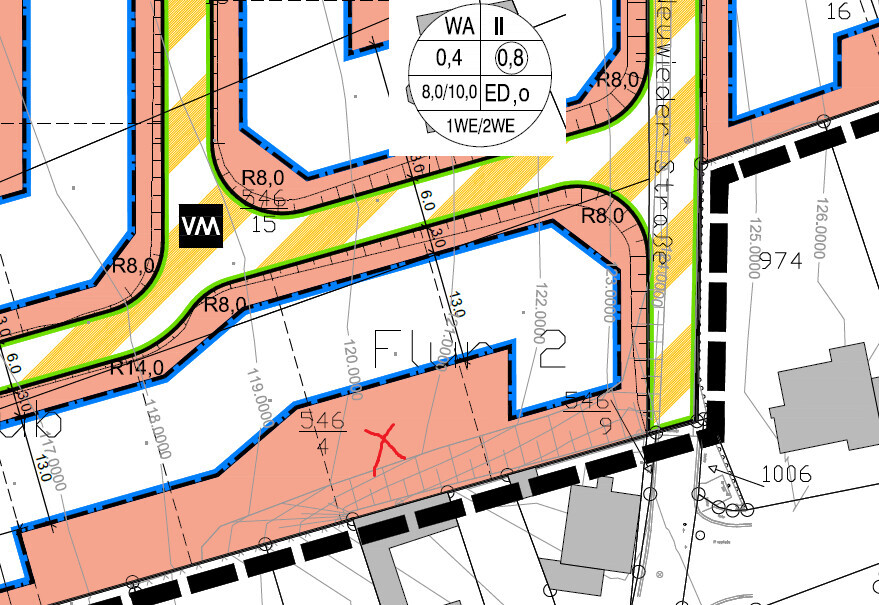
We are planning to build the house on a slight slope. The property is 18m (59 feet) wide, with a drop of about 1.5m (5 feet) along this length, which is approximately 8.3% (see sketch from east to west as well as a section of the development plan/planning permission).
To make the best use of the width, parking spaces will be created on both the left and right sides of the house in the form of at least one garage and one parking space/carport each (requirement according to the development plan/planning permission: 2 parking spaces). This way, the setback from the boundary line will be optimized and the house can theoretically be 12m (39 feet) wide. Due to the 1.5m (5 feet) fill, the parking space on the right side will inevitably be lower than the house because of the slope.
Now we are wondering if the fill can be built as shown in the sketch and also be retained flush with the house wall, and if so, how—using L-shaped retaining blocks or retaining walls—and what the approximate cost might be.
Thank you very much
with our first post, we would like to ask for help regarding our building project and would appreciate any suggestions and advice.
We are planning to build the house on a slight slope. The property is 18m (59 feet) wide, with a drop of about 1.5m (5 feet) along this length, which is approximately 8.3% (see sketch from east to west as well as a section of the development plan/planning permission).
To make the best use of the width, parking spaces will be created on both the left and right sides of the house in the form of at least one garage and one parking space/carport each (requirement according to the development plan/planning permission: 2 parking spaces). This way, the setback from the boundary line will be optimized and the house can theoretically be 12m (39 feet) wide. Due to the 1.5m (5 feet) fill, the parking space on the right side will inevitably be lower than the house because of the slope.
Now we are wondering if the fill can be built as shown in the sketch and also be retained flush with the house wall, and if so, how—using L-shaped retaining blocks or retaining walls—and what the approximate cost might be.
Thank you very much
fsbau2019 schrieb:
What makes me suspicious is the slope; I have visited the site several times, and after 1.5m (5 inches) it doesn’t look like that on the construction site. Now that you yourself have doubts, I took a closer look at the development plan and the contour lines and reread your slope information. I have to admit that I was misled by your non-scaled sketch with what looks like a dramatic underpinning. If you rotate the house by 90°, so the slope runs along the narrow side (9.44m (31 feet)), the height difference at the residential building—assuming a uniform slope—is only 1.5m (5 inches) / 18m (59 feet) * 9.44m (31 feet) = 0.79m (31 inches). If the street level also differs from the existing terrain, then we are back in an area where a slight slope can be assumed, and the foundation slab can be a sensible and cost-effective solution.
@11ant’s request from #20
11ant schrieb:
Height data at measuring points would be helpful; contour lines alone are better than nothing but provide a less precise picture. should thus be an essential basis for any further discussion.
F
fsbau20195 Jan 2019 12:27Unfortunately, I cannot provide that.
I only have the two surveyed drill points from the soil report in relation to the road.
I will try to take a few pictures.
The road definitely has a slope; the building plot (site) has probably already been leveled.
If I calculate the slope of the road at 8.3% over the width of the foundation slab of 10.90m (36 feet), I get 90cm (35 inches).
I can imagine leveling it by digging in 0.45m (18 inches) on the left and filling in 0.45m (18 inches) on the right.
This way, the 18m (59 feet) wide plot can be divided into three sections and built in a stepped manner: the first section on the left for the garage, the second section for the house, each with 0.45m (18 inches) of excavation or filling, and the third section on the right for the parking space at the third elevation.
The sketch with the 1.5m (5 feet) refers to the slope of the road and the drill points surveyed based on it.
I only have the two surveyed drill points from the soil report in relation to the road.
I will try to take a few pictures.
The road definitely has a slope; the building plot (site) has probably already been leveled.
If I calculate the slope of the road at 8.3% over the width of the foundation slab of 10.90m (36 feet), I get 90cm (35 inches).
I can imagine leveling it by digging in 0.45m (18 inches) on the left and filling in 0.45m (18 inches) on the right.
This way, the 18m (59 feet) wide plot can be divided into three sections and built in a stepped manner: the first section on the left for the garage, the second section for the house, each with 0.45m (18 inches) of excavation or filling, and the third section on the right for the parking space at the third elevation.
The sketch with the 1.5m (5 feet) refers to the slope of the road and the drill points surveyed based on it.


fsbau2019 schrieb:
What makes me suspicious is the slope; I have visited the construction site several times, and after 1.5m (5 feet), it doesn’t look like that. The rather intense communication between your vestibular system and the muscles from your legs up to your neck is not registered by your consciousness. As a result, you simply stand upright without being aware of the effort involved. The underestimation of the perspective distortion of the visually perceived slope adds to your body, as a “faulty measuring instrument,” doubting the results provided by the trained surveyor.
https://www.instagram.com/11antgmxde/
https://www.linkedin.com/company/bauen-jetzt/
F
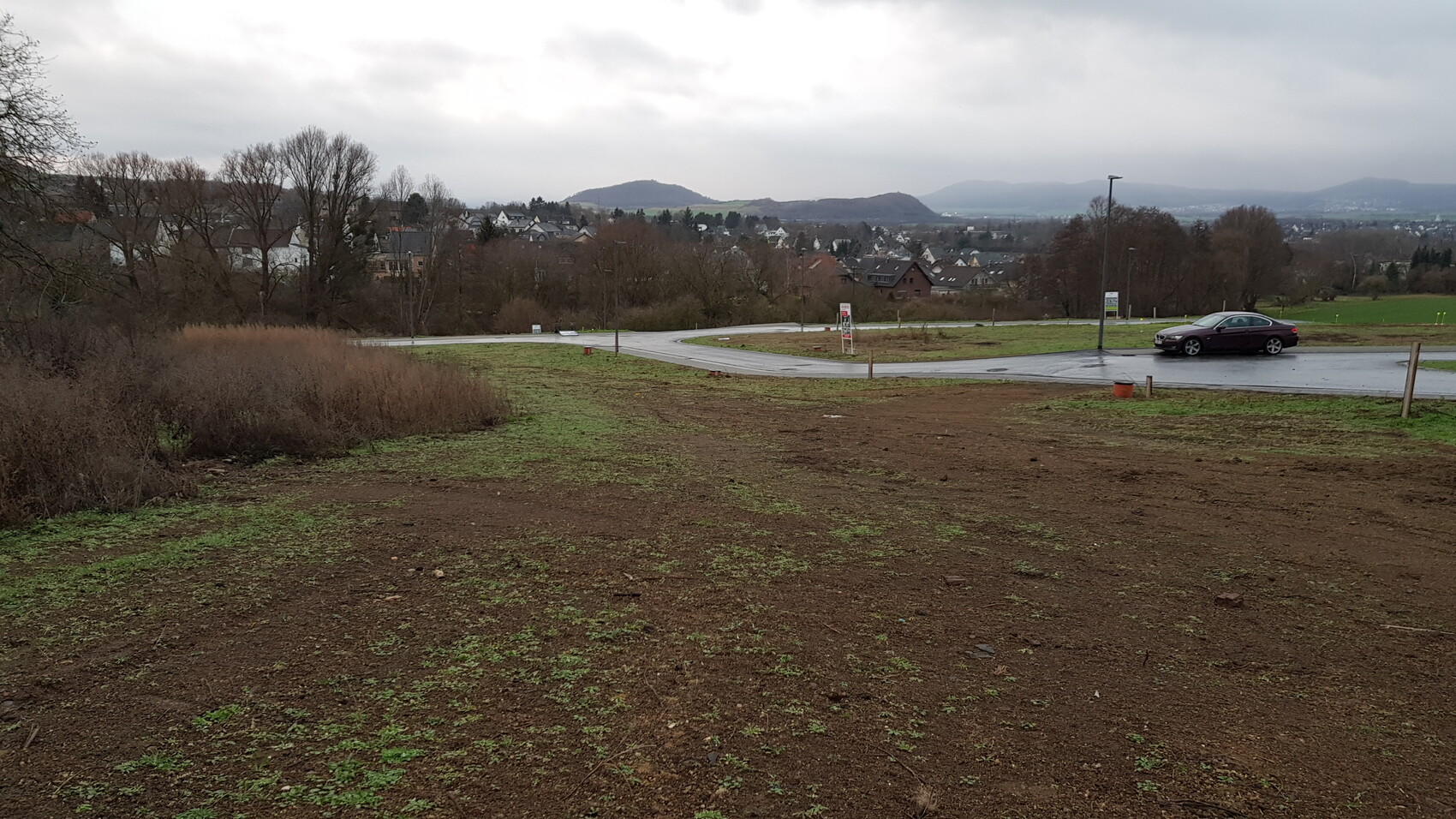
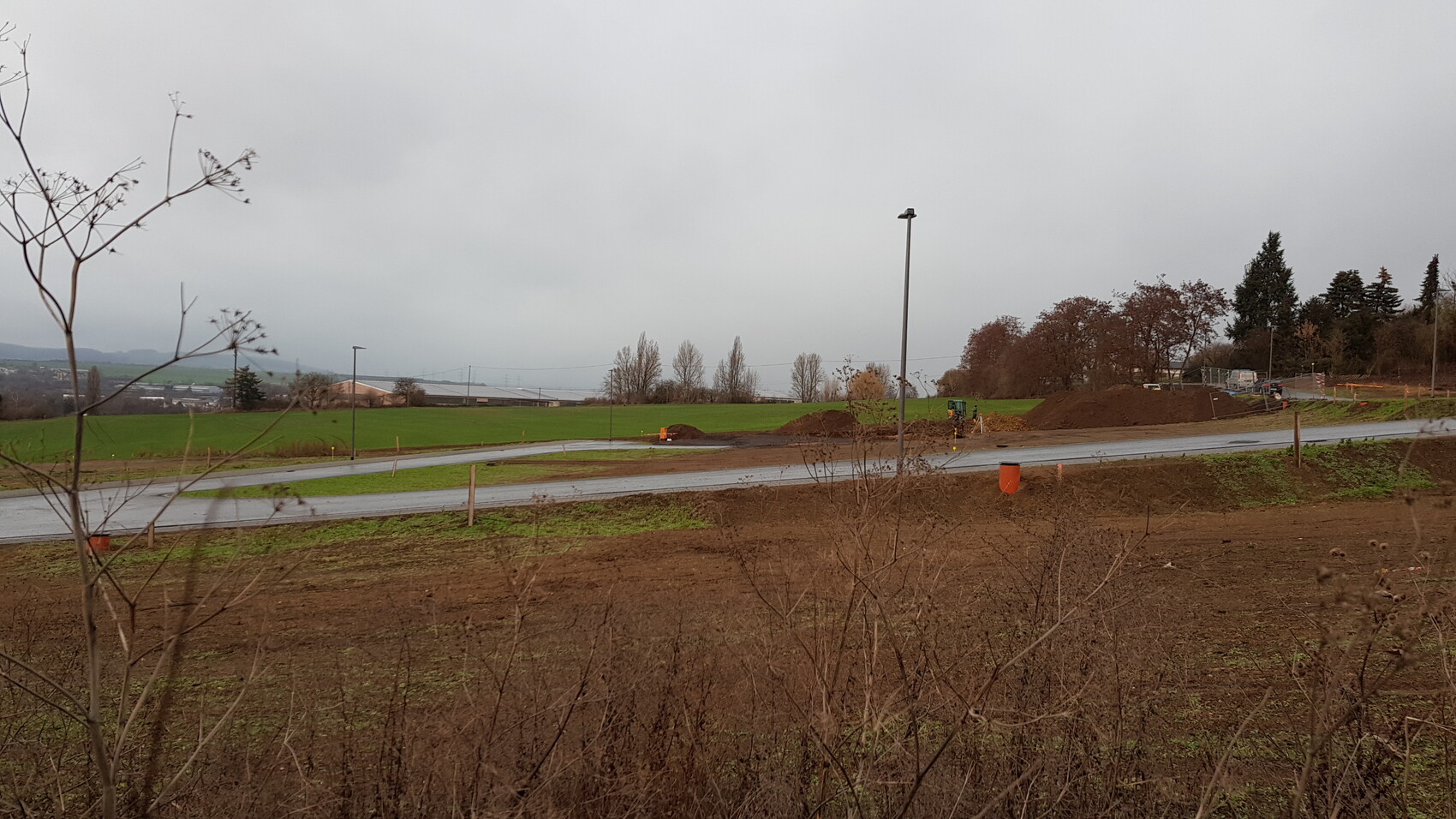
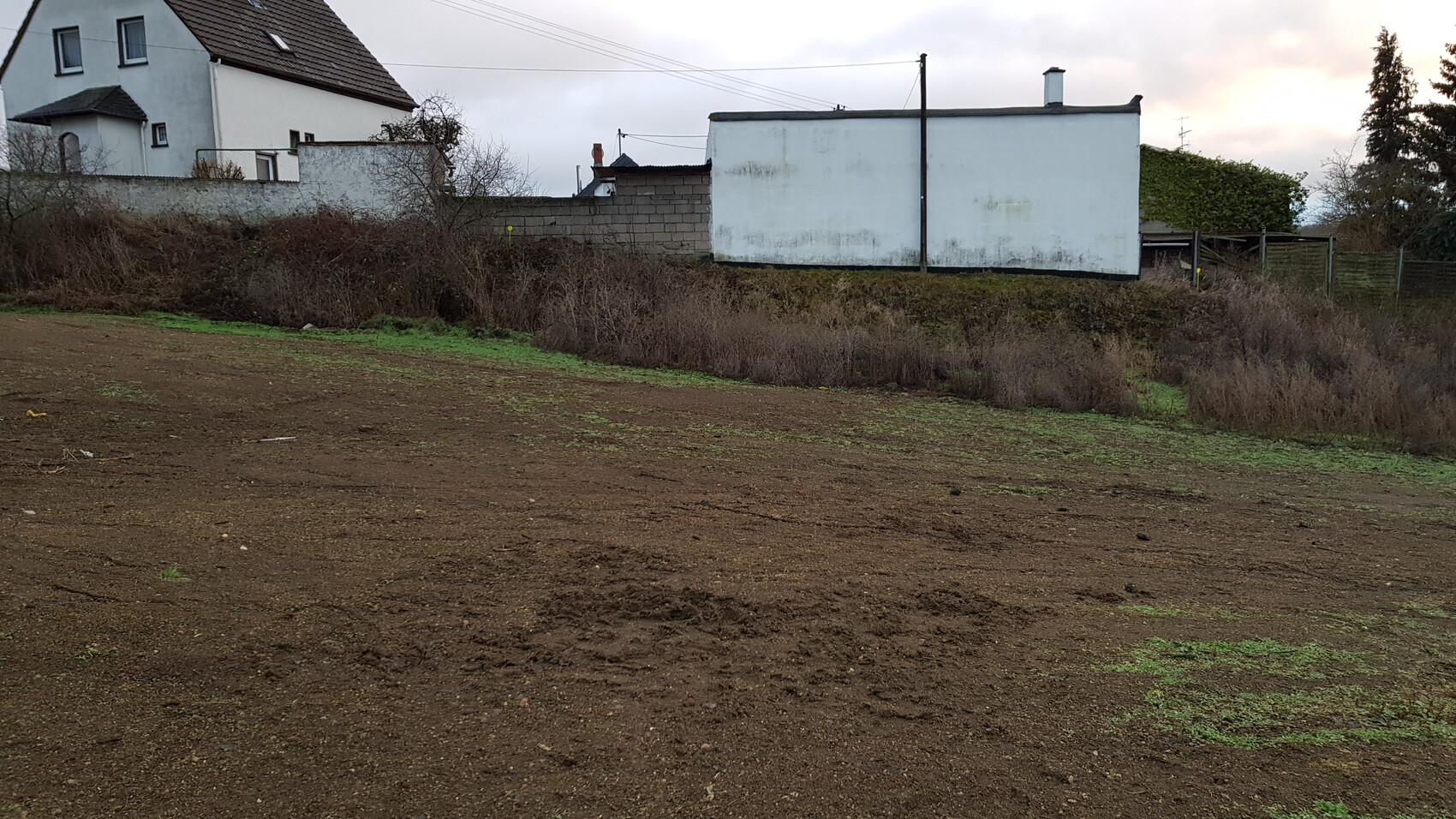
fsbau20195 Jan 2019 17:43Attached are three pictures: one of the north side, one of the south side, and one of the east side.
Similar topics