
Hello everyone!
Although we are from Austria and building here, we have been following various posts in this forum for some time. There are many creative minds here, and I really appreciate your advice in the other discussions.
We ourselves have been in the house planning phase for quite a while. We recently purchased a plot of land south of Vienna and plan to start construction in 2020. We want to build with solid construction methods, but we are still deciding between brick (which is very common here) and aerated concrete blocks (we really like the kit house concept from Ytong based on what we’ve heard so far, although it is quite rare in our area).
Efficiency in the use of living space is very important to us (no unnecessary features, no long hallways, no balconies or bay windows), as well as in the building services (heat pump, controlled mechanical ventilation system, etc.).
I assume there isn’t much experience here with Austrian building regulations, so I will try to answer any questions that come up as quickly and competently as possible.
Here is the completed questionnaire:
Zoning Plan / Restrictions
Plot size: 604 m² (6500 ft² approx.)
Slope: No, completely flat
Site coverage ratio: (not applicable here) - 32% buildable area
Floor area ratio: (not applicable here)
Building setback lines and boundaries: front setback 3 m (10 ft), side setback 3 m (10 ft) or half the eave height of the adjoining façade – whichever is greater, rear setback 3 m (10 ft)
Edge building restrictions: within the setback zone up to a maximum height of 3 m (10 ft)
Number of parking spaces: 2
Number of floors: not specified in the zoning plan
Roof shape: no restriction according to zoning plan
Architectural style: no restriction
Orientation: no restriction
Maximum height/limits: max. building height 6.8 m (22 ft) (eave height)
Other requirements: none
Client Requirements
Style, roof shape, building type: classic rectangular shape, gable roof or staggered shed roof, simple building form without bay windows or dormers, no balconies!
Basement, floors: basement (gym, workshop, laundry, mainly storage), ground floor (living areas + guest room), upper floor (bedrooms)
Number of occupants, ages: male 28, female 34, child 0.5 years, child 11 years (every second weekend + school holidays)
Space requirements ground floor, upper floor: ground floor (shower bathroom, guest room/home office/play/multi-purpose room, living room, kitchen, pantry), upper floor (bedroom including walk-in closet, 2 children’s rooms, bathroom), basement (gym, laundry, storage, workshop)
Office: family use or home office?: 80% family use as playroom, 10% home office, 10% guest room
Overnight guests per year: approximately 5, mainly relatives visiting for various celebrations from afar
Open or closed layout: open plan
Conservative or modern construction: rather conservative but open to “unconventional ideas”
Open kitchen, kitchen island: open kitchen with breakfast bar
Number of dining seats: permanently 6, at family celebrations minimum 12 temporarily, >16 long term
Fireplace: no
Music/speaker wall: no – but large TV frequently used
Balcony, roof terrace: definitely no!
Garage, carport: carport within the setback zone (on the north side?)
Vegetable garden, greenhouse: definitely yes! Gardening is a big wish and the main reason for the whole project
Other wishes/special features/daily routines, explanations if desired: The house should be as efficient as possible (during construction and especially in operation), therefore no awkward bay windows etc. (ratio of surface to volume)
Additional requests: controlled mechanical ventilation system, laundry chute, non-load-bearing partition wall between the children’s rooms so it can be removed in a few years if the older child no longer lives at home. The most important thing is a large garden, so that’s why the basement is desired to minimize the building footprint. The kitchen must be large enough for at least two people to cook at the same time – this is currently a problem in our apartment.
House Design
Designed by: DIY with a lot of input from planners
What do you like? Why?: almost all wishes implemented
What do you dislike? Why?: pantry is quite small, upper floor still not quite perfect, niche in the corridor as storage replacement for vacuum cleaner etc.
Price estimate according to architect/planner: €430,000 turnkey, €350,000 “turnkey with owner involvement”
Personal price limit for house, including fixtures and fittings: €350,000 in shell and core condition is the goal, with a comfortable buffer, but that would be our ideal
Preferred heating technology: heat pump with ground source collector (trench collector)
Note: We are not under time pressure for planning or construction. We are very willing and able to do much of the work on the house ourselves. Providing appropriate “self-performance proof” for the bank is not a problem either. This helps keep construction costs low.
If you have to give up something, which details/finishes
- could you give up: almost everything except the pantry and open kitchen
- could you not give up: pantry, open kitchen, and preferably not the controlled ventilation
Why is the design the way it is now?
A mix of many examples from model home parks, magazines, and many discussions with planners/architects etc.
What do you think makes it particularly good or bad?
All the rooms we imagined are present, relatively short circulation routes, hardly any wasted space
What is the most important/basic question about the floor plan in 130 characters?
What do you think of the design? Where do you see potential for improvement? Placement of laundry chute?
I look forward to your opinions and comments!
Best regards,
your Gugelhupf
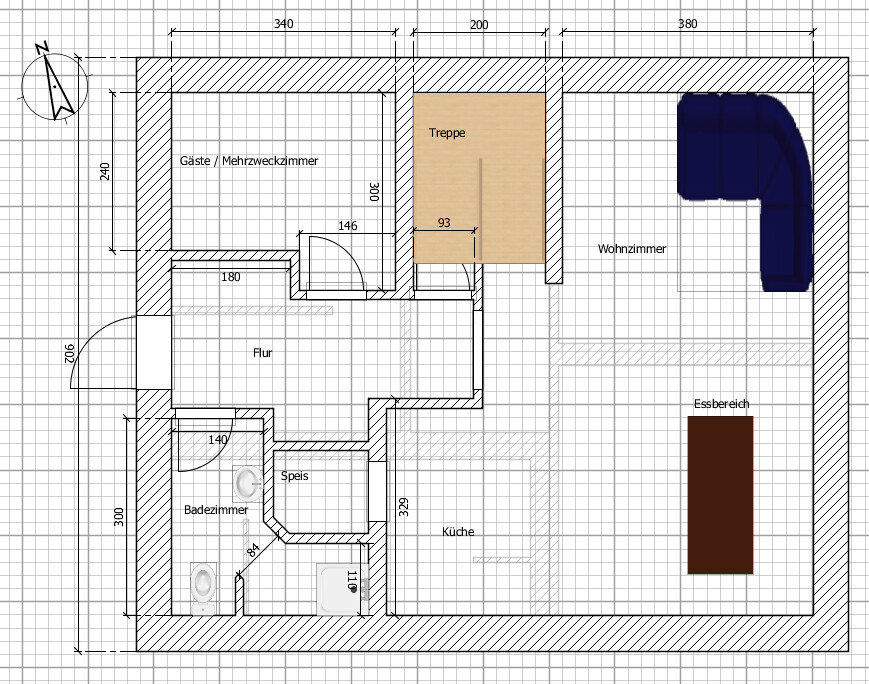

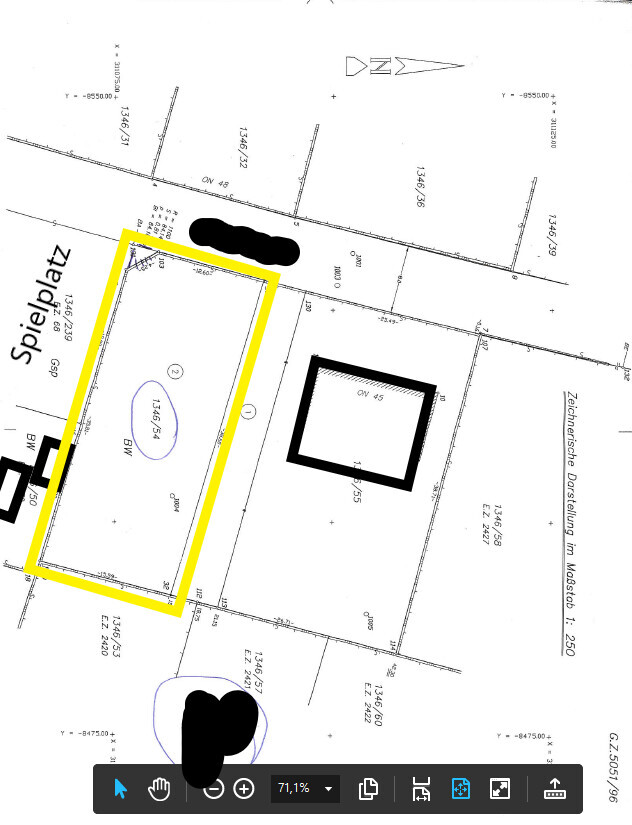
Although we are from Austria and building here, we have been following various posts in this forum for some time. There are many creative minds here, and I really appreciate your advice in the other discussions.
We ourselves have been in the house planning phase for quite a while. We recently purchased a plot of land south of Vienna and plan to start construction in 2020. We want to build with solid construction methods, but we are still deciding between brick (which is very common here) and aerated concrete blocks (we really like the kit house concept from Ytong based on what we’ve heard so far, although it is quite rare in our area).
Efficiency in the use of living space is very important to us (no unnecessary features, no long hallways, no balconies or bay windows), as well as in the building services (heat pump, controlled mechanical ventilation system, etc.).
I assume there isn’t much experience here with Austrian building regulations, so I will try to answer any questions that come up as quickly and competently as possible.
Here is the completed questionnaire:
Zoning Plan / Restrictions
Plot size: 604 m² (6500 ft² approx.)
Slope: No, completely flat
Site coverage ratio: (not applicable here) - 32% buildable area
Floor area ratio: (not applicable here)
Building setback lines and boundaries: front setback 3 m (10 ft), side setback 3 m (10 ft) or half the eave height of the adjoining façade – whichever is greater, rear setback 3 m (10 ft)
Edge building restrictions: within the setback zone up to a maximum height of 3 m (10 ft)
Number of parking spaces: 2
Number of floors: not specified in the zoning plan
Roof shape: no restriction according to zoning plan
Architectural style: no restriction
Orientation: no restriction
Maximum height/limits: max. building height 6.8 m (22 ft) (eave height)
Other requirements: none
Client Requirements
Style, roof shape, building type: classic rectangular shape, gable roof or staggered shed roof, simple building form without bay windows or dormers, no balconies!
Basement, floors: basement (gym, workshop, laundry, mainly storage), ground floor (living areas + guest room), upper floor (bedrooms)
Number of occupants, ages: male 28, female 34, child 0.5 years, child 11 years (every second weekend + school holidays)
Space requirements ground floor, upper floor: ground floor (shower bathroom, guest room/home office/play/multi-purpose room, living room, kitchen, pantry), upper floor (bedroom including walk-in closet, 2 children’s rooms, bathroom), basement (gym, laundry, storage, workshop)
Office: family use or home office?: 80% family use as playroom, 10% home office, 10% guest room
Overnight guests per year: approximately 5, mainly relatives visiting for various celebrations from afar
Open or closed layout: open plan
Conservative or modern construction: rather conservative but open to “unconventional ideas”
Open kitchen, kitchen island: open kitchen with breakfast bar
Number of dining seats: permanently 6, at family celebrations minimum 12 temporarily, >16 long term
Fireplace: no
Music/speaker wall: no – but large TV frequently used
Balcony, roof terrace: definitely no!
Garage, carport: carport within the setback zone (on the north side?)
Vegetable garden, greenhouse: definitely yes! Gardening is a big wish and the main reason for the whole project
Other wishes/special features/daily routines, explanations if desired: The house should be as efficient as possible (during construction and especially in operation), therefore no awkward bay windows etc. (ratio of surface to volume)
Additional requests: controlled mechanical ventilation system, laundry chute, non-load-bearing partition wall between the children’s rooms so it can be removed in a few years if the older child no longer lives at home. The most important thing is a large garden, so that’s why the basement is desired to minimize the building footprint. The kitchen must be large enough for at least two people to cook at the same time – this is currently a problem in our apartment.
House Design
Designed by: DIY with a lot of input from planners
What do you like? Why?: almost all wishes implemented
What do you dislike? Why?: pantry is quite small, upper floor still not quite perfect, niche in the corridor as storage replacement for vacuum cleaner etc.
Price estimate according to architect/planner: €430,000 turnkey, €350,000 “turnkey with owner involvement”
Personal price limit for house, including fixtures and fittings: €350,000 in shell and core condition is the goal, with a comfortable buffer, but that would be our ideal
Preferred heating technology: heat pump with ground source collector (trench collector)
Note: We are not under time pressure for planning or construction. We are very willing and able to do much of the work on the house ourselves. Providing appropriate “self-performance proof” for the bank is not a problem either. This helps keep construction costs low.
If you have to give up something, which details/finishes
- could you give up: almost everything except the pantry and open kitchen
- could you not give up: pantry, open kitchen, and preferably not the controlled ventilation
Why is the design the way it is now?
A mix of many examples from model home parks, magazines, and many discussions with planners/architects etc.
What do you think makes it particularly good or bad?
All the rooms we imagined are present, relatively short circulation routes, hardly any wasted space
What is the most important/basic question about the floor plan in 130 characters?
What do you think of the design? Where do you see potential for improvement? Placement of laundry chute?
I look forward to your opinions and comments!
Best regards,
your Gugelhupf
The space between the dining table and the sofa area might actually be a bit tight. I think the removable wall is really just a gimmick—it costs money and offers little benefit, so I would cut it. The pantry can work better this way, as it is ventilated, being located against an exterior wall. What about your utility room? Where will the electrical connection, heating, equipment, and possibly the washing machine and dryer be placed? The multipurpose room would be ideal for that. Karsten
G
Gugelhupf21 Mar 2019 20:39Hi Karsten, thanks for the feedback!
The pantry was already located on the exterior wall in the previous design.
All technical equipment, connections, washing machine, etc., should be placed in the basement.
The pantry was already located on the exterior wall in the previous design.
All technical equipment, connections, washing machine, etc., should be placed in the basement.
In the plan on the first page, it is not located on the outside, but enclosed inside.
The plan includes the more spacious living room, which in my opinion is more practical. I had already expressed my concerns about the enclosed space earlier. I had overlooked the addition of a basement; with that, the technical installations are taken care of.
The plan includes the more spacious living room, which in my opinion is more practical. I had already expressed my concerns about the enclosed space earlier. I had overlooked the addition of a basement; with that, the technical installations are taken care of.
I like the kitchen better.
The dining area might be a bit too narrow.
I would remove the door between the multipurpose room and the hallway. Guests can use the sliding door.
The wardrobe is too small.
The guest bathroom doesn’t work. The distance between the toilet and the sink is too tight.
Remove the shower.
The hallway on the upper floor will be larger.
The dining area might be a bit too narrow.
I would remove the door between the multipurpose room and the hallway. Guests can use the sliding door.
The wardrobe is too small.
The guest bathroom doesn’t work. The distance between the toilet and the sink is too tight.
Remove the shower.
The hallway on the upper floor will be larger.

Overall, I still find the floor plan too ambitious for the available space. With your detailed tinkering, you quickly lose a sense of comfortable room sizes and end up piecing together tiny rooms that barely fit the furniture. Some rooms, like the pantry—which is actually quite important—are no longer practical to use. This doesn’t result in a dream home, but at best a cramped apartment with narrow corridors.
If I were in your position, I would consider removing the extra room on the ground floor. You have enough bedrooms upstairs, and the children's rooms are large enough for playing. When guests come, the two kids can simply share one room. Otherwise, everyone can play together in the living room—done.
Alternatively, here is a suggestion with a floor area of 11.6 x 8.6 meters (38.1 x 28.2 feet) using standard wall thicknesses. This means a slightly larger footprint. However, I hardly see any potential for savings unless you eliminate another room downstairs. On the contrary, part of the wardrobe has already had to be moved into the guest room.
(The top of the plan is south.)
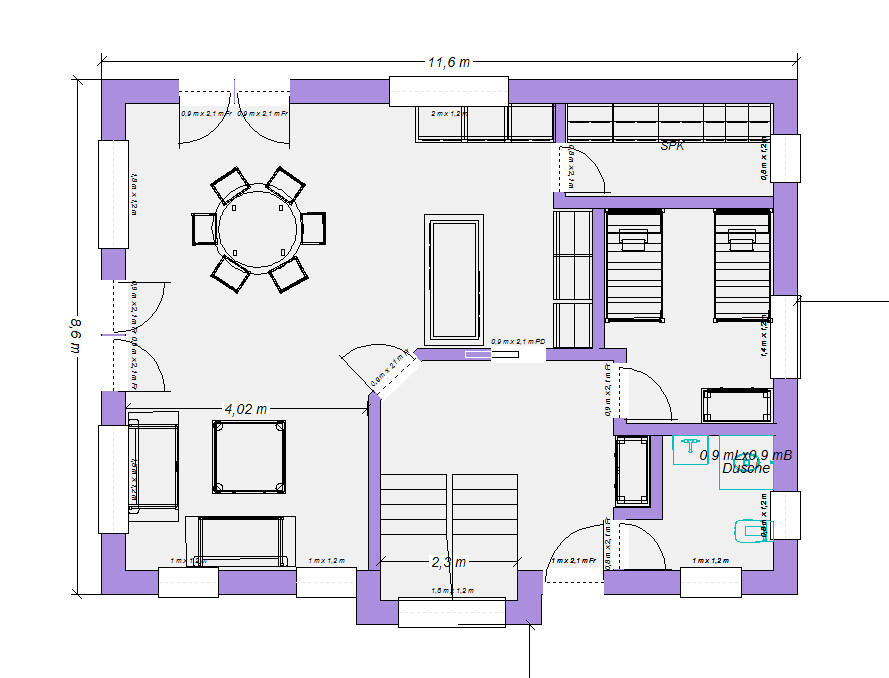
The upper floor is more flexible. Here are two proposals—there are various options:
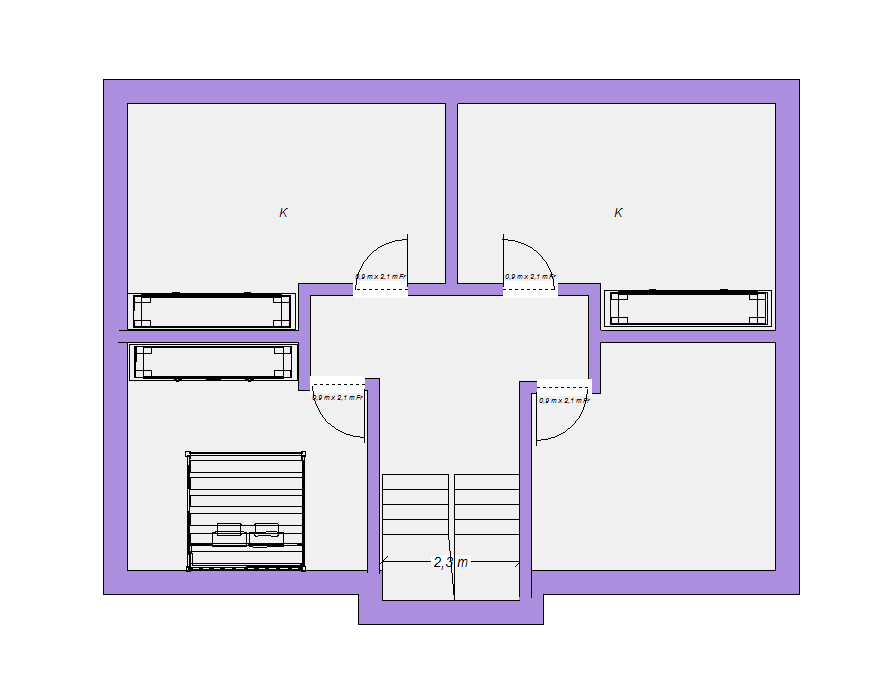
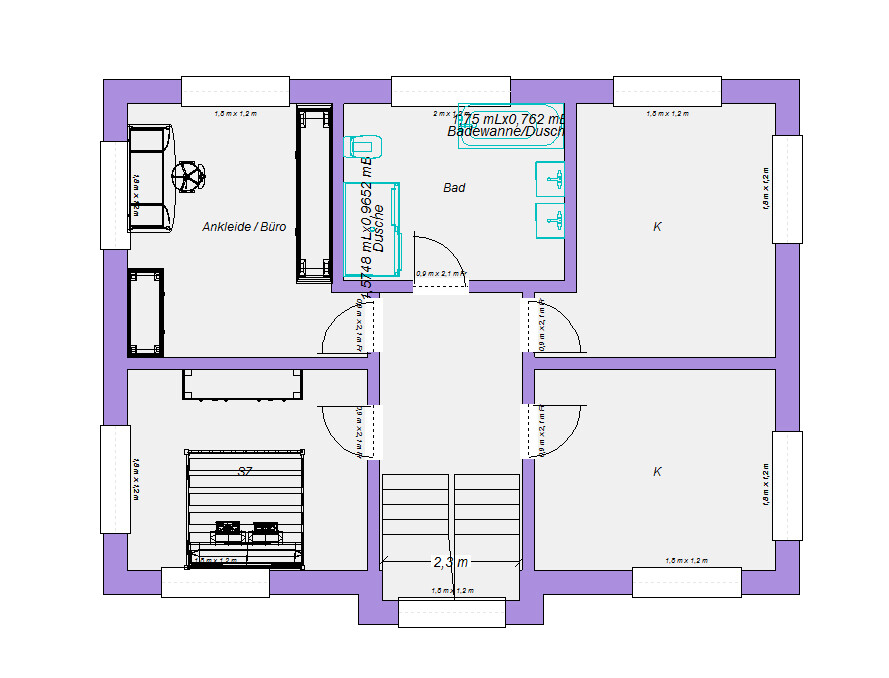
If I were in your position, I would consider removing the extra room on the ground floor. You have enough bedrooms upstairs, and the children's rooms are large enough for playing. When guests come, the two kids can simply share one room. Otherwise, everyone can play together in the living room—done.
Alternatively, here is a suggestion with a floor area of 11.6 x 8.6 meters (38.1 x 28.2 feet) using standard wall thicknesses. This means a slightly larger footprint. However, I hardly see any potential for savings unless you eliminate another room downstairs. On the contrary, part of the wardrobe has already had to be moved into the guest room.
(The top of the plan is south.)
The upper floor is more flexible. Here are two proposals—there are various options:
Edit:
I was able to adjust it a bit more. The current dimensions are 8.15 x 11.60 meters (27 x 38 feet), totaling 94.54 m² (1,017 ft²), which is still less than 97.74 m² (1,052 ft²) (10.8 x 9.05 meters).
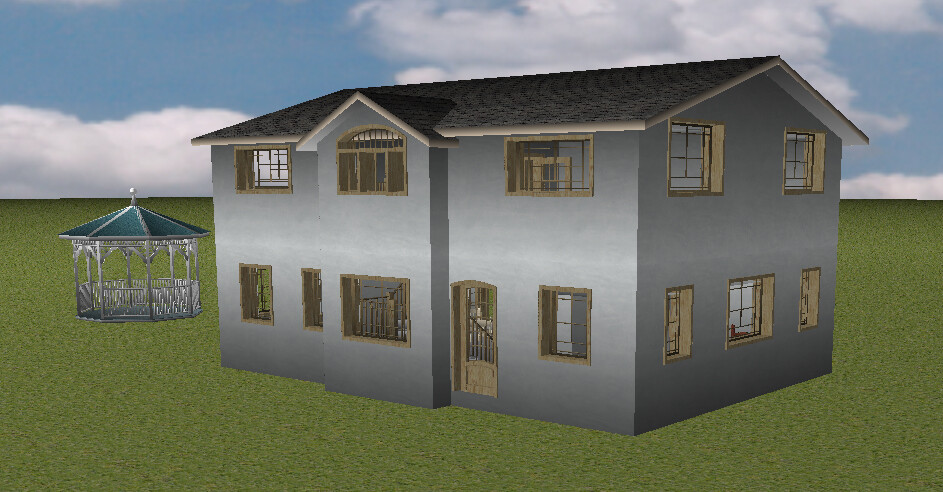
However, this required moving the shower downstairs in front of the window. Hmm. I don’t want to leave it out because of the symmetry at the gable. So it will probably have to remain fixed-glass as it is.
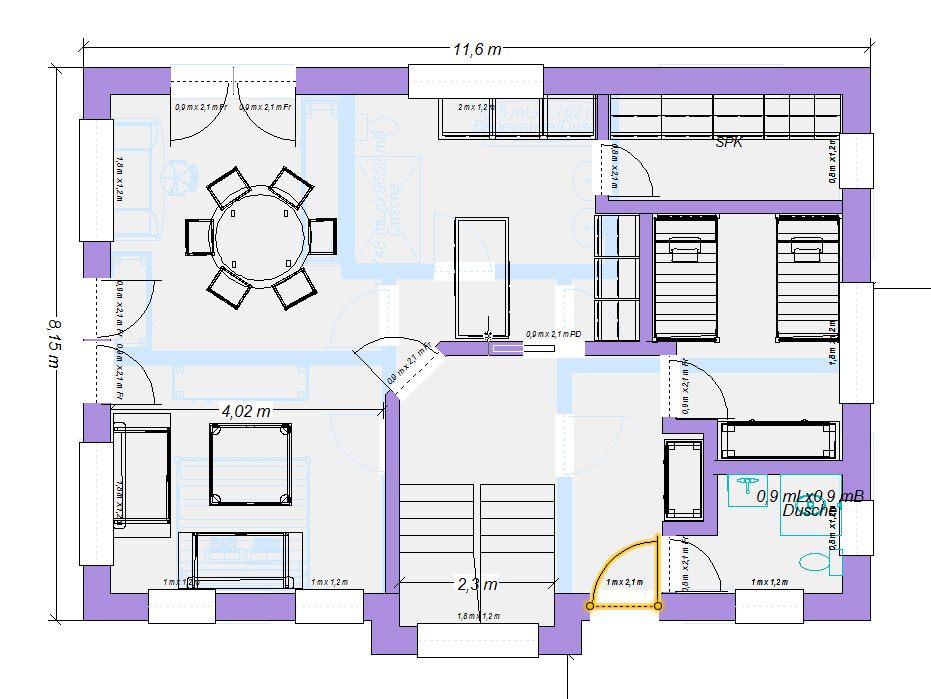
I was able to adjust it a bit more. The current dimensions are 8.15 x 11.60 meters (27 x 38 feet), totaling 94.54 m² (1,017 ft²), which is still less than 97.74 m² (1,052 ft²) (10.8 x 9.05 meters).
However, this required moving the shower downstairs in front of the window. Hmm. I don’t want to leave it out because of the symmetry at the gable. So it will probably have to remain fixed-glass as it is.
Similar topics