
Hello,
It would be really great if everyone here could just post one or a few pictures showing the current state of their house.
I'll start right away.
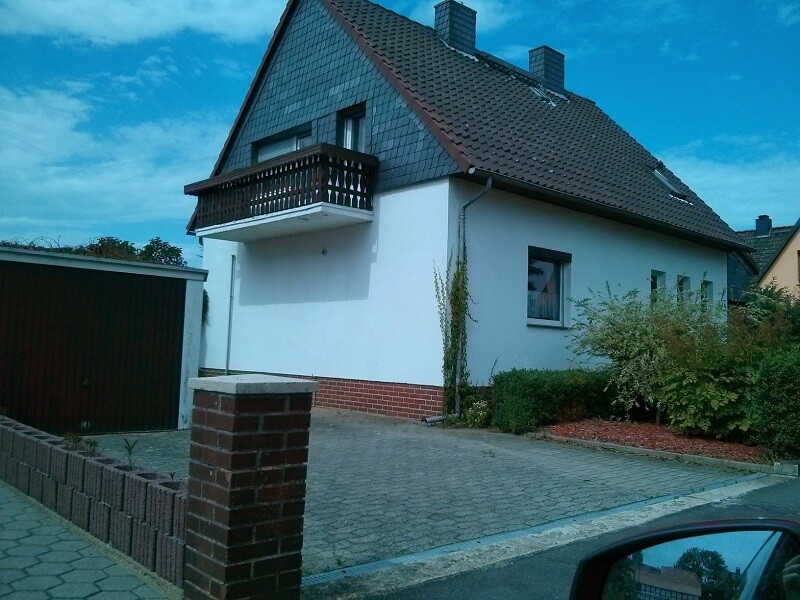
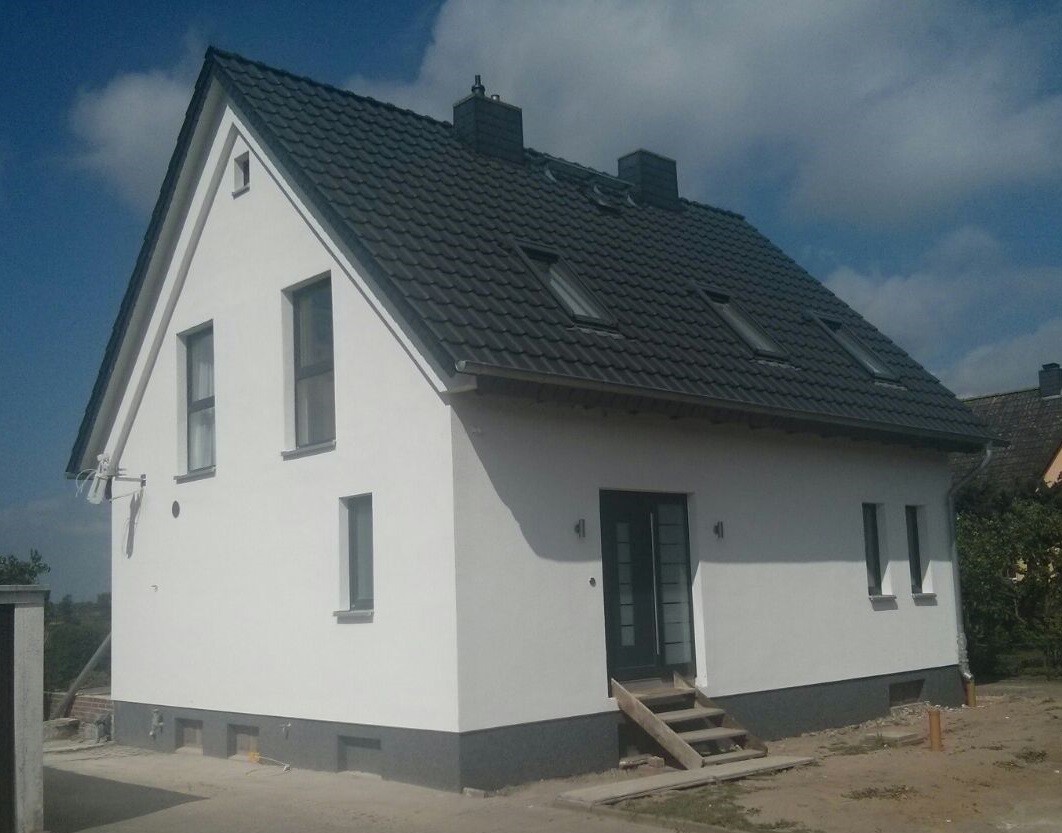
For renovations, it’s best to provide a comparison of before and after the remodeling.
Before March 2014:
After May 2015:
It would be really great if everyone here could just post one or a few pictures showing the current state of their house.
I'll start right away.
For renovations, it’s best to provide a comparison of before and after the remodeling.
Before March 2014:
After May 2015:
Climbee schrieb:
Do you really have to use such a light color for the roof? I would consider a different facade color than white... is that still possible? It is possible... but it has to be approved by the local authority.
What about something like this? Possibly making the window frames a bit darker, but not by much!
 Josephine248913 Sep 2018 22:20
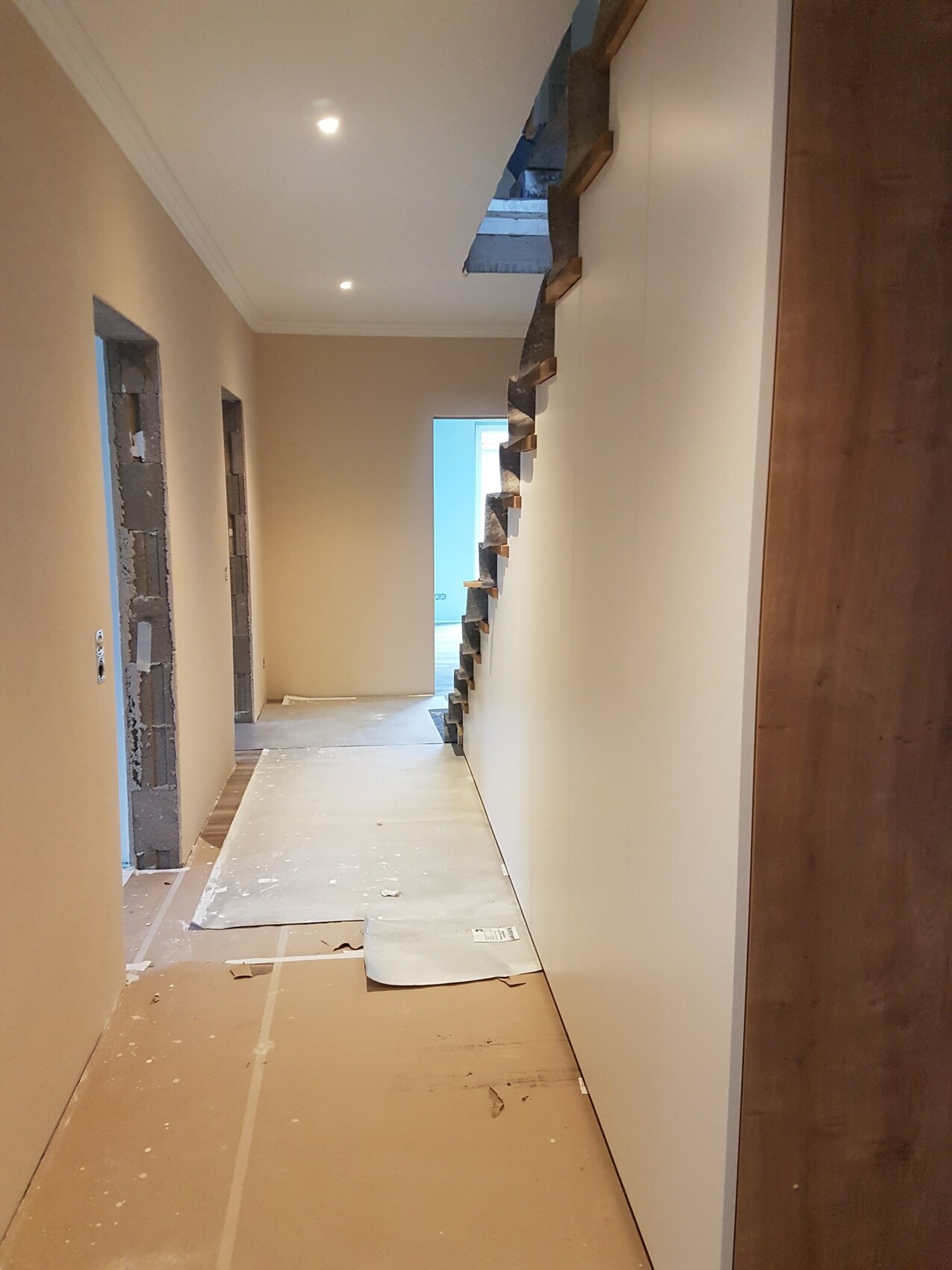
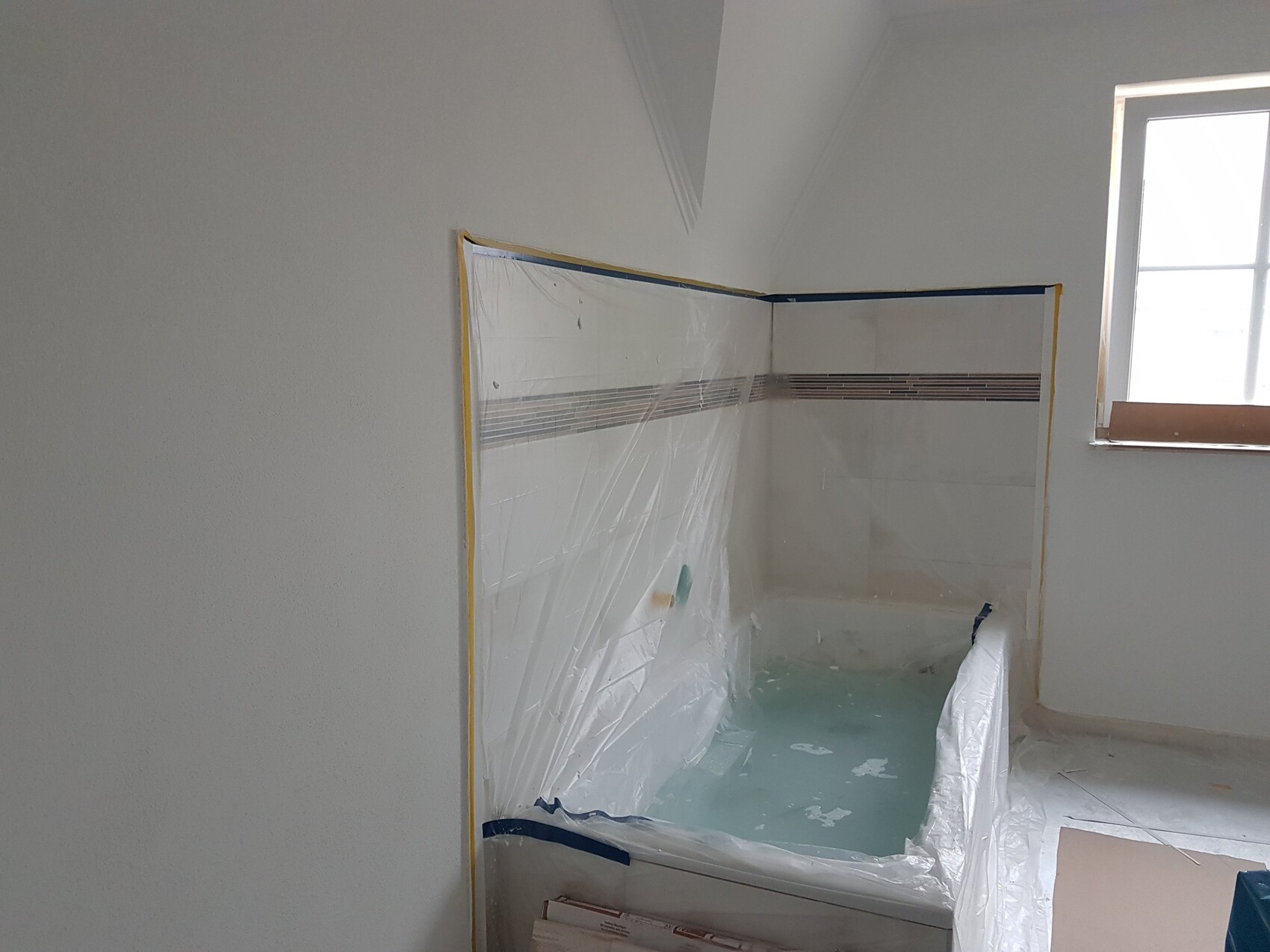
The carpenter is installing the staircase along with the wardrobe cabinet, and the bathroom is starting to take shape...
Zaba12 schrieb:
The development plan states roof coverings should be red or light gray. The mayor’s interpretation is that red ranges from light red to chestnut, and light gray means just light gray. Ah yes, those beloved mayors and municipal councils. I would check whether your dear Mr. Mayor has a planning-related purpose with this requirement, and by that I don’t mean enforcing his personal taste.
If not, the clause in the development plan might be invalid.
We have something similar in our municipality. The builder wanted anthracite, the development plan and the building authority insisted it had to be red. The builder didn’t care at all and used anthracite roofing. The building authority saw it, angrily involved the district administration (LRA) and asked to issue a removal order. The LRA replied, “No, dear building authority, apart from your personal preference, the requirement has no planning objective. This contradicts building freedom. We won’t take any action and recommend retroactive approval or toleration.” The building authority wasn’t happy and at the next meeting voted 11:2 against the building department’s (!) proposal to grant retroactive approval or tolerate the situation. That was five years ago, nothing has happened since. Meanwhile, the head of the building department unofficially advises builders to use anthracite roofing if that’s their wish. The building authority has no real power. They would have to sue, which would have little chance of success since the LRA, as the approving authority, already expressed support for the builder. You don’t have to accept every arbitrary rule. And arbitrariness seems to be a widespread issue in rural areas (in Bavaria, Franconia).

Yes, that’s correct. Our house, the location where it is being built, and the fact that the ridge runs north-south rather than east-west did not suit the municipal mayor and the local planning committee at all. We had never encountered this before, didn’t know it, and didn’t want it. Combined with an almost unbelievable inability to read plans, this situation ultimately cost us two years and ended with a clear statement from the district building authority (LRA) that the project must be approved as planned.
This letter from the LRA is ultimately a verbal slap to the mayor and the planning committee; we read it with great pleasure and satisfaction.
My advice: I would still try to get the municipality on board because it is simply better to reach an agreement with them. If that’s not possible, always clarify with the higher-level building authority what is allowed and what is not, and if necessary, challenge the municipal decision. If you follow the usual building regulations, you have a good chance.
In the municipal council, decisions are usually made according to the mayor’s wishes. We witnessed this live: a building application was presented that could not be approved in its current form! (direct quote from the mayor) What was not true, but since the mayor had already indicated how to decide, the obedient planning committee gave the votes as expected.
In the end, we found a competent architect who we knew had good relations with the LRA. This proved to be true. We even received approval for a setback encroachment, allowing us to move the house back slightly. The justification was that all concerned parties benefit from this, especially the neighbors, from whom we thus “steal” significantly less evening sun.
The next step for us would have been the administrative court; after the planning committee rejected the application already approved by the LRA once again (even convening a special planning committee meeting for this!), the LRA issued the aforementioned “slap letter” and, as the higher building authority, approved the application. Now the planning committee could only file a lawsuit at the administrative court. They usually don’t do this because the court typically follows the directives of the higher building authority.
So, my advice: grow a thick skin and stand your ground!
This letter from the LRA is ultimately a verbal slap to the mayor and the planning committee; we read it with great pleasure and satisfaction.
My advice: I would still try to get the municipality on board because it is simply better to reach an agreement with them. If that’s not possible, always clarify with the higher-level building authority what is allowed and what is not, and if necessary, challenge the municipal decision. If you follow the usual building regulations, you have a good chance.
In the municipal council, decisions are usually made according to the mayor’s wishes. We witnessed this live: a building application was presented that could not be approved in its current form! (direct quote from the mayor) What was not true, but since the mayor had already indicated how to decide, the obedient planning committee gave the votes as expected.
In the end, we found a competent architect who we knew had good relations with the LRA. This proved to be true. We even received approval for a setback encroachment, allowing us to move the house back slightly. The justification was that all concerned parties benefit from this, especially the neighbors, from whom we thus “steal” significantly less evening sun.
The next step for us would have been the administrative court; after the planning committee rejected the application already approved by the LRA once again (even convening a special planning committee meeting for this!), the LRA issued the aforementioned “slap letter” and, as the higher building authority, approved the application. Now the planning committee could only file a lawsuit at the administrative court. They usually don’t do this because the court typically follows the directives of the higher building authority.
So, my advice: grow a thick skin and stand your ground!

11ant schrieb:
A bit more respect for my former industry, please
Why does the roof frame end well before the outer edges of the gable walls?As Müllerin already mentioned, it was by no means meant disrespectfully. In our area, this term is simply used colloquially. I apologize if it came across the wrong way.
The outer edges were intentionally left open to allow for any material movements. There are still pallets with bricks and construction machinery partially in the upper floor.
Next week, after all other minor tasks are completed, the roof frame will be finished completely.
Similar topics