
Hello building experts,
I have already asked some questions in this https://www.hausbau-forum.de/threads/hausausrichtung-sued-oder-West.9523/page-3 thread, but I wanted to start a separate post now because I think it no longer fits with the original discussion.
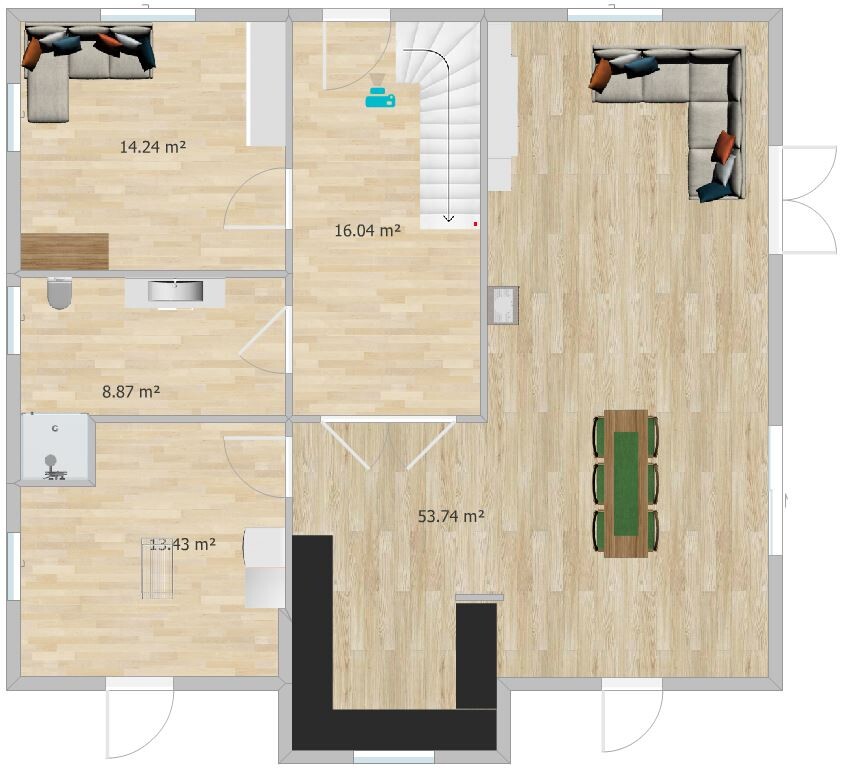
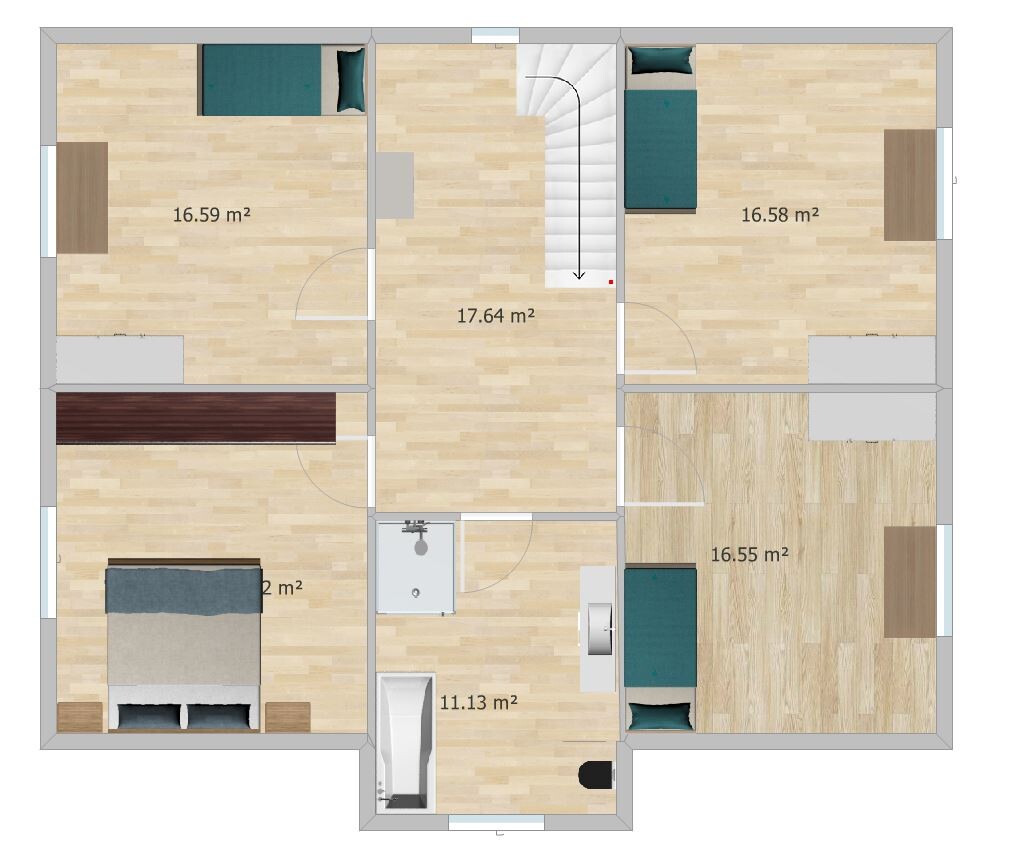
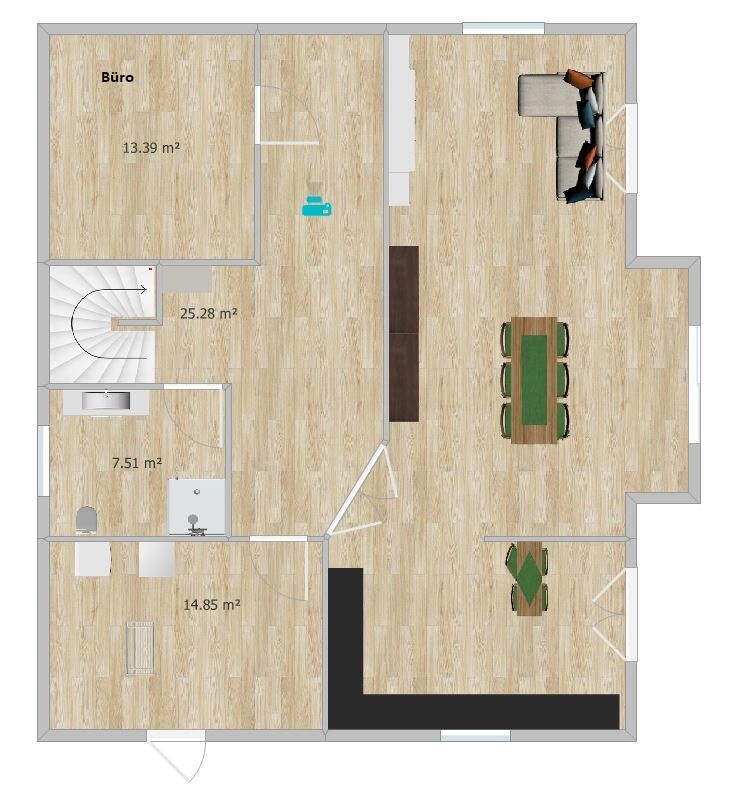
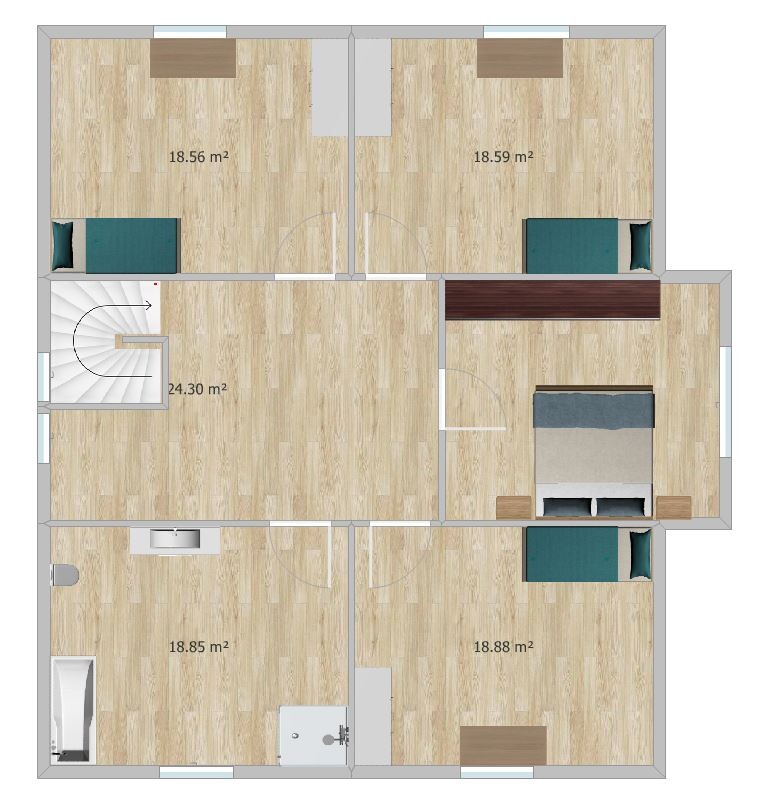
We are planning to build a new single-family house with approximately 160sqm-180sqm (1720-1937 sq ft). The house will be about 10x11 meters / 9x12 meters (33x36 ft / 30x39 ft) in size and will have a gable/ bay window. Upstairs, there will be three children's bedrooms, the master bedroom, and a bathroom. On the ground floor, there will be a utility room, living room, kitchen, office, and a bathroom with a shower.
A garage or carport with a storage room is planned, depending on the available budget.
The development plan includes the following restrictions:
Boundary setback: 3m (10 ft) to the neighboring plot only for garage/carport with a maximum length of 9m (30 ft); for corner buildings, a boundary setback of 15m (49 ft) is allowed.
House: 4m (13 ft) eaves height, 9m (30 ft) ridge height; no prescribed gable orientation.
I have roughly created floor plans for west and north orientations and attached them.
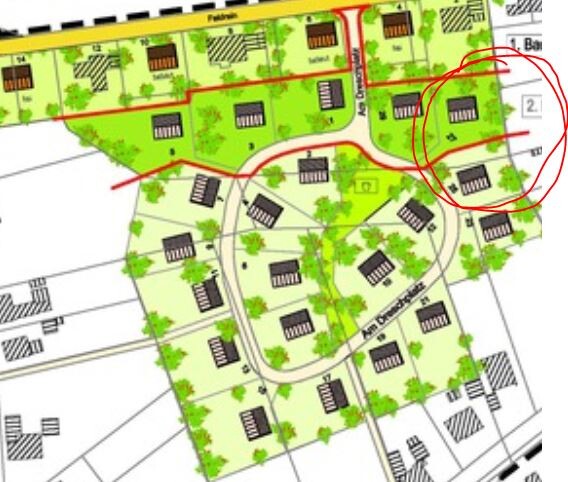
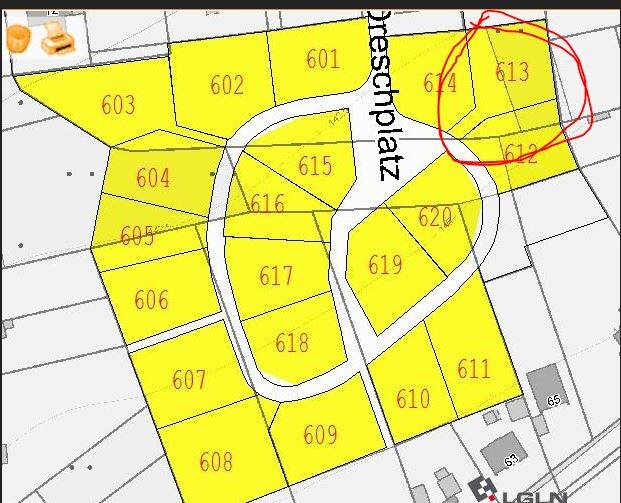
Images 1 and 2 show the new residential area and the location of the plot; these images are oriented to north.
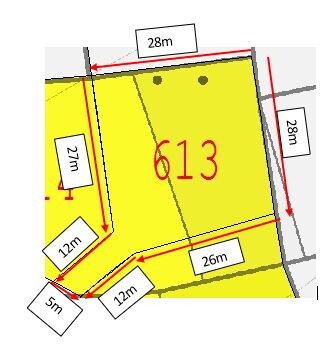
The plot measures about 27x27 meters (see Grundstück_maße.jpg) (89x89 ft).
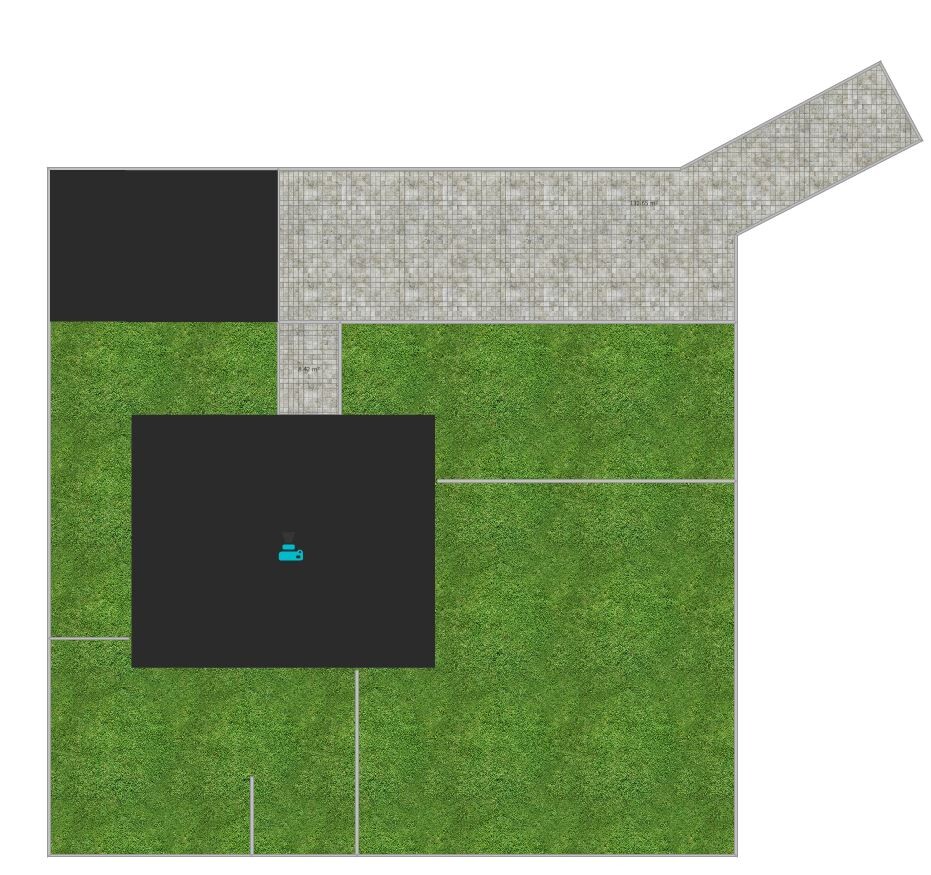
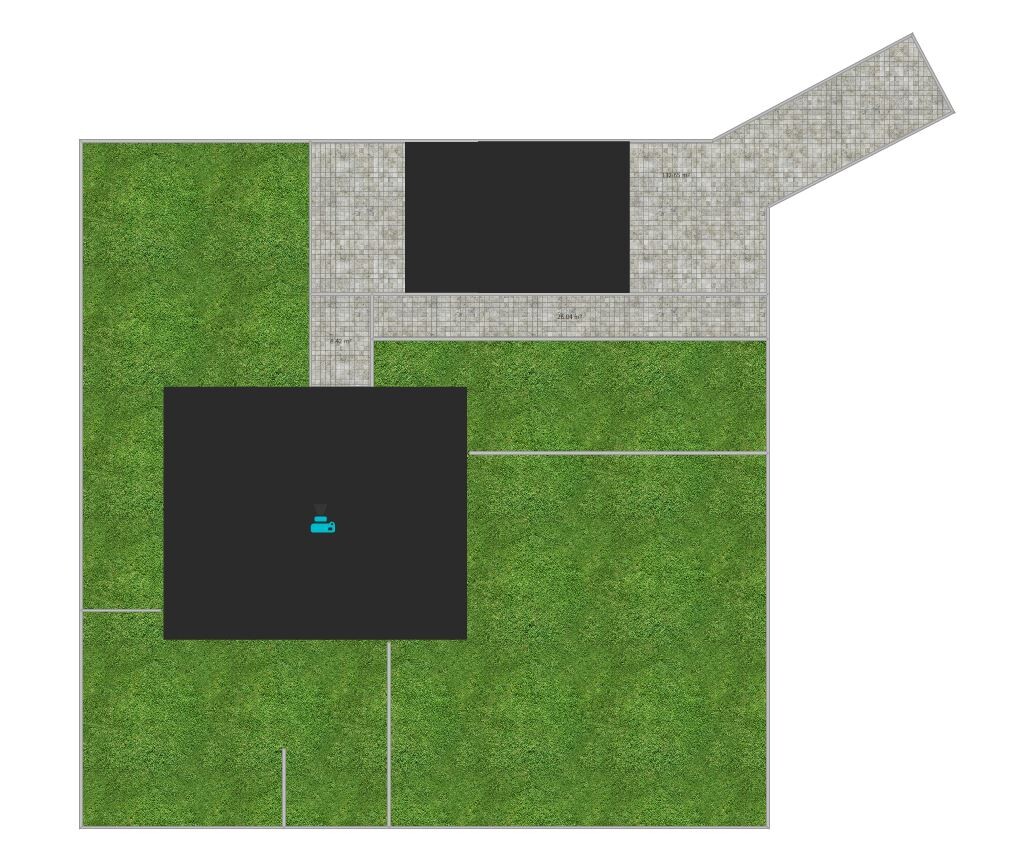
The other images show the floor plans and the considerations for the orientation on the plot. Unfortunately, I could not find a suitable tool to better illustrate the orientation. The large black area represents the house, the smaller one the carport/garage with storage. These images are not north oriented but rotated, roughly facing south.
A south orientation is also possible. However, we want to leave some space for the known friendly neighbors to the east and north and would prefer not to build over those areas.
If the neighbor builds their house with a 9m (30 ft) height directly at the boundary, there would be about 14m (46 ft) to the west with the west orientation and about 12m (39 ft) + the 3m (10 ft) boundary zone with the north orientation.
Is this enough to have sunlight in the evening (from 5:00 pm to 8:00 pm)? And will there still be sunlight in autumn and winter?
My main concern is that the utility room should not face south, and I have no idea where to place the garage or carport.
I hope you can help me with this issue.
Regards,
Sören

I have already asked some questions in this https://www.hausbau-forum.de/threads/hausausrichtung-sued-oder-West.9523/page-3 thread, but I wanted to start a separate post now because I think it no longer fits with the original discussion.
We are planning to build a new single-family house with approximately 160sqm-180sqm (1720-1937 sq ft). The house will be about 10x11 meters / 9x12 meters (33x36 ft / 30x39 ft) in size and will have a gable/ bay window. Upstairs, there will be three children's bedrooms, the master bedroom, and a bathroom. On the ground floor, there will be a utility room, living room, kitchen, office, and a bathroom with a shower.
A garage or carport with a storage room is planned, depending on the available budget.
The development plan includes the following restrictions:
Boundary setback: 3m (10 ft) to the neighboring plot only for garage/carport with a maximum length of 9m (30 ft); for corner buildings, a boundary setback of 15m (49 ft) is allowed.
House: 4m (13 ft) eaves height, 9m (30 ft) ridge height; no prescribed gable orientation.
I have roughly created floor plans for west and north orientations and attached them.
Images 1 and 2 show the new residential area and the location of the plot; these images are oriented to north.
The plot measures about 27x27 meters (see Grundstück_maße.jpg) (89x89 ft).
The other images show the floor plans and the considerations for the orientation on the plot. Unfortunately, I could not find a suitable tool to better illustrate the orientation. The large black area represents the house, the smaller one the carport/garage with storage. These images are not north oriented but rotated, roughly facing south.
A south orientation is also possible. However, we want to leave some space for the known friendly neighbors to the east and north and would prefer not to build over those areas.
If the neighbor builds their house with a 9m (30 ft) height directly at the boundary, there would be about 14m (46 ft) to the west with the west orientation and about 12m (39 ft) + the 3m (10 ft) boundary zone with the north orientation.
Is this enough to have sunlight in the evening (from 5:00 pm to 8:00 pm)? And will there still be sunlight in autumn and winter?
My main concern is that the utility room should not face south, and I have no idea where to place the garage or carport.
I hope you can help me with this issue.
Regards,
Sören
 montessalet25 Sep 2018 06:13
ypg schrieb:
What’s the benefit for you? People work during the day, so the dining room and kitchen should have higher priority, as already mentioned. Well, in my opinion, 1. it’s a matter of personal taste and 2. there is a phase in life when you spend more time at home.
I still think the basic layout ideas are not bad. However, I would remove the bay window and instead slightly increase the size of the house if it’s about space. A northern bay window is generally rather disappointing. If there’s going to be a bay window, then facing south or west is better. But honestly, I don’t really see the advantage.
It’s true that walls drawn too thinly significantly distort the living area. For me, this is not a real floor plan but rather a conceptual layout intended to establish the room locations. You can’t go into detail based on this.
What will be more important is defining the "constraints" for each room (e.g. size, which can be a minimum or maximum; considerations for furnishing: windows are planned accordingly). There’s still quite a way to go…
11ant schrieb:
That’s why I asked about the benefit, specifically regarding the height contours. A dormer aligned with the general eave line can also create this effect of “locally higher knee walls,” and combined with the wall offset, this adds another cost factor.Okay, I did some reading and I think I used the wrong term—we’re actually talking about the same thing. (I meant something like in the photo, more of a shallow version).
I will try changing the floor plan and wall thickness if the software allows it. (Which software is best suited for this, by the way?)
But as I said, in the end, a professional will handle everything properly. For me, it’s about preliminary planning: the layout (room arrangement and house type; positioning on the plot).
I’m just not sure if the rooms facing more towards the north might end up too dark. I also read that children’s rooms shouldn’t face north because kids should grow up in natural light.
That would lean towards house option 1, where the windows on the upper floor face east and west. In option 2, one child’s room would always face north unless I could fit our bedroom there (with a 3.5m (11.5 ft) wardrobe), then the child’s room could be in the dormer facing west.
With option 1, I’m also not entirely happy about the staircase; the routes from the upper floor to the kitchen/living room seem a bit long. My wife prefers an open-plan living/dining/kitchen in an L shape, which is difficult with a north-facing plot. She worries it might feel like a long corridor.
Our plan for the upper floor is three children’s bedrooms (preferably similar size, about 12–16 m² (130–170 sq ft)), a master bedroom (with space for a 3.5 m (11.5 ft) wardrobe), and a bathroom with shower and bathtub.
On the ground floor, we want the kitchen/dining/living area, a utility room, a study/guest room (which will be our bedroom when we’re older), and a bathroom with shower.
As a complete beginner, I think the connection costs for the utility room on a northeast-facing plot can’t be “that much” more expensive than on a southeast-facing plot.
If you have better suggestions, please share—I’m open to all ideas.
Without rereading all the posts from the last few days:
1. I would keep the access route as short as possible (paving costs money; long utility connections might too); therefore, orient the house more towards the west.
2. The original poster is currently thinking in terms of "either/or." They have developed floor plans and want to move them back and forth. In my opinion, the location should be determined first, and the floor plan should then be developed based on that.
1. I would keep the access route as short as possible (paving costs money; long utility connections might too); therefore, orient the house more towards the west.
2. The original poster is currently thinking in terms of "either/or." They have developed floor plans and want to move them back and forth. In my opinion, the location should be determined first, and the floor plan should then be developed based on that.
montessalet25 Sep 2018 14:09Maria16 schrieb:
Without rereading all the posts from the last few days:
1. I would keep the access path as short as possible (paving costs money; long utility connections possibly too; therefore orient the house rather towards the west.
2. The original poster (OP) currently assumes an "either/or" situation. They have developed floor plans and now want to move them back and forth. In my opinion, the location should be determined first, and then the floor plan developed accordingly.1. Sure, keep paths short – but never place the house in the west!2. Correct. First decide the placement, then explore the possibilities based on it.

I don’t think it’s that important how you apply the roofing term correctly. Calling the dormer here a bay window is not entirely wrong, since it actually sits on top of the ground floor bay window. And that’s exactly what I want to steer you away from: the notch in the floor plan – towards a “smooth” house side.
If you compare the two pictures and imagine yourself as the carpenter who has to build the roof structure, you’ll see that a gable like the one on the left is more complicated (and therefore more expensive) than the shed roof version on the right.
As a drawn space layout scheme, the drawing can also be used with “incorrect” wall thicknesses. My note was basically to tell you that you need to mentally subtract the extra square meters calculated. This becomes relevant with the width of small rooms like toilets and pantries, and with the area of medium-sized rooms – in the living room you won’t notice the difference.
https://www.instagram.com/11antgmxde/
https://www.linkedin.com/company/bauen-jetzt/
If you compare the two pictures and imagine yourself as the carpenter who has to build the roof structure, you’ll see that a gable like the one on the left is more complicated (and therefore more expensive) than the shed roof version on the right.
As a drawn space layout scheme, the drawing can also be used with “incorrect” wall thicknesses. My note was basically to tell you that you need to mentally subtract the extra square meters calculated. This becomes relevant with the width of small rooms like toilets and pantries, and with the area of medium-sized rooms – in the living room you won’t notice the difference.
Sören schrieb:That’s exactly right.
But as I said, in the end a professional should do it properly once, I’m just concerned with the preliminary planning, the orientation
Sören schrieb:Equal-sized children’s bedrooms work well for children of similar age. Often, younger ones prefer to share a room. And when the eldest moves out, the others want to “move up” and upgrade – which is harder with equal-sized rooms.
We actually want only three children’s bedrooms on the upper floor (preferably all approximately the same size, about 12-16sqm (130-170 sq ft))
Sören schrieb:The concept of living only downstairs when climbing stairs gets difficult and leaving the upper floor empty is already becoming outdated. Building a home just before retirement like the “Nordlys” example, incorporating all life experience at that stage, will become a more common model for those under 50 today.
(which should later become our bedroom as we get older)
Maria16 schrieb:
1. I would keep the access path as short as possible (paving costs; possibly longer utility connections too; therefore orient the house more towards the west)
montessalet schrieb:The west is not that bad a direction after all. If the floor area ratio allows, I would prefer a longer driveway over having mostly a north-facing garden.
1. Of course keep paths short – but never place the house facing west!
Maria16 schrieb:He developed two variants, which are really four (shown: model A with a north bay and model B with a west bay). First setting the orientation seems important to me – the plot position is basically just a linear shift – and then deciding whether to continue developing A or B (or take elements from them to create C).
He developed floor plans and now wants to move them back and forth. In my opinion, the location should be fixed first and then the floor plan developed from it.
https://www.instagram.com/11antgmxde/
https://www.linkedin.com/company/bauen-jetzt/
11ant schrieb:
I don’t think it’s that important to use the correct technical term for the roof feature. Calling this dormer a bay window isn’t entirely wrong either, since it actually sits on top of the bay window on the ground floor. What I’m really trying to get you away from is the idea of an indentation in the floor plan — instead, toward a smooth, uninterrupted house facade.Good point, thanks. If the price difference is really that significant, then definitely go for a smooth exterior wall.
11ant schrieb:
And if you compare the two pictures and imagine you were the carpenter responsible for building the roof structure: you’ll see that a gable like the one on the left is more complicated (and therefore more expensive) than the lean-to version in the picture on the right.So the lean-to variant basically means a "flat-roofed dormer"?
According to Sonnenverlauf_de, we need to position the house as far southeast as possible and place the garden in the west to get long evening sunlight. Alternatively, placing the house further north with the garden facing south would mean the neighbor would practically shade our house. In that case, we would need a second seating area in the far southeast (where the garage is in option 1) for the evening hours. The plot also has a slight slope of about 1–1.5 meters (3–5 feet) from south to north.
I’m not so keen on placing the garage in the southeast corner either—it requires too much driveway and paving work. I’d rather put the garage in the center or further forward and have a small lawn area behind it for things like a clothesline or similar.
If the terrace faces west, the north orientation of the plot isn’t that much of an issue.
Currently, we live in a house with the street on the west side and the garden on the east. That works because the sun reaches the garden (from the side) in the afternoon from the south, and then in the evening, sunlight from the west hits the garden from the side (over the garage). Only late at around 6 p.m. (18:00), when the sun has moved behind the garage and away from the house, does the sunlight disappear.
People usually say that there’s no sun in an east-facing garden after midday, but that isn’t really true. It depends heavily on how the house and garden are positioned.
The driveway is in the shade after midday at our current location, but since it’s always shaded in summer anyway, I don’t find that problematic—there’s still always some sunlight in the garden somewhere.
Placement and orientation of the house are what really matter, I think that’s the most important factor.
Similar topics