
ᐅ House on a slope – approximately 200 square meters of living space
Created on: 1 Nov 2017 07:51
S
SupaCriz
Good morning everyone,
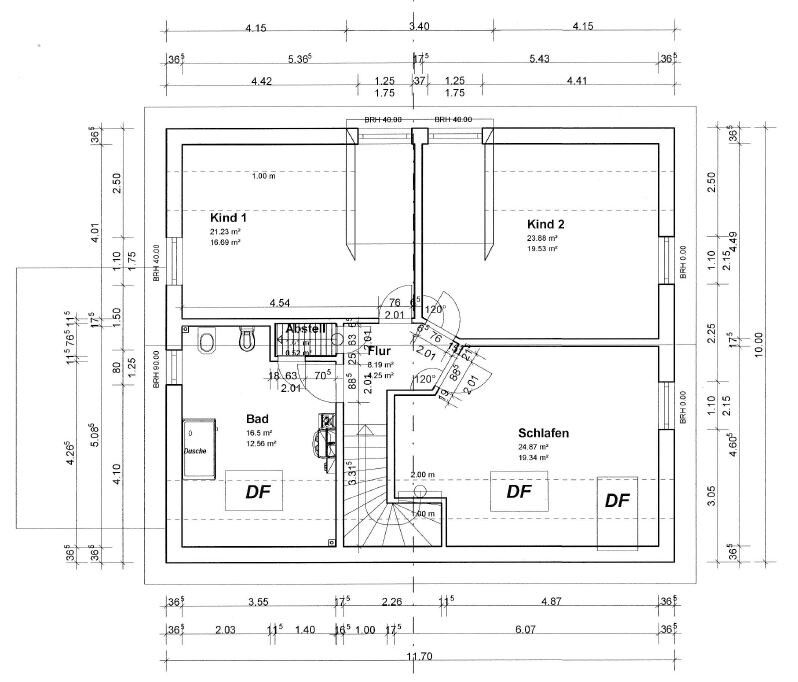
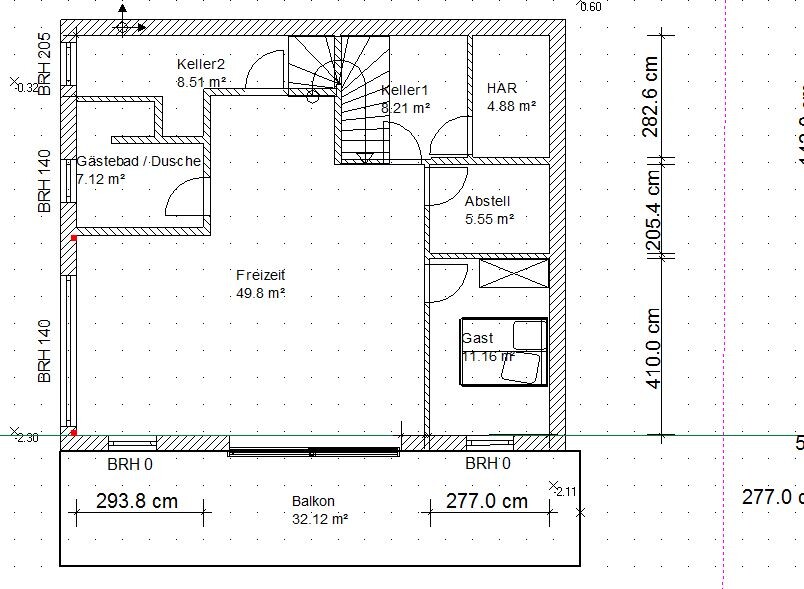
we are building a single-family house with approximately 200 sqm (2,150 sq ft) of living space on a beautiful sloped plot not far from the city center. We shared some initial drafts a few months ago. Since a lot has changed since then, we are posting the current planning status again and look forward to the discussions:
Development plan/restrictions: development plan
Plot size: 500 sqm (5,380 sq ft)
Slope: yes, about 6 m (20 ft) drop over 28 m (92 ft) plot length (southeast facing slope)
Floor area ratio: 0.2
Plot ratio: 0.3 (variations are expected to be approved if the floor area ratio is respected)
Building envelope, building line and boundaries: standard setback distances
Edge development: garage will be built on the boundary line, which is permitted
Number of parking spaces: 1 + garage driveway
Number of storeys: I + IS (meaning 1 full floor + basement level → basement on the slope)
Roof style: no specification
Architectural style: no specification
Orientation: ridge must run east-west
Maximum heights/limits: eaves max. 3.60 m (11.8 ft) above street level
Other requirements
Homeowners’ requirements
Style, roof type, building type: gable roof with 48° pitch
Basement, floors: basement level – to be used as primary living space on the south slope with access to the terrace
Number of people, ages: parents just over 30, children 0 and 2 years old
Space requirements for ground floor and upper floor: ground floor: main living area and kitchen; upper floor: 3 bedrooms + bathroom; basement: summer living room/playroom with garden access, guest room
Office use: possibly a studio office under the roof (not a decisive factor)
Guests per year: long-term visits anticipated
Open or closed architecture: open
Traditional or modern construction: classic form with large, high windows
Open kitchen, kitchen island: open kitchen with cold island and seating
Number of dining seats: 6
Fireplace: probably yes, but as an external chimney
Music/stereo wall: no
Balcony, roof terrace: no
Garage, carport: prefabricated garage with masonry undercroft
Utility garden, greenhouse: no
Further wishes/special features/daily routine, including reasons why certain things should be included or excluded:
terrace access at ground level from the basement
photovoltaic system
House design
Who designed it:
- Planner from a construction company (civil engineer) / self-planned by homeowners
What do you particularly like? Why? Large basement room with terrace access. Comfortable overnight accommodation for guests.
What don’t you like? Why? The stair shape is very functional; it optimizes space usage on the upper floor and generally towards the south side of the house. A straight staircase would be preferred visually, though.
The current full storey definition according to the Bavarian Building Code of 1969 forbids, for example, raising the knee wall or adding a second dormer on the upper floor.
Estimated cost according to architect/planner: €360,000
Personal price limit for the house including fixtures: 400,000
Preferred heating technology: air-to-water heat pump
If you have to give up something, what details/finishes can you live without?
- Can give up: photovoltaic system
- Cannot give up: basement with living-quality standards
Why does the design look the way it does? For example:
Based on the plot conditions and the development plan, we have completely redesigned the first draft step by step, incorporating inspiration from this forum and new build areas (offline) / Pinterest and similar sources (online).
Currently, we are still considering the following questions:
- Floor-to-ceiling windows on the south side: single- or double-leaf? Originally double-leaf with 150 cm (60 inches) width planned. We prefer the look without the division, but then probably max. 120 cm (47 inches) wide would be possible.
- Fixed glazing as a large light strip on the southwest corner of the basement or rather two windows aligned with those above on the west facade?
- Omit the window in the small basement room on the northwest side to improve facade appearance?
- Add 2 extra roof windows next to the dormer on the upper floor to bring more light to the children’s rooms?
- Flooring on ground and basement floors: upper floor will have parquet; still undecided between parquet, continuous granite flooring, or exposed screed/smooth floor for the other two levels
We look forward to your comments!
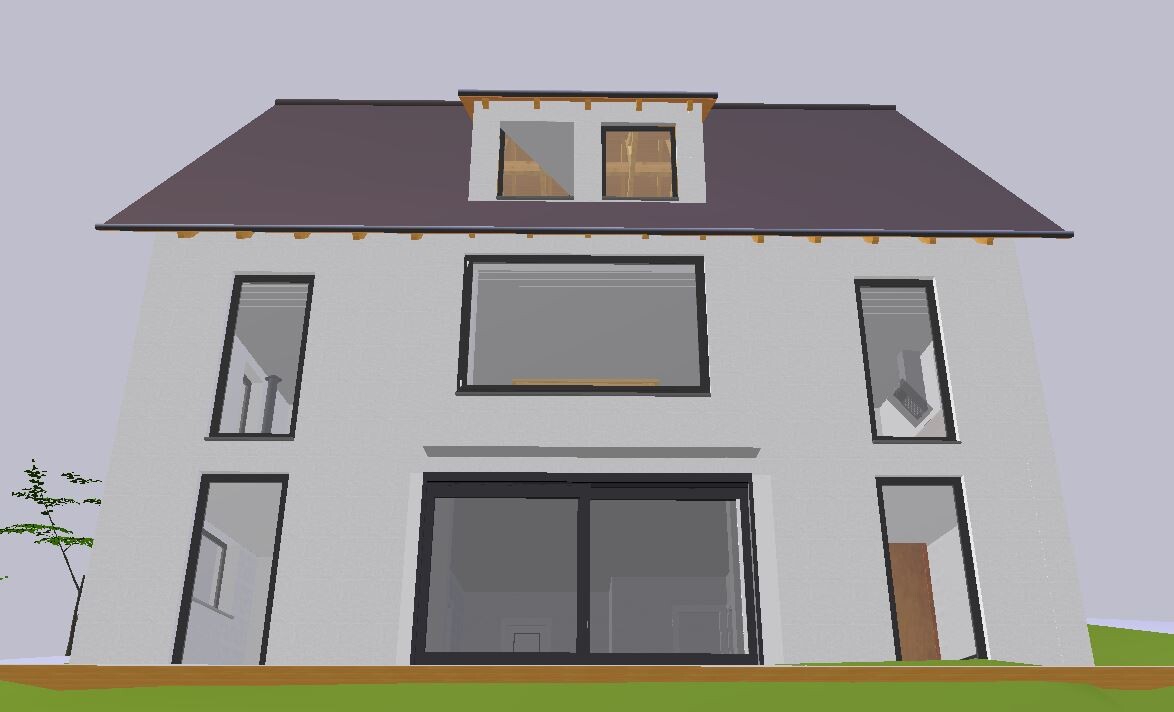
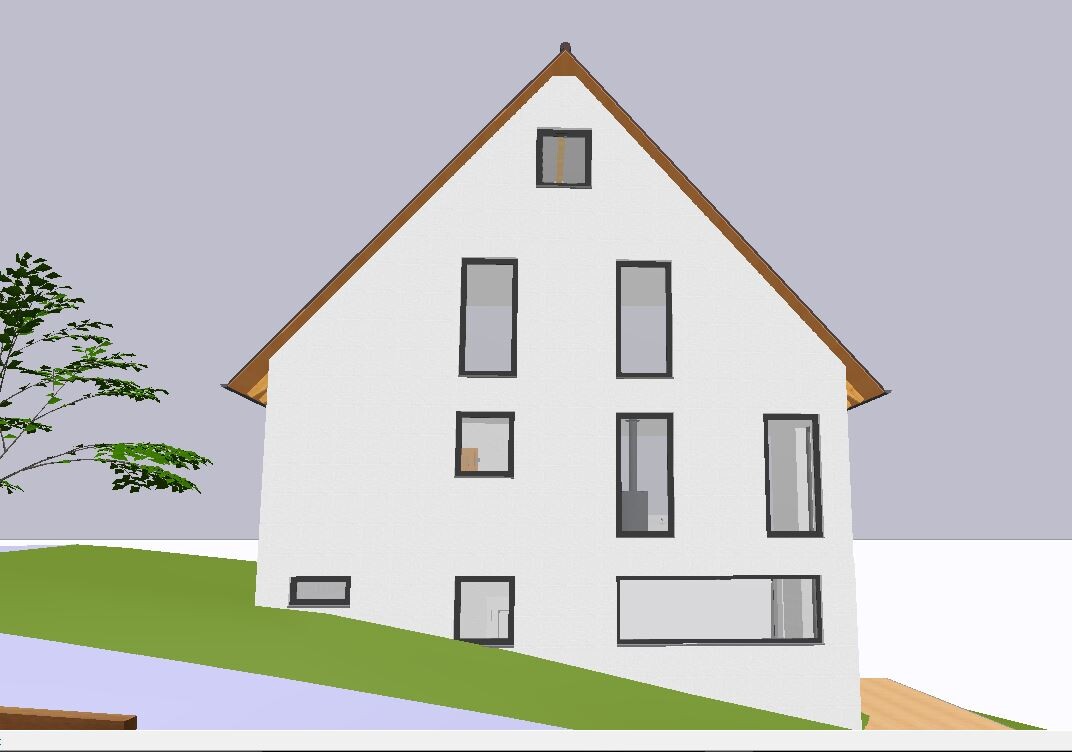
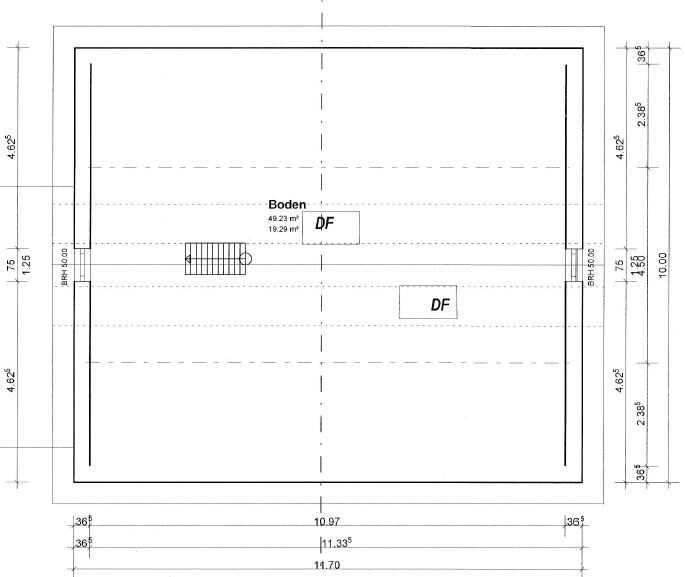
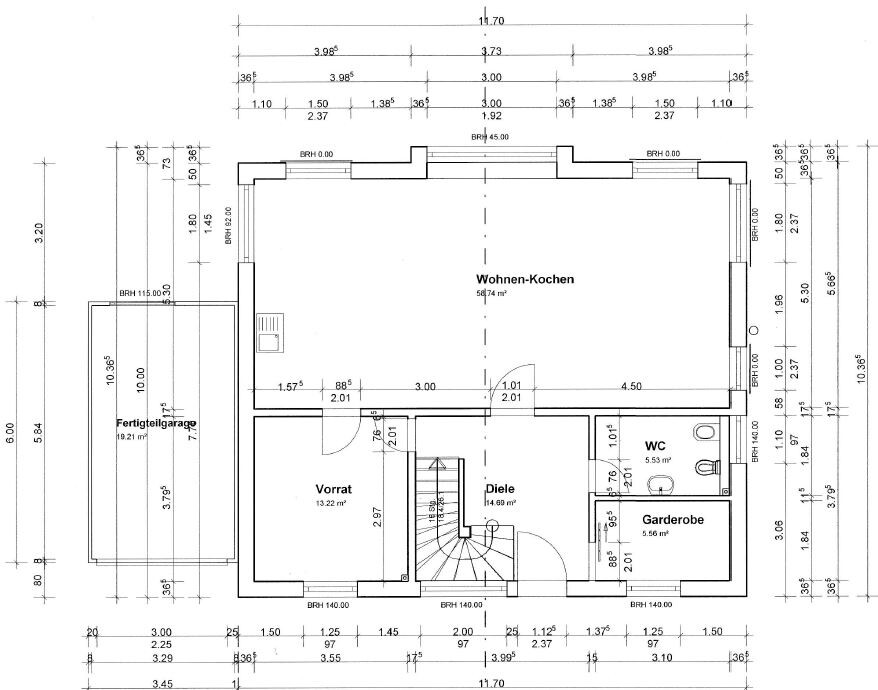
we are building a single-family house with approximately 200 sqm (2,150 sq ft) of living space on a beautiful sloped plot not far from the city center. We shared some initial drafts a few months ago. Since a lot has changed since then, we are posting the current planning status again and look forward to the discussions:
Development plan/restrictions: development plan
Plot size: 500 sqm (5,380 sq ft)
Slope: yes, about 6 m (20 ft) drop over 28 m (92 ft) plot length (southeast facing slope)
Floor area ratio: 0.2
Plot ratio: 0.3 (variations are expected to be approved if the floor area ratio is respected)
Building envelope, building line and boundaries: standard setback distances
Edge development: garage will be built on the boundary line, which is permitted
Number of parking spaces: 1 + garage driveway
Number of storeys: I + IS (meaning 1 full floor + basement level → basement on the slope)
Roof style: no specification
Architectural style: no specification
Orientation: ridge must run east-west
Maximum heights/limits: eaves max. 3.60 m (11.8 ft) above street level
Other requirements
Homeowners’ requirements
Style, roof type, building type: gable roof with 48° pitch
Basement, floors: basement level – to be used as primary living space on the south slope with access to the terrace
Number of people, ages: parents just over 30, children 0 and 2 years old
Space requirements for ground floor and upper floor: ground floor: main living area and kitchen; upper floor: 3 bedrooms + bathroom; basement: summer living room/playroom with garden access, guest room
Office use: possibly a studio office under the roof (not a decisive factor)
Guests per year: long-term visits anticipated
Open or closed architecture: open
Traditional or modern construction: classic form with large, high windows
Open kitchen, kitchen island: open kitchen with cold island and seating
Number of dining seats: 6
Fireplace: probably yes, but as an external chimney
Music/stereo wall: no
Balcony, roof terrace: no
Garage, carport: prefabricated garage with masonry undercroft
Utility garden, greenhouse: no
Further wishes/special features/daily routine, including reasons why certain things should be included or excluded:
terrace access at ground level from the basement
photovoltaic system
House design
Who designed it:
- Planner from a construction company (civil engineer) / self-planned by homeowners
What do you particularly like? Why? Large basement room with terrace access. Comfortable overnight accommodation for guests.
What don’t you like? Why? The stair shape is very functional; it optimizes space usage on the upper floor and generally towards the south side of the house. A straight staircase would be preferred visually, though.
The current full storey definition according to the Bavarian Building Code of 1969 forbids, for example, raising the knee wall or adding a second dormer on the upper floor.
Estimated cost according to architect/planner: €360,000
Personal price limit for the house including fixtures: 400,000
Preferred heating technology: air-to-water heat pump
If you have to give up something, what details/finishes can you live without?
- Can give up: photovoltaic system
- Cannot give up: basement with living-quality standards
Why does the design look the way it does? For example:
Based on the plot conditions and the development plan, we have completely redesigned the first draft step by step, incorporating inspiration from this forum and new build areas (offline) / Pinterest and similar sources (online).
Currently, we are still considering the following questions:
- Floor-to-ceiling windows on the south side: single- or double-leaf? Originally double-leaf with 150 cm (60 inches) width planned. We prefer the look without the division, but then probably max. 120 cm (47 inches) wide would be possible.
- Fixed glazing as a large light strip on the southwest corner of the basement or rather two windows aligned with those above on the west facade?
- Omit the window in the small basement room on the northwest side to improve facade appearance?
- Add 2 extra roof windows next to the dormer on the upper floor to bring more light to the children’s rooms?
- Flooring on ground and basement floors: upper floor will have parquet; still undecided between parquet, continuous granite flooring, or exposed screed/smooth floor for the other two levels
We look forward to your comments!
Excuse me? No one needs a children's room over 20sqm (215 sq ft)? What’s the point if there is the space available, why not use it? Okay, it only really makes sense from the toddler age onwards, but that’s fine.
With so much space, I would install a sauna and a second bathroom for the kids or at least add a shower to one of the downstairs toilets. I also find the bathroom unnecessarily large – sure, a bit of space is nice, but so much empty space in the middle – what do you want to do with it?
Besides, I prefer a separate walk-in closet; I hate it when clothes are scattered around the bedroom. But everyone has to decide for themselves how they want to use their space.
But under no circumstances would I add extra roof windows, and in the bedroom, I would paint over at least one of the existing ones. Summers are getting hotter, and nobody wants sunlight through the roof – it’s warm enough underneath already.
With so much space, I would install a sauna and a second bathroom for the kids or at least add a shower to one of the downstairs toilets. I also find the bathroom unnecessarily large – sure, a bit of space is nice, but so much empty space in the middle – what do you want to do with it?
Besides, I prefer a separate walk-in closet; I hate it when clothes are scattered around the bedroom. But everyone has to decide for themselves how they want to use their space.
But under no circumstances would I add extra roof windows, and in the bedroom, I would paint over at least one of the existing ones. Summers are getting hotter, and nobody wants sunlight through the roof – it’s warm enough underneath already.

SupaCriz schrieb:
We are looking forward to the comments! Ah, time will tell. Moving away from the square shape and mostly implementing the suggestions. Good.
https://www.instagram.com/11antgmxde/
https://www.linkedin.com/company/bauen-jetzt/

My impression:
Half of everything would actually be enough.
- Someone still has to clean all of it (or want to).
- On the ground floor, the storage room is almost as big as one of our children’s bedrooms.
- The guest bathroom is spacious enough for a full sauna; imagine sitting on the toilet, feeling so lost in the hall-like guest bathroom—unless you’re a true deal hunter and join every “TV for the guest bathroom” and SNES Mini deal.
- The wardrobe area can be that large, and it will definitely get filled. But the same applies even if it was half the size; people just keep collecting and don’t sort out or move winter coats to the basement under the stairs during summer (where another wardrobe could fit, by the way).
- The size of the living/dining/kitchen area is okay. I would design the kitchen in an L-shape tucked into the corner of the room to improve the acoustics.
- I was happy about my large children’s bedroom, which was nearly 20m² (including sloped ceilings). Bedrooms of 16–18m² floor area would be plenty.
- The size of the bedrooms will naturally reduce if you make the ground floor smaller.
- I find the rooms to be quite awkward with many corners.
- This is impractical because you can’t place furniture properly, and interior finishing (painting, flooring, skirting boards) will be difficult. To avoid wasting space, I would arrange the rooms in the four corners, place the staircase in the center, and then figure out how the staircase fits on the ground floor, rotating rooms as needed.
- Maybe give the stairwell a “gallery.” It’s often unused space but better than patching up spaces everywhere else. It would also make the hallway feel more homely.
- I like the idea of a fixed staircase to the attic.
- Consider a heating solution for the attic, at least run preparation for it.
- In the basement, I see two storage rooms that seem hard to use, and a small utility room that might be sufficient (ours is 2.5 x 1.2 meters (8 x 4 feet) and, due to the large heating system, electrical panel, and connections, it is 70% full but fully accessible).
- Like in the attic, the layout and walls seem unsuitable.
- The almost-alcove room is furthest from the guest bathroom in the basement—an unfavorable room distribution.
- The hobby room is very large. Do you already have ideas about how you want to use it? It could become a second living room, but it would be a shame if only a stationary bike ends up there and the rest is just for cleaning.
- If the house were smaller, the hobby room could also give up some space.
- From the exterior views, the windows of different sizes and shapes look like Klitschko after his last fight. I would focus on symmetry here.
- I don’t think roof windows are practical. For example, we installed double casement windows (1.5–2 meters (5–6.5 feet) wide including frame) to let in lots of sunlight. Sunlight is important to me.
If you’re not offended by my directness (I’ve been pretty straightforward), here are my suggestions:
- Start drawing again from scratch.
- Begin with simple room layouts.
- Rooms should have mostly four walls (or more for L-shaped rooms, but no niches).
- Make the rooms as small as possible!
- Position stairs and entrances, moving rooms around as needed.
- If something doesn’t quite fit, slightly enlarge the external walls of the house; this will also “accidentally” enlarge some rooms.
- If everything now “fits” but might be too small, you already have a good floor plan. You can then extend the external walls further to enlarge all the rooms.
- Add windows while keeping symmetry from the outside in mind.
This is not a foolproof recipe for a “beautiful” house but prevents a mess. If you have special design wishes for rooms or anything else, you can always incorporate those later.
If this approach doesn’t suit you: talk to several building companies or architects. They will provide offers after hearing your wishes first. Their proposals will include floor plans. This is usually free for you. You also get various professional ideas. You can compare the offers side by side and weigh them against your expectations.
Half of everything would actually be enough.
- Someone still has to clean all of it (or want to).
- On the ground floor, the storage room is almost as big as one of our children’s bedrooms.
- The guest bathroom is spacious enough for a full sauna; imagine sitting on the toilet, feeling so lost in the hall-like guest bathroom—unless you’re a true deal hunter and join every “TV for the guest bathroom” and SNES Mini deal.
- The wardrobe area can be that large, and it will definitely get filled. But the same applies even if it was half the size; people just keep collecting and don’t sort out or move winter coats to the basement under the stairs during summer (where another wardrobe could fit, by the way).
- The size of the living/dining/kitchen area is okay. I would design the kitchen in an L-shape tucked into the corner of the room to improve the acoustics.
- I was happy about my large children’s bedroom, which was nearly 20m² (including sloped ceilings). Bedrooms of 16–18m² floor area would be plenty.
- The size of the bedrooms will naturally reduce if you make the ground floor smaller.
- I find the rooms to be quite awkward with many corners.
- This is impractical because you can’t place furniture properly, and interior finishing (painting, flooring, skirting boards) will be difficult. To avoid wasting space, I would arrange the rooms in the four corners, place the staircase in the center, and then figure out how the staircase fits on the ground floor, rotating rooms as needed.
- Maybe give the stairwell a “gallery.” It’s often unused space but better than patching up spaces everywhere else. It would also make the hallway feel more homely.
- I like the idea of a fixed staircase to the attic.
- Consider a heating solution for the attic, at least run preparation for it.
- In the basement, I see two storage rooms that seem hard to use, and a small utility room that might be sufficient (ours is 2.5 x 1.2 meters (8 x 4 feet) and, due to the large heating system, electrical panel, and connections, it is 70% full but fully accessible).
- Like in the attic, the layout and walls seem unsuitable.
- The almost-alcove room is furthest from the guest bathroom in the basement—an unfavorable room distribution.
- The hobby room is very large. Do you already have ideas about how you want to use it? It could become a second living room, but it would be a shame if only a stationary bike ends up there and the rest is just for cleaning.
- If the house were smaller, the hobby room could also give up some space.
- From the exterior views, the windows of different sizes and shapes look like Klitschko after his last fight. I would focus on symmetry here.
- I don’t think roof windows are practical. For example, we installed double casement windows (1.5–2 meters (5–6.5 feet) wide including frame) to let in lots of sunlight. Sunlight is important to me.
If you’re not offended by my directness (I’ve been pretty straightforward), here are my suggestions:
- Start drawing again from scratch.
- Begin with simple room layouts.
- Rooms should have mostly four walls (or more for L-shaped rooms, but no niches).
- Make the rooms as small as possible!
- Position stairs and entrances, moving rooms around as needed.
- If something doesn’t quite fit, slightly enlarge the external walls of the house; this will also “accidentally” enlarge some rooms.
- If everything now “fits” but might be too small, you already have a good floor plan. You can then extend the external walls further to enlarge all the rooms.
- Add windows while keeping symmetry from the outside in mind.
This is not a foolproof recipe for a “beautiful” house but prevents a mess. If you have special design wishes for rooms or anything else, you can always incorporate those later.
If this approach doesn’t suit you: talk to several building companies or architects. They will provide offers after hearing your wishes first. Their proposals will include floor plans. This is usually free for you. You also get various professional ideas. You can compare the offers side by side and weigh them against your expectations.
Hello everyone,
Thank you for your opinions and comments. Could you please give us some tips regarding, for example, the arrangement of the windows?
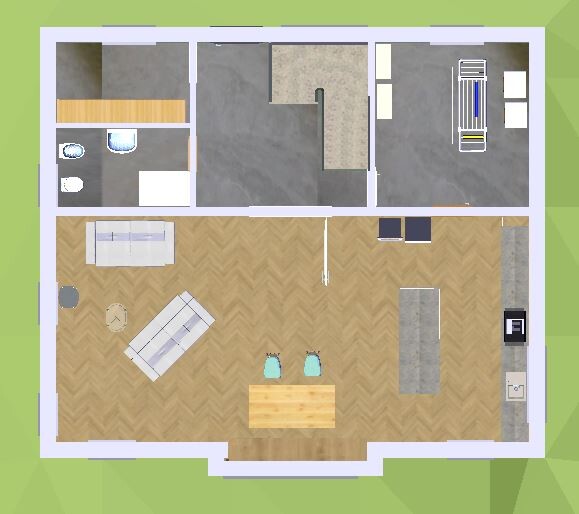
Here are some background details and a possible furnishing plan for the ground floor:
- Storage on the ground floor: This refers to the utility room with storage space, plus extra room for drinks and non-perishable supplies. The washing machine and dryer will also be located on the ground floor.
- Roof windows: The Velux roof balcony was prohibited by the city. According to them, all roof windows on the northwest side facing the street must be omitted due to heritage protection. We have now reduced to one double casement window each in the master bedroom and bathroom.
Does anyone know if the city can ban double casement windows because of heritage protection when all three neighboring houses and even the demolition house on our property have one or two double casement windows facing the street? The city says these were probably never officially approved and therefore do not “count.”
- Children’s rooms: It should be noted that due to the low knee wall, a large part of the floor area will be under the sloped ceiling. Overall, we find the rooms nicely sized but not too big.
- Children’s bathroom / Second bathroom: At least the bathroom in the basement, and possibly also on the ground floor, will have a shower. An additional children’s bathroom would be too much for me (father).
- Large open-plan living, kitchen, and dining area: With a kitchen island, window seating/dining table, and sofa corner, we think the space is not too big. After all, much of family life happens here.
- Utility room (HAR): What size would you consider appropriate here? The room must at least accommodate a heat pump with hot water storage, water and electrical connections — probably also storage batteries and a photovoltaic system.
- Construction method / Building costs: We are building with 365 mm (14 inches) Ytong blocks. According to the planning company, the construction costs should work out as planned; we are curious to see if that will be the case.
Thank you for your opinions and comments. Could you please give us some tips regarding, for example, the arrangement of the windows?
Here are some background details and a possible furnishing plan for the ground floor:
- Storage on the ground floor: This refers to the utility room with storage space, plus extra room for drinks and non-perishable supplies. The washing machine and dryer will also be located on the ground floor.
- Roof windows: The Velux roof balcony was prohibited by the city. According to them, all roof windows on the northwest side facing the street must be omitted due to heritage protection. We have now reduced to one double casement window each in the master bedroom and bathroom.
Does anyone know if the city can ban double casement windows because of heritage protection when all three neighboring houses and even the demolition house on our property have one or two double casement windows facing the street? The city says these were probably never officially approved and therefore do not “count.”
- Children’s rooms: It should be noted that due to the low knee wall, a large part of the floor area will be under the sloped ceiling. Overall, we find the rooms nicely sized but not too big.
- Children’s bathroom / Second bathroom: At least the bathroom in the basement, and possibly also on the ground floor, will have a shower. An additional children’s bathroom would be too much for me (father).
- Large open-plan living, kitchen, and dining area: With a kitchen island, window seating/dining table, and sofa corner, we think the space is not too big. After all, much of family life happens here.
- Utility room (HAR): What size would you consider appropriate here? The room must at least accommodate a heat pump with hot water storage, water and electrical connections — probably also storage batteries and a photovoltaic system.
- Construction method / Building costs: We are building with 365 mm (14 inches) Ytong blocks. According to the planning company, the construction costs should work out as planned; we are curious to see if that will be the case.
A small additional note: as people get older and the children have moved out, many find the house too large. It is wise for those with a basement (especially on a sloped site) to have built it from the start so that it could be converted into a separate rental apartment (meaning to equip it accordingly with its own electrical, water, and, if necessary, heating circuits).
Why do you all want to cram all the technical equipment into the utility room when you have basement rooms downstairs?
Anyway, I have two or three tips...
1. Straighten the hallway upstairs. Have straight walls so proper doors can fit nicely. Currently, the children’s rooms show doors with a width of 76cm (30 inches). Those are secondary room dimensions and are far too narrow! The hallway could also use some extra square meters so that four people don’t have to squeeze past each other.
2. Regarding other dimensions: there are quite a few inconsistencies. The toilet and shower are at minimum size, while other rooms are uncomfortably small.
In contrast, the guest room, at 2.77m (9 feet) wide for a bed, is cramped again (not as comfortable as you might think).
I don’t mean to be harsh, but could it be that you have difficulties with sizes, proportions, and design (windows)?
That wouldn’t be a problem in itself. But to experiment and take liberties with a 200sqm (2,150 sq ft) house? You’re not doing yourselves any favors. Just my opinion.
Anyway, I have two or three tips...
1. Straighten the hallway upstairs. Have straight walls so proper doors can fit nicely. Currently, the children’s rooms show doors with a width of 76cm (30 inches). Those are secondary room dimensions and are far too narrow! The hallway could also use some extra square meters so that four people don’t have to squeeze past each other.
2. Regarding other dimensions: there are quite a few inconsistencies. The toilet and shower are at minimum size, while other rooms are uncomfortably small.
In contrast, the guest room, at 2.77m (9 feet) wide for a bed, is cramped again (not as comfortable as you might think).
I don’t mean to be harsh, but could it be that you have difficulties with sizes, proportions, and design (windows)?
That wouldn’t be a problem in itself. But to experiment and take liberties with a 200sqm (2,150 sq ft) house? You’re not doing yourselves any favors. Just my opinion.
Similar topics