
ᐅ House from the 1970s – Assessment of Mold Issues Indoors?
Created on: 1 May 2022 13:17
B
Besenkammer84
Hello everyone,
I have the opportunity to take over a house (2 floors + attic - small vaulted cellar) that is built partially (1/6) into a hillside.
Renovation has already been partly started (floor, including screed, removed), and new double-glazed "good quality" windows were installed in the 2000s. The house itself dates from the 1970s and the foundation walls are built with 24cm (9.5 inches) clinker bricks. Furthermore, the entire interior was insulated with approximately 3.5cm (1.4 inches) of polystyrene foam, finished with drywall.
In some places where cupboards were located, as well as in the areas between the windows and the foundation bricks on the inside, mold is present. This is certainly partly due to insufficient ventilation by the previous owners.
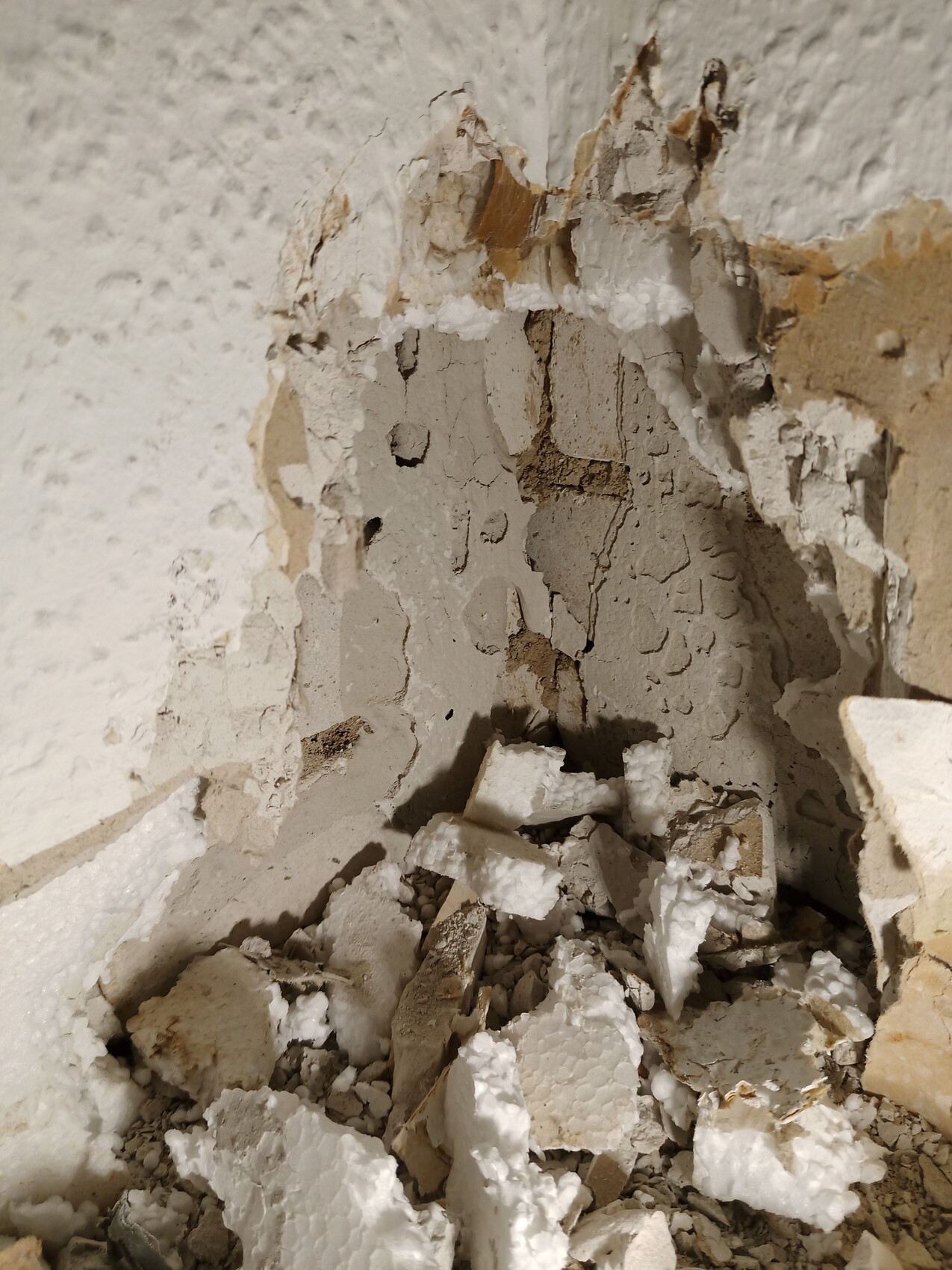
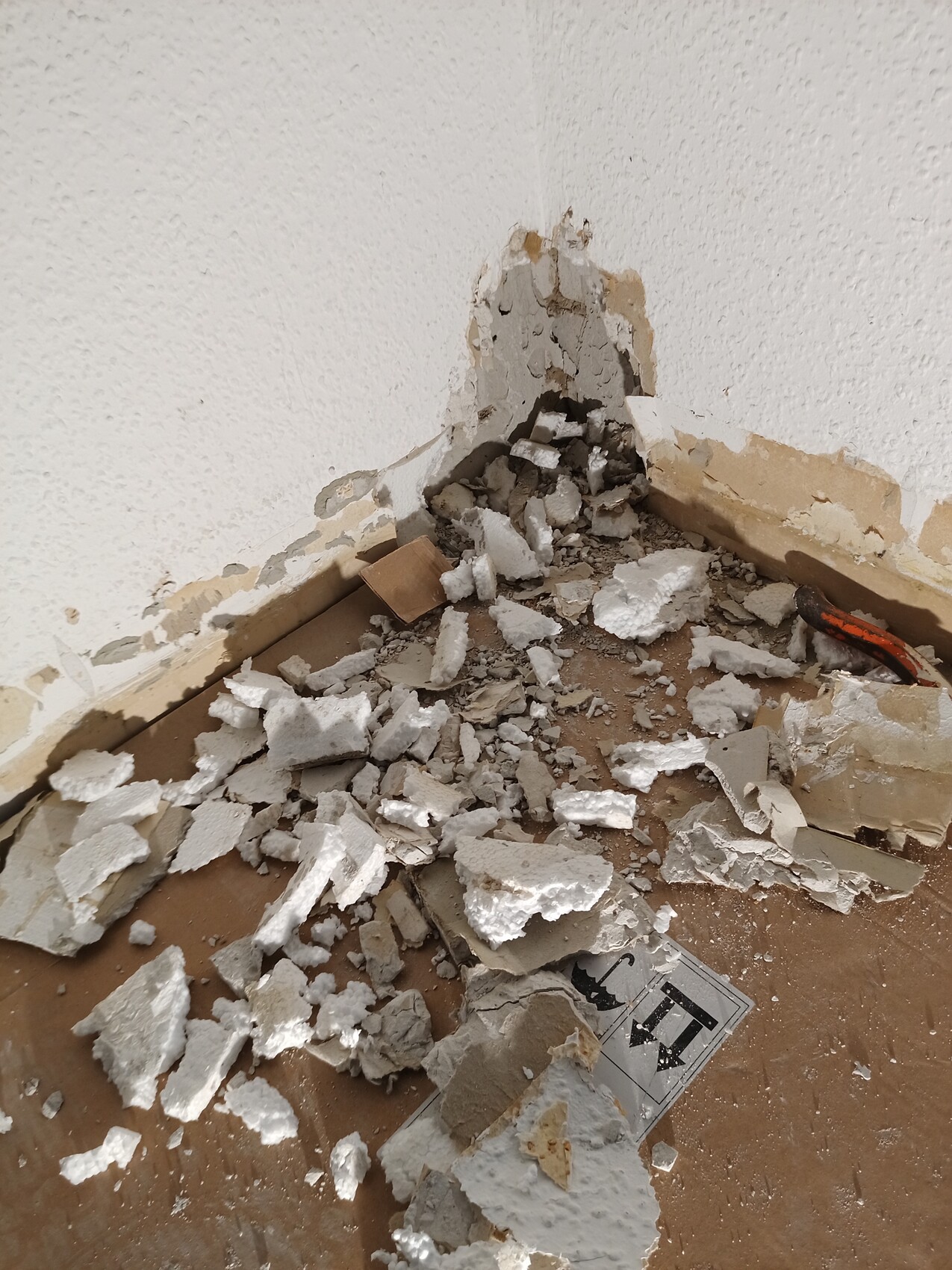
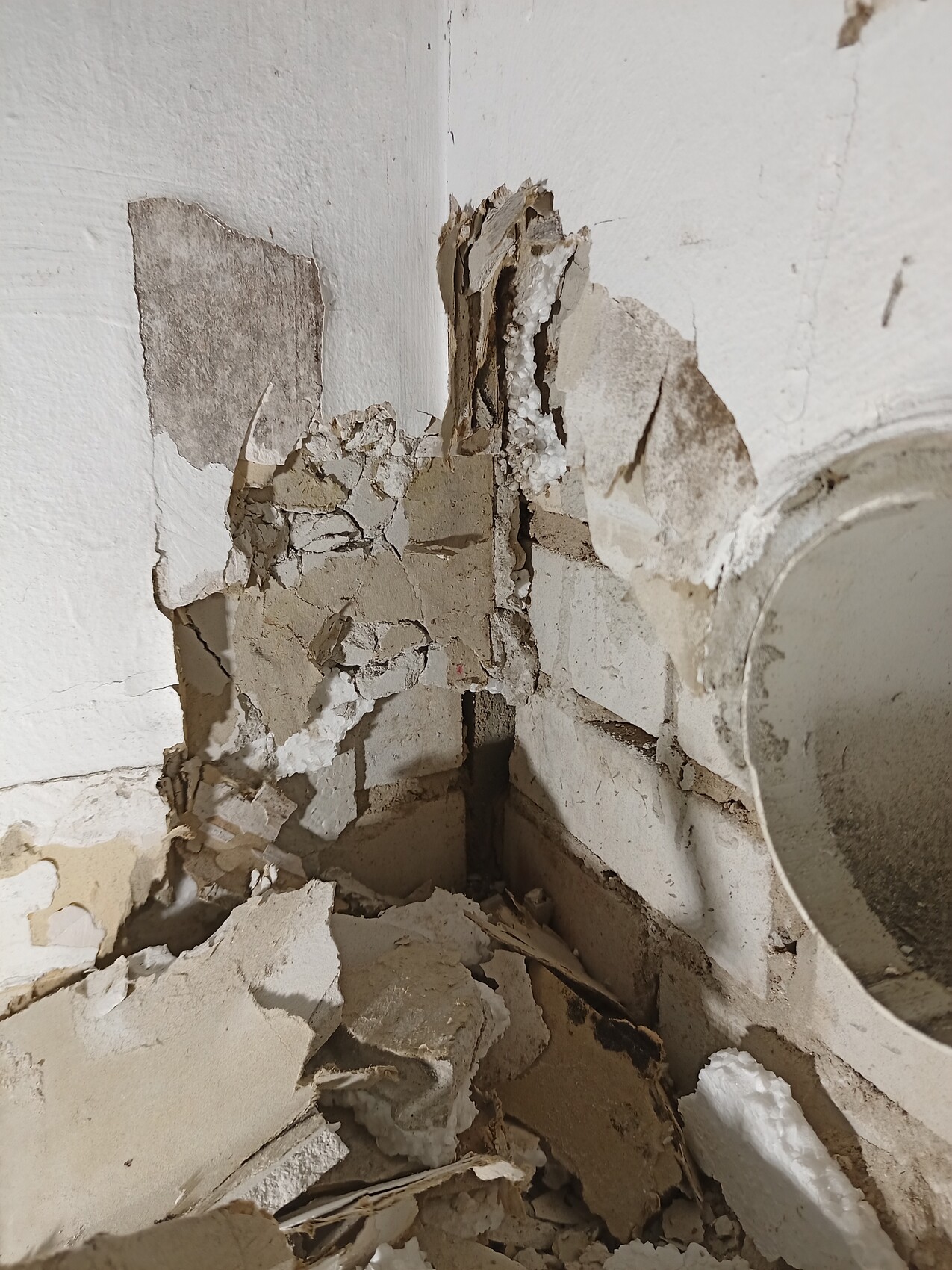
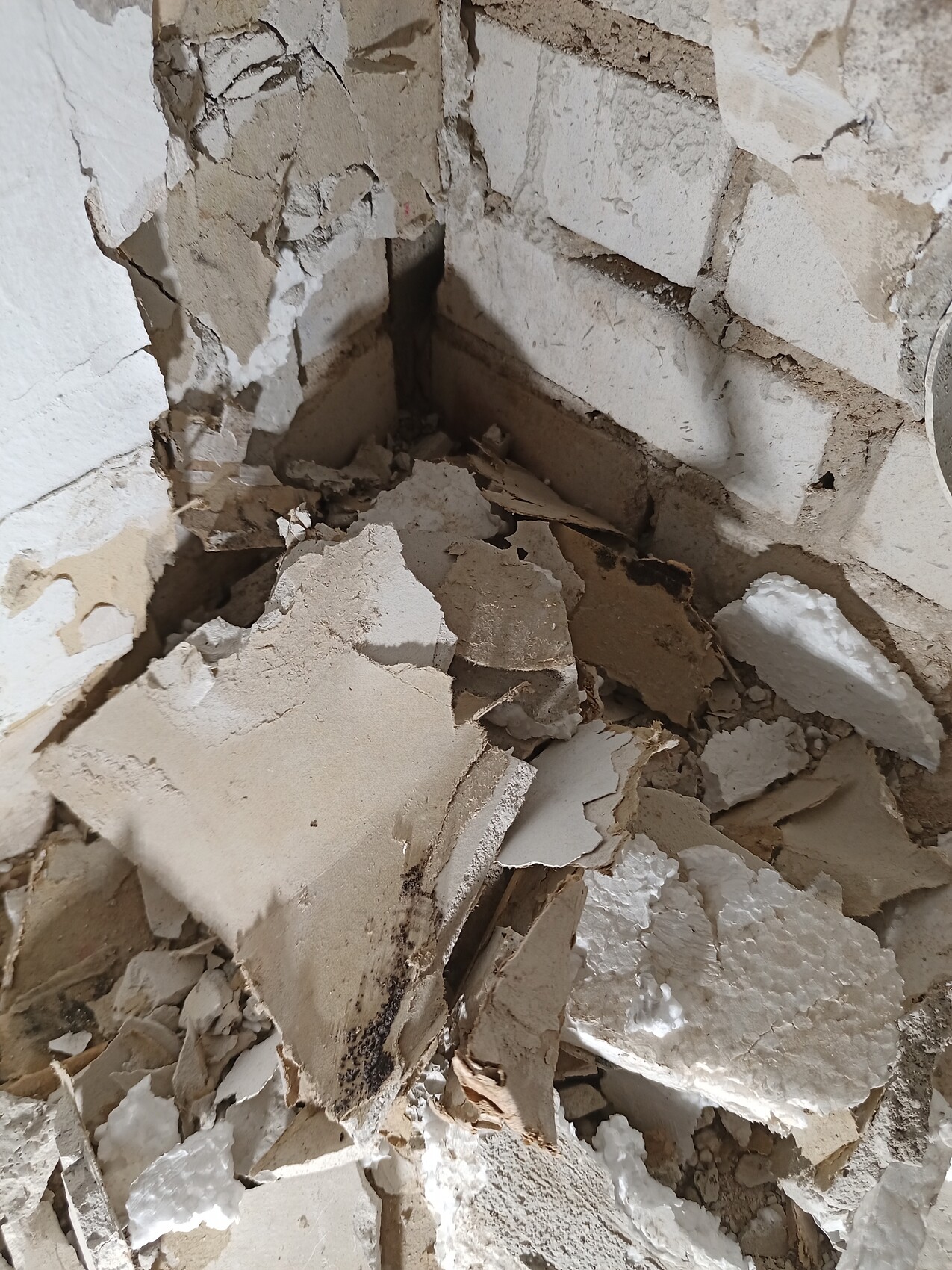
To check how the insulation behaves against the masonry, I have exposed the insulation at about 10 spots in the house (finding slight mold in 2 locations) in the corners where exterior walls are located, near the lower parts of the rooms. It mostly appears that the mold is limited to the visible interior surfaces and has not spread further outward.
Still, I am not entirely sure whether this is really "harmless" and whether it is okay to leave the drywall etc. in place and just remove or treat the wallpaper.
That is why I took some photos, hoping to get advice on how to assess the mold situation.
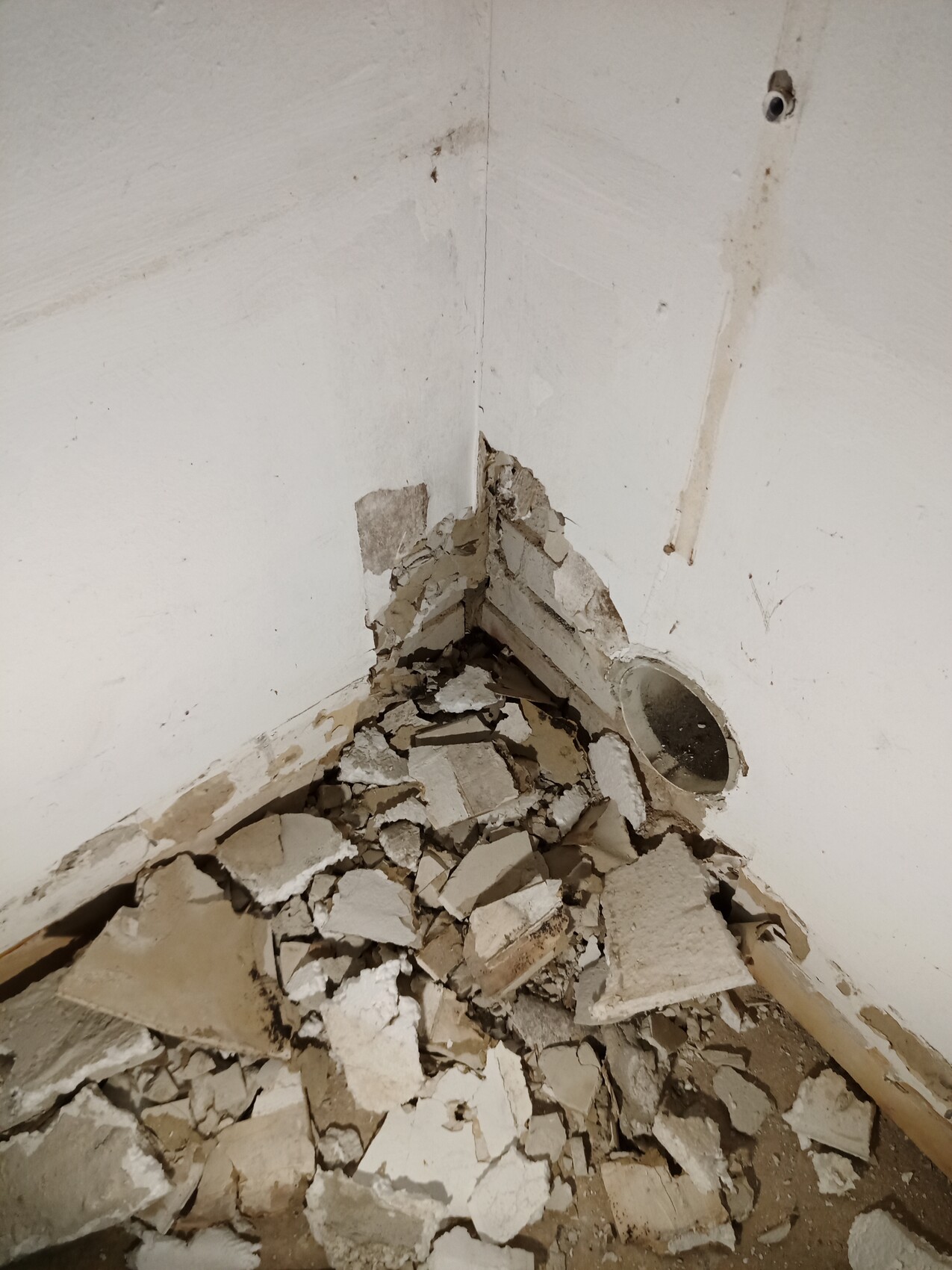
CORNER 1 - without mold
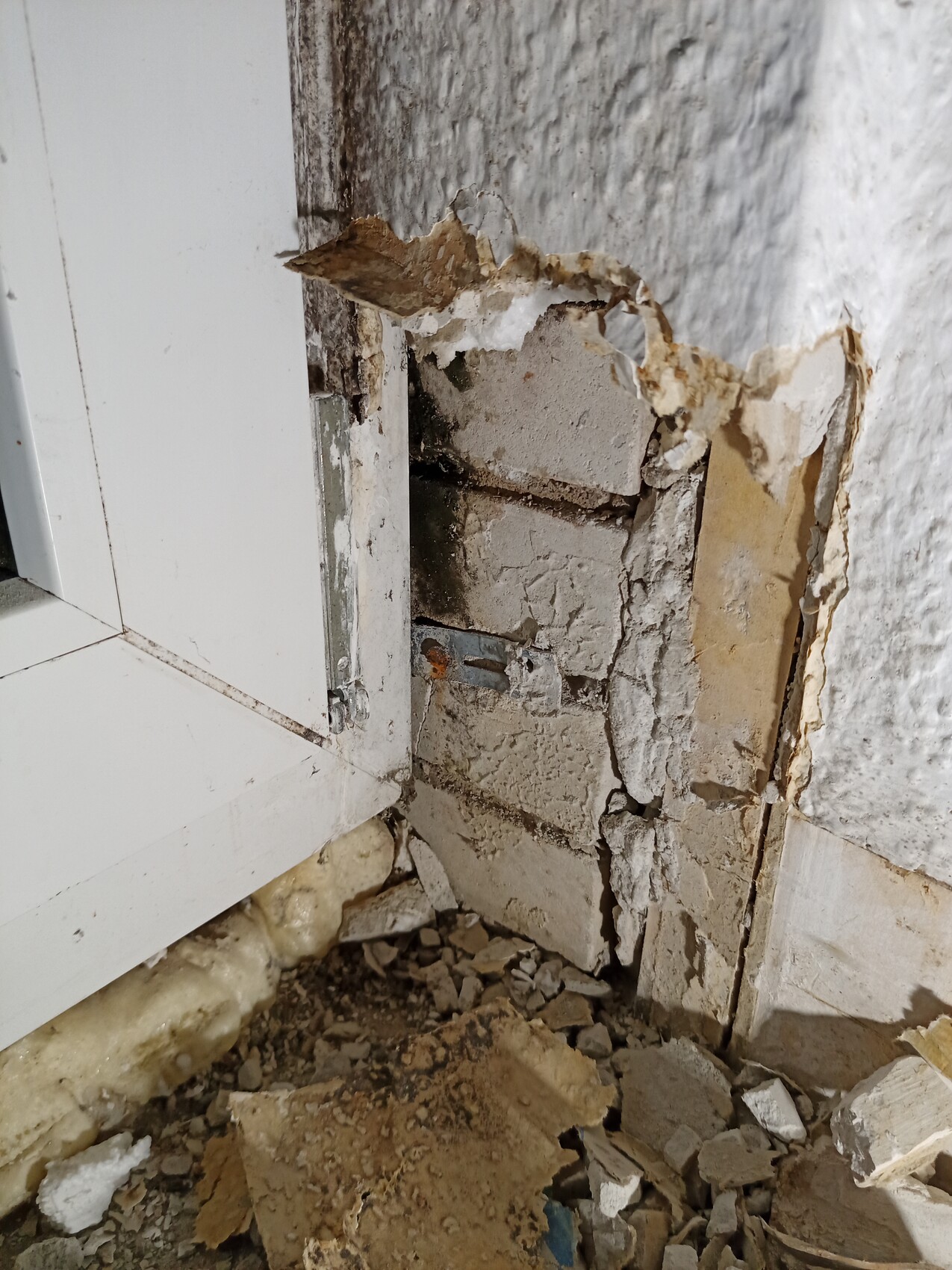
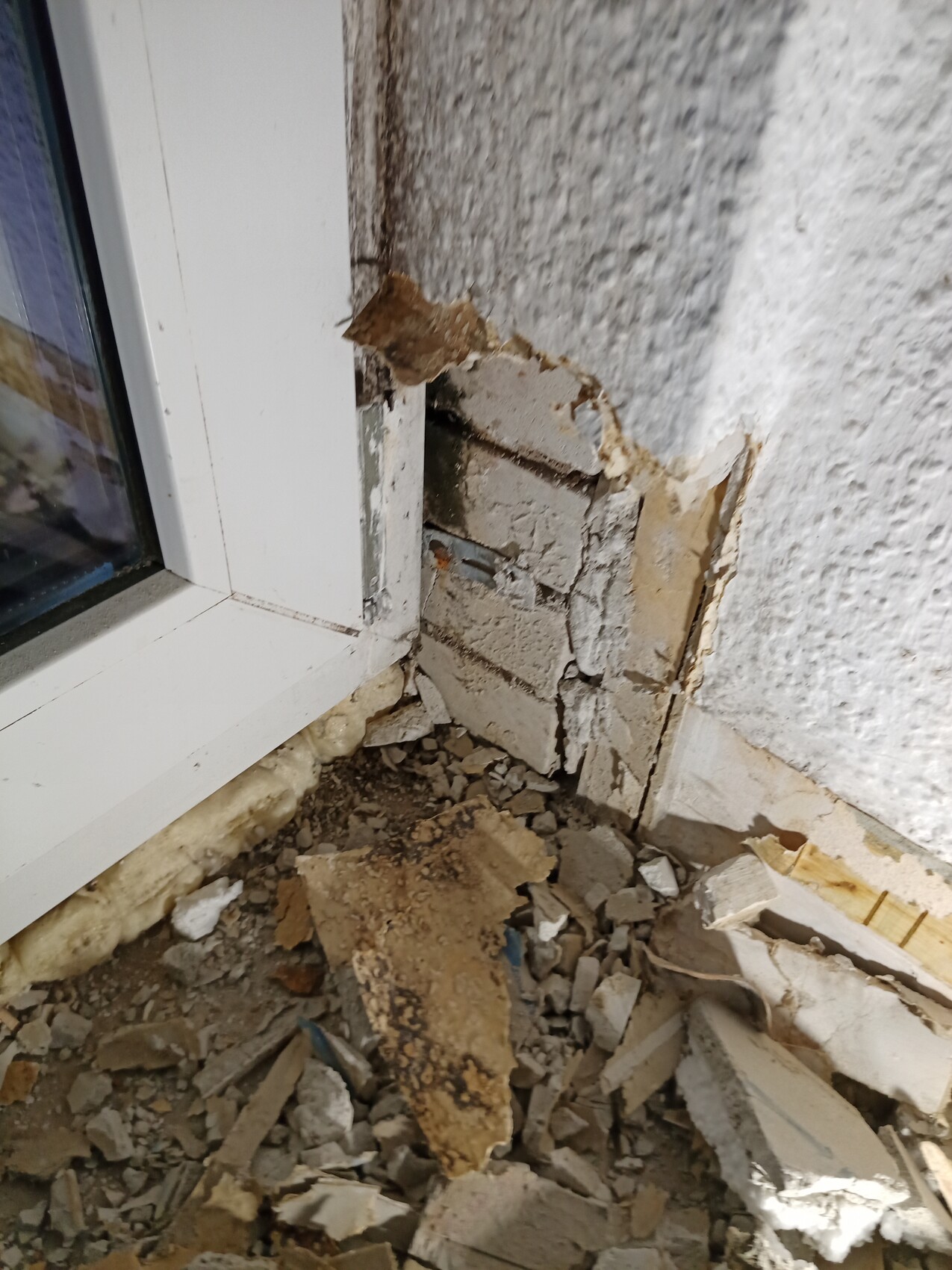
CORNER 2 - with mold
CORNER 3 - with mold
____________
Is it possible to give an assessment from a distance or based on the pictures?
Best regards and thanks for your support
I have the opportunity to take over a house (2 floors + attic - small vaulted cellar) that is built partially (1/6) into a hillside.
Renovation has already been partly started (floor, including screed, removed), and new double-glazed "good quality" windows were installed in the 2000s. The house itself dates from the 1970s and the foundation walls are built with 24cm (9.5 inches) clinker bricks. Furthermore, the entire interior was insulated with approximately 3.5cm (1.4 inches) of polystyrene foam, finished with drywall.
In some places where cupboards were located, as well as in the areas between the windows and the foundation bricks on the inside, mold is present. This is certainly partly due to insufficient ventilation by the previous owners.
To check how the insulation behaves against the masonry, I have exposed the insulation at about 10 spots in the house (finding slight mold in 2 locations) in the corners where exterior walls are located, near the lower parts of the rooms. It mostly appears that the mold is limited to the visible interior surfaces and has not spread further outward.
Still, I am not entirely sure whether this is really "harmless" and whether it is okay to leave the drywall etc. in place and just remove or treat the wallpaper.
That is why I took some photos, hoping to get advice on how to assess the mold situation.
CORNER 1 - without mold
CORNER 2 - with mold
CORNER 3 - with mold
____________
Is it possible to give an assessment from a distance or based on the pictures?
Best regards and thanks for your support
L
LisasTräume5 May 2022 09:12In my opinion, this is not mold. The wall is dry and appears healthy. Obviously, you haven't seen mold before.
Any potential mold contamination can be measured, however.
The gray-black area under the wallpaper is usually wallpaper adhesive. It simply changes color over the years. And regarding thermal insulation, the 3cm (1.2 inches) of polystyrene under the drywall don’t really make much of a difference.
Any potential mold contamination can be measured, however.
The gray-black area under the wallpaper is usually wallpaper adhesive. It simply changes color over the years. And regarding thermal insulation, the 3cm (1.2 inches) of polystyrene under the drywall don’t really make much of a difference.
I’m not sure if this is helpful, but here’s my experience with interior insulation:
We also had expanded polystyrene insulation, and in one room, there was mold under the wallpaper near the base of the wall. Since the seller of our house messed up most of what he handled, we removed everything on the ground floor. Surprisingly, hardly any mold appeared after that. Maybe it wouldn’t have been necessary? Perhaps we would have only had problems in 5, 10, or 15 years (the interior insulation was installed in 2016)?
On the first floor, we have the same wall structure and are actually considering not tackling that construction right after finishing the ground floor (we live on the first floor and are renovating the ground floor, so doing both at the same time isn’t possible). Instead, we want to enjoy a house with less construction dust for a while. But I’m absolutely against the expanded polystyrene with drywall solution, especially since in our case it wasn’t applied fully across the surface but only spot-glued in lumps.
On the ground floor, we have started using pure lime plaster (with lightweight aggregate insulation plaster containing expanded glass on the exterior walls). I’m curious if we will notice any difference in room climate or comfort when comparing upstairs and downstairs. This will likely influence the decision about whether or not to start the second renovation on the first floor soon. But it’s clear that it will be done eventually.
The bricks in your photos look really good, so I wouldn’t be immediately discouraged. What kind of heating are you planning? If the screed is already removed, it could be underfloor heating, right? In that case, it would definitely be beneficial if the house is well insulated.
Just discovered the neighboring thread—have you seen it yet?
https://www.hausbau-forum.de/threads/innendaemmung-styropor-schimmelbildung.43330/#post-574179
We also had expanded polystyrene insulation, and in one room, there was mold under the wallpaper near the base of the wall. Since the seller of our house messed up most of what he handled, we removed everything on the ground floor. Surprisingly, hardly any mold appeared after that. Maybe it wouldn’t have been necessary? Perhaps we would have only had problems in 5, 10, or 15 years (the interior insulation was installed in 2016)?
On the first floor, we have the same wall structure and are actually considering not tackling that construction right after finishing the ground floor (we live on the first floor and are renovating the ground floor, so doing both at the same time isn’t possible). Instead, we want to enjoy a house with less construction dust for a while. But I’m absolutely against the expanded polystyrene with drywall solution, especially since in our case it wasn’t applied fully across the surface but only spot-glued in lumps.
On the ground floor, we have started using pure lime plaster (with lightweight aggregate insulation plaster containing expanded glass on the exterior walls). I’m curious if we will notice any difference in room climate or comfort when comparing upstairs and downstairs. This will likely influence the decision about whether or not to start the second renovation on the first floor soon. But it’s clear that it will be done eventually.
The bricks in your photos look really good, so I wouldn’t be immediately discouraged. What kind of heating are you planning? If the screed is already removed, it could be underfloor heating, right? In that case, it would definitely be beneficial if the house is well insulated.
Just discovered the neighboring thread—have you seen it yet?
https://www.hausbau-forum.de/threads/innendaemmung-styropor-schimmelbildung.43330/#post-574179
Besenkammer84 schrieb:
Thank you for your crystal ball prediction.
What would be proper professional measures, for example? What kind of actions might those be? Repainting? Mold remover? Or what is usually done or meant here?
..I just want to avoid doing extensive interior work only to find out afterwards that it is mold, which is harmful to health. I don't want to fully insulate the exterior facade because of the genuine exposed brick. Replacing the windows would also be necessary, which would go beyond the budget.
Regards & thanks in advance I don’t see any critical mold here; it looks different.
With 3 cm (1 inch) of expanded polystyrene interior insulation, drywall panels, and textured wallpaper… I would remove all of that and rebuild properly if you are planning interior renovations anyway (water, electrical?).
Your wall construction is probably from the 1970s (if before 1978) with likely 11.5 or 17.5 cm (4.5 or 7 inches) calcium silicate bricks (as seen in the photos), cement mortar in a sharp mix (about 1 cm (0.4 inch)), and brick as a facing layer. This was a common economical building method at the time. The 3 cm (1 inch) of polystyrene may have been installed either during initial construction or later, but it looks like it was put in during the build.
I would not recommend exterior insulation on brick facades.
The 3 cm (1 inch) interior insulation under drywall is unfortunately the cheapest and most amateurish construction possible. It offers limited effect because it’s just 3 cm, is probably building-physics flawed since it lacks a vapor barrier and has many penetrations (sockets, switches, etc.), and is unfavorable for indoor climate because the wall’s thermal mass is no longer available as a heat buffer.
I would suggest removing everything except the calcium silicate bricks and then rebuilding. You can use capillary-active, vapor-permeable insulation materials applied as boards to the wall. Wood fiber insulation boards or hemp boards are good options here. This also allows you to re-route plumbing, heating, and electrical lines in advance—for example, mounting sockets directly on the calcium silicate brick with 60 mm (2.4 inches) wood fiber boards over them. With thicker insulation, just route cables and then use suitable wood fiber boxes. Be sure to close radiator niches flush.
No mold risk, warm home, ecologically safe, and better indoor climate due to the high specific heat capacity of wood fiber. For plaster and paint, make sure to use vapor-permeable materials such as lime or clay plaster and lime, clay, or silicate paint.
The building energy regulation does not require a minimum thickness for this type of insulation, unlike others. Thicknesses of 6–8 cm (2.4–3 inches) already achieve a U-value below 0.5, and 10 cm (4 inches) can reach 0.3. Anything beyond that strongly reduces living space.
The only thing that needs checking is the joints on the weather-exposed side of the outer wall. They should be in good condition and renewed if necessary. Due to the cold exterior walls, moisture cannot dry out as well here, so allowing driving rain to penetrate must be avoided.
Similar topics