

Hello everyone. We want to add an extension with a dining room and living room to our house. Due to the slope of the land, we cannot avoid having a basement. Since the basement will be "freestanding," we are considering using it as a bedroom or similar. What have we overlooked in our plans?
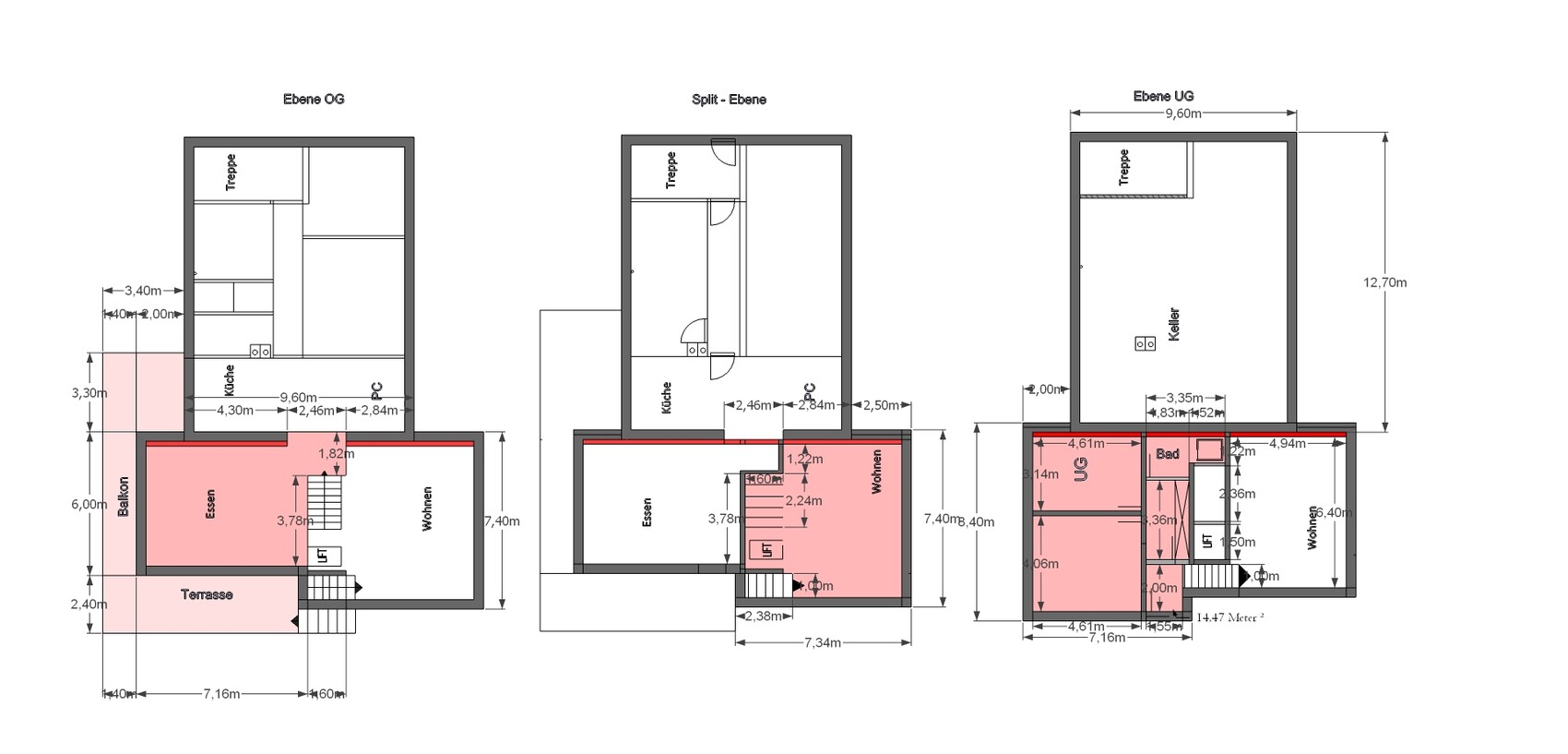
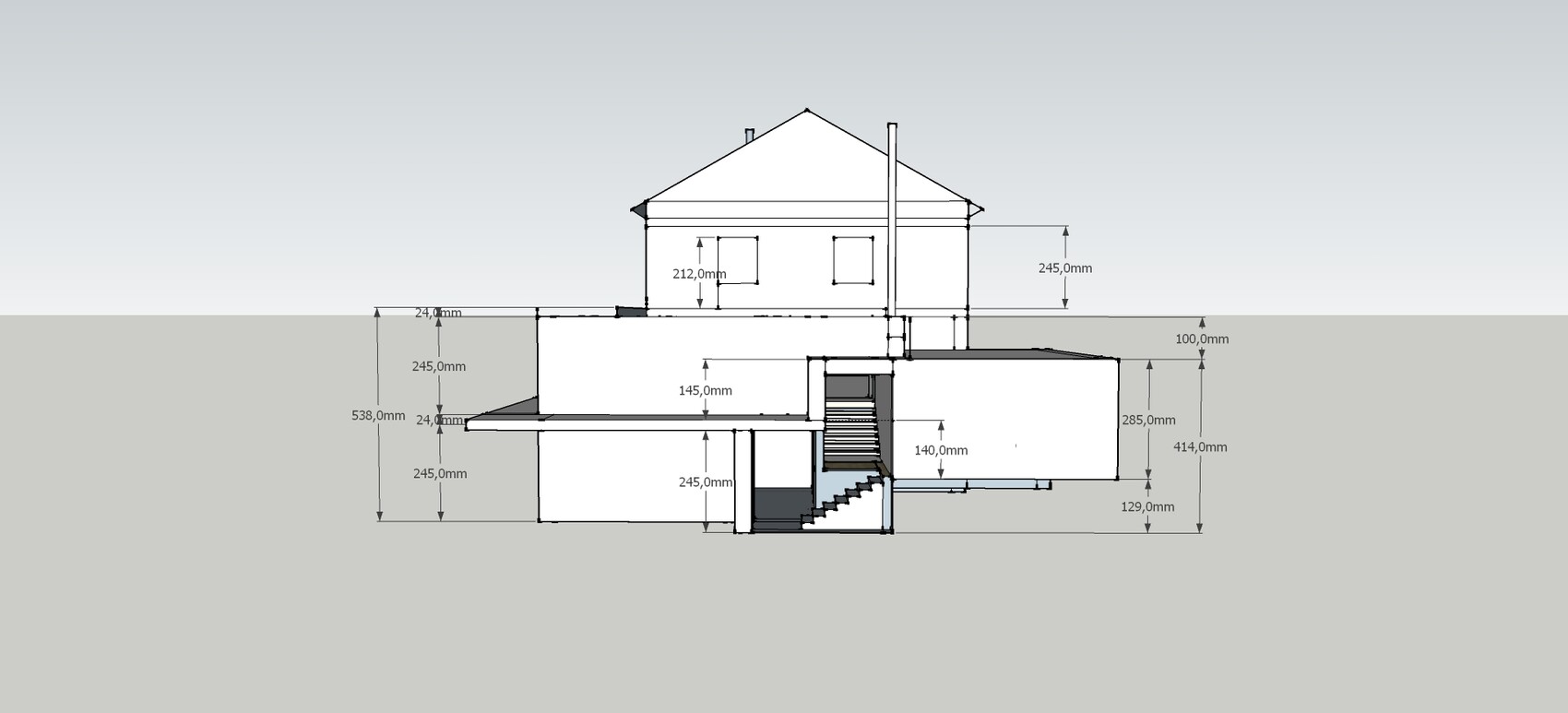
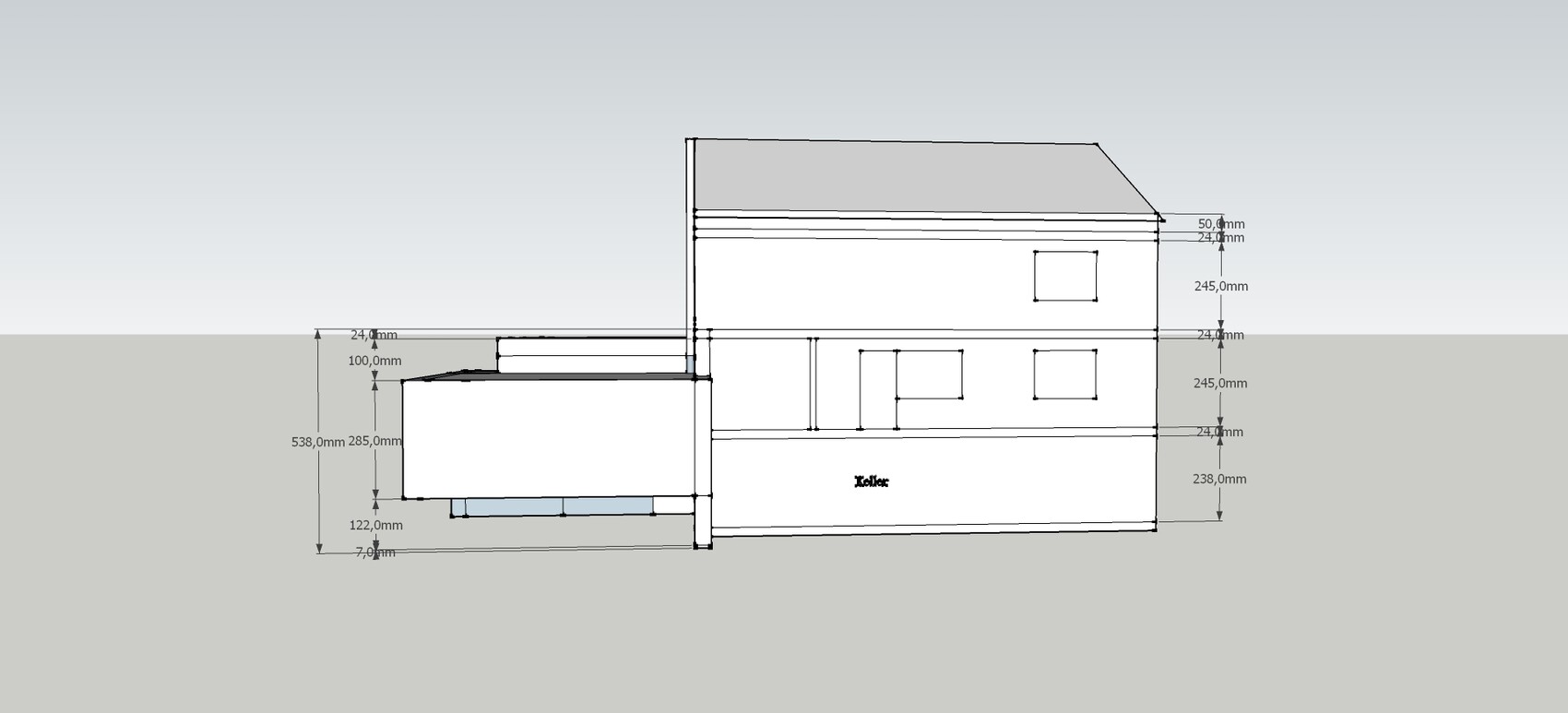
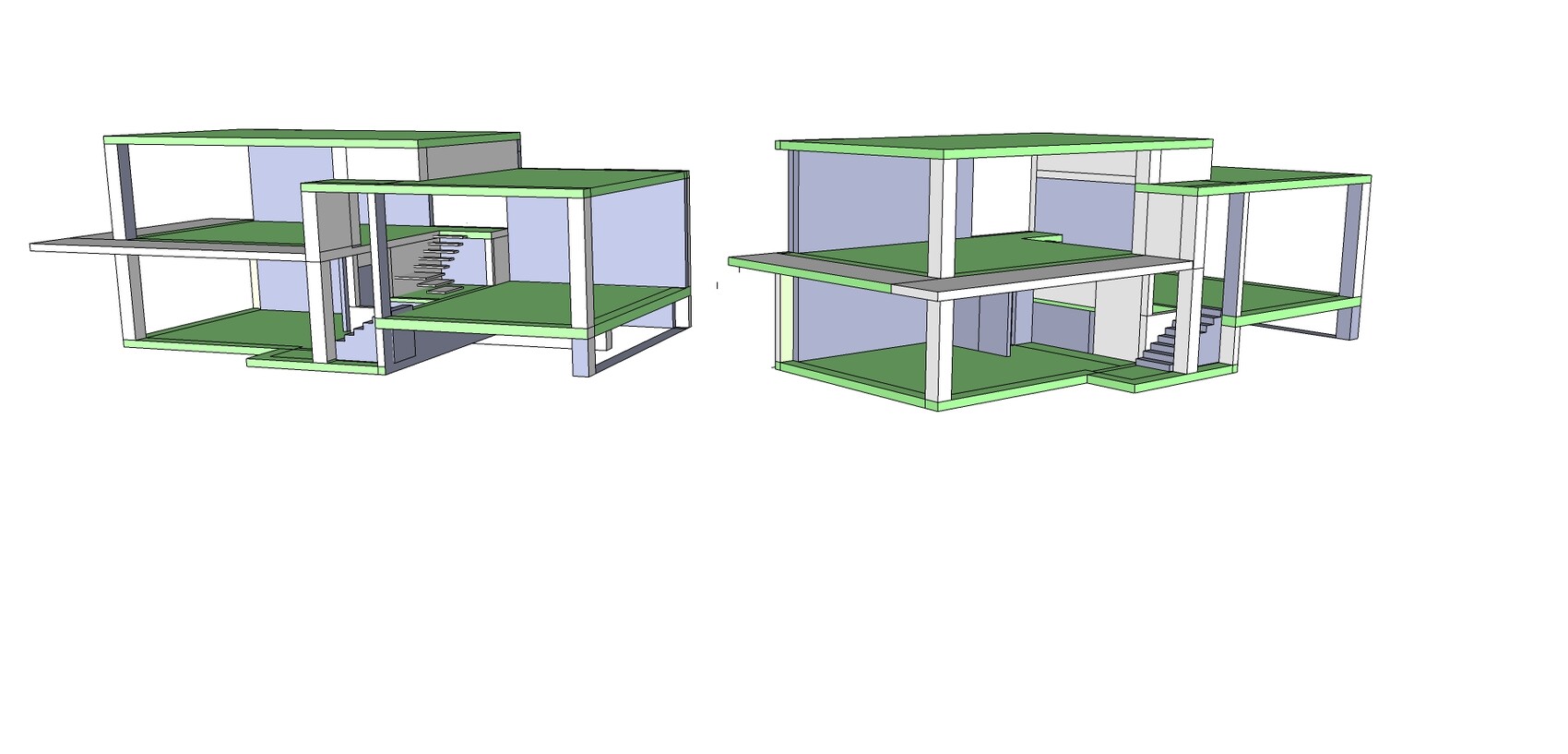
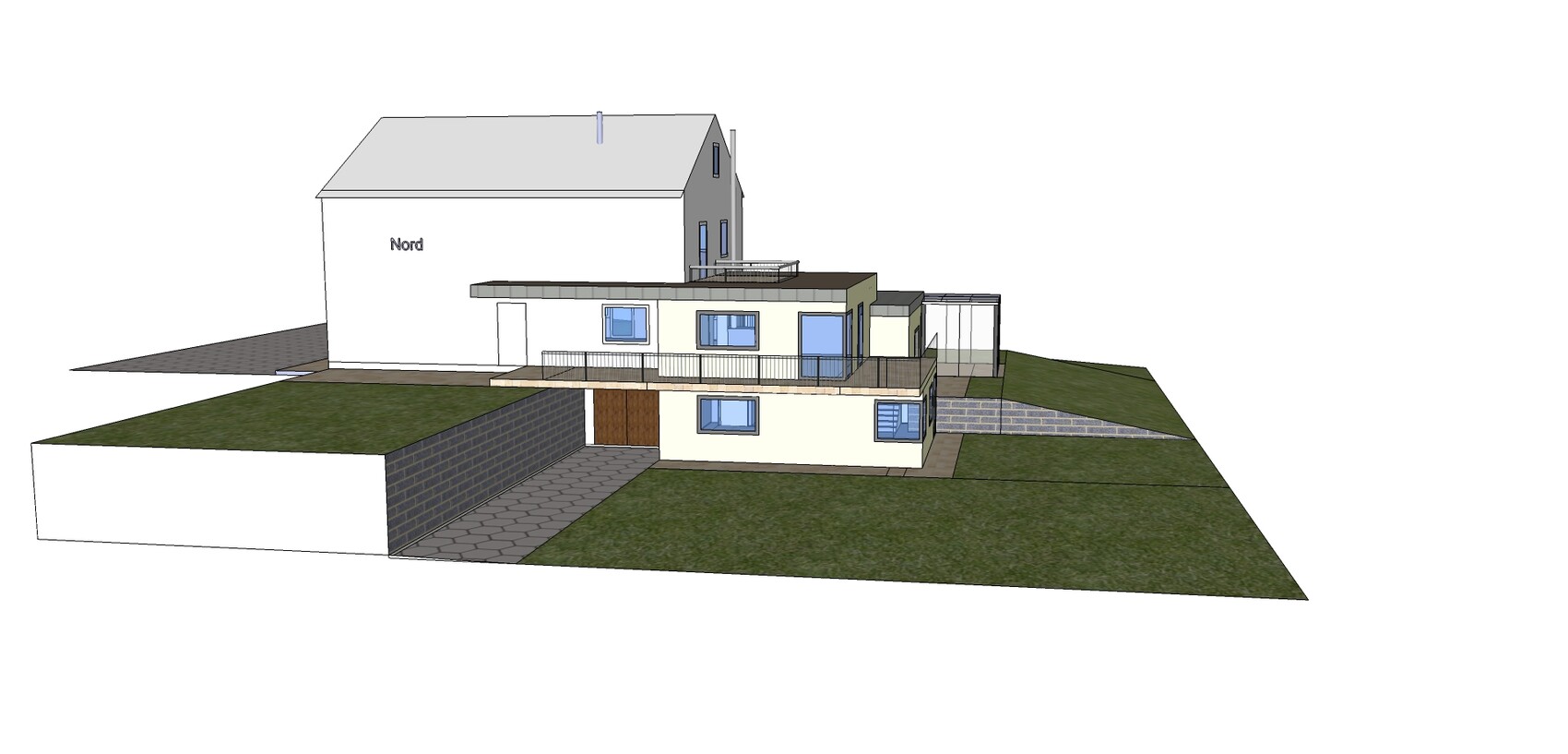
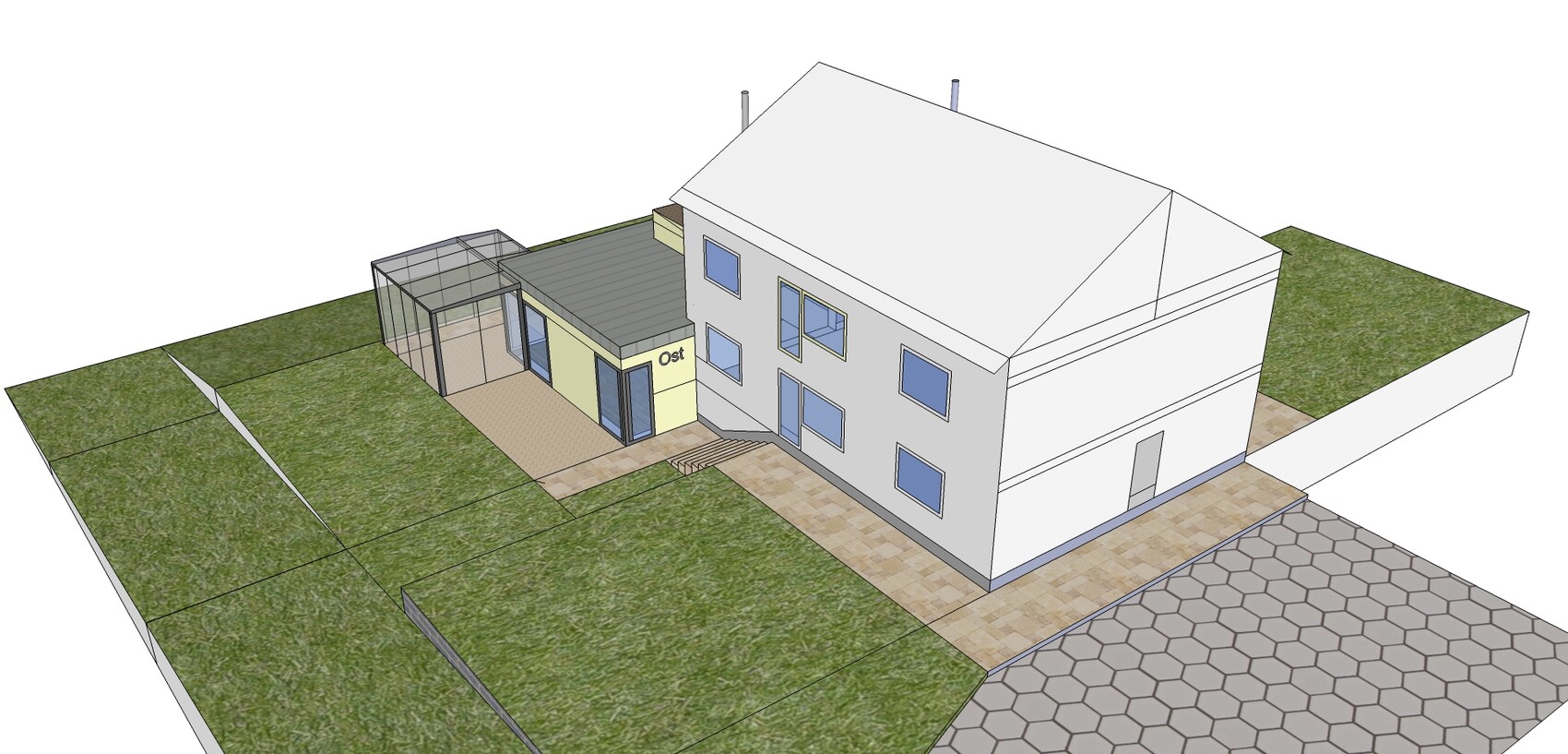

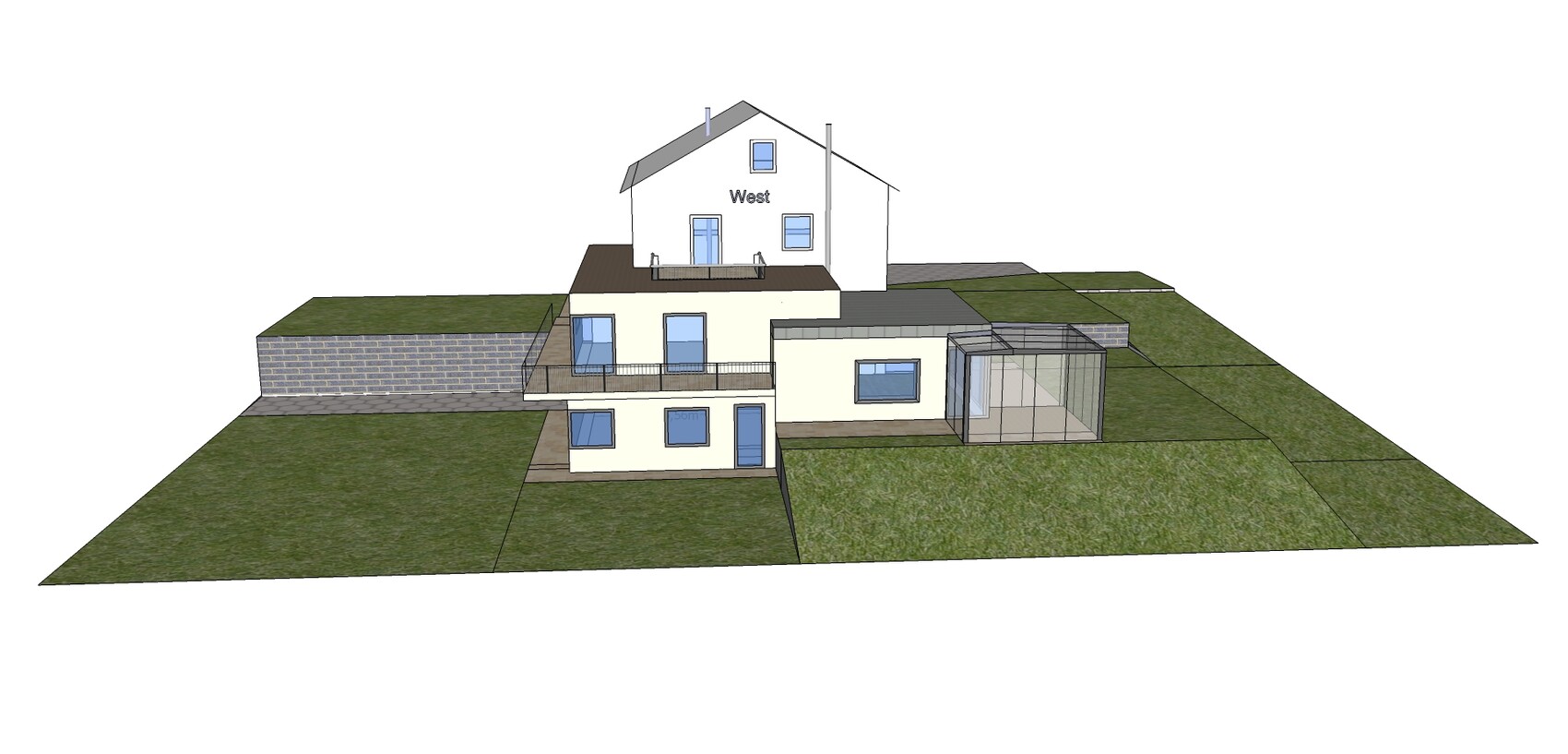
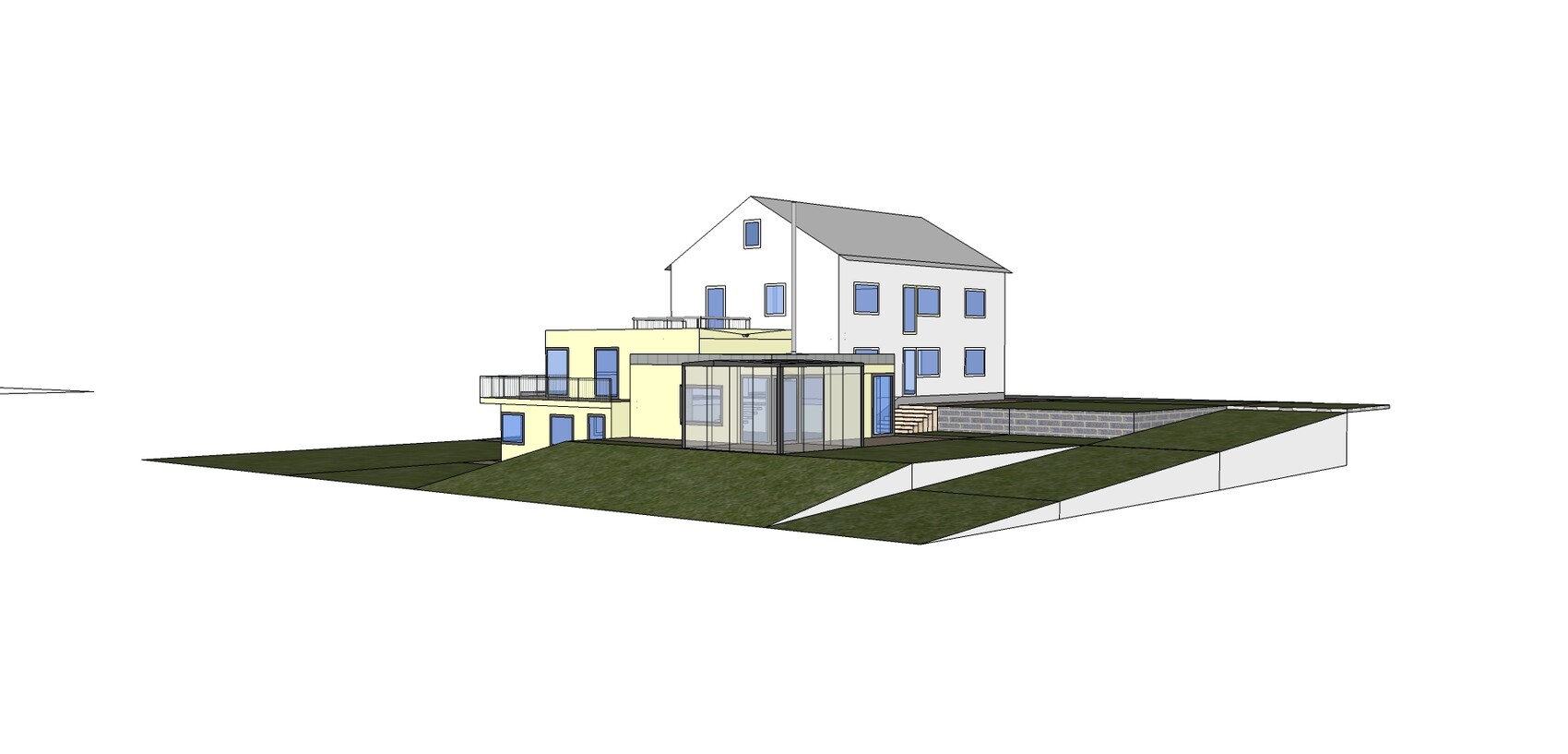

For us, it was important to have level access from the new living room to the garden, which is why the living room floor is lowered. A basement beneath the living room is therefore not possible and also not necessary.
A seamless transition from the existing building to the new construction was also desired. For the living room, we have a ceiling height limitation due to an electrical line above (5m (16.4 ft) clearance), which has been fully utilized with this design. The living room height should be 3m (9.8 ft). This resulted in the split-level concept.
From the upper floor of the existing building, a roof terrace should be accessible, so the dining room height had to be adjusted to approximate the existing floor ceiling level. (Flat roof insulation approximately 15–25 cm (6–10 inches))
Without the basement, we would have needed a substantial amount of fill, which would have required significant foundation work or posed a risk of settling. We decided on the basement with a terrace and balcony, which also provides direct access to the north garden.
A seamless transition from the existing building to the new construction was also desired. For the living room, we have a ceiling height limitation due to an electrical line above (5m (16.4 ft) clearance), which has been fully utilized with this design. The living room height should be 3m (9.8 ft). This resulted in the split-level concept.
From the upper floor of the existing building, a roof terrace should be accessible, so the dining room height had to be adjusted to approximate the existing floor ceiling level. (Flat roof insulation approximately 15–25 cm (6–10 inches))
Without the basement, we would have needed a substantial amount of fill, which would have required significant foundation work or posed a risk of settling. We decided on the basement with a terrace and balcony, which also provides direct access to the north garden.
Ok, now I’m reviewing the plan. I found the term "OG" a bit confusing. OG in the plan currently refers to your ground floor, right? And the dining area is supposed to be located at that level, below it, in the basement, bedrooms are planned, and the living room is in between, at a halfway level. Above the dining area there is a roof terrace for the existing upper floor (here I’m really curious why not use the entire roof area as a terrace?).
Now I get it!
Cleverly done!
I might also consider removing the wall between the dining area and kitchen and creating a (half) island solution for the kitchen here. Or is a new kitchen not planned?
Now I get it!
Cleverly done!
I might also consider removing the wall between the dining area and kitchen and creating a (half) island solution for the kitchen here. Or is a new kitchen not planned?
Exactly!
We reduced the size of the roof terrace due to the electrical cable. We might adjust it to the maximum possible size after the shell construction is completed, in coordination with the utility company.
We wanted to keep the kitchen as it is. We are still considering installing a combined wood stove (one side for cooking, the other for heating) between the kitchen and dining room. The challenge would be the flue pipe, which would need to run approximately 3m (10 feet) horizontally through the kitchen to the chimney.
We reduced the size of the roof terrace due to the electrical cable. We might adjust it to the maximum possible size after the shell construction is completed, in coordination with the utility company.
We wanted to keep the kitchen as it is. We are still considering installing a combined wood stove (one side for cooking, the other for heating) between the kitchen and dining room. The challenge would be the flue pipe, which would need to run approximately 3m (10 feet) horizontally through the kitchen to the chimney.
Similar topics