
ᐅ Utility Connection: Telecom Company Refuses to Penetrate Watertight Concrete Structure
Created on: 6 Nov 2018 08:34
T
trapjaw
Hello,
we are currently in the middle of building our house (basement: waterproof concrete) and have already requested the application documents from the telecom provider for the house connection.
Summary: The telecom provider does not want to carry out a gas- and water-tight house entry seal, including sealing the cables they install where they enter the house — this responsibility is expected to be handled by the homeowner.
When we asked our site manager, he explicitly advised against us doing this ourselves (or having it done), as we would otherwise be liable for the connection. Based on experience in our building region, the telecom provider usually makes this difficult, but in this case, they want to "be firm."
The problem now is that despite multiple phone inquiries, the telecom company continues to refuse, and we are going in circles.
We are now considering submitting the application anyway and then trying to "resolve" the situation on site with the contractor or through our site manager. The application itself does not mention this issue, but it is addressed in the cover letter and in the "important notes regarding the house connection."
Does anyone have experience with this matter?
we are currently in the middle of building our house (basement: waterproof concrete) and have already requested the application documents from the telecom provider for the house connection.
Summary: The telecom provider does not want to carry out a gas- and water-tight house entry seal, including sealing the cables they install where they enter the house — this responsibility is expected to be handled by the homeowner.
When we asked our site manager, he explicitly advised against us doing this ourselves (or having it done), as we would otherwise be liable for the connection. Based on experience in our building region, the telecom provider usually makes this difficult, but in this case, they want to "be firm."
The problem now is that despite multiple phone inquiries, the telecom company continues to refuse, and we are going in circles.
We are now considering submitting the application anyway and then trying to "resolve" the situation on site with the contractor or through our site manager. The application itself does not mention this issue, but it is addressed in the cover letter and in the "important notes regarding the house connection."
Does anyone have experience with this matter?
M
Mottenhausen6 Nov 2018 09:59trapjaw schrieb:
Conclusion: The telecom company does not want to provide a gas- and watertight house entry, including sealing the cables they install against the house entry point – instead, the homeowner is supposed to handle this.Well, why do you think that is...
No one wants to take liability. It is known that later patchwork on the basement waterproofing often causes problems. Water stains or dampness can appear. The telecom company has no interest in getting involved in disputes over who is responsible for repairs.
It is better to have a properly installed, qualified wall penetration during construction, or alternatively, to bring the cables into the house above ground afterward and just leave the basement as a basement.
Correct. Telekom basically never drills a hole in the exterior wall. They simply pull their cable (or have it laid at the same time by the civil engineer who digs the trench for gas, water, and electricity) through the duct planned by the construction company for all utilities to the inside (in our case, it was a few conduit pipes back then). The whole setup is then properly sealed at the end and that’s it.
If no drillings or similar preparations were made, the process will probably take a long time. After all, no one wants to drill into a waterproof concrete shell (“white tank” construction). Most likely, the construction company missed installing the proper connection preparations.
How do gas, water, and electricity enter your house? Did they drill, or were holes prepared for this? Maybe share a picture?
If no drillings or similar preparations were made, the process will probably take a long time. After all, no one wants to drill into a waterproof concrete shell (“white tank” construction). Most likely, the construction company missed installing the proper connection preparations.
How do gas, water, and electricity enter your house? Did they drill, or were holes prepared for this? Maybe share a picture?
Your general contractor and architect messed up. The house entry point must be prepared with a sealed PVC sewer pipe before pouring the basement. Check it out!
The holes from left to right: multi-utility, exhaust controlled residential ventilation, wastewater, air-to-water heat pump, supply air controlled residential ventilation geothermal heat exchanger (green)
Which fools are you letting build your house? A core drill like that is pretty expensive!
It’s not Telekom’s fault.
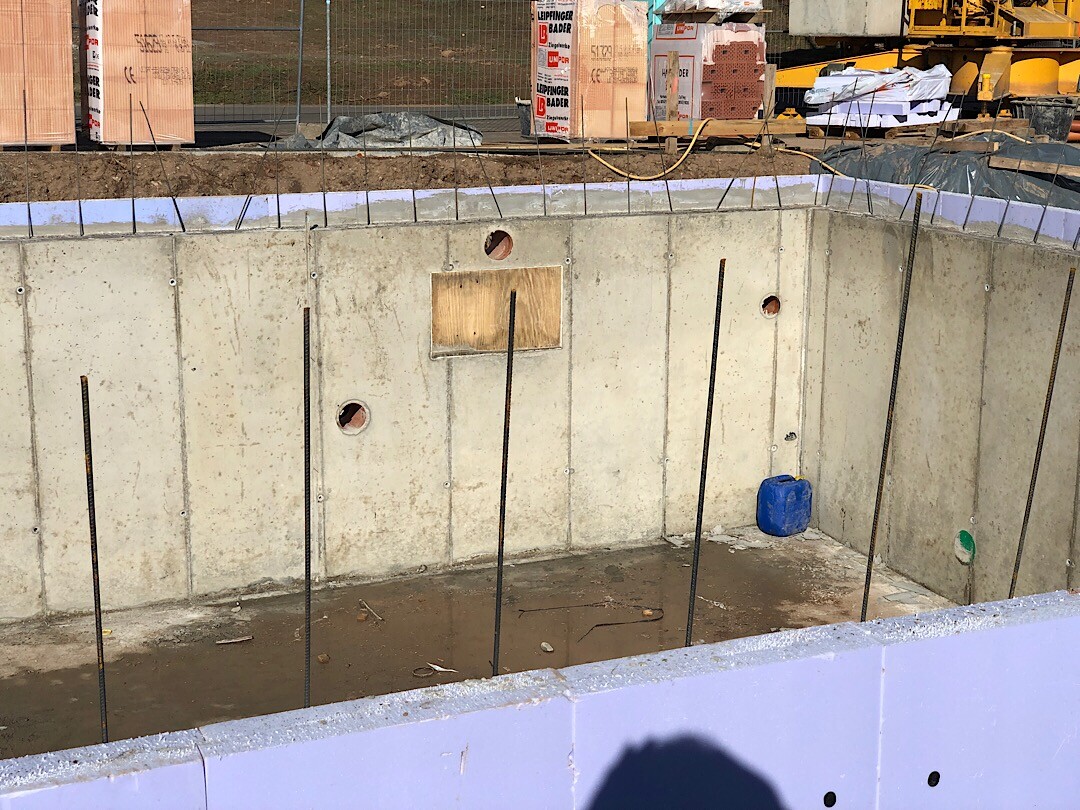
The holes from left to right: multi-utility, exhaust controlled residential ventilation, wastewater, air-to-water heat pump, supply air controlled residential ventilation geothermal heat exchanger (green)
Which fools are you letting build your house? A core drill like that is pretty expensive!
It’s not Telekom’s fault.
seat88 schrieb:
What does the municipality have to do with it?Says the site manager
C
chand19866 Nov 2018 10:33trapjaw schrieb:
Says the site managerThen he should show you where the municipality explicitly forbids it (never heard of that).
M
Mottenhausen6 Nov 2018 10:34As already mentioned: Telecom cables are not sensitive to frost and require a very small cross-section (just one cable). I would enter the house above the foundation slab to avoid many problems.
Inside the house, there is likely a cable duct running from the ground floor to the basement, where the distribution box is to be installed. It could also be placed directly in the hallway, so the Wi-Fi router can be positioned there, saving an extra access point. Of course, this depends on how extensively the Cat7 star cabling is set up, as you generally wouldn’t want something like that in the hallway.
Inside the house, there is likely a cable duct running from the ground floor to the basement, where the distribution box is to be installed. It could also be placed directly in the hallway, so the Wi-Fi router can be positioned there, saving an extra access point. Of course, this depends on how extensively the Cat7 star cabling is set up, as you generally wouldn’t want something like that in the hallway.
Similar topics