
ᐅ Building alignment including or excluding garage on a sloped lot
Created on: 27 Jul 2025 15:35
H
HeinzBosslauch
Hello everyone,
Originally, we planned a solid construction house with an architect. Due to the uncertain market situation and potential cost increases with individual contracts, we have now decided to go with a prefabricated house provider and are therefore switching to timber frame construction. The floor plan remains largely unchanged, but the new construction method requires some adjustments:
The architect planned two or three steps as well as a concrete slab with a raised edge in the outbuilding. The prefabricated house provider rejects this, arguing that both buildings must be at the same level. Direct contact between the exterior wall and the foundation/reinforced concrete wall would lead to moisture and long-term damage. The height difference is small and is better compensated through the foundation.
However, the section shows a critical height offset. Possible solutions would be:
Elevations, sections, and floor plans are attached – I look forward to your feedback!
Thanks in advance!
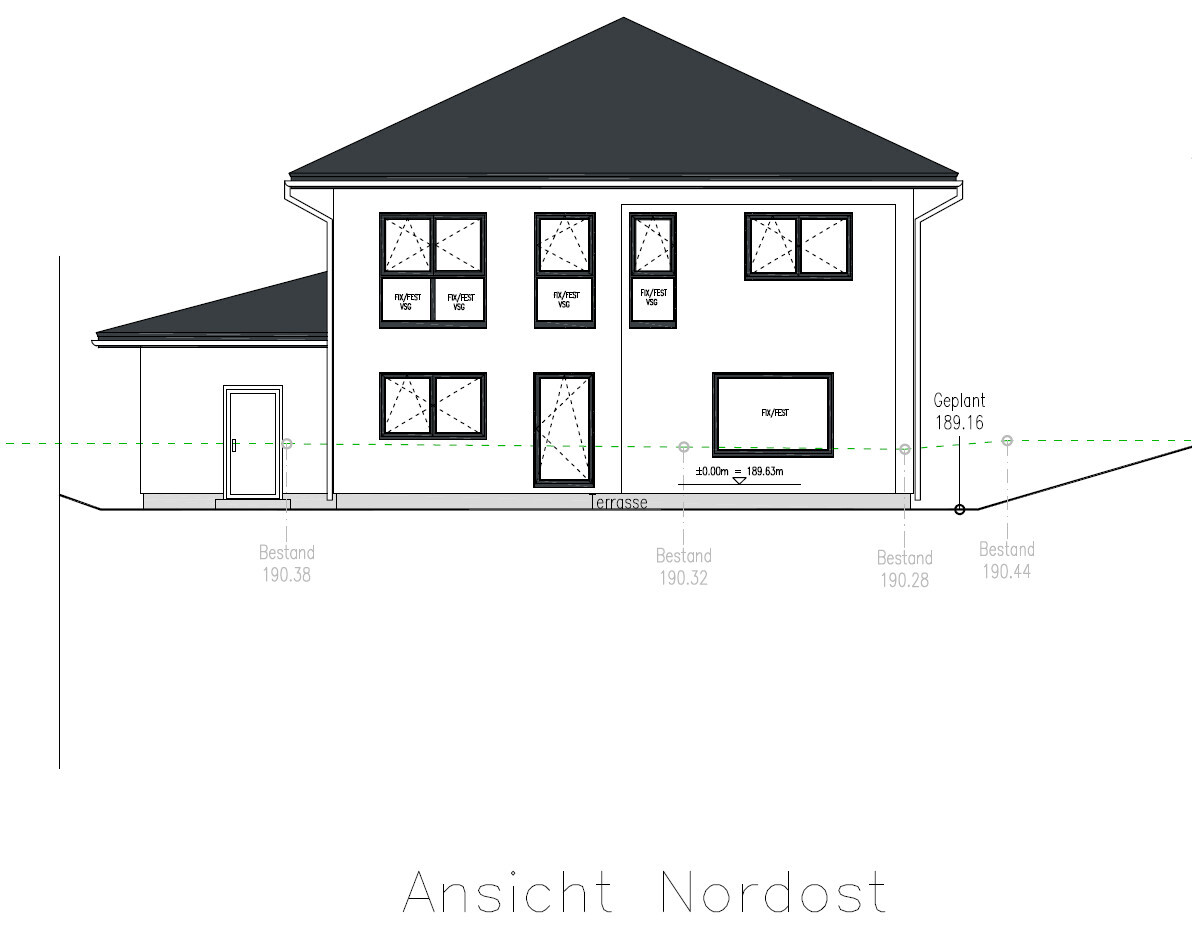
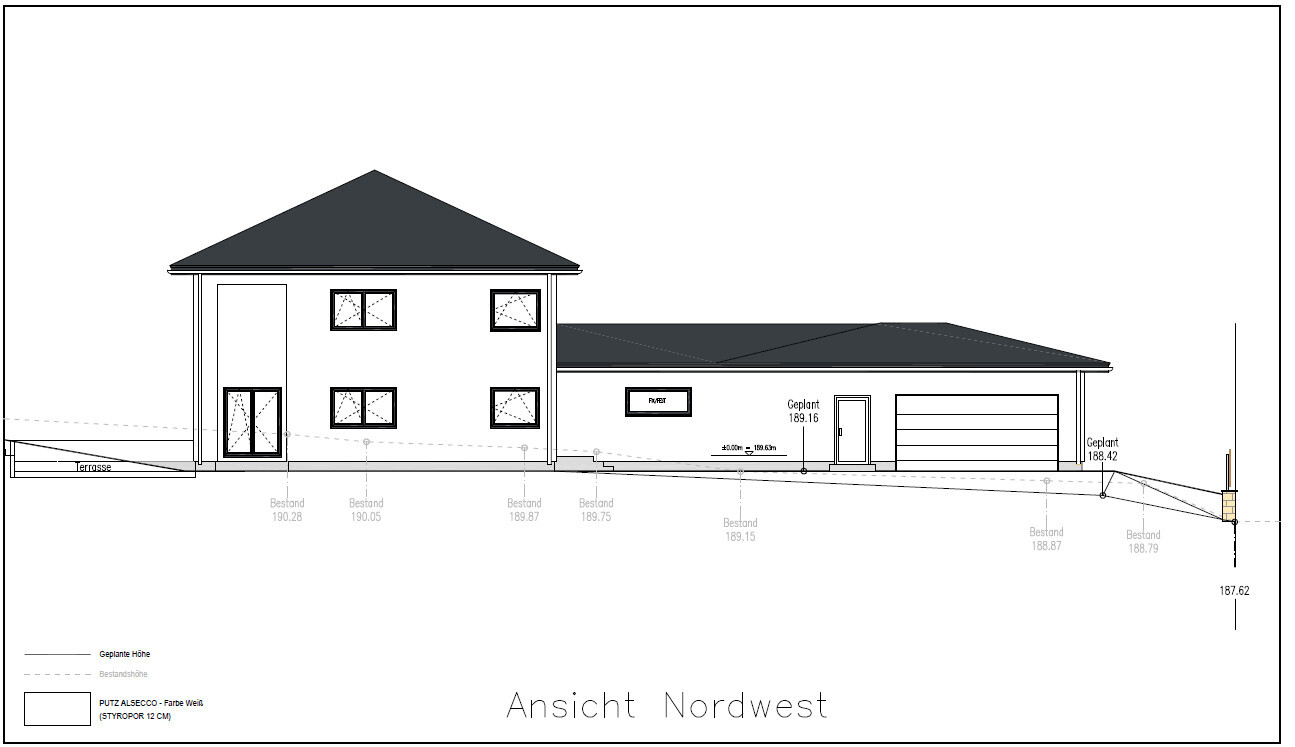
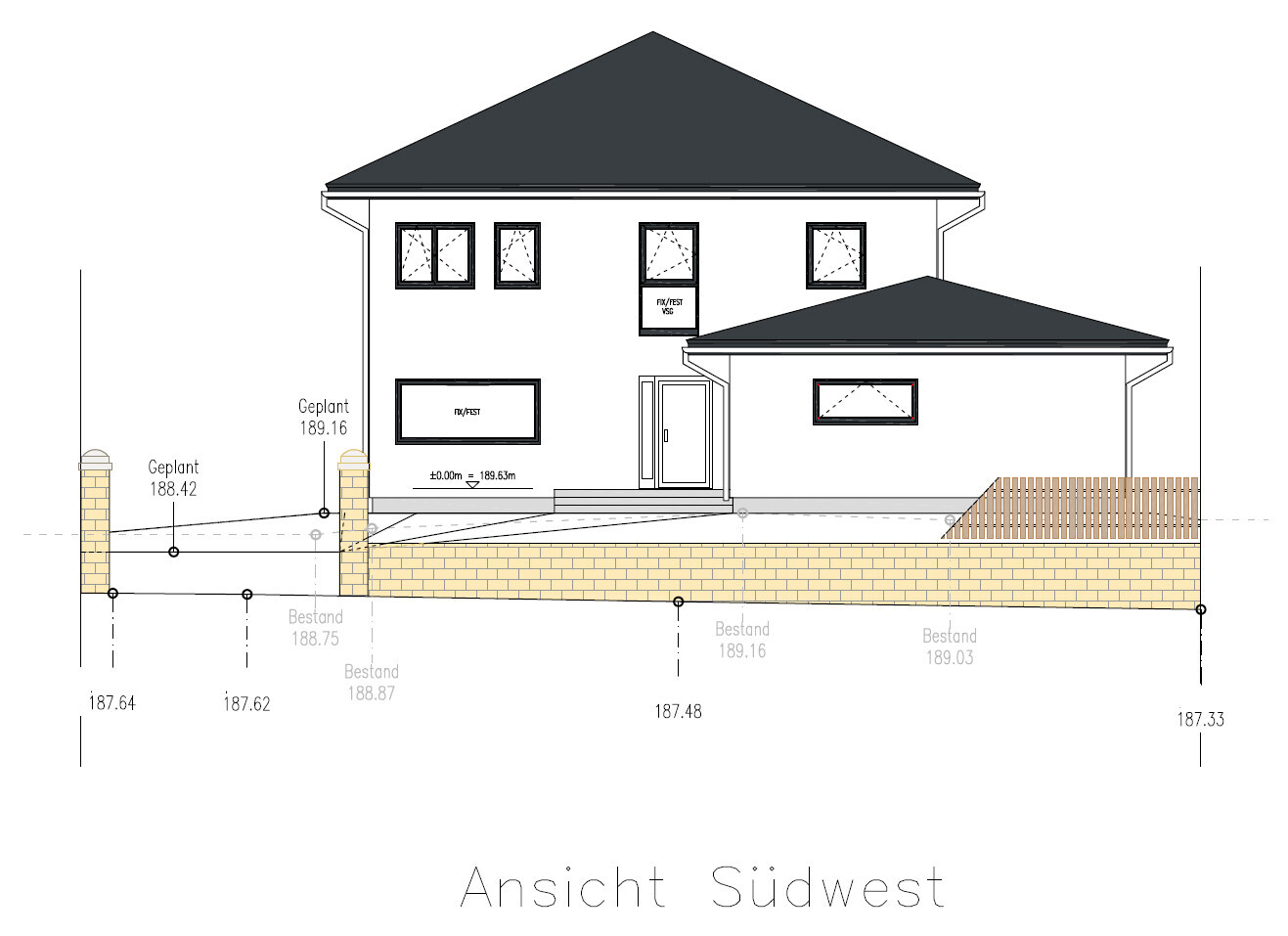
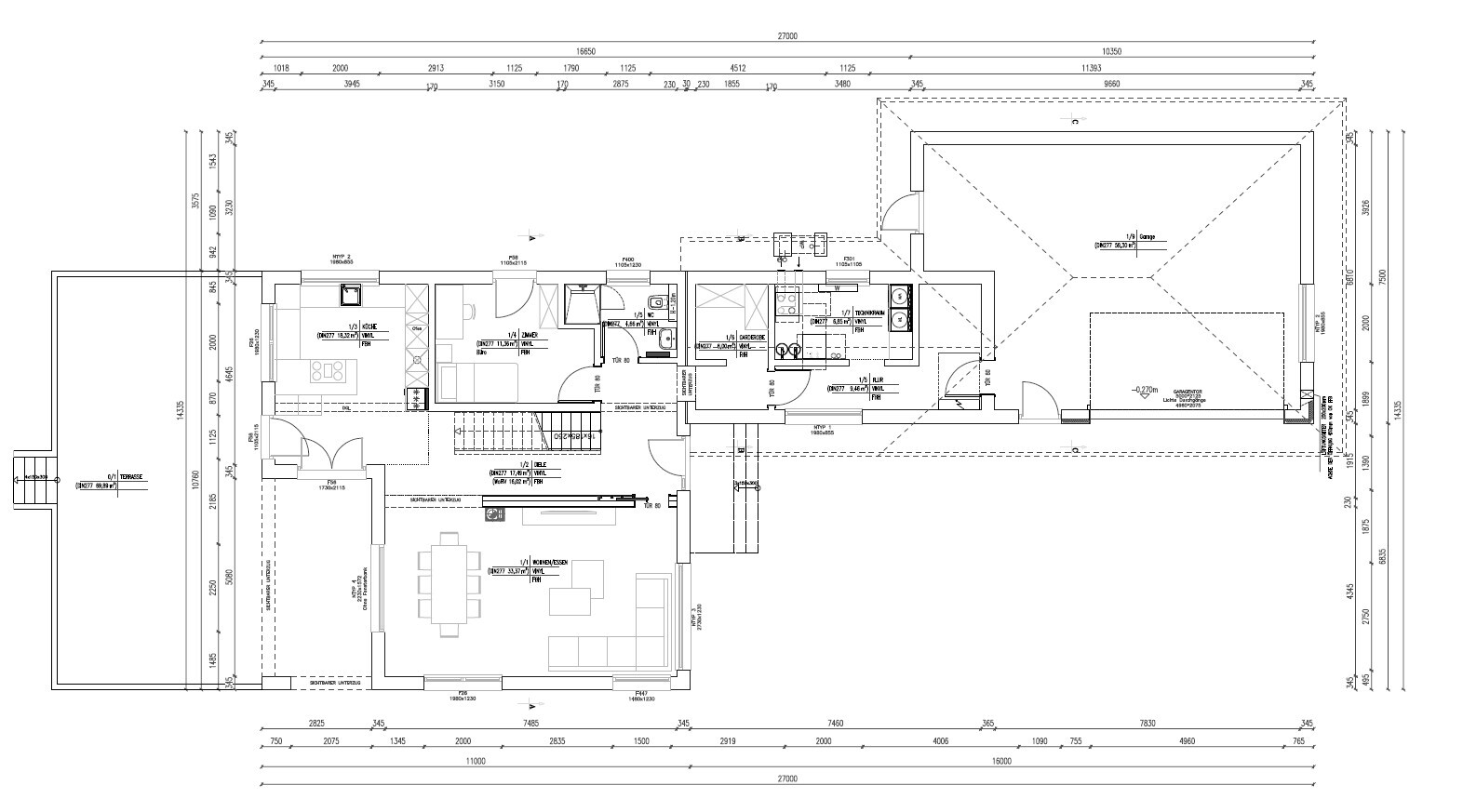
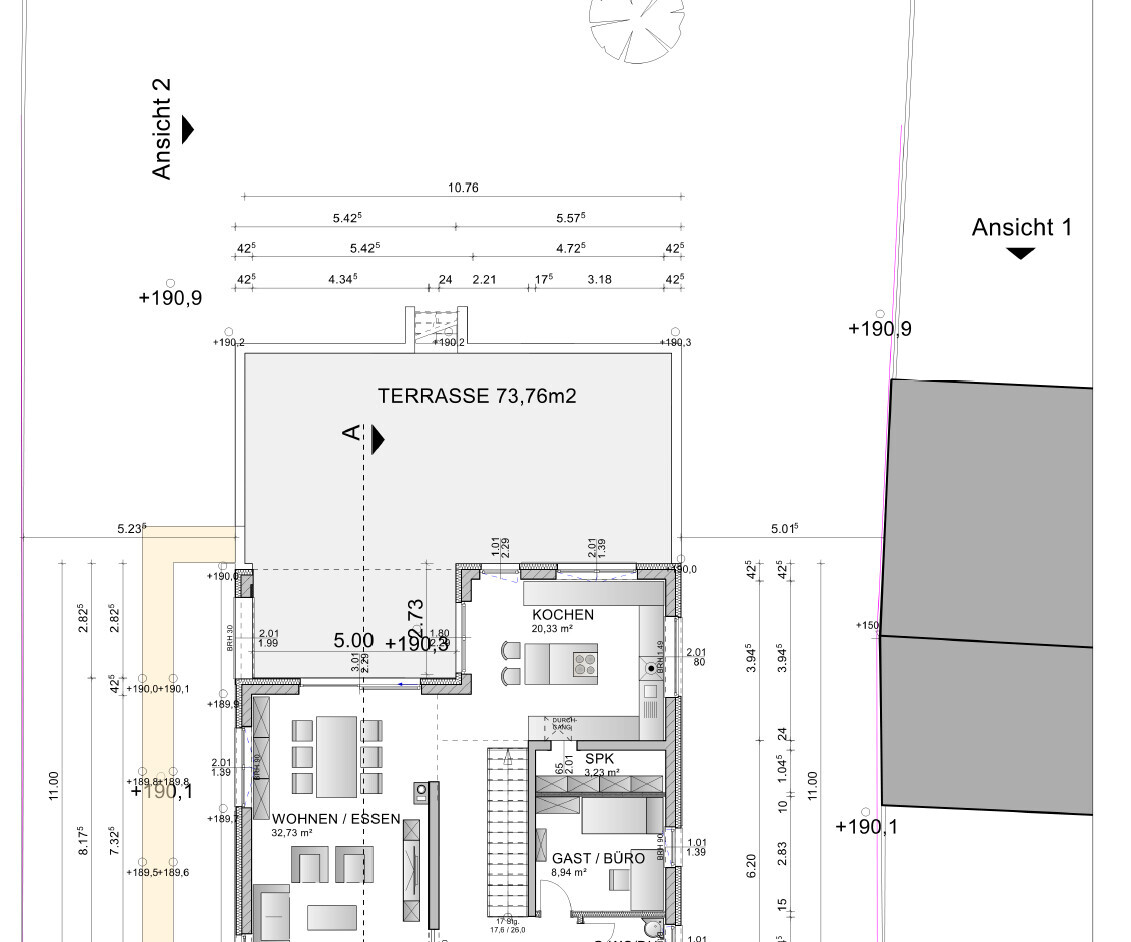
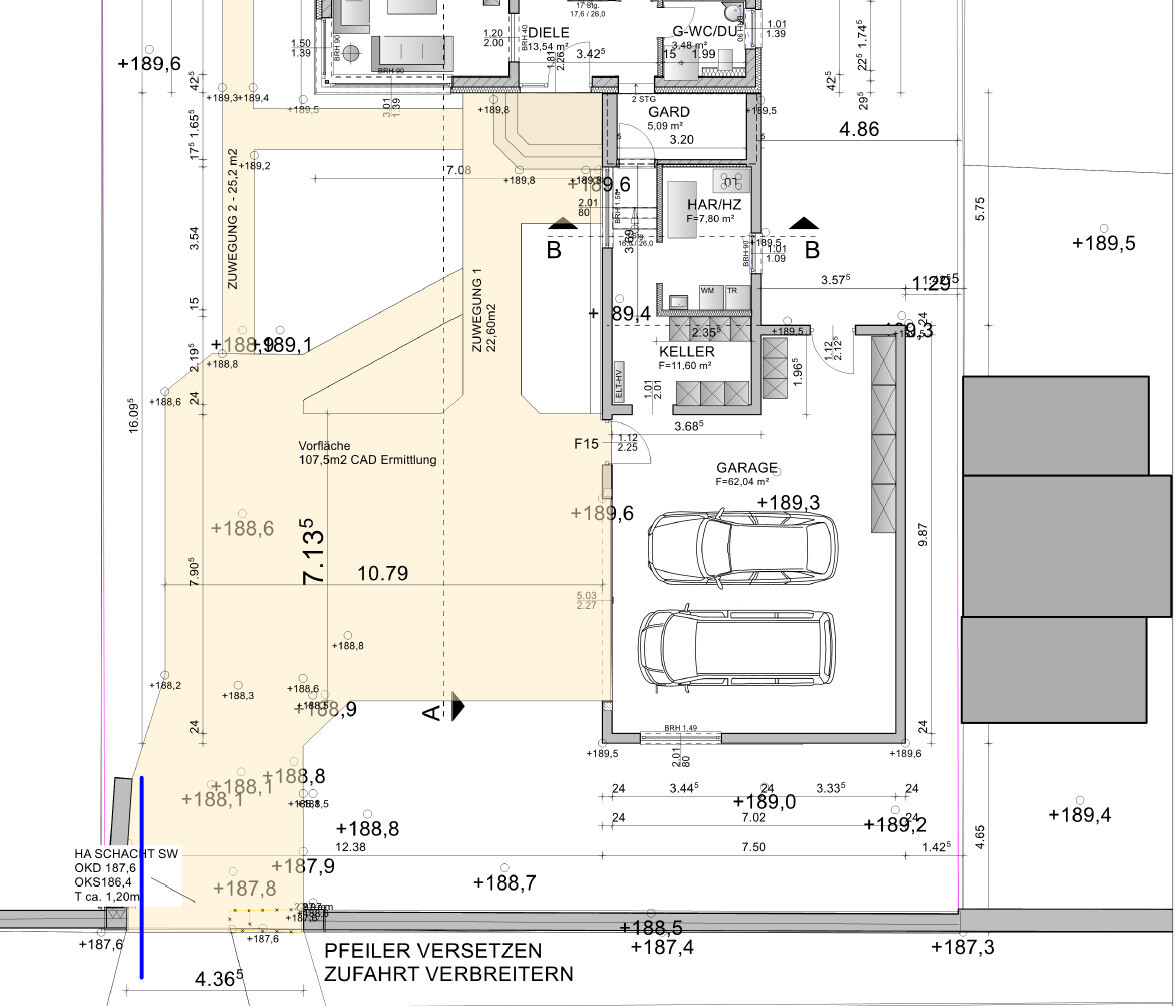
Originally, we planned a solid construction house with an architect. Due to the uncertain market situation and potential cost increases with individual contracts, we have now decided to go with a prefabricated house provider and are therefore switching to timber frame construction. The floor plan remains largely unchanged, but the new construction method requires some adjustments:
The architect planned two or three steps as well as a concrete slab with a raised edge in the outbuilding. The prefabricated house provider rejects this, arguing that both buildings must be at the same level. Direct contact between the exterior wall and the foundation/reinforced concrete wall would lead to moisture and long-term damage. The height difference is small and is better compensated through the foundation.
However, the section shows a critical height offset. Possible solutions would be:
- Lowering the house (possibly with disadvantages for drainage, daylight, and appearance),
- Separating the garage and designing the transition with steps,
- Or leveling the front height already and building the garage higher (steep driveway)
Elevations, sections, and floor plans are attached – I look forward to your feedback!
Thanks in advance!
H
HeinzBosslauch27 Jul 2025 20:17ypg schrieb:
This one probably isn’t relevant here either.
What do you mean by that? Could you explain the disadvantages you mentioned?Hello and thank you for the feedback,
I would like to gather some pros and cons to help me make my decision. Would you accept increased building depth, especially at the terrace, in order to integrate the garage? Or would it be better to separate the garage from the house and have a connecting passage? This connection would have stairs and only be covered. Or maybe someone has another idea.
HeinzBosslauch schrieb:
Disadvantages regarding drainage, daylight, and appearance What kind of disadvantages are you referring to regarding drainage, daylight, and appearance?
I would slope the ground at the edges of the property so that the house has a level area all around, matching the garage’s elevation. From what I can see, the slopes would be less than one meter (about 3 feet), right? You could plant along the edges of the property on a strip about 150cm (5 feet) wide.
As for the garden area, I would create terraces stepping upwards toward the back, but not immediately adjacent to the patio. First, a level at patio height, then one or two platforms, with the highest one planted with trees and shrubs. Apparently, the property extends further back.
In this case, I would match the house height to that of the garage. This also has the advantage of avoiding three steps at the entrance and eliminates trip hazards between the house and the cloakroom/utility area. I’m not sure whether timber frame construction is the right choice for a sloped site and drainage. However, I’m not an expert in that area; my focus is more on floor plan design.

I see the components "house" and "garage" as easily separable here, but due to site conditions, I wouldn’t consider going with a timber frame panel builder. What probably gives them cold feet, quite literally, is the technical requirement that the base frame is recommended to be 15 cm (6 inches) above the ground level, which is difficult to achieve here. You are at the wrong place with a timber builder, but they won’t turn you away—if only because you fell for the myth of the precisely predictable final price of a "turnkey" house. You probably ended up with an architect warned about by "@Gerddieter" (a floor plan sketch artist with a contract scope covering phases 1 to 4). These are indeed a risky type—especially if you approach contractors only with building permit / planning permission drawings. Only then are your fears about runaway costs actually justified. You would have been better off hiring an architect for both halves of the project (phases 1 to 8). This mistake is now hardly fixable without paying a teaching fee almost as high as you feared. The most elegant way to get the situation out of the mud now is to switch to a fixed-price general contractor for masonry construction. This could be a case for an independent building consultant like me—note, only like me, because someone like me is currently not available due to a full appointment schedule. In this case, unfortunately, I cannot recommend a colleague. We could still talk about a little coaching for self-directed searching, but beyond that, nothing before my vacation.
To summarize:
1. Your problem does not lie with the construction method, but with the fixed price.
2. The timber construction general contractor is the wrong provider due to the terrain conditions.
3. The problem can be solved by returning to the only suitable construction method here,
4. but not by individual contracting.
5. You cannot go back to where you took the wrong turn and where I could have helped you excellently, because that would be like jumping out of the frying pan into the fire.
6. Aside from self-help coaching, I cannot currently assist you (specialist’s full appointment calendar problem) nor can I recommend any specific colleagues.
7. So you will have to find a fixed-price general contractor yourself.
https://www.instagram.com/11antgmxde/
https://www.linkedin.com/company/bauen-jetzt/
To summarize:
1. Your problem does not lie with the construction method, but with the fixed price.
2. The timber construction general contractor is the wrong provider due to the terrain conditions.
3. The problem can be solved by returning to the only suitable construction method here,
4. but not by individual contracting.
5. You cannot go back to where you took the wrong turn and where I could have helped you excellently, because that would be like jumping out of the frying pan into the fire.
6. Aside from self-help coaching, I cannot currently assist you (specialist’s full appointment calendar problem) nor can I recommend any specific colleagues.
7. So you will have to find a fixed-price general contractor yourself.
https://www.instagram.com/11antgmxde/
https://www.linkedin.com/company/bauen-jetzt/
N
nordanney27 Jul 2025 23:23ypg schrieb:
That would definitely be a good option. Tell him that 😉I'm late. Was at the cinema. The 11ant beat me to it.H
HeinzBosslauch28 Jul 2025 12:44Hello and thank you very much for the feedback,
I had an appointment today with a local construction company that could handle the earthworks and the concrete slab.
Their conclusion was also that the house should not be separated from the garage and that it is better to lower the terrace at the back of the house, keeping everything at the same level. The height difference to the left and right is not a problem and can be evened out.
Regarding the architect versus the prefabricated house provider, I can say that our architect is still guiding us. It was his suggestion to talk to a prefabricated house provider, which is how this came about. He continues to advise us.
Thanks for your input so far.
I had an appointment today with a local construction company that could handle the earthworks and the concrete slab.
Their conclusion was also that the house should not be separated from the garage and that it is better to lower the terrace at the back of the house, keeping everything at the same level. The height difference to the left and right is not a problem and can be evened out.
Regarding the architect versus the prefabricated house provider, I can say that our architect is still guiding us. It was his suggestion to talk to a prefabricated house provider, which is how this came about. He continues to advise us.
Thanks for your input so far.
H
HeinzBosslauch28 Jul 2025 12:46ypg schrieb:
What disadvantages are you referring to regarding drainage, natural light, and appearance?
I would slope the ground at the edges of the lot so that the house has a level base all around, matching the garage level exactly. The slopes are less than one meter (about 3 feet), as far as I can tell. These could then be planted with vegetation along the 150cm (5 feet) wide edges of the lot.
As for the garden area, I would design it with terraced levels ascending toward the rear, but not immediately adjacent to the patio. First, one level at the patio height, then one or two platforms stepping up behind that, with the last one featuring trees and shrubs. It seems the property extends further back.
Therefore, I would use the garage height as a reference and set the house at the same elevation. This also has the advantage of avoiding three steps at the entrance and eliminating a tripping hazard between the house and the cloakroom/utility area.
Regarding whether wood frame construction is suitable for a sloped site and drainage, I’m not sure. I’m not an expert; I mostly focus on floor plans. Exactly as you wrote, this was also confirmed to me by the foundation and railing contractor. Many thanks for the constructive feedback!
Similar topics