
K
KellerMaus28 May 2025 02:25Hello, I started a thread on this topic about a year ago (https://www.hausbau-forum.de/threads/homeoffice-im-feuchten-keller.47235).
At that time, it was mainly about gathering information, but now we are ready to take action.
We also got a second opinion, but ultimately, as laypeople, it is simply difficult for us to fully understand what is possible / allowed / advisable, which is exactly why I wanted to open a new thread on the subject.
The issue is that in the basement of our house from 1987, we would like to convert a party room into a home office / guest room.
The exterior walls are cast concrete and in some places connected with a type of rubber coating, but they are uninsulated, just like the floor and ceiling. We were advised against insulating the walls (not possible from the outside, and inside you risk shifting the dew point into the living space).
Instead, we were told that the best option is to plaster the walls with lime putty plaster (Sumpfkalk), as this keeps them breathable and also offers natural protection against mold.
We tested all the walls with a moisture meter and found no moisture. Nevertheless, the humidity in the basement is rather high, around 60 - 71% at temperatures of 15 - 17°C (59 - 63°F) in May, for example.
It has also been found that we have radon in the basement, and we are supposed to install a membrane on the floor to prevent radon from entering the house through the ground.
The original party basement had full wooden paneling (on interior and exterior walls) and a polystyrene ceiling, both of which we have removed.
1) As mentioned above, we were advised to plaster the walls with lime putty plaster and not to cover them. We would have really liked to cover the walls with impregnated gypsum boards or similar, to allow us to run electrical cables and install light switches in the walls. Unfortunately, the interior walls are not deep enough. So now we are asking ourselves: If the walls were covered with wooden paneling for over 30 years, why would using gypsum boards or similar suddenly cause a problem? You can use these materials even in bathrooms. Wouldn’t it be possible to at least use them on the interior walls?
2) What options are there to insulate the floor and ceiling, and is it worthwhile? Would it make a noticeable difference? Since the ceiling height is rather low, a very thin insulation would be needed.
If insulation can be applied, can it be glued or screwed directly onto the ceiling? Currently, there are still many adhesive residues on the ceiling from the original polystyrene ceiling, which are difficult to remove. So we thought maybe just glue thin insulation boards on top and that would be it? Or could this also be a potential risk for bringing mold into the living space? We thought maybe very thin calcium silicate boards or something similar?
At that time, it was mainly about gathering information, but now we are ready to take action.
We also got a second opinion, but ultimately, as laypeople, it is simply difficult for us to fully understand what is possible / allowed / advisable, which is exactly why I wanted to open a new thread on the subject.
The issue is that in the basement of our house from 1987, we would like to convert a party room into a home office / guest room.
The exterior walls are cast concrete and in some places connected with a type of rubber coating, but they are uninsulated, just like the floor and ceiling. We were advised against insulating the walls (not possible from the outside, and inside you risk shifting the dew point into the living space).
Instead, we were told that the best option is to plaster the walls with lime putty plaster (Sumpfkalk), as this keeps them breathable and also offers natural protection against mold.
We tested all the walls with a moisture meter and found no moisture. Nevertheless, the humidity in the basement is rather high, around 60 - 71% at temperatures of 15 - 17°C (59 - 63°F) in May, for example.
It has also been found that we have radon in the basement, and we are supposed to install a membrane on the floor to prevent radon from entering the house through the ground.
The original party basement had full wooden paneling (on interior and exterior walls) and a polystyrene ceiling, both of which we have removed.
1) As mentioned above, we were advised to plaster the walls with lime putty plaster and not to cover them. We would have really liked to cover the walls with impregnated gypsum boards or similar, to allow us to run electrical cables and install light switches in the walls. Unfortunately, the interior walls are not deep enough. So now we are asking ourselves: If the walls were covered with wooden paneling for over 30 years, why would using gypsum boards or similar suddenly cause a problem? You can use these materials even in bathrooms. Wouldn’t it be possible to at least use them on the interior walls?
2) What options are there to insulate the floor and ceiling, and is it worthwhile? Would it make a noticeable difference? Since the ceiling height is rather low, a very thin insulation would be needed.
If insulation can be applied, can it be glued or screwed directly onto the ceiling? Currently, there are still many adhesive residues on the ceiling from the original polystyrene ceiling, which are difficult to remove. So we thought maybe just glue thin insulation boards on top and that would be it? Or could this also be a potential risk for bringing mold into the living space? We thought maybe very thin calcium silicate boards or something similar?
F
Frechdachs28 May 2025 08:00Hey KellerMaus,
I just skimmed through your first thread – could you provide some more details about the basement:
- Are there other rooms in the basement that share walls with the party room / office?
- Are these other rooms heated?
- Above the party room, there must be heated living space, right?
- Does the party room have windows?
I’m currently researching insulation for our renovation and found a good book on “proper insulation.” So my feedback is mostly theoretical; I’d recommend asking practitioners with hands-on experience.
That said, here’s roughly how I would approach it:
- If there is a heated room above, I probably wouldn’t insulate the ceiling (unless legally required).
- For the exterior walls, I would probably use calcium silicate boards for insulation since they are hydrophilic but resistant to mold. I wouldn’t place anything like shelves directly against them.
- I wouldn’t insulate the floor – the ground never gets that cold, and if I’m only using it as an office, I can live with that.
- For walls adjoining the rest of the basement, I would insulate on the side of the unheated basement with insulation wedges and insulate the basement ceiling – and if I won the lottery, I might even use vacuum insulation panels.
But that’s just my idea; I’d definitely consult specialists further. Maybe another energy consultant or building physicist until all your questions are satisfactorily answered. Although I wonder what kind of answer would satisfy you – it seems you’ve already gotten first and second opinions.
By the way, I would measure the cellar wall thickness at the basement window at least to have an estimate.
I just skimmed through your first thread – could you provide some more details about the basement:
- Are there other rooms in the basement that share walls with the party room / office?
- Are these other rooms heated?
- Above the party room, there must be heated living space, right?
- Does the party room have windows?
I’m currently researching insulation for our renovation and found a good book on “proper insulation.” So my feedback is mostly theoretical; I’d recommend asking practitioners with hands-on experience.
That said, here’s roughly how I would approach it:
- If there is a heated room above, I probably wouldn’t insulate the ceiling (unless legally required).
- For the exterior walls, I would probably use calcium silicate boards for insulation since they are hydrophilic but resistant to mold. I wouldn’t place anything like shelves directly against them.
- I wouldn’t insulate the floor – the ground never gets that cold, and if I’m only using it as an office, I can live with that.
- For walls adjoining the rest of the basement, I would insulate on the side of the unheated basement with insulation wedges and insulate the basement ceiling – and if I won the lottery, I might even use vacuum insulation panels.
But that’s just my idea; I’d definitely consult specialists further. Maybe another energy consultant or building physicist until all your questions are satisfactorily answered. Although I wonder what kind of answer would satisfy you – it seems you’ve already gotten first and second opinions.
By the way, I would measure the cellar wall thickness at the basement window at least to have an estimate.

KellerMaus schrieb:
Honestly, I have no idea. My guess is that they were cast from concrete. What I can see is that every few meters there seems to be some kind of rubber-like material where the walls were joined. I don’t know how thick the walls are or if they have any insulation.Why don’t you take some photos of the situation? That way, we might get a better idea of what’s beneath the "rubber-like material."https://www.instagram.com/11antgmxde/
https://www.linkedin.com/company/bauen-jetzt/
K
KellerMaus29 May 2025 14:06Thank you for the response.
The basement party room adjoins two other rooms, both of which are currently unheated. Each room has a basement window, and all the basement rooms are located beneath heated living spaces.
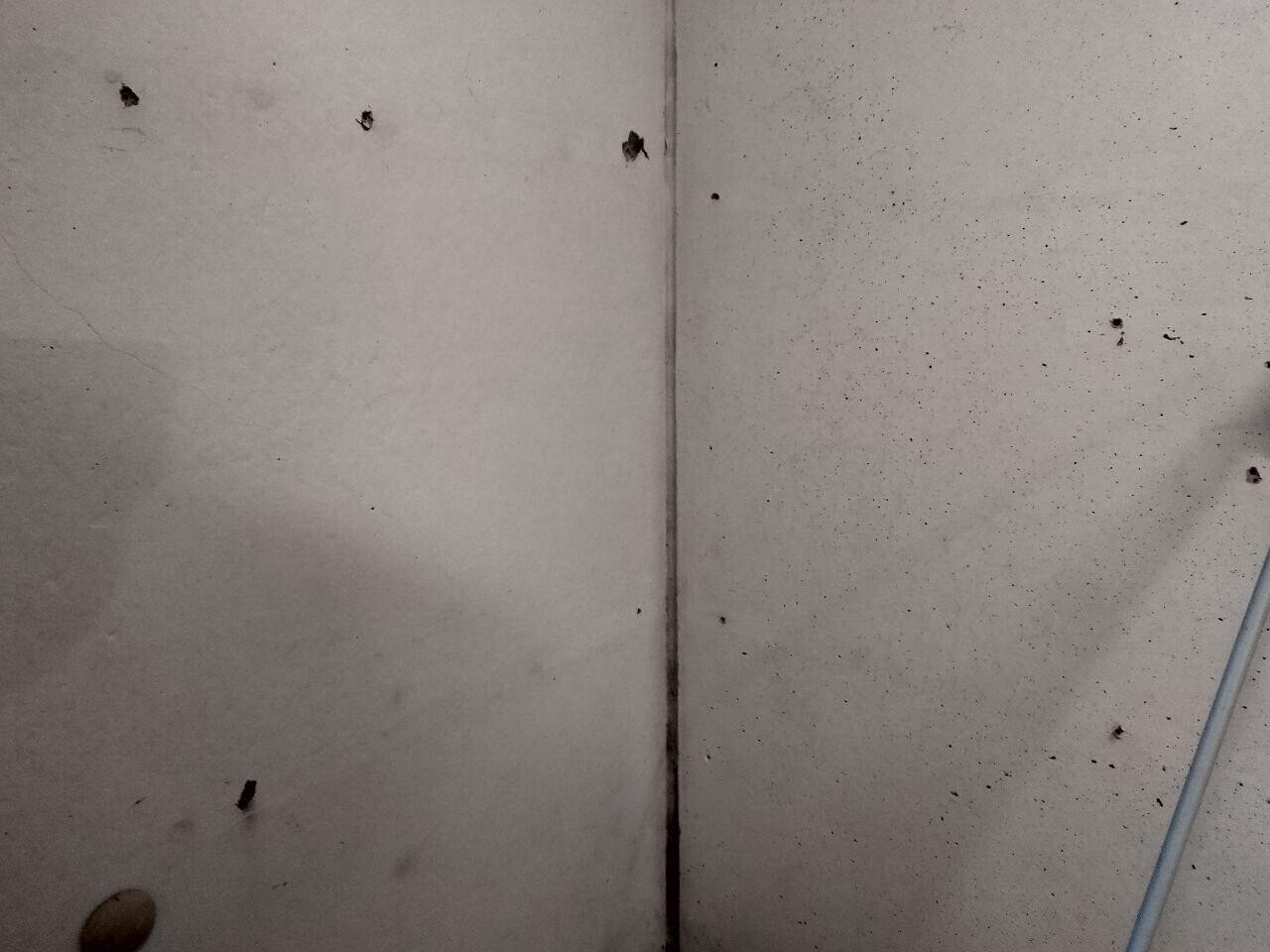
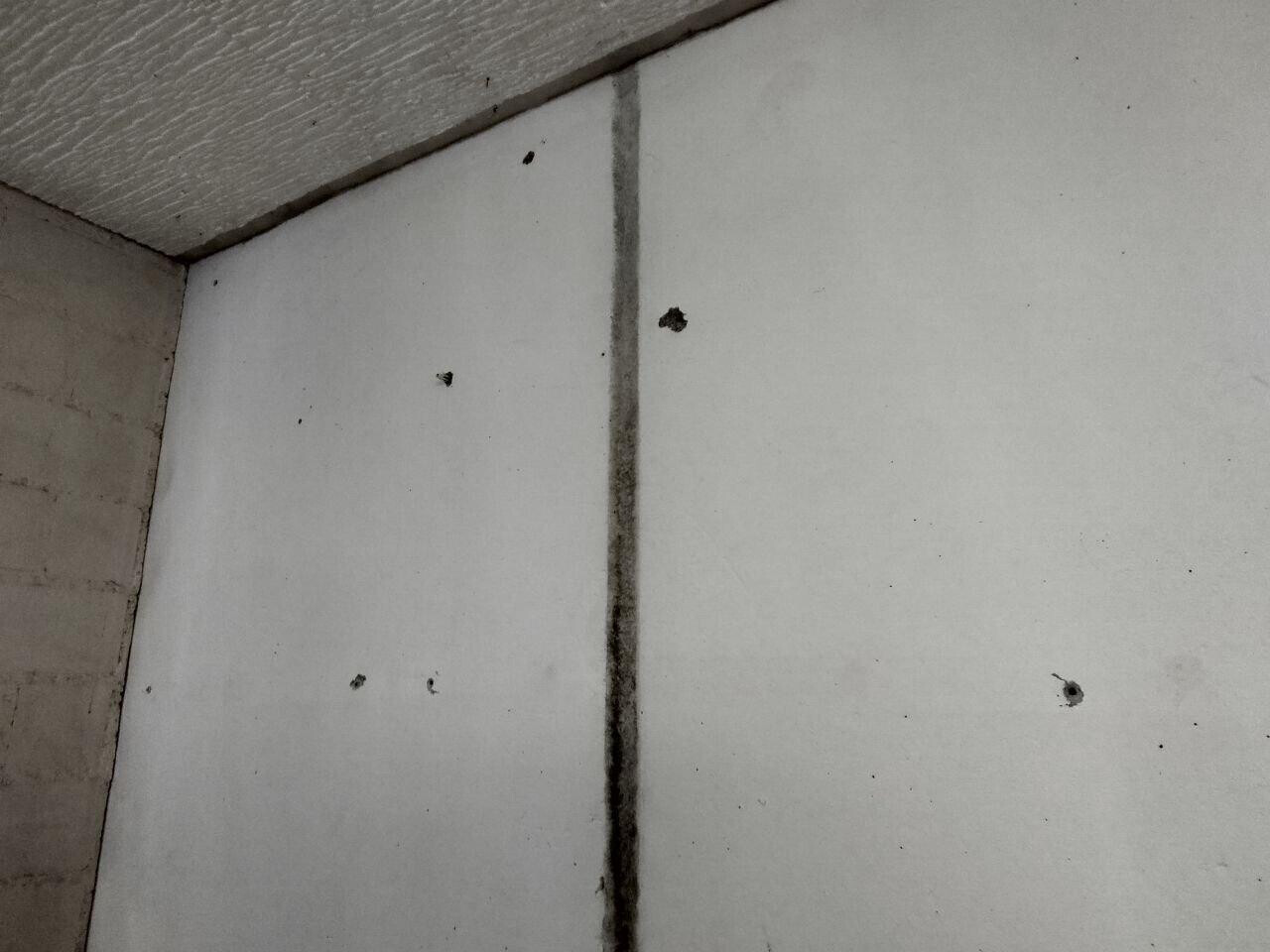
Regarding the rubber coating, it can be seen here:
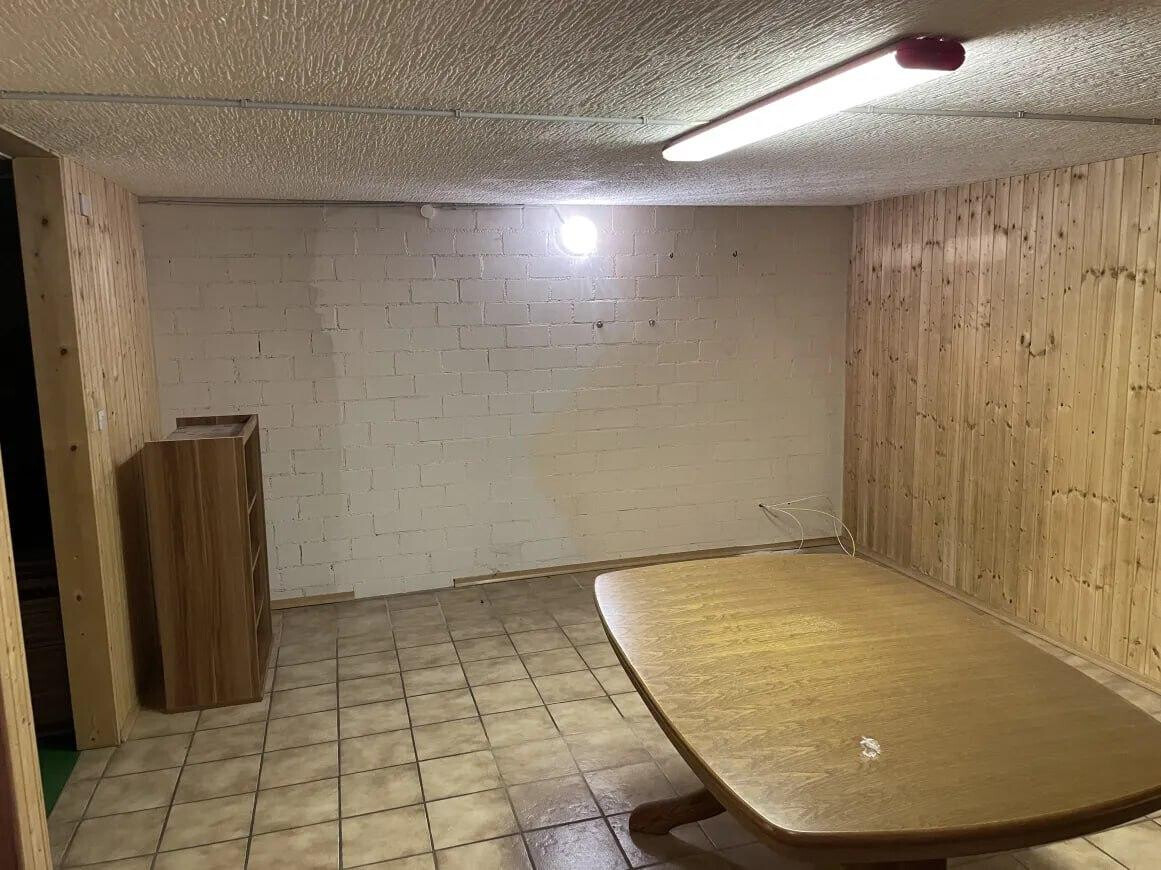
This is how the room originally looked. The exterior wall is shown on the right in the picture (fully covered with wood paneling).
The basement party room adjoins two other rooms, both of which are currently unheated. Each room has a basement window, and all the basement rooms are located beneath heated living spaces.
Regarding the rubber coating, it can be seen here:
This is how the room originally looked. The exterior wall is shown on the right in the picture (fully covered with wood paneling).
KellerMaus schrieb:
Regarding the rubber coating, you can see it here:Looks to me like joint filler, silicone, or adhesive compound.Our house, built in 1986, has an apartment in the basement. The walls are also cast concrete and lack external insulation. The exterior walls have internal insulation consisting of drywall with a polystyrene coating. There have been no issues with mold for over 30 years. Just to point out, internal insulation with polystyrene can work without problems.
Similar topics