
H
HausGraus28 Apr 2024 21:05Hello,
our screed has been installed and was heated using a separate device (MobiHeat) since the heating system is not yet installed. At the moment, I am less concerned about the usual issue of residual moisture and more worried about the fact that many pipes have developed an orange discoloration. You can see a film on the pipes inside the floor distributor. The heating process is finished and the water has already been drained. In the photo, you can see the contents of the container placed underneath to collect the drained water. It was left there as a precaution in case a few more drops came out. Small particles and the orange discoloration are visible in the container. There is no unusual odor.
The technician said he had never seen anything like this before. He suspects that the utility company may have flushed pipes somewhere when he drew the water. The circuit was filled directly without any treatment. According to the technician, these impurities are not a problem since they are removed during filling (flushing).
I have no idea what this is and am considering sending the water to a lab for analysis. Since it reminds me of rust, I would assume iron, but what else could it be and what impact might it have?
I believe a magnetic filter will be installed. It could become clogged, but that would be manageable. The valves can become blocked, but those can be replaced. However, this is not possible with the heating pipes in the floor. The efficiency of the pipes probably decreases, or do rust particles have a high thermal conductivity?
If it is something “biological,” then I fear we will need to flush the system every few years and it will keep recurring.
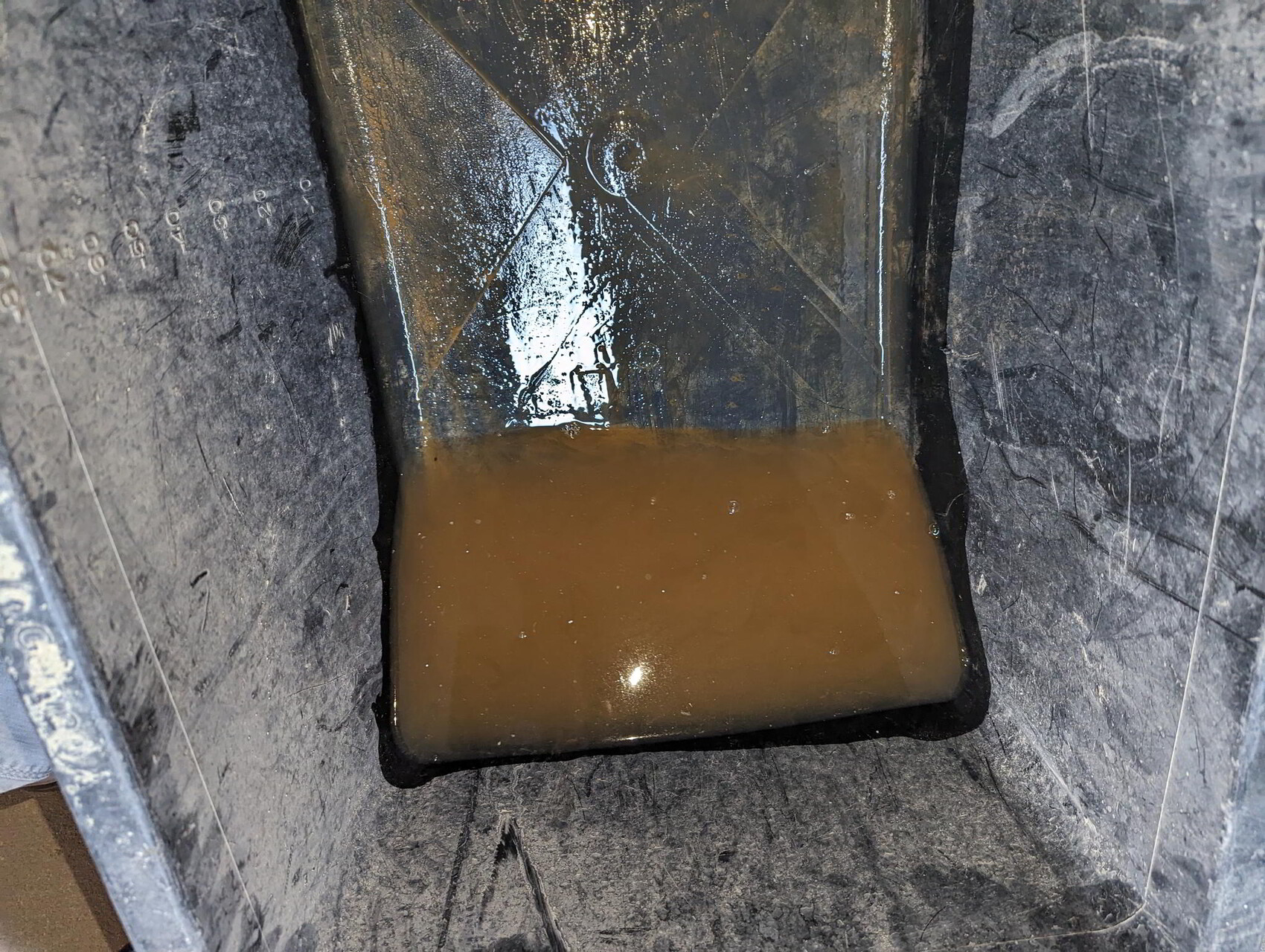
our screed has been installed and was heated using a separate device (MobiHeat) since the heating system is not yet installed. At the moment, I am less concerned about the usual issue of residual moisture and more worried about the fact that many pipes have developed an orange discoloration. You can see a film on the pipes inside the floor distributor. The heating process is finished and the water has already been drained. In the photo, you can see the contents of the container placed underneath to collect the drained water. It was left there as a precaution in case a few more drops came out. Small particles and the orange discoloration are visible in the container. There is no unusual odor.
The technician said he had never seen anything like this before. He suspects that the utility company may have flushed pipes somewhere when he drew the water. The circuit was filled directly without any treatment. According to the technician, these impurities are not a problem since they are removed during filling (flushing).
I have no idea what this is and am considering sending the water to a lab for analysis. Since it reminds me of rust, I would assume iron, but what else could it be and what impact might it have?
I believe a magnetic filter will be installed. It could become clogged, but that would be manageable. The valves can become blocked, but those can be replaced. However, this is not possible with the heating pipes in the floor. The efficiency of the pipes probably decreases, or do rust particles have a high thermal conductivity?
If it is something “biological,” then I fear we will need to flush the system every few years and it will keep recurring.
N
nordanney29 Apr 2024 14:40HausGraus schrieb:
The installer said he had never seen anything like this before. He suspects that the municipal utility was flushing the system somewhere when he drew the water. The circuit was filled directly, without any treatment. According to the installer, the impurities are not a problem because they are removed during filling (flushing). Then, as mentioned, he should flush thoroughly and sufficiently, and then refill with the correct water. That should be enough.