
ᐅ Heating system failure caused by ammonia from the drainage system
Created on: 17 Jun 2019 12:23
L
Lorenz-AKU
Hello,
we built an Okal house before 2017 with a Tecalor 404 eco heat pump. This year, 2019, the first service by Tecalor (under a maintenance contract) was due in April. Coincidentally, about two weeks before the service date, our heating system repeatedly showed errors related to the refrigerant.
When the technician from Tecalor visited us at the end of April, he found damage to the heating system caused by ammonia flowing back from the duct (according to the Tecalor employee). This ammonia entered the house connection room due to dried-out funnel traps and the absence of a trap and corroded the copper pipes and motors.
After several weeks, when we asked Tecalor when the repair would take place, we received an email stating that a repair was not possible and that a full replacement of the heat pump would be required at our expense.
We passed this information to DFH, and after a few weeks—as we have already become accustomed to from DFH (Okal)—we received their response. They claimed that the system failed due to our own negligence because we had neglected to regularly fill the funnel traps with water (which was never mentioned to us during handover). The missing trap was not addressed at all.
Now, I would like to ask the users of this forum:
Has anyone had similar experiences with their heating system?
Who among you homeowners has to regularly fill the funnel traps in the house connection room to prevent damage to the heating system?
Furthermore, I would be interested to know if anyone can tell me whether this system was connected correctly at all?
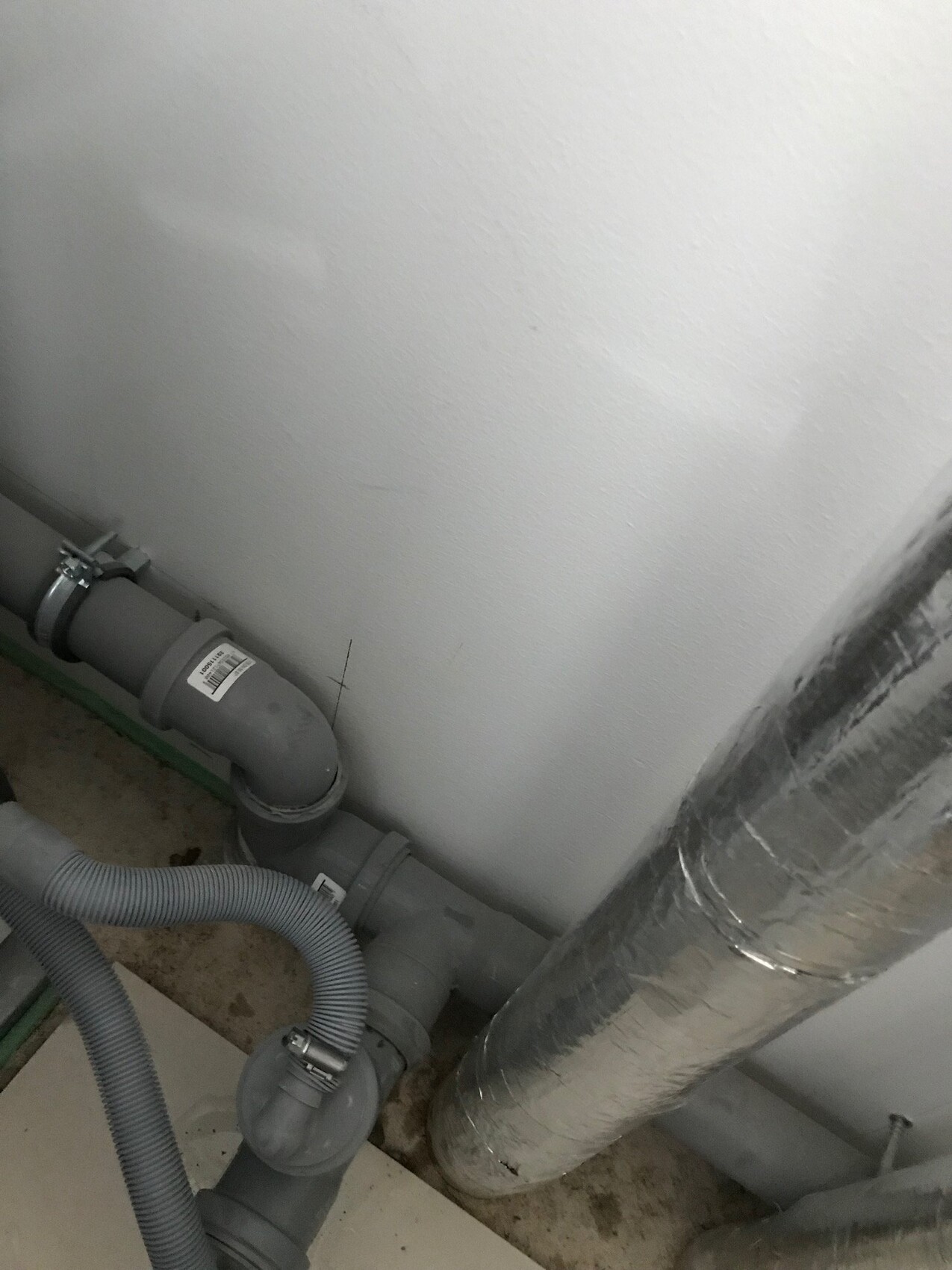
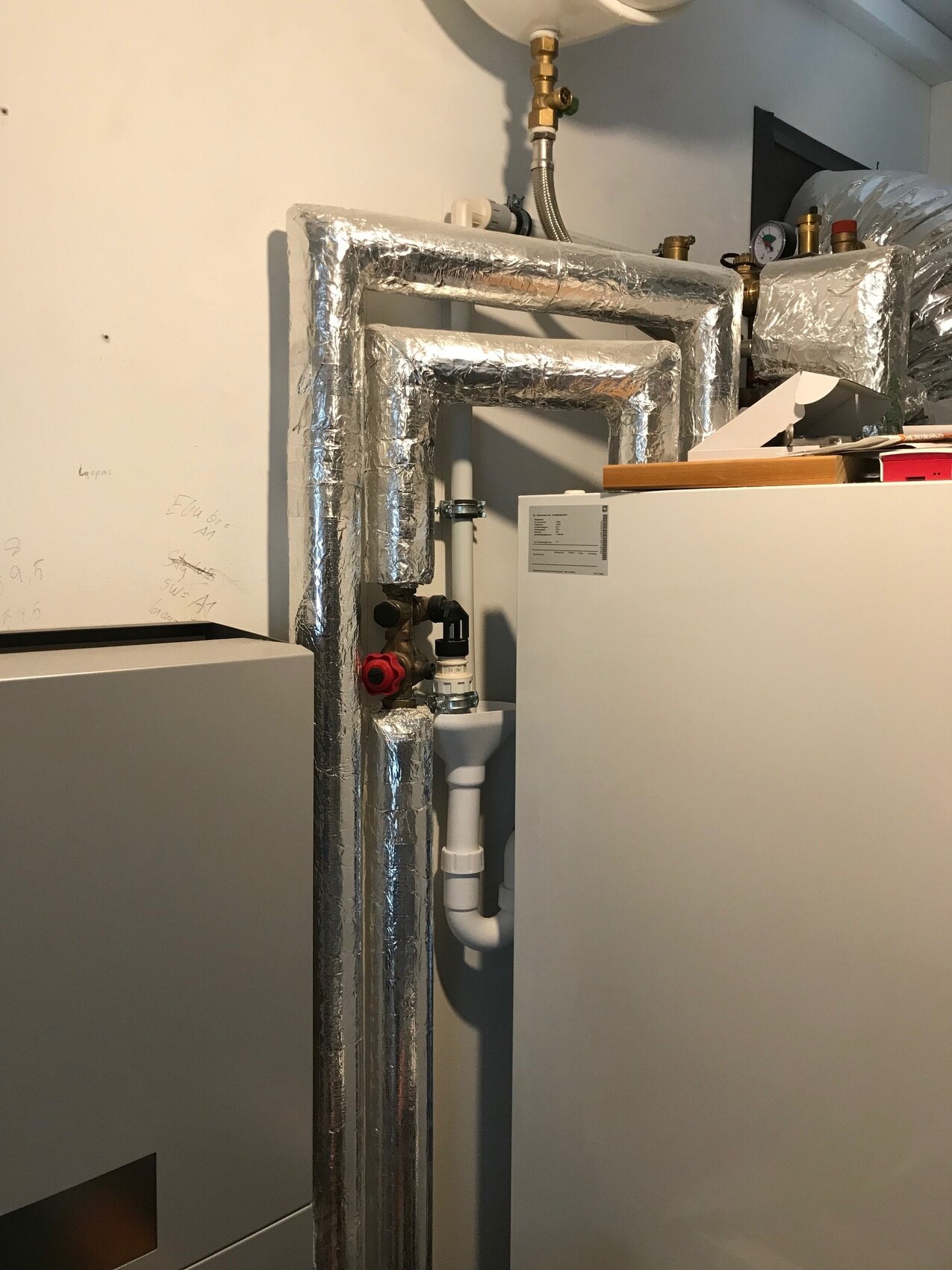
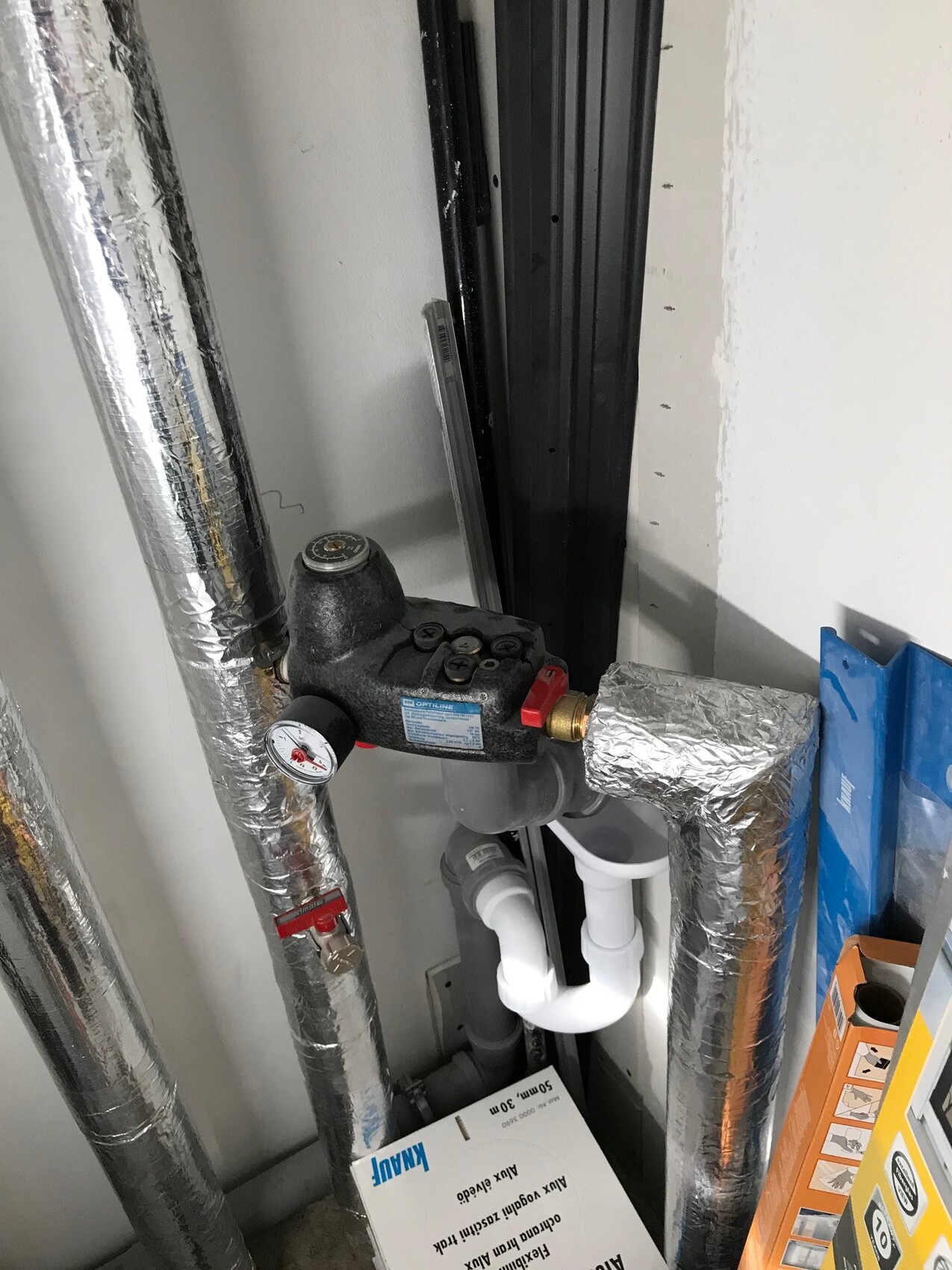
A funnel trap was installed on the expansion vessel, another funnel trap under an Optiline filling valve, but the condensate drain from the Tecalor heat pump was connected directly to the sewage line without a trap.
In my layman's opinion, I would say that a trap placed directly at the floor above the sewage inlet would have been sufficient, into which condensate water from both the expansion vessel and the Optiline filling valve, as well as from the heating system’s condensate drain, could drain.
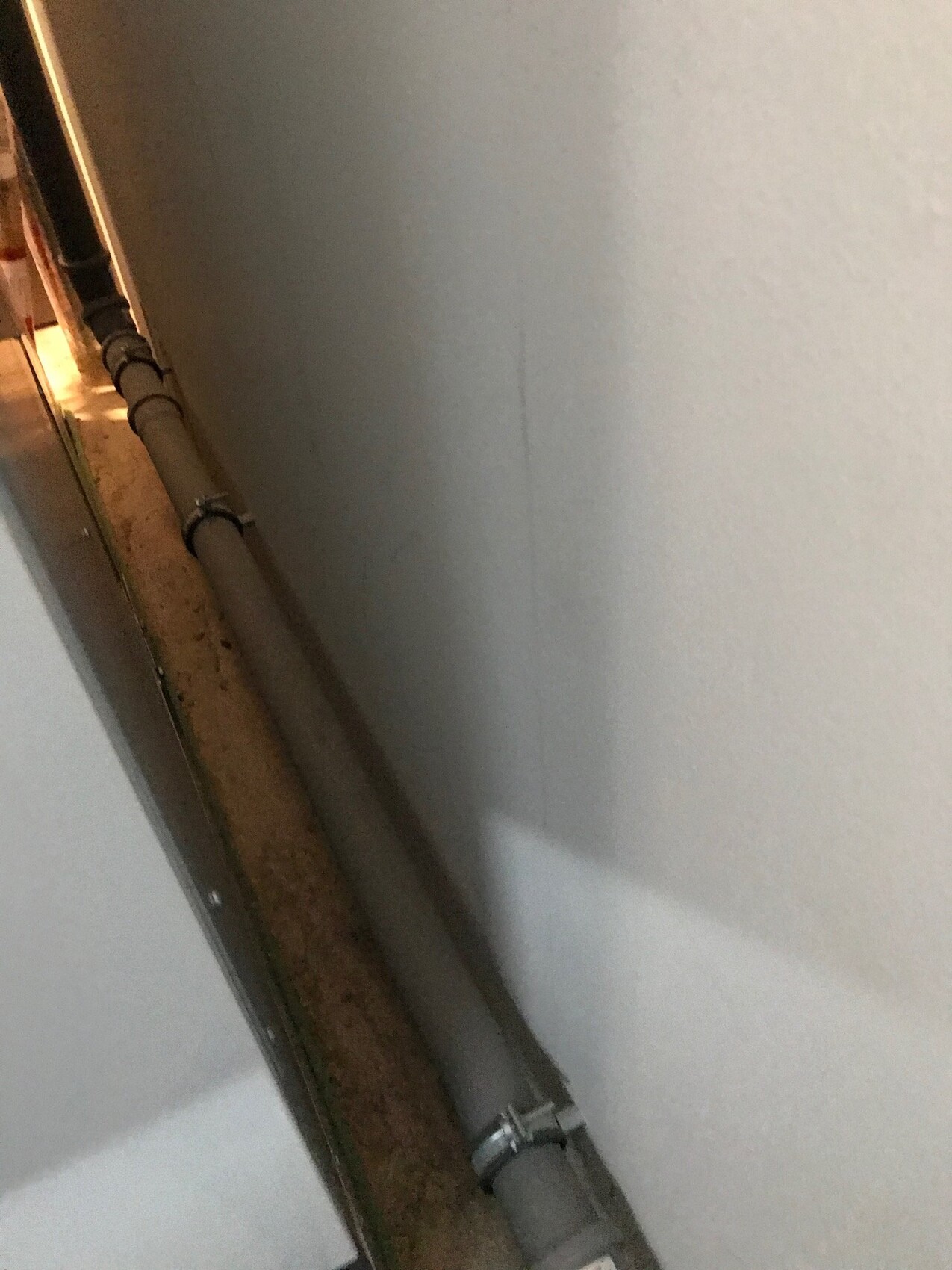
I am attaching a few photos of the installation by Fehl and Sohn (subcontractors of DFH) for reference.
I am grateful for your opinions on this matter and hope they will help us decide on how to proceed.
Since the heating system no longer provides heat, there will probably be no warm water in our house as of September. For reasons of preserving evidence, I am not allowed to make any changes to the current installation.
However, I am also not willing to pay for a new heat pump installation, which is expected to cost about 25,000 euros.


we built an Okal house before 2017 with a Tecalor 404 eco heat pump. This year, 2019, the first service by Tecalor (under a maintenance contract) was due in April. Coincidentally, about two weeks before the service date, our heating system repeatedly showed errors related to the refrigerant.
When the technician from Tecalor visited us at the end of April, he found damage to the heating system caused by ammonia flowing back from the duct (according to the Tecalor employee). This ammonia entered the house connection room due to dried-out funnel traps and the absence of a trap and corroded the copper pipes and motors.
After several weeks, when we asked Tecalor when the repair would take place, we received an email stating that a repair was not possible and that a full replacement of the heat pump would be required at our expense.
We passed this information to DFH, and after a few weeks—as we have already become accustomed to from DFH (Okal)—we received their response. They claimed that the system failed due to our own negligence because we had neglected to regularly fill the funnel traps with water (which was never mentioned to us during handover). The missing trap was not addressed at all.
Now, I would like to ask the users of this forum:
Has anyone had similar experiences with their heating system?
Who among you homeowners has to regularly fill the funnel traps in the house connection room to prevent damage to the heating system?
Furthermore, I would be interested to know if anyone can tell me whether this system was connected correctly at all?
A funnel trap was installed on the expansion vessel, another funnel trap under an Optiline filling valve, but the condensate drain from the Tecalor heat pump was connected directly to the sewage line without a trap.
In my layman's opinion, I would say that a trap placed directly at the floor above the sewage inlet would have been sufficient, into which condensate water from both the expansion vessel and the Optiline filling valve, as well as from the heating system’s condensate drain, could drain.
I am attaching a few photos of the installation by Fehl and Sohn (subcontractors of DFH) for reference.
I am grateful for your opinions on this matter and hope they will help us decide on how to proceed.
Since the heating system no longer provides heat, there will probably be no warm water in our house as of September. For reasons of preserving evidence, I am not allowed to make any changes to the current installation.
However, I am also not willing to pay for a new heat pump installation, which is expected to cost about 25,000 euros.
L
Lorenz-AKU17 Jun 2019 13:47@Lumpi_LE
Sometimes there was a smell of urine, but it disappeared again without us adding anything. However, we almost always keep the window open in the utility room. We also have a ventilation system installed in our house. The utility room is an exhaust air room, where the air is extracted, similar to our bathrooms, hallway, and kitchen.
I cannot say how professional the technician from Tecalor’s statement is, or if it was just an initial assumption on which all further arguments are now based.
At the moment, the cost is the reason preventing me from hiring an expert. This would amount to about 3600 net, including a metallurgical examination of the copper corrosion.
Sometimes there was a smell of urine, but it disappeared again without us adding anything. However, we almost always keep the window open in the utility room. We also have a ventilation system installed in our house. The utility room is an exhaust air room, where the air is extracted, similar to our bathrooms, hallway, and kitchen.
I cannot say how professional the technician from Tecalor’s statement is, or if it was just an initial assumption on which all further arguments are now based.
At the moment, the cost is the reason preventing me from hiring an expert. This would amount to about 3600 net, including a metallurgical examination of the copper corrosion.
Did you not receive instructions directly from Tecalor?
Take a look at Tecalor’s website; there should be a detailed installation manual there. Maybe you’ll find something useful.
You will probably need to involve an inspector.
Alternatively, you could pretend you don’t know much and contact the nearest plumbing and heating service that maintains such systems. Of course, there is the risk that things might get worse.
Take a look at Tecalor’s website; there should be a detailed installation manual there. Maybe you’ll find something useful.
You will probably need to involve an inspector.
Alternatively, you could pretend you don’t know much and contact the nearest plumbing and heating service that maintains such systems. Of course, there is the risk that things might get worse.
L
Lorenz-AKU17 Jun 2019 14:20@haydee
There was no direct instruction from Tecalor. An employee from Fehl und Sohn briefly explained the control panel menu of the system to me, and that was it. I only found out from the maintenance technician in April 2019 that Tecalor usually commissions these systems and that this also includes an extended 5-year warranty. In my case, the installation company carried out the commissioning without informing me about this.
The technician from Tecalor said: I’m not familiar with this system at all. Normally, we handle the commissioning of these units.
This technician also noticed the absence of a siphon on the condensate drain.
The company Stiebel Eltron has an installation video of an identical system in which all three of these drainage and overflow pipes discharge into a trap siphon.
There was no direct instruction from Tecalor. An employee from Fehl und Sohn briefly explained the control panel menu of the system to me, and that was it. I only found out from the maintenance technician in April 2019 that Tecalor usually commissions these systems and that this also includes an extended 5-year warranty. In my case, the installation company carried out the commissioning without informing me about this.
The technician from Tecalor said: I’m not familiar with this system at all. Normally, we handle the commissioning of these units.
This technician also noticed the absence of a siphon on the condensate drain.
The company Stiebel Eltron has an installation video of an identical system in which all three of these drainage and overflow pipes discharge into a trap siphon.
Similar topics