
ᐅ Heat pump produces audible structure-borne noise (with photos of the system)
Created on: 1 Feb 2021 15:16
V
vaderle
Hello everyone,
We moved into our house last summer (150m² (1,615 sq ft) urban villa made of 16cm (6 inch) aerated concrete prefab elements with ETICS insulation). For hot water production (heating + domestic hot water), we have a Vaillant air-to-water heat pump.
It is the VWL 55/5 AS 230V S2 model with outdoor and indoor units. The fan and compressor are located outside.
On cold days — when the system runs more frequently — we have noticed that the system (when the compressor is on) can be heard in every room (a humming sound). It makes no difference whether doors or windows are open or closed. Therefore, I assume this humming is transmitted through the walls (structure-borne sound).
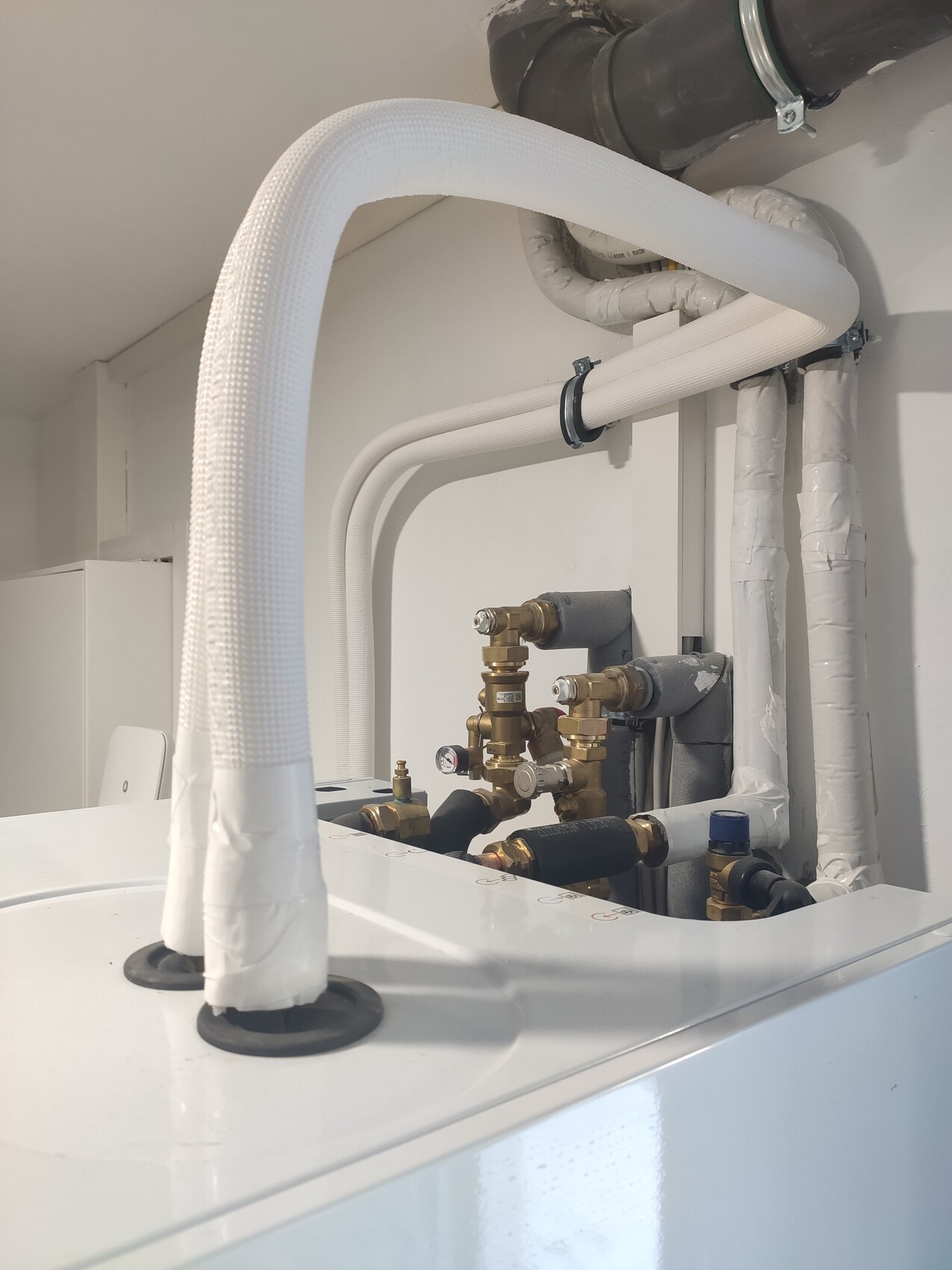
In the utility room (where the indoor unit is installed) and outside, I have detected the strongest vibrations in the pipes of the refrigeration circuit. All other components appear to produce very little vibration. When touching these pipes, you can feel them vibrating. When the fluid is not flowing or the compressor is off, of course, there is no vibration. Then the house is quiet.
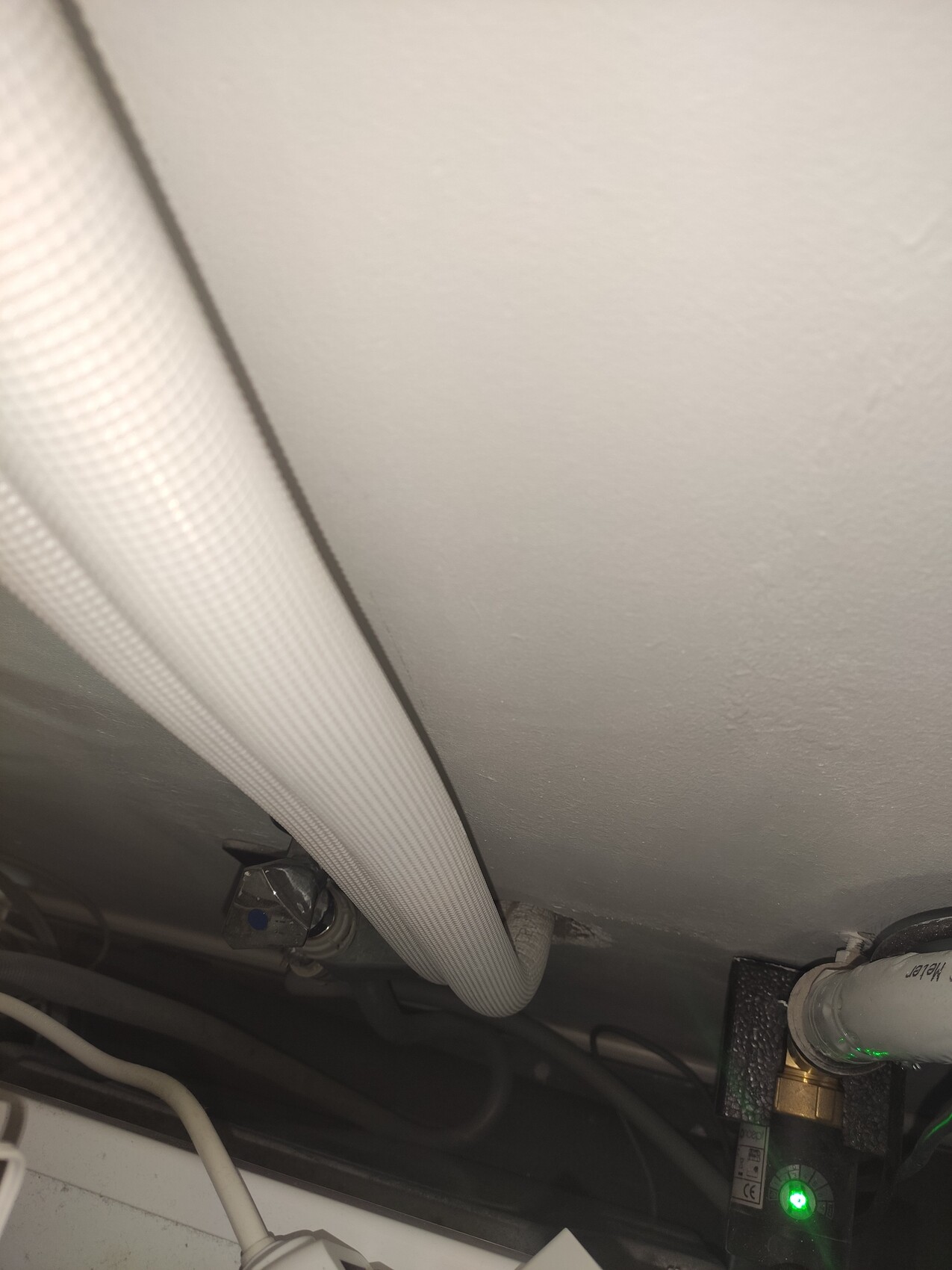
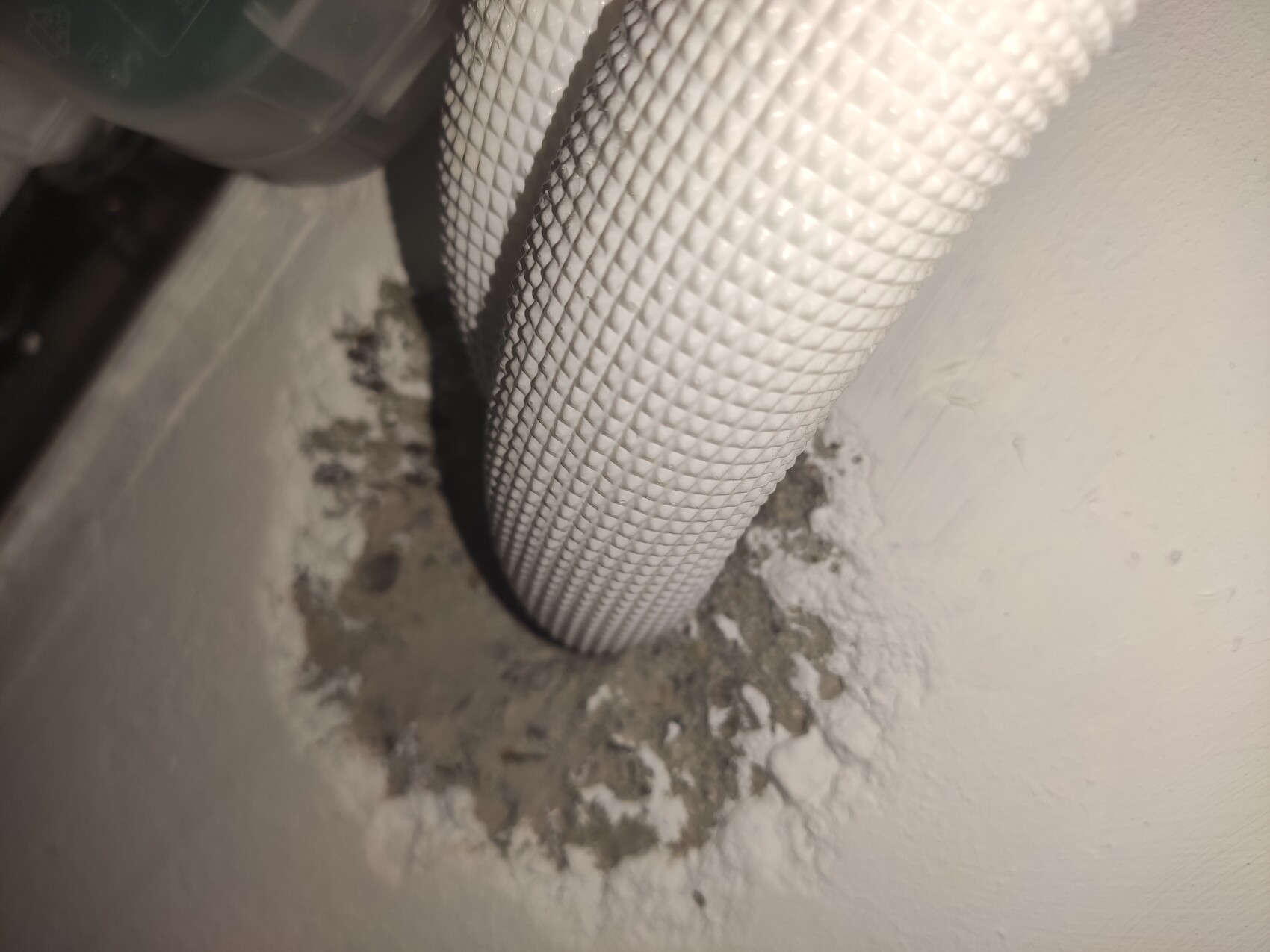
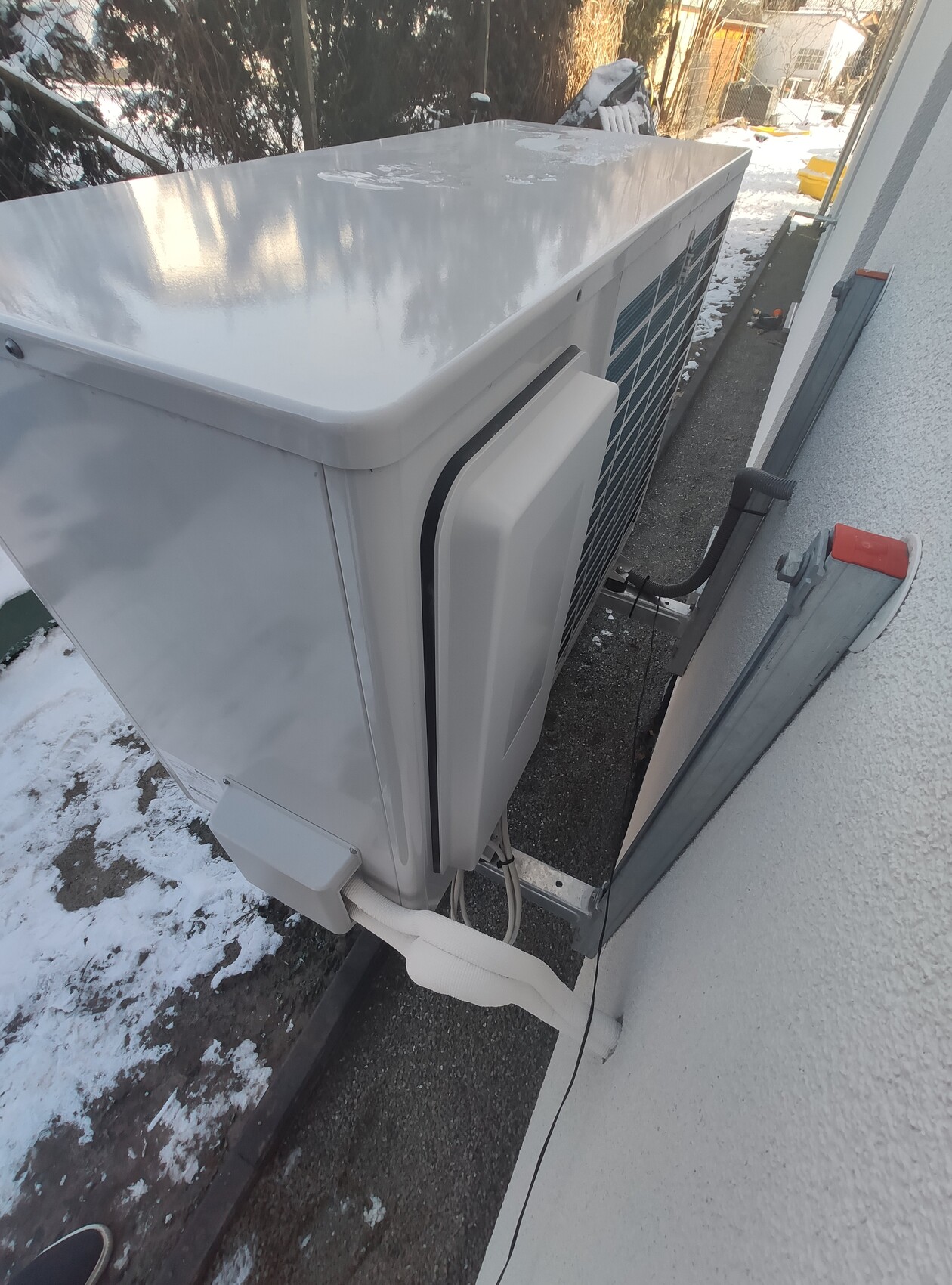
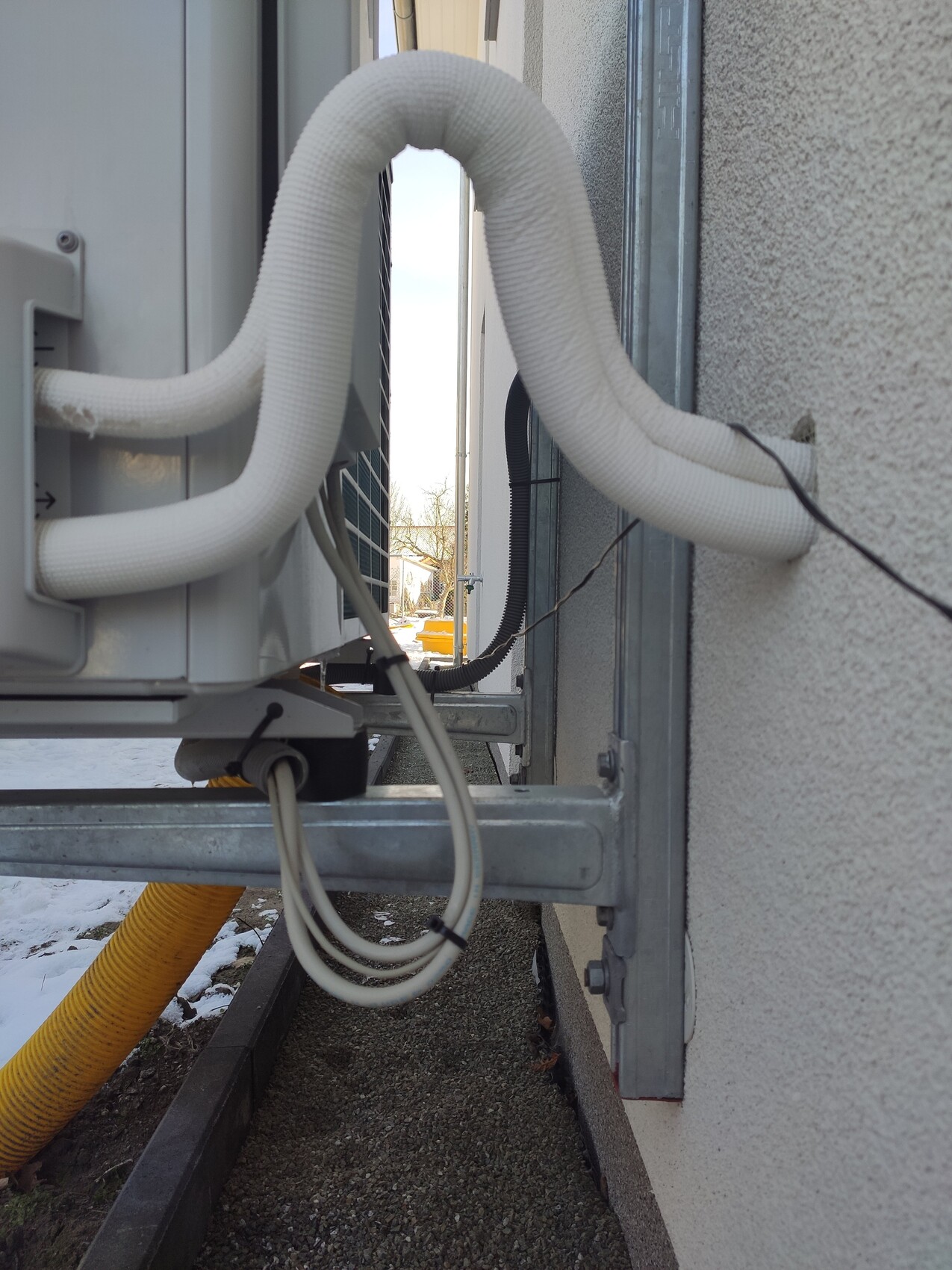
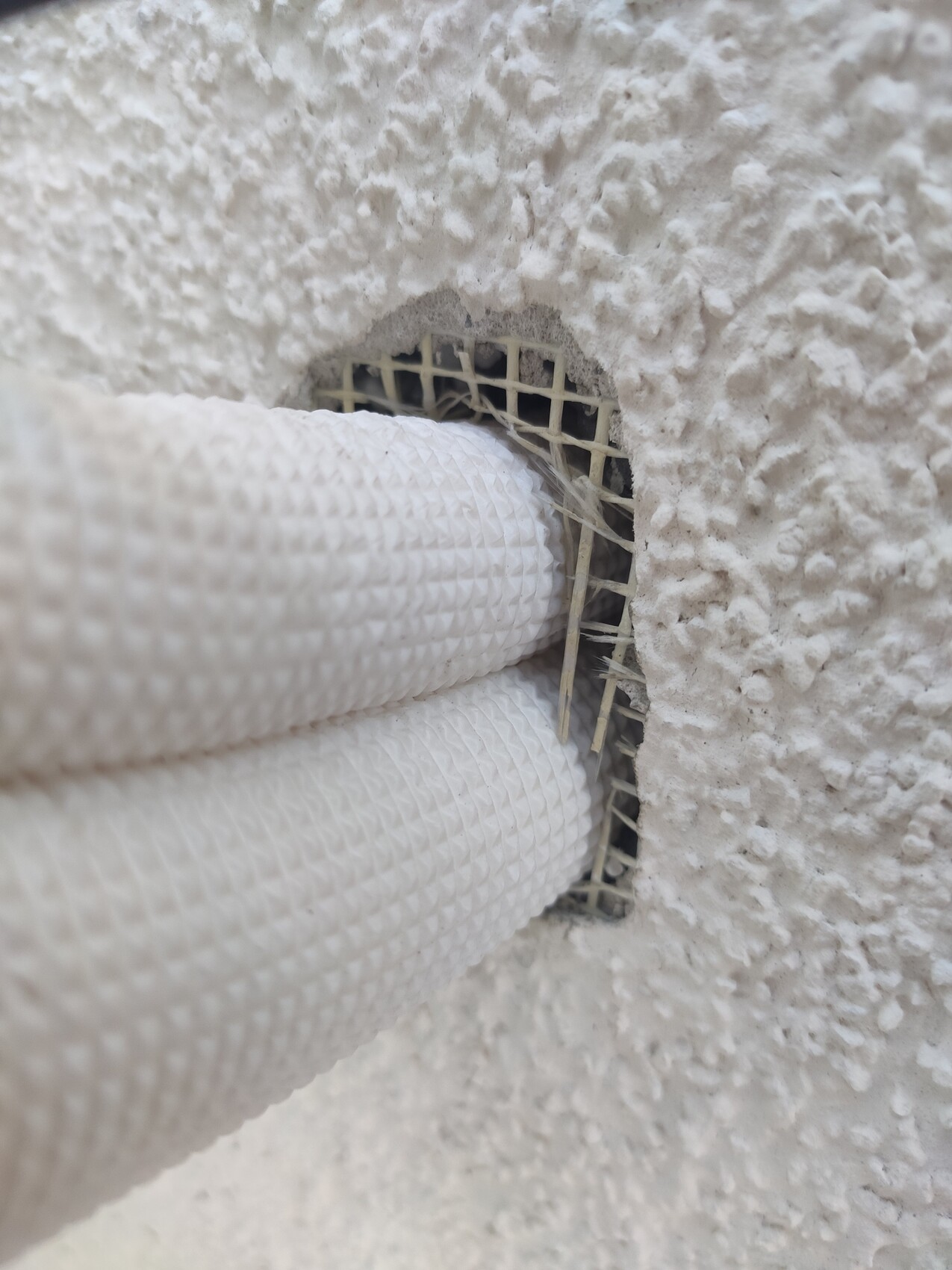
The outdoor unit is mounted on the facade (see photos). It rests on dampers. The mentioned pipes run from inside through the house wall to the outside (see photos). I noticed that the holes where the pipes pass through are simply filled with concrete (see photos). I do not see a separate sleeve or duct to prevent direct contact between the pipes and the concrete. I therefore assume that the vibrations from the pipes are being transmitted directly to the wall.
Would you also consider this the cause?
Finding a solution: I had thought about placing the indoor unit on a mat and wrapping the already white-insulated refrigerant pipes (see photos) again with soundproofing material. Do you think that would help?
Or is the root of the problem the passage of the pipes from inside to outside? I also considered whether placing the outdoor unit on a concrete foundation could help. But as long as these white pipes have direct contact with the concrete elements, the problem will probably persist.
How do you route the refrigerant pipes from inside to outside in your installations?
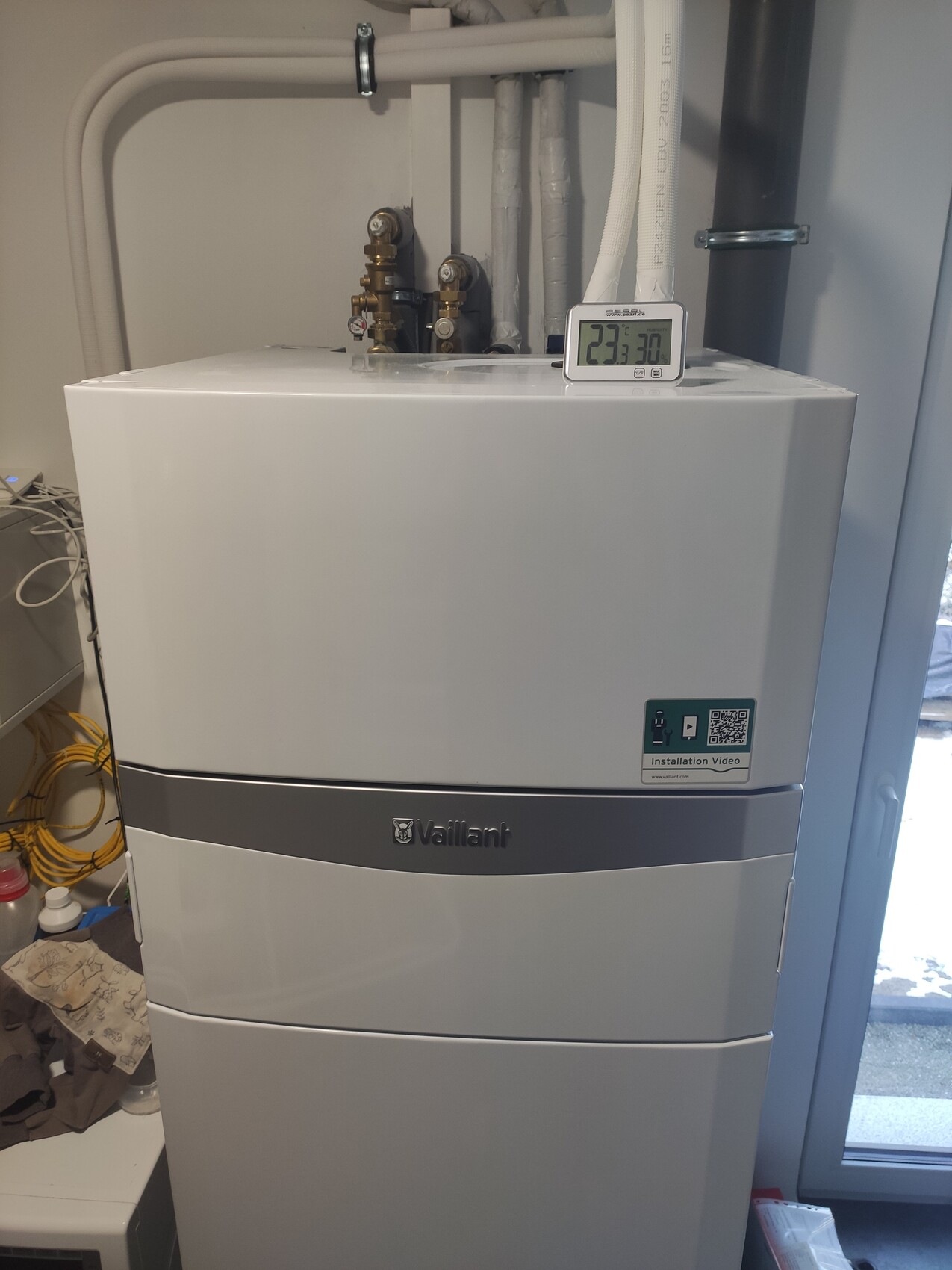
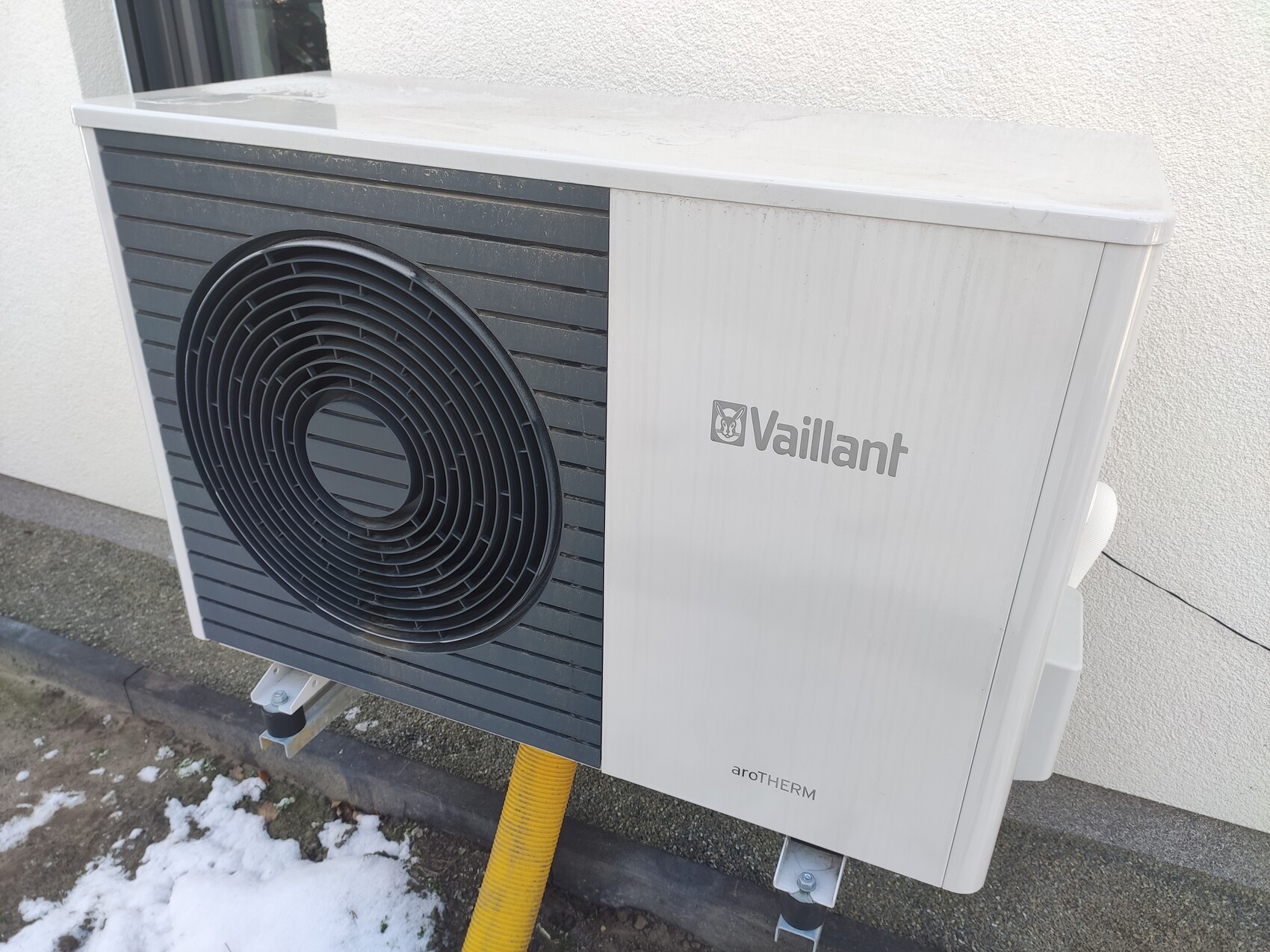
We moved into our house last summer (150m² (1,615 sq ft) urban villa made of 16cm (6 inch) aerated concrete prefab elements with ETICS insulation). For hot water production (heating + domestic hot water), we have a Vaillant air-to-water heat pump.
It is the VWL 55/5 AS 230V S2 model with outdoor and indoor units. The fan and compressor are located outside.
On cold days — when the system runs more frequently — we have noticed that the system (when the compressor is on) can be heard in every room (a humming sound). It makes no difference whether doors or windows are open or closed. Therefore, I assume this humming is transmitted through the walls (structure-borne sound).
In the utility room (where the indoor unit is installed) and outside, I have detected the strongest vibrations in the pipes of the refrigeration circuit. All other components appear to produce very little vibration. When touching these pipes, you can feel them vibrating. When the fluid is not flowing or the compressor is off, of course, there is no vibration. Then the house is quiet.
The outdoor unit is mounted on the facade (see photos). It rests on dampers. The mentioned pipes run from inside through the house wall to the outside (see photos). I noticed that the holes where the pipes pass through are simply filled with concrete (see photos). I do not see a separate sleeve or duct to prevent direct contact between the pipes and the concrete. I therefore assume that the vibrations from the pipes are being transmitted directly to the wall.
Would you also consider this the cause?
Finding a solution: I had thought about placing the indoor unit on a mat and wrapping the already white-insulated refrigerant pipes (see photos) again with soundproofing material. Do you think that would help?
Or is the root of the problem the passage of the pipes from inside to outside? I also considered whether placing the outdoor unit on a concrete foundation could help. But as long as these white pipes have direct contact with the concrete elements, the problem will probably persist.
How do you route the refrigerant pipes from inside to outside in your installations?
H
HilfeHilfe2 Feb 2021 05:08We have moved the pump away from the house, and the pipes were routed underground in HT pipes into the utility room.
To me, the system is too close to the house. The noise is transmitted directly to the building.
And yes, during cold periods, the unit runs constantly. Currently, we are experiencing the longest cold spell in six years.
To me, the system is too close to the house. The noise is transmitted directly to the building.
And yes, during cold periods, the unit runs constantly. Currently, we are experiencing the longest cold spell in six years.
Would you recommend consulting an expert beforehand?
If it’s not possible to route pipes later through the concrete slab (although I could imagine doing this through the conduit pipes installed in the utility room), could you please show me a picture or provide a link to the type of sleeve that should be installed in the wall to prevent direct contact between the pipe and the concrete wall, so that pipe vibrations are not transmitted to the rest of the house?
If it’s not possible to route pipes later through the concrete slab (although I could imagine doing this through the conduit pipes installed in the utility room), could you please show me a picture or provide a link to the type of sleeve that should be installed in the wall to prevent direct contact between the pipe and the concrete wall, so that pipe vibrations are not transmitted to the rest of the house?
In the installation video from Vaillant, the pipes also come out of the wall. However, everything appears to be sealed there. The installation is also done on a pedestal. A different type of insulation can be seen as well. I’ll probably have to ask Vaillant why the result looks a bit different in my case.
[MEDIA=youtube]8N_0Z7x_s14[/MEDIA]
[MEDIA=youtube]8N_0Z7x_s14[/MEDIA]
As a temporary solution, you could try activating the system’s whisper mode. This causes the compressor to run at a lower speed/frequency, which might reduce the humming noise to a more tolerable level. However, this will also decrease the heating capacity of the system, so the house might get a bit chilly.
This doesn’t change the fact that the wall penetration and the routing of the pipes need to be inspected.
This doesn’t change the fact that the wall penetration and the routing of the pipes need to be inspected.
R
RotorMotor1 Dec 2022 10:13@vaderle have you made any progress with the topic?
Similar topics