
Hello,
Some time ago, I hired a professional flooring company to fully glue down engineered wide plank flooring over an area of 90m² (970 sq ft). After a short time, I noticed that the flooring was uneven and the baseboards were installed very poorly. One uneven spot was repaired since it was outside the usual tolerance. The baseboards were also replaced.
For the job, I paid approximately €7,500 and an additional €500 for the baseboards. I paid around €7,000 for the wide plank flooring itself. Altogether, I am at about €15,000.
What bothers me about the whole matter is that I expected a neat and clean job, but there are several unsightly spots. Even after the uneven area was repaired and the baseboards replaced, I keep finding new imperfections. Almost all rooms have unevenness, though still within acceptable tolerance.
What do you think about the quality of the work?
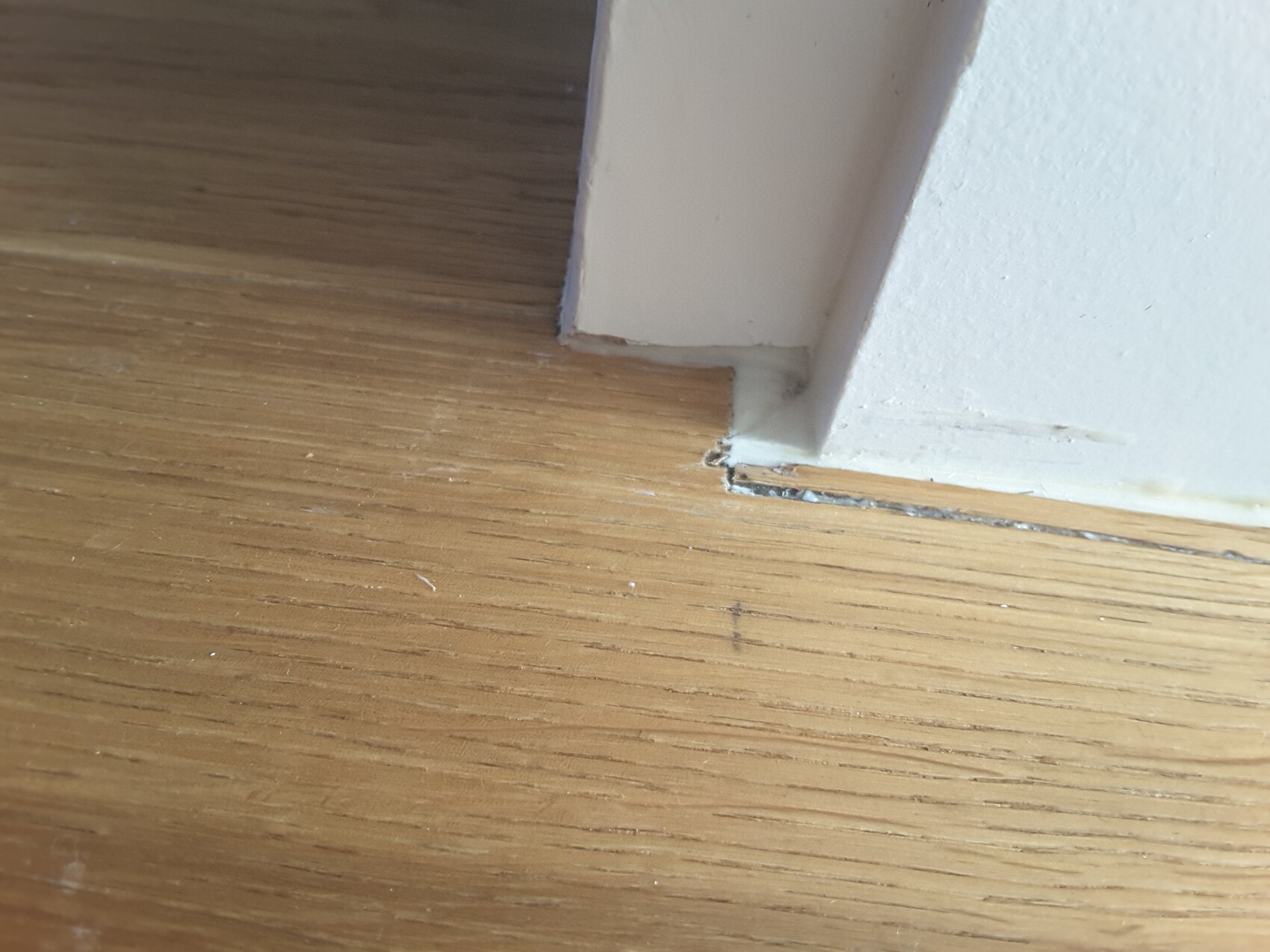
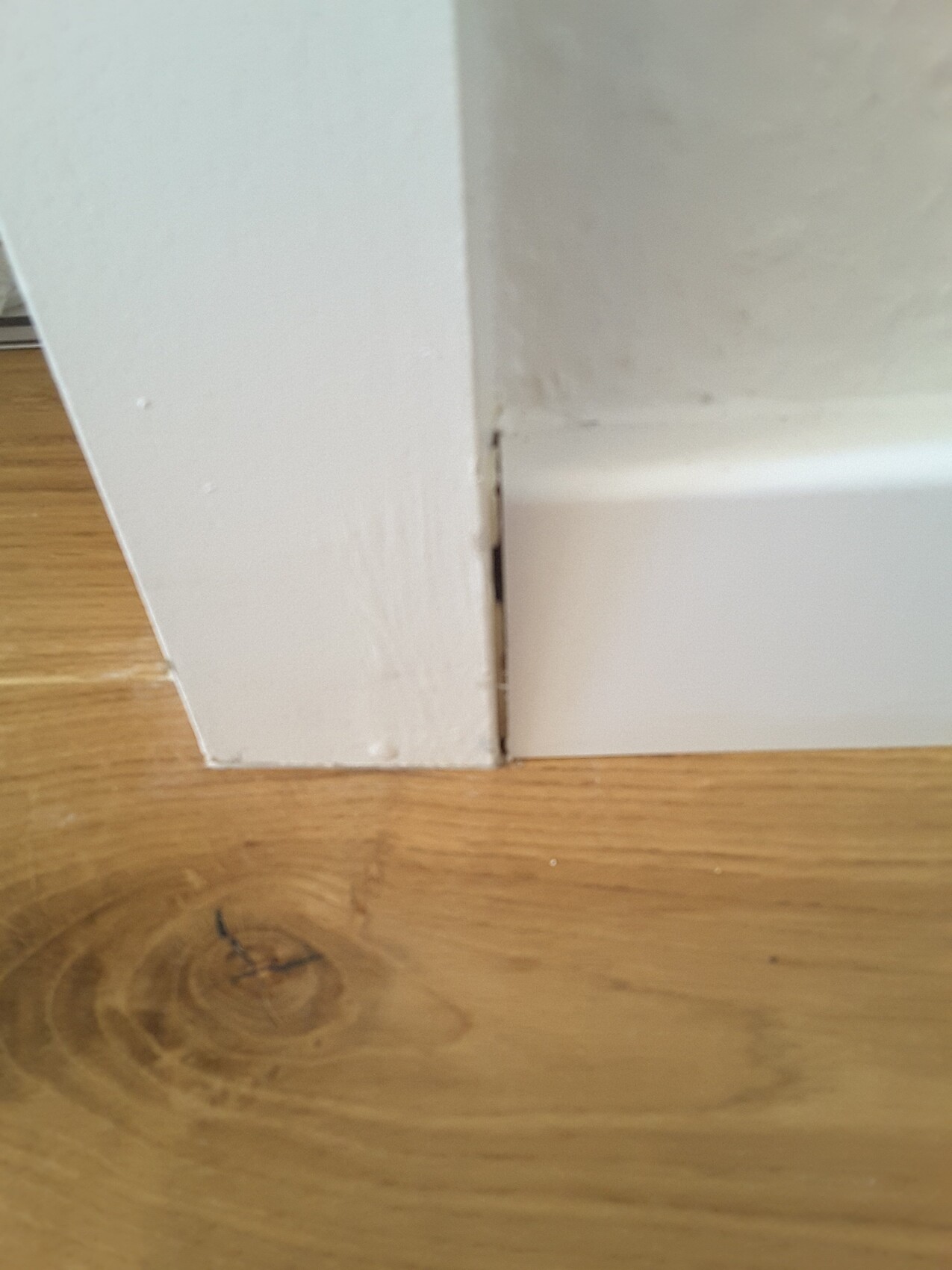
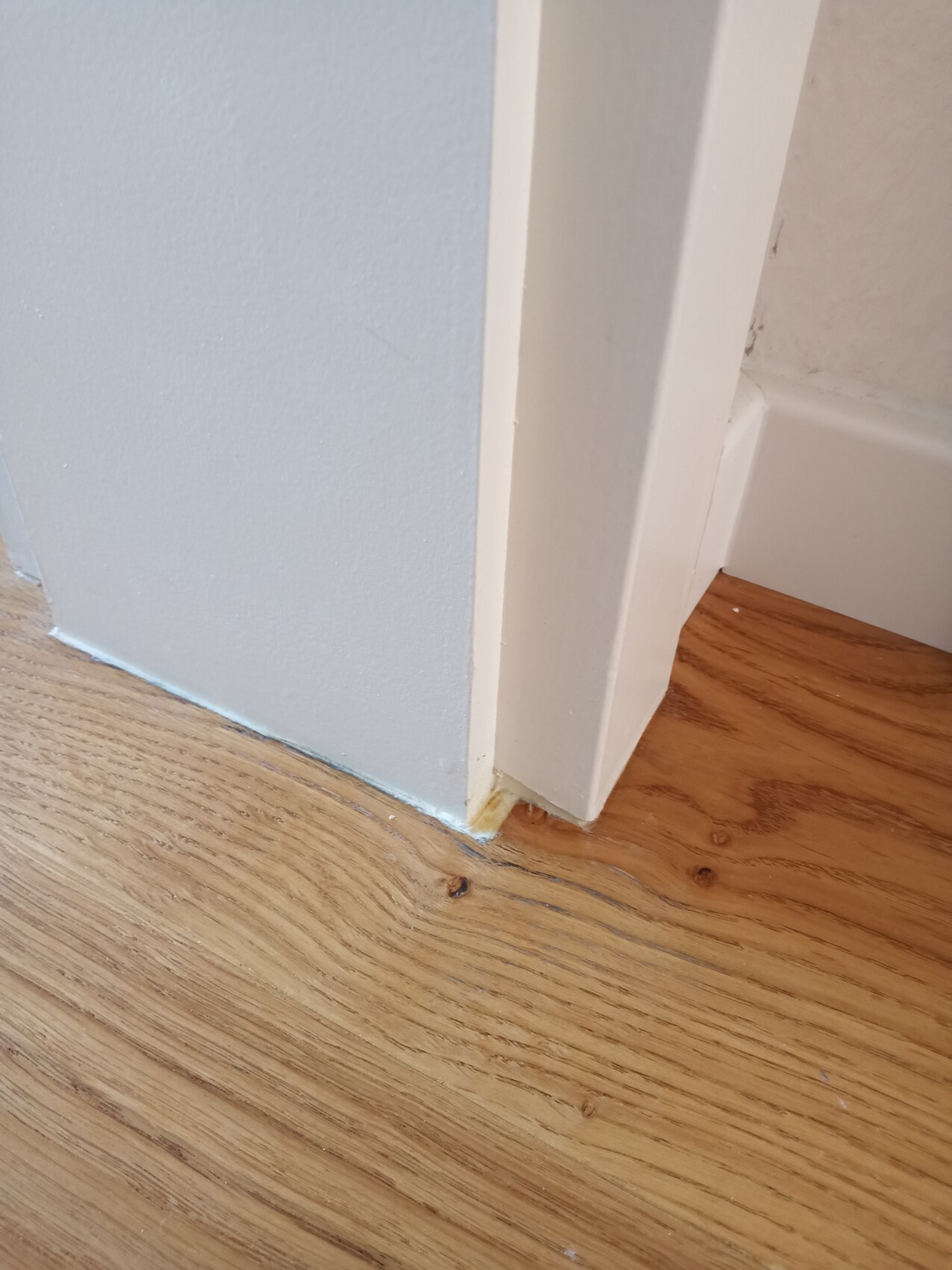
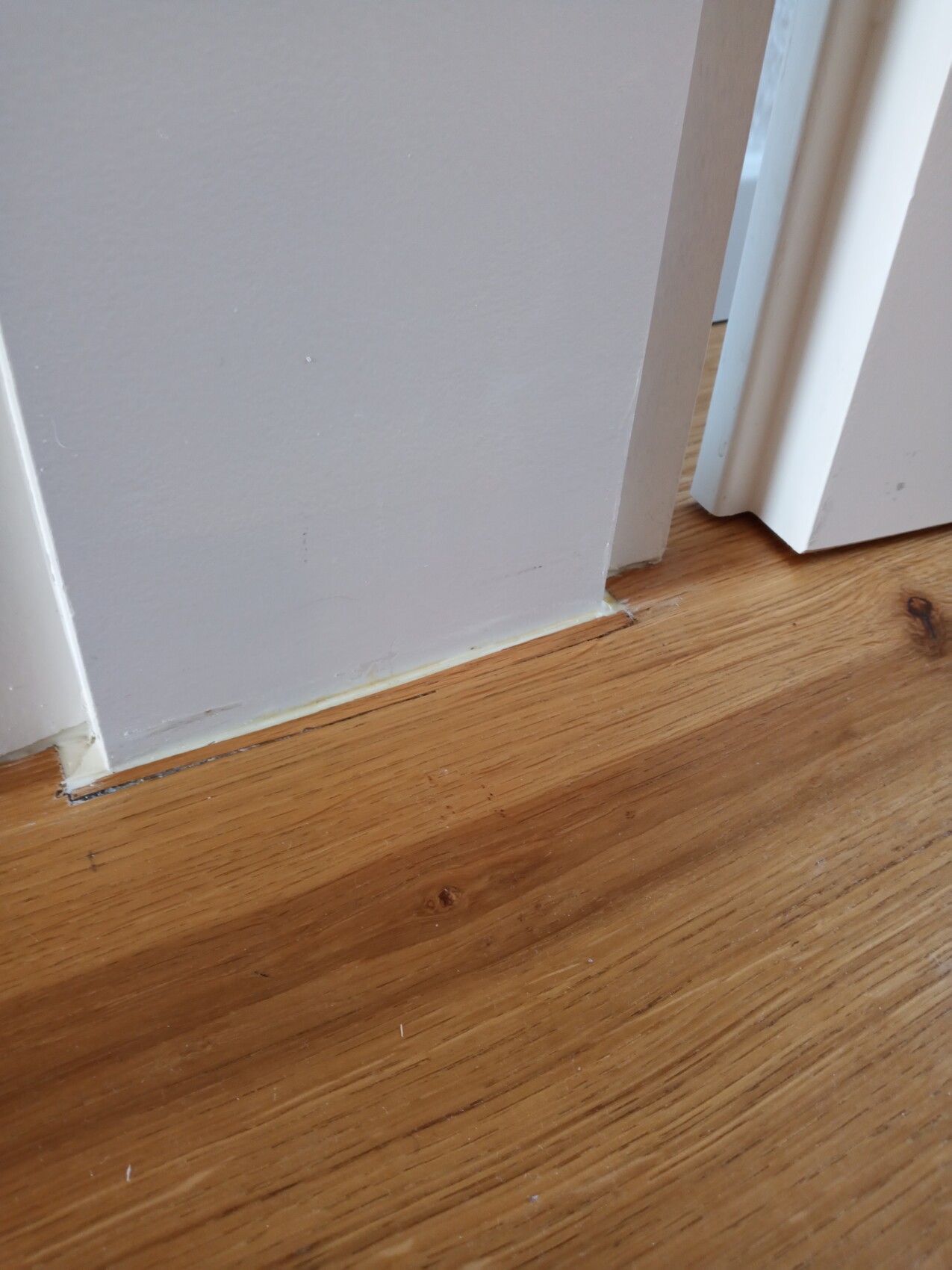
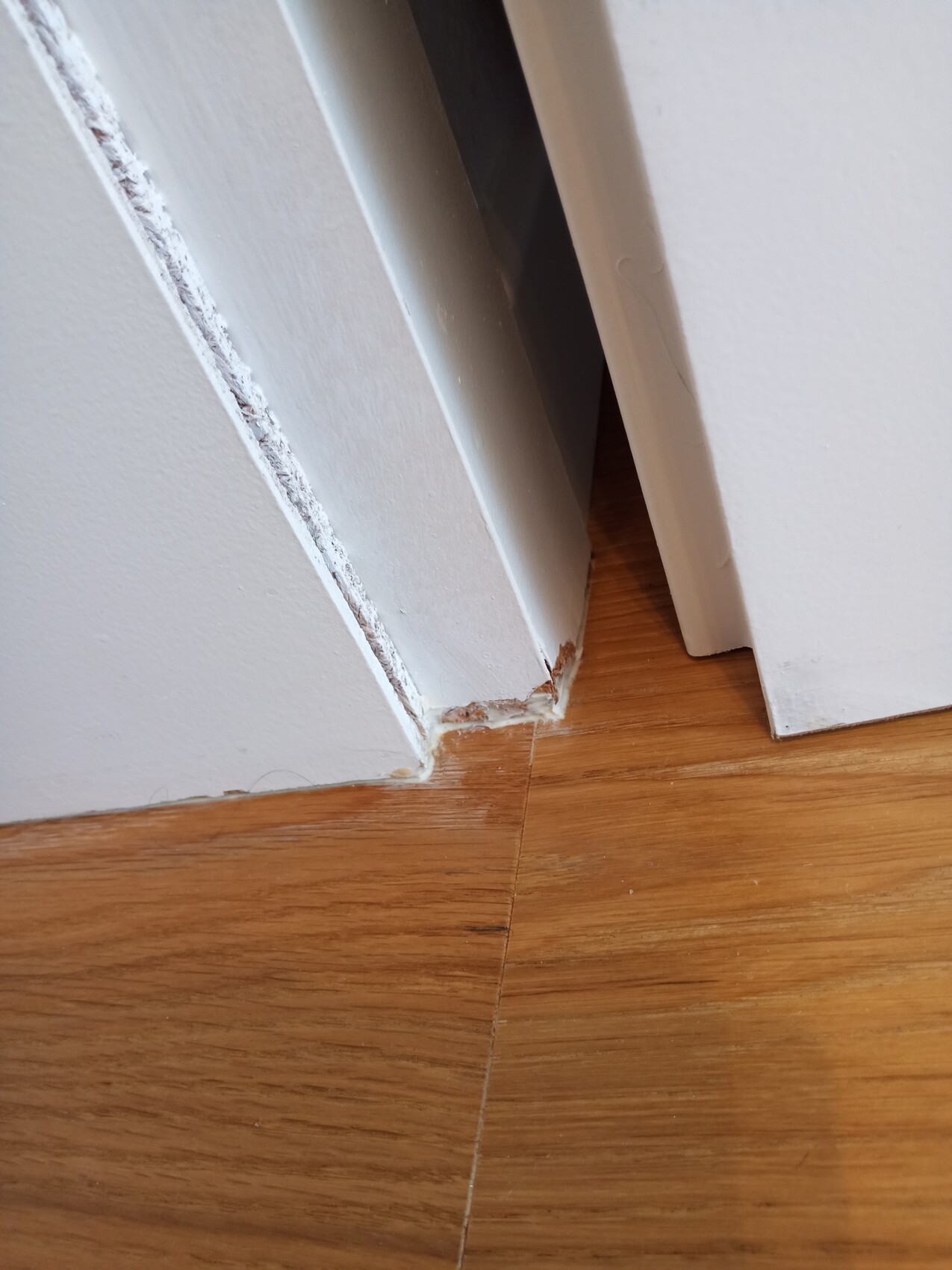
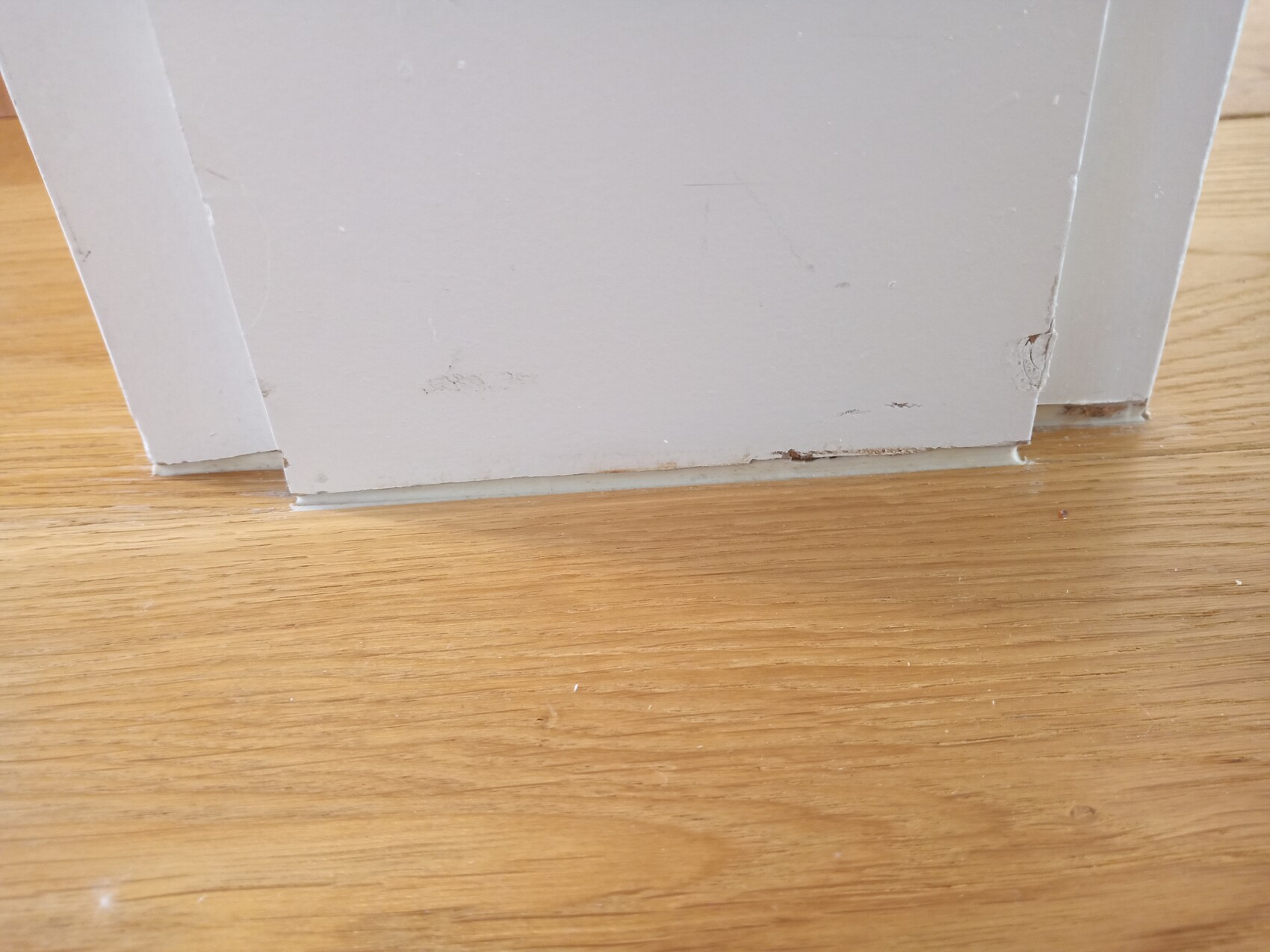
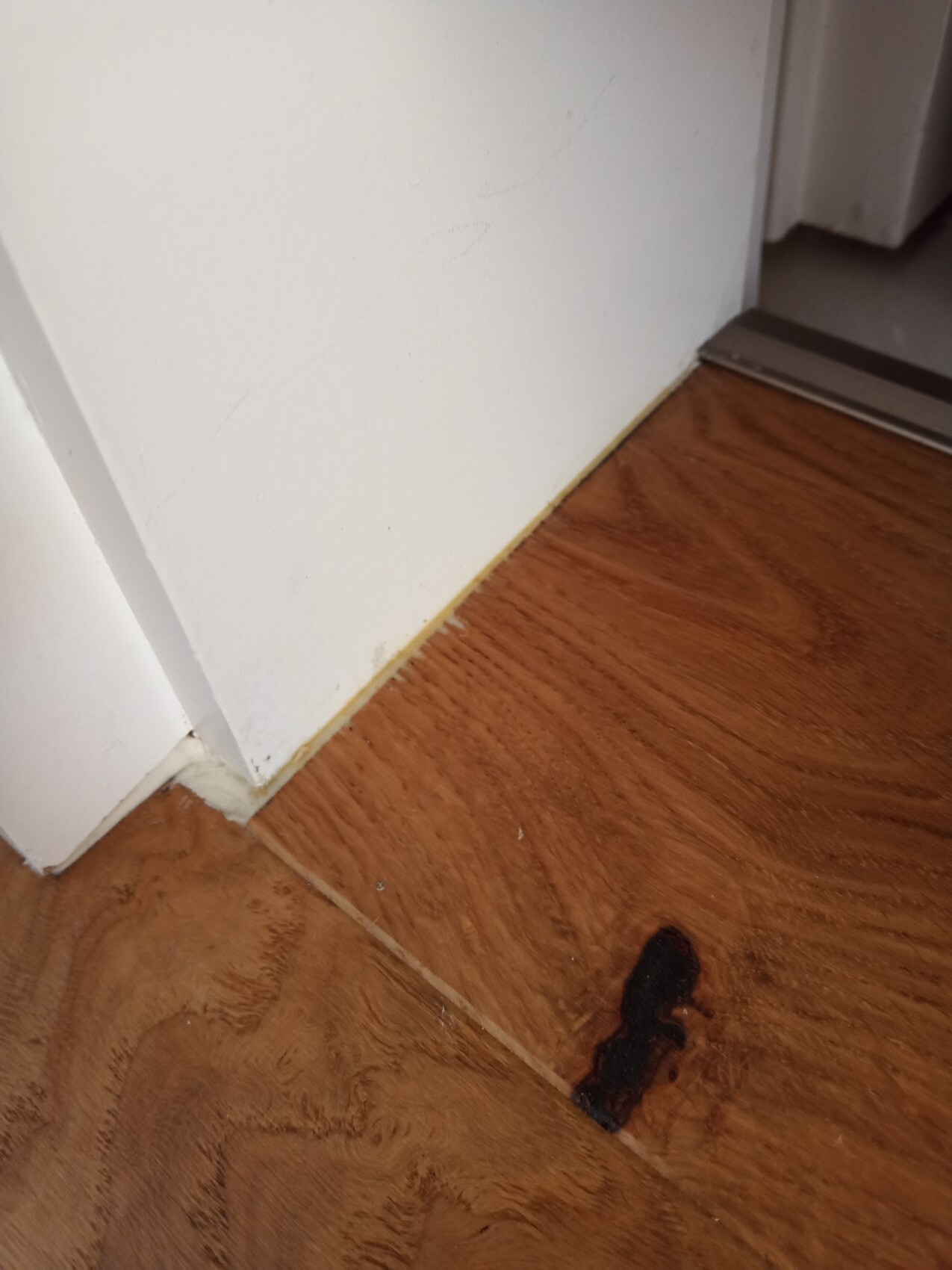
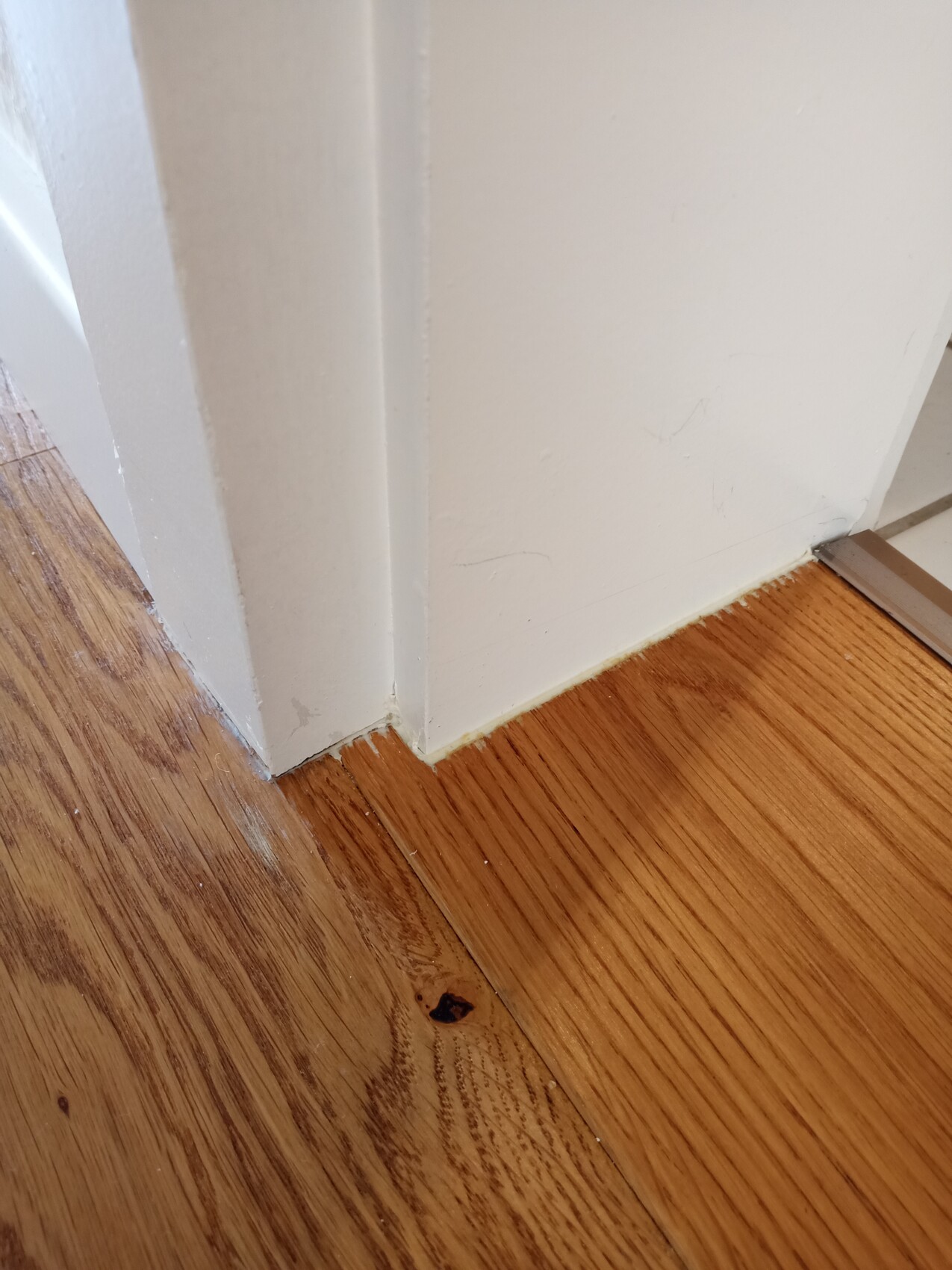
What do you think about the door frames? Are they acceptable as they are?
How would you recommend I proceed (warranty period), or do you consider the result to be okay?
Thank you very much for answering my questions.
Some time ago, I hired a professional flooring company to fully glue down engineered wide plank flooring over an area of 90m² (970 sq ft). After a short time, I noticed that the flooring was uneven and the baseboards were installed very poorly. One uneven spot was repaired since it was outside the usual tolerance. The baseboards were also replaced.
For the job, I paid approximately €7,500 and an additional €500 for the baseboards. I paid around €7,000 for the wide plank flooring itself. Altogether, I am at about €15,000.
What bothers me about the whole matter is that I expected a neat and clean job, but there are several unsightly spots. Even after the uneven area was repaired and the baseboards replaced, I keep finding new imperfections. Almost all rooms have unevenness, though still within acceptable tolerance.
What do you think about the quality of the work?
What do you think about the door frames? Are they acceptable as they are?
How would you recommend I proceed (warranty period), or do you consider the result to be okay?
Thank you very much for answering my questions.

Mp11111 schrieb:
The company’s manager visited the site several times and inspected the work of his team.
He therefore had the opportunity to correct his employees’ mistakes.
Unlike me, he is not an amateur. He would have noticed something like this immediately. He remained silent. The owner of the contractor’s company is the legal representative of the opposing party.
Mp11111 schrieb:
Why should the above no longer apply just because I accepted the work out of layman’s ignorance without signing any form? From a purely legal point of view, maybe that is the case. Or maybe not?
On a personal and professional level, however, that is absolutely not fair! You complained, the defects were repaired, and you implicitly accepted the incomplete repairs. From what is shown, I do not see any signs of escalating long-term issues; you simply delayed reporting your dissatisfaction with the previous repairs promptly. That is not fair. Warranty periods are intended to cover defects that become apparent later—not to postpone reporting complaints. All defects appear to have been noticeable from the start. It may require an expert to be able to explain and demonstrate correct workmanship—but in my opinion, not to recognize poor workmanship as such.
https://www.instagram.com/11antgmxde/
https://www.linkedin.com/company/bauen-jetzt/
I wanted to bring our expert @KlaRa into the thread earlier, but we last saw him after March 21 of this year.
https://www.instagram.com/11antgmxde/
https://www.linkedin.com/company/bauen-jetzt/
https://www.instagram.com/11antgmxde/
https://www.linkedin.com/company/bauen-jetzt/
Hello 11ant,
Many things seem to have gone wrong here, including my own approach. I admit that I have made mistakes. As I said, the whole matter overwhelmed me. This is not how I had imagined it. I would not do it this way again. I still hope that the issue will be resolved well for both sides.
Thank you all. 🙂
Goodbye
Many things seem to have gone wrong here, including my own approach. I admit that I have made mistakes. As I said, the whole matter overwhelmed me. This is not how I had imagined it. I would not do it this way again. I still hope that the issue will be resolved well for both sides.
Thank you all. 🙂
Goodbye

Hello questioner.
Regardless of the previous feedback here, here is my expert opinion:
----------------
1. What kind of unevenness is it, how was it determined, how was it measured, and above all: how was it fixed?
Surface irregularities within the tolerance limits according to DIN 19202 are checked using a long straightedge or a sufficiently long measuring ruler (or spirit level). If it is a bulging high spot, which I assume in this case, it is technically considered a "high point," which according to flatness standards is not classified as an unevenness.
However, this does not mean that every high spot cannot be a defect and must be accepted!
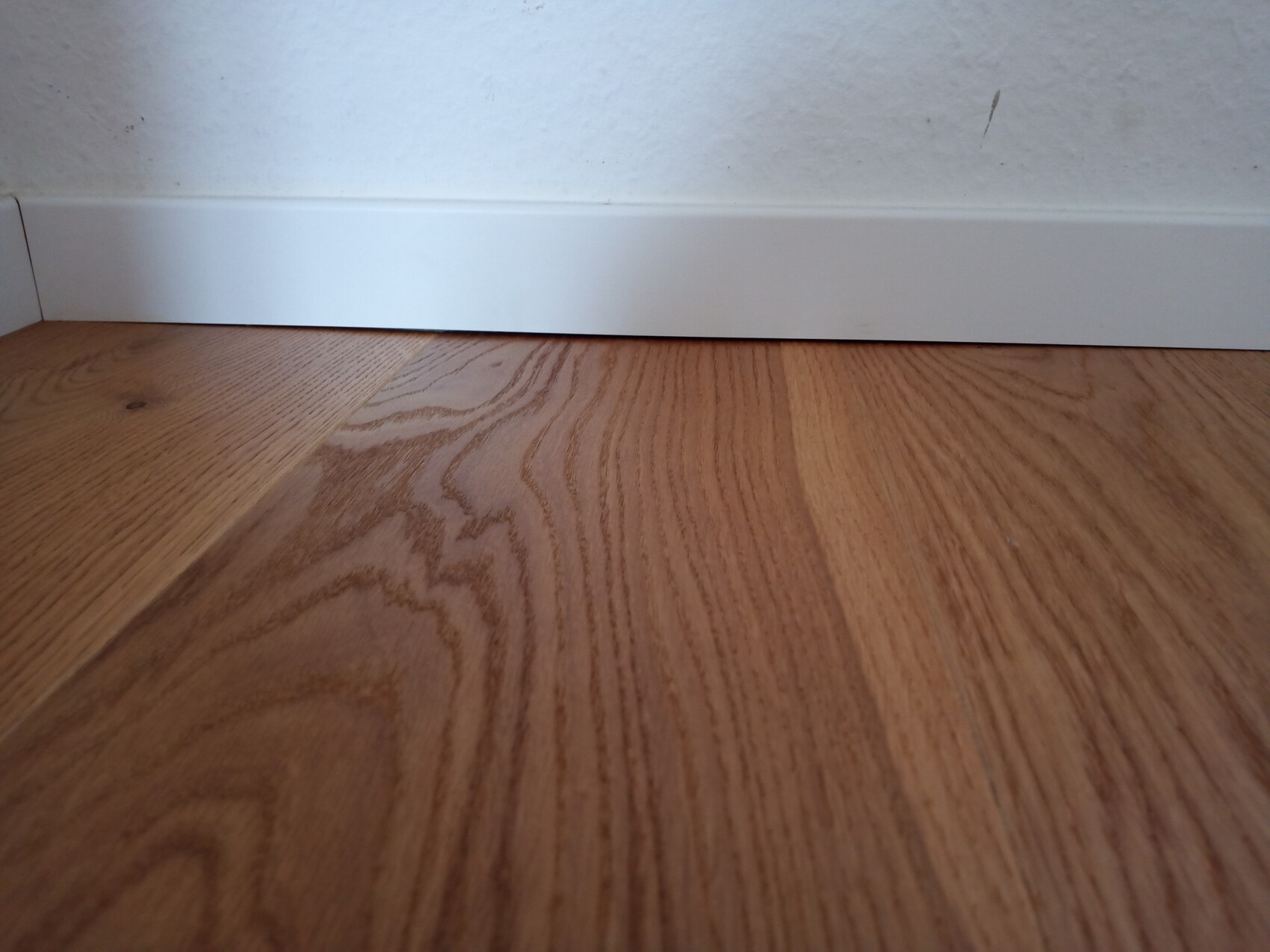
For example, take the photo showing the parquet surface and the baseboard, with a visible gap beneath the baseboard in the transition area.
Such unevenness usually originates from the flatness of the substrate under glued parquet, so in the skimmed screed surface.
Whether this is a defect or something to be corrected depends on the tolerance value and the measurement point spacing, as well as how the measurements were taken.
In most cases, the cause of such gap formation is the shrinkage-related curling of the screed during drying and cannot be avoided.
Conclusion here: not necessarily a defect, based on photo 691092-1.jpg a defect can be clearly denied.
-------------------
2. The strip-like pattern shown in photo 20250628_192154.jpg is a visual aspect (I avoid the term DEFECT here, as it is a legal term reserved for lawyers) which is definitely not acceptable, but can only be corrected with considerable effort, such as partial reinstallation.
For clarity, let us use the term "visual defect." This is certainly a black mark for the installer, since they did not calculate the final position of the last row of planks based on the plank widths before installation. In this case, the measurement was too tight; they should have started with half a plank width at the beginning.
--------------------------------
IMG_20250701_150134_748.jpg
3. Even for glued parquet, an expansion gap of 5mm (0.2 inches) to the wall should be maintained. This was not done here, and furthermore, the white sealant used is not aesthetically pleasing. There are also color-matched sealants available that better complement the parquet appearance.
------------------------------
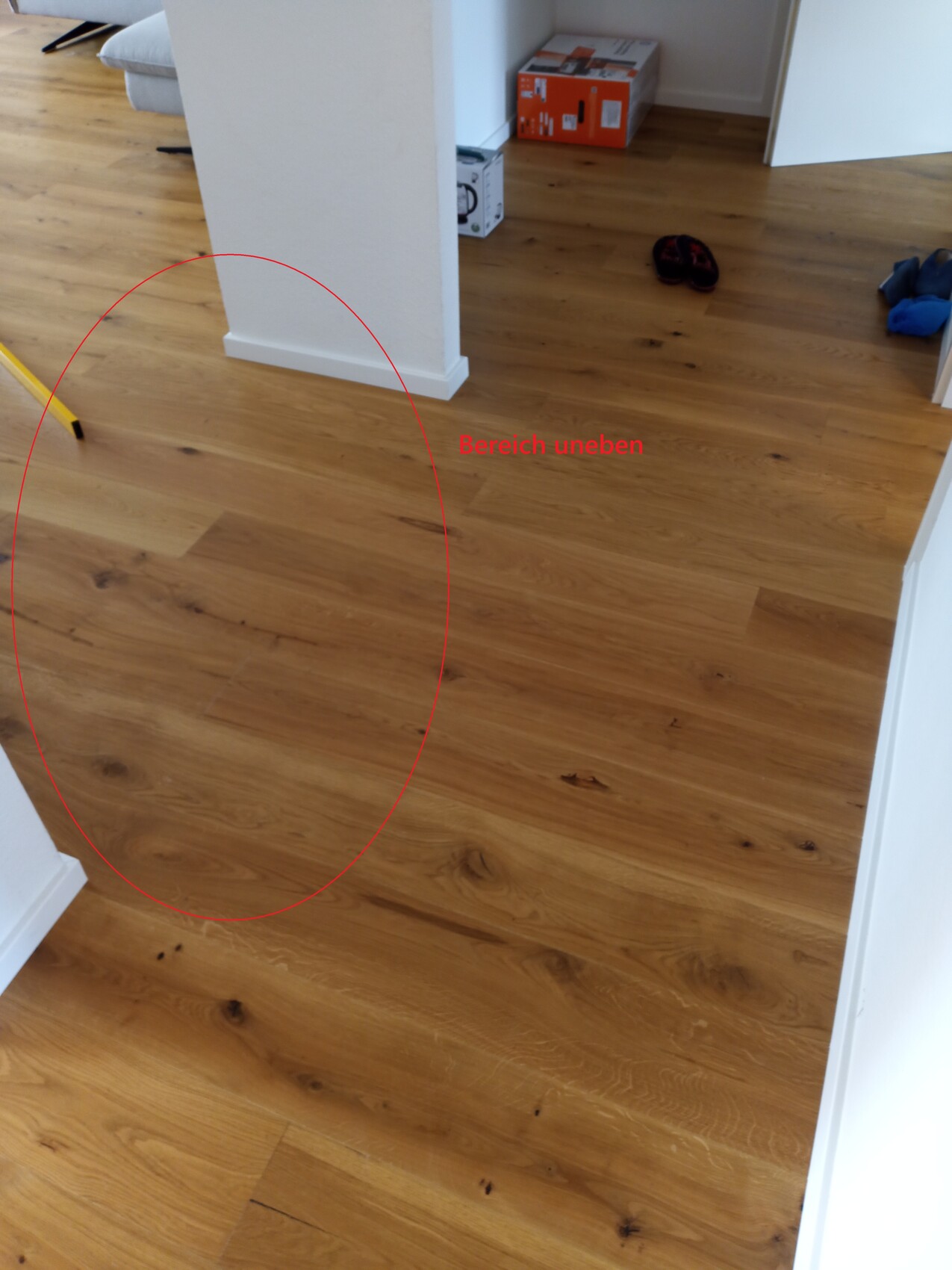
4. The main issue, also for the future, can be seen in photo 691092-2.jpg.
If the area outlined in red has bulged, this is likely due to a detachment underneath the affected parquet planks.
This means: either the parquet adhesive failed for reasons I will not list here individually, or the upper edge zone of the substrate. This can only be identified by opening the affected area to assess the breakage zone.
What does "corrected" mean?
I can only correctly repair something if I have identified the cause of the detachment in this case.
And if the parquet planks have actually detached on the underside, how can this be repaired without partially removing the planks?
While this can be done by injection with a reactive resin, for example PMMA, it is completely uncertain whether this method will have a lasting successful result.
I do not intend to cause alarm.
My suggestion is that as soon as a larger area bulges again, send a registered letter to the parquet company including in the subject line the phrase "notice of defects with a request for correction within 4 weeks of receipt."
This letter will initially stop the limitation period of (usually) 5 years, and you can prove by means of the letter that you insist on performance.
If you only call, the whole matter tends to disappear in the fog of non-commitment and/or forgetfulness.
----------------------------
Good luck: KlaRa
Regardless of the previous feedback here, here is my expert opinion:
----------------
1. What kind of unevenness is it, how was it determined, how was it measured, and above all: how was it fixed?
Surface irregularities within the tolerance limits according to DIN 19202 are checked using a long straightedge or a sufficiently long measuring ruler (or spirit level). If it is a bulging high spot, which I assume in this case, it is technically considered a "high point," which according to flatness standards is not classified as an unevenness.
However, this does not mean that every high spot cannot be a defect and must be accepted!
For example, take the photo showing the parquet surface and the baseboard, with a visible gap beneath the baseboard in the transition area.
Such unevenness usually originates from the flatness of the substrate under glued parquet, so in the skimmed screed surface.
Whether this is a defect or something to be corrected depends on the tolerance value and the measurement point spacing, as well as how the measurements were taken.
In most cases, the cause of such gap formation is the shrinkage-related curling of the screed during drying and cannot be avoided.
Conclusion here: not necessarily a defect, based on photo 691092-1.jpg a defect can be clearly denied.
-------------------
2. The strip-like pattern shown in photo 20250628_192154.jpg is a visual aspect (I avoid the term DEFECT here, as it is a legal term reserved for lawyers) which is definitely not acceptable, but can only be corrected with considerable effort, such as partial reinstallation.
For clarity, let us use the term "visual defect." This is certainly a black mark for the installer, since they did not calculate the final position of the last row of planks based on the plank widths before installation. In this case, the measurement was too tight; they should have started with half a plank width at the beginning.
--------------------------------
IMG_20250701_150134_748.jpg
3. Even for glued parquet, an expansion gap of 5mm (0.2 inches) to the wall should be maintained. This was not done here, and furthermore, the white sealant used is not aesthetically pleasing. There are also color-matched sealants available that better complement the parquet appearance.
------------------------------
4. The main issue, also for the future, can be seen in photo 691092-2.jpg.
If the area outlined in red has bulged, this is likely due to a detachment underneath the affected parquet planks.
This means: either the parquet adhesive failed for reasons I will not list here individually, or the upper edge zone of the substrate. This can only be identified by opening the affected area to assess the breakage zone.
What does "corrected" mean?
I can only correctly repair something if I have identified the cause of the detachment in this case.
And if the parquet planks have actually detached on the underside, how can this be repaired without partially removing the planks?
While this can be done by injection with a reactive resin, for example PMMA, it is completely uncertain whether this method will have a lasting successful result.
I do not intend to cause alarm.
My suggestion is that as soon as a larger area bulges again, send a registered letter to the parquet company including in the subject line the phrase "notice of defects with a request for correction within 4 weeks of receipt."
This letter will initially stop the limitation period of (usually) 5 years, and you can prove by means of the letter that you insist on performance.
If you only call, the whole matter tends to disappear in the fog of non-commitment and/or forgetfulness.
----------------------------
Good luck: KlaRa
Similar topics