
ᐅ Concrete slab with strip foundation and frost protection apron
Created on: 8 Feb 2019 21:48
C
Christian K.
Hello friends of house building,
Until now, I always assumed that you insulate a slab foundation using formwork. Simply placing a shell of XPS insulation and then pouring the slab. Of course, that’s a very simplified explanation.
Our construction manager now suggests a frost skirt. This means that the masonry and the slab will be insulated with x cm of insulation material, and the strip footing will receive 5 cm (2 inches) of insulation. The area below the slab will not be insulated because the strip footing with the frost skirt makes it unnecessary, AND insulation of walls, roof, etc., provides more benefit than insulating the slab. It could be insulated, but it would add more cost.
What do you think? We do need to keep an eye on costs, and if it is more than just a nice-to-have, we have no problem with it, but I must admit that we have little information (and no experience at all) on this.
So long...
Until now, I always assumed that you insulate a slab foundation using formwork. Simply placing a shell of XPS insulation and then pouring the slab. Of course, that’s a very simplified explanation.
Our construction manager now suggests a frost skirt. This means that the masonry and the slab will be insulated with x cm of insulation material, and the strip footing will receive 5 cm (2 inches) of insulation. The area below the slab will not be insulated because the strip footing with the frost skirt makes it unnecessary, AND insulation of walls, roof, etc., provides more benefit than insulating the slab. It could be insulated, but it would add more cost.
What do you think? We do need to keep an eye on costs, and if it is more than just a nice-to-have, we have no problem with it, but I must admit that we have little information (and no experience at all) on this.
So long...
C
Christian K.9 Feb 2019 16:12wow... I didn’t receive an email notification and wanted to check if anyone had commented, and then I read through 4 pages full of useful information! Thanks!!
Our site manager wants to proceed as you described. We are building without a basement, using calcium silicate blocks and external thermal insulation composite system (ETICS). Here is a rough sketch of how it is planned:
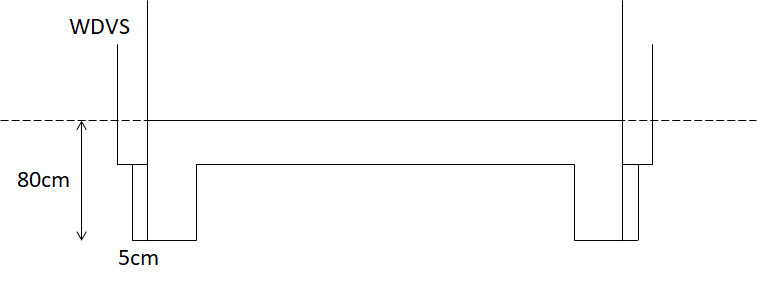
If we want to fully formwork the slab on grade, it will cost about 4,000 more. That was only an estimate and the structural contractor would need to be asked. We don’t know the cost for insulating the slab on grade alone in this example. However, he thinks that, for instance, 4,000 spent on ETICS or the roof would be more beneficial. The slab insulation contributes only 0.5 to the overall energy value and is not needed for frost protection.
We are not working with a general contractor, so we would have to negotiate any extra costs with the structural contractor. How this would affect the structural calculations is, of course, a different matter.
Our site manager wants to proceed as you described. We are building without a basement, using calcium silicate blocks and external thermal insulation composite system (ETICS). Here is a rough sketch of how it is planned:
If we want to fully formwork the slab on grade, it will cost about 4,000 more. That was only an estimate and the structural contractor would need to be asked. We don’t know the cost for insulating the slab on grade alone in this example. However, he thinks that, for instance, 4,000 spent on ETICS or the roof would be more beneficial. The slab insulation contributes only 0.5 to the overall energy value and is not needed for frost protection.
We are not working with a general contractor, so we would have to negotiate any extra costs with the structural contractor. How this would affect the structural calculations is, of course, a different matter.

Perhaps I should add that in Schleswig-Holstein, ETICS constructions are rather exceptions: most buildings have clinker brick facades, followed by monolithically plastered Ytong (aerated concrete) facades in second place, and wooden houses in third. ---Then there is a long gap, and only occasionally Poroton with ETICS appears. Karsten
Similar topics