
Hello everyone,
We are currently insulating our facade with 16cm (6.3 inches) EPS. The insulation will be extended down to the level of the basement windows, so it will also run underneath the patio doors. The basement itself is not heated. Now we are wondering what the best solution is for the patio exits. According to our energy consultant, we are not allowed to omit insulation under the doors. Our builder says that we cannot lay patio slabs on top of the insulation because the insulation boards cannot support the weight.
One solution we found would be a stepped exit, similar to a windowsill. However, this would result in a step. Ideally, everything would be on the same level.
Does anyone have any ideas or have faced the same problem?
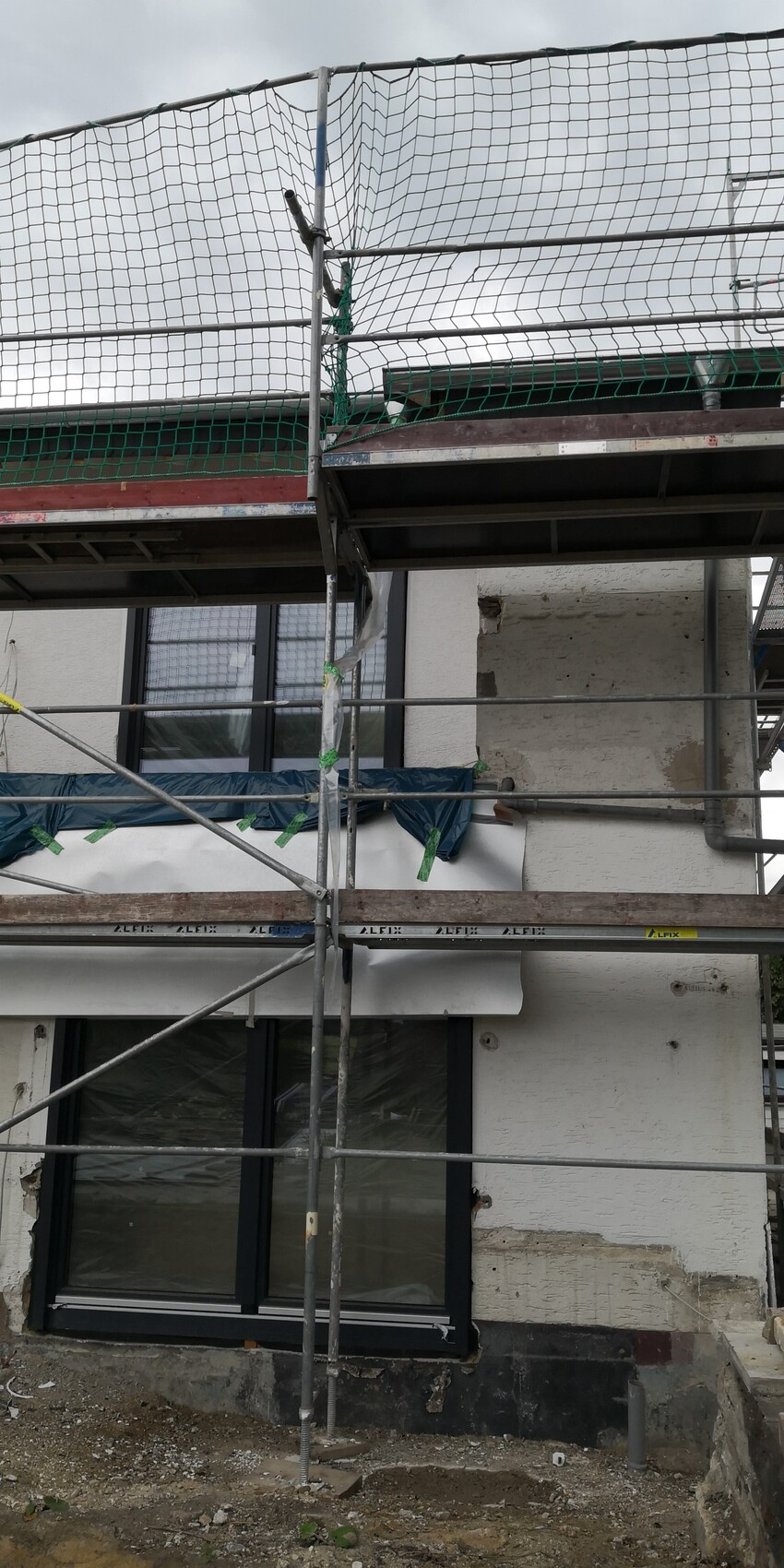
Here is a photo showing one of the patio doors at the bottom. The entire facade will be insulated. The terrace area will be built up with fill material.
We are currently insulating our facade with 16cm (6.3 inches) EPS. The insulation will be extended down to the level of the basement windows, so it will also run underneath the patio doors. The basement itself is not heated. Now we are wondering what the best solution is for the patio exits. According to our energy consultant, we are not allowed to omit insulation under the doors. Our builder says that we cannot lay patio slabs on top of the insulation because the insulation boards cannot support the weight.
One solution we found would be a stepped exit, similar to a windowsill. However, this would result in a step. Ideally, everything would be on the same level.
Does anyone have any ideas or have faced the same problem?
Here is a photo showing one of the patio doors at the bottom. The entire facade will be insulated. The terrace area will be built up with fill material.
I don’t think it’s unimportant at all; at least, I don’t know of any perimeter insulation that isn’t pressure-resistant.
A general assumption only works with the poor thermal bridge allowance of 0.10 W/(m²·K). This often means losing a KfW55 standard, which can be financially worthwhile just based on the higher subsidy. Also, moisture protection is not demonstrated with this approach.
I only use this in heritage conservation cases when no other option is feasible, or for garages located inside the house or stairs leading to unheated basements. After construction, optimizing thermal bridges in these areas becomes very difficult. A blower door test often becomes a problem in these situations as well.
A general assumption only works with the poor thermal bridge allowance of 0.10 W/(m²·K). This often means losing a KfW55 standard, which can be financially worthwhile just based on the higher subsidy. Also, moisture protection is not demonstrated with this approach.
I only use this in heritage conservation cases when no other option is feasible, or for garages located inside the house or stairs leading to unheated basements. After construction, optimizing thermal bridges in these areas becomes very difficult. A blower door test often becomes a problem in these situations as well.

That won’t really work out, as all the expensive trades are also included in the KfW70 standard.
There will be no changes to the building services or the windows and doors.
Possibly, there could be 2cm (1 inch) more insulation in the walls or roof, or a thermal bridge coefficient of 0.05 W/(m²·K) or less might suffice.
Only then is the calculated verification required.
But no worries, I wish you every success.
There will be no changes to the building services or the windows and doors.
Possibly, there could be 2cm (1 inch) more insulation in the walls or roof, or a thermal bridge coefficient of 0.05 W/(m²·K) or less might suffice.
Only then is the calculated verification required.
But no worries, I wish you every success.
@parcus In our case, it actually works out due to the increase in subsidies at the beginning of the year. (Last year we applied for KfW55, then withdrew it and applied for KfW70)
We had corrugated metal sheets installed. They’re not exactly pleasing to the eye, but it was simply the fastest and easiest solution. We’re still not satisfied with the type of fastening, though, as it feels a bit loose to us. Our builder will have to take care of that.
Just the other day, I realized we will have the same issue with the front door since it’s raised by about one step. We’ll see if we can simply leave out the insulation under the door.
I’m still surprised that there are so few solutions to this topic online. It should actually concern everyone who is insulating the facade and replacing doors at the same time, right?
We had corrugated metal sheets installed. They’re not exactly pleasing to the eye, but it was simply the fastest and easiest solution. We’re still not satisfied with the type of fastening, though, as it feels a bit loose to us. Our builder will have to take care of that.
Just the other day, I realized we will have the same issue with the front door since it’s raised by about one step. We’ll see if we can simply leave out the insulation under the door.
I’m still surprised that there are so few solutions to this topic online. It should actually concern everyone who is insulating the facade and replacing doors at the same time, right?
Similar topics