
Hello everyone,
the facade of our 2-year-old house is no longer white.
Here are a few pictures:
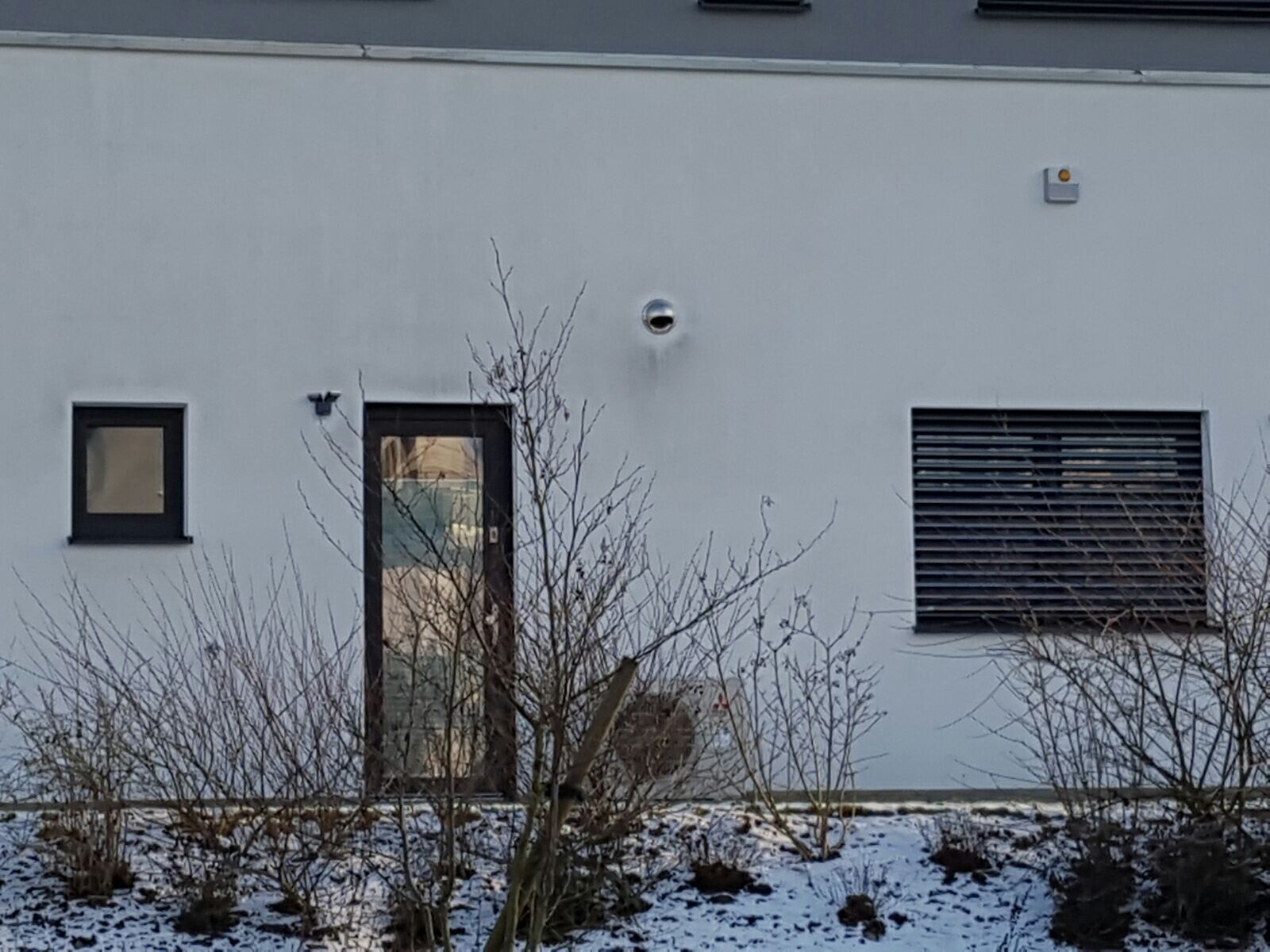

What could this be?
In the picture of the north side, the outlines of the insulation panels seem visible – or am I just imagining it?
We had similar “stains” already after one year. However, only in a few spots and mostly on other sides. We repainted those areas and it was fine afterward.
I don’t know how long these have been here – but they are on the back side of the house, which I just happened to pass recently and noticed this for the first time.
Thanks for your feedback.
Mario
the facade of our 2-year-old house is no longer white.
Here are a few pictures:
What could this be?
In the picture of the north side, the outlines of the insulation panels seem visible – or am I just imagining it?
We had similar “stains” already after one year. However, only in a few spots and mostly on other sides. We repainted those areas and it was fine afterward.
I don’t know how long these have been here – but they are on the back side of the house, which I just happened to pass recently and noticed this for the first time.
Thanks for your feedback.
Mario
Google "construction visual defect"
(even though this term does not officially exist)
Several court rulings come up, for example:
Under certain circumstances, property owners can refuse acceptance or make claims against the builder even for purely visual defects. A construction defect is usually defined as when "the usability of the building for its usual or contractually intended purpose is impaired or when the building does not correspond to what the contracting parties agreed upon." However, the prerequisite for visual defects is that these are not just minor imperfections. Here are three interesting court rulings on this topic.
The green-discolored facade:
An owners' association commissioned facade refurbishment including thermal insulation. The facade was white, but after only two years, dark greenish discolorations appeared. These were mold and algae. The owners' association wanted to assert warranty claims. The contractor defended themselves by stating that a facade can naturally discolor due to environmental influences and occasionally needs cleaning.
The Higher Regional Court of Frankfurt am Main confirmed that there was a defect in this case. Although every facade gradually discolors due to weather exposure, this should not happen within just two years. According to an expert, the similarly light-colored facades of neighboring houses had not discolored in this way. The materials used were flawless on their own. According to the expert, a remedy was possible by widening metal sheet coverings made of zinc, which could prevent constant runoff of rainwater down the facade. The court regarded the delivered work as defective because the building already had an unattractive external appearance after a short time and, in addition, required an unusual cleaning effort every two years.
[I]Higher Regional Court of Frankfurt am Main, decision from July 7, 2010, case no. 7 U 76/09[/I]
(even though this term does not officially exist)
Several court rulings come up, for example:
Under certain circumstances, property owners can refuse acceptance or make claims against the builder even for purely visual defects. A construction defect is usually defined as when "the usability of the building for its usual or contractually intended purpose is impaired or when the building does not correspond to what the contracting parties agreed upon." However, the prerequisite for visual defects is that these are not just minor imperfections. Here are three interesting court rulings on this topic.
The green-discolored facade:
An owners' association commissioned facade refurbishment including thermal insulation. The facade was white, but after only two years, dark greenish discolorations appeared. These were mold and algae. The owners' association wanted to assert warranty claims. The contractor defended themselves by stating that a facade can naturally discolor due to environmental influences and occasionally needs cleaning.
The Higher Regional Court of Frankfurt am Main confirmed that there was a defect in this case. Although every facade gradually discolors due to weather exposure, this should not happen within just two years. According to an expert, the similarly light-colored facades of neighboring houses had not discolored in this way. The materials used were flawless on their own. According to the expert, a remedy was possible by widening metal sheet coverings made of zinc, which could prevent constant runoff of rainwater down the facade. The court regarded the delivered work as defective because the building already had an unattractive external appearance after a short time and, in addition, required an unusual cleaning effort every two years.
[I]Higher Regional Court of Frankfurt am Main, decision from July 7, 2010, case no. 7 U 76/09[/I]
B
Bieber081526 Jan 2017 23:12Fortunately, the word "optical" does not appear in the bolded part; I was beginning to think it actually existed.
P
Peanuts7427 Jan 2017 07:56Our neighbor experienced the same issue. It could also be caused by residual moisture still present in the masonry.
In any case, we checked with a thermal imaging camera, and thermal bridges were definitely not the cause.
Typically, the panels have a "step" profile, so they overlap. Any remaining gaps are then filled with expanding foam.
In the end, his general contractor coated the wall with a paint that allows moisture to pass from the inside to the outside while still being "tight" against inward moisture.
He has had no problems for years now, and it wasn't a major effort...
In any case, we checked with a thermal imaging camera, and thermal bridges were definitely not the cause.
Typically, the panels have a "step" profile, so they overlap. Any remaining gaps are then filled with expanding foam.
In the end, his general contractor coated the wall with a paint that allows moisture to pass from the inside to the outside while still being "tight" against inward moisture.
He has had no problems for years now, and it wasn't a major effort...
B
Bieber081527 Jan 2017 10:09Peanuts74 schrieb:
Any remaining joints will then be filled with construction foam. Construction foam is a broad term. More accurately, it might be a PU insulating foam; further details can be found in the datasheet from the ETICS provider.
P
Peanuts7427 Jan 2017 10:15Bieber0815 schrieb:
Construction foam is a broad term. It might actually refer to a PU insulating foam; the datasheet from the ETICS provider can give more details.Or something like that. I've done a lot myself, but anything related to plastering is like magic to me. It just looks like construction foam...
Update....
The service provider did not respond to my defect notice. I then hired a lawyer and... lo and behold... suddenly there was a letter... "contacted multiple times, he should check his voicemail."
I then received feedback by phone: it is not a defect.
The stains come from algae and fish (from the stream) or from the air conditioning.
=> just as a side note: there are no fish in that stream at all.
Kind of funny, if it weren’t so frustrating.
So, it’s on to the next round.
Regards,
Mario
The service provider did not respond to my defect notice. I then hired a lawyer and... lo and behold... suddenly there was a letter... "contacted multiple times, he should check his voicemail."
I then received feedback by phone: it is not a defect.
The stains come from algae and fish (from the stream) or from the air conditioning.
=> just as a side note: there are no fish in that stream at all.
Kind of funny, if it weren’t so frustrating.
So, it’s on to the next round.
Regards,
Mario
Similar topics