
ᐅ Garage-carport combination as a timber frame structure with sandwich panels
Created on: 10 Jan 2024 17:46
B
bigborre
I am planning to build my garage with an attached carport this year. The garage will have two rooms (garage + workshop) with a height difference of 30cm (12 inches).
Directly adjacent to the garage, there will be a carport ending on a wall. The roof will be continuous.
I am considering building the garage using sandwich panels (with a wooden substructure). The advantages are insulation and easy assembly. No external or internal plastering is needed.
The workshop is intended for use in winter, so insulation is important. Heating will probably be electric or an air heat pump.
A photovoltaic system will be installed on the roof.
For the foundation, two concrete slabs will be poured (on strip foundations) with a height difference of 30cm (12 inches) to help even out the slope.
I am currently working on the detailed planning.
The strip foundations and concrete slabs will be done as self build. The wooden structure will be contracted out (mainly because of the roof length of over 11m (36 feet)).
Current questions:
- Insulation of the concrete slab for winter use. Is a complete floor build-up including screed necessary?
- Heating – air heat pump without underfloor heating, or electric heating in the floor (simpler but less effective).
- Practical mounting of photovoltaic panels on sandwich panels (using a mounting system or not). Some panels should also be mounted on the south-facing vertical wall (perfect south orientation).
Maybe someone has some input, as it’s hard to think of everything. The building permit / planning permission is currently in process.
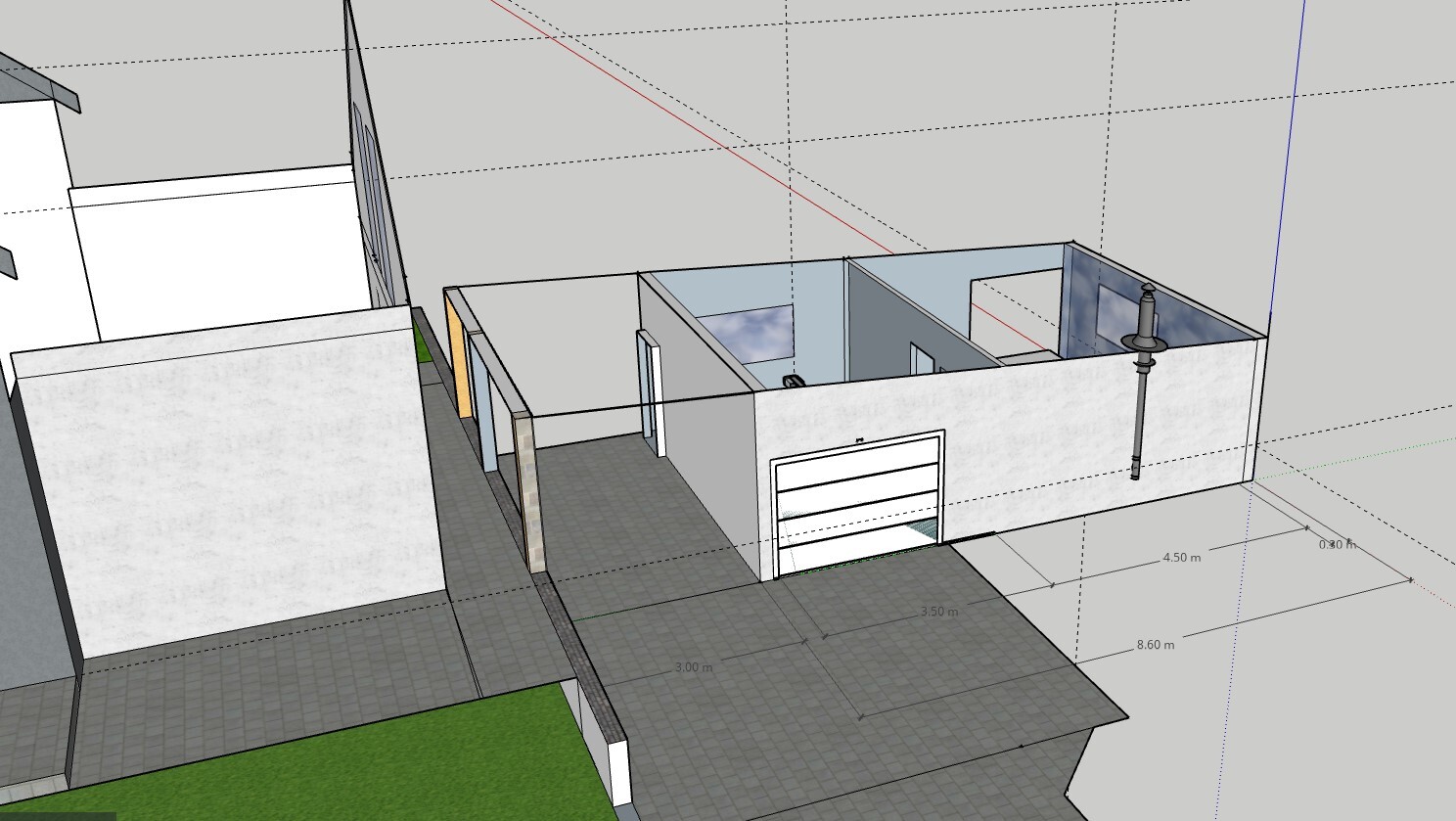
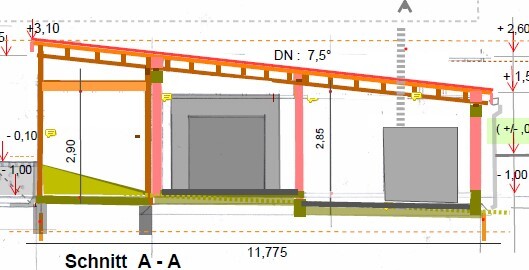
Directly adjacent to the garage, there will be a carport ending on a wall. The roof will be continuous.
I am considering building the garage using sandwich panels (with a wooden substructure). The advantages are insulation and easy assembly. No external or internal plastering is needed.
The workshop is intended for use in winter, so insulation is important. Heating will probably be electric or an air heat pump.
A photovoltaic system will be installed on the roof.
For the foundation, two concrete slabs will be poured (on strip foundations) with a height difference of 30cm (12 inches) to help even out the slope.
I am currently working on the detailed planning.
The strip foundations and concrete slabs will be done as self build. The wooden structure will be contracted out (mainly because of the roof length of over 11m (36 feet)).
Current questions:
- Insulation of the concrete slab for winter use. Is a complete floor build-up including screed necessary?
- Heating – air heat pump without underfloor heating, or electric heating in the floor (simpler but less effective).
- Practical mounting of photovoltaic panels on sandwich panels (using a mounting system or not). Some panels should also be mounted on the south-facing vertical wall (perfect south orientation).
Maybe someone has some input, as it’s hard to think of everything. The building permit / planning permission is currently in process.
Then just consider good insulation and a frost-proof water connection. The sink itself is rather unproblematic.
I wouldn’t install a large heating system in the garage just for a sink. However, if you need your garage as a retreat from your spouse/children, then I would line everything nicely with velvet and silk 😉
I wouldn’t install a large heating system in the garage just for a sink. However, if you need your garage as a retreat from your spouse/children, then I would line everything nicely with velvet and silk 😉
S
Simon-18912 Jan 2024 11:03Hello,
I think you are overcomplicating the water supply. Run the cold water pipe frost-free through the garage and install an instantaneous water heater there for the hot water. That will be more than sufficient for occasional use. For heating, you might consider infrared panels. Underfloor heating in the garage or workshop would be too slow to noticeably warm the space. I also wouldn’t recommend running it continuously. It depends on how often you work there.
Once the building permit / planning permission is approved, please reduce the number of purlins. There are clearly too many. With a photovoltaic system, a sandwich roof can easily span 2.20 to 2.50 meters (7.2 to 8.2 feet), depending on the core thickness. There is still potential for optimization. 😉
I think you are overcomplicating the water supply. Run the cold water pipe frost-free through the garage and install an instantaneous water heater there for the hot water. That will be more than sufficient for occasional use. For heating, you might consider infrared panels. Underfloor heating in the garage or workshop would be too slow to noticeably warm the space. I also wouldn’t recommend running it continuously. It depends on how often you work there.
Once the building permit / planning permission is approved, please reduce the number of purlins. There are clearly too many. With a photovoltaic system, a sandwich roof can easily span 2.20 to 2.50 meters (7.2 to 8.2 feet), depending on the core thickness. There is still potential for optimization. 😉

I would simply choose a split air conditioner. It can also cool in the summer (and dehumidify during the transitional seasons).
An interesting question would be whether there is a specific model that regulates a temperature range (15-25°C (59-77°F)). Essentially, one that allows setting both an upper and lower hysteresis. That way, you would have an all-year-round climatization system without wasting too much electricity.
Maybe @Mycraft knows of a particular model?
An interesting question would be whether there is a specific model that regulates a temperature range (15-25°C (59-77°F)). Essentially, one that allows setting both an upper and lower hysteresis. That way, you would have an all-year-round climatization system without wasting too much electricity.
Maybe @Mycraft knows of a particular model?
Thanks, there are some really good ideas here. I had already considered the climate system aspect, since it is essentially an air heat pump. Especially because an 18-20 kWh (kilowatt-hour) solar system will be installed, so there will usually be enough electricity available.
My thought is also possibly a future change of use—for example, the garage becoming a workshop, and the workshop turning into a hobby room, party room, or similar. Everything should be prepared in advance so that you don’t have to tear everything up again, particularly to avoid cold floors. Underfloor heating was an idea for that. At least insulation against the ground is necessary to prevent cold radiation from the floor when heating.
Inside the house, we have a slab-on-grade with insulation, heating, and a 6.5 cm (2.5 inch) screed.
That setup is quite complex and maybe even overkill, but otherwise the only option I can think of is to put the insulation under the slab.
My thought is also possibly a future change of use—for example, the garage becoming a workshop, and the workshop turning into a hobby room, party room, or similar. Everything should be prepared in advance so that you don’t have to tear everything up again, particularly to avoid cold floors. Underfloor heating was an idea for that. At least insulation against the ground is necessary to prevent cold radiation from the floor when heating.
Inside the house, we have a slab-on-grade with insulation, heating, and a 6.5 cm (2.5 inch) screed.
That setup is quite complex and maybe even overkill, but otherwise the only option I can think of is to put the insulation under the slab.

I agree with Tolentino and the others here. A split air conditioning system (which is essentially a heat pump, just cheaper to install) would, in my opinion, be the first choice. This way, you can respond quickly and achieve the desired temperatures within about 30-60 minutes (depending on capacity and size). Underfloor heating would be far too slow, although I would still insulate the floor.
The water pipes should be installed frost-free and, if necessary, equipped with heating cables. Automating this would also be an option. Nowadays, that’s no problem and doesn’t cost a fortune.
A desired temperature range and other parameters can easily be managed with modern home control systems from Daikin, Mitsubishi, and others. Together with further integration, for example with Google Calendar, even more can be achieved.
The water pipes should be installed frost-free and, if necessary, equipped with heating cables. Automating this would also be an option. Nowadays, that’s no problem and doesn’t cost a fortune.
A desired temperature range and other parameters can easily be managed with modern home control systems from Daikin, Mitsubishi, and others. Together with further integration, for example with Google Calendar, even more can be achieved.
Thanks, the split air conditioning is almost decided. Now I have a question regarding the floor slabs.
I want to pour two floor slabs. First the "lower" one, which overlaps the "upper" one by about 1 meter (3 feet). I plan to connect them with steel reinforcement. (Two floor slabs because I want to achieve a height difference of 30cm (12 inches).)
Is concrete with steel fibers sufficient for the floor slabs, or are proper steel mesh reinforcements necessary? This is not a single-family house. Does anyone have experience with this?
Thickness 15-20cm (6-8 inches). (I usually prefer a bit more.)
I want to pour two floor slabs. First the "lower" one, which overlaps the "upper" one by about 1 meter (3 feet). I plan to connect them with steel reinforcement. (Two floor slabs because I want to achieve a height difference of 30cm (12 inches).)
Is concrete with steel fibers sufficient for the floor slabs, or are proper steel mesh reinforcements necessary? This is not a single-family house. Does anyone have experience with this?
Thickness 15-20cm (6-8 inches). (I usually prefer a bit more.)
Similar topics