
Hello everyone,
This week, a new front door was delivered and installed at our house. In my opinion, the door was delivered too large and was not installed set into the wall opening but rather fixed from the inside against the wall. Unfortunately, I was not present at the time, and another family member essentially gave permission for this installation.
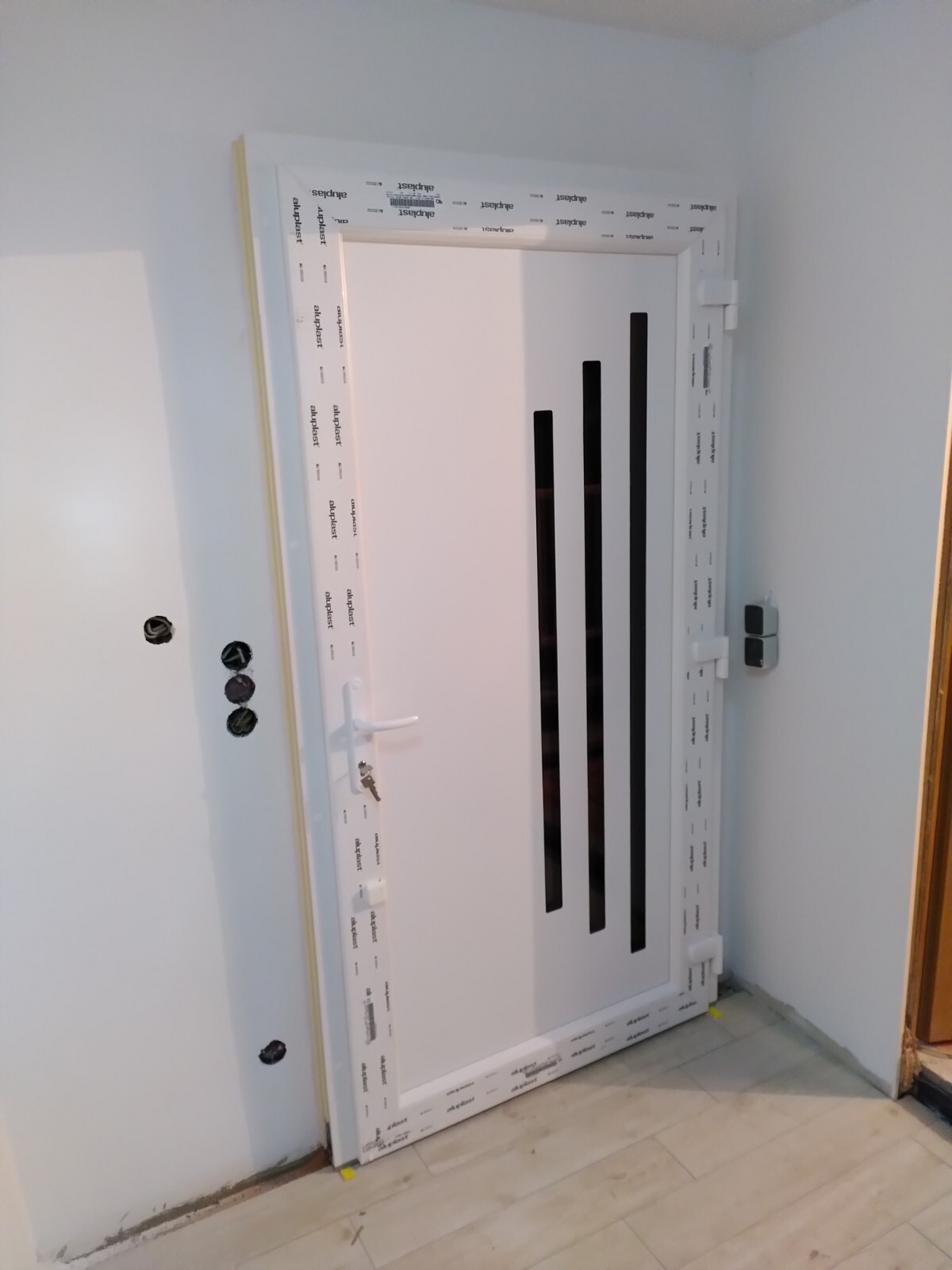
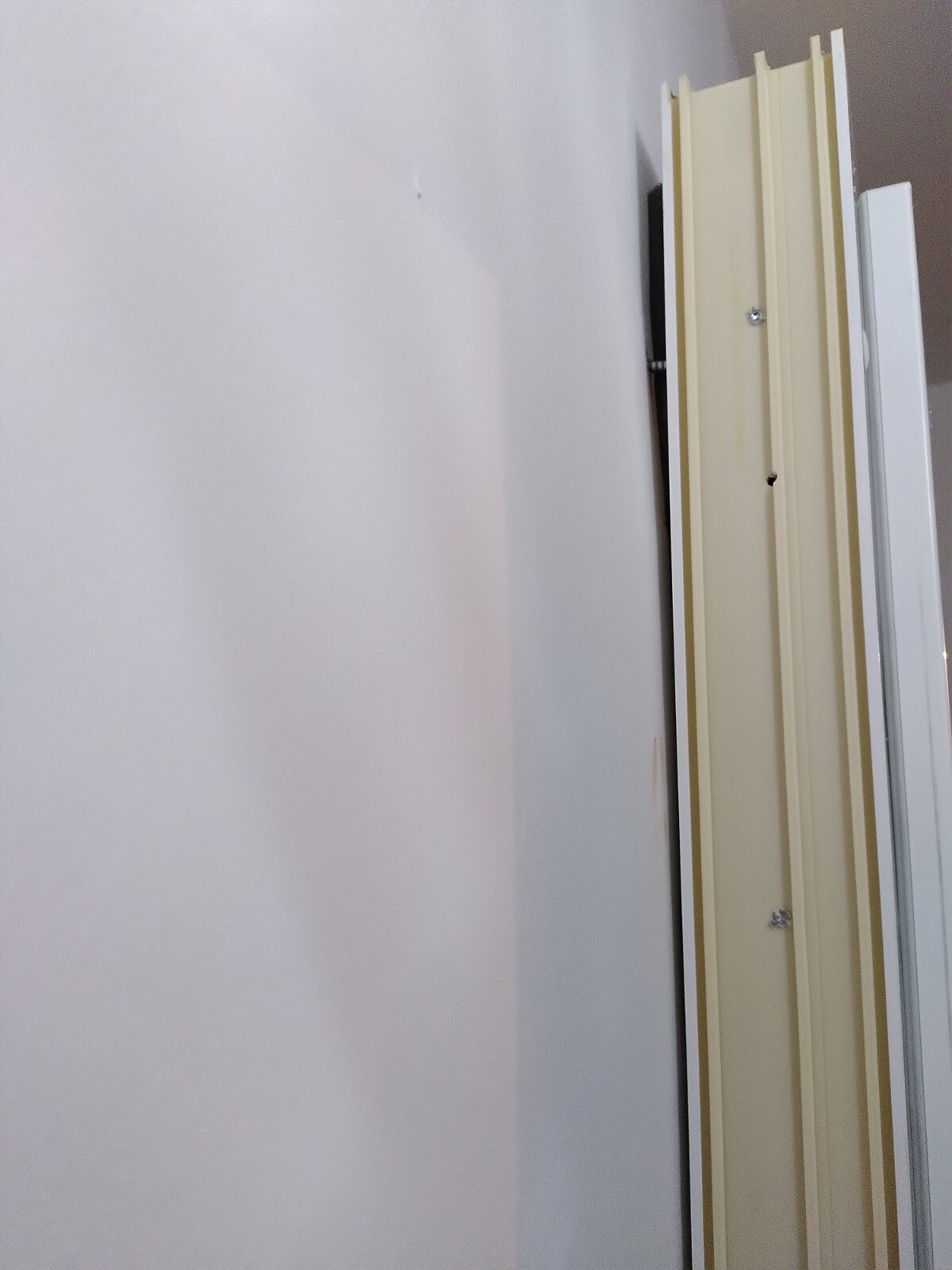
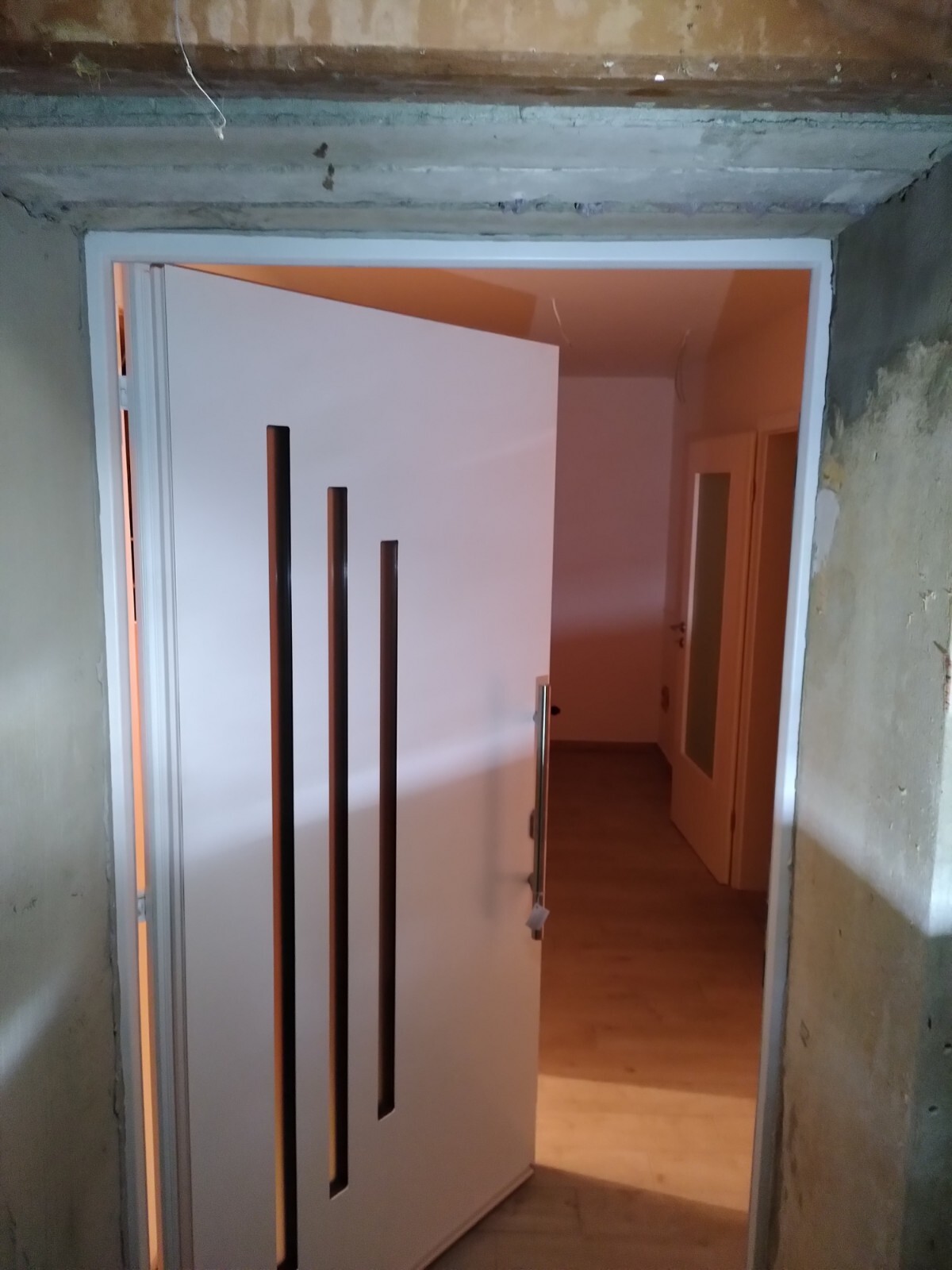
So now I’m considering how to deal with this. The company responsible says they measured specifically and everything is as ordered. I will hold back and spare myself and you from going into more detail on that.
For me, this was completely unexpected. The external wall is an uninsulated 45cm (18 inches) thick solid wall and will be fitted with external insulation. I even had the wall opening enlarged beforehand. I never would have dreamed the door wouldn’t be installed centered in the opening. Especially since there is currently no insulation in the opening, and at least the lintel still needs to be plastered. So I can’t add insulation in front of it anymore. Maybe a maximum of 1cm (0.4 inch), but then the door jamb practically lines up with the insulation. Since this is an older building and the walls are uneven, there are accordingly large gaps (which at least have sealing tape in them) as you can also see in the photo. This didn’t really matter for the interior plasterwork because no one expected a door to be installed here. The door frame still needs to be covered, and the gaps closed. The frame also has pre-drilled holes where it would normally be anchored to the wall opening.
What I’m really interested in is whether this kind of installation is standard practice at all? Assuming the misunderstanding is my responsibility, would this be acceptable from a craftsmanship or technical point of view? Because the external wall around the door opening cannot be insulated, I firmly assume this must cause a thermal bridge. Is my assumption correct?
This week, a new front door was delivered and installed at our house. In my opinion, the door was delivered too large and was not installed set into the wall opening but rather fixed from the inside against the wall. Unfortunately, I was not present at the time, and another family member essentially gave permission for this installation.
So now I’m considering how to deal with this. The company responsible says they measured specifically and everything is as ordered. I will hold back and spare myself and you from going into more detail on that.
For me, this was completely unexpected. The external wall is an uninsulated 45cm (18 inches) thick solid wall and will be fitted with external insulation. I even had the wall opening enlarged beforehand. I never would have dreamed the door wouldn’t be installed centered in the opening. Especially since there is currently no insulation in the opening, and at least the lintel still needs to be plastered. So I can’t add insulation in front of it anymore. Maybe a maximum of 1cm (0.4 inch), but then the door jamb practically lines up with the insulation. Since this is an older building and the walls are uneven, there are accordingly large gaps (which at least have sealing tape in them) as you can also see in the photo. This didn’t really matter for the interior plasterwork because no one expected a door to be installed here. The door frame still needs to be covered, and the gaps closed. The frame also has pre-drilled holes where it would normally be anchored to the wall opening.
What I’m really interested in is whether this kind of installation is standard practice at all? Assuming the misunderstanding is my responsibility, would this be acceptable from a craftsmanship or technical point of view? Because the external wall around the door opening cannot be insulated, I firmly assume this must cause a thermal bridge. Is my assumption correct?
H
hanghaus200031 Oct 2021 09:30Report the defect and request its correction. The door frame should be installed within the wall reveal.
H
hampshire31 Oct 2021 10:09What reason does your contractor give for this unusual installation choice?
To me, it also seems incorrect, and asking questions can help. There might be some unusual feature in your old house that explains it.
To me, it also seems incorrect, and asking questions can help. There might be some unusual feature in your old house that explains it.
K
Klappradl31 Oct 2021 10:51I will install a door like this in my basement. But only to avoid making it even lower, and the appearance doesn’t matter there. It would never be an option for an exterior door.