
Hello everyone,
This week, a new front door was delivered and installed at our house. In my opinion, the door was delivered too large and was not installed set into the wall opening but rather fixed from the inside against the wall. Unfortunately, I was not present at the time, and another family member essentially gave permission for this installation.
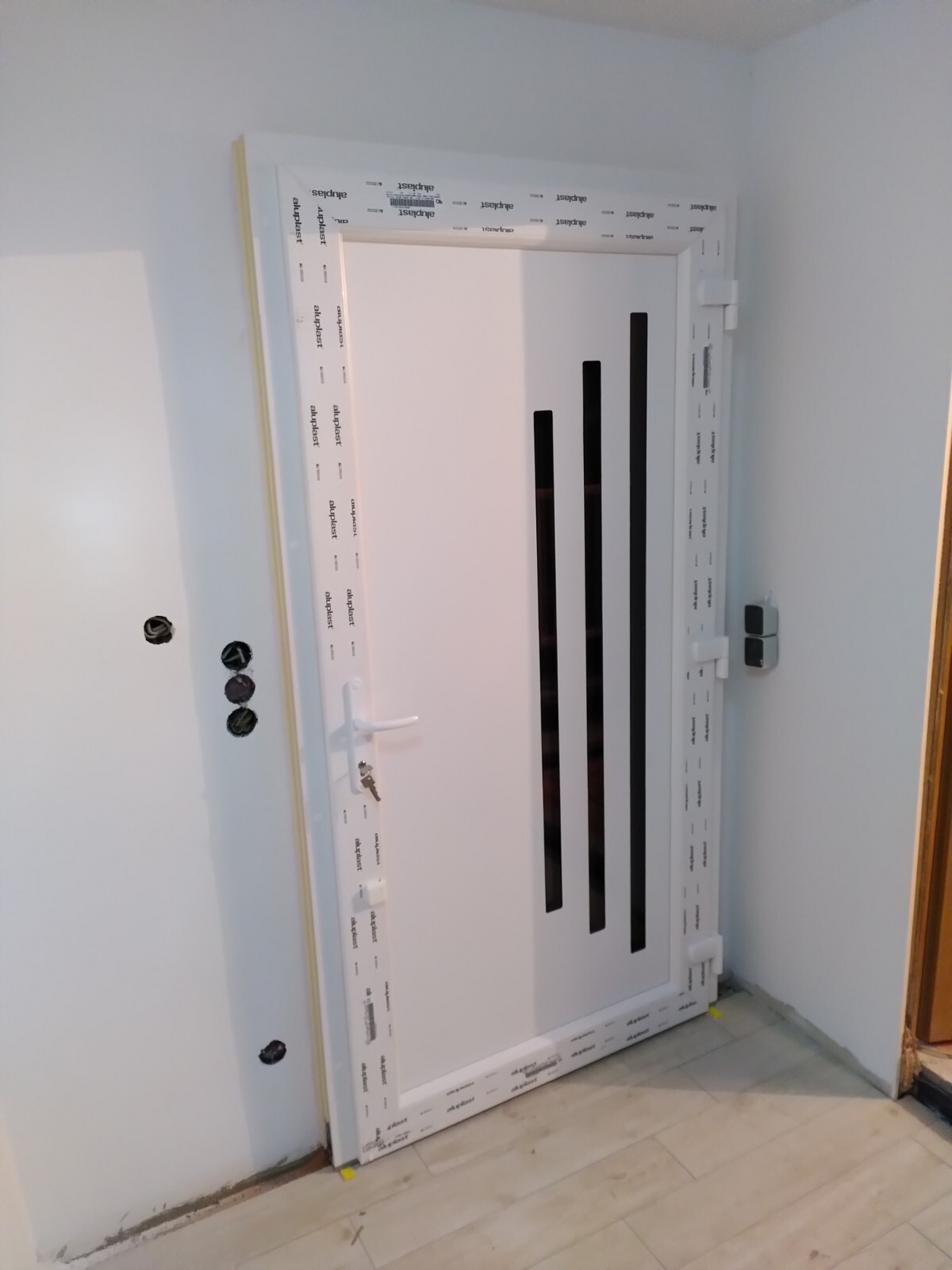
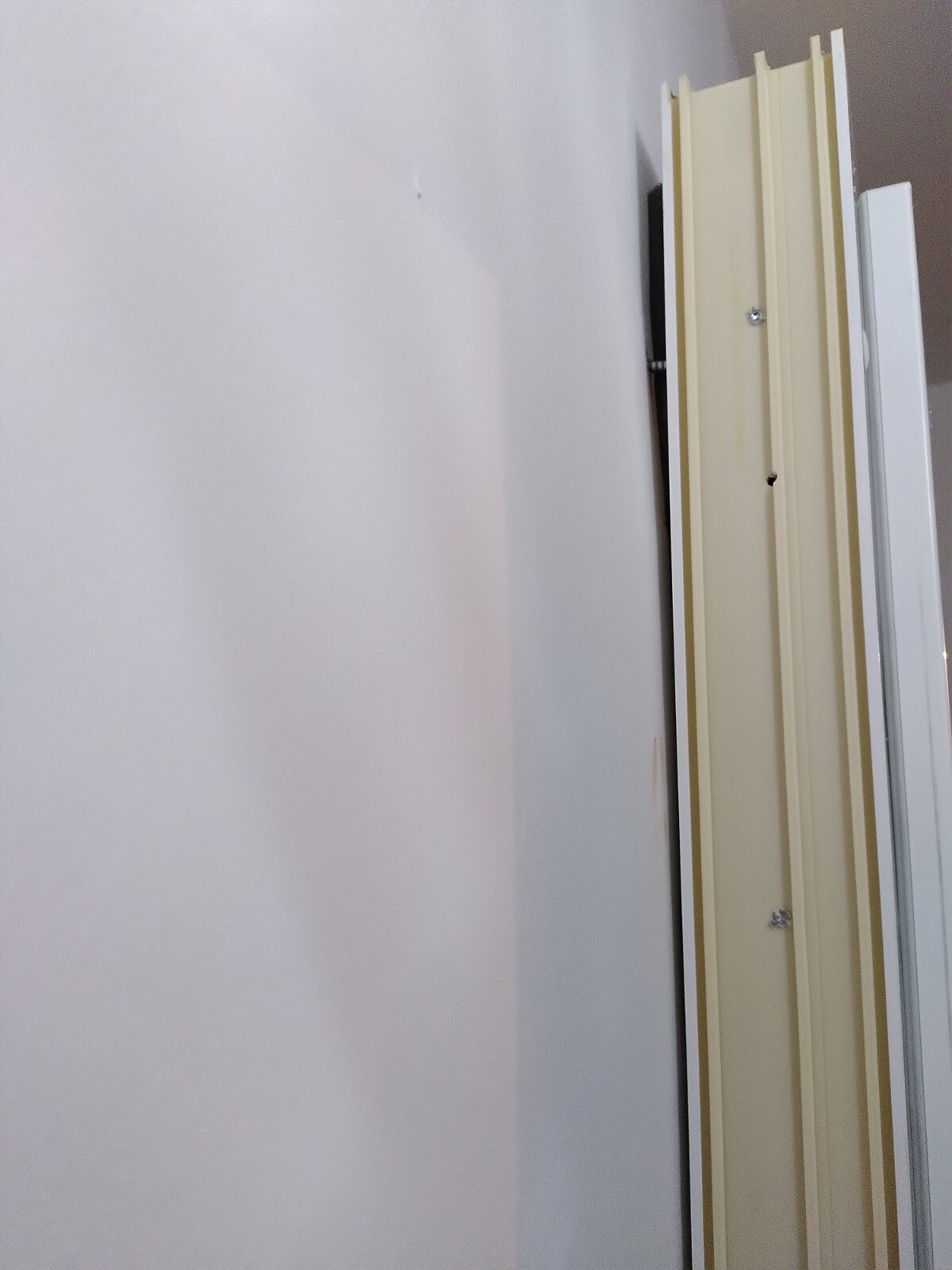
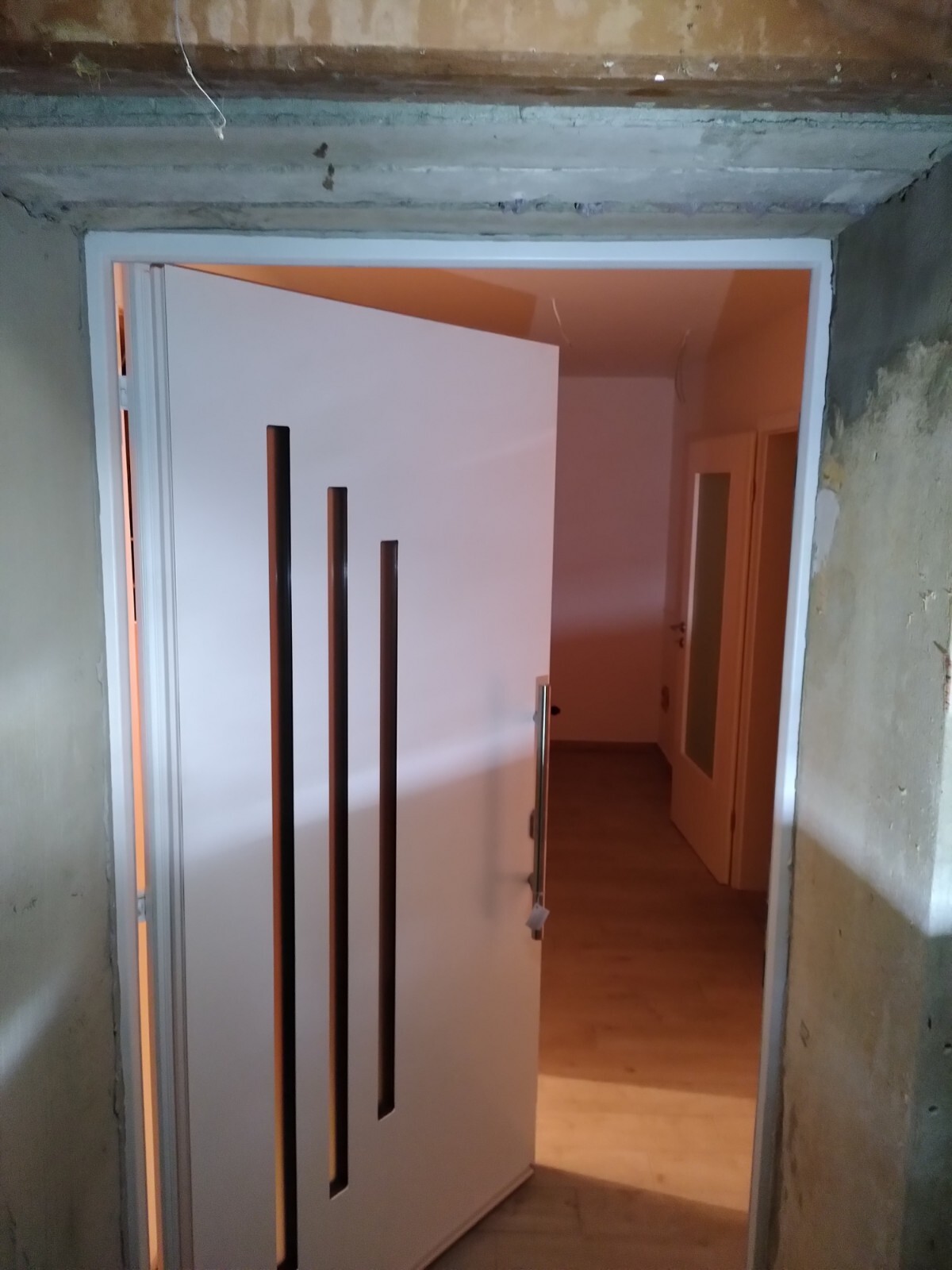
So now I’m considering how to deal with this. The company responsible says they measured specifically and everything is as ordered. I will hold back and spare myself and you from going into more detail on that.
For me, this was completely unexpected. The external wall is an uninsulated 45cm (18 inches) thick solid wall and will be fitted with external insulation. I even had the wall opening enlarged beforehand. I never would have dreamed the door wouldn’t be installed centered in the opening. Especially since there is currently no insulation in the opening, and at least the lintel still needs to be plastered. So I can’t add insulation in front of it anymore. Maybe a maximum of 1cm (0.4 inch), but then the door jamb practically lines up with the insulation. Since this is an older building and the walls are uneven, there are accordingly large gaps (which at least have sealing tape in them) as you can also see in the photo. This didn’t really matter for the interior plasterwork because no one expected a door to be installed here. The door frame still needs to be covered, and the gaps closed. The frame also has pre-drilled holes where it would normally be anchored to the wall opening.
What I’m really interested in is whether this kind of installation is standard practice at all? Assuming the misunderstanding is my responsibility, would this be acceptable from a craftsmanship or technical point of view? Because the external wall around the door opening cannot be insulated, I firmly assume this must cause a thermal bridge. Is my assumption correct?
This week, a new front door was delivered and installed at our house. In my opinion, the door was delivered too large and was not installed set into the wall opening but rather fixed from the inside against the wall. Unfortunately, I was not present at the time, and another family member essentially gave permission for this installation.
So now I’m considering how to deal with this. The company responsible says they measured specifically and everything is as ordered. I will hold back and spare myself and you from going into more detail on that.
For me, this was completely unexpected. The external wall is an uninsulated 45cm (18 inches) thick solid wall and will be fitted with external insulation. I even had the wall opening enlarged beforehand. I never would have dreamed the door wouldn’t be installed centered in the opening. Especially since there is currently no insulation in the opening, and at least the lintel still needs to be plastered. So I can’t add insulation in front of it anymore. Maybe a maximum of 1cm (0.4 inch), but then the door jamb practically lines up with the insulation. Since this is an older building and the walls are uneven, there are accordingly large gaps (which at least have sealing tape in them) as you can also see in the photo. This didn’t really matter for the interior plasterwork because no one expected a door to be installed here. The door frame still needs to be covered, and the gaps closed. The frame also has pre-drilled holes where it would normally be anchored to the wall opening.
What I’m really interested in is whether this kind of installation is standard practice at all? Assuming the misunderstanding is my responsibility, would this be acceptable from a craftsmanship or technical point of view? Because the external wall around the door opening cannot be insulated, I firmly assume this must cause a thermal bridge. Is my assumption correct?

hanghaus2000 schrieb:
As so often, a lack of communication. 😡This has absolutely nothing to do with communication; this is sloppy workmanship at its worst.
Yes, the reveal is the inside edge of the wall opening. Perhaps you should explain in more detail how the entire structure is built and what the opening looked like when the finishing surveyor was on site. A 45 cm (18 inches) wall (with plaster but without insulation yet) doesn’t initially suggest much expected thermal transmittance. Since it is made of bricks (which size and age?) it also suggests that the wall could be multi-layered. I recommend that you (for your construction work itself, not specifically related to this complaint) take the plans from the building file and examine the whole matter more closely. Simply applying insulation onto a black box is not advisable!
And that was definitely carried through all copies?
https://www.instagram.com/11antgmxde/
https://www.linkedin.com/company/bauen-jetzt/
Thomas Faerber schrieb:
where we crossed out the dimension with the note “Please wait. Probably 1000x2100”
And that was definitely carried through all copies?
https://www.instagram.com/11antgmxde/
https://www.linkedin.com/company/bauen-jetzt/
Thomas Faerber schrieb:
I would have assumed that the door would be centered.Aren’t doors usually installed at the exterior edge of the rough opening… Thomas Faerber schrieb:
Where exactly should the insulation go then?… and then the insulation is applied to the walls. That’s why it looks like the door is set in the middle of the wall thickness (if you don’t consider this carefully).
Thomas Faerber schrieb:
1150x2200", although we crossed out this measurement with the note "Please wait. Probably 1000x2100", because we first wanted to see how to enlarge the door opening, since the previous one was quite small at about 850mm x 1900mm (33 inches x 75 inches).Thomas Faerber schrieb:
Maybe I used the term reveal incorrectly.Could it be that you ordered something online without proper knowledge and careful checking?
Has your “maybe” happened more often? Did you perhaps not use the correct dimensions?
I mean, there is a difference between measuring and ordering the door leaf width and the actual passage opening.
T
Thomas Faerber30 Oct 2021 19:2211ant schrieb:
Maybe you should explain in more detail how the whole setup was and what the opening looked like when the precise measurement technician was on site. The measurements were taken in the condition shown in the photos (and if they had been taken earlier, the door would now be too small rather than too large).
11ant schrieb:
A 45 cm (18 inches) wall (with plaster but no insulation yet) doesn’t initially suggest much heat transfer. Made of bricks (what size and how old?) it also suggests the wall could be multi-layered. I recommend you take the plans from the building file to examine the whole thing more closely for your construction work itself, not specifically relevant to the complaint here. Well, the house is about 120 years old. There actually are no documents left. I can’t say the exact size right now. But generally, for the upcoming work, I’ll probably look for an advisor for the planning.
ypg schrieb:
So it looks like the door is positioned in the center of the wall thickness (if you don’t think too much about it). I find that idea quite reasonable. That way, the insulation together with the door would insulate the exterior wall. I’ll definitely take that tip, thanks!
ypg schrieb:
Could it be that you ordered something online without proper knowledge and without thorough checking?
Could it be that your “maybe” happened more often? That you didn’t use the correct measurements?
I mean, there’s a difference between measuring and ordering the door leaf width or the opening width. That almost sounds like what happened, doesn’t it? :p 😀 No, unfortunately not, otherwise I probably would have been better informed. I found a local company here and trusted that the professionals would do it right. Of course, they took the measurements themselves.
Thomas Faerber schrieb:
Well, the house is about 120 years old. There are actually no documents left. I can’t tell you the exact format right now. But generally, for everything upcoming, I better find a consultant for the planning. Yes, you should know your house well before you start modernizing it. One hundred and twenty years, with two wars in between, but city archives should not be underestimated. The format will have been the Reich format, wall thickness without plaster 25 cm (10 inches) or 38 cm (15 inches) in basements and ground floors of three-story buildings. A thickness of 45 cm (18 inches) indicates a variation, likely due to an air cavity or other double-wall construction.
https://www.instagram.com/11antgmxde/
https://www.linkedin.com/company/bauen-jetzt/
Similar topics