
Hello everyone,
We have installed a controlled residential ventilation system Wolf CWL 400, and I want to create a transom ventilation horizontally, above the door leaf.
How many millimeters do I need to mill out over a length of 80cm (31.5 inches) to allow the required air volume to pass through? Is there any calculation formula for the air cross-section?
We have installed a controlled residential ventilation system Wolf CWL 400, and I want to create a transom ventilation horizontally, above the door leaf.
How many millimeters do I need to mill out over a length of 80cm (31.5 inches) to allow the required air volume to pass through? Is there any calculation formula for the air cross-section?
Where does this table come from? It doesn’t make any physical sense at all.
A standard duct for a single-family house mechanical ventilation system has an inner diameter of 6 cm (2.4 inches).
That results in an area of about 28 cm² (4.3 in²). Since such a duct is also several meters long, you get significant friction losses. If you try to push 50 m³/h (about 30 CFM) through this duct, only a slight airflow will come out at the end. In contrast, with a door thickness of 3 cm (1.2 inches), the losses remain quite low.
Neglecting all losses, you would need only 3 mm (0.12 inches) of gap per duct in a mechanical ventilation system with a 90 cm (35.4 inches) door—this is not even addressed by the table. Considering the losses, the maximum is around the stated 50%; realistically and calculated accurately, it is likely much less.
A standard duct for a single-family house mechanical ventilation system has an inner diameter of 6 cm (2.4 inches).
That results in an area of about 28 cm² (4.3 in²). Since such a duct is also several meters long, you get significant friction losses. If you try to push 50 m³/h (about 30 CFM) through this duct, only a slight airflow will come out at the end. In contrast, with a door thickness of 3 cm (1.2 inches), the losses remain quite low.
Neglecting all losses, you would need only 3 mm (0.12 inches) of gap per duct in a mechanical ventilation system with a 90 cm (35.4 inches) door—this is not even addressed by the table. Considering the losses, the maximum is around the stated 50%; realistically and calculated accurately, it is likely much less.
R
Reini12346 Dec 2019 00:14I also found a table here:

Yesterday, we routed a test frame. Due to the connectors on the right and left sides, we ended up with a length of just over 80cm (31.5 inches). The width is about 0.85cm (0.33 inches). My carpenter was worried that the frame would become too unstable if he removed more material.
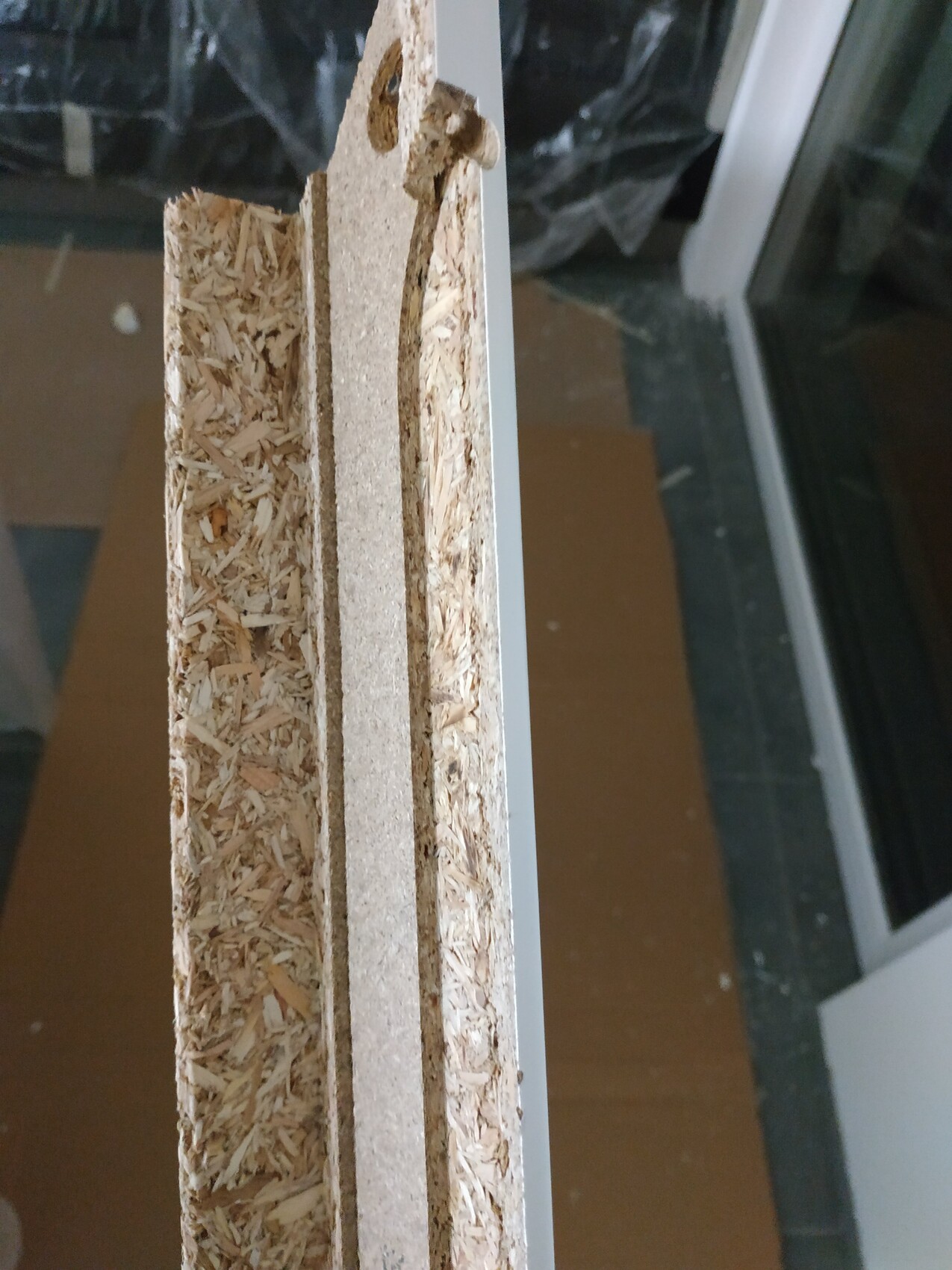
Yesterday, we routed a test frame. Due to the connectors on the right and left sides, we ended up with a length of just over 80cm (31.5 inches). The width is about 0.85cm (0.33 inches). My carpenter was worried that the frame would become too unstable if he removed more material.
R
Reini12346 Dec 2019 08:37@guckuck2
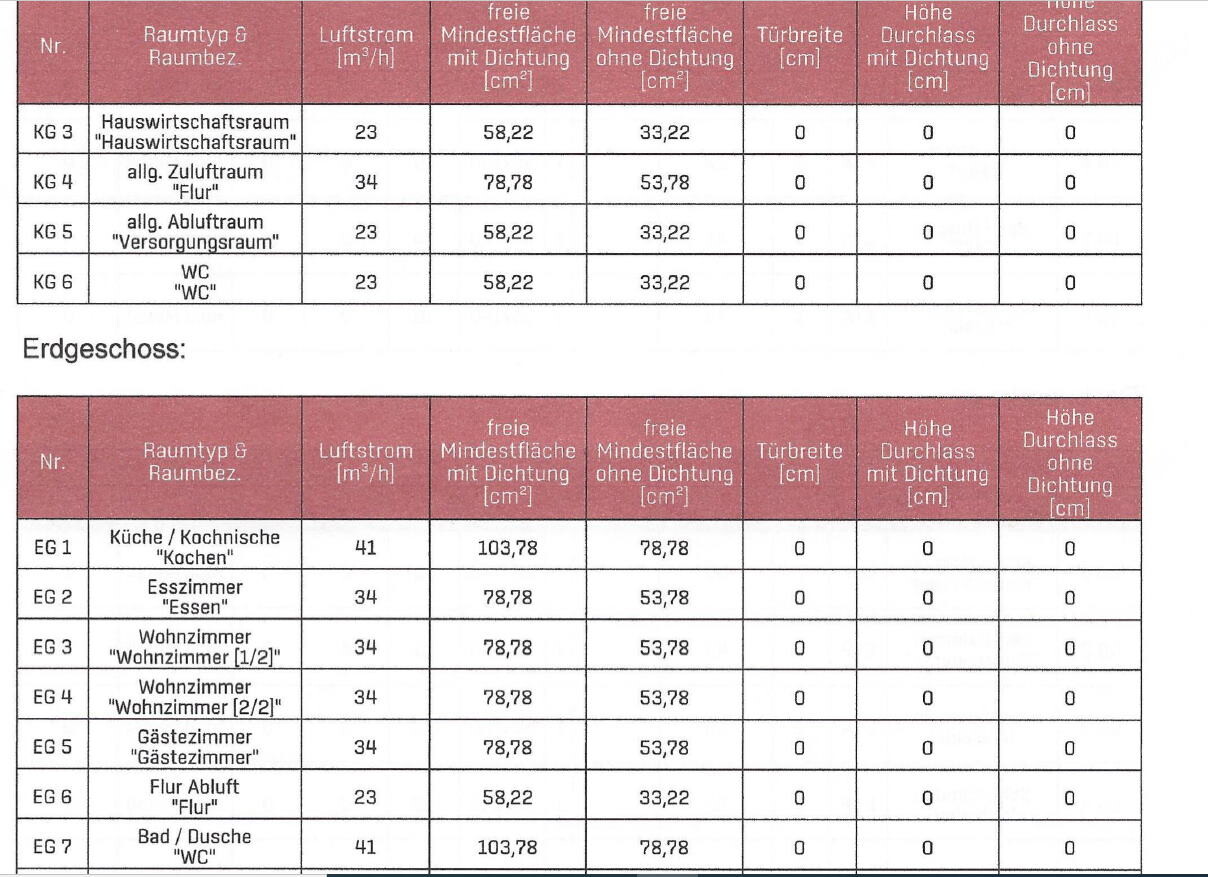
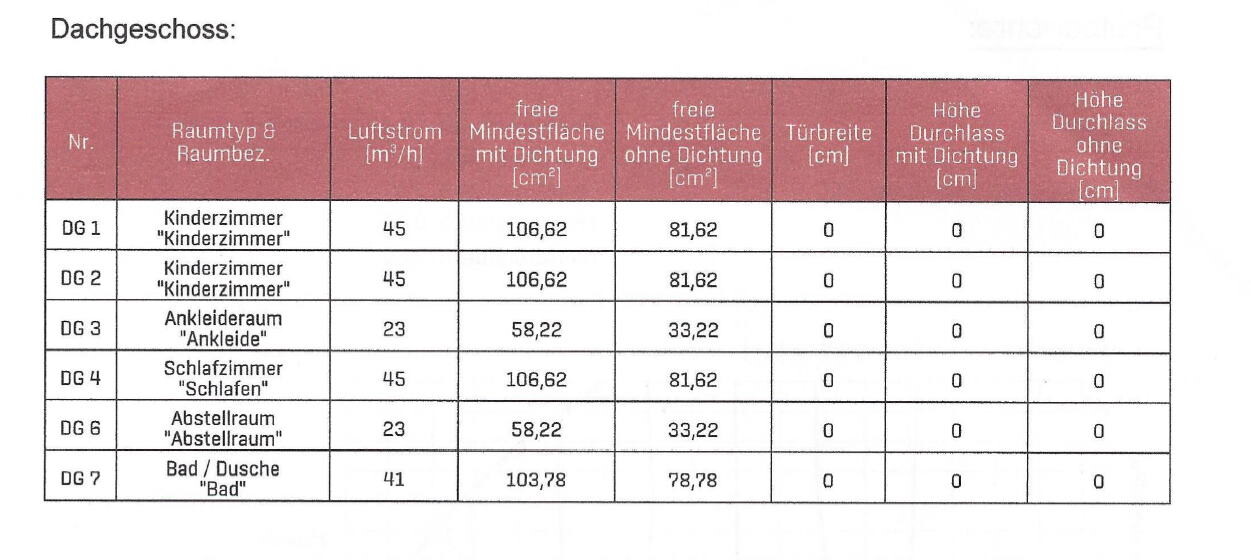
Here are excerpts from my ventilation plan. I’m not allowed to post external links, and apparently uploading PDFs is not possible.
@Lumpi_LE
Wait a moment! Your statement was that no transfer air is needed at all because everything passes through the 2-3mm (0.08–0.12 inch) gap at the door. You didn’t mention incorrectly sized air volumes. I assume you haven’t even looked at my ventilation plan, which was still available online here. And regarding sound, I’m not worried—unlike shortened door leaves, door frame ventilation is the better solution.
By the way, my table comes from an Austrian website dedicated exclusively to ventilation systems, jointly created by the state of Salzburg, various energy associations, and an energy institute.
Additionally, the manufacturer specifically points out the necessity of transfer air through shortened door leaves or alternatives. Ready-made transfer air vents are also available to buy, so my approach can’t be completely wrong.
Maybe @Mycraft can comment on this?
Here are excerpts from my ventilation plan. I’m not allowed to post external links, and apparently uploading PDFs is not possible.
@Lumpi_LE
Wait a moment! Your statement was that no transfer air is needed at all because everything passes through the 2-3mm (0.08–0.12 inch) gap at the door. You didn’t mention incorrectly sized air volumes. I assume you haven’t even looked at my ventilation plan, which was still available online here. And regarding sound, I’m not worried—unlike shortened door leaves, door frame ventilation is the better solution.
By the way, my table comes from an Austrian website dedicated exclusively to ventilation systems, jointly created by the state of Salzburg, various energy associations, and an energy institute.
Additionally, the manufacturer specifically points out the necessity of transfer air through shortened door leaves or alternatives. Ready-made transfer air vents are also available to buy, so my approach can’t be completely wrong.
Maybe @Mycraft can comment on this?
You have already cut the door frames, so any further discussion is unnecessary.
You are building a standard single-family house; ventilation systems are always designed similarly and, honestly, not rocket science. As @guckuck2 described, this problem only exists in theory. Doors are supposed to be opened occasionally, for example, to pass through. Between most frequently used rooms in the house, there are often no doors at all. The only room of real interest is the bedroom between 12 a.m. and 6 a.m., and during those 6 hours, the room won’t "explode," even if you tape the door shut.
You are building a standard single-family house; ventilation systems are always designed similarly and, honestly, not rocket science. As @guckuck2 described, this problem only exists in theory. Doors are supposed to be opened occasionally, for example, to pass through. Between most frequently used rooms in the house, there are often no doors at all. The only room of real interest is the bedroom between 12 a.m. and 6 a.m., and during those 6 hours, the room won’t "explode," even if you tape the door shut.
Similar topics