
ᐅ Floor plan designs for a single-family house on a 640 m² plot with a low eaves height
Created on: 22 Sep 2020 10:43
D
derschwax
Good morning!
My girlfriend and I have reserved a plot of land in between other properties, which is being sold privately through a real estate agent, and we already had an initial meeting with an architect. A second meeting with another architect is scheduled for tomorrow. During the first meeting, our needs and wishes were recorded, and at the end, a rather steep price was given. We reluctantly accepted it for the time being and then silently drove home for 30 minutes. We continued researching construction costs and found out that—no matter how you look at it—building significantly cheaper is hardly possible without compromises.
Since then, my mind has been spinning about what the house’s floor plan on the plot could even look like. My girlfriend is dreaming of two full floors and is looking at nice floor plans on Instagram. That is not practical at all in my opinion because a solution deviating from the "standard" is needed to meet our requirements. So these are daydreams that are likely to burst soon. Arguments and conflict are inevitable. I’m trying to prevent that by reading up and educating myself.
I hope for honest assessments, advice, and perhaps some links to helpful threads.
Questionnaire about Your Floor Plan
Zoning plan / restrictions
Plot size: approximately 640 m² (7,000 sq ft)
Slope: yes
Site occupancy index (floor area ratio): 0.4
Floor space index (FSI): 0.7
Setback from property boundary: 3 m (10 feet)
Number of parking spaces: 2
Number of floors: 1
Roof type: gable roof (24–30° pitch)
Orientation: ridge parallel to street
Eaves height on valley side: 3 m (10 feet)
Eaves height on hillside side: 6 m (20 feet)
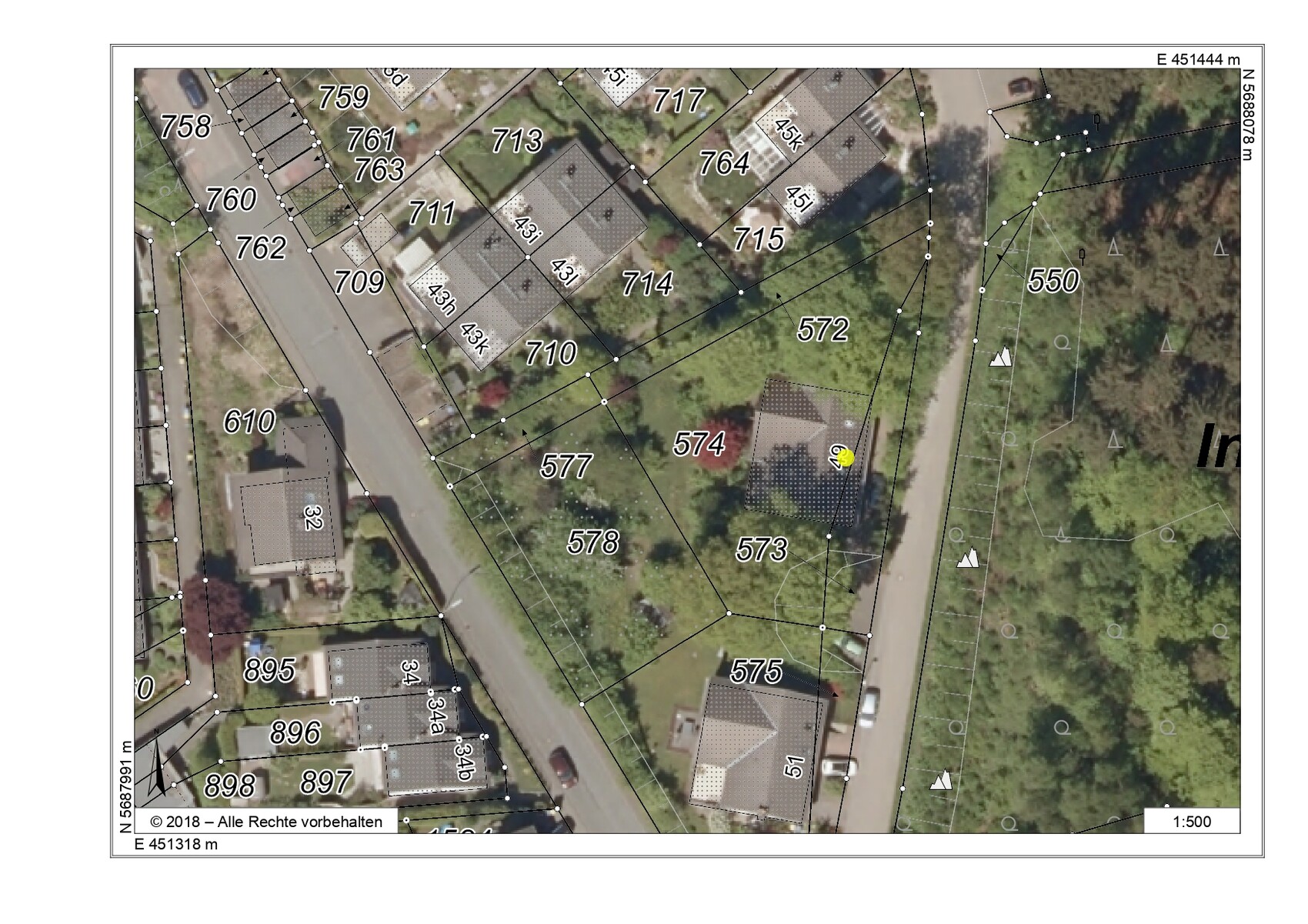
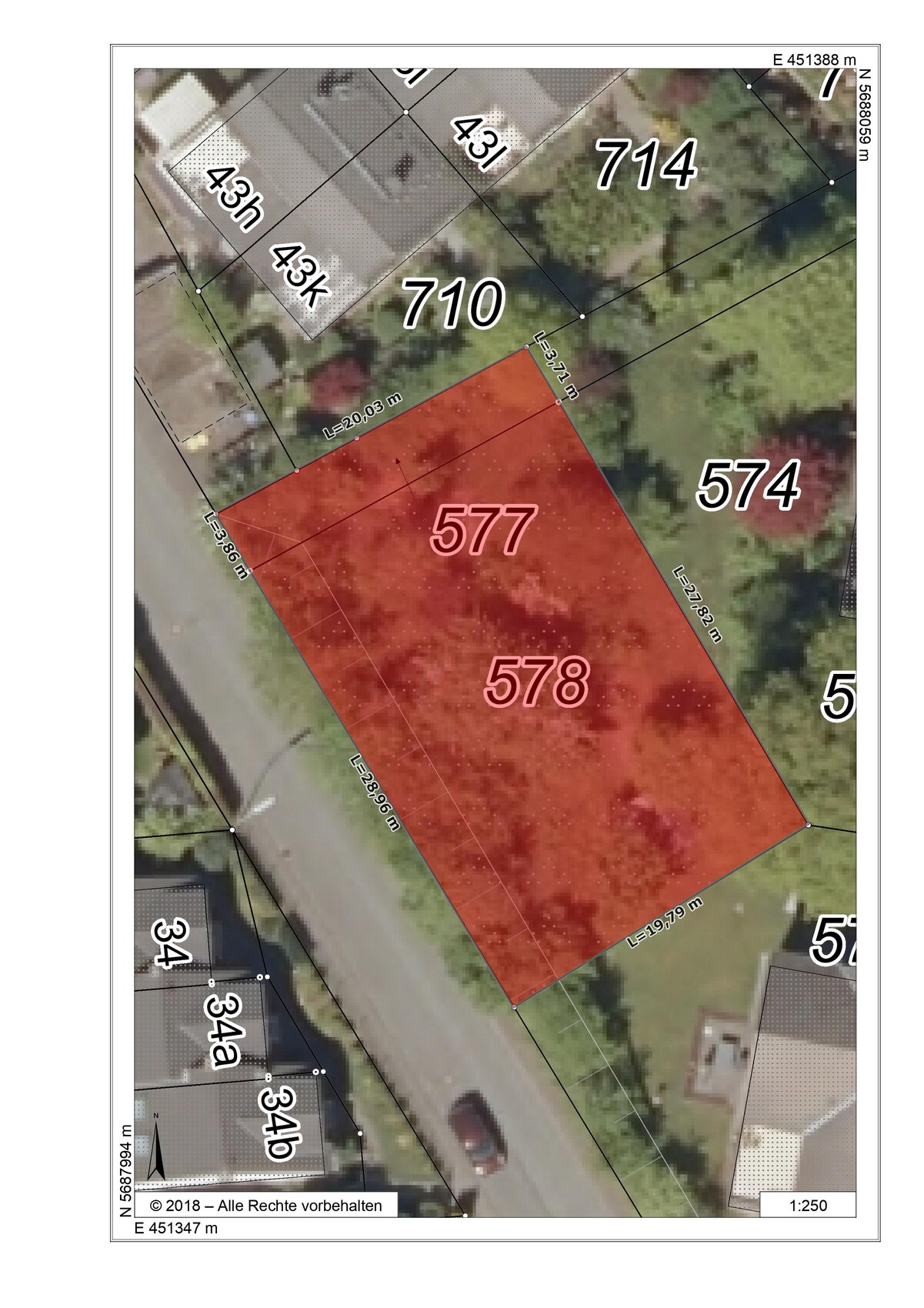
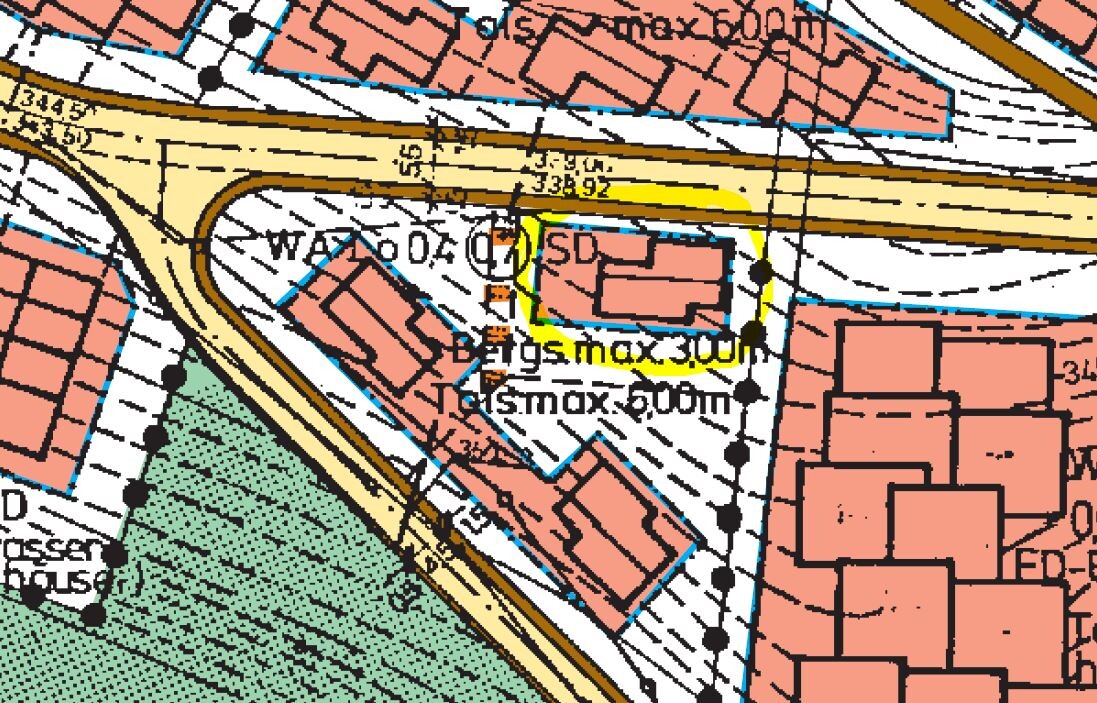
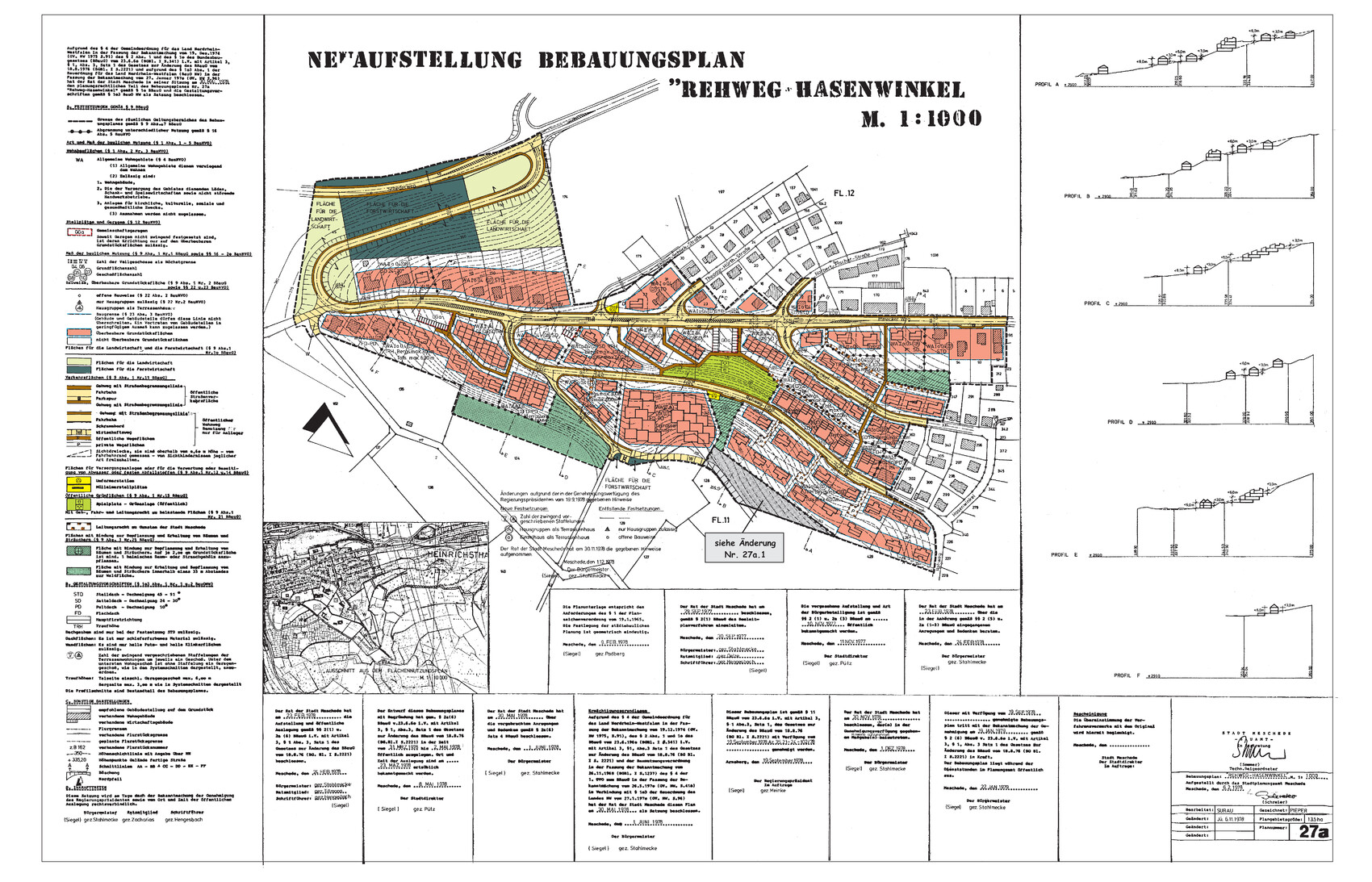
I will attach the zoning plan including the section to locate the plot, as well as aerial photos later.
Homeowners’ Requirements
Living space: 160–180 m² (1,700–1,940 sq ft)
Basement and floors: maximize floor space index, basement with double garage and office on hillside side
2 (4) persons: ages 32 and 30, 2 children planned
Room needs on ground floor: cloakroom, guest toilet, open living-dining area, additional room (playroom, office for family use, guest room)
Room needs on upper floor: 2 children’s bedrooms with bathroom for children, 1 master bedroom with dressing room and private bathroom
Office: family use on ground floor, home office in basement
Guests overnight per year: 4
Conservative or modern construction: rather conservative style
Open kitchen with island: yes
Number of dining seats: 6–8
Fireplace: yes
Music/speaker wall: no
Balcony: not necessary—if it fits the floor plan, OK, but not essential
Garage, carport: double garage in basement with parking spaces in front
Utility garden, greenhouse: no
House Design
So far, we’ve considered pushing the basement forward so that a terrace could be extended like a kind of balcony in front of the house at this offset. We enjoy the evening sun. Otherwise, I’m holding back ideas and waiting to see what the architect will answer tomorrow to the questions that have come up during the planning process.
What is the most important/fundamental question about the floor plan in 130 characters?
Do you know floor plan designs with similar restrictions (slope, floor space index 0.7, eaves heights 3 m/6 m)? Or any other useful tips? The zoning plan is from 1978—can we negotiate with the city about these requirements?
My girlfriend and I have reserved a plot of land in between other properties, which is being sold privately through a real estate agent, and we already had an initial meeting with an architect. A second meeting with another architect is scheduled for tomorrow. During the first meeting, our needs and wishes were recorded, and at the end, a rather steep price was given. We reluctantly accepted it for the time being and then silently drove home for 30 minutes. We continued researching construction costs and found out that—no matter how you look at it—building significantly cheaper is hardly possible without compromises.
Since then, my mind has been spinning about what the house’s floor plan on the plot could even look like. My girlfriend is dreaming of two full floors and is looking at nice floor plans on Instagram. That is not practical at all in my opinion because a solution deviating from the "standard" is needed to meet our requirements. So these are daydreams that are likely to burst soon. Arguments and conflict are inevitable. I’m trying to prevent that by reading up and educating myself.
I hope for honest assessments, advice, and perhaps some links to helpful threads.
Questionnaire about Your Floor Plan
Zoning plan / restrictions
Plot size: approximately 640 m² (7,000 sq ft)
Slope: yes
Site occupancy index (floor area ratio): 0.4
Floor space index (FSI): 0.7
Setback from property boundary: 3 m (10 feet)
Number of parking spaces: 2
Number of floors: 1
Roof type: gable roof (24–30° pitch)
Orientation: ridge parallel to street
Eaves height on valley side: 3 m (10 feet)
Eaves height on hillside side: 6 m (20 feet)
I will attach the zoning plan including the section to locate the plot, as well as aerial photos later.
Homeowners’ Requirements
Living space: 160–180 m² (1,700–1,940 sq ft)
Basement and floors: maximize floor space index, basement with double garage and office on hillside side
2 (4) persons: ages 32 and 30, 2 children planned
Room needs on ground floor: cloakroom, guest toilet, open living-dining area, additional room (playroom, office for family use, guest room)
Room needs on upper floor: 2 children’s bedrooms with bathroom for children, 1 master bedroom with dressing room and private bathroom
Office: family use on ground floor, home office in basement
Guests overnight per year: 4
Conservative or modern construction: rather conservative style
Open kitchen with island: yes
Number of dining seats: 6–8
Fireplace: yes
Music/speaker wall: no
Balcony: not necessary—if it fits the floor plan, OK, but not essential
Garage, carport: double garage in basement with parking spaces in front
Utility garden, greenhouse: no
House Design
So far, we’ve considered pushing the basement forward so that a terrace could be extended like a kind of balcony in front of the house at this offset. We enjoy the evening sun. Otherwise, I’m holding back ideas and waiting to see what the architect will answer tomorrow to the questions that have come up during the planning process.
What is the most important/fundamental question about the floor plan in 130 characters?
Do you know floor plan designs with similar restrictions (slope, floor space index 0.7, eaves heights 3 m/6 m)? Or any other useful tips? The zoning plan is from 1978—can we negotiate with the city about these requirements?
D
derschwax24 Sep 2020 08:47K1300S schrieb:
0.7 * 640 does result in the number above, doesn’t it?derschwax schrieb:
Oh, somehow I mixed up all possible values in the opening...I didn’t. You just multiplied the floor area ratio of 0.7 by the wrong value. The base here is the ground floor or basement footprint (depending on whether there is a cellar or not). With a site coverage ratio of 0.4, that’s a maximum of 256 m² (640 m² x 0.4).
256 m² x 0.7 = 179.2 m² would be the usable floor area of the upper floor if the basement/ground floor is at its maximum size.
What I meant by “using up the floor area ratio” was not about a maximum upper floor size relative to the plot, but a maximum upper floor size relative to the basement/ground floor. “Thanks to” the maximum eave height and a maximum roof pitch of 30°, I thought I could calculate how high my knee wall could be with a rectangular floor plan. No chance—I just can’t manage it.

Um, I think you’re mixing up a few things.
Site coverage ratio = maximum buildable area of the plot, which also includes terraces and similar structures.
Floor area ratio = maximum gross floor area allowed on the plot, counting only full storeys.
Wikipedia can provide you with a more detailed explanation.
Site coverage ratio = maximum buildable area of the plot, which also includes terraces and similar structures.
Floor area ratio = maximum gross floor area allowed on the plot, counting only full storeys.
Wikipedia can provide you with a more detailed explanation.
derschwax schrieb:
maximum size of the upper floor (OG) relative to the ground floor / basement (UG/EG)This is mainly a question of whether a two-story building is allowed—if yes, then the upper floor area can be equal to the ground floor area. If not, in your case the upper floor cannot be a full story, meaning it may only have up to two-thirds of the area of the full floor below it (in this case the ground floor). This definition varies from one federal state to another.D
derschwax24 Sep 2020 09:04Apparently, I still haven’t fully figured it out. I will look it up!
It's not a big deal, but that's why I was a bit confused about you wanting to fully utilize the floor area ratio (see above). Typically, the site coverage ratio is more often the issue (especially with smaller plots, probably not in your case), rather than the floor area ratio.
D
derschwax24 Sep 2020 09:21Maybe it’s not a big deal, but I find it somewhat embarrassing. I value posts that are factually correct. If someone hasn’t understood something, they should make that clear.
Similar topics