
Hello everyone!
My husband and I are in the early stages of planning our house. We had to submit a preliminary house plan to our local municipality (Salzburg Land/Austria) on short notice due to certain requirements. We developed this plan together with our designer with very little preparation time.
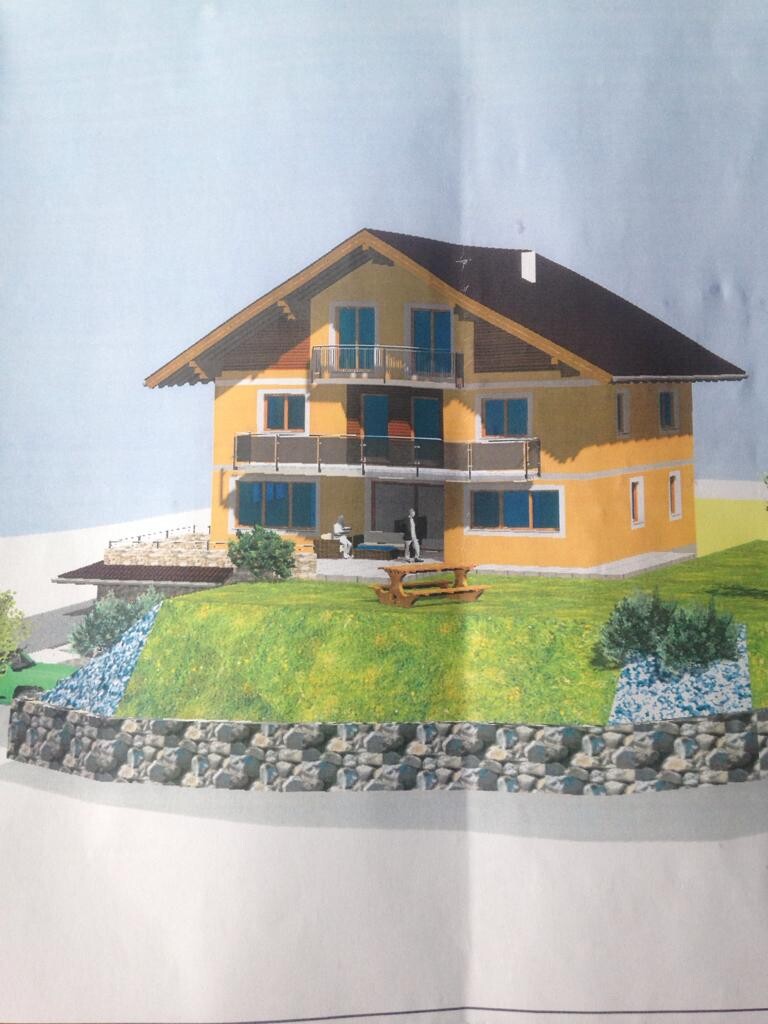
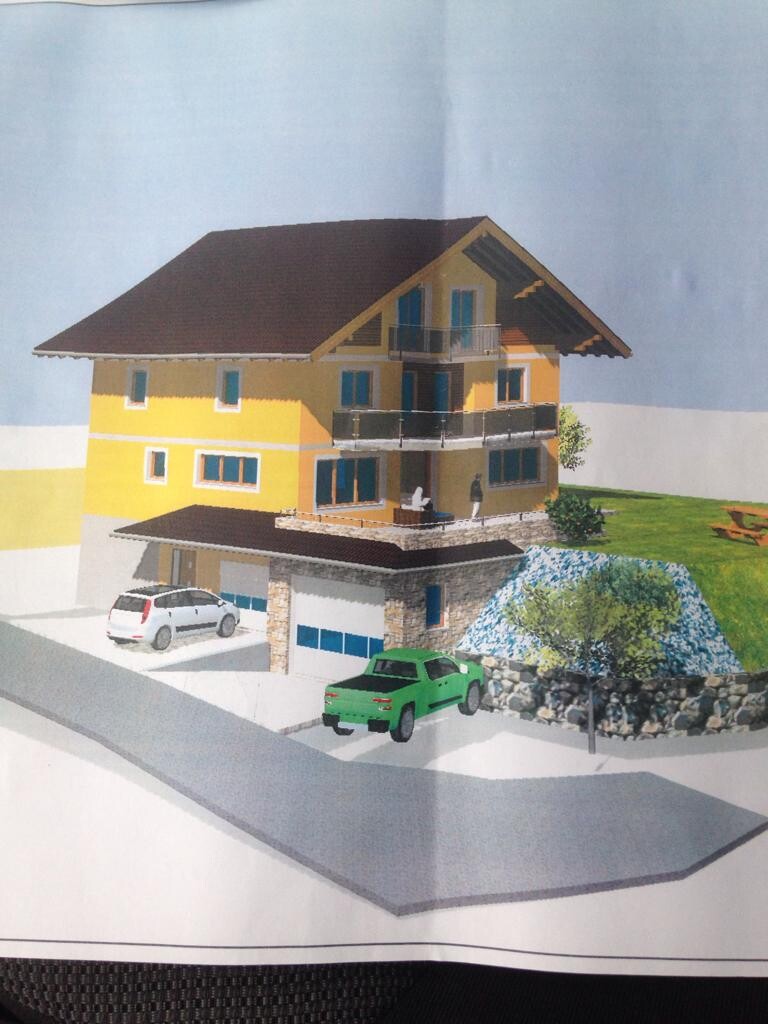
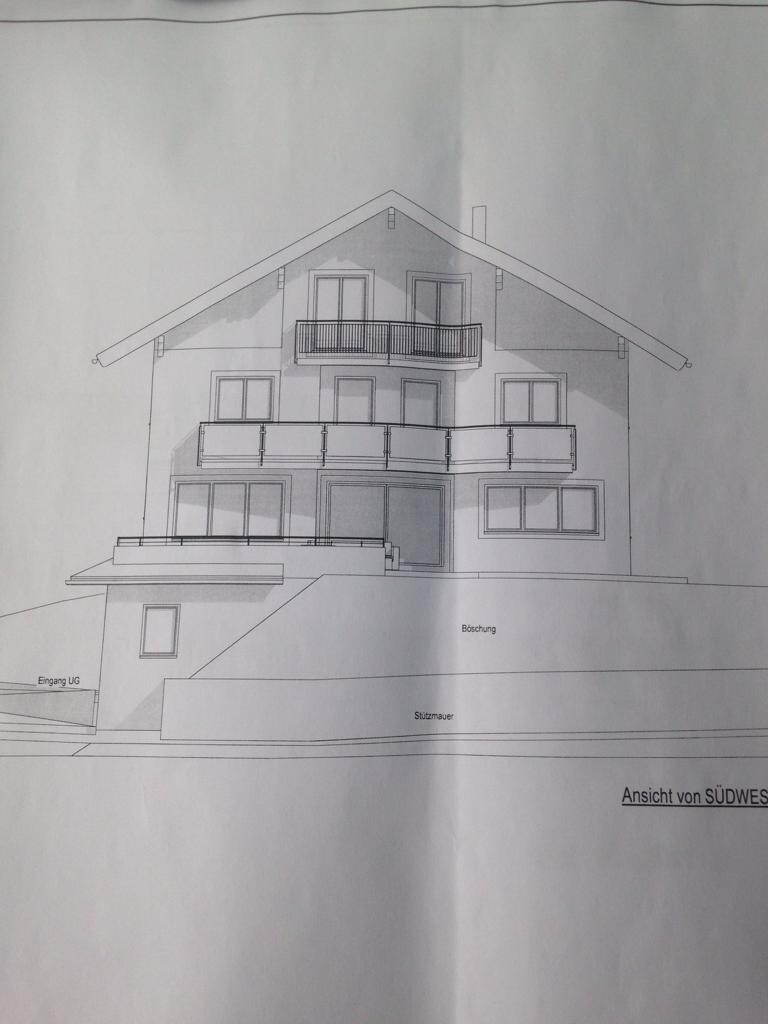
We have a somewhat unusual floor plan, in our opinion, featuring a setback on the ground floor, and we mainly want to hear your opinions about this. Our primary concern is whether we have taken a completely absurd approach or if we can build on this basic idea. Our biggest issue is that so far we haven’t seen a single house with this type of floor plan (neither online nor in real life, at least around Salzburg and nearby ...) and naturally, we wonder why. Does it have any significant disadvantages? Does it look strange in any way?
We look forward to your feedback and are already very grateful for your constructive criticism and especially your time to help us.
Now to the questionnaire:
Development plan / Restrictions
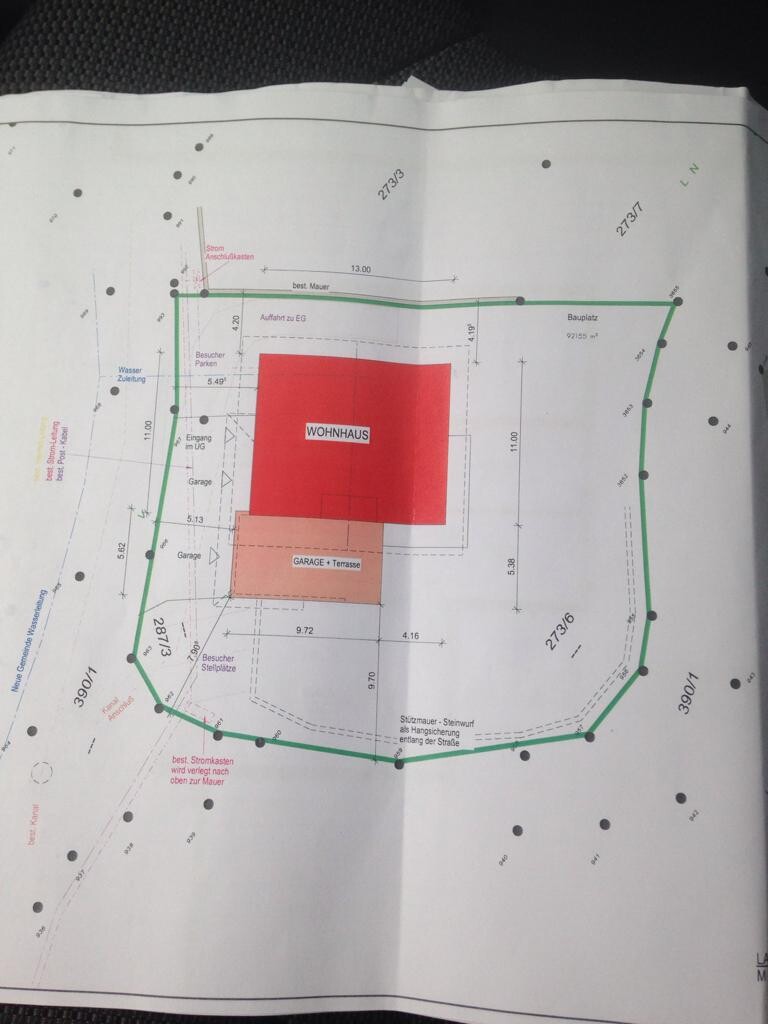
Plot size 920 m² (9,900 sq ft)
Slope Elevated plot, gently sloping on three sides
Owners’ requirements
Style, roof type, building type rural-modern, gable roof, two-family house
Basement, floors Basement, 2 full floors, attic
Number of occupants, ages Currently three (28, 29, and 8 months old) with 1-2 more children planned
Space requirements on ground and upper floors
Ground floor: spacious open kitchen with integrated pantry, dining area, living room, WC, bathroom, office (later a bedroom)
Upper floor: 3 children’s bedrooms, family bathroom, WC
Attic: master bedroom with bathroom and an additional room (extra bedroom / hobby room)
Ground floor + upper floor approx. 200 m² (2,150 sq ft); attic size not yet finalized
Office For family use and later bedroom
Kitchen L-shaped with cooking island and wood stove
Number of dining seats 6-8, possibly extendable table for more space
Fireplace Yes – planned as a room divider between living room and "common room"
Balcony Balcony on the first floor – should eventually be large enough for the second family
Garage Small garage for 1 vehicle and a larger garage for 2 vehicles
House design
Planned by:
Designer from a construction company
What do you particularly like? Why?
Cost estimate according to architect/designer not yet available – only a preliminary draft
Personal budget for house including fixtures and fittings 350,000 € (with a lot of personal labor)
Preferred heating technology Heat pump
If you had to give up something, which features/finishes
- Could give up: attic expansion initially, but want to keep the possibility for future use
- Cannot give up: a cozy and large kitchen/dining area is very important to us
Why does the design look the way it does?
The most important aspect of our planning is that the house can be converted into a two-family home in the future when one of our children would need it, earliest in 20–25 years. That would mean one living unit on the ground floor and a second on the first floor plus the attic.
The office planned on the ground floor would then be used as a bedroom. The staircase can be completely separated with a (already marked) wall but is intended to remain open until then.
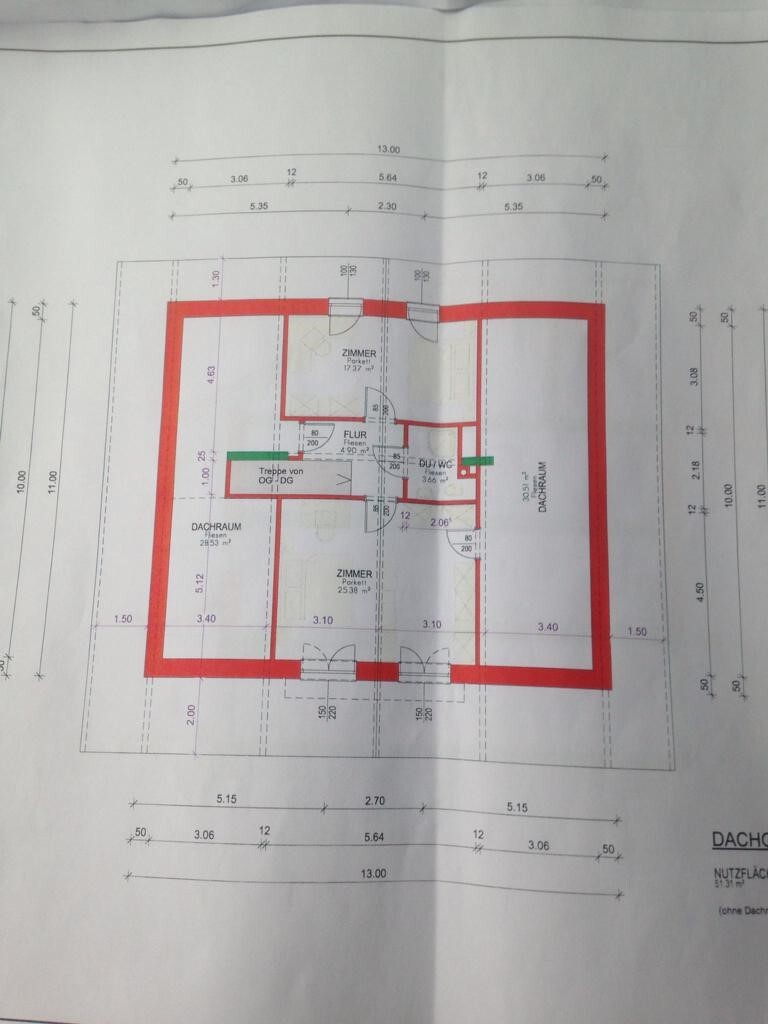
The attic is planned to house the master bedroom with bathroom. This is where the plan shows the biggest weaknesses for us: the bedroom is too large, and the bathroom is too small. This definitely needs to be changed.
Why sleep in the attic? There is not enough space on the ground floor, and we want to keep privacy from the children’s bedrooms so that when our kids are older and have friends/partners visiting, everyone can have their own space. We know this might be inconvenient with small children/babies due to additional distances, but since children’s bedrooms 1 and 2 are relatively large, siblings could share a room, and bedroom 3 could serve as a “backup bedroom” for us. We are only planning for two children but you never know!
If later children’s bedrooms 1 and 2 become kitchen/living areas, there would then be one bedroom on the first floor and two more in the attic.
What we particularly like is the idea of the split-level living room. We are aware that opinions on this are very divided and most experts discourage it. However, the level difference is only 36 cm (2 steps), and we believe it will be manageable even as we get older.
What is the most important/basic question about the floor plan in 130 characters?
We would really like to know from you:
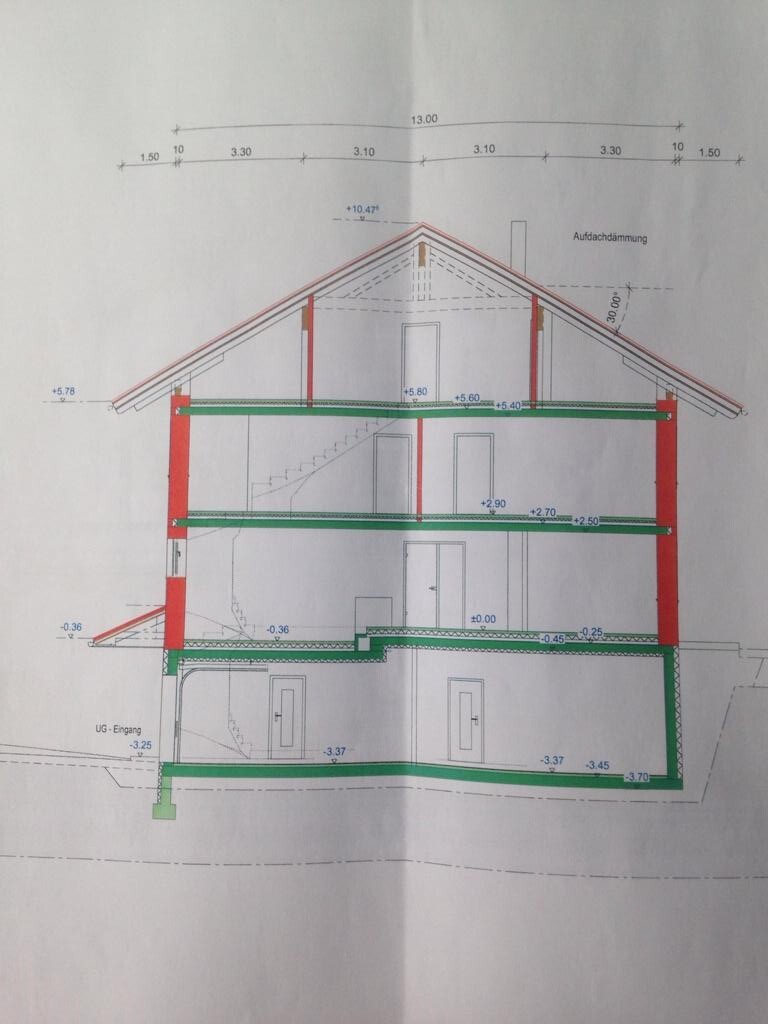
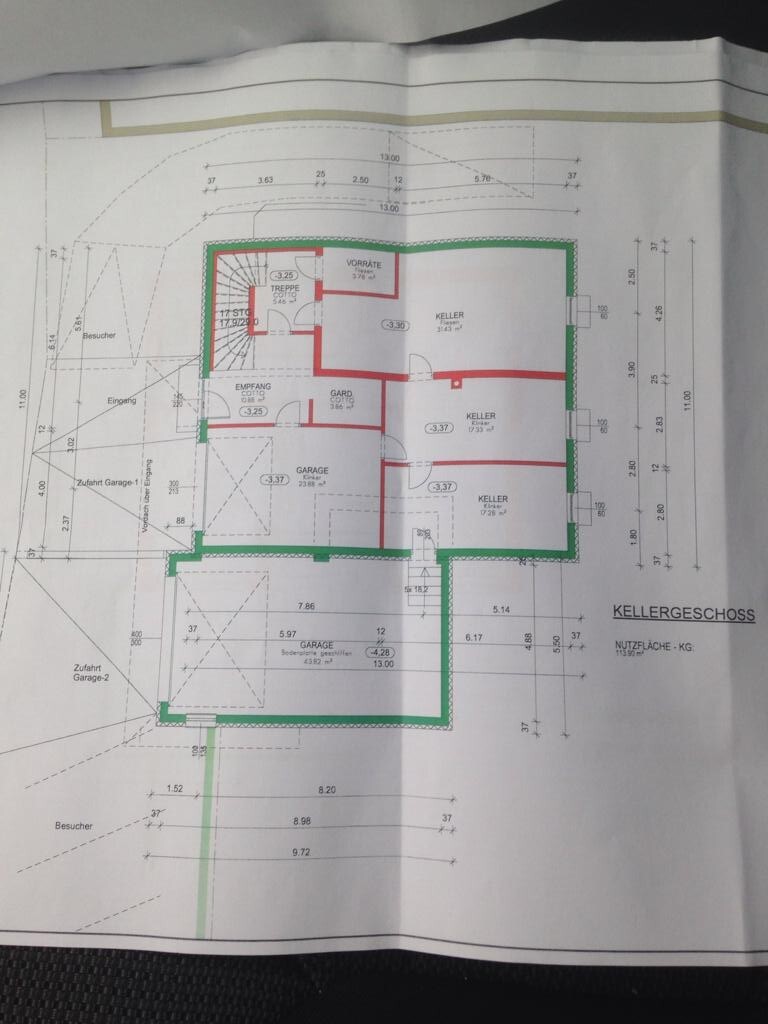
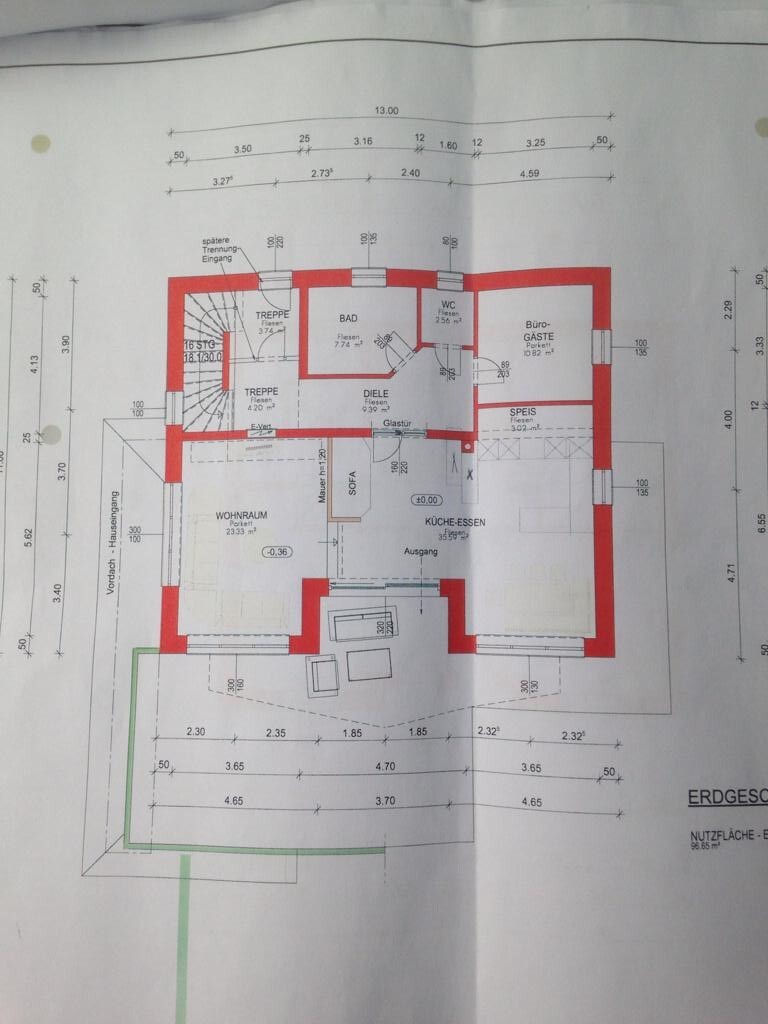
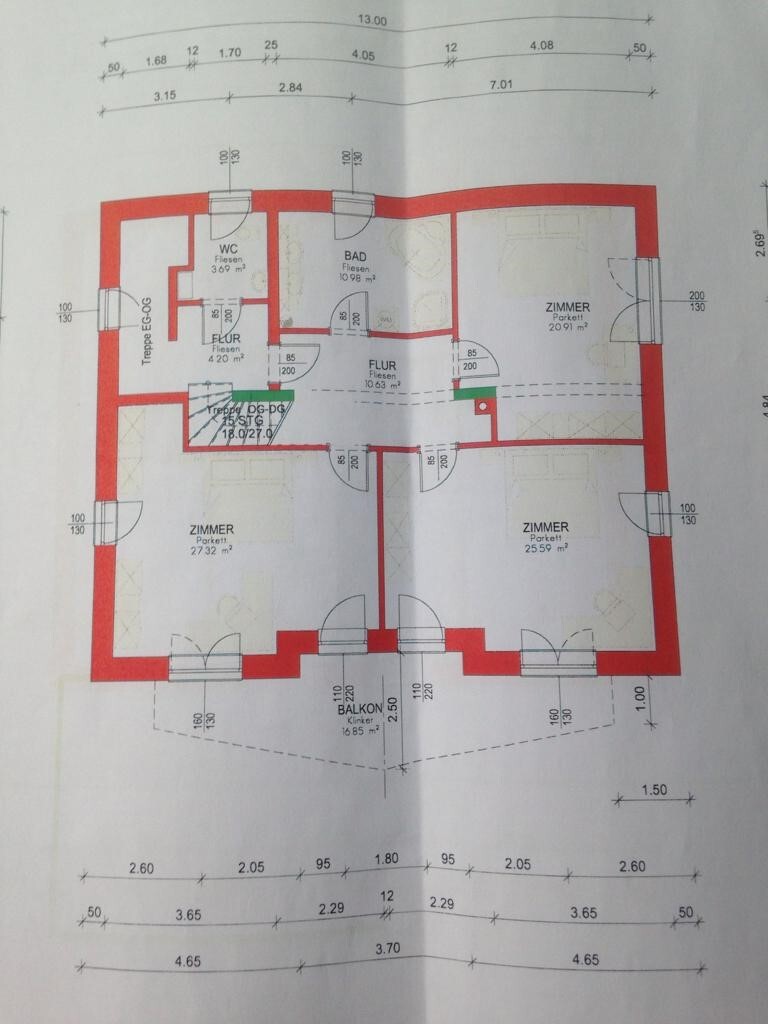
My husband and I are in the early stages of planning our house. We had to submit a preliminary house plan to our local municipality (Salzburg Land/Austria) on short notice due to certain requirements. We developed this plan together with our designer with very little preparation time.
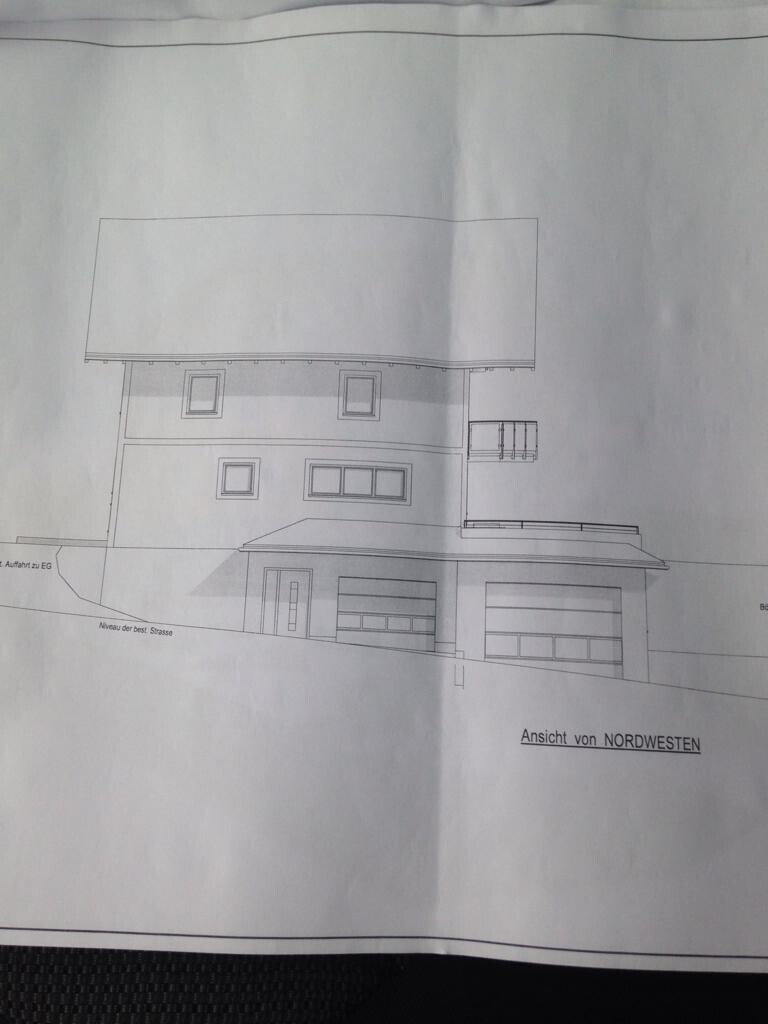
We have a somewhat unusual floor plan, in our opinion, featuring a setback on the ground floor, and we mainly want to hear your opinions about this. Our primary concern is whether we have taken a completely absurd approach or if we can build on this basic idea. Our biggest issue is that so far we haven’t seen a single house with this type of floor plan (neither online nor in real life, at least around Salzburg and nearby ...) and naturally, we wonder why. Does it have any significant disadvantages? Does it look strange in any way?
We look forward to your feedback and are already very grateful for your constructive criticism and especially your time to help us.
Now to the questionnaire:
Development plan / Restrictions
Plot size 920 m² (9,900 sq ft)
Slope Elevated plot, gently sloping on three sides
Owners’ requirements
Style, roof type, building type rural-modern, gable roof, two-family house
Basement, floors Basement, 2 full floors, attic
Number of occupants, ages Currently three (28, 29, and 8 months old) with 1-2 more children planned
Space requirements on ground and upper floors
Ground floor: spacious open kitchen with integrated pantry, dining area, living room, WC, bathroom, office (later a bedroom)
Upper floor: 3 children’s bedrooms, family bathroom, WC
Attic: master bedroom with bathroom and an additional room (extra bedroom / hobby room)
Ground floor + upper floor approx. 200 m² (2,150 sq ft); attic size not yet finalized
Office For family use and later bedroom
Kitchen L-shaped with cooking island and wood stove
Number of dining seats 6-8, possibly extendable table for more space
Fireplace Yes – planned as a room divider between living room and "common room"
Balcony Balcony on the first floor – should eventually be large enough for the second family
Garage Small garage for 1 vehicle and a larger garage for 2 vehicles
House design
Planned by:
Designer from a construction company
What do you particularly like? Why?
- “Split-level” living room – in our opinion, this creates a visual separation between the kitchen/dining area and is our little “highlight.” The living room remains a distinct living space and doesn’t get cluttered with toys because the common room offers plenty of space.
- “Common room” – this refers to the area between the living room and kitchen in front of the terrace door – lots of space for children to play and creates an open atmosphere while keeping the living room somewhat separated. Where a sofa is drawn, a fireplace with a reading corner as a room divider is also planned.
- Setback at the terrace – seating area covered and wind-protected with privacy screening. The resulting floor plan (where the living room is not directly adjacent to the kitchen and dining area as in many open-concept designs) is something we like.
- The office is intended to become our bedroom later, but in our opinion, it is currently too small for that.
- Main entrance is in the basement – spatially, the floor plan doesn’t allow for another solution; otherwise, the entrance would be on the back of the house, which we do not like. However, there is certainly another entrance on the ground floor for easier access when bringing in groceries, so you don’t have to carry everything through the basement.
- The cloakroom in the basement is still too small but can be easily enlarged – just mentioning this in case someone notices.
Cost estimate according to architect/designer not yet available – only a preliminary draft
Personal budget for house including fixtures and fittings 350,000 € (with a lot of personal labor)
Preferred heating technology Heat pump
If you had to give up something, which features/finishes
- Could give up: attic expansion initially, but want to keep the possibility for future use
- Cannot give up: a cozy and large kitchen/dining area is very important to us
Why does the design look the way it does?
The most important aspect of our planning is that the house can be converted into a two-family home in the future when one of our children would need it, earliest in 20–25 years. That would mean one living unit on the ground floor and a second on the first floor plus the attic.
The office planned on the ground floor would then be used as a bedroom. The staircase can be completely separated with a (already marked) wall but is intended to remain open until then.
The attic is planned to house the master bedroom with bathroom. This is where the plan shows the biggest weaknesses for us: the bedroom is too large, and the bathroom is too small. This definitely needs to be changed.
Why sleep in the attic? There is not enough space on the ground floor, and we want to keep privacy from the children’s bedrooms so that when our kids are older and have friends/partners visiting, everyone can have their own space. We know this might be inconvenient with small children/babies due to additional distances, but since children’s bedrooms 1 and 2 are relatively large, siblings could share a room, and bedroom 3 could serve as a “backup bedroom” for us. We are only planning for two children but you never know!
If later children’s bedrooms 1 and 2 become kitchen/living areas, there would then be one bedroom on the first floor and two more in the attic.
What we particularly like is the idea of the split-level living room. We are aware that opinions on this are very divided and most experts discourage it. However, the level difference is only 36 cm (2 steps), and we believe it will be manageable even as we get older.
What is the most important/basic question about the floor plan in 130 characters?
We would really like to know from you:
- Is there a name for this floor plan style (like L-shaped or U-shaped)?
- What do you think in general about the idea of the setback? We like the idea of having a covered terrace area and the resulting floor plan. We haven’t seen houses or floor plans like this before (if at all, only with bungalows) and wonder why? Does nobody like it, or are there disadvantages we are overlooking? Do you have experiences with sunlight exposure – will it be a problem that the setback measures 3.5 m (11.5 ft) from the balcony edge to the terrace door?
- Even though we love the idea, we would appreciate experiences and opinions on the split-level living room.
- Would you build the wall separating the common room from the living room (shown as 1.20 m (4 ft) high in the plan) all the way to the ceiling?
- Suggestions and ideas for the office/bedroom on the ground floor – how could the layout be changed to make the room at least 5 m² (54 sq ft) larger?

Zaba12 schrieb:
If you were to build from the bottom up as the final approach, the budget would be used up before the ground floor ceiling. Feels like it.......not uncommon in some countries...
H
HilfeHilfe5 Jun 2019 13:21In some countries, you construct the shell and roof and continue building on your own for 20 years.
goldmarieeeee schrieb:
We haven’t dealt with the financing yet, since we’re still stuck on the basic idea for our house. Financing should be the first step. Not the financing itself, but a meeting with the bank to find out what kind of house you can afford.
Where does the 350,000 come from? Is that just a rough estimate?
You already have the plot of land.
Let’s take the 350,000 (with a lot of subsidies),
then subtract 30,000 for additional construction costs, leaving 320,000.
At 2,000 €/m² (approx. $185/sq ft), you can build 150 m² (1,615 sq ft)... let’s keep 20,000 aside for kitchen and so on.
Even if subsidies apply... let’s just take that number. Or, say, 160 m² (1,722 sq ft)... the garage and garden materials will cost extra anyway.
goldmarieeeee schrieb:
Basement, floors Basement, 2 full floors, attic goldmarieeeee schrieb:
Ground floor + first floor approx. 200 m² (2,153 sq ft) + attic area not yet finalized That means a house with ground and attic floors, whether one or two storeys. No basement, no complicated garage, no balconies, no finished attic.
Now allocate your room program over 160 m² (1,722 sq ft). This is not done by sketch, but by listing your space requirements:
Living room: 20 m² (215 sq ft)
Living kitchen: 25 m² (270 sq ft)
3 children’s rooms: 45 m² (484 sq ft)
etc.
Only in this way does it make sense. You don’t need to submit anything else. Maybe include the attic, but as a question mark whether it will be built.
Just a quick guess, without looking at the budget issue:
goldmarieeeee schrieb:
- obviously the bedroom is too small - that’s why I asked for your tips on how to solve this. You can’t just make the room bigger without the upper floor growing as well.
goldmarieeeee schrieb:
- that’s why there is a bathroom planned on the ground floor, since one day it will be our “only” bathroom when the first and attic floors are occupied by someone else.
- there is one bathroom on each floor – so “only” 3 in total You can’t look at it that way. If you plan the house from the start to be divided later into two separate living units, with the ground floor unit kept for old age and then around 80 m² (860 sq ft), you should plan a guest toilet that allows enough space for elderly needs in terms of separation. An additional guest toilet would be pointless in relation to the size of the apartment and how it will be used.
Your setback (by the way, I know other similar U-shaped floor plans) is your least problem.

goldmarieeeee schrieb:
We had to submit a preliminary house plan to our local authority (Salzburg region/Austria) on relatively short notice for certain reasons. Can someone explain this in a way that’s easy for a non-German speaker to understand?
Curly schrieb:
A large house with all sorts of extra features (balconies, garages, basement, multiple bathrooms, etc.) seems pointless. To me, the building’s design appears very complex and multifaceted, similar to model train houses where some details are exaggerated in scale or the variety and density of elements can seem a bit overwhelming.
I also share the concern that the overall lack of harmony (the floor plans don’t seem consistent with each other and so on) will likely result in significant costs that won’t be reflected in the final living quality.
The design seems inspired by buildings that have evolved over three centuries in alpine regions (including Swiss areas). To say it bluntly: it’s almost like the stereotypical image of how the average ugly German tourist imagines a local’s home. The only thing missing is a Wolpertinger popping out of the cuckoo clock.
https://www.instagram.com/11antgmxde/
https://www.linkedin.com/company/bauen-jetzt/
G
goldmarieeeee5 Jun 2019 22:20face26 schrieb:
This won’t work like that.
You have a finished design, but that’s more like the basic idea. Right now is the very latest time to deal with the budget.
You can’t just “wish for” something, create a design based on that, find out it costs 600k instead of 350k, and then start cutting items out. You can’t simply cut or shrink parts of a floor plan; then the rest no longer works.
Not many people here will put much effort into planning something that has no chance of being built.
So try this approach instead:
Overall budget
- Fixtures, furniture, moving, etc.
- Exterior work, garage, etc.
- Additional construction costs, architect, extra expenses for earthworks on slopes, etc.
- Purchase-related costs, etc.
- @all please add if I forgot something
= Budget for the house
I don’t know the construction prices in the Salzburg area. In the forum, about €2,000 / sqm is often assumed for good standard.
I can’t really estimate how much self-labor means in terms of savings, but you still need materials, and self-labor tends to be overestimated.
So subtract €50,000-100,000 for the basement from the house budget.
Then divide what’s left by, say, €1,800 / sqm.
That gives you a rough idea of the size your house can be. Depending on what’s included in the budget, it will probably be about 130-140 sqm (without an additional attic level) rather than 200 sqm + attic.
No offense, but this way you’re getting carried away with a plan that will never be realized, and what’s worse is trying to later shrink that plan to meet your budget.
Edit: Fixtures also include items like the kitchen, lighting, etc. Hello face26!
First of all, thank you very much for your honest yet constructive feedback, especially for not using a condescending tone.
I know it looks different, but basically, this design was really a quick-and-dirty draft and is nowhere near a finished plan. We only needed this plan as “leverage” when acquiring our (now already completed) plot of land.
Our budget is probably set a bit too low, and I could write a lot about this topic, but had I known that everyone here would immediately focus on costs regardless of our actual concerns, I would have filled out the questionnaire differently.
Regardless, thank you for your breakdown and explanation—we can definitely take some useful points from that.
I just want to briefly say that things like self-labor, moving, and furniture are very individual. For example, we have many skilled workers right within our close family, and my husband and his family are very handy as well; my family also has several “connections” in the construction industry. I don’t want to belabor this, but I think it can make quite a difference overall.
Regarding moving: our new house will be built immediately in front of where we currently live.
For furnishing, we currently want only the kitchen and at least one bathroom fully finished to start. Other bathrooms can be completed later, and our existing furniture will move into the new house.
I’d also like to mention that we do not plan to move into this house finished and ready within a year. We expect at least two years until it is move-in ready. Exterior work, etc., will have to wait even longer. Around here it is quite normal for a house to take several years to be completed.
Finally, I can say that we do have financial flexibility, so no one needs to worry. But of course, I understand that this is because of my “naive” €350,000 figure.
Similar topics