
ᐅ Single-family house floor plan, 230 sqm of living space, east-facing slope, Bauhaus style
Created on: 24 Aug 2022 13:42
R
RoterPapagei
Development Plan / Restrictions
Plot size: 610 sqm (about 15 x 40 m) rectangular
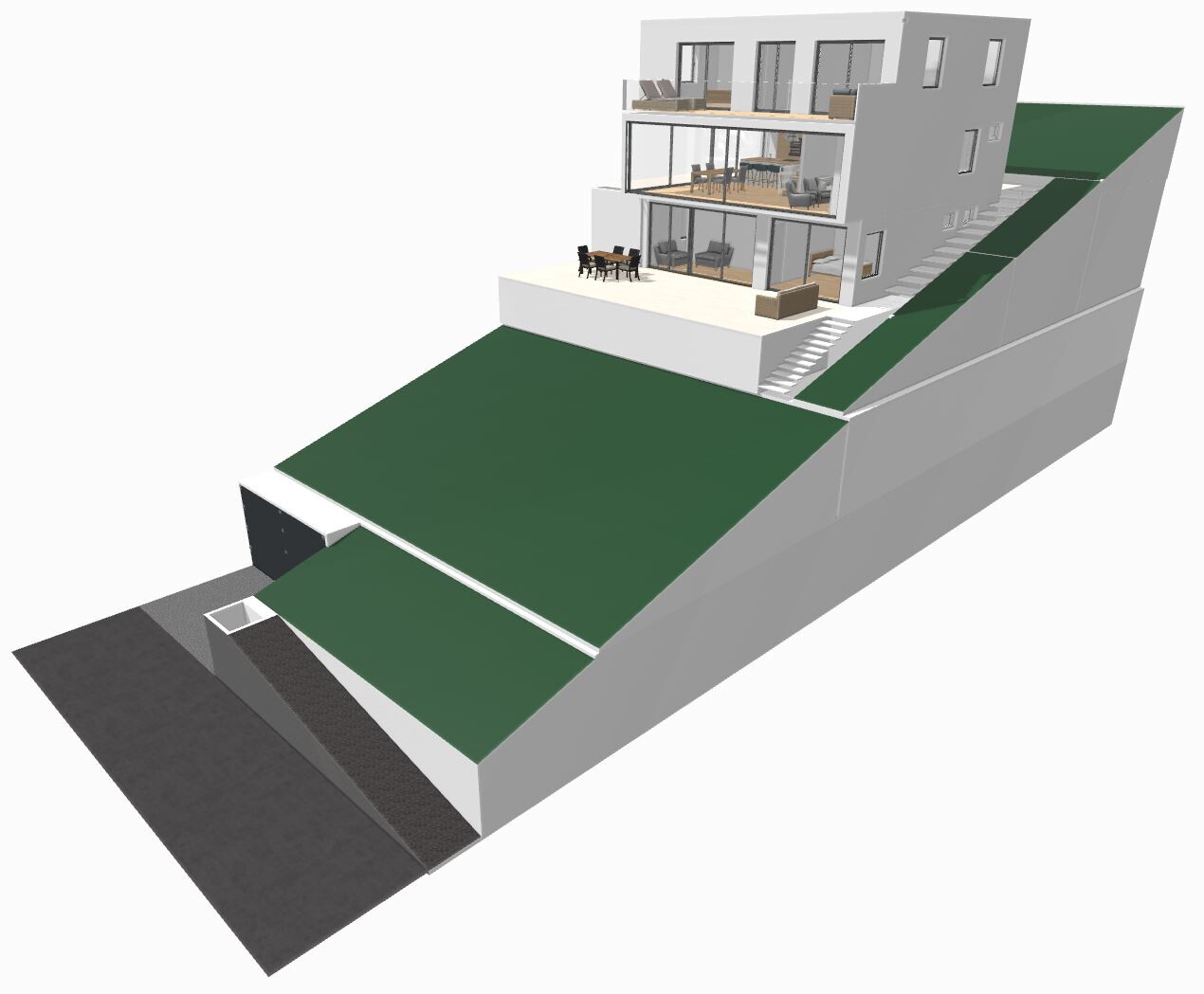
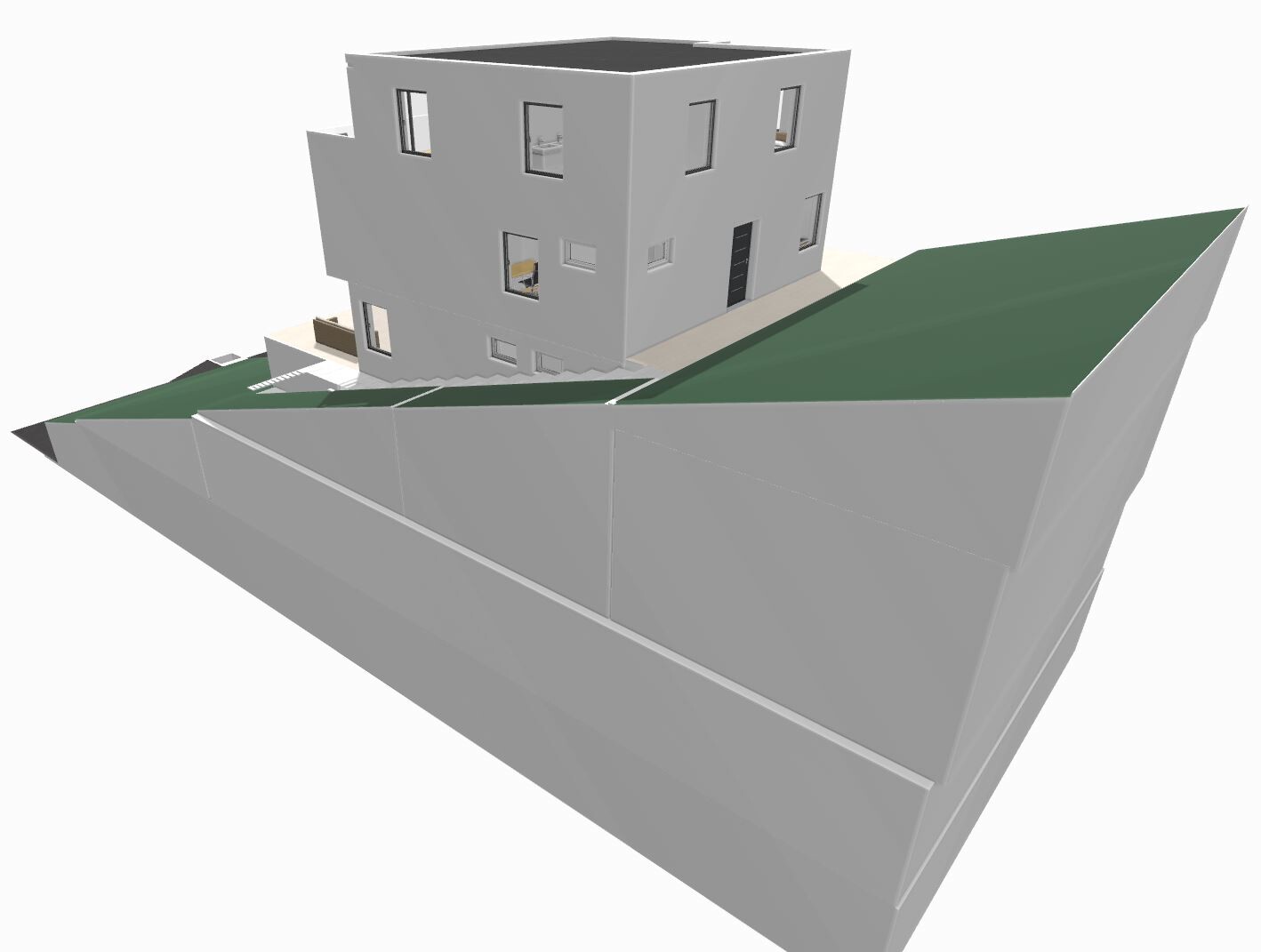
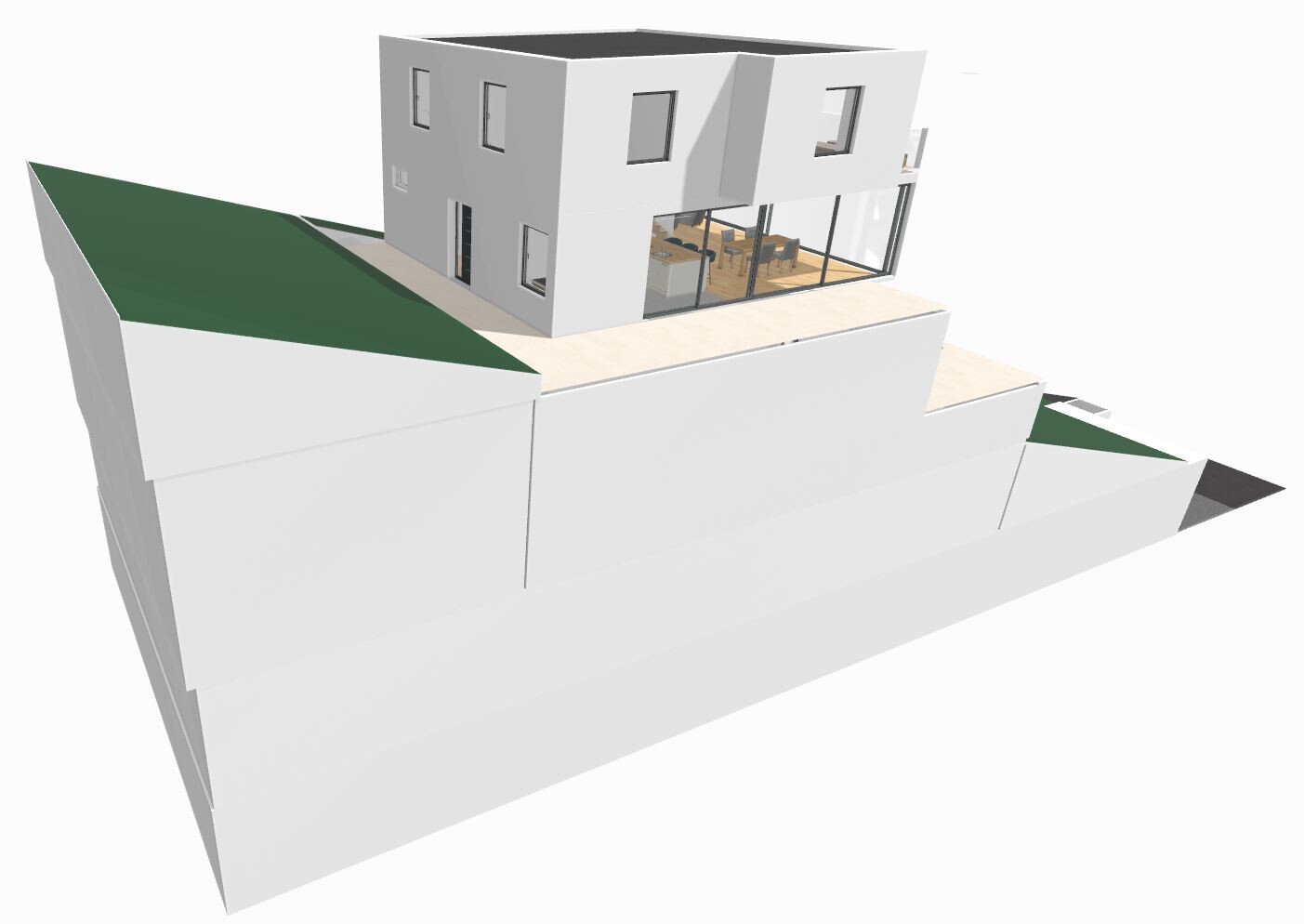
Slope: East-facing slope, approximately 28% gradient. Road downhill. The house is planned to be positioned in the upper third on the hill side (for privacy and view).
Floor area ratio: n.a. (no development plan)
Plot ratio: n.a.
Building window, building line and boundary: n.a.
Setbacks: presumably 2.50 meters (8 feet 2 inches) in all directions
Number of parking spaces: n.a.
Number of floors: n.a.
Roof type: n.a.
Architectural style: n.a.
Orientation: n.a.
Maximum heights / limits: n.a.
Other requirements: There is no formal development plan. However, the street features a variety of house types, so almost any architectural style should be possible.
Client Requirements
Architectural style, roof type, building type: Bauhaus style, preferred flat roof (possibly also shed roof)
Basement, floors: Basement integrated as a living space in the slope, with two floors above
Number of occupants, ages: Currently 3 persons, aged 33, 32, and an infant
Space requirements on ground floor (GF), upper floor (UF):
GF: kitchen, pantry with sink niche, living room, study, WC, entrance area with dressing room
UF: master bedroom with dressing room, two children’s rooms, bathroom, roof terrace
Basement: guest room, guest bathroom, study, laundry room, technical room, storage room, fitness room
Office: currently family use, potential home office in future
Overnight guests per year: parents-in-law visit frequently
Open or enclosed layout: open
Traditional or modern construction: modern
Open kitchen, kitchen island: open kitchen with island
Number of dining seats: one large dining table
Fireplace: preferred, as shown in the floor plan
Music/speaker wall: possibly in the living room
Balcony, roof terrace: roof terrace facing the valley (east side)
Garage, carport: double garage detached from the house, cut into the slope at the street
Utility garden, greenhouse: no
Other wishes / special features / daily routine, including reasons why something should or should not be: no ventilation system, no smart home, photovoltaic system
House Design
Who designed it: do-it-yourself
Living area: approx. 230 sqm (including half the roof terrace area)
Usable area: approx. 260 sqm
What do you like most and why? The overhangs to the east and south, the glass facades, the integration into the slope, the straight staircase, the long visual axis on the ground floor
What do you like least and why? Possibly the entrance area as it may be too small; living room may be too small
Estimated cost according to architect/designer: not available yet
Personal budget for house including equipment: n.a.
Preferred heating technology: air-to-water heat pump, underfloor heating
If you have to compromise, on which details / extensions
- which can you do without: overhangs if much more expensive, flat roof if much more expensive
- which you cannot give up: glass facades
Why is the design as it is now?
The floor plans are a first draft, completely self-developed, and intended as a starting point for discussion. The design is based on three main principles: slope orientation, cardinal directions, and plot shape. Because of the east-facing slope, the larger floor-to-ceiling glass facades and living and dining rooms on the ground floor, as well as the guest room in the basement, are positioned facing east (offering a nice view of the valley). To allow access to the outside from the kitchen and take advantage of sunlight, the kitchen on the ground floor is adjacent on the south side, also with large glass facades. Another idea was to create a long line of sight to the valley directly upon entering the house, which is why the entrance is positioned on the uphill side. Functional rooms (bathrooms, technical room, dressing room, pantry, etc.) are generally oriented uphill (to the west). All WCs are stacked to simplify plumbing. The two 1-meter (3 feet 3 inches) cantilevers are mainly aesthetic but also provide some shading and would be dispensable if needed. The original shape was a simple 10 x 10 m (33 x 33 feet) cube, but this version is preferred by my wife and me. The glass facades are not yet fixed in size and serve as rough guidelines; they could be slightly smaller if structural requirements demand it. The straight staircase may be a point of discussion, although I personally find it very appealing visually.
Regarding privacy and neighbors: downhill side is not relevant due to the slope. On the uphill side a neighboring house is adjacent, so no open facades are planned there. On the north and south sides, houses are located further up the street, with tall trees and shrubs in between. This provides almost complete privacy.
Please ignore the outdoor areas not attached to terraces in the floor plans, as these were only used for rough simulation of the slope.
What is the key question about the floor plan, summarized in 130 characters?
Is our design heading in the right direction, or are there major issues we have overlooked?
The plan is also intended to obtain initial cost comparisons from various companies for a similar house. We understand that an architect will need to be involved in further planning.
We are grateful for any feedback!
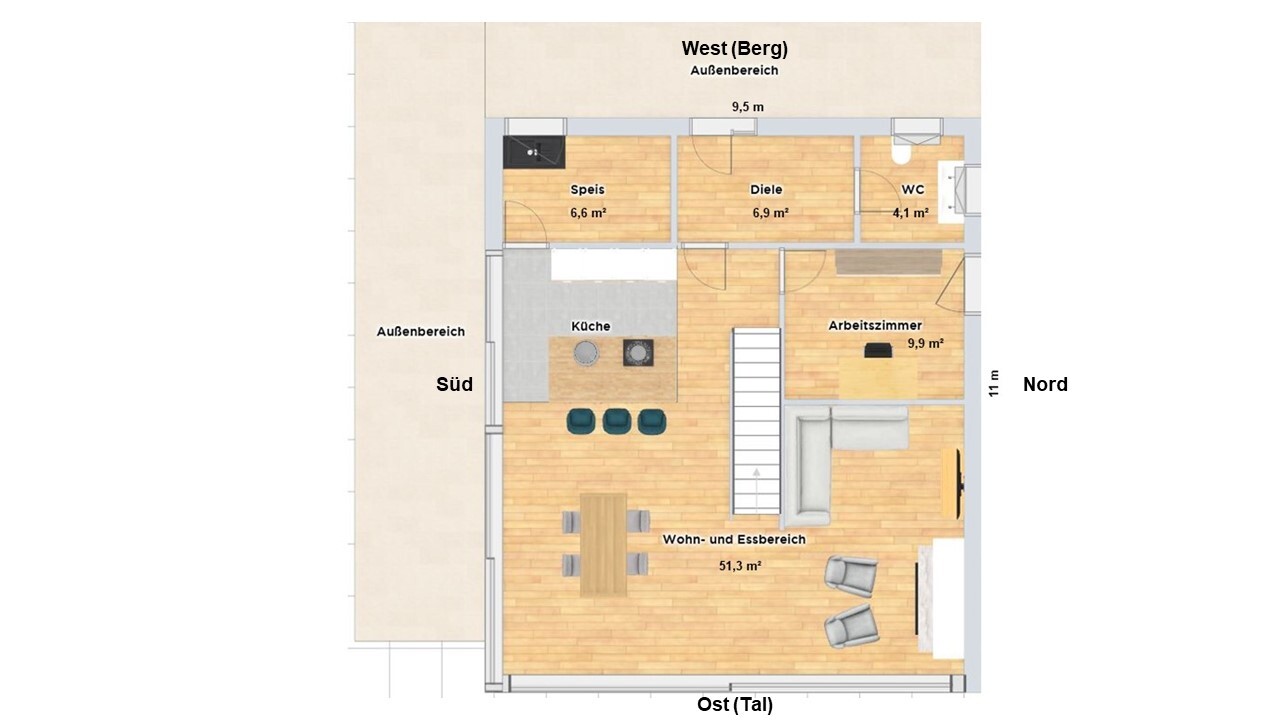
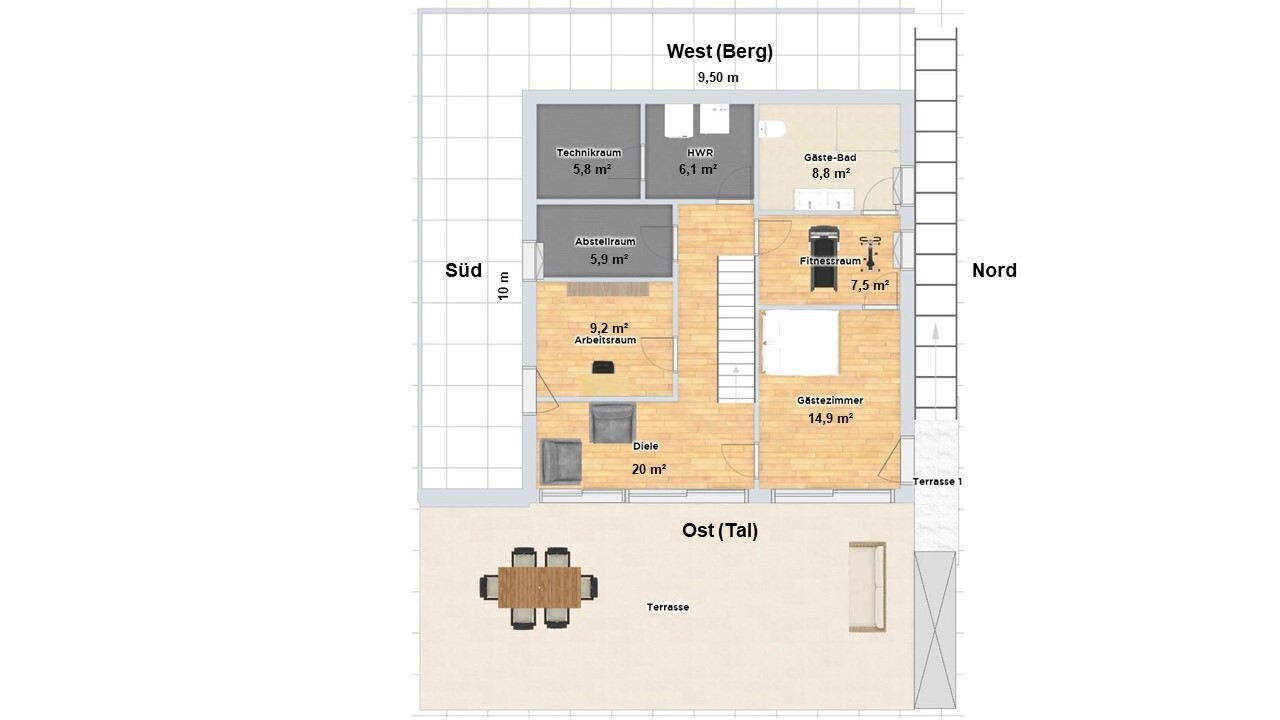
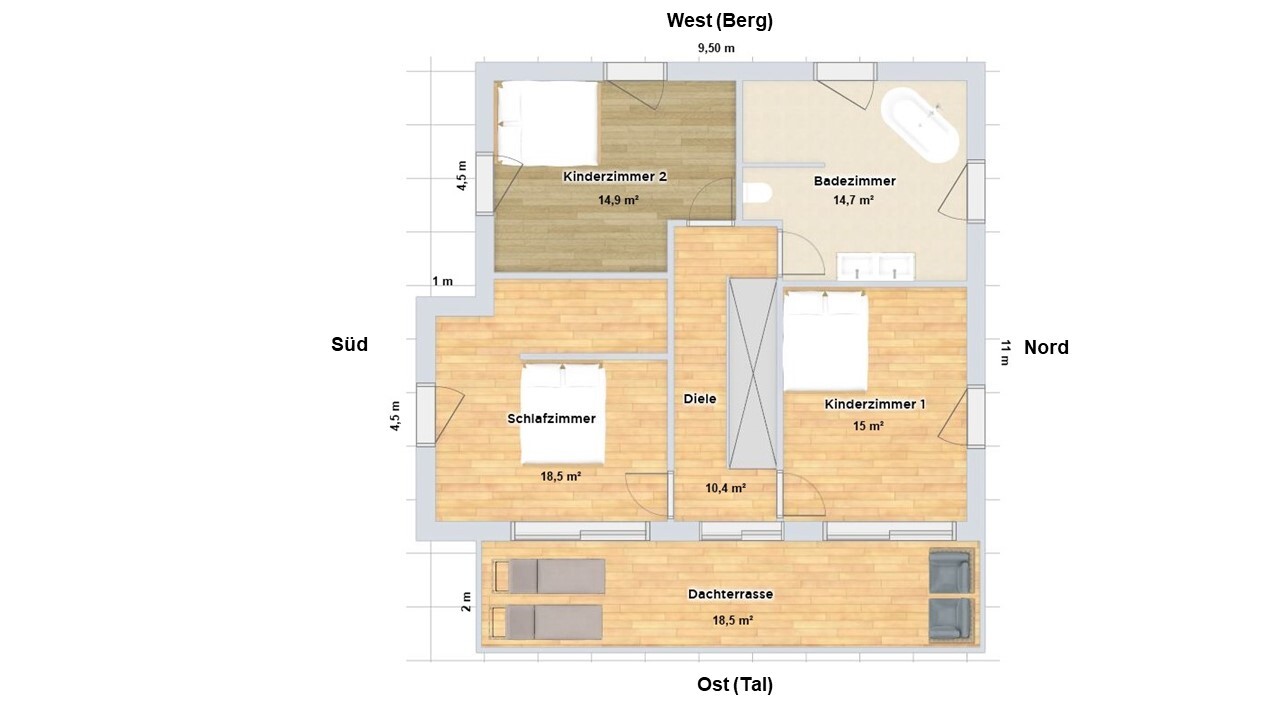

Plot size: 610 sqm (about 15 x 40 m) rectangular
Slope: East-facing slope, approximately 28% gradient. Road downhill. The house is planned to be positioned in the upper third on the hill side (for privacy and view).
Floor area ratio: n.a. (no development plan)
Plot ratio: n.a.
Building window, building line and boundary: n.a.
Setbacks: presumably 2.50 meters (8 feet 2 inches) in all directions
Number of parking spaces: n.a.
Number of floors: n.a.
Roof type: n.a.
Architectural style: n.a.
Orientation: n.a.
Maximum heights / limits: n.a.
Other requirements: There is no formal development plan. However, the street features a variety of house types, so almost any architectural style should be possible.
Client Requirements
Architectural style, roof type, building type: Bauhaus style, preferred flat roof (possibly also shed roof)
Basement, floors: Basement integrated as a living space in the slope, with two floors above
Number of occupants, ages: Currently 3 persons, aged 33, 32, and an infant
Space requirements on ground floor (GF), upper floor (UF):
GF: kitchen, pantry with sink niche, living room, study, WC, entrance area with dressing room
UF: master bedroom with dressing room, two children’s rooms, bathroom, roof terrace
Basement: guest room, guest bathroom, study, laundry room, technical room, storage room, fitness room
Office: currently family use, potential home office in future
Overnight guests per year: parents-in-law visit frequently
Open or enclosed layout: open
Traditional or modern construction: modern
Open kitchen, kitchen island: open kitchen with island
Number of dining seats: one large dining table
Fireplace: preferred, as shown in the floor plan
Music/speaker wall: possibly in the living room
Balcony, roof terrace: roof terrace facing the valley (east side)
Garage, carport: double garage detached from the house, cut into the slope at the street
Utility garden, greenhouse: no
Other wishes / special features / daily routine, including reasons why something should or should not be: no ventilation system, no smart home, photovoltaic system
House Design
Who designed it: do-it-yourself
Living area: approx. 230 sqm (including half the roof terrace area)
Usable area: approx. 260 sqm
What do you like most and why? The overhangs to the east and south, the glass facades, the integration into the slope, the straight staircase, the long visual axis on the ground floor
What do you like least and why? Possibly the entrance area as it may be too small; living room may be too small
Estimated cost according to architect/designer: not available yet
Personal budget for house including equipment: n.a.
Preferred heating technology: air-to-water heat pump, underfloor heating
If you have to compromise, on which details / extensions
- which can you do without: overhangs if much more expensive, flat roof if much more expensive
- which you cannot give up: glass facades
Why is the design as it is now?
The floor plans are a first draft, completely self-developed, and intended as a starting point for discussion. The design is based on three main principles: slope orientation, cardinal directions, and plot shape. Because of the east-facing slope, the larger floor-to-ceiling glass facades and living and dining rooms on the ground floor, as well as the guest room in the basement, are positioned facing east (offering a nice view of the valley). To allow access to the outside from the kitchen and take advantage of sunlight, the kitchen on the ground floor is adjacent on the south side, also with large glass facades. Another idea was to create a long line of sight to the valley directly upon entering the house, which is why the entrance is positioned on the uphill side. Functional rooms (bathrooms, technical room, dressing room, pantry, etc.) are generally oriented uphill (to the west). All WCs are stacked to simplify plumbing. The two 1-meter (3 feet 3 inches) cantilevers are mainly aesthetic but also provide some shading and would be dispensable if needed. The original shape was a simple 10 x 10 m (33 x 33 feet) cube, but this version is preferred by my wife and me. The glass facades are not yet fixed in size and serve as rough guidelines; they could be slightly smaller if structural requirements demand it. The straight staircase may be a point of discussion, although I personally find it very appealing visually.
Regarding privacy and neighbors: downhill side is not relevant due to the slope. On the uphill side a neighboring house is adjacent, so no open facades are planned there. On the north and south sides, houses are located further up the street, with tall trees and shrubs in between. This provides almost complete privacy.
Please ignore the outdoor areas not attached to terraces in the floor plans, as these were only used for rough simulation of the slope.
What is the key question about the floor plan, summarized in 130 characters?
Is our design heading in the right direction, or are there major issues we have overlooked?
The plan is also intended to obtain initial cost comparisons from various companies for a similar house. We understand that an architect will need to be involved in further planning.
We are grateful for any feedback!
R
RoterPapagei25 Aug 2022 14:57alles3d schrieb:
Hello,
this is my first post. This got me motivated to find a solution for the house placement. A 28% or 16° slope isn’t that dramatic if the house is set a bit deeper into the hillside. If the plot is retained toward the street and starts at a higher level, then I would push the house slightly forward and set it deeper into the slope, and it should still fit.
The kids would have a nice area to play. It would be relatively easy to create a path from the garage to the house, in case an elevator option is desired.
The stairs have no more than 18 steps, and I assumed a floor height of 320 cm (10.5 ft), so with a 40 cm (16 inch) parapet, you get a 10x10x10 m (33x33x33 ft) cube. An interior staircase should be more central and closer to the south side, so that an entrance area on the lower and middle floors is possible.
Maybe I will consider a floor plan with nice openings. A cube can look very good with well-placed openings.
Best regards,
Jan That is super kind and helpful! Many thanks for your effort!
Just to clarify for me as a layperson: What speaks against having the west terrace at ground floor level and not setting the house so deep into the ground? The slope to be bridged toward the street, or are there other reasons as well? Regardless, thank you very much for the clear proposal!
RoterPapagei schrieb:
That is really very kind and helpful! Thank you very much for the effort!
Just to clarify for me as a layperson: Is there any reason not to build the west terrace at the ground floor level and not to dig the house so deep? Is it just the slope to the street that needs to be overcome, or are there other reasons as well? Regardless, thanks for the clear explanation! There is basically no objection to that; personally, I prefer having the option to access the garden directly from the back. This is definitely nicer for the children’s rooms, and the upper section of the plot gets better use. The middle floor gets enough natural light, so it doesn’t bother me that the building is set deeper into the terrain.
You could even create a trench behind the house, so the children can cross small bridges into the garden. This would also allow for a light well down to the lower level.
R
RoterPapagei25 Aug 2022 16:24alles3d schrieb:
Basically, there is nothing against it, but I personally prefer having the possibility to go directly into the garden at the back. This is definitely nicer for the children's rooms, and the upper area of the plot is used more. The middle floor is bright enough that it doesn't bother me that the building is set deeper into the terrain.
You could even create a ditch behind the house so the children can cross small bridges into the garden; then a light well down to the lower floor would even be possible.Hmm, it really looks good! And of course, that would be great for the children.However, I see three disadvantages with this version:
1) You basically lose the slope yourself (advantage for access, disadvantage for the view)
2) Excavation will probably be significantly more expensive because a lot of digging, especially deeply into the uphill side, is necessary
3) Less natural light in the middle and lower floors
With the original version, the excavated material might even be reused for terracing the lower floor towards the valley?
1. The ground floor and first floor still have ceiling heights of 6 and 9 meters (20 and 30 feet), respectively. The basement with the terrace is less visible and more private. The terrace on the south side is also quite secluded. In your design, I feel the exposure is much more prominent.
2. That is about 800 cubic meters (28,000 cubic feet) of excavation. I measured it once. Perhaps a small portion, about one-sixth, could be reused.
3. The basement will be darker, but if the secondary rooms are located at the rear and 2 to 3 light wells are installed, I wouldn’t mind that. On the ground floor, it depends on the floor plan. Three sides receive natural light.
2. That is about 800 cubic meters (28,000 cubic feet) of excavation. I measured it once. Perhaps a small portion, about one-sixth, could be reused.
3. The basement will be darker, but if the secondary rooms are located at the rear and 2 to 3 light wells are installed, I wouldn’t mind that. On the ground floor, it depends on the floor plan. Three sides receive natural light.
R
RoterPapagei25 Aug 2022 17:32alles3d schrieb:
1. The ground floor and first floor are still 6 meters (20 feet) and 9 meters (30 feet) high. The basement with the terrace is less visible and more private. The terrace on the south side is also not very exposed. In your design, I think it feels much more on display.
2. That is about 800 cubic meters (28,000 cubic feet) of excavation. I measured once. Maybe about one-sixth of that can be used.
3. The basement will be darker, but if the ancillary rooms are placed at the back and 2 to 3 light wells are installed, it wouldn’t bother me. On the ground floor, it depends on the floor plan. Three sides have natural light.Point 1 wasn’t very clear to me! Thanks! Really very kind of you!
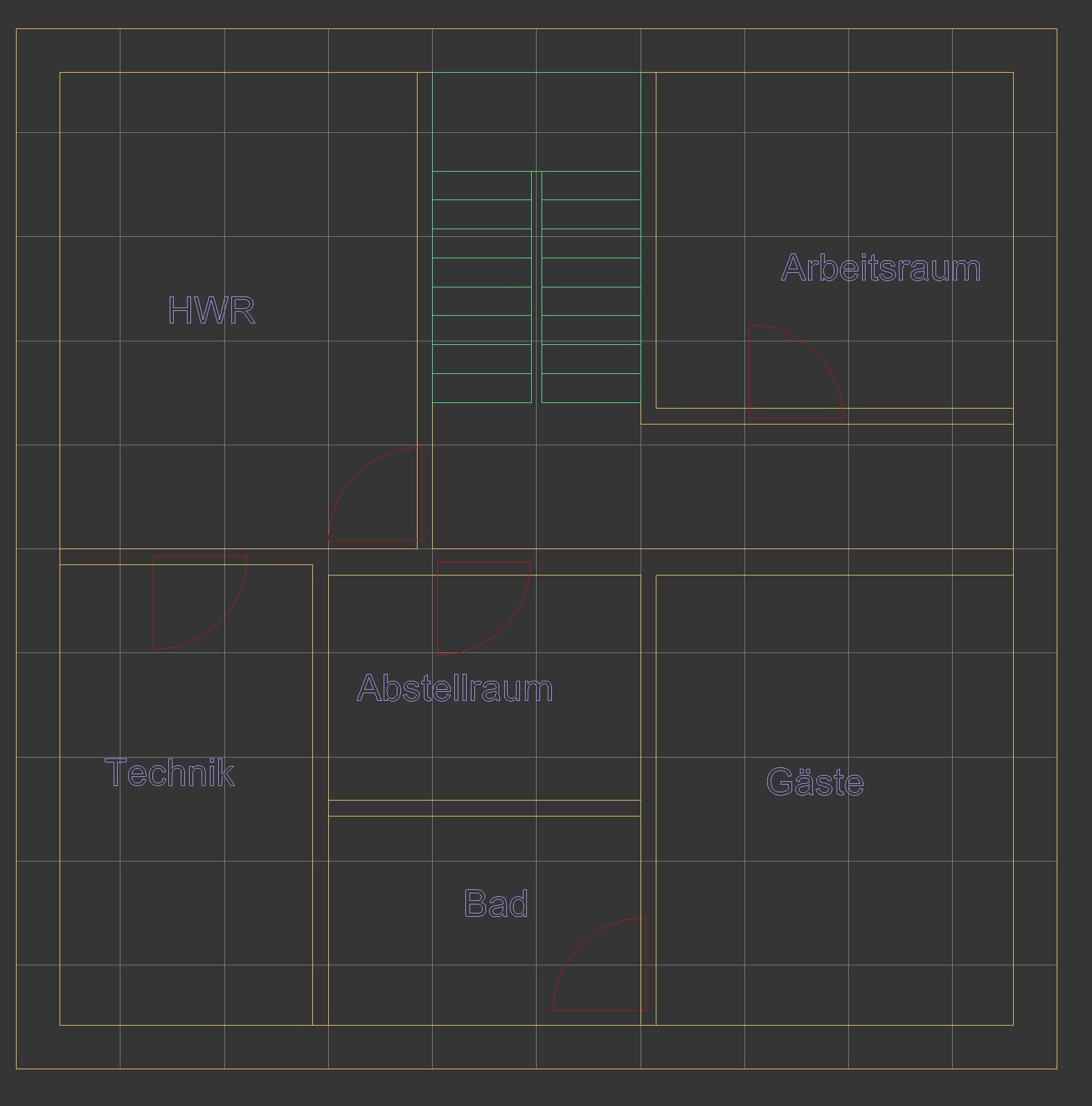
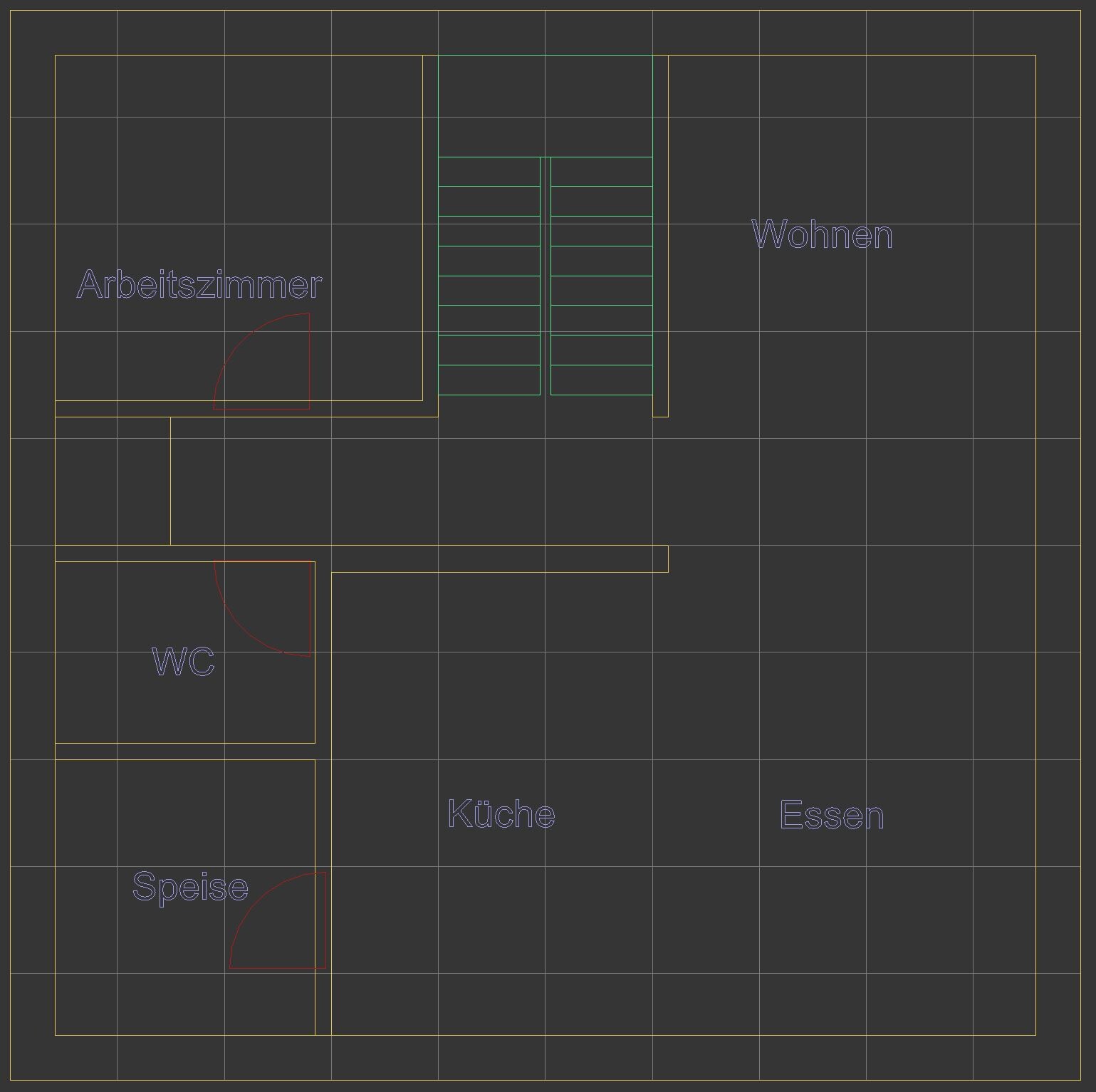
Everything here is a bit more detailed. The floor plans are oriented to the north. The fitness room has been removed, but it fits well into the guest room.
The facade, in my opinion, has the maximum amount of window area. If I were familiar with the surroundings, I could probably distribute it more evenly. We would have liked the balcony on the upper floor to be much larger, but it should be enough for a few chairs or an outdoor shower.
If the children’s rooms are made smaller and the staircase is shifted, the master area could become even more luxurious.

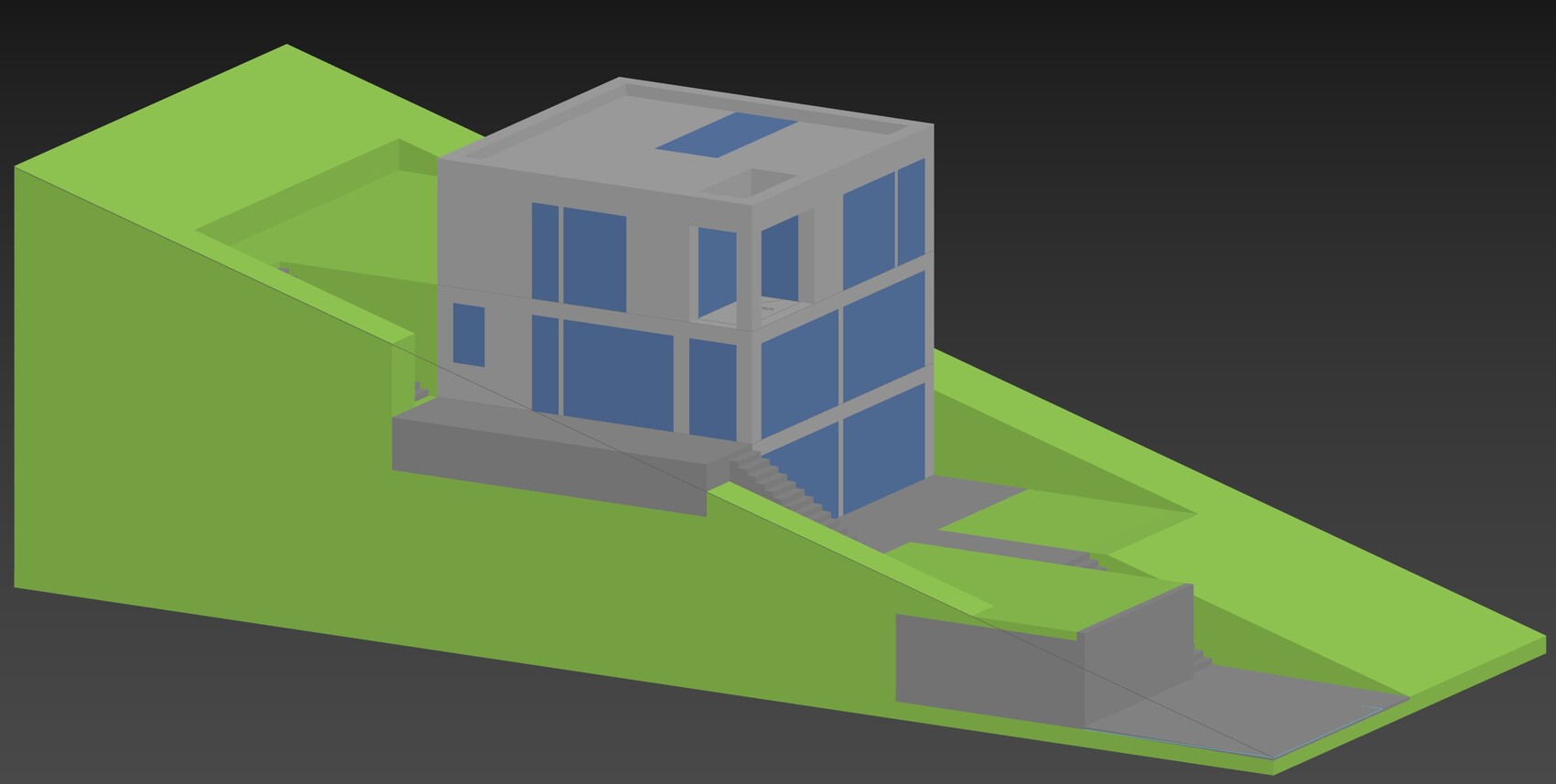
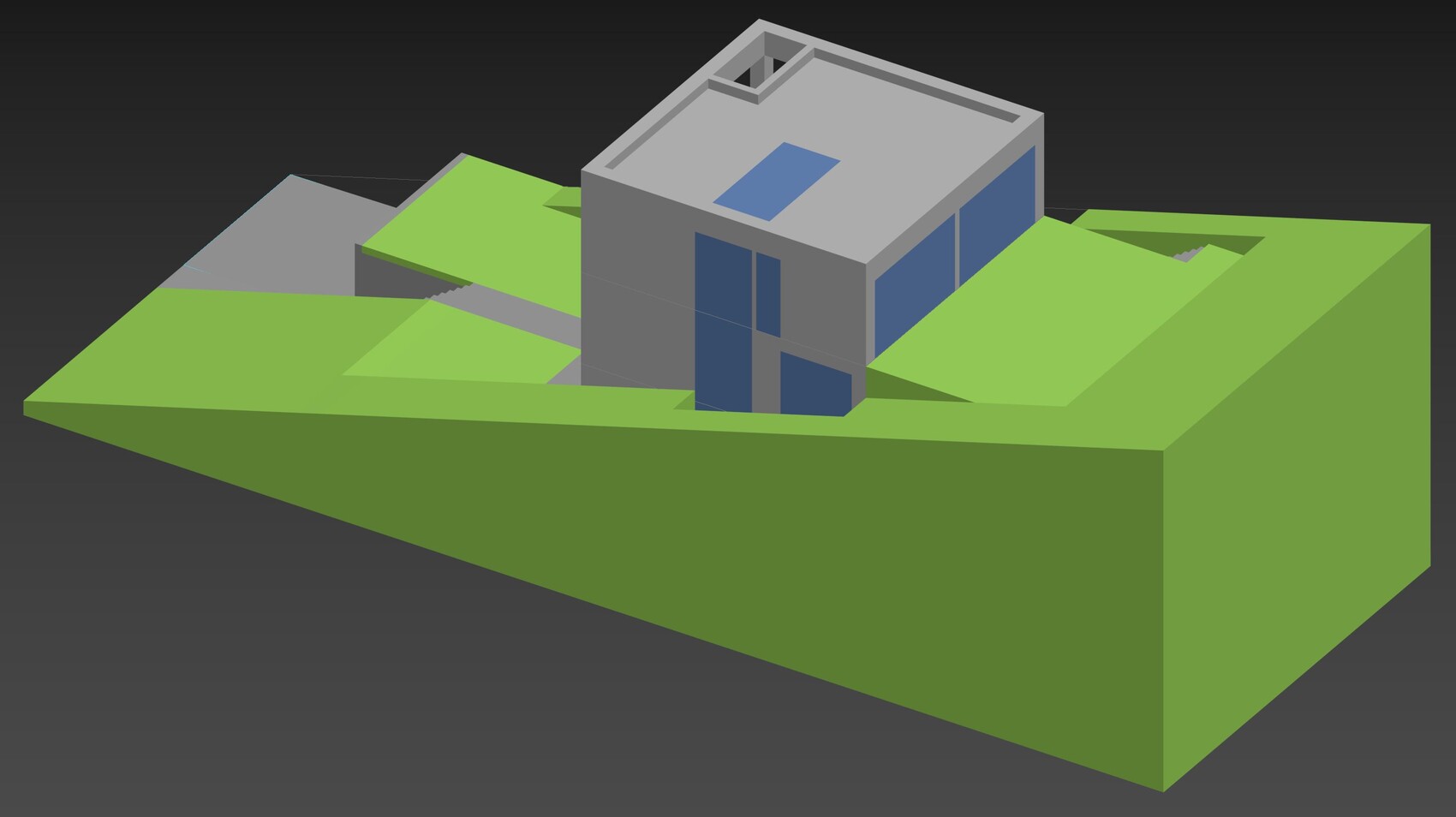
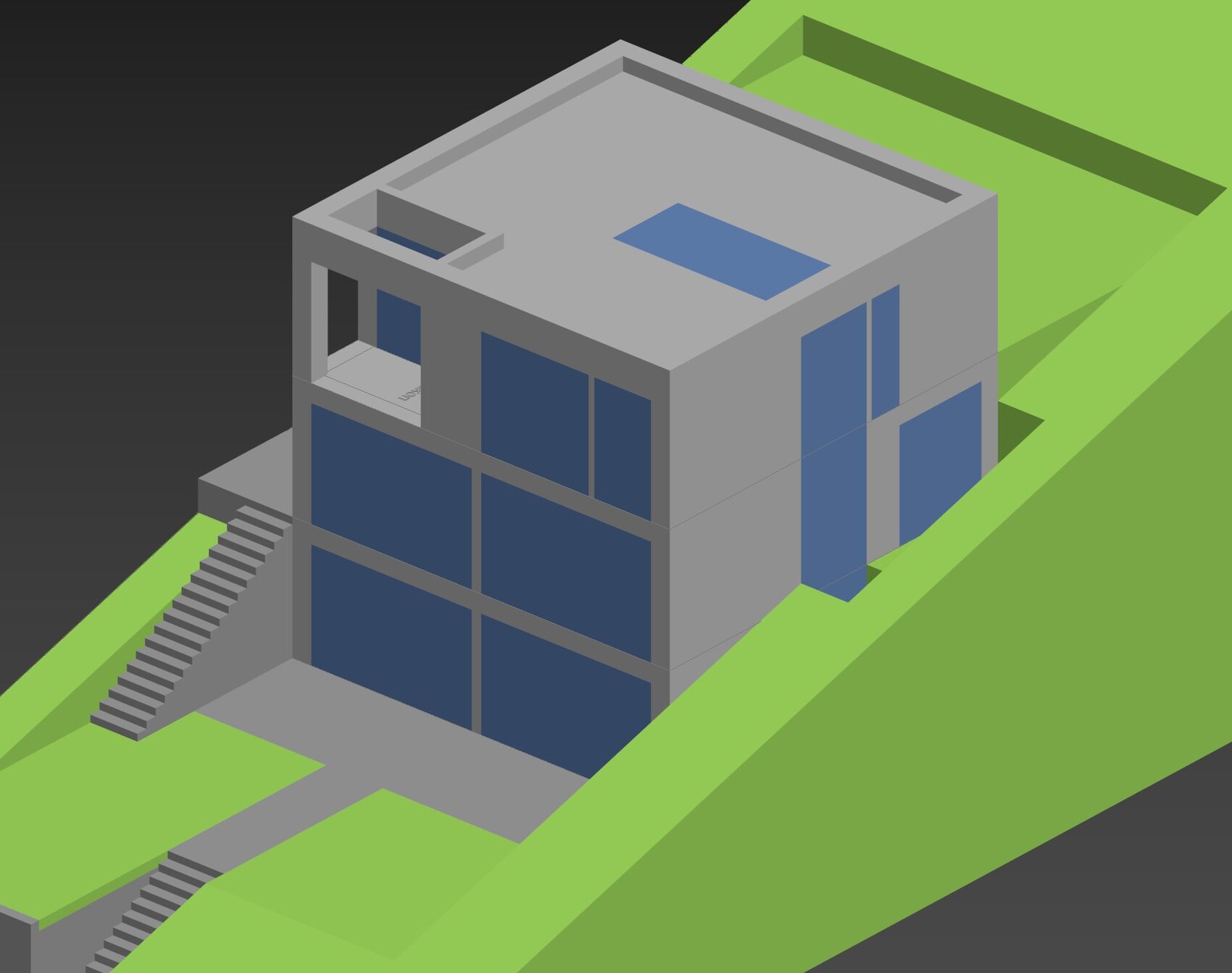
The facade, in my opinion, has the maximum amount of window area. If I were familiar with the surroundings, I could probably distribute it more evenly. We would have liked the balcony on the upper floor to be much larger, but it should be enough for a few chairs or an outdoor shower.
If the children’s rooms are made smaller and the staircase is shifted, the master area could become even more luxurious.
Similar topics