
ᐅ Single-family house floor plan, 200 sqm, wooden house in American style, concrete slab foundation
Created on: 22 Jun 2024 13:10
T
TRomz_y
Hi everyone,
we are planning to build a prefabricated timber-frame house in the American style.
Before choosing a supplier, we worked with an architect to develop a floor plan. The architect’s latest draft was acceptable, but we made some corrections and have now incorporated them into the floor plan via screenshots. I hope everything is still clear enough for evaluation despite that.
We are now entering the third round with the architect. After this, any further planning or changes will incur additional costs. Therefore, we are hoping for tips and constructive criticism.
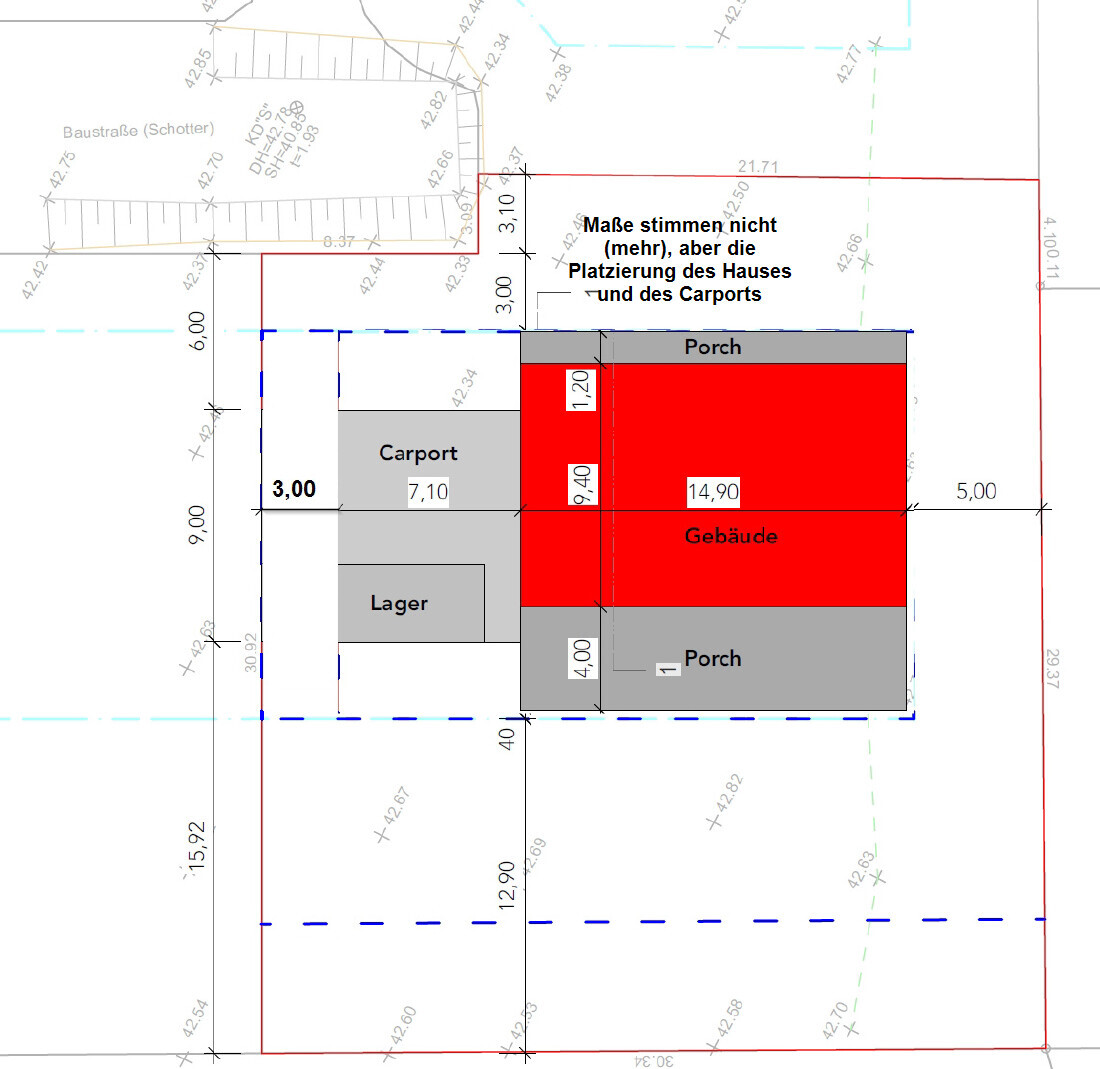
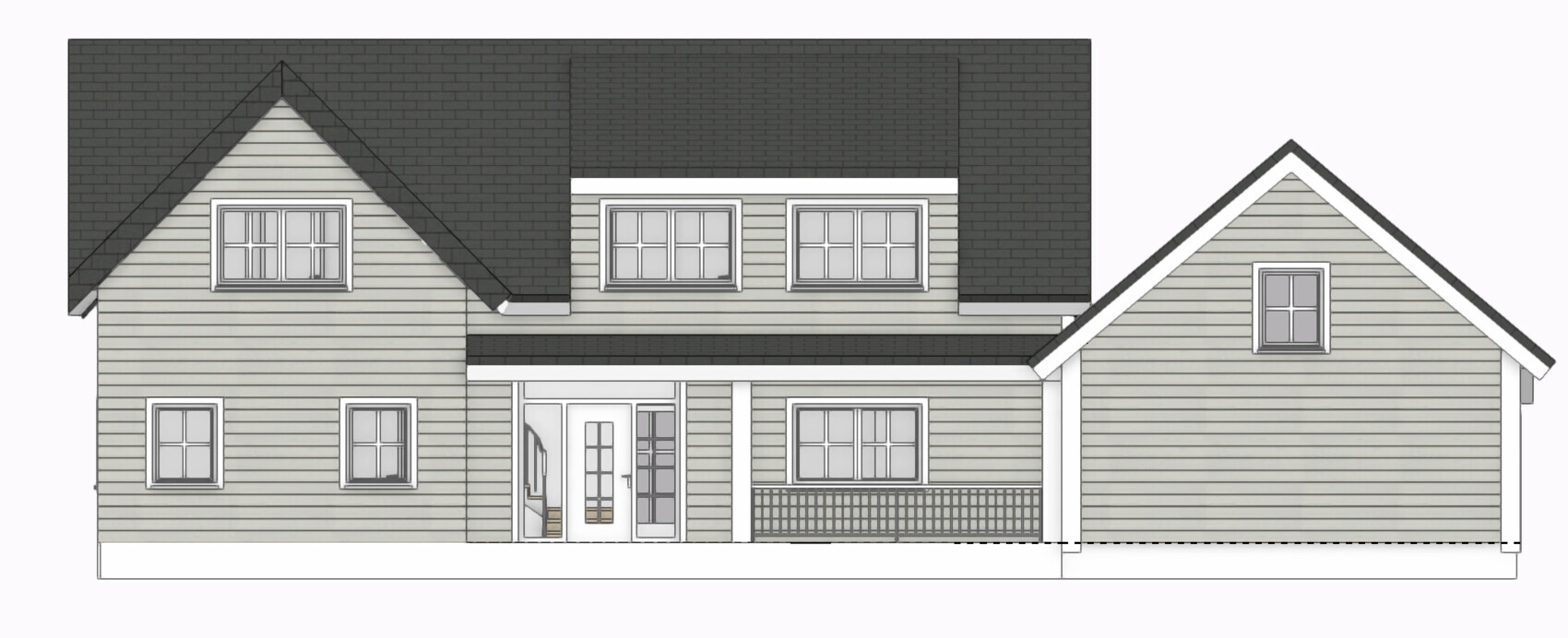
Note: In the house visualizations, the carport roof is still very high (architect’s planning mistake, as the upper floor windows would have looked directly onto the carport roof...). The roof pitch will be lowered so that only a small roof remains.
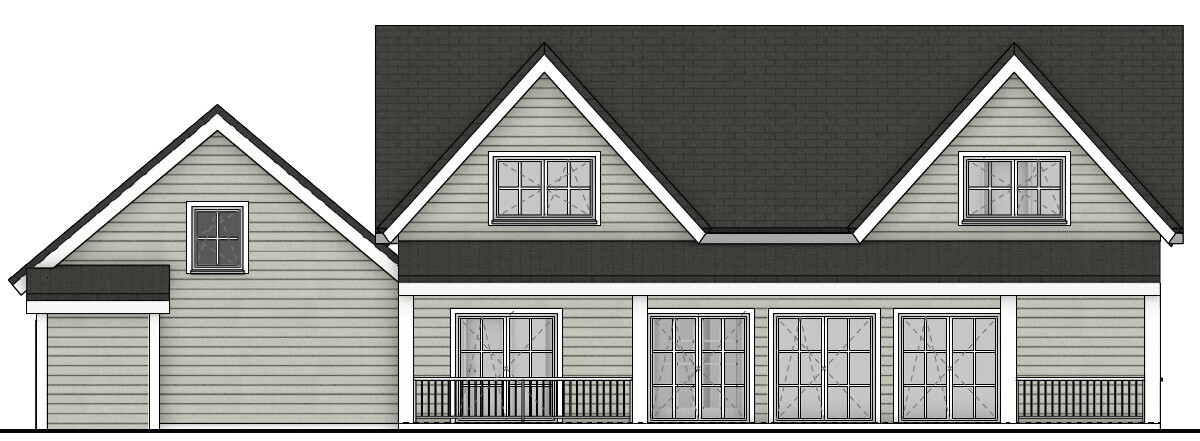
Rear view: There is no railing on the back terrace, as the small roof at the carport should serve as a bicycle parking area, but this will be removed.
Thank you very much in advance for all your efforts.
Development plan / restrictions
Plot size: 1000sqm (about 10,764 sq ft)
Slope: no
Floor area ratio (FAR): 0.28
Plot ratio / building coverage index: n.a.
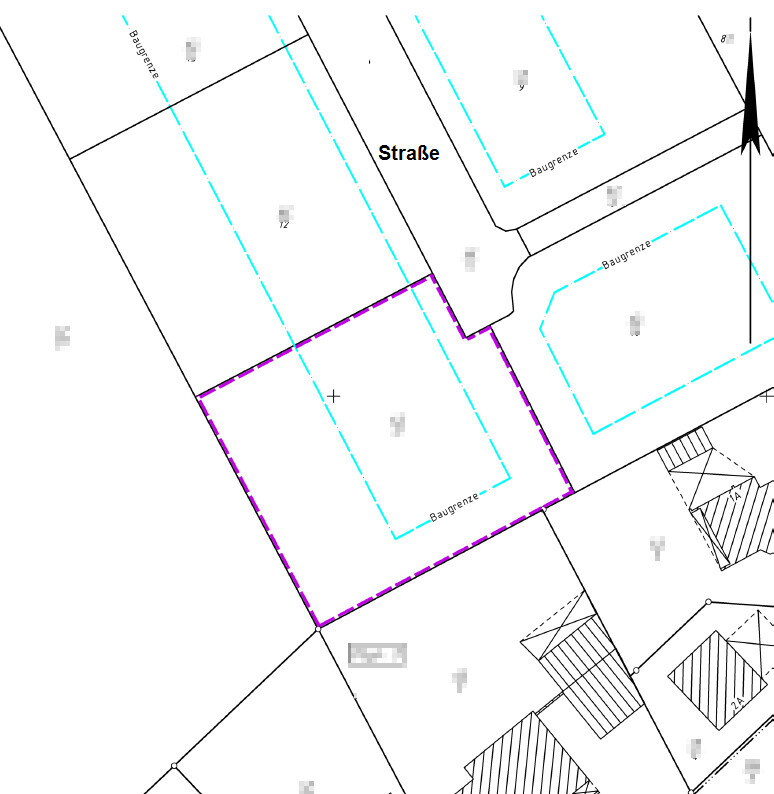
Building envelope, building line and boundaries: see site plan
Edge development
Number of parking spaces: 2
Number of floors: 1
Roof type: gable roof, hip roof, half-hipped roof, etc.
Style: n.a.
Orientation: S/SW
Maximum heights / limits: ridge height 9m (30 ft), eaves height 4.30m (14 ft)
Other requirements: none
Client requirements
Style, roof type, building type: American farmhouse, gable roof
Basement, floors: no basement
Number of occupants, age: 2 adults, 1 child
Floor space required on ground floor (GF), upper floor (UF): approx. 160-170sqm (1,722-1,829 sq ft)
Office: family use or home office? Workspace for 2 people, both working from home, private use
Guests per year: 5
Open or closed layout: open kitchen-dining area
Conservative or modern style: farmhouse / modern
Open kitchen, kitchen island: yes
Number of dining seats: 6
Fireplace: no
Music / stereo wall: no
Balcony, roof terrace: no
Garage, carport: carport, 2 parking spaces required
Kitchen garden, greenhouse: no
Additional wishes / special features / daily routines, including reasons why some things are preferred or avoided:
- Because of the American style, we have covered terraces both at the front and back. We hope this means we won’t have the typical “mudroom” at the entrance (dirt settles on the terrace, shoes can possibly stay outside).
- No office on the upper floor due to sloping ceilings. The desks are height-adjustable, and we have bookshelves there... this would be difficult to accommodate.
- Laundry room on the upper floor with space for a drying rack is great – short distances.
- The living room should be separable to reduce noise from the kitchen (currently we have an open kitchen-dining-living area and it’s hard to watch TV when someone is cooking).
House design
Who designed the plan: Architect and our ideas
What do you like best? Why? Large kitchen-dining area
What do you dislike? Why?
The upper floor feels too big because we have – unfortunately – more rooms downstairs than upstairs. Does anyone see potential to save some floor space?
The wardrobe ended up there because the small room was still “left over.” It was originally the guest bathroom without a shower. We would like to have 2 showers in the house.
Estimated price according to architect/planner: 800,000 EUR
Personal price limit for the house, including fixtures: 800k
Preferred heating system: air-to-water heat pump, underfloor heating
If you had to give up any details or additional features:
- can give up: "all-purpose room" (see floor plan)
- cannot give up: mudroom
Why is the design as it is now? For example:
The floor plan ideas come from a collection of house tour videos and Pinterest inspirations.
Since the construction method places strong emphasis on symmetry and harmony in the façade, moving windows around is not “just possible” without causing visual chaos from the outside.
What do you think are its strong and weak points? Well, that’s the question. For us personally, everything is now taken into account, but is it also “logical”? Are there planning errors? What can be improved?
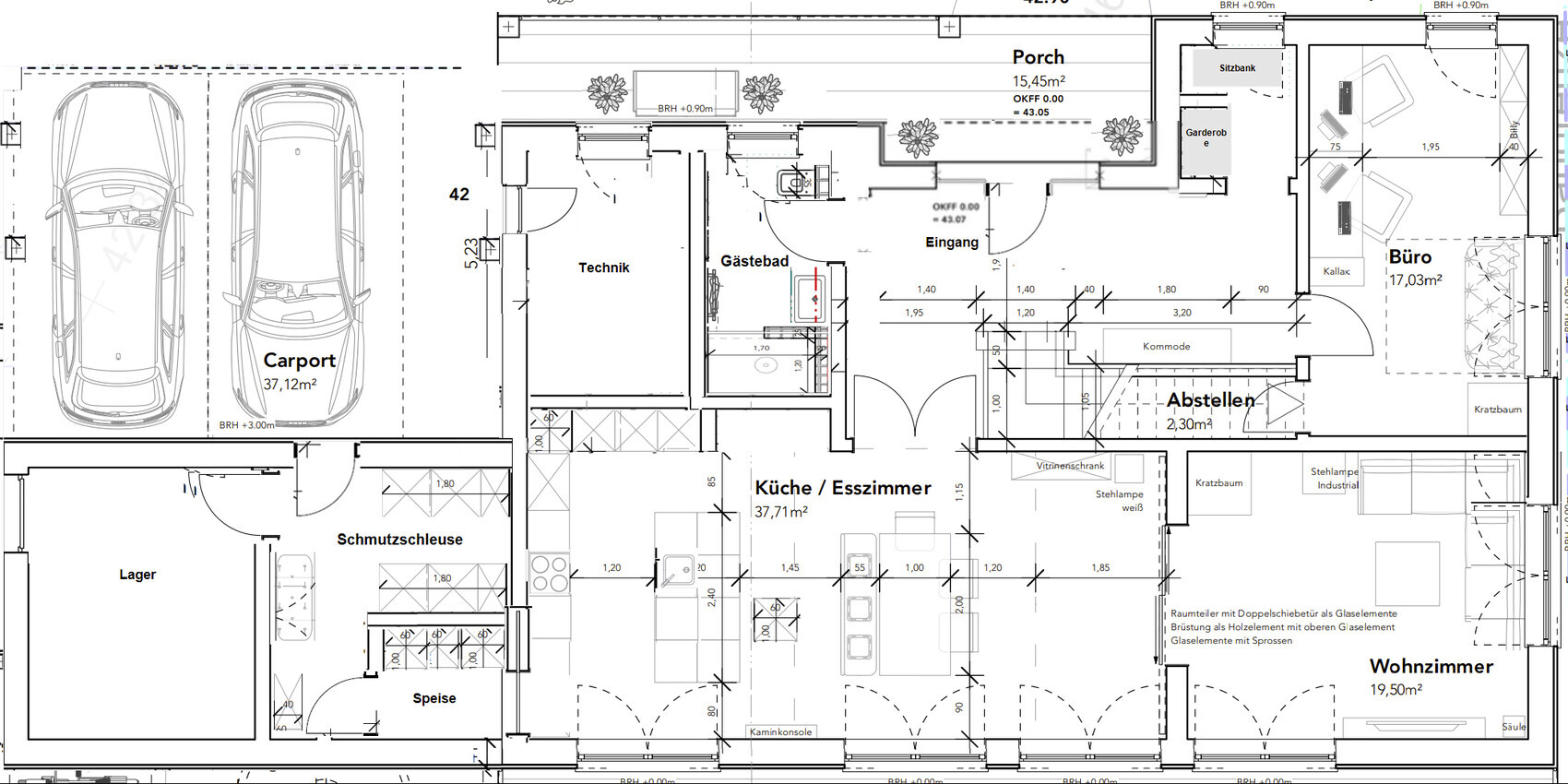
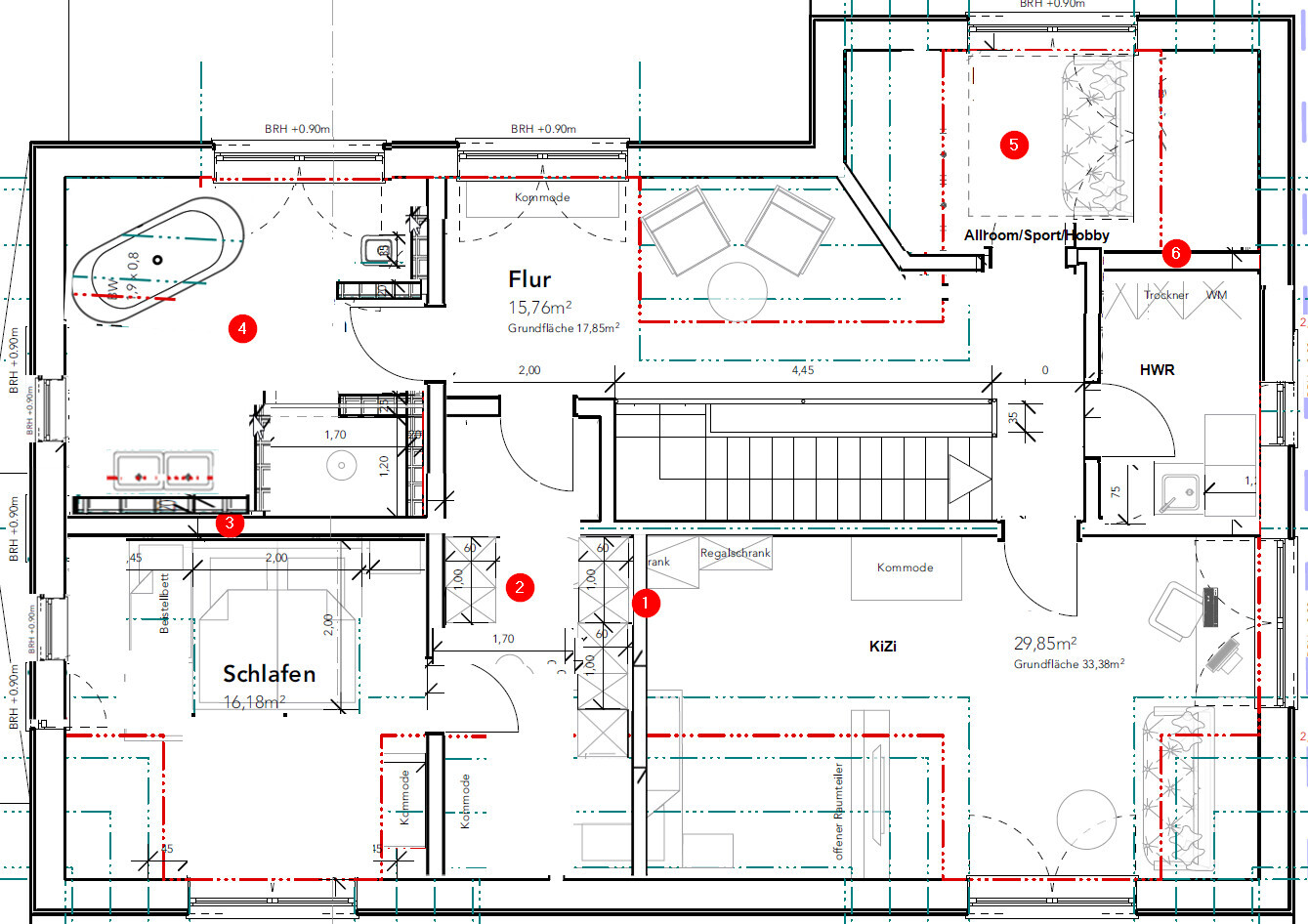
we are planning to build a prefabricated timber-frame house in the American style.
Before choosing a supplier, we worked with an architect to develop a floor plan. The architect’s latest draft was acceptable, but we made some corrections and have now incorporated them into the floor plan via screenshots. I hope everything is still clear enough for evaluation despite that.
We are now entering the third round with the architect. After this, any further planning or changes will incur additional costs. Therefore, we are hoping for tips and constructive criticism.
Note: In the house visualizations, the carport roof is still very high (architect’s planning mistake, as the upper floor windows would have looked directly onto the carport roof...). The roof pitch will be lowered so that only a small roof remains.
Rear view: There is no railing on the back terrace, as the small roof at the carport should serve as a bicycle parking area, but this will be removed.
Thank you very much in advance for all your efforts.
Development plan / restrictions
Plot size: 1000sqm (about 10,764 sq ft)
Slope: no
Floor area ratio (FAR): 0.28
Plot ratio / building coverage index: n.a.
Building envelope, building line and boundaries: see site plan
Edge development
Number of parking spaces: 2
Number of floors: 1
Roof type: gable roof, hip roof, half-hipped roof, etc.
Style: n.a.
Orientation: S/SW
Maximum heights / limits: ridge height 9m (30 ft), eaves height 4.30m (14 ft)
Other requirements: none
Client requirements
Style, roof type, building type: American farmhouse, gable roof
Basement, floors: no basement
Number of occupants, age: 2 adults, 1 child
Floor space required on ground floor (GF), upper floor (UF): approx. 160-170sqm (1,722-1,829 sq ft)
| Room | sqm |
| Ground floor |
| Living room, kitchen, and dining area | 55 |
| Entrance area | 10 |
| Utility room / mudroom | 10 |
| Technical room | 10 |
| Pantry | 4 |
| Office / private computer room | 15 |
| Guest bathroom | 4-6? |
| Upper floor | |
| Bedroom | 15 |
| Dressing room / walk-in closet | 10 |
| Child’s bedroom | 20 |
| Bathroom | 13 |
Office: family use or home office? Workspace for 2 people, both working from home, private use
Guests per year: 5
Open or closed layout: open kitchen-dining area
Conservative or modern style: farmhouse / modern
Open kitchen, kitchen island: yes
Number of dining seats: 6
Fireplace: no
Music / stereo wall: no
Balcony, roof terrace: no
Garage, carport: carport, 2 parking spaces required
Kitchen garden, greenhouse: no
Additional wishes / special features / daily routines, including reasons why some things are preferred or avoided:
- Because of the American style, we have covered terraces both at the front and back. We hope this means we won’t have the typical “mudroom” at the entrance (dirt settles on the terrace, shoes can possibly stay outside).
- No office on the upper floor due to sloping ceilings. The desks are height-adjustable, and we have bookshelves there... this would be difficult to accommodate.
- Laundry room on the upper floor with space for a drying rack is great – short distances.
- The living room should be separable to reduce noise from the kitchen (currently we have an open kitchen-dining-living area and it’s hard to watch TV when someone is cooking).
House design
Who designed the plan: Architect and our ideas
What do you like best? Why? Large kitchen-dining area
What do you dislike? Why?
The upper floor feels too big because we have – unfortunately – more rooms downstairs than upstairs. Does anyone see potential to save some floor space?
The wardrobe ended up there because the small room was still “left over.” It was originally the guest bathroom without a shower. We would like to have 2 showers in the house.
Estimated price according to architect/planner: 800,000 EUR
Personal price limit for the house, including fixtures: 800k
Preferred heating system: air-to-water heat pump, underfloor heating
If you had to give up any details or additional features:
- can give up: "all-purpose room" (see floor plan)
- cannot give up: mudroom
Why is the design as it is now? For example:
The floor plan ideas come from a collection of house tour videos and Pinterest inspirations.
Since the construction method places strong emphasis on symmetry and harmony in the façade, moving windows around is not “just possible” without causing visual chaos from the outside.
What do you think are its strong and weak points? Well, that’s the question. For us personally, everything is now taken into account, but is it also “logical”? Are there planning errors? What can be improved?
A
ArminJG2224 Jun 2024 19:03I would mainly swap the mudroom and the technical room. The technical room should be accessible from the garage and, in case of emergency, from the kitchen, as well as directly through the mudroom into the main hallway. I find it strange to always enter the kitchen directly from the mudroom.
Similar topics