
ᐅ Single-family house floor plan, 2 full stories, approximately 180 m², on a 600 m² plot of land
Created on: 6 Oct 2021 00:29
M
Masterle25
Hello dear members,
like most others, I have also been quietly following along for quite some time. There are many great pieces of advice here.
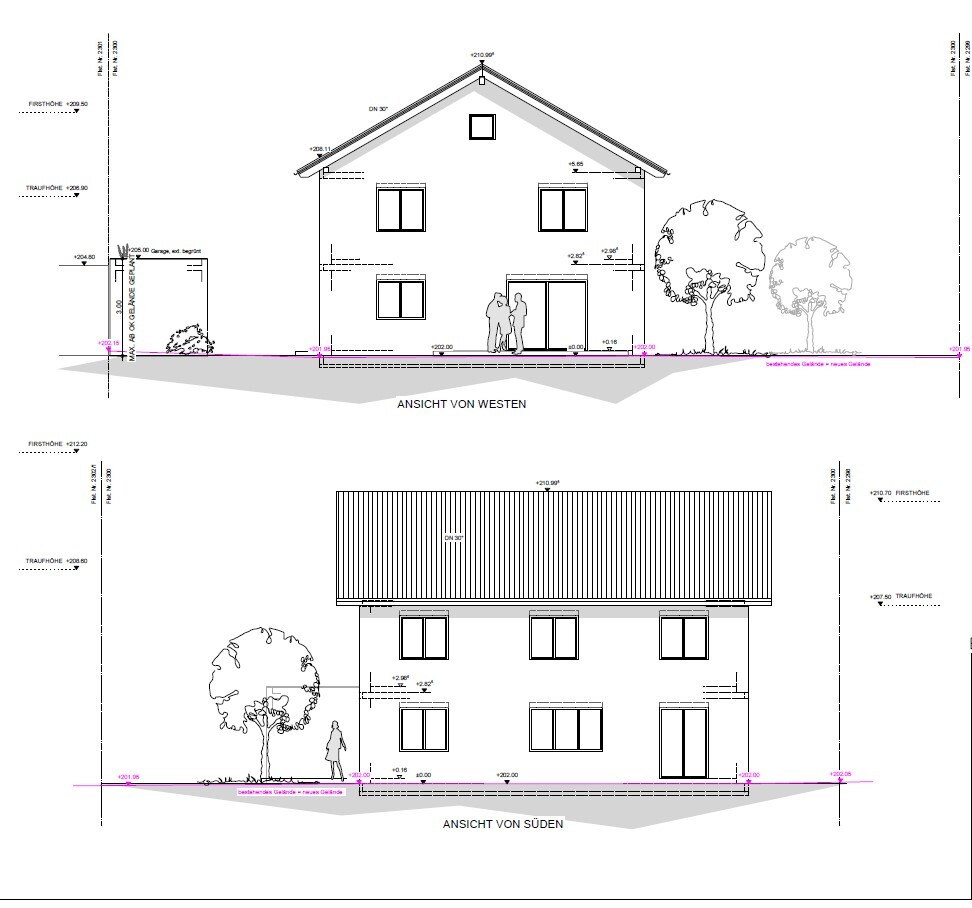
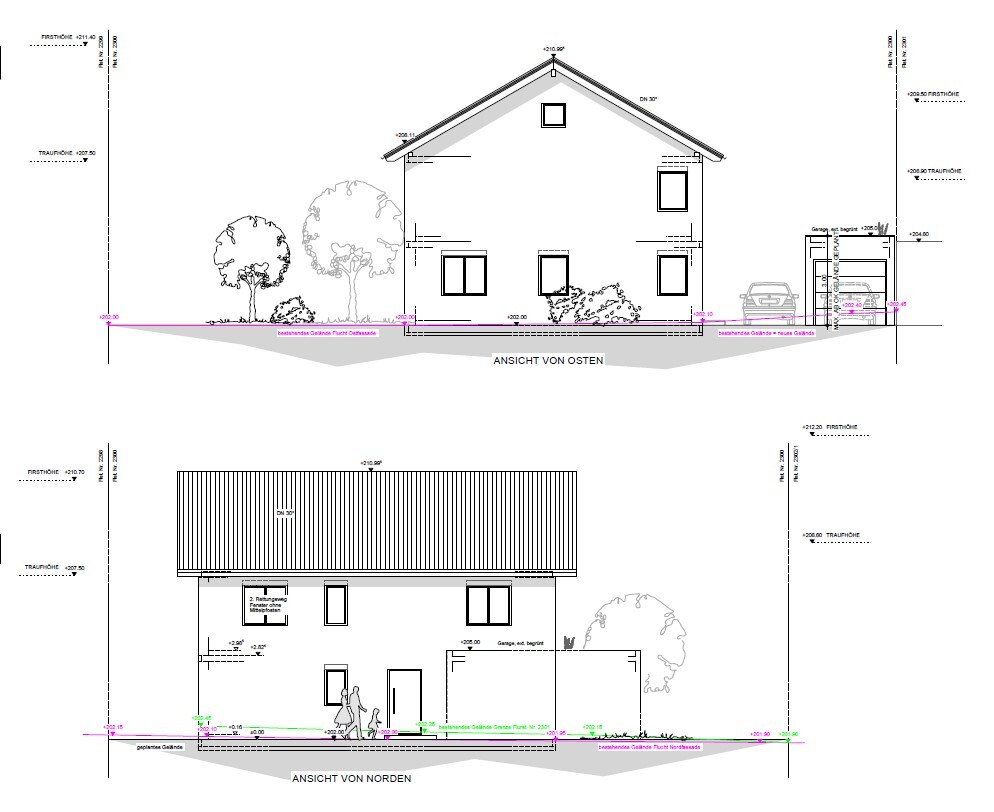
The building application has been submitted, and the exterior dimensions as well as the number of windows are fixed. Positioning is still negotiable in consultation, though only to a limited extent. Inside, we basically still have almost all options. The general contractor (GC) is a local family business and has been operating for over 20 years. They are consistently found in the surrounding new development areas, along with two other GCs, and their reputation is quite remarkable. (In fact, we spent quite some time interviewing the newly settled homeowners around us... *g*) One GC was excluded because of the building method (exclusively KfW 40+ standard), and another after submitting a proposal. The process so far has taken about 10 months, starting with graph paper, heating technology, necessary rooms, house positioning, and so on. There are great guides on this topic in the forum!
So, I hope these words were inviting enough to read through the list of questions. If I have forgotten anything, please let me know. I look forward to your feedback, critical comments are also welcome!
Development plan / Restrictions
No development plan
Plot size – 598 sqm (6,435 sq ft)
Slope – no
Floor area ratio – 0.3
Building window, building line and boundary – 3 m (10 feet) distance on all sides
Other stipulations – orientation aligned with neighboring buildings
The building project, including documents, has already been approved by the relevant building authority.
Homeowners’ requirements
Style, roof type, building type – gable roof / 30° pitch facing south with a 10 kWp photovoltaic system, KfW 55 EE standard
Basement, floors – slab-on-grade foundation, 2 full floors, unheated attic
Number of occupants, ages – currently 3 people, planned 4; ages 38, 35, 1
Space requirements on ground floor and upper floor – Ground floor: living/dining, closed kitchen, study/guest room, WC/bathroom, utility/technical room, guest WC including shower
Upper floor: bedroom, dressing room (emergency room if 3rd child), 2 children’s rooms, bathroom
Office: 2 home office workstations
Guests per year: max. 5, excluding drunken friends, who usually make do with the couch *g*
Open or closed architecture: rather closed architecture
Conservative or modern construction: conservative
Open kitchen, island: closed kitchen, island only used as a workspace
Number of dining seats: 6
Fireplace: no
Music/speaker wall: TV wall
Balcony, roof terrace: none
Garage, carport: garage plus carport cover
House design
Who created the plan:
Planner from a construction company, based on our draft floor plan
What do you particularly like? Why? All necessary rooms are present in sufficient size
What do you not like? Why? Office entrance difficult to use, lack of space due to guest WC and living room widening
Fixed price: approx. 450,000€
Personal price limit for house, including fittings: 550,000€
Preferred heating technology: air-to-water heat pump + underfloor heating
If you had to give up something, which details/extensions:
- can give up: size of the dressing room
- cannot give up: office / two children’s rooms
Why did the design turn out like it is now?
Which wishes were implemented by the planner?
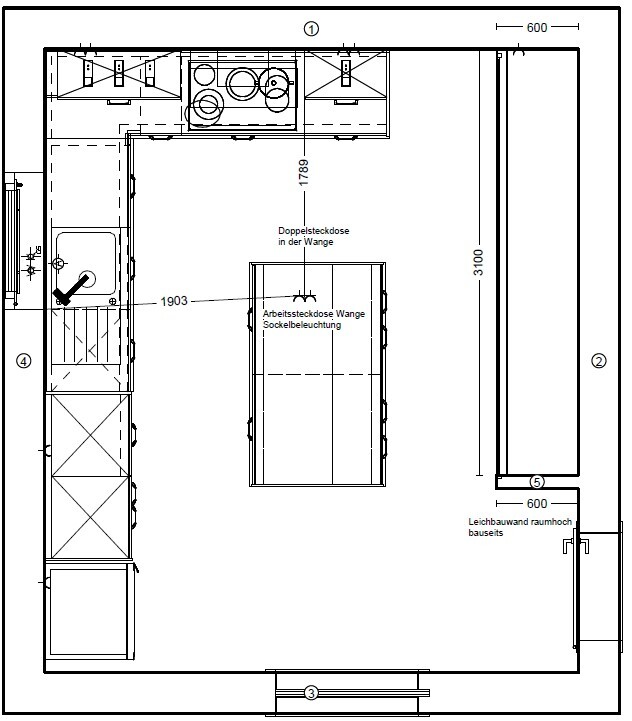
- We have already planned and commissioned the kitchen; floor plan adjusted accordingly (changes still possible)
We hesitated a long time over open vs. closed kitchen and, after deciding, debated for a long time over whether to have a pantry behind the kitchen front or not; it is now behind sliding elements on the right side (see attachment)
- Storage space under the stairs
- Bedroom window removed on the east side because of bedroom closet
- Living room widened due to TV wall and to gain space
What makes it particularly good or bad in your opinion?
All rooms are suitable for everyday use, and living on the ground floor later with minimal alterations is possible
What is the most important / fundamental question about the floor plan in 130 characters?
Are the individual rooms adequately lit? I have no sense of this at all. Any obvious flaws?
PS: North is at the top on the site plan as well as on both floor plans!
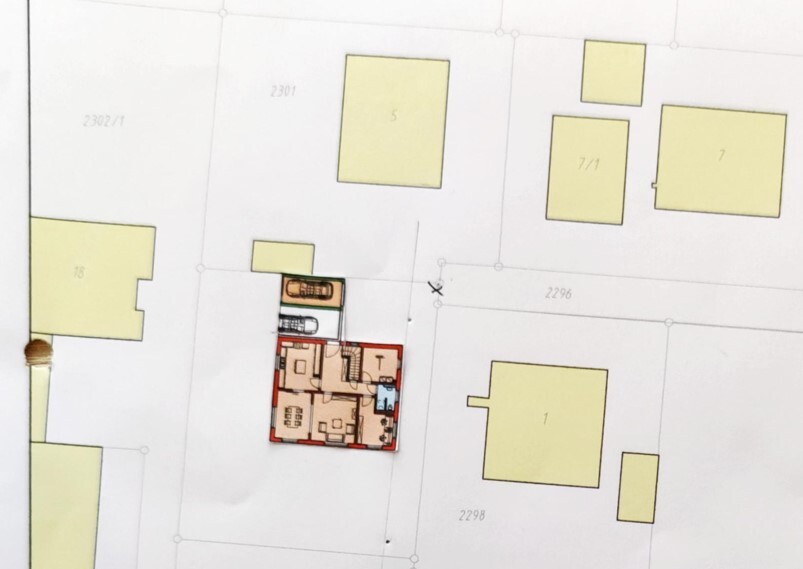
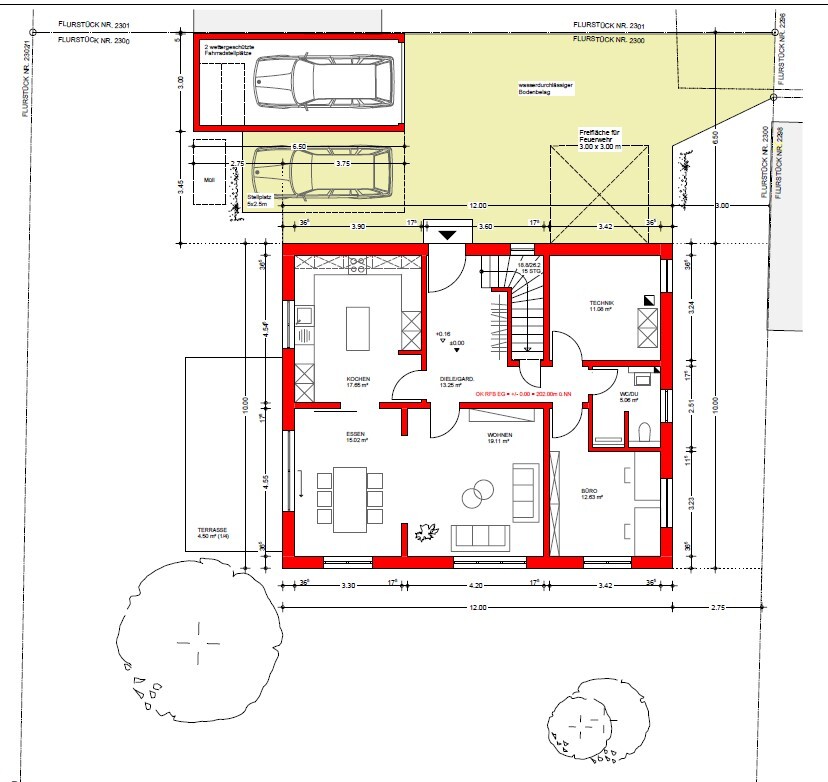
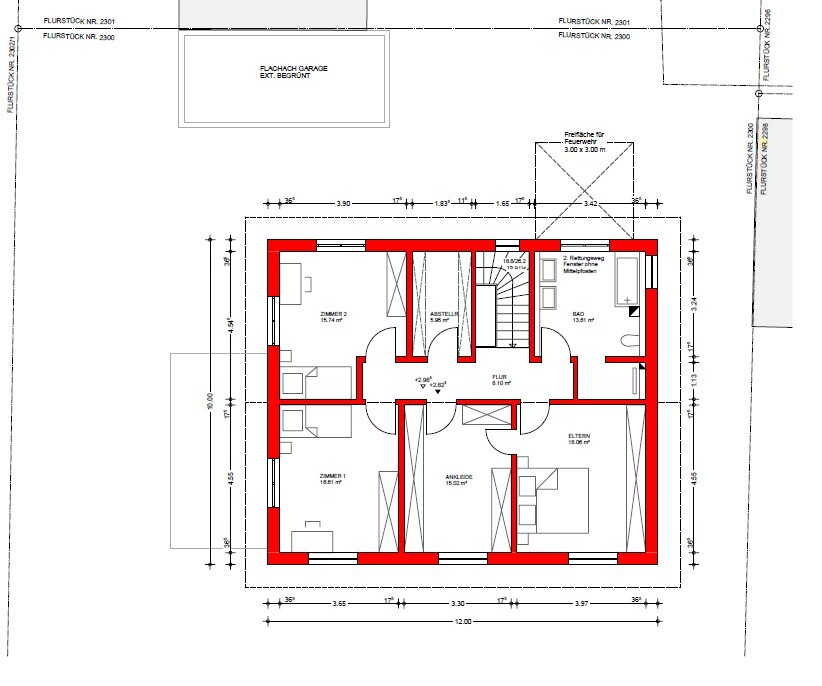
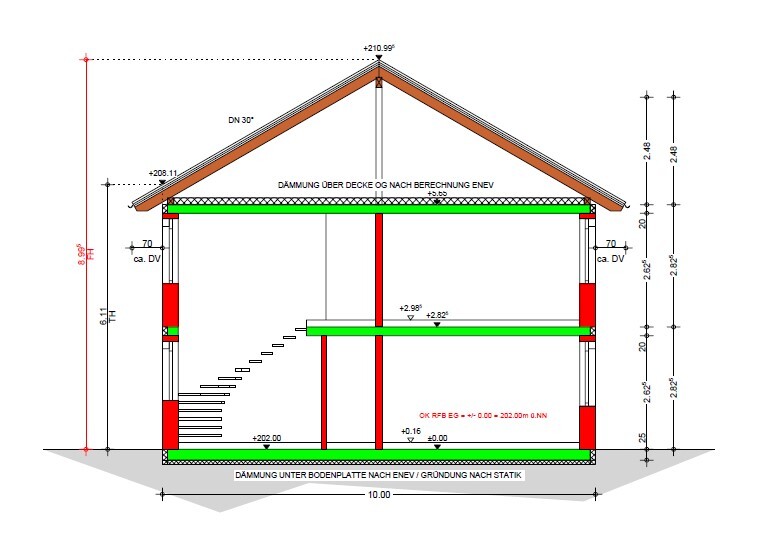
like most others, I have also been quietly following along for quite some time. There are many great pieces of advice here.
The building application has been submitted, and the exterior dimensions as well as the number of windows are fixed. Positioning is still negotiable in consultation, though only to a limited extent. Inside, we basically still have almost all options. The general contractor (GC) is a local family business and has been operating for over 20 years. They are consistently found in the surrounding new development areas, along with two other GCs, and their reputation is quite remarkable. (In fact, we spent quite some time interviewing the newly settled homeowners around us... *g*) One GC was excluded because of the building method (exclusively KfW 40+ standard), and another after submitting a proposal. The process so far has taken about 10 months, starting with graph paper, heating technology, necessary rooms, house positioning, and so on. There are great guides on this topic in the forum!
So, I hope these words were inviting enough to read through the list of questions. If I have forgotten anything, please let me know. I look forward to your feedback, critical comments are also welcome!
Development plan / Restrictions
No development plan
Plot size – 598 sqm (6,435 sq ft)
Slope – no
Floor area ratio – 0.3
Building window, building line and boundary – 3 m (10 feet) distance on all sides
Other stipulations – orientation aligned with neighboring buildings
The building project, including documents, has already been approved by the relevant building authority.
Homeowners’ requirements
Style, roof type, building type – gable roof / 30° pitch facing south with a 10 kWp photovoltaic system, KfW 55 EE standard
Basement, floors – slab-on-grade foundation, 2 full floors, unheated attic
Number of occupants, ages – currently 3 people, planned 4; ages 38, 35, 1
Space requirements on ground floor and upper floor – Ground floor: living/dining, closed kitchen, study/guest room, WC/bathroom, utility/technical room, guest WC including shower
Upper floor: bedroom, dressing room (emergency room if 3rd child), 2 children’s rooms, bathroom
Office: 2 home office workstations
Guests per year: max. 5, excluding drunken friends, who usually make do with the couch *g*
Open or closed architecture: rather closed architecture
Conservative or modern construction: conservative
Open kitchen, island: closed kitchen, island only used as a workspace
Number of dining seats: 6
Fireplace: no
Music/speaker wall: TV wall
Balcony, roof terrace: none
Garage, carport: garage plus carport cover
House design
Who created the plan:
Planner from a construction company, based on our draft floor plan
What do you particularly like? Why? All necessary rooms are present in sufficient size
What do you not like? Why? Office entrance difficult to use, lack of space due to guest WC and living room widening
Fixed price: approx. 450,000€
Personal price limit for house, including fittings: 550,000€
Preferred heating technology: air-to-water heat pump + underfloor heating
If you had to give up something, which details/extensions:
- can give up: size of the dressing room
- cannot give up: office / two children’s rooms
Why did the design turn out like it is now?
Which wishes were implemented by the planner?
- We have already planned and commissioned the kitchen; floor plan adjusted accordingly (changes still possible)
We hesitated a long time over open vs. closed kitchen and, after deciding, debated for a long time over whether to have a pantry behind the kitchen front or not; it is now behind sliding elements on the right side (see attachment)
- Storage space under the stairs
- Bedroom window removed on the east side because of bedroom closet
- Living room widened due to TV wall and to gain space
What makes it particularly good or bad in your opinion?
All rooms are suitable for everyday use, and living on the ground floor later with minimal alterations is possible
What is the most important / fundamental question about the floor plan in 130 characters?
Are the individual rooms adequately lit? I have no sense of this at all. Any obvious flaws?
PS: North is at the top on the site plan as well as on both floor plans!

Pinkiponk schrieb:
What are botched mortar pockets? You should already know this (even if it doesn’t concern you in a “prefabricated” house), as I have pointed it out repeatedly: these are mortar fills in the vertical joints of masonry, which do not belong at all in the case of planar blocks, and originally result from a lack of planning regarding the block dimensions. Furthermore, they are not only building physics problem areas but also regularly pose a risk to proper overlapping lengths of the blocks in their “surroundings.”
Schimi1791 schrieb:
Simply put: when blocks don’t fit together optimally during house construction. No. (no further words / characters)
Zubi123 schrieb:
The sole plate is currently planned to be positioned on the ceiling… it can also be shifted inward, which would lower the entire roof. That’s not serious: you want a room height of 245 cm (96.5 inches) on both the ground floor and the upper floor but alter that without changing the total height — raising the ground floor by 12.5 cm (5 inches) while cutting off a corner of the rooms in the upper floor cross-section and giving them knee walls of 232.5 cm (91.5 inches) at the eaves instead of full room-height straight walls??? — that would be a joke both visually and technically, a sort of foolery! — (by the way, I also see no reason for exactly a 12.5 cm (5 inches) increase, aside from optimizing block cutting — or do you intend to mix in 2DF blocks here?).
https://www.instagram.com/11antgmxde/
https://www.linkedin.com/company/bauen-jetzt/
11ant schrieb:
For an increase of 12.5 cm (5 inches) on the ground floor, then in the upper floor, cutting off a corner of the rooms in the cross-section and giving them a knee wall of 232.5 cm (92 inches) on the eaves sides instead of full-height straight walls?You misunderstood me. The upper floor won’t become lower because of this, only the attic floor will! And that should be unproblematic.
And this is possible both technically and visually without any issues.
Zubi123 schrieb:
The upper floor doesn’t get any lower because of that, only the attic does!If you pull the roof down to the upper floor, it becomes the lower attic—how else?https://www.instagram.com/11antgmxde/
https://www.linkedin.com/company/bauen-jetzt/

Should the garage really stay there? So far back on the property and therefore so far away from the street?
Our neighbors live there, and I hear them curse every winter morning when they have to shovel the driveway clear before they can get out of the garage. I would reconsider.
At least move it closer to the street, or possibly plan the garage longer overall, and include two or three meters (6.5 to 10 feet) as a shed area that can stay there because it provides access from the garden.
Is a covered connection planned between the house and the garage, like a carport between the two? If this covers the entrance, you have a sheltered entry. I would personally find that comfortable.
Overall, plan the garage more towards the street side. If it’s not a prefabricated garage, simply extend it by 2.5 to 3 meters (8 to 10 feet). Park the car in front, use the back as a shed. You can separate it with a wall, but it’s not necessary. A door in the back wall leads into the garden, giving lawn mowers and other equipment a home. In the extended carport, you can also store four bikes (and beforehand plenty of scooters, ride-on cars, pedal cars, etc.) in a dry place. I would definitely cover the space between the house and garage to create an additional covered parking spot and a sheltered entrance.
Our neighbors live there, and I hear them curse every winter morning when they have to shovel the driveway clear before they can get out of the garage. I would reconsider.
At least move it closer to the street, or possibly plan the garage longer overall, and include two or three meters (6.5 to 10 feet) as a shed area that can stay there because it provides access from the garden.
Is a covered connection planned between the house and the garage, like a carport between the two? If this covers the entrance, you have a sheltered entry. I would personally find that comfortable.
Overall, plan the garage more towards the street side. If it’s not a prefabricated garage, simply extend it by 2.5 to 3 meters (8 to 10 feet). Park the car in front, use the back as a shed. You can separate it with a wall, but it’s not necessary. A door in the back wall leads into the garden, giving lawn mowers and other equipment a home. In the extended carport, you can also store four bikes (and beforehand plenty of scooters, ride-on cars, pedal cars, etc.) in a dry place. I would definitely cover the space between the house and garage to create an additional covered parking spot and a sheltered entrance.
M
Masterle257 Oct 2021 18:24Würfel* schrieb:
ypg’s idea for the bedroom is great. Also, I would probably place the utility room with the washing machine upstairs, including cabinets for bedding and such, and access down to the technical room. You could also integrate the space under the stairs into the technical room. That would make it much more accessible. We have a laundry chute from the bathroom to the technical room, so the washing machine is downstairs. Most likely, a cabinet in the walk-in closet will be used for bedding and such. There is enough space there. The access from the technical room to the space under the stairs is brilliant—I don’t know why I hadn’t thought of that myself. Will be implemented right away! 🙂
What I don’t like is the whole window situation in the kitchen and living-dining area. We have a very similar layout of these rooms but with many more windows, both in the living-dining room and in the kitchen. We placed the tall cabinets on the interior wall so the exterior wall remains free for access to a second terrace. I love having all that light at any time of year. In your case, that wall faces west, which would be the perfect spot for an evening terrace right outside the kitchen! I’m not entirely happy with it either, but my wife is satisfied. She says there is enough light, and so far we only have one window in the kitchen... I somehow lack the idea of how to change it. We gave up a separate pantry (originally planned hidden in the upper part of the kitchen behind a front panel) and therefore planned the pantry on the right side behind the sliding wall. So naturally, no kitchen base cabinets can be planned there. My wife prefers a view into the garden and wants fewer and smaller windows. Someone always has to clean them... *g*
I really like your kitchen, by the way!
The terrace is planned in front of the dining area and possibly also on the south side of the house, so it can be easily accessed from the office.
I would only build that squared arch with drywall, maybe after laying the floor? Then it can be removed if it’s no longer liked. It does create a nice zoning effect. We have two small walls like that between kitchen and dining area, but it’s out of necessity because we hid pipes there and needed a support for the load-bearing upper floor wall. I actually like it quite a bit. Maybe someday I’ll add a big loft-style glass door there. Maybe the squared arch will be removed after all and the dish cabinet placed there instead. I really like ypg’s idea as well...
M
Masterle257 Oct 2021 22:3911ant schrieb:
You should already know this (even if it doesn’t apply to your "prefabricated" house), as I have mentioned it several times before: these are mortar fills in the head joints of the masonry, where they absolutely do not belong in the case of planed bricks, originally caused by a lack of consideration for brick dimensions during planning. Furthermore, they are not only building physics problem areas but also regularly pose a risk to the proper overlapping lengths of the bricks in their surroundings. Thank you for the note; I will definitely bring this up again with the general contractor. Perhaps the building surveyor can also take a closer look at it. I actually have little knowledge of masonry work, and I hadn’t come across this issue in the forum before.
Similar topics