
ᐅ Single-family house floor plan, approximately 180 m², basement with a pitched roof
Created on: 27 Jul 2016 16:59
M
Mike12345678901
Hello everyone,
Attached is our floor plan, on which the detailed construction plan will be based in the coming days. We would appreciate any constructive criticism and suggestions for improvement.
Development Plan / Restrictions
Plot size: approximately 850m² (9,150 sq ft)
Slope: yes, see terrain elevation image
Site coverage ratio: 0.3
Floor area ratio: 0.6
Edge development: yes
Number of parking spaces: 1.25
Number of floors: 2
Roof type: gable roof - visible roof truss
Roof pitch: 15-30 degrees
Architectural style: family house, country house
Orientation: north-south (planned)
Maximum cut on plot: 0.75m (2.5 ft)
Maximum fill on plot: 0.75m (2.5 ft)
Knee wall height:
Valley side: permitted up to 0.50m (20 inches) measured from top of raw ceiling to top of purlin;
Hill side: permitted up to 0.75m (30 inches), measured from top of raw ceiling to top of purlin.
Additional Specifications
Basement, floors: yes, 2
Number of occupants, ages: 4 (3, 6, 39, 41)
Space requirements on ground floor and upper floor:
Office: home office
Garage, carport: garage
Guest bedrooms: many
Open or closed architecture: open (living area)
Open kitchen, kitchen island: yes
Number of dining seats: 8 (one central dining table)
Fireplace: yes
House Design
Designer: self-designed
What do you particularly like? Living area
What do you not like? The slope is somehow not being utilized, but we can’t think of any ideas
Preferred heating technology: gas condensing boiler seems appropriate since gas is available, but not yet finalized
Other Notes:
Attached is our floor plan, on which the detailed construction plan will be based in the coming days. We would appreciate any constructive criticism and suggestions for improvement.
Development Plan / Restrictions
Plot size: approximately 850m² (9,150 sq ft)
Slope: yes, see terrain elevation image
Site coverage ratio: 0.3
Floor area ratio: 0.6
Edge development: yes
Number of parking spaces: 1.25
Number of floors: 2
Roof type: gable roof - visible roof truss
Roof pitch: 15-30 degrees
Architectural style: family house, country house
Orientation: north-south (planned)
Maximum cut on plot: 0.75m (2.5 ft)
Maximum fill on plot: 0.75m (2.5 ft)
Knee wall height:
Valley side: permitted up to 0.50m (20 inches) measured from top of raw ceiling to top of purlin;
Hill side: permitted up to 0.75m (30 inches), measured from top of raw ceiling to top of purlin.
Additional Specifications
Basement, floors: yes, 2
Number of occupants, ages: 4 (3, 6, 39, 41)
Space requirements on ground floor and upper floor:
Office: home office
Garage, carport: garage
Guest bedrooms: many
Open or closed architecture: open (living area)
Open kitchen, kitchen island: yes
Number of dining seats: 8 (one central dining table)
Fireplace: yes
House Design
Designer: self-designed
What do you particularly like? Living area
What do you not like? The slope is somehow not being utilized, but we can’t think of any ideas
Preferred heating technology: gas condensing boiler seems appropriate since gas is available, but not yet finalized
Other Notes:
- Parcel 4 in the site plan is ours
- The 2m (6.5 ft) line is not yet drawn, as the roof pitch has not been definitively determined
- Windows etc., especially on the upper floor, are also not yet 100% fixed; we would appreciate any tips
- North is at the top
- We have a slight (?) slope (from 511.65m (1,681 ft) in the southeast to 507.86m (1,666 ft) in the northwest), but we don’t know how to use it positively… perhaps someone has a good idea so we can take advantage of it
- The kitchen island is shown as 60cm (24 inches) in the plan, but will actually be 1.10m (43 inches) wide – hence the space between the chairs and the kitchen island
So, at some point at the beginning, someone— I think Yvonne— suggested a split-level design.
I have now tried to implement this in a very basic way.
At the lower part of the plot, half of the house is properly embedded as a basement. Then about 130 cm (5 inches) above that is the first ground floor level with the entrance from the street and the driveway to the garage. On this level, there is a combined room for work/guest sleeping, a guest bathroom, plenty of space for the cloakroom, and, if desired, a passage from the garage.
With a height difference of about 150 cm (6 inches), it then goes up to ground floor level 2—the dining/kitchen/living area.
From there, again with a height difference of about 130 cm (5 inches), to the first upper floor level, planned for the master bedroom, family bathroom, and a utility room for washing machine, dryer, vacuum cleaner, and similar items.
Finally, again with a height difference of about 150 cm (6 inches), to the second upper floor level for the children—2 large south-facing children’s rooms.
Some earthworks are also necessary here to make the terrace level with the ground and the driveway flush with the ground. However, this should be in a significantly smaller area than your current earthmoving works.
Maybe this is an approach. Perhaps everything is a bit too large. There are also relatively large hallway areas, but they can be used well.
You can definitely see what kind of height differences there are.

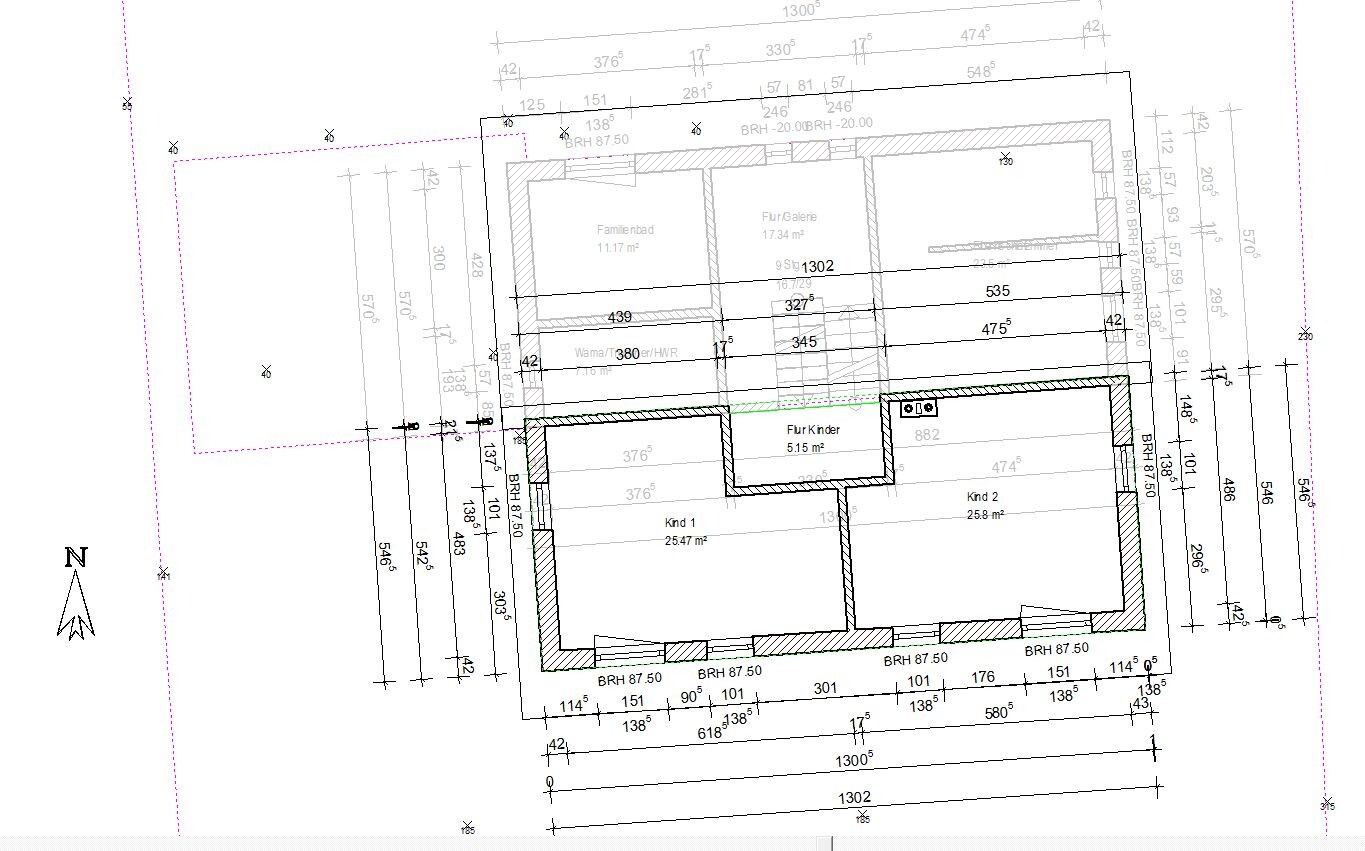
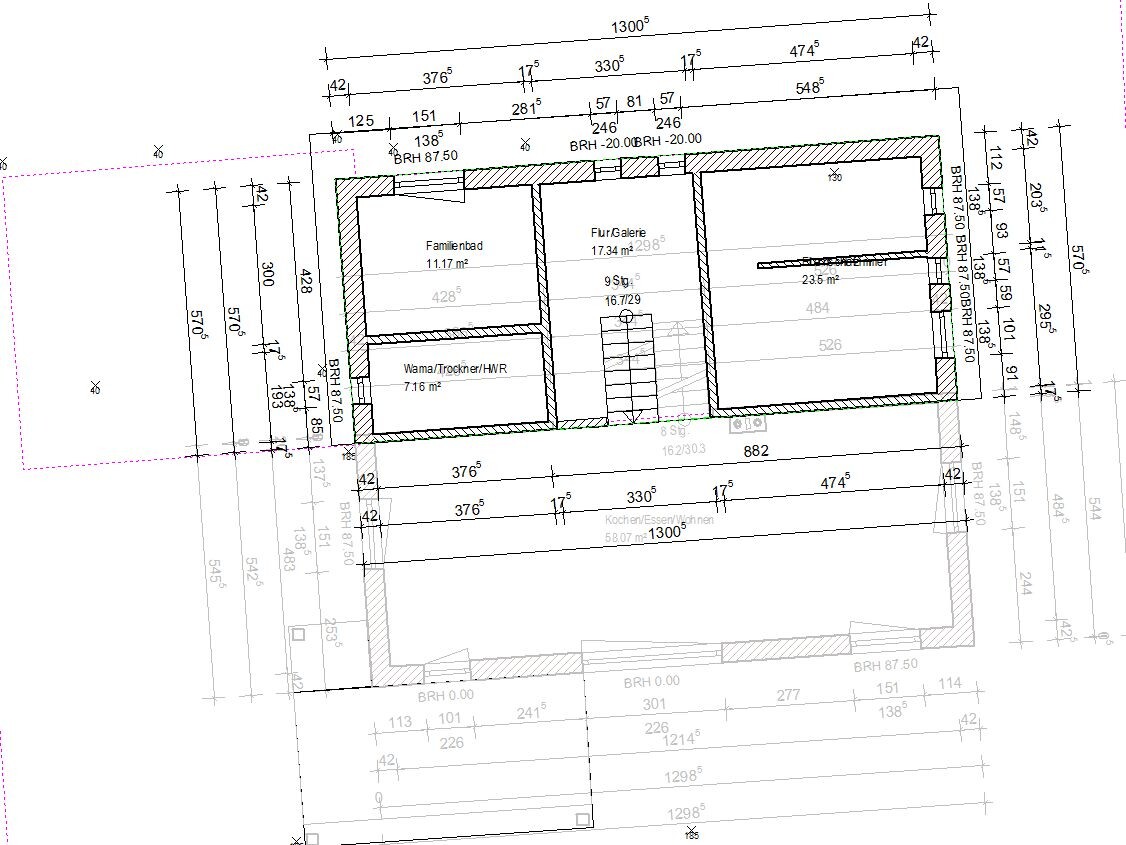
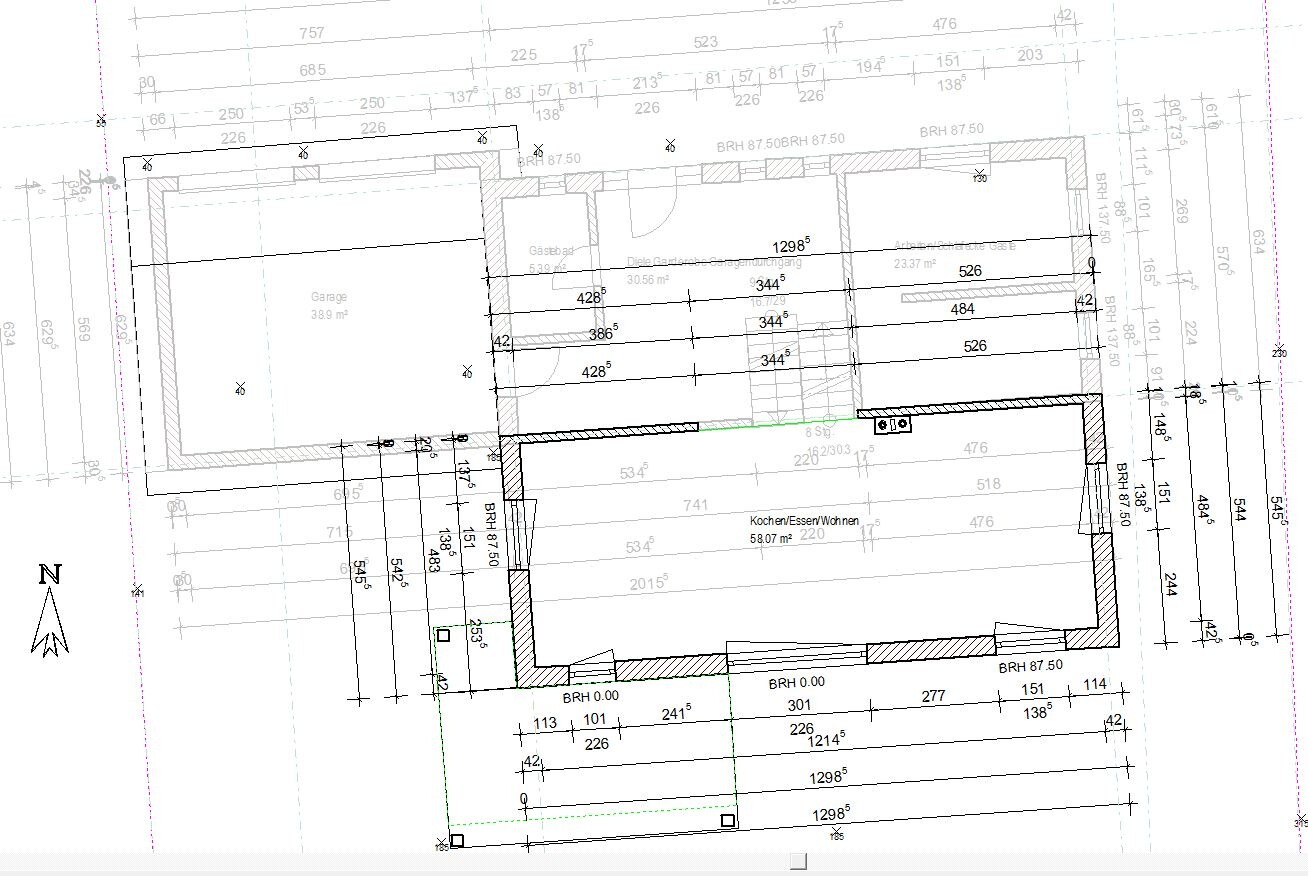
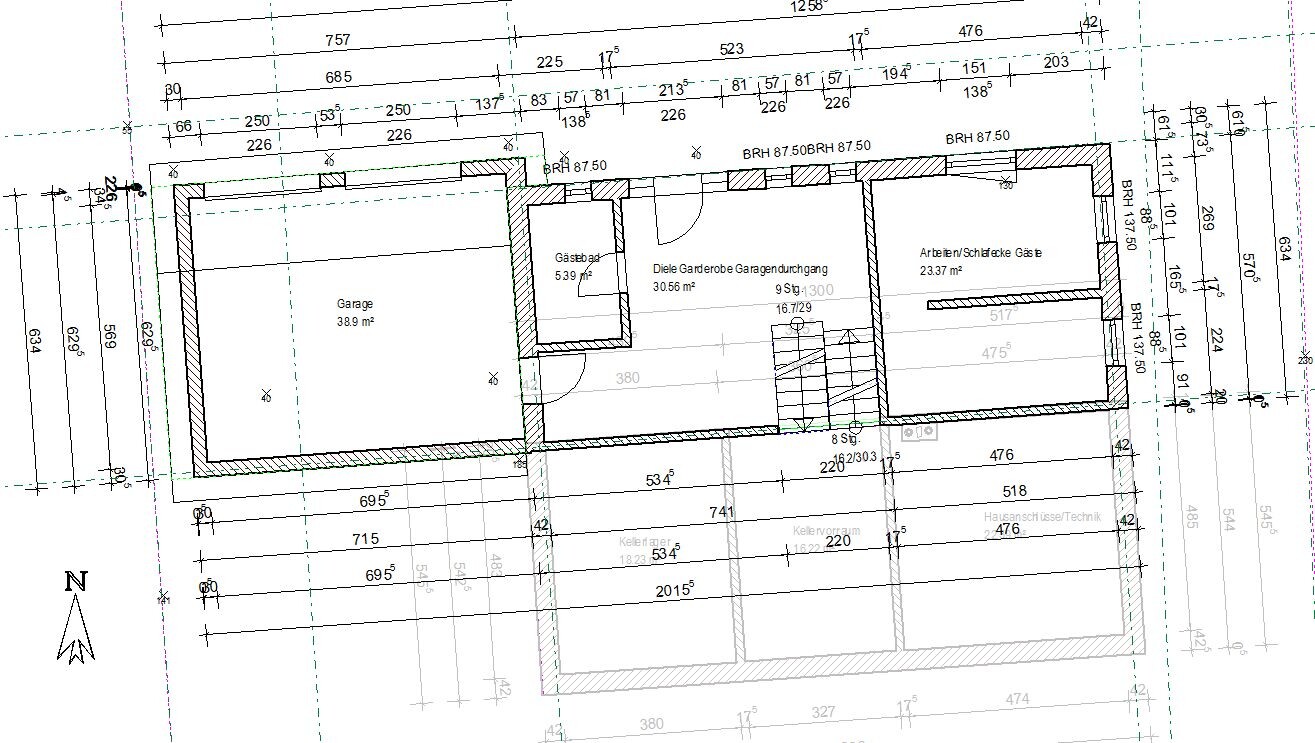
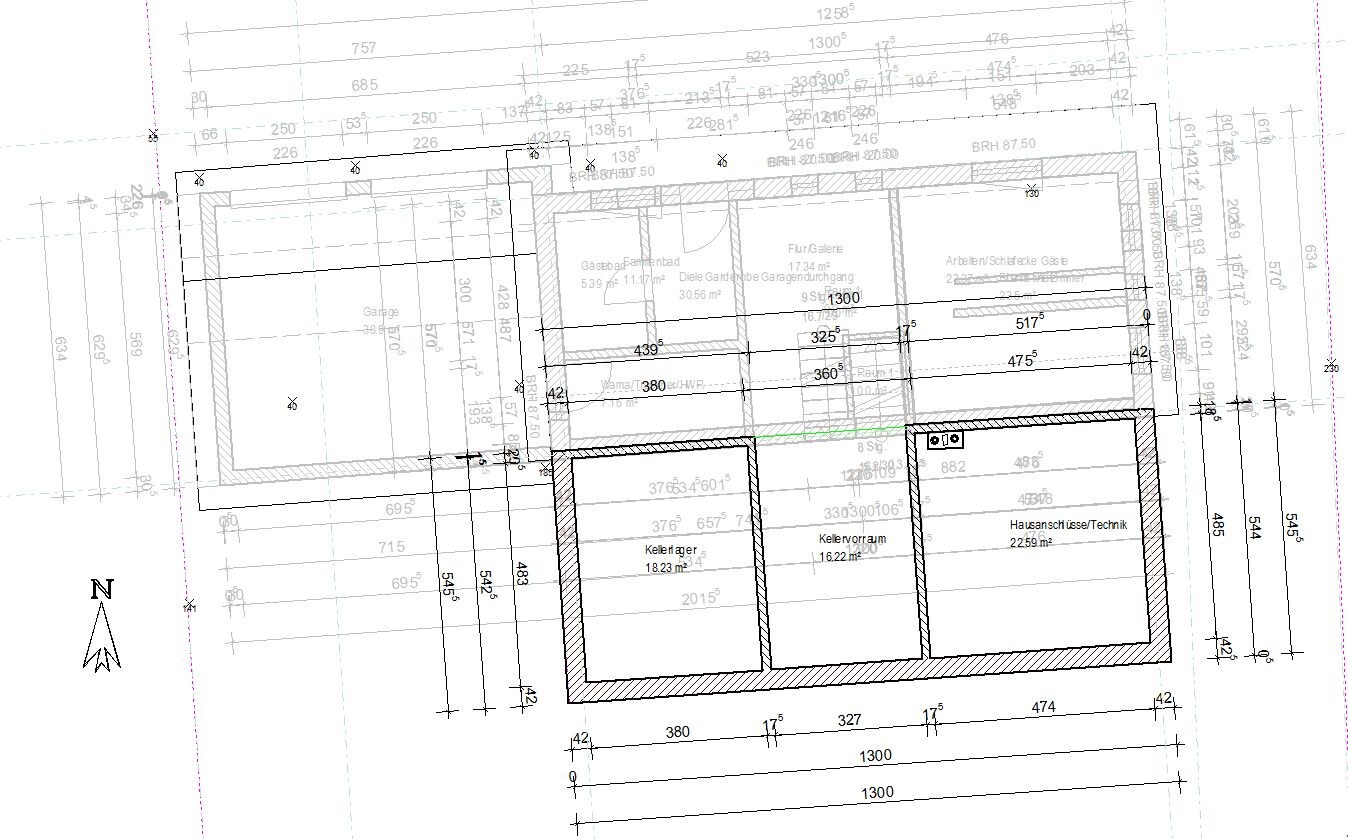
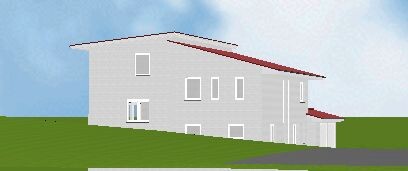
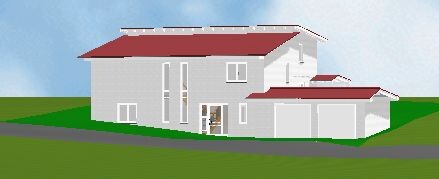
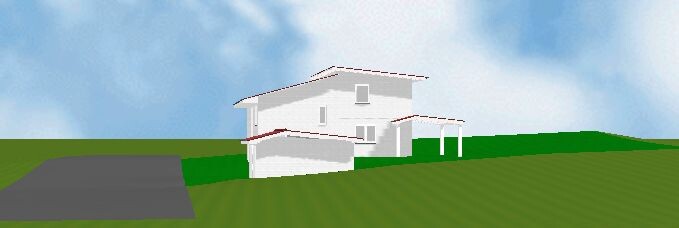
I have now tried to implement this in a very basic way.
At the lower part of the plot, half of the house is properly embedded as a basement. Then about 130 cm (5 inches) above that is the first ground floor level with the entrance from the street and the driveway to the garage. On this level, there is a combined room for work/guest sleeping, a guest bathroom, plenty of space for the cloakroom, and, if desired, a passage from the garage.
With a height difference of about 150 cm (6 inches), it then goes up to ground floor level 2—the dining/kitchen/living area.
From there, again with a height difference of about 130 cm (5 inches), to the first upper floor level, planned for the master bedroom, family bathroom, and a utility room for washing machine, dryer, vacuum cleaner, and similar items.
Finally, again with a height difference of about 150 cm (6 inches), to the second upper floor level for the children—2 large south-facing children’s rooms.
Some earthworks are also necessary here to make the terrace level with the ground and the driveway flush with the ground. However, this should be in a significantly smaller area than your current earthmoving works.
Maybe this is an approach. Perhaps everything is a bit too large. There are also relatively large hallway areas, but they can be used well.
You can definitely see what kind of height differences there are.
M
Mike1234567890131 Jul 2016 18:39ypg schrieb:
50cm is a vertical measurement. What percentage slope do you mean? Depending on the length considered, a 50cm (20 inch) height difference corresponds to a 10% slope over 5m (16.4 ft) or a 5% slope over 10m (32.8 ft).
According to the Bavarian garage regulations, this should still be acceptable. Above 10%, it gets a bit more complicated:
"(2) Between public traffic areas and a ramp with more than 10% gradient, there must be a less steep section with a gradient of less than 5% and at least 3m (9.8 ft) in length."
M
Mike1234567890131 Jul 2016 18:48kbt09 schrieb:
So, at some point in the beginning, someone, I think Yvonne, suggested a split-level design.
I have now tried to implement it in a rather amateur way..Wow @kbt09 Amazing!
Thank you very much for your time and effort. This isn’t something you can do in just 5 minutes!!!
I really like it! I will discuss this with my building professional tomorrow.
And exactly, what you quoted about the slope, etc., should lead you to realize that a 5 m (16 feet) section with a 50 cm (20 inches) height difference requires an additional 3 m (10 feet) with a maximum height difference of 25 cm (10 inches). I can only recommend you draw this out and then place a car on the drawn lines. That way, you will notice what I mentioned—the strange kink.
M
Mike1234567890131 Jul 2016 21:09Here is the corpus delicti in an aerial view.
Heights are not visible here, but you can see what the neighbors have done.

Heights are not visible here, but you can see what the neighbors have done.
Similar topics