
ᐅ Floor plan for a single-family house, 180 sqm plus basement, located in the Rhine-Main area
Created on: 24 Jul 2020 14:10
A
Amosa34
Dear HBF members,
I previously asked for your cost estimates and promised to share the architect’s floor plan once we had a design that we felt was suitable.
Development Plan / Restrictions
Plot size: 260 sqm (2,800 sq ft)
Slope: Slightly sloping – about 50 cm (20 inches)?
Site coverage ratio: 0.4
Floor area ratio
Building window, building line and boundary: §34 Building Code; 3 m (10 ft) setback to neighboring plots and direct building possible on the street side
Edge development: Yes, house facing the street and carport/parking spots at the neighbors’ boundary
Number of parking spaces: 2
Number of floors: 2.5
Roof type: Gable roof
Architectural style: Open
Further requirements
Client Requirements
Style, roof shape, building type: Open / modern / bright, gable roof, single-family house
Basement, floors: Basement (full), ground floor, upper floor, attic; approx. 180 sqm (1,940 sq ft) living area + 63 sqm (680 sq ft) basement
Number of occupants, ages: 2 adults (35 + 28), 2 children (9 + under 1)
Room requirements on ground and upper floor: Ground floor: open living space with integrated kitchen and dining area; upper floor: children’s floor including bathroom, possibly a study, third child’s room or guest room
Office: Small workspace for occasional home office use
Overnight guests per year: 1-3 guests, possibly several times a year
Open or closed architecture: Open and bright
Conservative or modern style: Modern style
Open kitchen, kitchen island: Planned as an open kitchen with an island to separate it from dining/living areas
Number of dining seats: at least 6, possibly 8 with an extendable table
Fireplace: Yes, planned in the living room
Music/stereo wall: No
Balcony, roof terrace: Yes, in the attic (parents’ area) for nice views, sunrise, and relaxation
Garage, carport: Carport planned
Additional wishes/particulars/daily routine, including reasons for choices: Third child’s room reserved for potential future child; decision pending, alternatively a playroom or guest room
House Design
Planner: Architect based on our room and style requirements (bright, open, modern)
What do you particularly like? Why? We like the overall design since our small plot limits the size. We wanted a large, beautiful living and dining area that also serves as the main living space. The children should have rooms about the same size (quite a distance apart, but still equal). The attic is planned as a retreat for us, with its own bathroom including a potential small sauna to create a nice ambiance. We are planning in the Rhine-Main area and live somewhat rural, so we want an unobstructed view of nature from our bedroom (hence the balcony).
What don’t you like? Why? Overall, we are very satisfied and, based on the valuable guidance in this forum, developed our own ideas early on. We only needed three rounds with the architect to finalize the plan. We would have preferred a straight staircase instead of two quarter-turn staircases, but after the first draft, we gave up on that because it would have taken up too much space.
Cost estimate according to architect/planner: $540,000
Personal price limit for the house, including fixtures: $650,000
Preferred heating technology: Ground-source heat pump with underfloor heating and photovoltaic system
If you had to give up on something, which details or features
- could you live without: We are not at this point
- cannot give up:
Why is the design the way it is? For example:
As mentioned above, our plot is limited in size and we also want to keep some green space. Our architect considered all requests and gave us honest and open feedback on ideas (e.g. open gallery in the entrance area up to the upper floor – which we decided against).
What is the most important/basic question about the floor plan, summarized in 130 characters?
We are very happy with the plan and almost all of our wishes are met. Still, we would love to hear your opinions and ideas, especially based on your experiences and how it works in practice.
I previously asked for your cost estimates and promised to share the architect’s floor plan once we had a design that we felt was suitable.
Development Plan / Restrictions
Plot size: 260 sqm (2,800 sq ft)
Slope: Slightly sloping – about 50 cm (20 inches)?
Site coverage ratio: 0.4
Floor area ratio
Building window, building line and boundary: §34 Building Code; 3 m (10 ft) setback to neighboring plots and direct building possible on the street side
Edge development: Yes, house facing the street and carport/parking spots at the neighbors’ boundary
Number of parking spaces: 2
Number of floors: 2.5
Roof type: Gable roof
Architectural style: Open
Further requirements
Client Requirements
Style, roof shape, building type: Open / modern / bright, gable roof, single-family house
Basement, floors: Basement (full), ground floor, upper floor, attic; approx. 180 sqm (1,940 sq ft) living area + 63 sqm (680 sq ft) basement
Number of occupants, ages: 2 adults (35 + 28), 2 children (9 + under 1)
Room requirements on ground and upper floor: Ground floor: open living space with integrated kitchen and dining area; upper floor: children’s floor including bathroom, possibly a study, third child’s room or guest room
Office: Small workspace for occasional home office use
Overnight guests per year: 1-3 guests, possibly several times a year
Open or closed architecture: Open and bright
Conservative or modern style: Modern style
Open kitchen, kitchen island: Planned as an open kitchen with an island to separate it from dining/living areas
Number of dining seats: at least 6, possibly 8 with an extendable table
Fireplace: Yes, planned in the living room
Music/stereo wall: No
Balcony, roof terrace: Yes, in the attic (parents’ area) for nice views, sunrise, and relaxation
Garage, carport: Carport planned
Additional wishes/particulars/daily routine, including reasons for choices: Third child’s room reserved for potential future child; decision pending, alternatively a playroom or guest room
House Design
Planner: Architect based on our room and style requirements (bright, open, modern)
What do you particularly like? Why? We like the overall design since our small plot limits the size. We wanted a large, beautiful living and dining area that also serves as the main living space. The children should have rooms about the same size (quite a distance apart, but still equal). The attic is planned as a retreat for us, with its own bathroom including a potential small sauna to create a nice ambiance. We are planning in the Rhine-Main area and live somewhat rural, so we want an unobstructed view of nature from our bedroom (hence the balcony).
What don’t you like? Why? Overall, we are very satisfied and, based on the valuable guidance in this forum, developed our own ideas early on. We only needed three rounds with the architect to finalize the plan. We would have preferred a straight staircase instead of two quarter-turn staircases, but after the first draft, we gave up on that because it would have taken up too much space.
Cost estimate according to architect/planner: $540,000
Personal price limit for the house, including fixtures: $650,000
Preferred heating technology: Ground-source heat pump with underfloor heating and photovoltaic system
If you had to give up on something, which details or features
- could you live without: We are not at this point
- cannot give up:
Why is the design the way it is? For example:
As mentioned above, our plot is limited in size and we also want to keep some green space. Our architect considered all requests and gave us honest and open feedback on ideas (e.g. open gallery in the entrance area up to the upper floor – which we decided against).
What is the most important/basic question about the floor plan, summarized in 130 characters?
We are very happy with the plan and almost all of our wishes are met. Still, we would love to hear your opinions and ideas, especially based on your experiences and how it works in practice.
Ok, we will add doors and windows by hand again so you can get a better idea. The architect (not an apprentice) left them out of the last draft – I will follow up on that.
We will also include the furnishings.
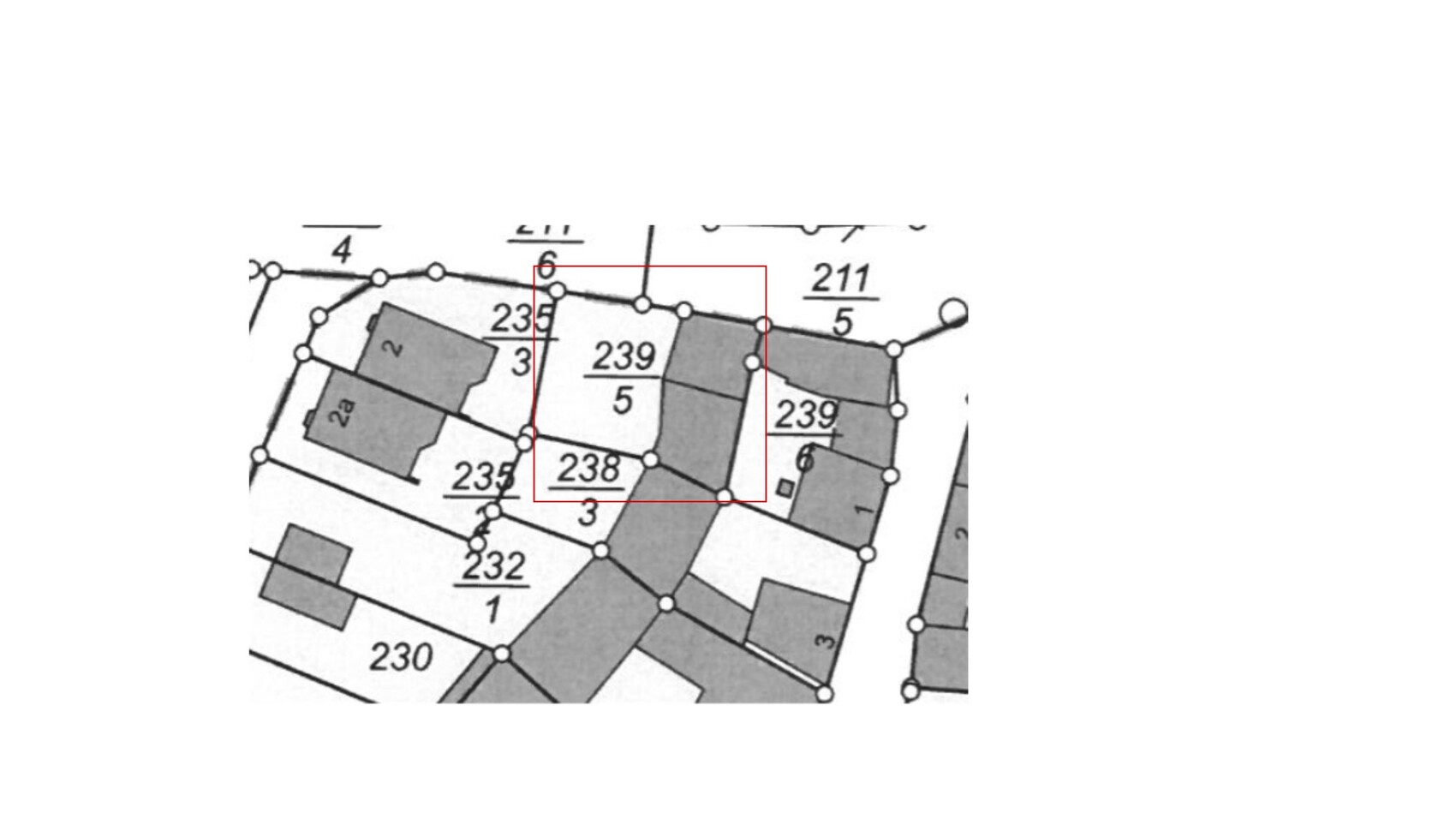
A site plan is attached – it concerns parcel 239/5. The garages (grey areas) no longer exist / never existed.
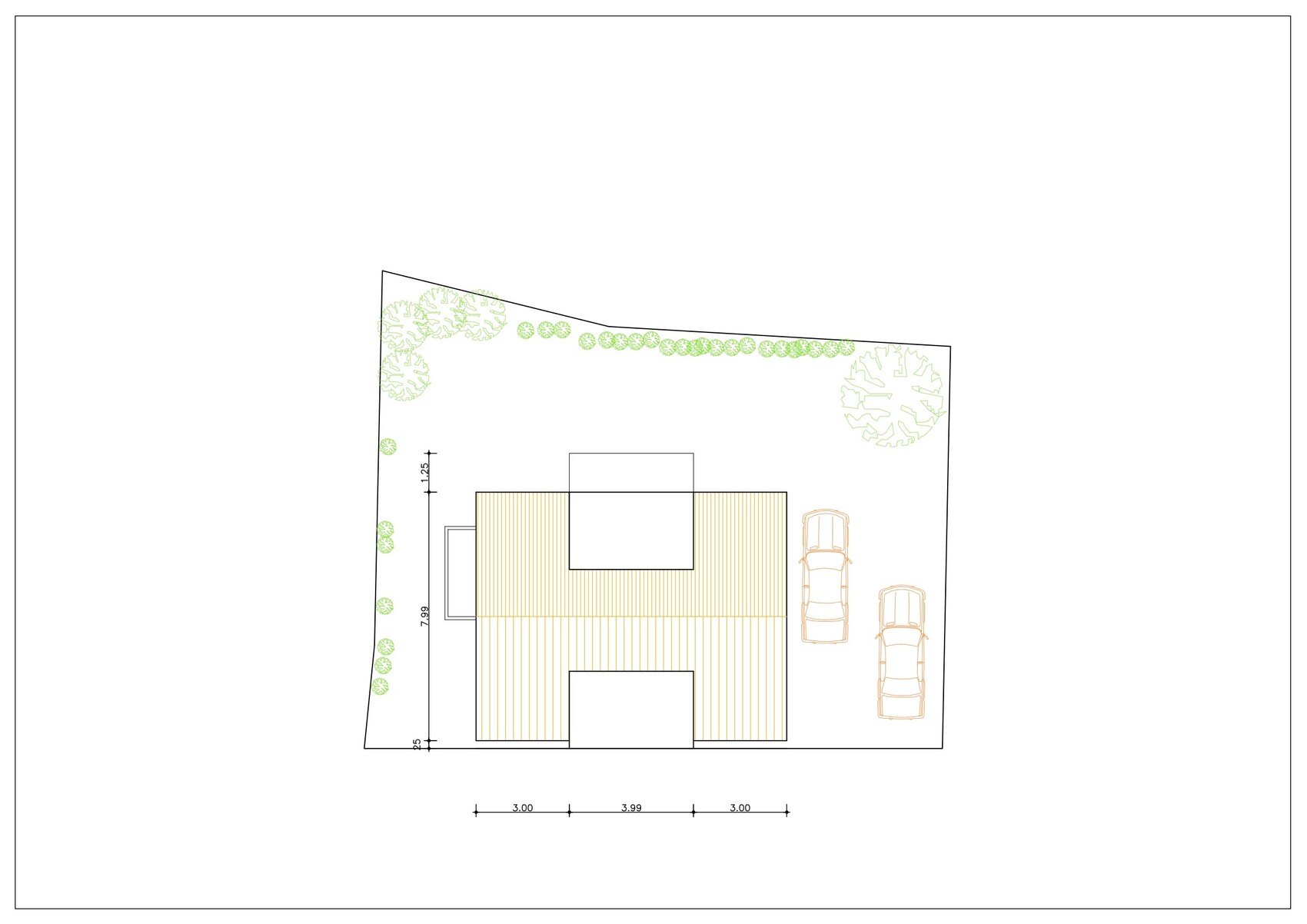
Also attached is a top view. The two parking spaces / carport will be on the right. We are in the Taunus region (between Frankfurt and Wiesbaden), where building plots are almost non-existent, so we have to make the best out of the house and the land.
Interesting name, but it fits quite well. For visuals: Would you recommend adding doors, windows, and furnishings by hand, or are there programs that can do this more accurately?
We will also include the furnishings.
11ant schrieb:It’s 260 sqm (2800 sq ft) as stated in the first post, and the carport will be right next to the neighboring property.
Wow! – if that wasn’t a typo, we probably have to imagine not only the bay window but also the garage gone.
A site plan is attached – it concerns parcel 239/5. The garages (grey areas) no longer exist / never existed.
Also attached is a top view. The two parking spaces / carport will be on the right. We are in the Taunus region (between Frankfurt and Wiesbaden), where building plots are almost non-existent, so we have to make the best out of the house and the land.
11ant schrieb:
... the pictorial notation is generally preferred over the textual one here.
Costs might be the lesser obstacle. And of course I guess she means dormer windows.
Interesting name, but it fits quite well. For visuals: Would you recommend adding doors, windows, and furnishings by hand, or are there programs that can do this more accurately?

Amosa34 schrieb:
Would you recommend entering doors, windows, and fixtures manually, or are there any programs that allow for more precise input?Manual entry is usually the most accurate.https://www.instagram.com/11antgmxde/
https://www.linkedin.com/company/bauen-jetzt/
Dimensions would be very helpful as well. Also, please describe from where the plot is to be accessed. Where is the road located? This is turning into more of a guessing game... we do NOT know the plot!
Is this a case of building right up to the property boundary? Is that common in your area?
It would be great to have more information.
And yes: pen and paper are still useful tools.
Is this a case of building right up to the property boundary? Is that common in your area?
It would be great to have more information.
And yes: pen and paper are still useful tools.

Hello Everyone,
Here is an update on our building project.
The planning has been completed for some time, and the building permit/planning permission has been approved. Construction is scheduled to start on January 4th, 2021, beginning with excavation work for the basement.
This might be interesting for some to hear about our process:
[April/ May 2020:] We found the plot and started the bank process. The challenge here was that it involved two properties (an existing property being sold to another party + the plot for us).
[June 2020:] The bank process was completed, the agreement with the buyer finalized, and the notarial sales contract signed. We took out a variable loan at 1.40% for 3 years since the house planning was still ongoing and we didn’t yet have a clear budget in mind.
A challenge after signing was the property division, which apparently hadn’t been completed yet, and neither the seller nor we were aware of this. This led to significant administrative effort, as we received conflicting information about who was responsible for the division: building authority, district building office, land management office, etc.
[July/ August:] Further intensive house planning with submission of the building permit/planning application in mid-August. Our architect said the building authority could take up to three months for processing, and it was almost fully used. In parallel, we started (with the architect) tendering the trades (including shell construction with basement, plumbing, heating, roofing, carpentry, etc.) to avoid delays and be ready to start quickly. Of course, there was a risk that the building authority would reject or request changes, but our architect gave us confidence based on decades of experience.
[September-November:] Various introductory meetings with the structural builder, plumber, electrician, structural engineer, and a second architect (just for construction supervision). At the same time, we visited several kitchen studios, a bathroom showroom, assessed flooring options, and visited a tile showroom. All this was done to avoid wasting time and to make as many decisions as possible in advance. Plus, planning our dream home is just fun.
[Early November:] Building permit received and construction start date set for January 4th. Obtained additional window quotes through the architect (OMG), discussed with the electrician what smart home technology actually is/can do and what makes sense for us (in the end, basically nothing, instead opting for conventional solutions). And finally, my favorite topic: budgeting, calculations, creating buffers, and playing with interest rates.
[Mid-November:] Started bank discussions for financing the entire project (replacement of variable loan + new single-family house construction). So far, a very smooth process since the property and credit documents were immediately available.
[Financing (for those interested):] Financing need of 780,000 plus 70,000 equity. We chose 20 years at an effective rate of 1.25% for 750,000 and a 30,000 capped loan at 1.45% over 3 years. The capped loan is a variable financing and effectively our buffer (despite generous planning), which can be repaid immediately if not needed. Overall, a monthly payment of 2,500 with planning security for 20 years including 5% annual prepayment.
So far, everything is on track and aside from minor issues, we are quite satisfied with the process. This is largely thanks to our architect, who is doing a great job, always available, gives honest feedback on ideas, and never tries to sell us the most expensive option.
[Lessons learned:]
- Early meetings with the main trades build trust and ensure you always have contact persons (the electrician took two personal meetings of over an hour each before contract signing to explain everything). He prepared a comprehensive smart home offer for shutters, underfloor heating, and lighting, and when we were surprised by the price, we made a needs assessment and ultimately found sensible alternatives – for us, smart home is basically a gimmick.
- Plan your budget from the start and monitor it closely, always including buffers. For us, excavation and shoring costs were about 20,000 higher than planned due to storage costs and direct construction by the sidewalk.
- Communicate clearly with all trades about your requirements and read offers carefully.
- Contracting individual trades (with the architect) is not rocket science and not a huge effort. In the end, you review offers and discuss them with the architect/suppliers. The advantage is early interaction and constant new ideas.
- Think carefully about what is really important for you: Is it the 31,000 just for the fixtures of 2 bathrooms + 1 WC (ceramics, shower, washbasins, fittings) or rather a high-quality kitchen that is over budget but you are convinced about?
That was a long text, and I am attaching some floor plan pictures again.
Here is an update on our building project.
The planning has been completed for some time, and the building permit/planning permission has been approved. Construction is scheduled to start on January 4th, 2021, beginning with excavation work for the basement.
This might be interesting for some to hear about our process:
[April/ May 2020:] We found the plot and started the bank process. The challenge here was that it involved two properties (an existing property being sold to another party + the plot for us).
[June 2020:] The bank process was completed, the agreement with the buyer finalized, and the notarial sales contract signed. We took out a variable loan at 1.40% for 3 years since the house planning was still ongoing and we didn’t yet have a clear budget in mind.
A challenge after signing was the property division, which apparently hadn’t been completed yet, and neither the seller nor we were aware of this. This led to significant administrative effort, as we received conflicting information about who was responsible for the division: building authority, district building office, land management office, etc.
[July/ August:] Further intensive house planning with submission of the building permit/planning application in mid-August. Our architect said the building authority could take up to three months for processing, and it was almost fully used. In parallel, we started (with the architect) tendering the trades (including shell construction with basement, plumbing, heating, roofing, carpentry, etc.) to avoid delays and be ready to start quickly. Of course, there was a risk that the building authority would reject or request changes, but our architect gave us confidence based on decades of experience.
[September-November:] Various introductory meetings with the structural builder, plumber, electrician, structural engineer, and a second architect (just for construction supervision). At the same time, we visited several kitchen studios, a bathroom showroom, assessed flooring options, and visited a tile showroom. All this was done to avoid wasting time and to make as many decisions as possible in advance. Plus, planning our dream home is just fun.
[Early November:] Building permit received and construction start date set for January 4th. Obtained additional window quotes through the architect (OMG), discussed with the electrician what smart home technology actually is/can do and what makes sense for us (in the end, basically nothing, instead opting for conventional solutions). And finally, my favorite topic: budgeting, calculations, creating buffers, and playing with interest rates.
[Mid-November:] Started bank discussions for financing the entire project (replacement of variable loan + new single-family house construction). So far, a very smooth process since the property and credit documents were immediately available.
[Financing (for those interested):] Financing need of 780,000 plus 70,000 equity. We chose 20 years at an effective rate of 1.25% for 750,000 and a 30,000 capped loan at 1.45% over 3 years. The capped loan is a variable financing and effectively our buffer (despite generous planning), which can be repaid immediately if not needed. Overall, a monthly payment of 2,500 with planning security for 20 years including 5% annual prepayment.
So far, everything is on track and aside from minor issues, we are quite satisfied with the process. This is largely thanks to our architect, who is doing a great job, always available, gives honest feedback on ideas, and never tries to sell us the most expensive option.
[Lessons learned:]
- Early meetings with the main trades build trust and ensure you always have contact persons (the electrician took two personal meetings of over an hour each before contract signing to explain everything). He prepared a comprehensive smart home offer for shutters, underfloor heating, and lighting, and when we were surprised by the price, we made a needs assessment and ultimately found sensible alternatives – for us, smart home is basically a gimmick.
- Plan your budget from the start and monitor it closely, always including buffers. For us, excavation and shoring costs were about 20,000 higher than planned due to storage costs and direct construction by the sidewalk.
- Communicate clearly with all trades about your requirements and read offers carefully.
- Contracting individual trades (with the architect) is not rocket science and not a huge effort. In the end, you review offers and discuss them with the architect/suppliers. The advantage is early interaction and constant new ideas.
- Think carefully about what is really important for you: Is it the 31,000 just for the fixtures of 2 bathrooms + 1 WC (ceramics, shower, washbasins, fittings) or rather a high-quality kitchen that is over budget but you are convinced about?
That was a long text, and I am attaching some floor plan pictures again.
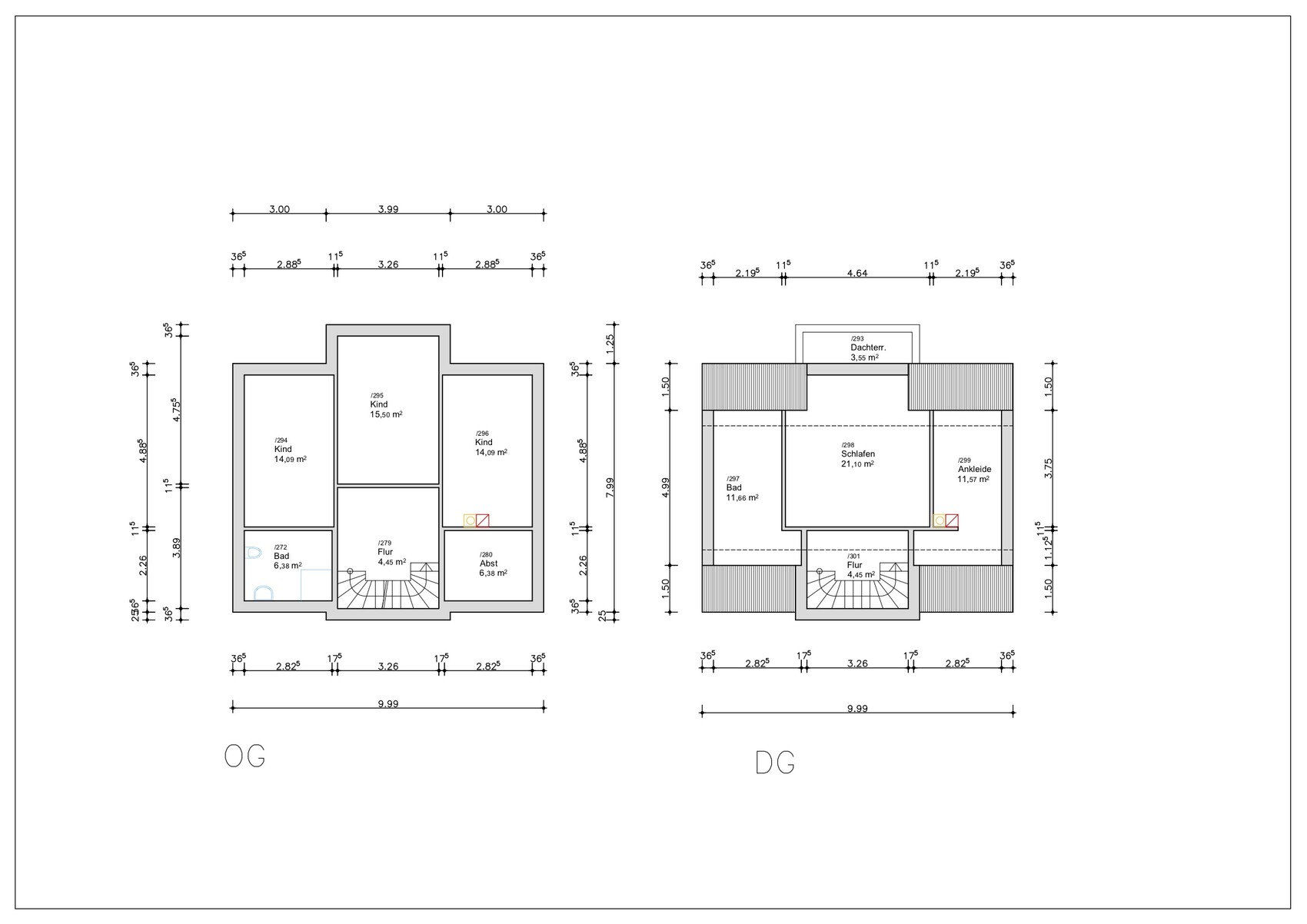
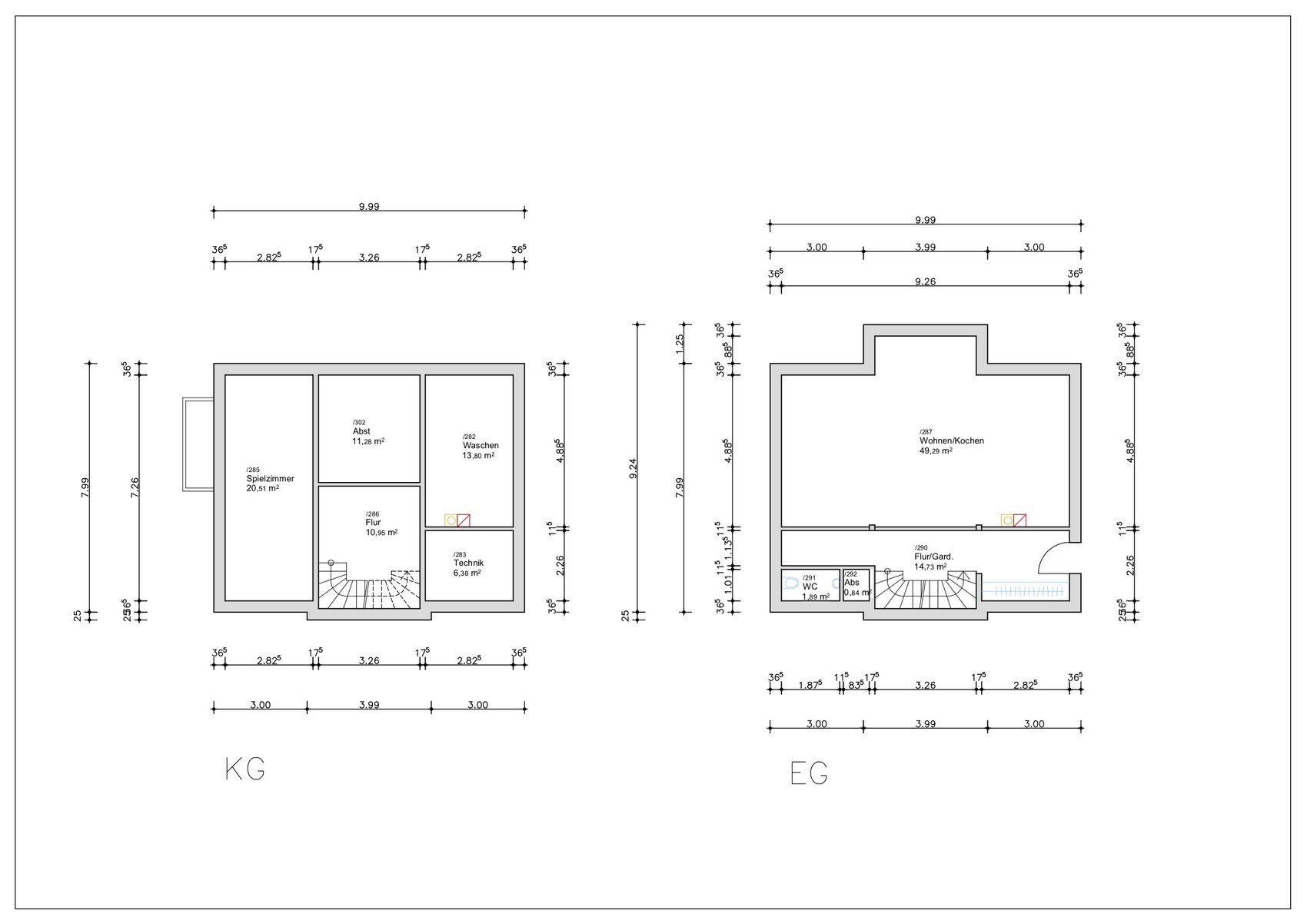
Here are the images of the floor plan. We have a total of approximately 184 sqm (1981 sq ft) of living space plus 63 sqm (678 sq ft) in the basement. The upper floor is the children’s area (currently 2 rooms, possibly a third), and the storage room will ultimately serve as my home office. The attic floor is planned as our parents’ area.
Note: The bathrooms do not yet correspond to the current planning stage in terms of layout, and we are still not satisfied with them (including room layout and 31' for fixtures).
The planned and communicated move-in date is November 2021.
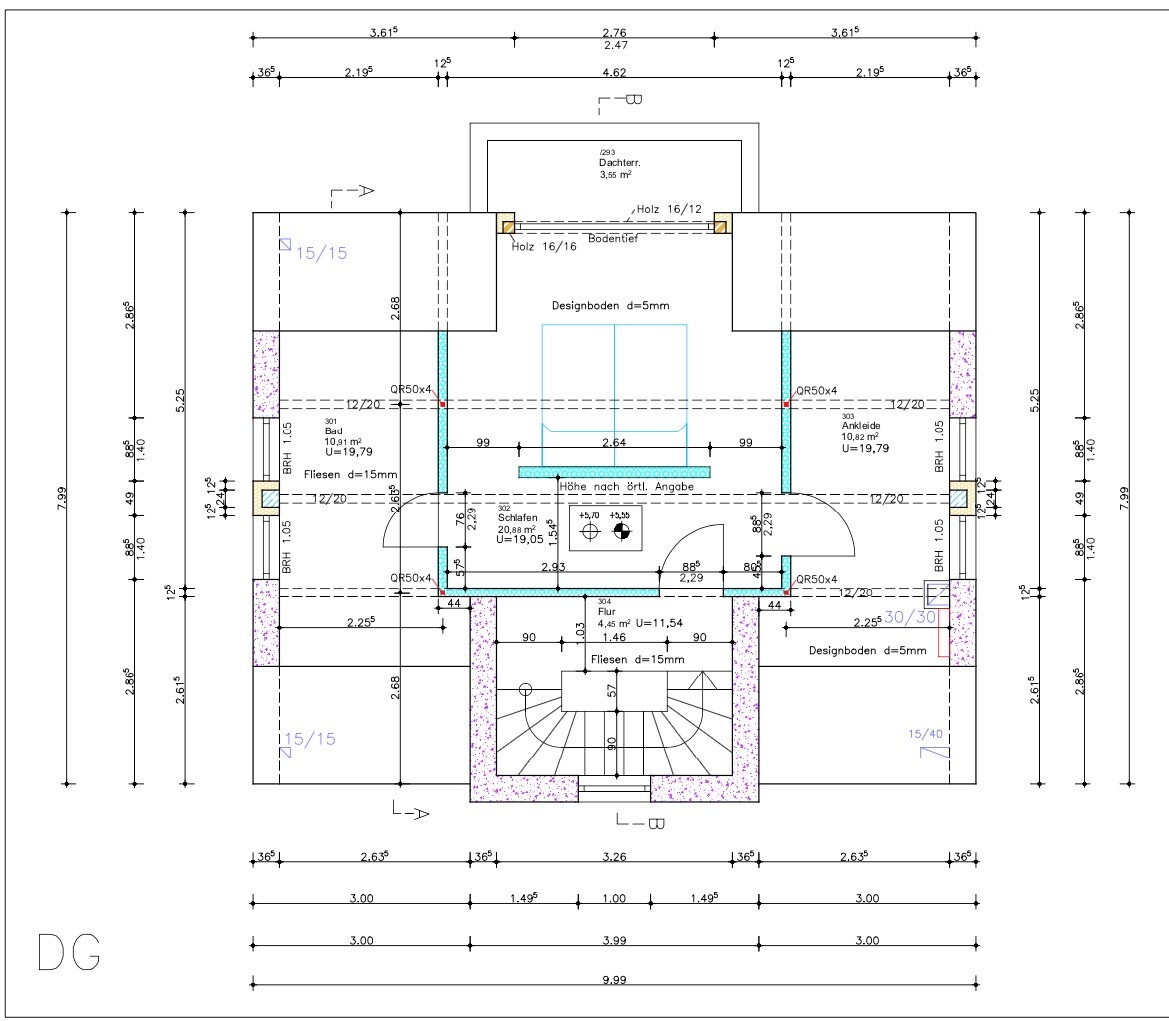
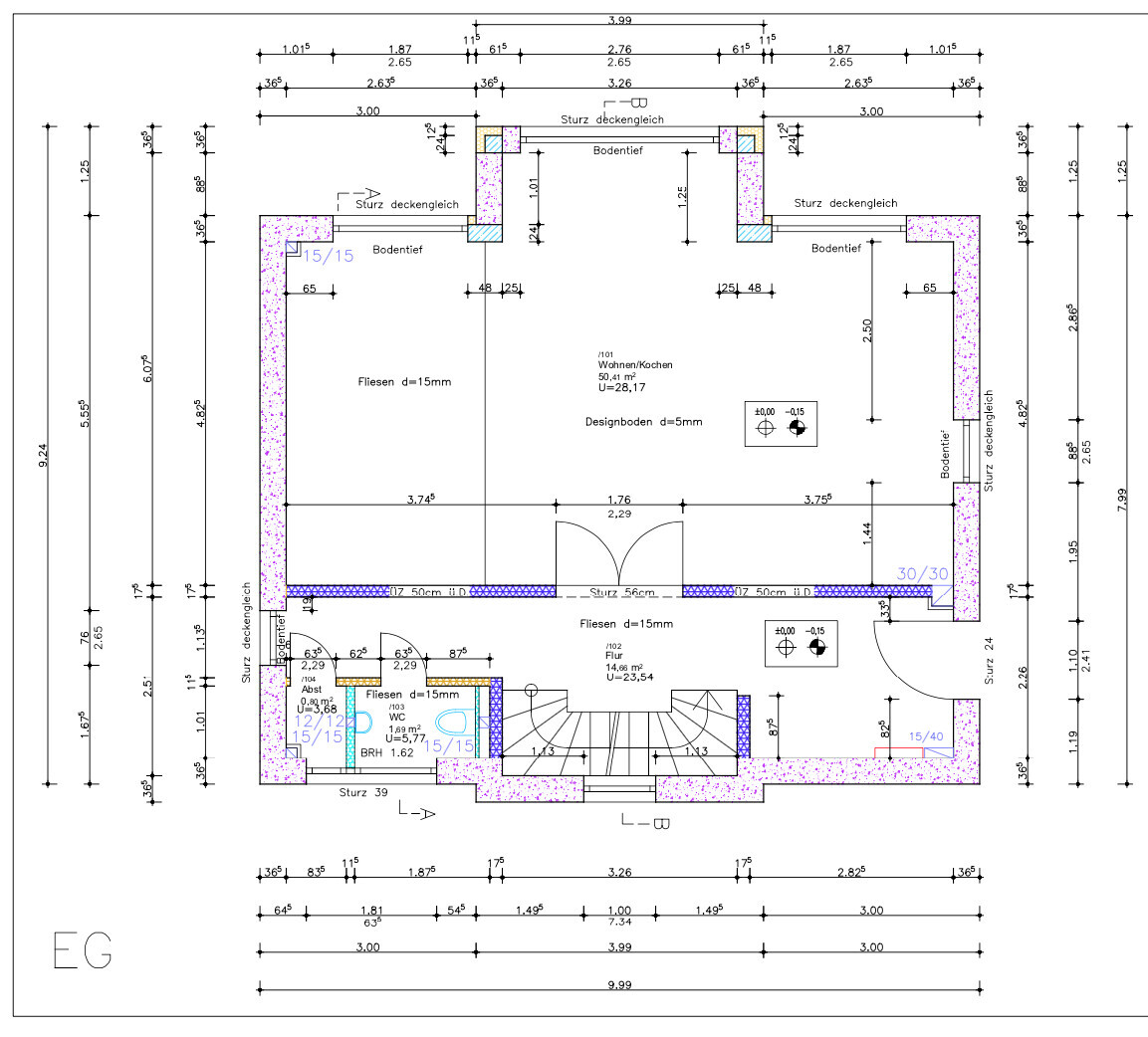
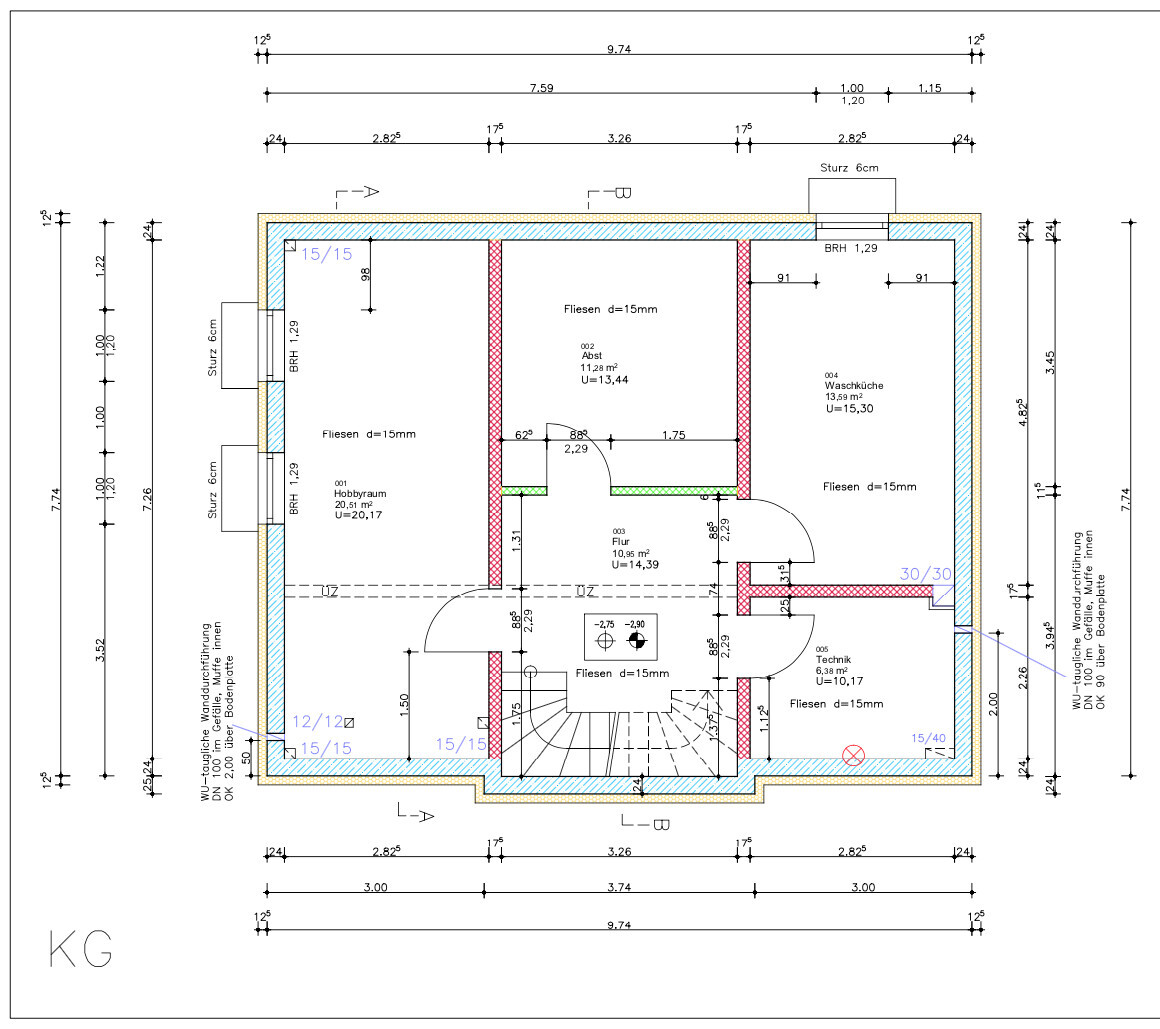
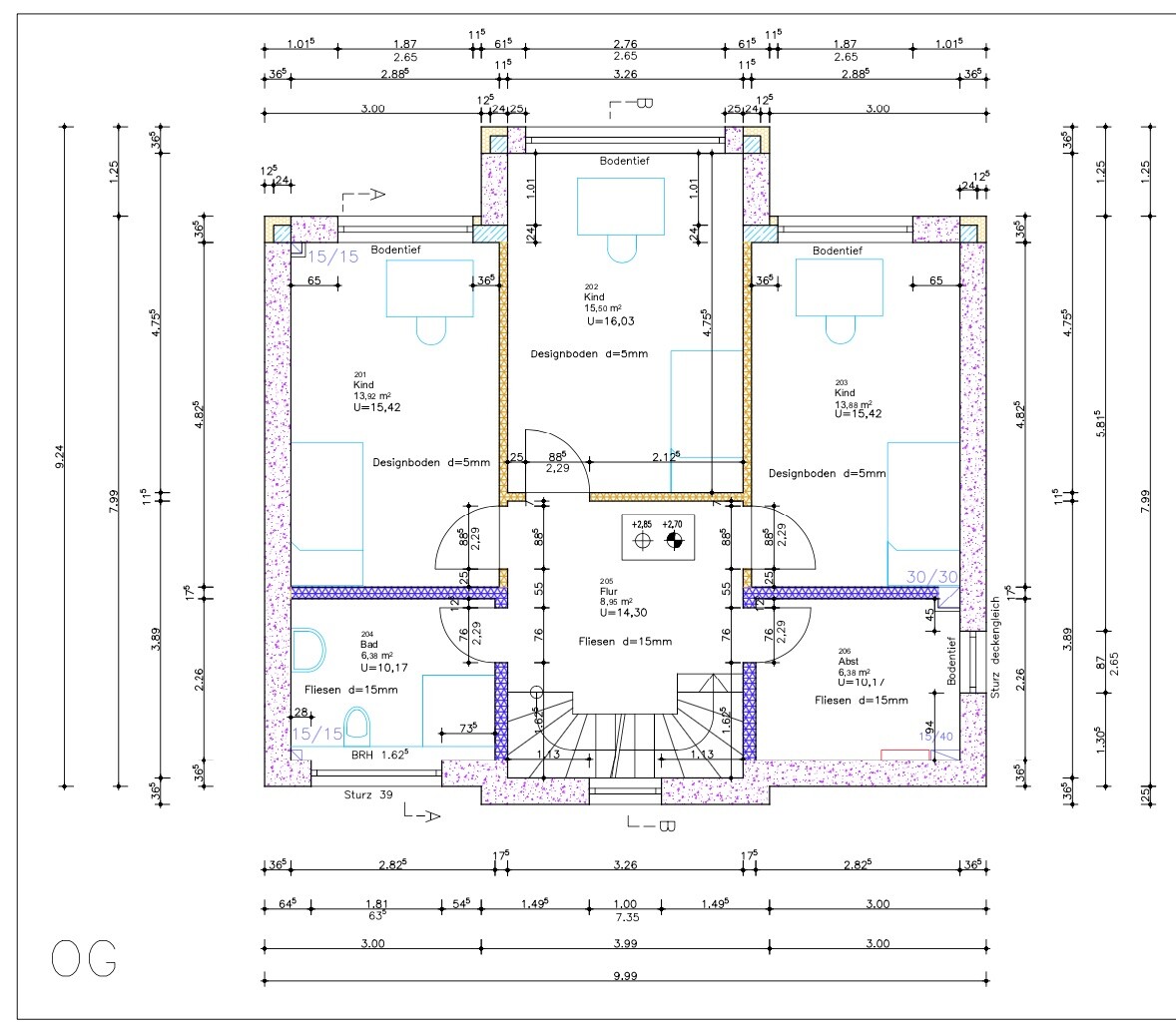
Note: The bathrooms do not yet correspond to the current planning stage in terms of layout, and we are still not satisfied with them (including room layout and 31' for fixtures).
The planned and communicated move-in date is November 2021.
Similar topics