
Hello, I have been following this forum for a long time and find it always interesting. I thought I might share our planning here. We started planning at the end of 2018, began construction in 03/2019, and moved in by 12/2019.
We planned the floor plans, dimensions, materials, etc., ourselves and then hired a retired architect to create the construction drawings and structural engineering, as well as to submit the building permit / planning permission application. He also handled the approvals and insurance.
Since we live in a historic preservation area with classical architecture, we wanted to reflect this style in our house and I did a lot of research. I know nothing is perfect and it is a series of compromises (size, budget, historic style). We wanted about 120sqm (1292 sqft) of living space, aimed not to exceed a certain budget, and wanted to choose and plan all the trades ourselves (this really saves a lot of money!). I have almost no craftsmanship skills, yet we still did or helped with many tasks ourselves (preparations for the electrician, applying window and facade plaster molding ourselves, ceiling molding, wooden baseboards, cladding the carport, assembling the garden shed, distributing 55t (60 US tons) of soil, planting, manually drilling a garden well, etc.). Ok, my father-in-law helped a lot because he is handy.
We wanted to keep as much symmetry as possible and had a rough idea inspired by a Georgian house. Wooden sash windows and front door made by the local carpenter, facade plaster molding, ceiling height of 2.75m (9 ft) on the ground floor, and a hipped roof with clay tiles.
The staircase was a bit challenging because the hallway is central and the dimensions we set (somewhat arbitrarily) limited a straight staircase. The stair builder managed it nevertheless using some tricks (a bit steeper and with a longer tread or something like that).
Since I talked a lot with energy consultants and wanted a reasonable price-performance/use balance, we made the following decisions:
* Energy standard just enough to meet requirements (saves construction costs)
* Therefore, deliberately only double-glazed windows
* Gas condensing boiler with underfloor heating and gas fireplace
* Solar thermal system for hot water (I would have preferred to skip this as a cost driver; in summer you don’t need 270l (71 gallons) of hot water and in winter the sun usually isn’t sufficient despite the south-facing side)
* No electric window openers (but conduits were installed)
* 36.5cm (14.4 inches) aerated concrete walls on the outside and 17.5/11.5cm (6.9/4.5 inches) limestone interior walls
* Interior walls plastered with cement plaster to Q3 level (relatively smooth)
* Plumbing and heating company installed everything. Toilets, sinks, faucets were bought by us (all Villeroy & Boch and GROHE, mostly via eBay)
* Floor tiles and parquet also bought by us and then installed by professionals
The total cost excluding the land was €297,000 (about USD 320,000) including connections and exterior works, garden planting (partly €500 (about USD 540) per tree), double carport, 12sqm (129 sqft) garden shed, 150sqm (1615 sqft) paving, 24sqm (258 sqft) travertine terrace, insurance, surveying, 55t (60 US tons) of topsoil (we added about 20-30cm (8-12 inches) of soil), kitchen and appliances, electric garden gate, and masonry gate pillars (including historically accurate pillar caps) etc.
Land size: 680sqm (7320 sqft)
Living space: 122sqm (1313 sqft)
* 29sqm (312 sqft) living room
* 11.5sqm (124 sqft) kitchen
* 7.5sqm (81 sqft) utility room (laundry hangs from the ceiling with Foxydry)
* approx. 9.5sqm (102 sqft) hallway downstairs
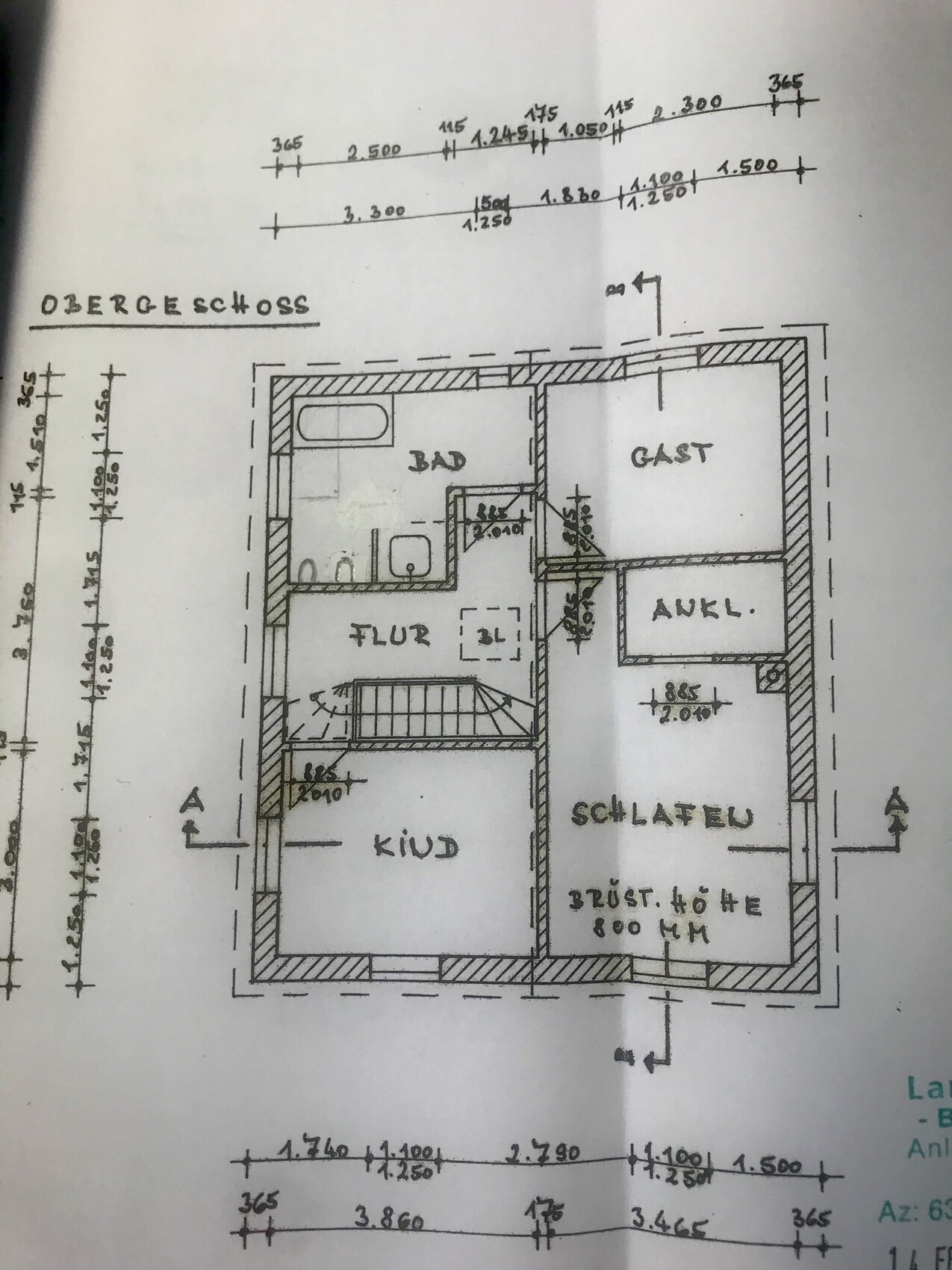
* 11.5sqm (124 sqft) children’s room
* 9sqm (97 sqft) guest room/library/study
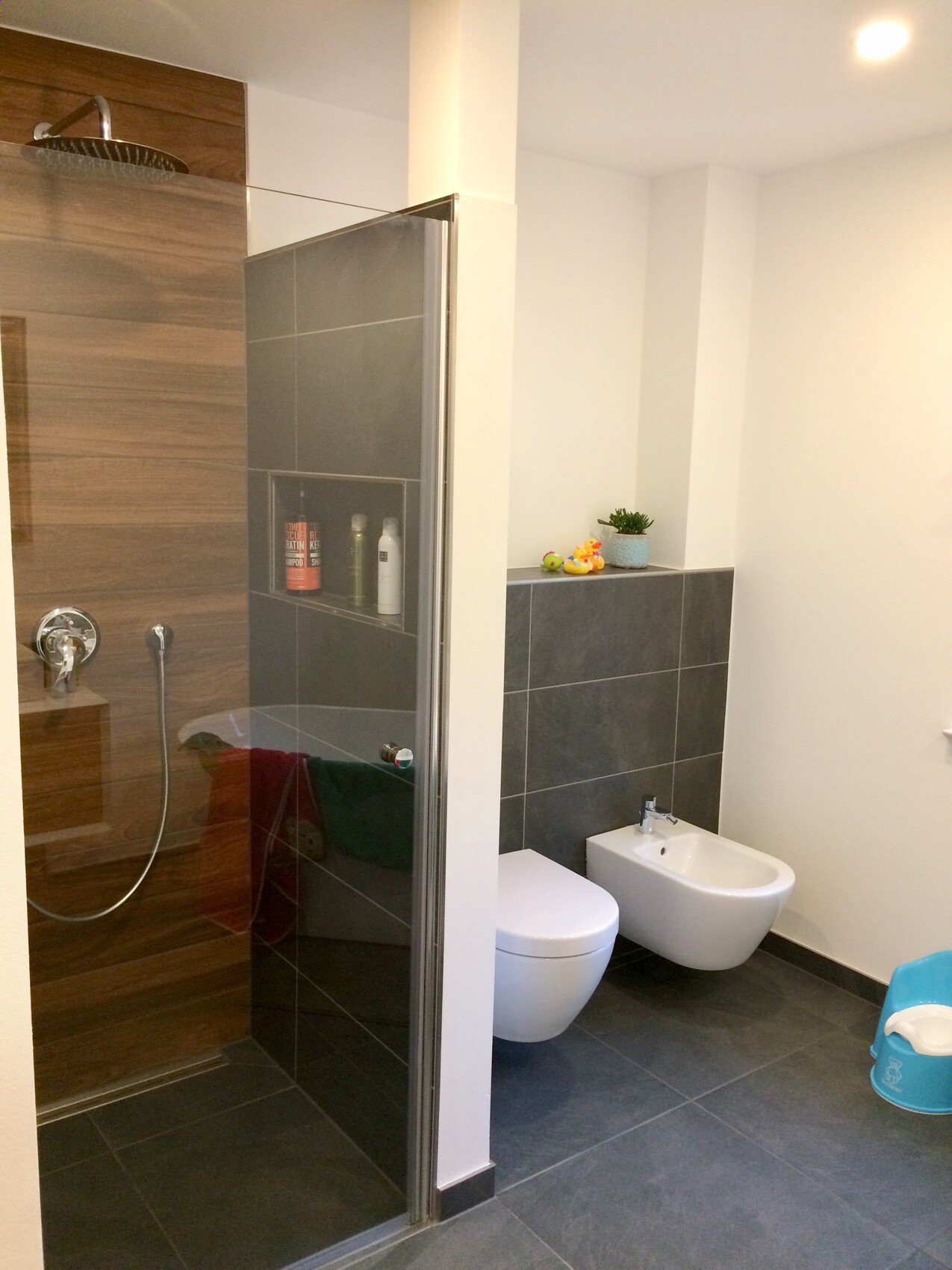
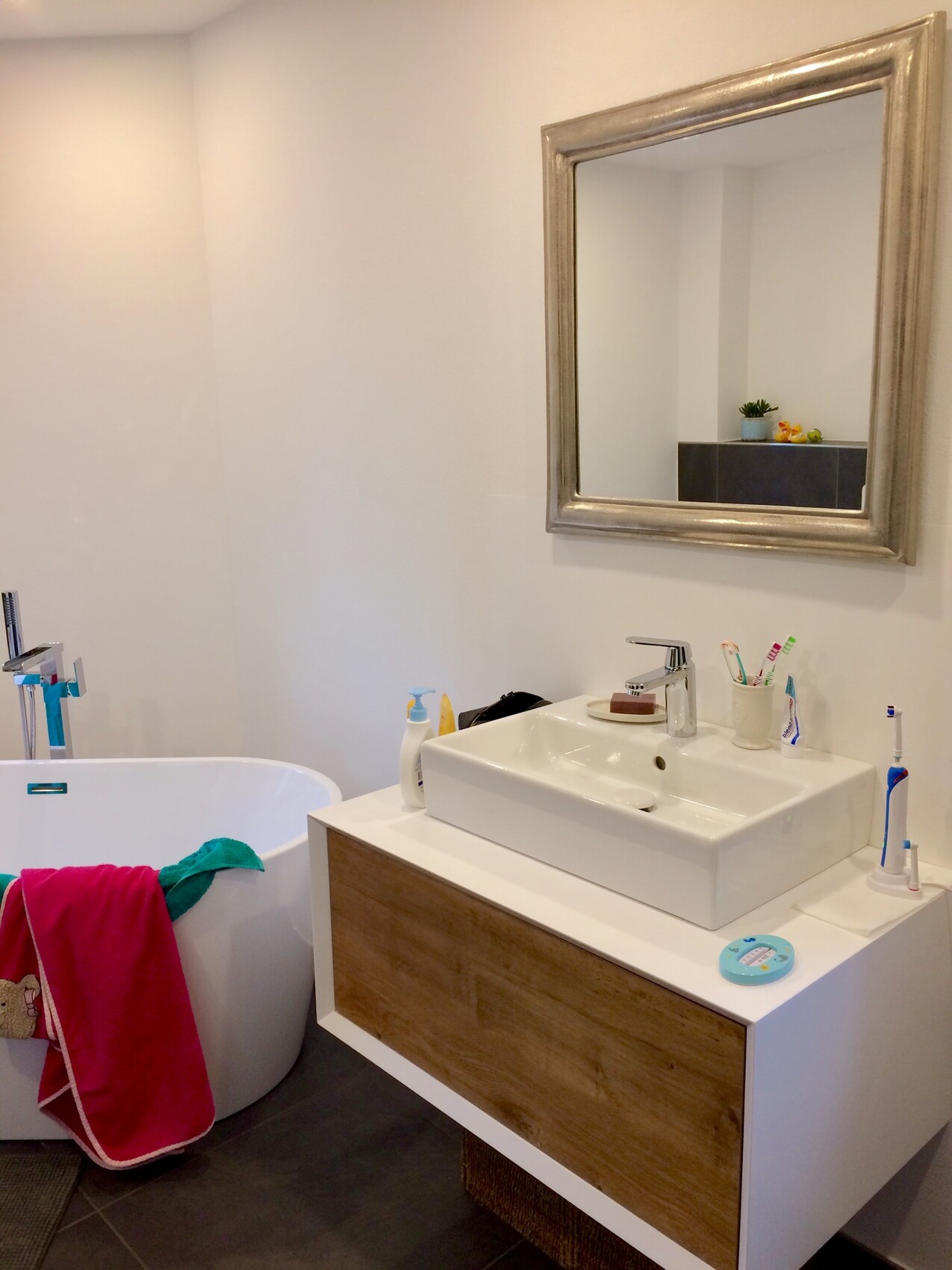
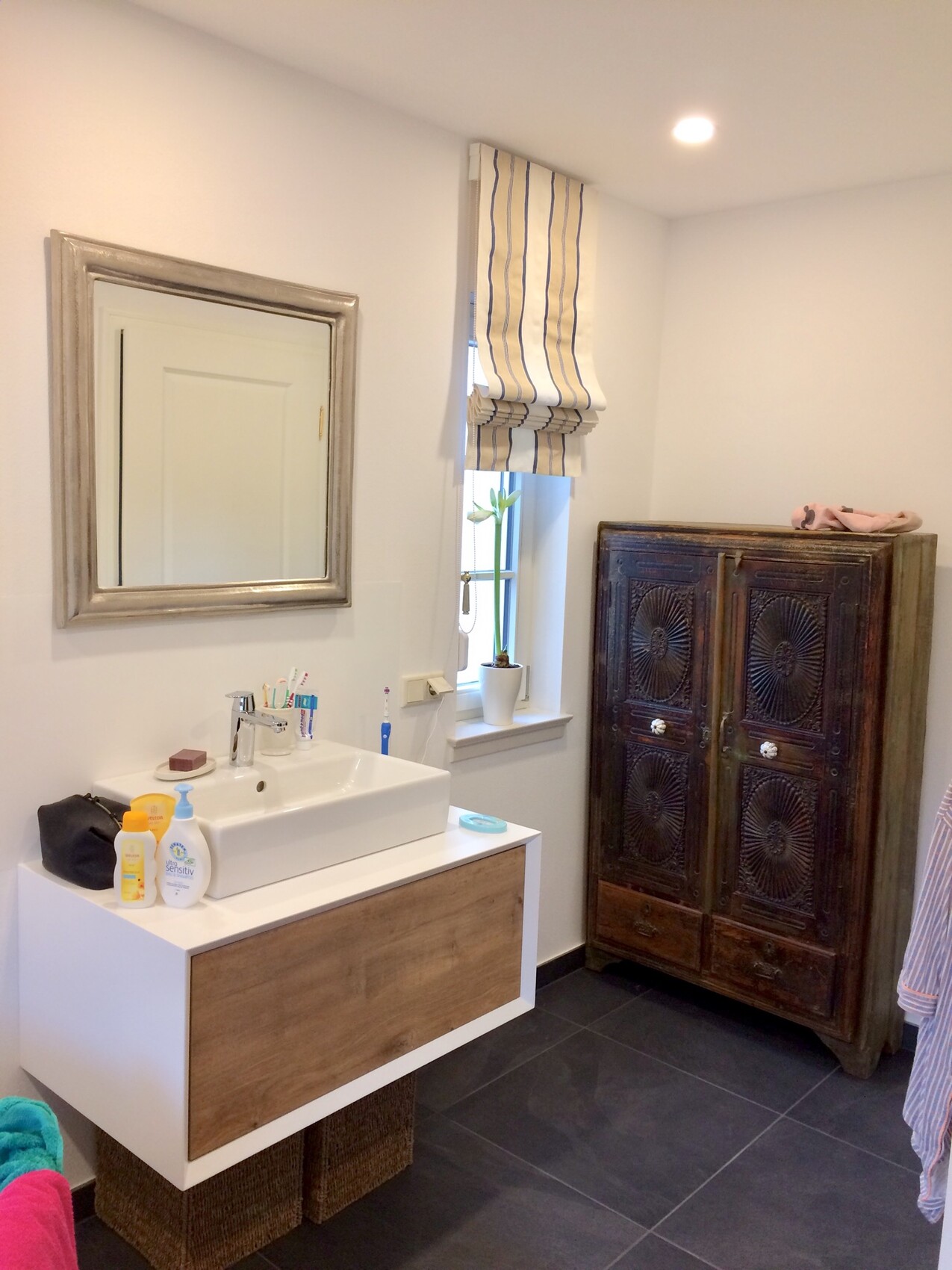
* approx. 9.3sqm (100 sqft) bathroom with shower, freestanding bathtub, toilet, bidet, washbasin
* approx. 20sqm (215 sqft) bedroom with walk-in closet/wardrobe
* The attic is currently an unheated storage room but could still be developed.
The space is sufficient, sometimes missing 0.5-1m (1.6-3.3 ft) here and there, but more space would have come at significantly higher construction costs.
What do you think of the floor plan? Any questions?
I’ve attached some pictures to give you a rough idea.

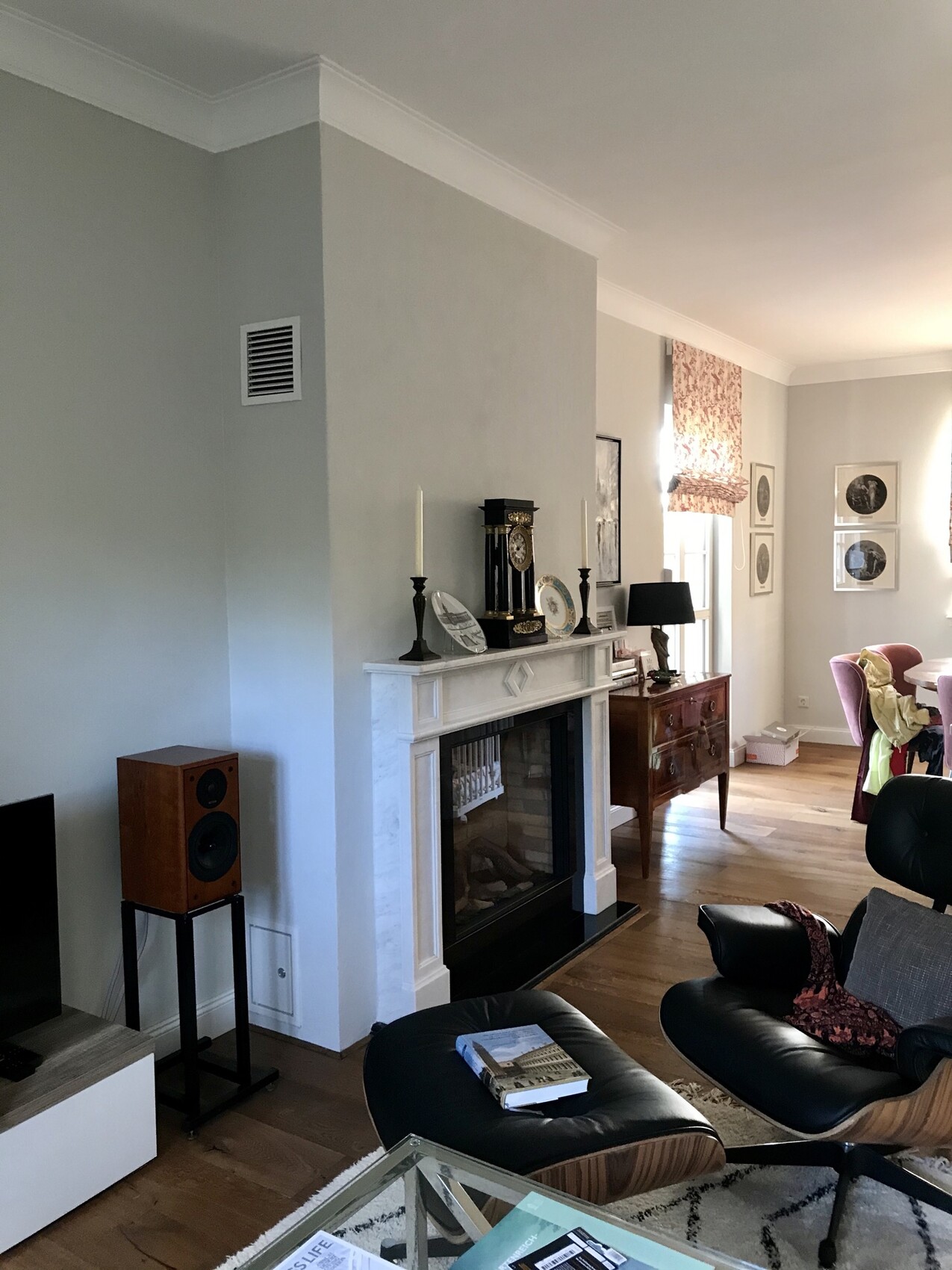
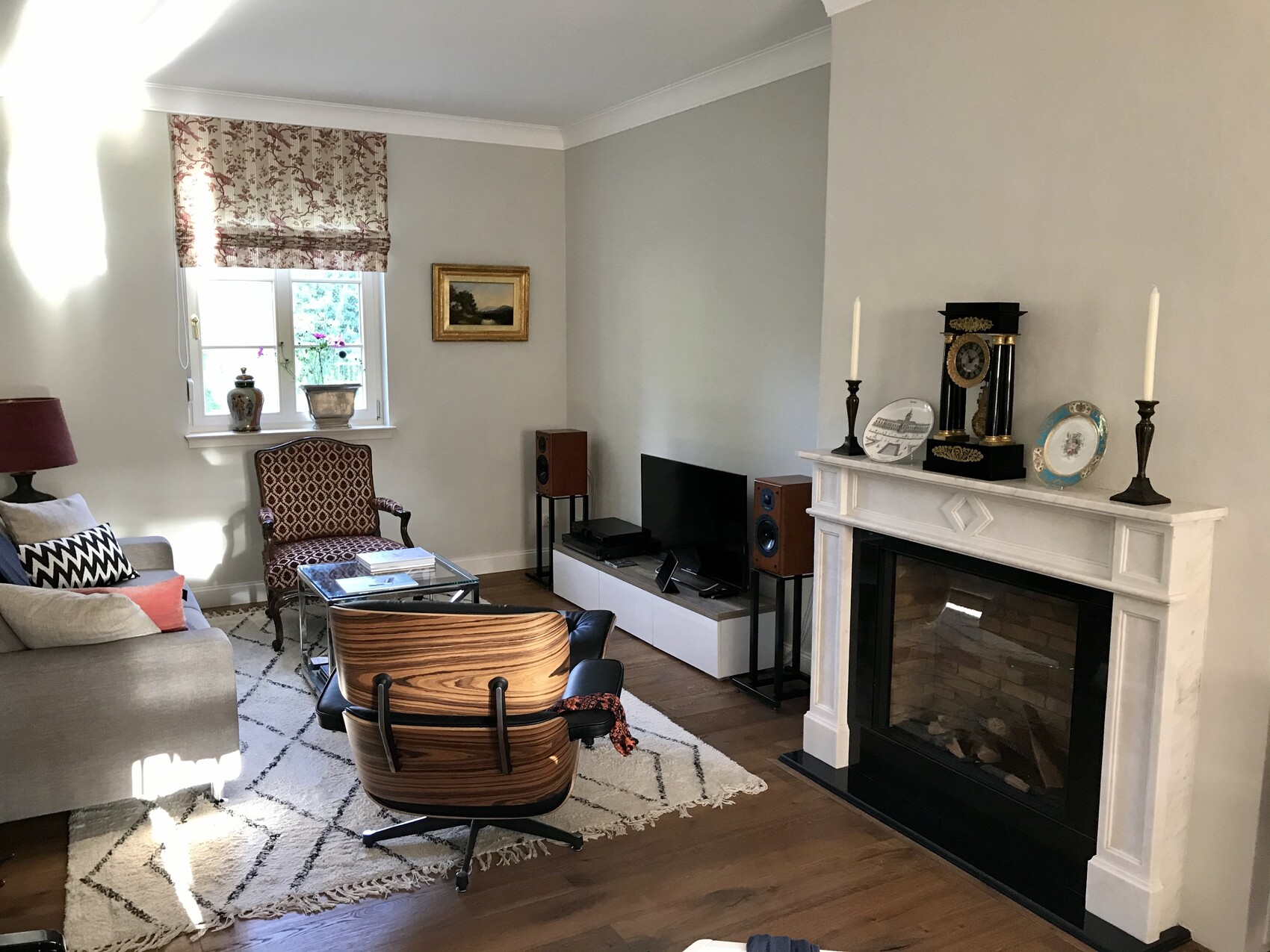
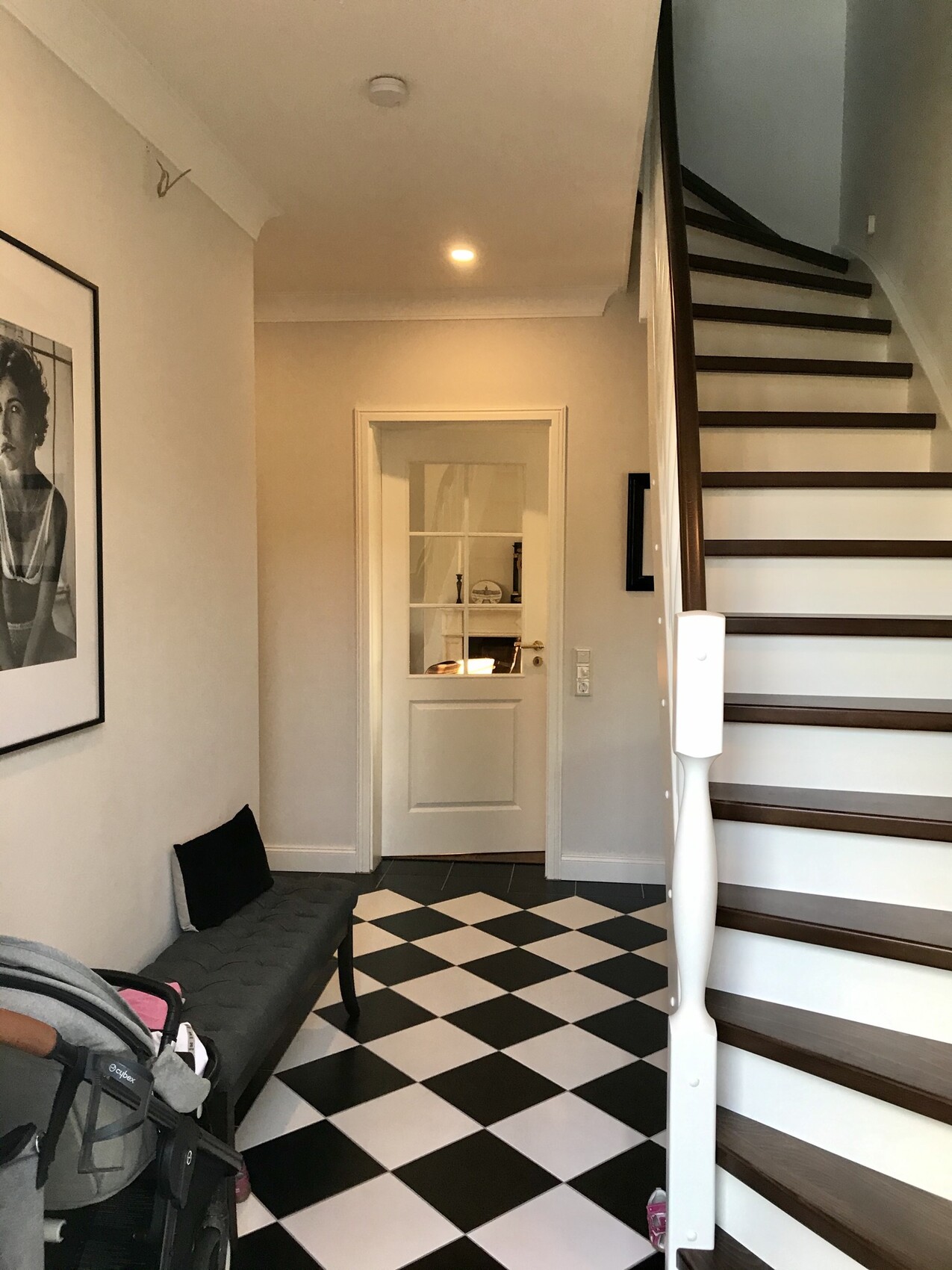
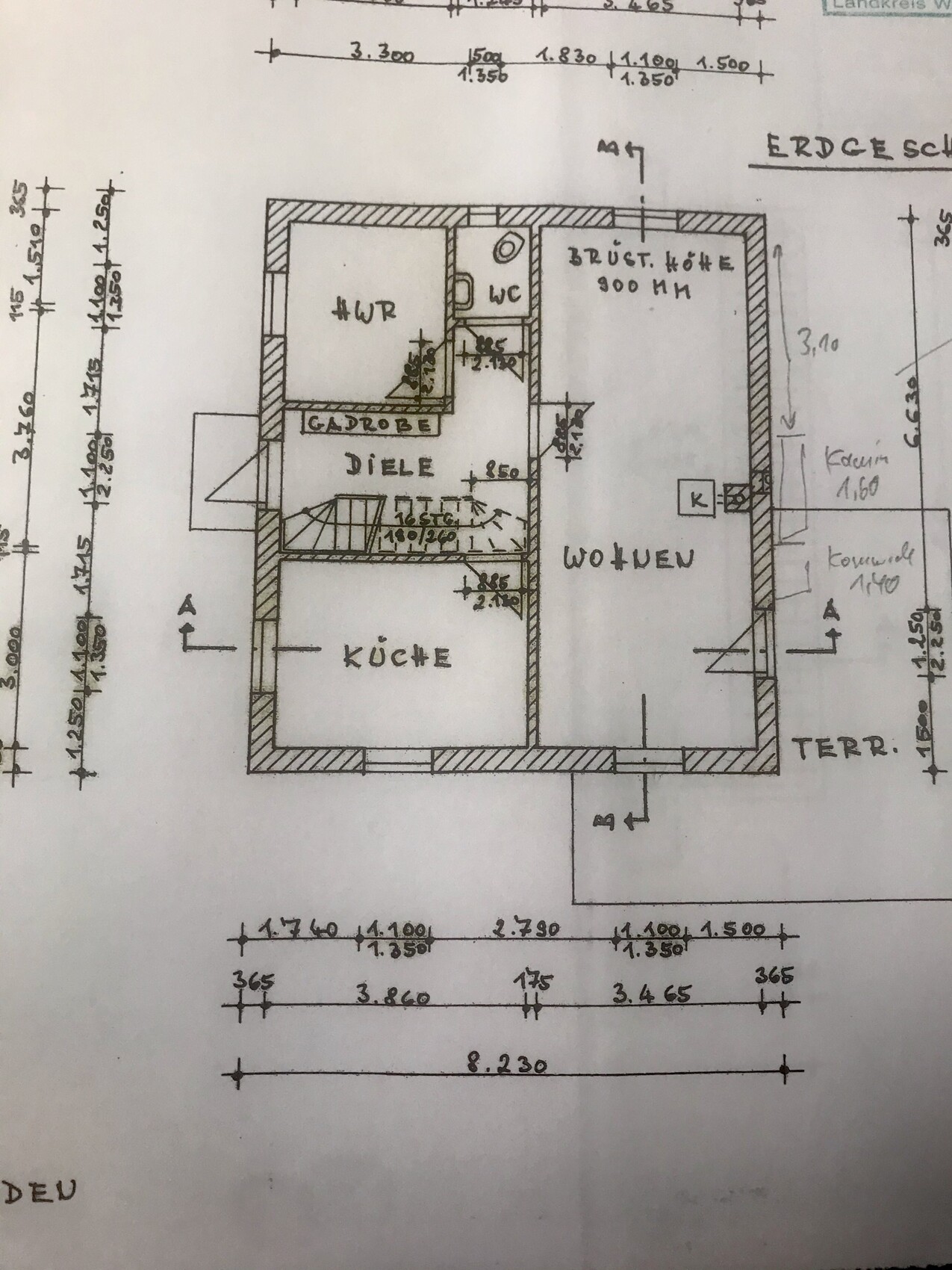
We planned the floor plans, dimensions, materials, etc., ourselves and then hired a retired architect to create the construction drawings and structural engineering, as well as to submit the building permit / planning permission application. He also handled the approvals and insurance.
Since we live in a historic preservation area with classical architecture, we wanted to reflect this style in our house and I did a lot of research. I know nothing is perfect and it is a series of compromises (size, budget, historic style). We wanted about 120sqm (1292 sqft) of living space, aimed not to exceed a certain budget, and wanted to choose and plan all the trades ourselves (this really saves a lot of money!). I have almost no craftsmanship skills, yet we still did or helped with many tasks ourselves (preparations for the electrician, applying window and facade plaster molding ourselves, ceiling molding, wooden baseboards, cladding the carport, assembling the garden shed, distributing 55t (60 US tons) of soil, planting, manually drilling a garden well, etc.). Ok, my father-in-law helped a lot because he is handy.
We wanted to keep as much symmetry as possible and had a rough idea inspired by a Georgian house. Wooden sash windows and front door made by the local carpenter, facade plaster molding, ceiling height of 2.75m (9 ft) on the ground floor, and a hipped roof with clay tiles.
The staircase was a bit challenging because the hallway is central and the dimensions we set (somewhat arbitrarily) limited a straight staircase. The stair builder managed it nevertheless using some tricks (a bit steeper and with a longer tread or something like that).
Since I talked a lot with energy consultants and wanted a reasonable price-performance/use balance, we made the following decisions:
* Energy standard just enough to meet requirements (saves construction costs)
* Therefore, deliberately only double-glazed windows
* Gas condensing boiler with underfloor heating and gas fireplace
* Solar thermal system for hot water (I would have preferred to skip this as a cost driver; in summer you don’t need 270l (71 gallons) of hot water and in winter the sun usually isn’t sufficient despite the south-facing side)
* No electric window openers (but conduits were installed)
* 36.5cm (14.4 inches) aerated concrete walls on the outside and 17.5/11.5cm (6.9/4.5 inches) limestone interior walls
* Interior walls plastered with cement plaster to Q3 level (relatively smooth)
* Plumbing and heating company installed everything. Toilets, sinks, faucets were bought by us (all Villeroy & Boch and GROHE, mostly via eBay)
* Floor tiles and parquet also bought by us and then installed by professionals
The total cost excluding the land was €297,000 (about USD 320,000) including connections and exterior works, garden planting (partly €500 (about USD 540) per tree), double carport, 12sqm (129 sqft) garden shed, 150sqm (1615 sqft) paving, 24sqm (258 sqft) travertine terrace, insurance, surveying, 55t (60 US tons) of topsoil (we added about 20-30cm (8-12 inches) of soil), kitchen and appliances, electric garden gate, and masonry gate pillars (including historically accurate pillar caps) etc.
Land size: 680sqm (7320 sqft)
Living space: 122sqm (1313 sqft)
* 29sqm (312 sqft) living room
* 11.5sqm (124 sqft) kitchen
* 7.5sqm (81 sqft) utility room (laundry hangs from the ceiling with Foxydry)
* approx. 9.5sqm (102 sqft) hallway downstairs
* 11.5sqm (124 sqft) children’s room
* 9sqm (97 sqft) guest room/library/study
* approx. 9.3sqm (100 sqft) bathroom with shower, freestanding bathtub, toilet, bidet, washbasin
* approx. 20sqm (215 sqft) bedroom with walk-in closet/wardrobe
* The attic is currently an unheated storage room but could still be developed.
The space is sufficient, sometimes missing 0.5-1m (1.6-3.3 ft) here and there, but more space would have come at significantly higher construction costs.
What do you think of the floor plan? Any questions?
I’ve attached some pictures to give you a rough idea.
Georgian2019 schrieb:
Yes, the carport will still be painted in ivoryI would have preferred the carport in black or anthracite so that it blends in more with the house. Ivory will really stand out.
G
Georgian201924 Sep 2021 09:16Steffi33 schrieb:
I would have preferred the carport in black/anthracite, so it blends in more with the house. Ivory will really stand out.Unfortunately, the colors are specified by the heritage office. But wouldn’t black/anthracite actually draw more attention and put the focus clearly on the (secondary) carport? Especially since we are not using black/anthracite anywhere else. Also, I imagine black/anthracite could be problematic since the carport is in the sun all day.Schwabe93 schrieb:
I think 90% of new builds lack style/care, and in 20-30 years people will regret the current architectural trends. However, your house is timeless 😎I wouldn’t say tasteless, because taste is subjective. I agree with you on careless, but that definitely has a financial background. Every detail adds cost. Since the walk-in closet, pantry, and kids’ bathroom already consume the cost per square meter, there’s not much left for the exterior 😉
I don’t think people will regret today’s architectural style: times change and the current era is no longer about small paned windows and such. Today’s focus is on climate protection and the energy transition—large windows and affordable design.
That doesn’t mean these houses lose their purpose. Wherever they are, they catch the eye—just like an old dresser in a modern bathroom, or an antique table in a contemporary living room. Contrasts and highlights, occasional mixing of styles—that’s what makes the world interesting 🙂
B
Bertram10024 Sep 2021 09:57Georgian2019 schrieb:
Unfortunately, the colors are specified by the heritage authority. But wouldn't black/anthracite really stand out and draw too much attention to the (secondary) carport? Especially since we are not using black/anthracite anywhere else. I also imagine black/anthracite could be problematic because the carport is exposed to sunlight all day. Definitely not anthracite, I would say. It doesn’t suit the period style and, in my opinion, would be a very unfortunate stylistic mismatch.
G
Georgian201924 Sep 2021 10:07[TQUOTE="ypg, post: 530376, member: 12491"]
I wouldn’t call it tasteless, since taste is subjective.
I do agree with you on the lack of care or attention, but that’s certainly linked to financial reasons. Every detail costs money. Since the dressing room, pantry, and children’s bathroom already consume the cost per square meter, there’s not much left for the exterior 😉
I don’t think people regret today’s architectural style: times change, and this period is no longer about casement windows and the like. Today’s era is defined by climate protection and the energy transition—large windows and affordable structure.
That doesn’t mean these houses lose their legitimacy. They stand where they stand and are eye-catchers—just like an old dresser in a modern bathroom or an antique table in a contemporary living room. Contrasts and highlights, occasional breaks in style—that’s what makes the world interesting 🙂
[/QUOTE]
Looking at architectural history, you can see that certain aesthetic elements have endured over centuries and repeatedly reappeared. I’m thinking of symmetry, proportions, the golden ratio. The entire Neo movement (Neoclassicism, Neo-Renaissance, Neo-Baroque, etc.) didn’t emerge without reason. Even the original Bauhaus style is rooted in Classicism, but Bauhaus omitted or altered “unnecessary” elements for reasons of functionality, simplification, and cost reduction. But original Bauhaus is classical in its foundation.
What is marketed as Bauhaus today is actually an eyesore. Five different window sizes on one house, windows randomly placed on the facade (just to get the right light inside), huge windows without divisions... that’s far from attractive. If only symmetry were respected! Anything symmetrical flatters the eye, whether a pretty face, interior decoration, or architecture. Strangely, most architects of modern or Bauhaus-style homes live in historic or turn-of-the-century villas.
The cubical house and bungalow were originally cost-saving designs, but the trend has morphed into something that’s increasingly problematic and invasive.
I wouldn’t call it tasteless, since taste is subjective.
I do agree with you on the lack of care or attention, but that’s certainly linked to financial reasons. Every detail costs money. Since the dressing room, pantry, and children’s bathroom already consume the cost per square meter, there’s not much left for the exterior 😉
I don’t think people regret today’s architectural style: times change, and this period is no longer about casement windows and the like. Today’s era is defined by climate protection and the energy transition—large windows and affordable structure.
That doesn’t mean these houses lose their legitimacy. They stand where they stand and are eye-catchers—just like an old dresser in a modern bathroom or an antique table in a contemporary living room. Contrasts and highlights, occasional breaks in style—that’s what makes the world interesting 🙂
[/QUOTE]
Looking at architectural history, you can see that certain aesthetic elements have endured over centuries and repeatedly reappeared. I’m thinking of symmetry, proportions, the golden ratio. The entire Neo movement (Neoclassicism, Neo-Renaissance, Neo-Baroque, etc.) didn’t emerge without reason. Even the original Bauhaus style is rooted in Classicism, but Bauhaus omitted or altered “unnecessary” elements for reasons of functionality, simplification, and cost reduction. But original Bauhaus is classical in its foundation.
What is marketed as Bauhaus today is actually an eyesore. Five different window sizes on one house, windows randomly placed on the facade (just to get the right light inside), huge windows without divisions... that’s far from attractive. If only symmetry were respected! Anything symmetrical flatters the eye, whether a pretty face, interior decoration, or architecture. Strangely, most architects of modern or Bauhaus-style homes live in historic or turn-of-the-century villas.
The cubical house and bungalow were originally cost-saving designs, but the trend has morphed into something that’s increasingly problematic and invasive.
The carport itself already represents a contrast in style. Using a light color then makes this contrast clearly visible. In contrast, a very dark color causes structures to blend into the natural surroundings, skillfully masking the stylistic difference.
This is also often seen in modern extensions added to beautiful old houses.
This is also often seen in modern extensions added to beautiful old houses.
Similar topics