
Hello, I have been following this forum for a long time and find it always interesting. I thought I might share our planning here. We started planning at the end of 2018, began construction in 03/2019, and moved in by 12/2019.
We planned the floor plans, dimensions, materials, etc., ourselves and then hired a retired architect to create the construction drawings and structural engineering, as well as to submit the building permit / planning permission application. He also handled the approvals and insurance.
Since we live in a historic preservation area with classical architecture, we wanted to reflect this style in our house and I did a lot of research. I know nothing is perfect and it is a series of compromises (size, budget, historic style). We wanted about 120sqm (1292 sqft) of living space, aimed not to exceed a certain budget, and wanted to choose and plan all the trades ourselves (this really saves a lot of money!). I have almost no craftsmanship skills, yet we still did or helped with many tasks ourselves (preparations for the electrician, applying window and facade plaster molding ourselves, ceiling molding, wooden baseboards, cladding the carport, assembling the garden shed, distributing 55t (60 US tons) of soil, planting, manually drilling a garden well, etc.). Ok, my father-in-law helped a lot because he is handy.
We wanted to keep as much symmetry as possible and had a rough idea inspired by a Georgian house. Wooden sash windows and front door made by the local carpenter, facade plaster molding, ceiling height of 2.75m (9 ft) on the ground floor, and a hipped roof with clay tiles.
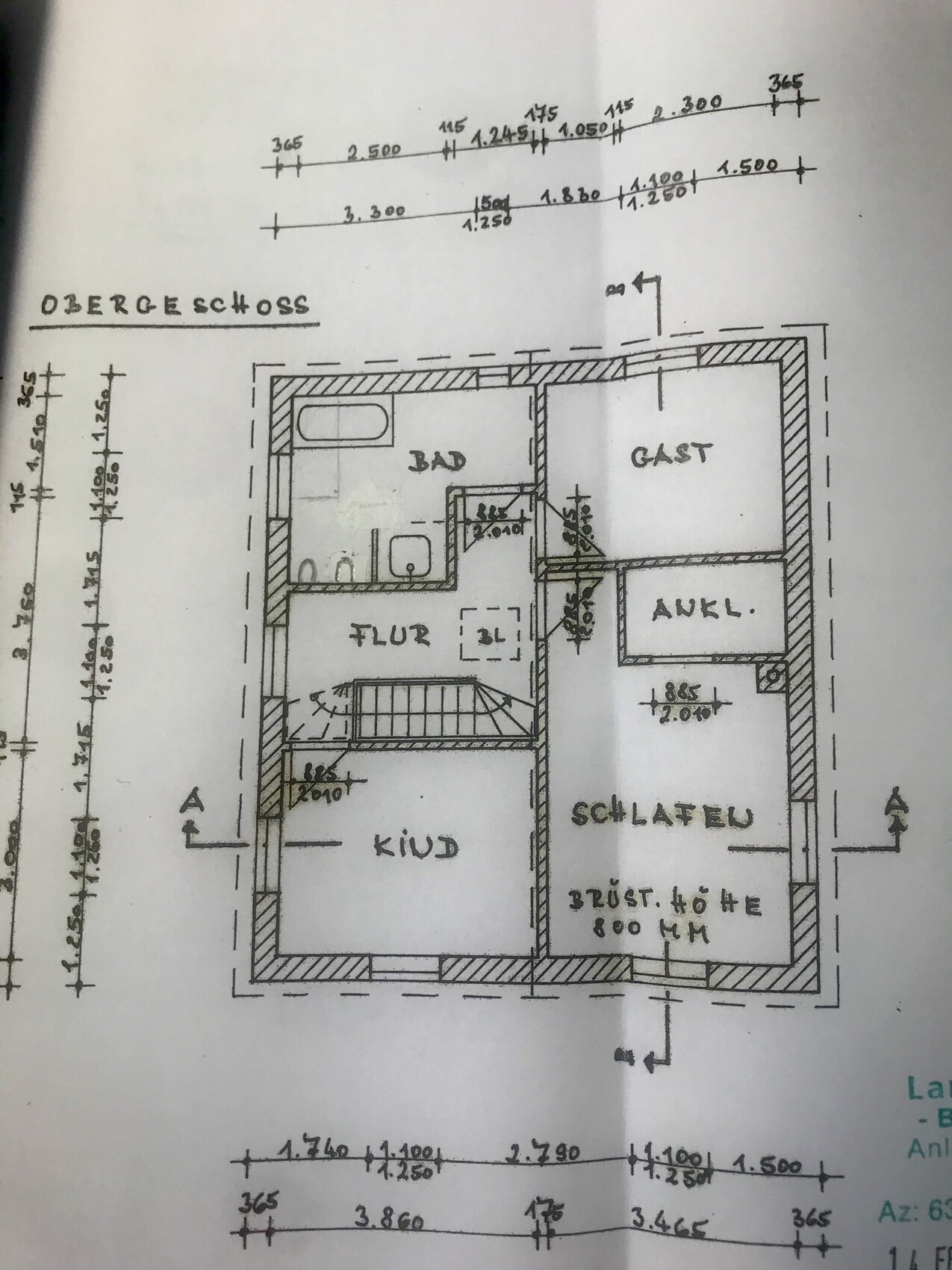
The staircase was a bit challenging because the hallway is central and the dimensions we set (somewhat arbitrarily) limited a straight staircase. The stair builder managed it nevertheless using some tricks (a bit steeper and with a longer tread or something like that).
Since I talked a lot with energy consultants and wanted a reasonable price-performance/use balance, we made the following decisions:
* Energy standard just enough to meet requirements (saves construction costs)
* Therefore, deliberately only double-glazed windows
* Gas condensing boiler with underfloor heating and gas fireplace
* Solar thermal system for hot water (I would have preferred to skip this as a cost driver; in summer you don’t need 270l (71 gallons) of hot water and in winter the sun usually isn’t sufficient despite the south-facing side)
* No electric window openers (but conduits were installed)
* 36.5cm (14.4 inches) aerated concrete walls on the outside and 17.5/11.5cm (6.9/4.5 inches) limestone interior walls
* Interior walls plastered with cement plaster to Q3 level (relatively smooth)
* Plumbing and heating company installed everything. Toilets, sinks, faucets were bought by us (all Villeroy & Boch and GROHE, mostly via eBay)
* Floor tiles and parquet also bought by us and then installed by professionals
The total cost excluding the land was €297,000 (about USD 320,000) including connections and exterior works, garden planting (partly €500 (about USD 540) per tree), double carport, 12sqm (129 sqft) garden shed, 150sqm (1615 sqft) paving, 24sqm (258 sqft) travertine terrace, insurance, surveying, 55t (60 US tons) of topsoil (we added about 20-30cm (8-12 inches) of soil), kitchen and appliances, electric garden gate, and masonry gate pillars (including historically accurate pillar caps) etc.
Land size: 680sqm (7320 sqft)
Living space: 122sqm (1313 sqft)
* 29sqm (312 sqft) living room
* 11.5sqm (124 sqft) kitchen
* 7.5sqm (81 sqft) utility room (laundry hangs from the ceiling with Foxydry)
* approx. 9.5sqm (102 sqft) hallway downstairs
* 11.5sqm (124 sqft) children’s room
* 9sqm (97 sqft) guest room/library/study
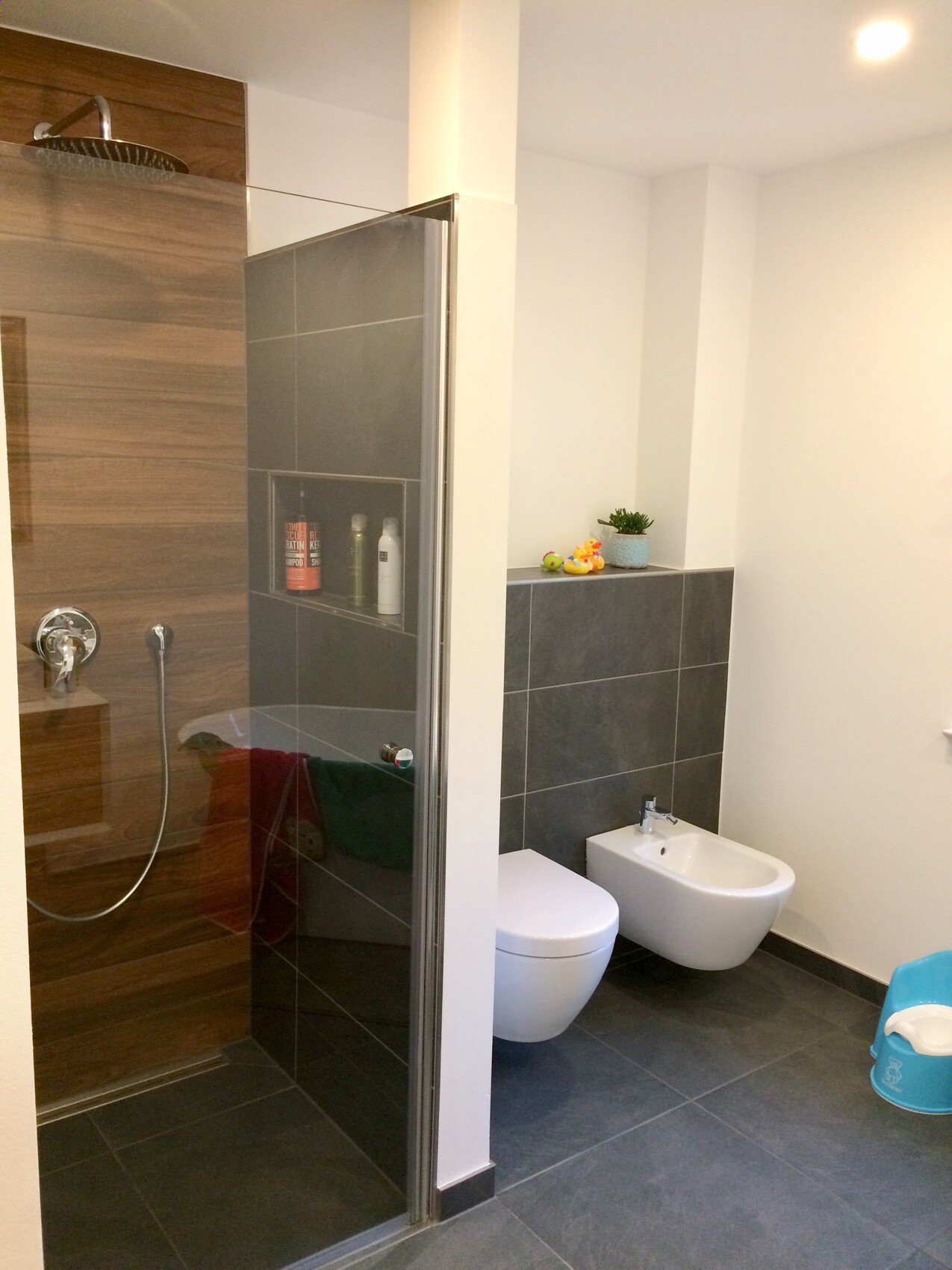
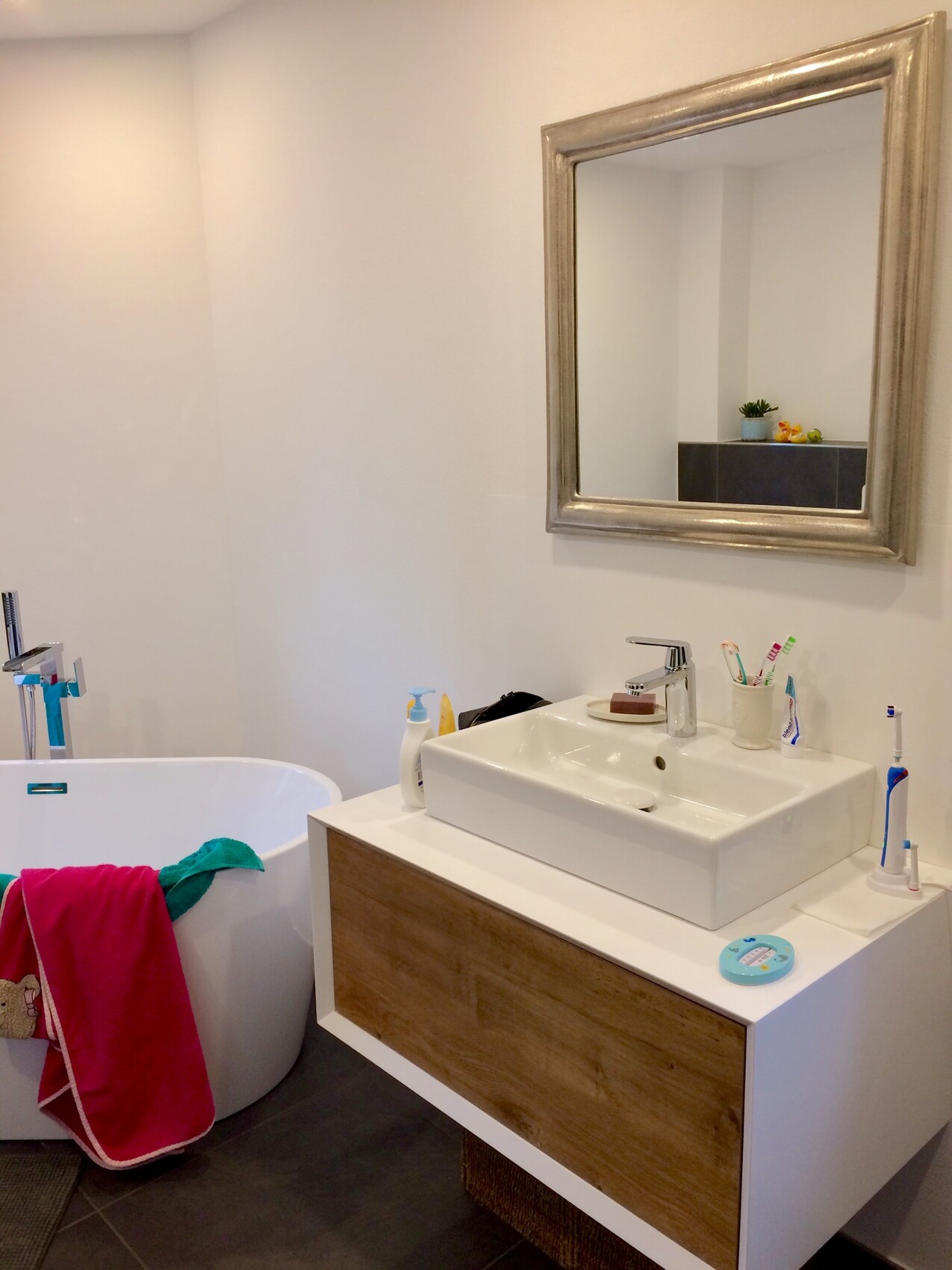
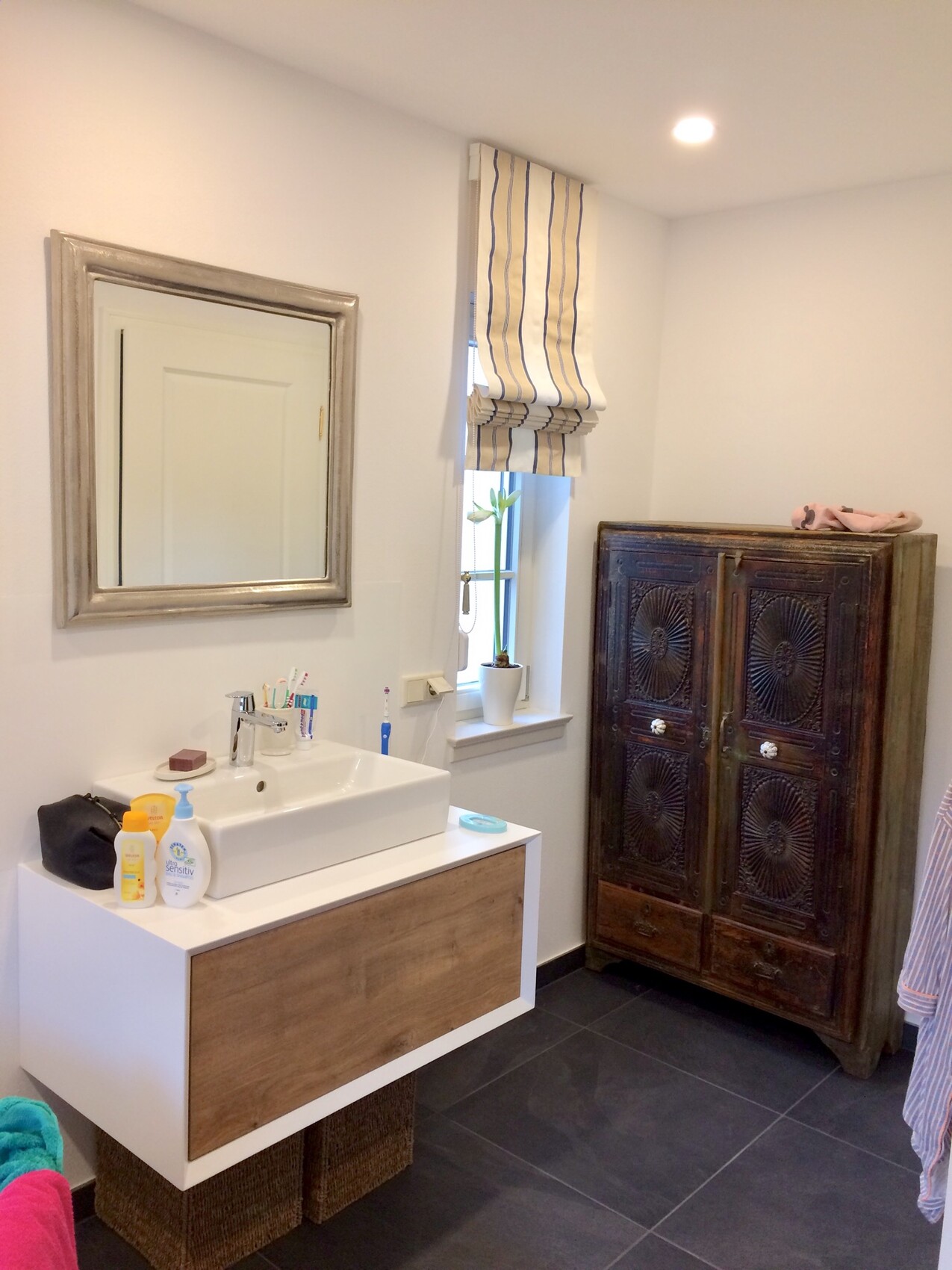
* approx. 9.3sqm (100 sqft) bathroom with shower, freestanding bathtub, toilet, bidet, washbasin
* approx. 20sqm (215 sqft) bedroom with walk-in closet/wardrobe
* The attic is currently an unheated storage room but could still be developed.
The space is sufficient, sometimes missing 0.5-1m (1.6-3.3 ft) here and there, but more space would have come at significantly higher construction costs.
What do you think of the floor plan? Any questions?
I’ve attached some pictures to give you a rough idea.

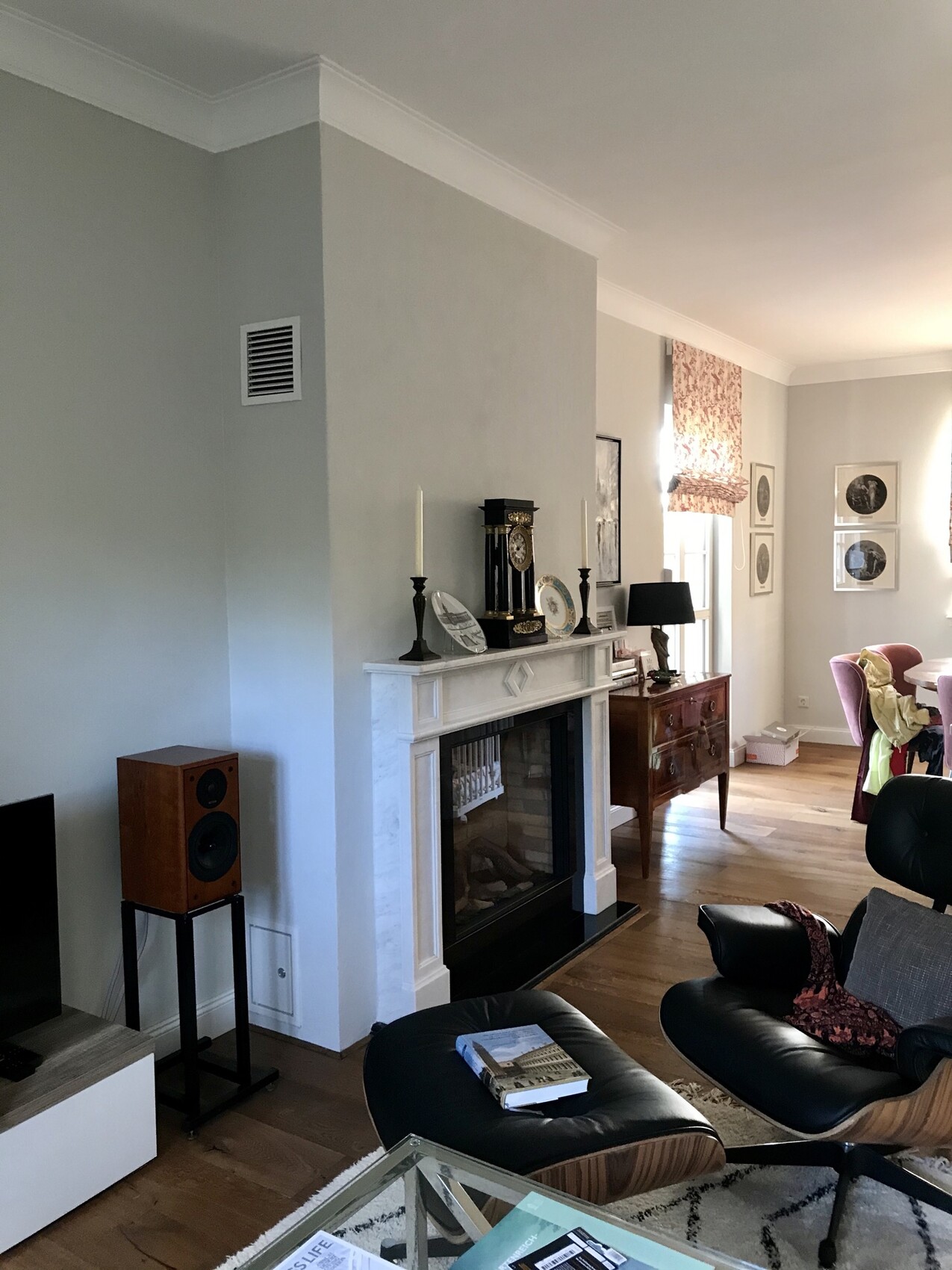
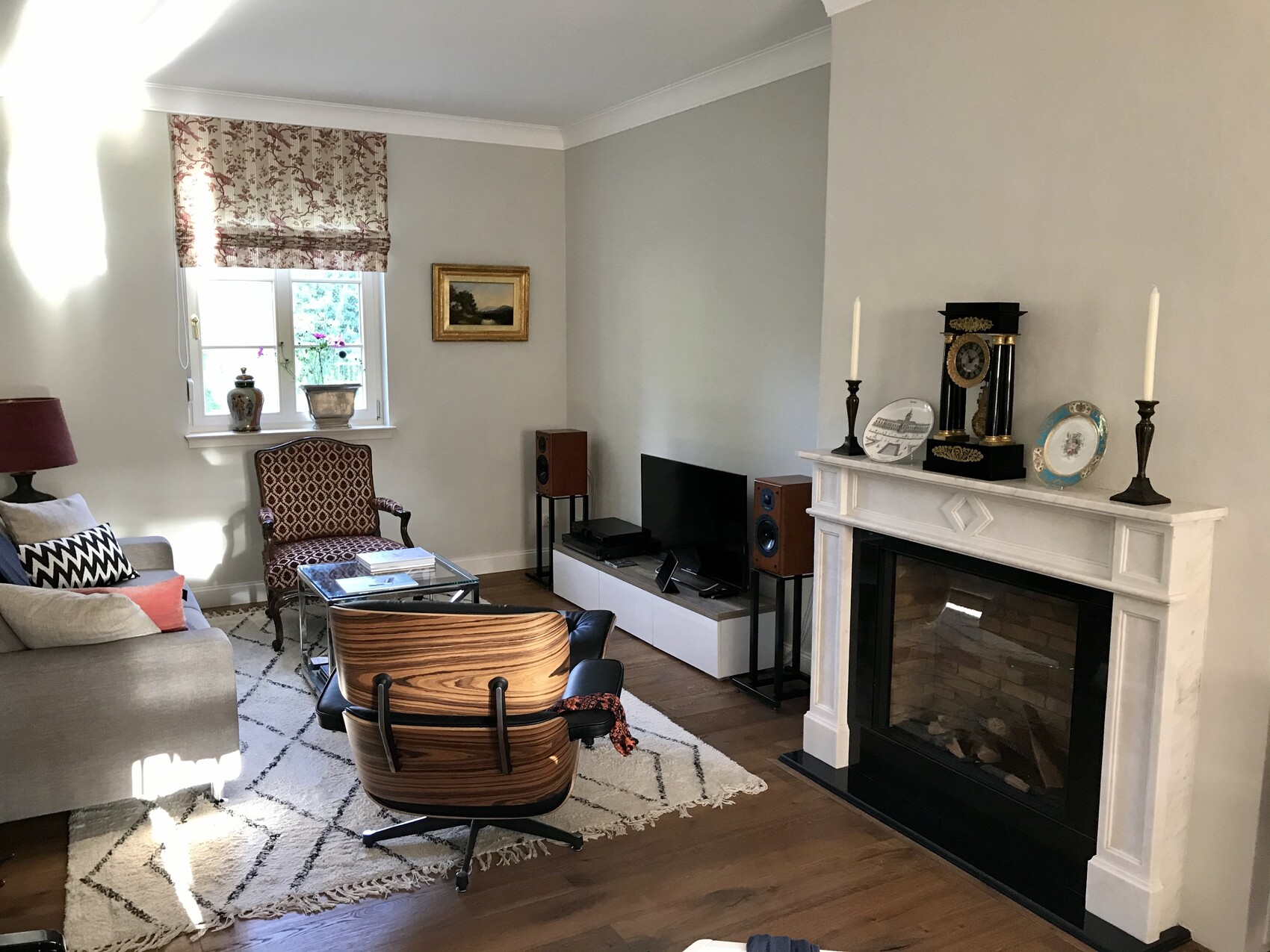
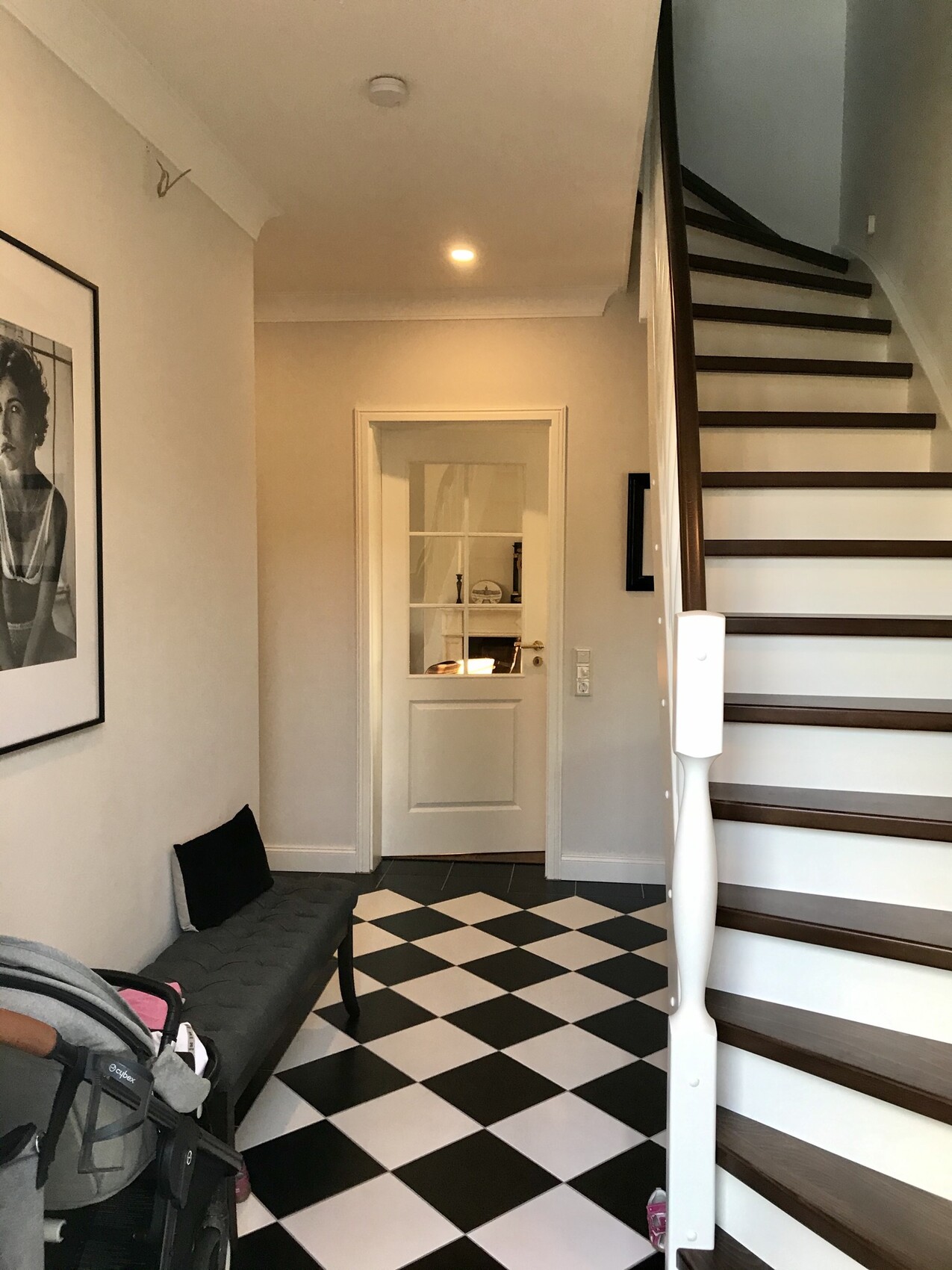
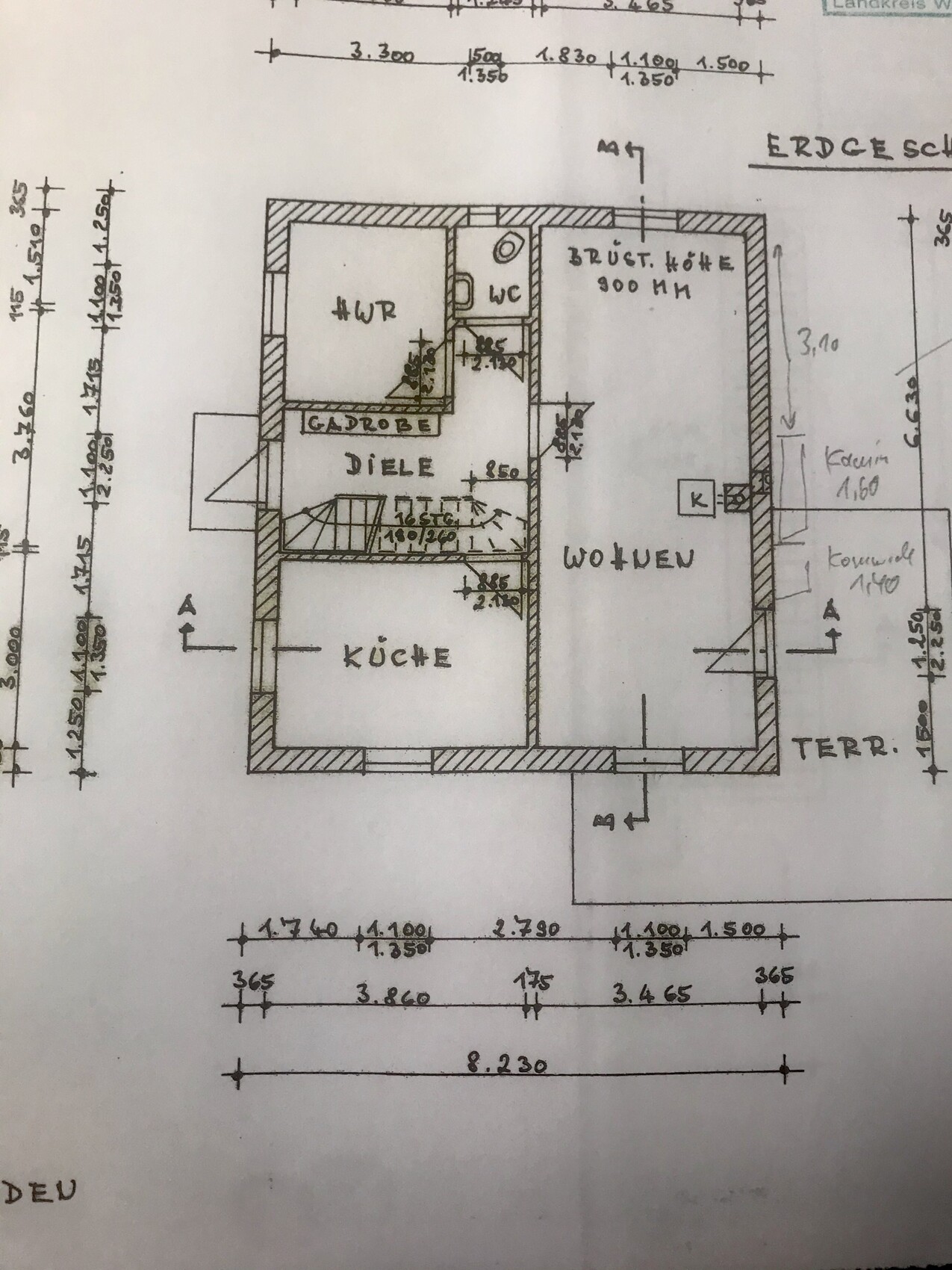
We planned the floor plans, dimensions, materials, etc., ourselves and then hired a retired architect to create the construction drawings and structural engineering, as well as to submit the building permit / planning permission application. He also handled the approvals and insurance.
Since we live in a historic preservation area with classical architecture, we wanted to reflect this style in our house and I did a lot of research. I know nothing is perfect and it is a series of compromises (size, budget, historic style). We wanted about 120sqm (1292 sqft) of living space, aimed not to exceed a certain budget, and wanted to choose and plan all the trades ourselves (this really saves a lot of money!). I have almost no craftsmanship skills, yet we still did or helped with many tasks ourselves (preparations for the electrician, applying window and facade plaster molding ourselves, ceiling molding, wooden baseboards, cladding the carport, assembling the garden shed, distributing 55t (60 US tons) of soil, planting, manually drilling a garden well, etc.). Ok, my father-in-law helped a lot because he is handy.
We wanted to keep as much symmetry as possible and had a rough idea inspired by a Georgian house. Wooden sash windows and front door made by the local carpenter, facade plaster molding, ceiling height of 2.75m (9 ft) on the ground floor, and a hipped roof with clay tiles.
The staircase was a bit challenging because the hallway is central and the dimensions we set (somewhat arbitrarily) limited a straight staircase. The stair builder managed it nevertheless using some tricks (a bit steeper and with a longer tread or something like that).
Since I talked a lot with energy consultants and wanted a reasonable price-performance/use balance, we made the following decisions:
* Energy standard just enough to meet requirements (saves construction costs)
* Therefore, deliberately only double-glazed windows
* Gas condensing boiler with underfloor heating and gas fireplace
* Solar thermal system for hot water (I would have preferred to skip this as a cost driver; in summer you don’t need 270l (71 gallons) of hot water and in winter the sun usually isn’t sufficient despite the south-facing side)
* No electric window openers (but conduits were installed)
* 36.5cm (14.4 inches) aerated concrete walls on the outside and 17.5/11.5cm (6.9/4.5 inches) limestone interior walls
* Interior walls plastered with cement plaster to Q3 level (relatively smooth)
* Plumbing and heating company installed everything. Toilets, sinks, faucets were bought by us (all Villeroy & Boch and GROHE, mostly via eBay)
* Floor tiles and parquet also bought by us and then installed by professionals
The total cost excluding the land was €297,000 (about USD 320,000) including connections and exterior works, garden planting (partly €500 (about USD 540) per tree), double carport, 12sqm (129 sqft) garden shed, 150sqm (1615 sqft) paving, 24sqm (258 sqft) travertine terrace, insurance, surveying, 55t (60 US tons) of topsoil (we added about 20-30cm (8-12 inches) of soil), kitchen and appliances, electric garden gate, and masonry gate pillars (including historically accurate pillar caps) etc.
Land size: 680sqm (7320 sqft)
Living space: 122sqm (1313 sqft)
* 29sqm (312 sqft) living room
* 11.5sqm (124 sqft) kitchen
* 7.5sqm (81 sqft) utility room (laundry hangs from the ceiling with Foxydry)
* approx. 9.5sqm (102 sqft) hallway downstairs
* 11.5sqm (124 sqft) children’s room
* 9sqm (97 sqft) guest room/library/study
* approx. 9.3sqm (100 sqft) bathroom with shower, freestanding bathtub, toilet, bidet, washbasin
* approx. 20sqm (215 sqft) bedroom with walk-in closet/wardrobe
* The attic is currently an unheated storage room but could still be developed.
The space is sufficient, sometimes missing 0.5-1m (1.6-3.3 ft) here and there, but more space would have come at significantly higher construction costs.
What do you think of the floor plan? Any questions?
I’ve attached some pictures to give you a rough idea.
H
Hutchinson12323 Sep 2021 16:00Beautiful!
I really like it a lot.
One of the few houses where you would rather think it is a renovated old building instead of a new construction.
I really like it a lot.
One of the few houses where you would rather think it is a renovated old building instead of a new construction.
G
Georgian201923 Sep 2021 16:07Hutchinson123 schrieb:
Beautiful!
I really like it a lot.
One of the few houses that makes you think it’s a renovated historic building rather than a new build. Hello, yes, that was our intention as well. Since we couldn’t find a suitable house from around 1800 (at least not in our area, and otherwise historic properties matching our detached and practical layout requirements were unaffordable), we decided to build it ourselves—if possible at a price that wouldn’t really hurt. It was sort of a challenge or a bet to see if everything would work out, or if we as amateurs could really manage it. We live in a UNESCO World Heritage site with many tourists and visitors, and people often ask if it’s a renovated historic monument. We’ve even had to give tours—already during the shell construction phase.

Congratulations. Then you could even charge entrance fees, and the house would gradually pay for itself. I might have installed an air-to-water heat pump. Along with a proper photovoltaic system, your energy balance would be even better. Whether gas is the right choice nowadays...? 🙄
G
Georgian201923 Sep 2021 16:17Mahri23 schrieb:
Congratulations. Then you could even charge admission fees, and the house would slowly pay for itself.
I might have installed an air-to-water heat pump. Along with a proper photovoltaic system, your energy balance would be even better. Whether gas is the right choice nowadays...? 🙄 We deliberately chose not to go with an air-to-water heat pump. On one hand, I find the units placed in front of or beside the house unattractive, and I don’t like the quiet humming noise. On the other hand, we calculated that the additional costs compared to a “cheap” gas heating system would only pay off after more than 17 years. The same applies to a photovoltaic system: first, I would have to cover the beautiful beaver tail roof tiles with photovoltaic panels, and secondly, the overall appearance would be spoiled. For the past two years, our gas costs have been consistently 82 € per month (including the gas stove in the kitchen) and electricity costs 54 € per month. Even if the gas price doubles, it doesn’t significantly affect the total cost calculation of building plus running expenses.
I understand you well. Everyone has their own preferences and what they find attractive. I don’t find the outdoor compressor very appealing either, but we were able to integrate it well into the exterior design. Currently, my electricity and heating costs amount to 26.00 Euro per month. Let’s see how the final bill looks in May next year.
G
Georgian201923 Sep 2021 16:55Mahri23 schrieb:
I can understand you well. Everyone likes and appreciates things differently. I also don’t find the external compressor attractive, but we were able to integrate it well into the outdoor design. My current electricity and heating costs are 26.00 euros per month. Let’s see what the final bill will look like in May next year.If you have a photovoltaic system and an air-to-water heat pump, of course, your running costs will be correspondingly low. However, the photovoltaic system and the air-to-water heat pump also came at a price. I have calculated for myself and decided that, over the next 15 years, it won’t pay off considering the total costs. And no one really knows if the heating system(s) will actually last 15 years or more. After that, I can always switch to something else (hydrogen, mini nuclear, or photons).Similar topics