
ᐅ Floor plan design shortly before submitting the building permit application
Created on: 2 Oct 2017 23:25
R
R.Hotzenplotz
Hello everyone!
As some users have requested before, I’m now starting a new thread with the current planning of our detached house, which is about to be finalized.
These are the preliminary drawings for the building permit / planning permission application, and I have one last chance to review them and point out any issues.
It still seems to me that there is less than 1.20m (4 feet) of space between the two wardrobes in the dressing room. Or am I seeing this wrong? Apparently, the rooms on the left and right were overlooked and not adjusted accordingly.
Two Velux ceiling spotlights are still planned to illuminate the upper floor hallway.
In the basement, on the right side in the upper room, a window similar to the one on the left basement side is an option.
We still haven’t decided on the T30 fire-rated door to the garage, even though it is shown in the plans. Most likely, for safety reasons and the limited use of the kitchen at the other end of the house, we will eventually forgo it.
User 11ant pointed out that the right window in child’s room 2 is suboptimally positioned. However, this could still be changed after submitting the building permit / planning permission application. Our architect thinks moving the window to the left would negatively affect the house’s exterior appearance. We’ll have to see about that.
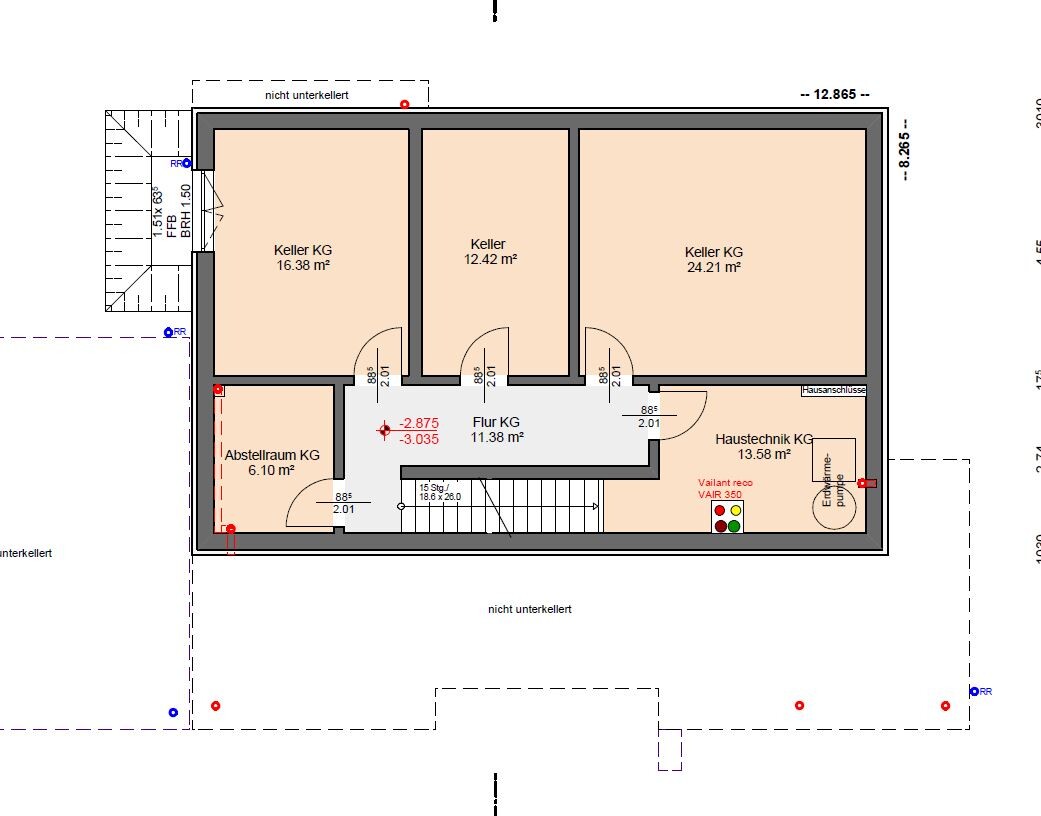
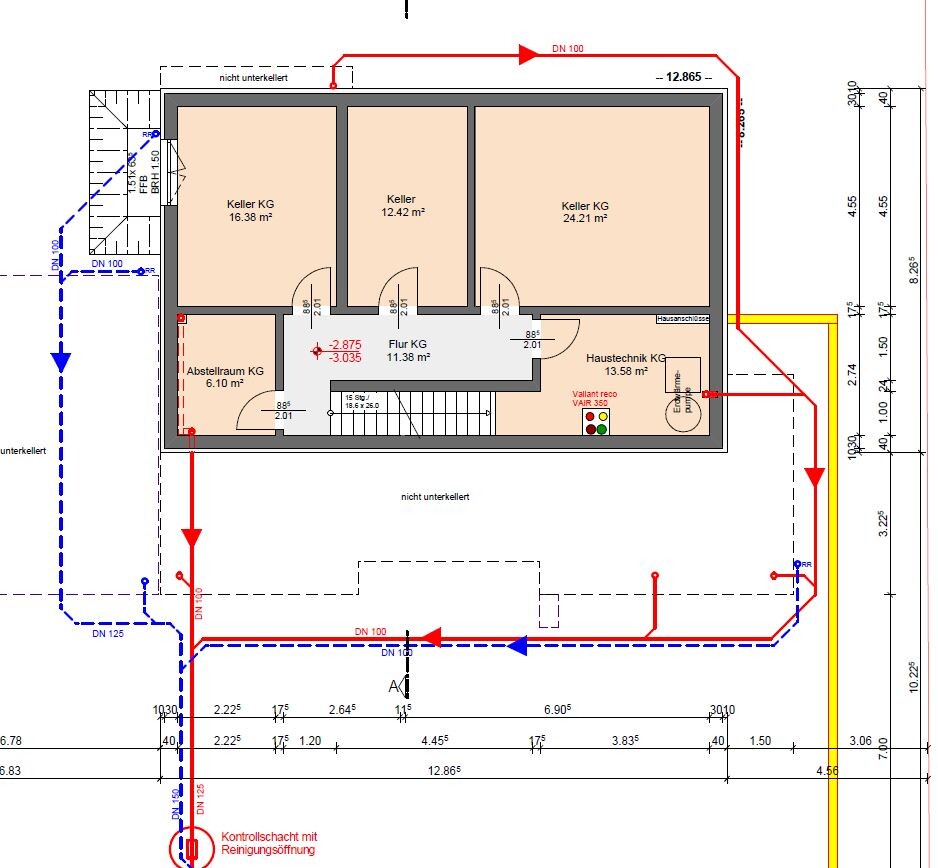
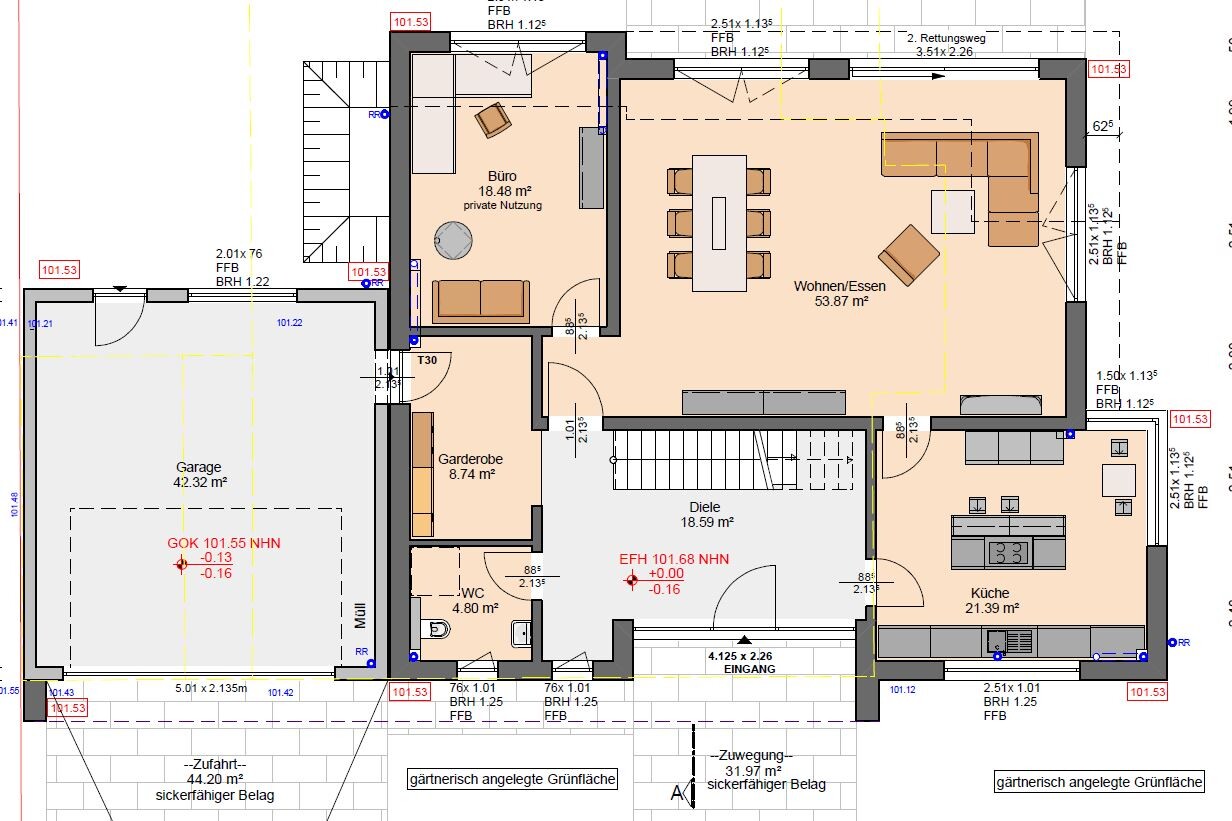
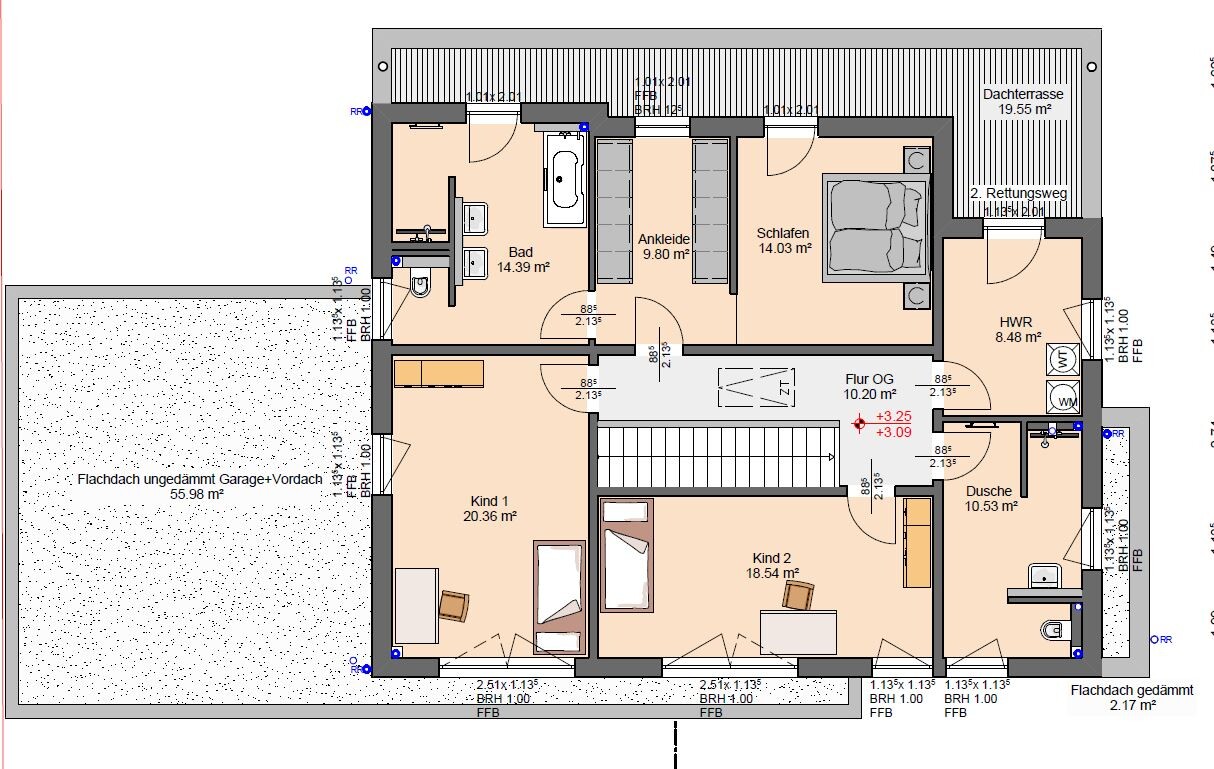
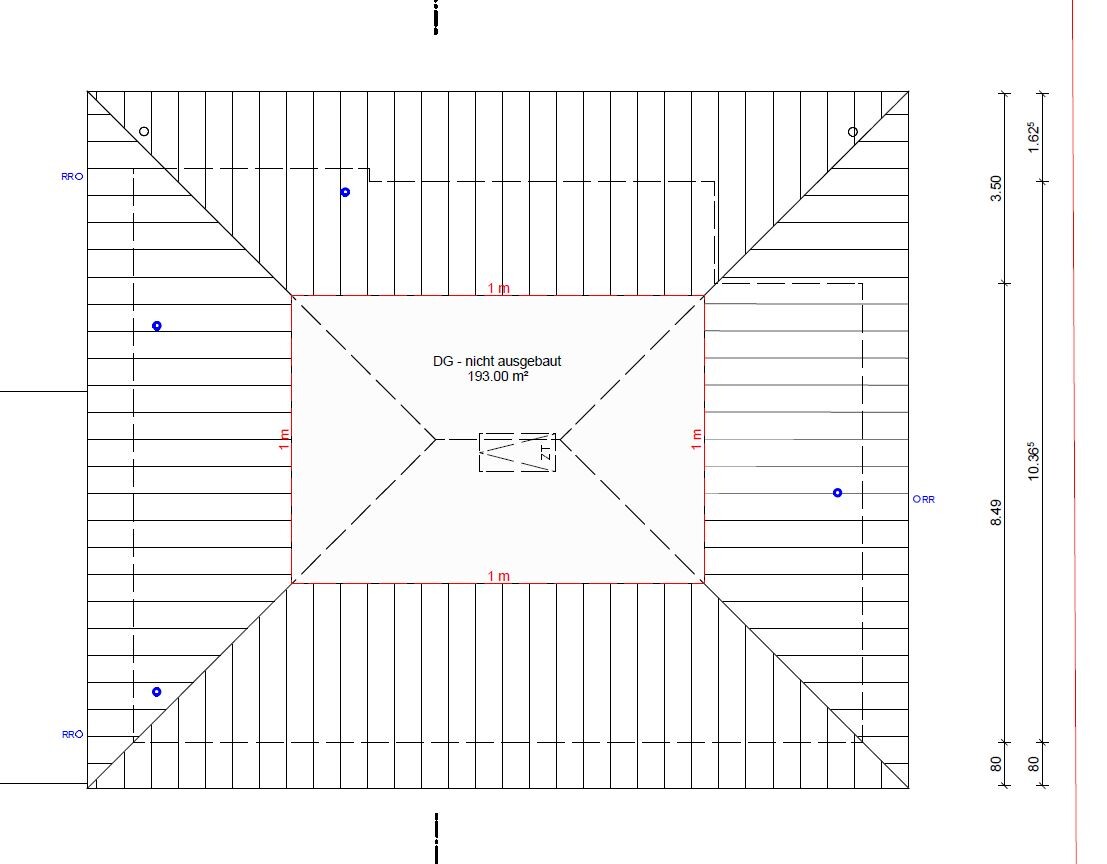
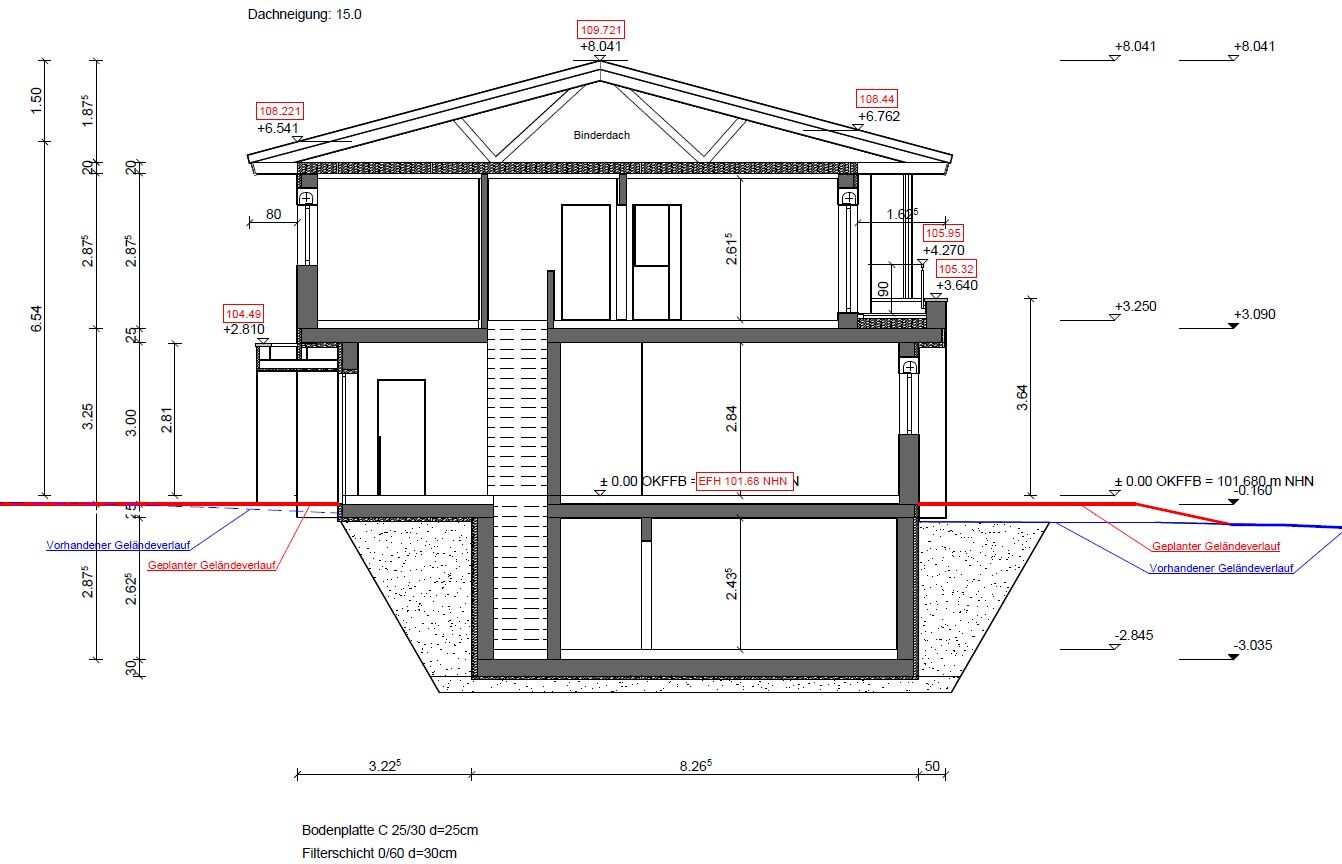

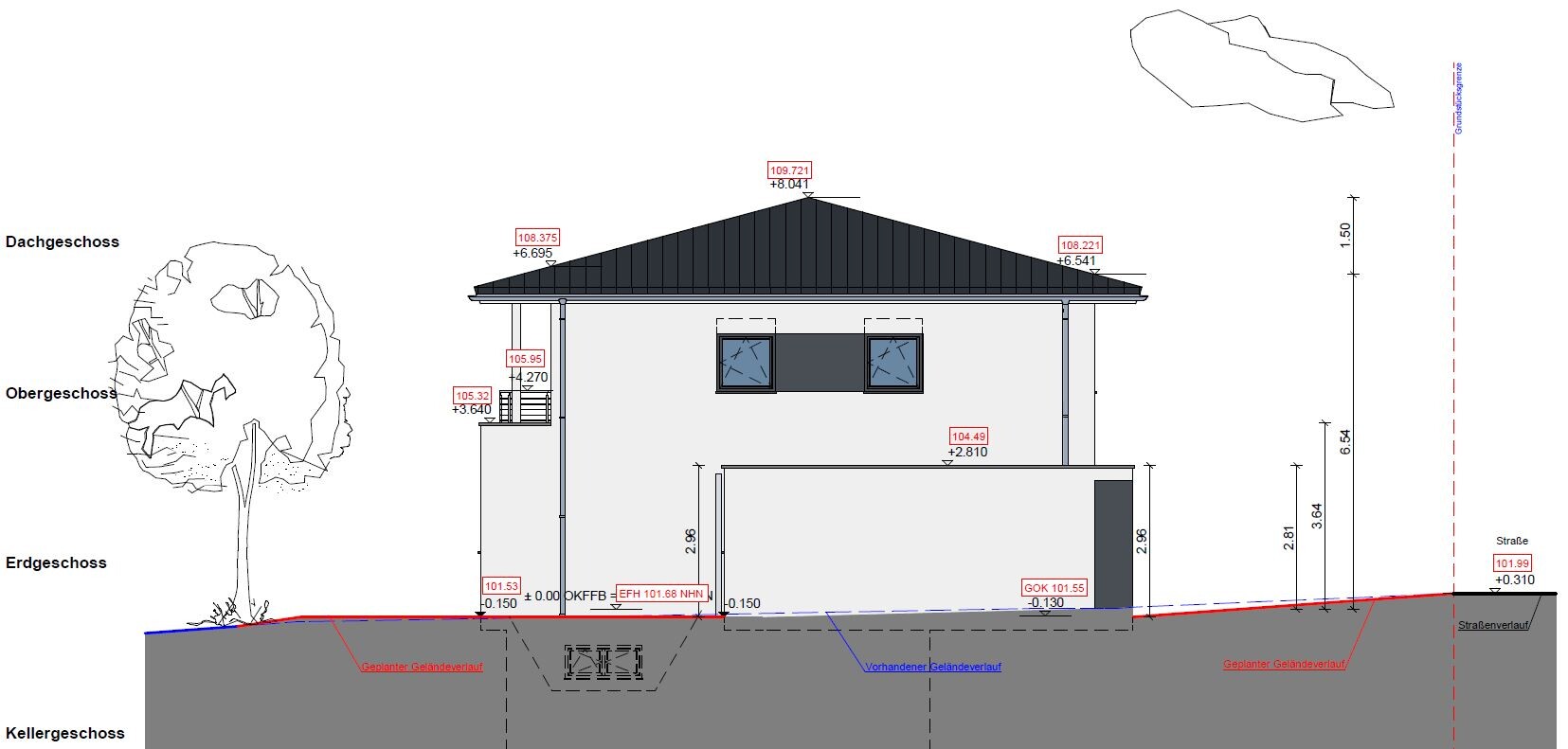
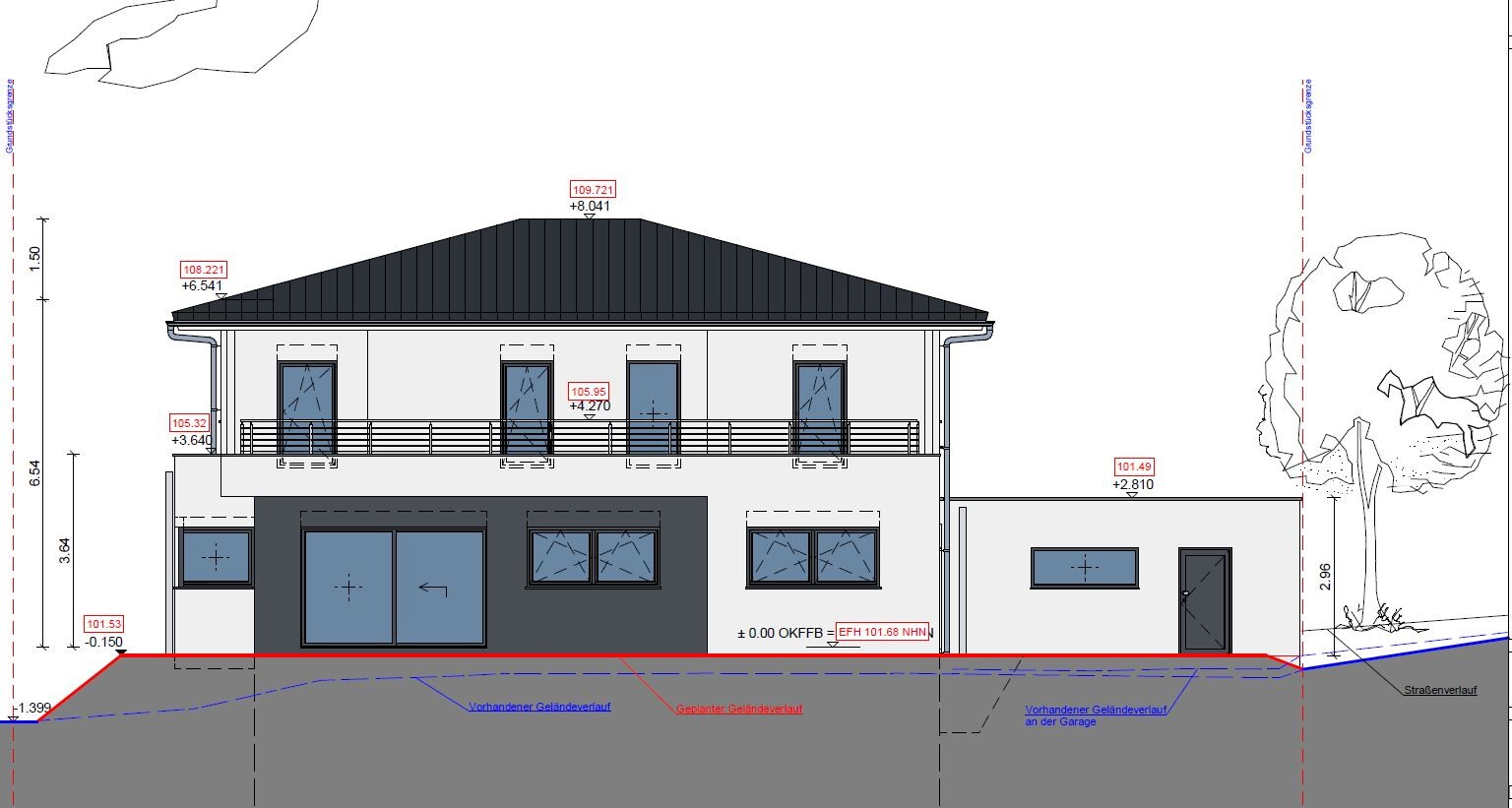
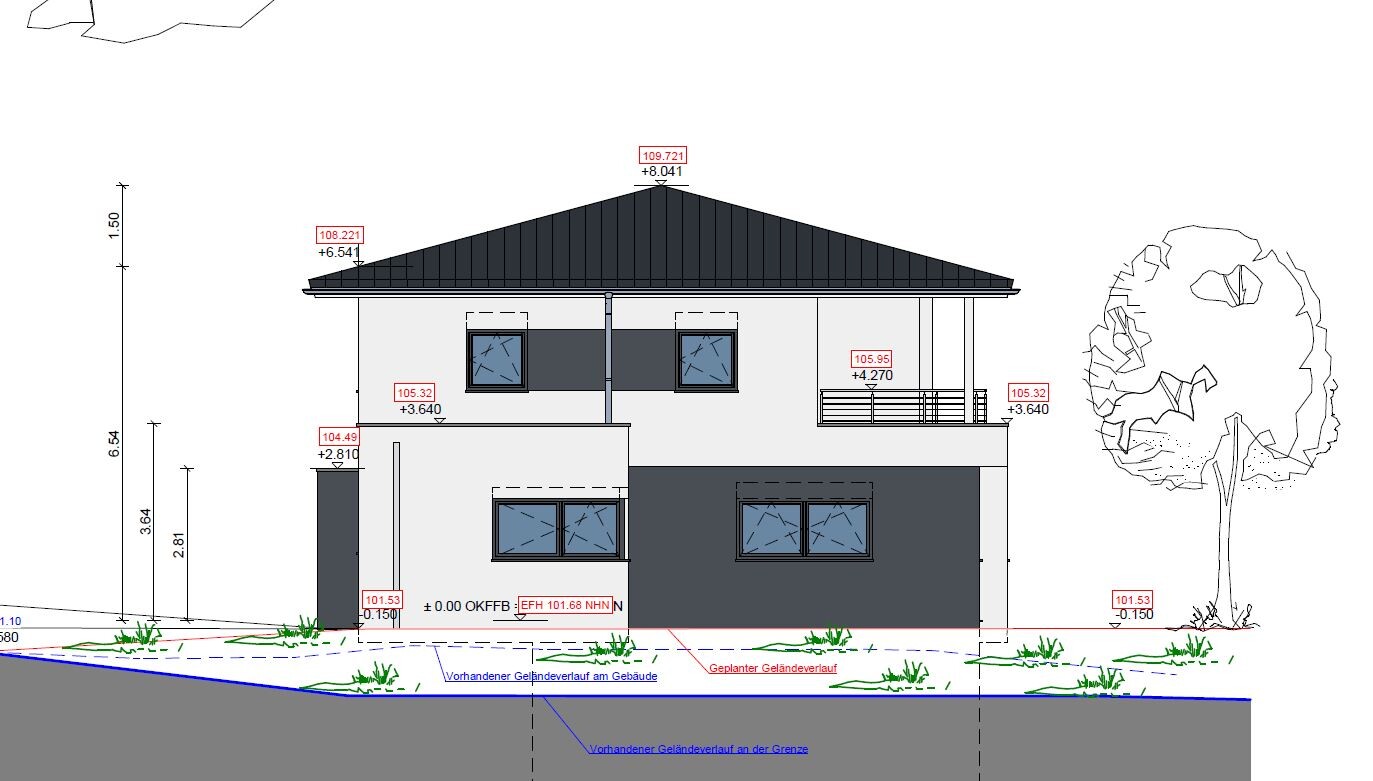
As some users have requested before, I’m now starting a new thread with the current planning of our detached house, which is about to be finalized.
These are the preliminary drawings for the building permit / planning permission application, and I have one last chance to review them and point out any issues.
It still seems to me that there is less than 1.20m (4 feet) of space between the two wardrobes in the dressing room. Or am I seeing this wrong? Apparently, the rooms on the left and right were overlooked and not adjusted accordingly.
Two Velux ceiling spotlights are still planned to illuminate the upper floor hallway.
In the basement, on the right side in the upper room, a window similar to the one on the left basement side is an option.
We still haven’t decided on the T30 fire-rated door to the garage, even though it is shown in the plans. Most likely, for safety reasons and the limited use of the kitchen at the other end of the house, we will eventually forgo it.
User 11ant pointed out that the right window in child’s room 2 is suboptimally positioned. However, this could still be changed after submitting the building permit / planning permission application. Our architect thinks moving the window to the left would negatively affect the house’s exterior appearance. We’ll have to see about that.
R.Hotzenplotz schrieb:
No. What exactly would you like to know?Whether the floor-to-ceiling window there is drawn with the correct height.
At first, I had the impression that it was drawn taller there.
But when comparing it with the other dimensions, it seems to be correct after all.
R
R.Hotzenplotz13 Jun 2018 08:33Now I’m curious to see how many centimeters (inches) they will gain by reworking the roof terrace. It should be around 10cm (4 inches) by using, among other things, higher-quality insulation.
I don’t think I can do much more at this point. Everything else would lead to unpredictable problems and risks.
I don’t think I can do much more at this point. Everything else would lead to unpredictable problems and risks.
However, it should not be forgotten that the flat roof must have a slope of at least 2 cm per 1 m (approximately 3/4 inch per 3.3 feet) toward the drainage point (and the slope should direct water away from the house).
Nothing has been planned for this so far, so it will not be implemented...
Nothing has been planned for this so far, so it will not be implemented...
This is not meant to sound arrogant, I believe that like 90% of homeowners, you simply didn’t know any better: Everything that happens here comes down to the fact that a proper architect and an execution plan were skipped. I don’t quite understand why, when building such an expensive house, you wouldn’t at least inform yourself about how planning is done and what the advantages and disadvantages of the available options are.
R
R.Hotzenplotz13 Jun 2018 11:10Lumpi_LE schrieb:
Everything happening here is because they skipped hiring a proper architect and detailed execution planning.We also wanted to build with an independent architect. We had four meetings, three of them more in-depth. Their consistent feedback was that, in the end, building with them would be significantly more expensive than the offer from the specialized concrete house provider. All three also recommended against pursuing a joint project. Their reasons were:
- The project is not large enough to be interesting for a good architect – with the construction boom, they can pick their projects and prefer to work on multi-family homes or luxury villas.
- Shortage of skilled tradespeople – several pointed out that especially here in the metropolitan area it is very difficult to find tradespeople; and if you do, they charge whatever they want, leaving no clear cost overview beforehand, making it guesswork – if you can even secure enough tradespeople at all. They said the advantage of a concrete house provider is that they have reliable tradespeople they work with long-term, and I shouldn’t underestimate that.
- All agreed that it would definitely be more expensive to go with an independent architect and individual subcontracting.
- The known disadvantages regarding warranties for individual subcontracting were also discussed.
All in all, this was not a good foundation to proceed with confidence. Who hires someone against their own advice?
Maybe it’s easier in rural areas, I don’t know. Architects already had several weeks of lead time just for a basic introductory meeting. They can afford to be selective. The same will apply to tradespeople. I see it with landscape gardeners—three weeks’ lead time for a short introductory meeting is normal.
Lumpi_LE schrieb:
Why anyone wouldn’t at least inform themselves about the planning process, or the advantages and disadvantages of the options when building such an expensive house, I don’t quite understand.As I said, we weighed the pros and cons of architect/individual subcontracting versus a specialized concrete house provider with in-house architects and studied the matter thoroughly. We were also in contact with three companies on the concrete house side.
They offered us the standard architectural services, too. Of course, you can end up with a good or bad architect in either scenario. I don’t think this model has much to do with that, although I admit that the really top architects almost never work as employees but operate independently on the open market, which means they can also now pick and choose their projects... a small vicious circle, based on my experience.
Nevertheless, I was aware from the start that as a layperson I have no chance competing against a building contractor. That’s why, even before signing the contract, I involved an expert from the association of private home builders who has accompanied the project from start to finish – reviewing and optimizing the construction contract, checking the execution planning, conducting construction monitoring for quality, and performing a professional final inspection. I feel that’s about all I can do. I also gathered a lot of input from this forum. It’s unfortunate that the expert didn’t catch the fact that 201cm (79 inches) was too tight during their review, but I can’t change that. Apparently, I missed a hint about this here in the forum as well.
I just want to say: I have informed myself, wanted to do everything properly, and didn’t want to save money on expert support, etc. – but now this issue has just fallen through the cracks.
Similar topics