
ᐅ Floor plan design shortly before submitting the building permit application
Created on: 2 Oct 2017 23:25
R
R.Hotzenplotz
Hello everyone!
As some users have requested before, I’m now starting a new thread with the current planning of our detached house, which is about to be finalized.
These are the preliminary drawings for the building permit / planning permission application, and I have one last chance to review them and point out any issues.
It still seems to me that there is less than 1.20m (4 feet) of space between the two wardrobes in the dressing room. Or am I seeing this wrong? Apparently, the rooms on the left and right were overlooked and not adjusted accordingly.
Two Velux ceiling spotlights are still planned to illuminate the upper floor hallway.
In the basement, on the right side in the upper room, a window similar to the one on the left basement side is an option.
We still haven’t decided on the T30 fire-rated door to the garage, even though it is shown in the plans. Most likely, for safety reasons and the limited use of the kitchen at the other end of the house, we will eventually forgo it.
User 11ant pointed out that the right window in child’s room 2 is suboptimally positioned. However, this could still be changed after submitting the building permit / planning permission application. Our architect thinks moving the window to the left would negatively affect the house’s exterior appearance. We’ll have to see about that.
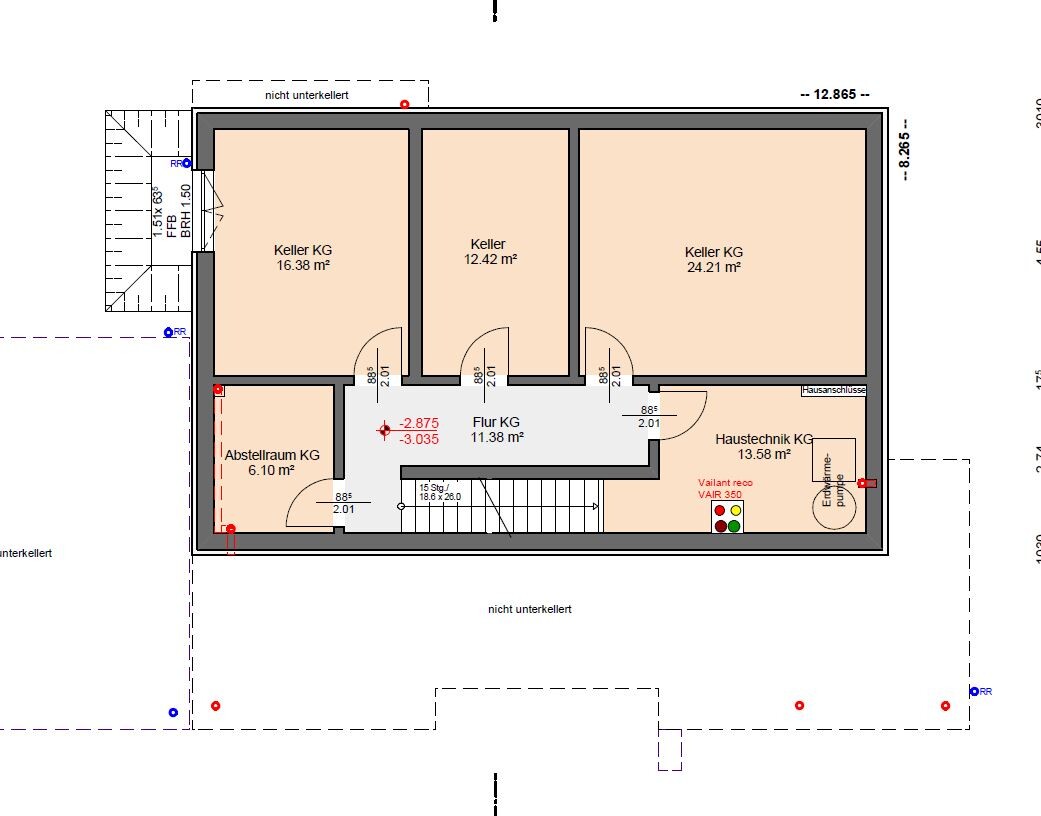
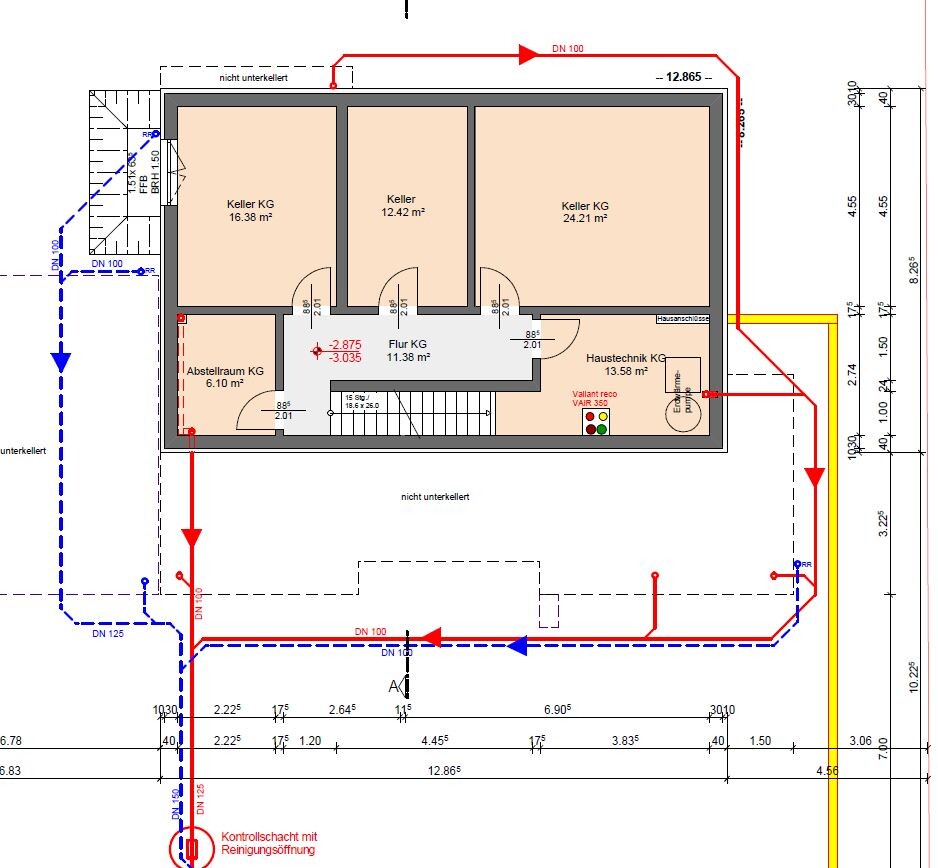
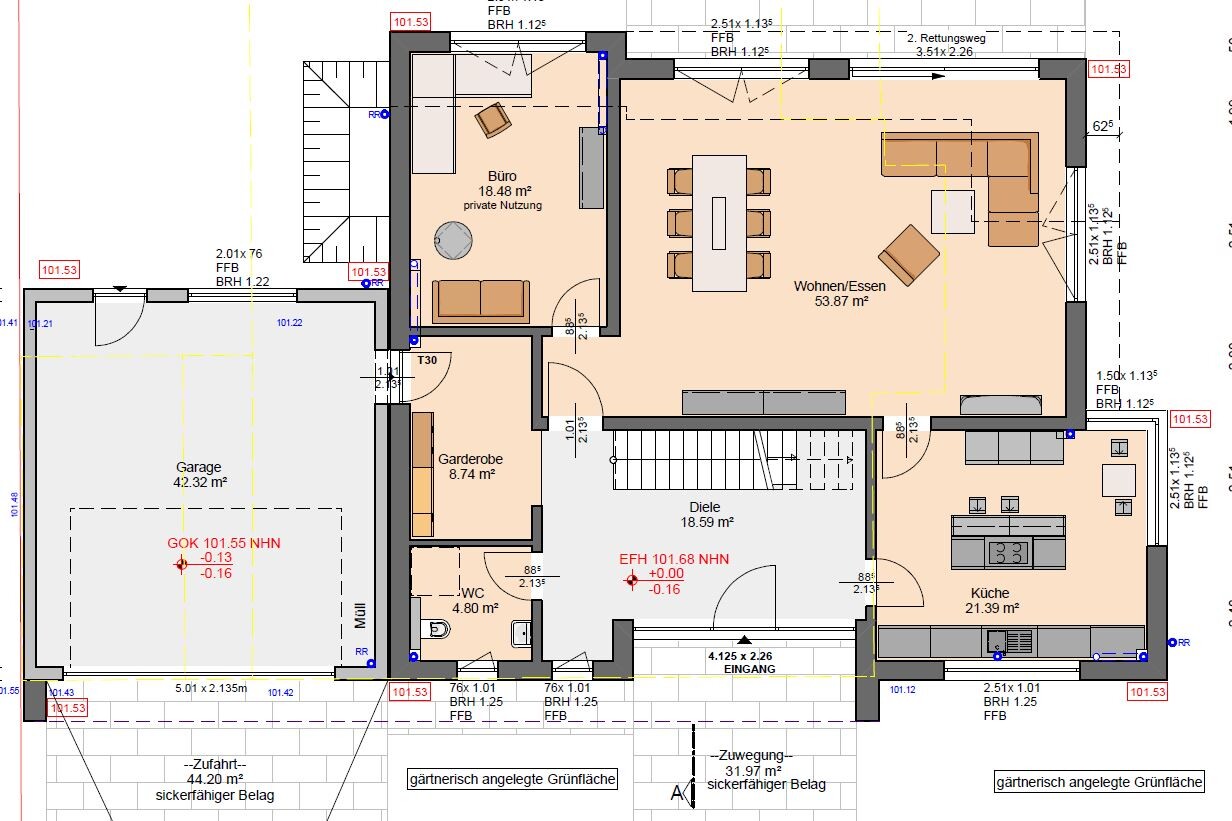
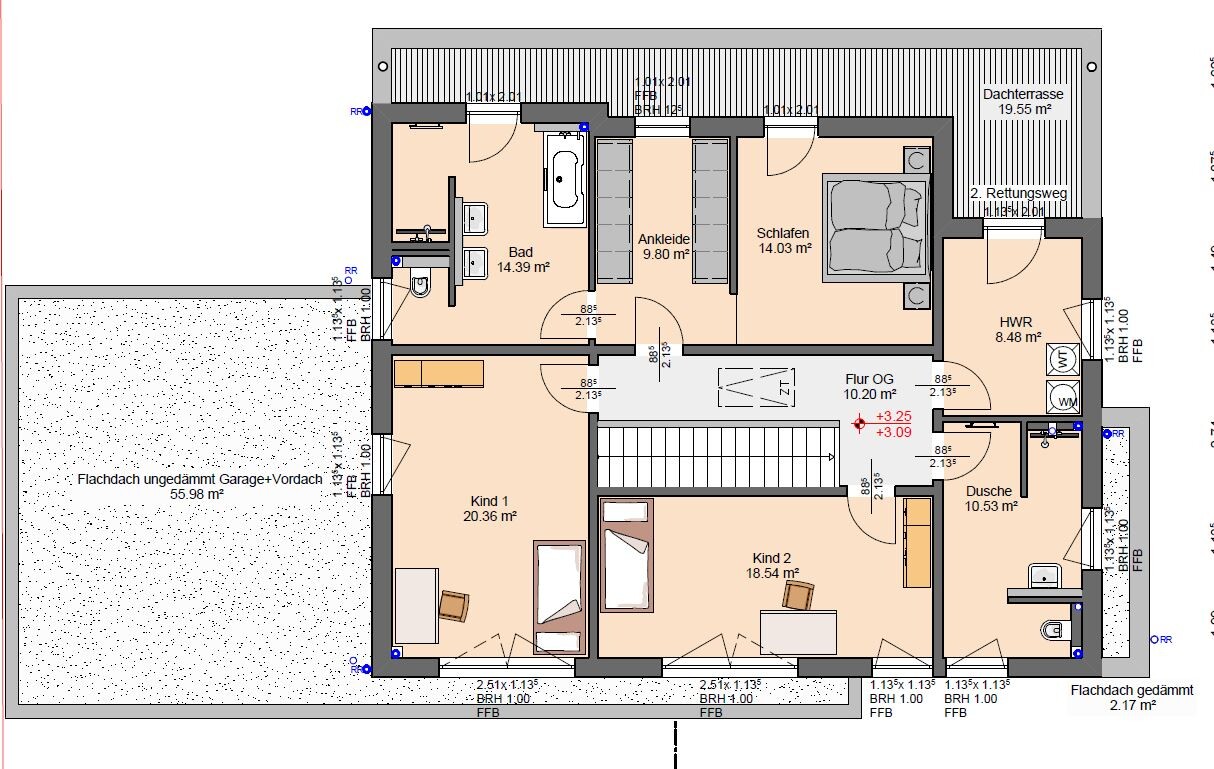
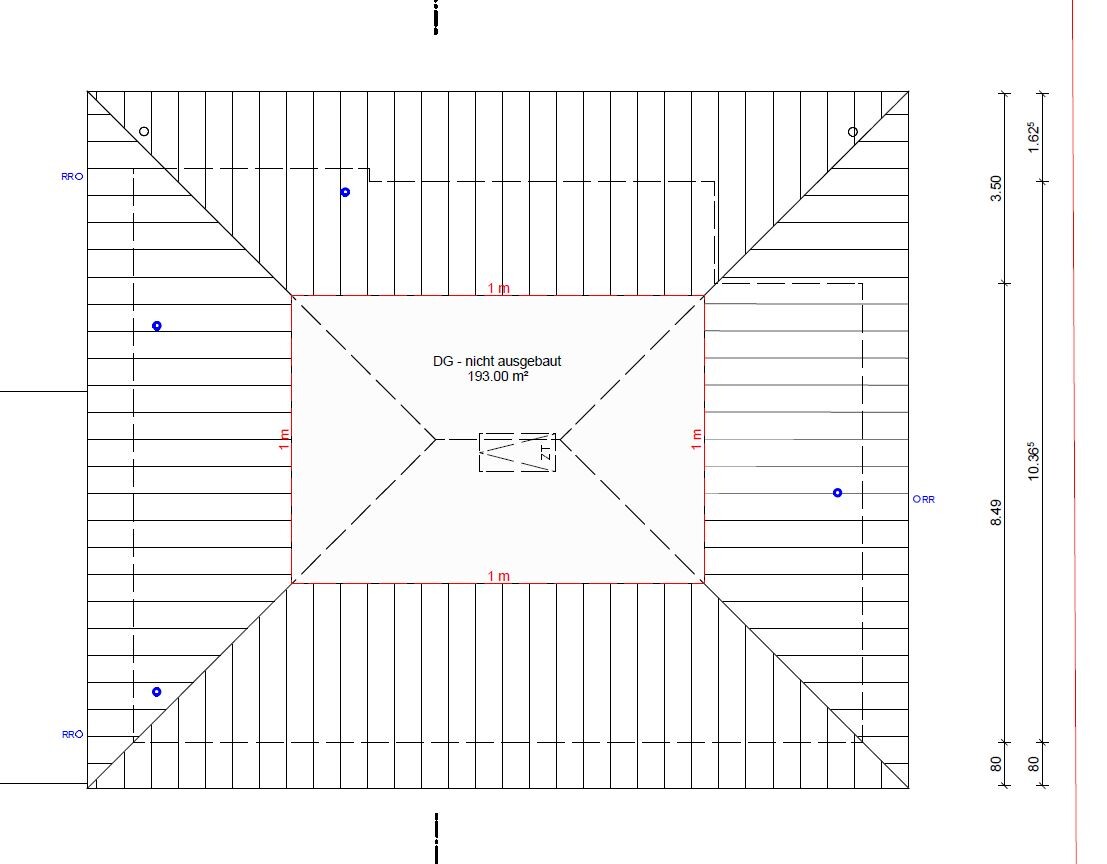
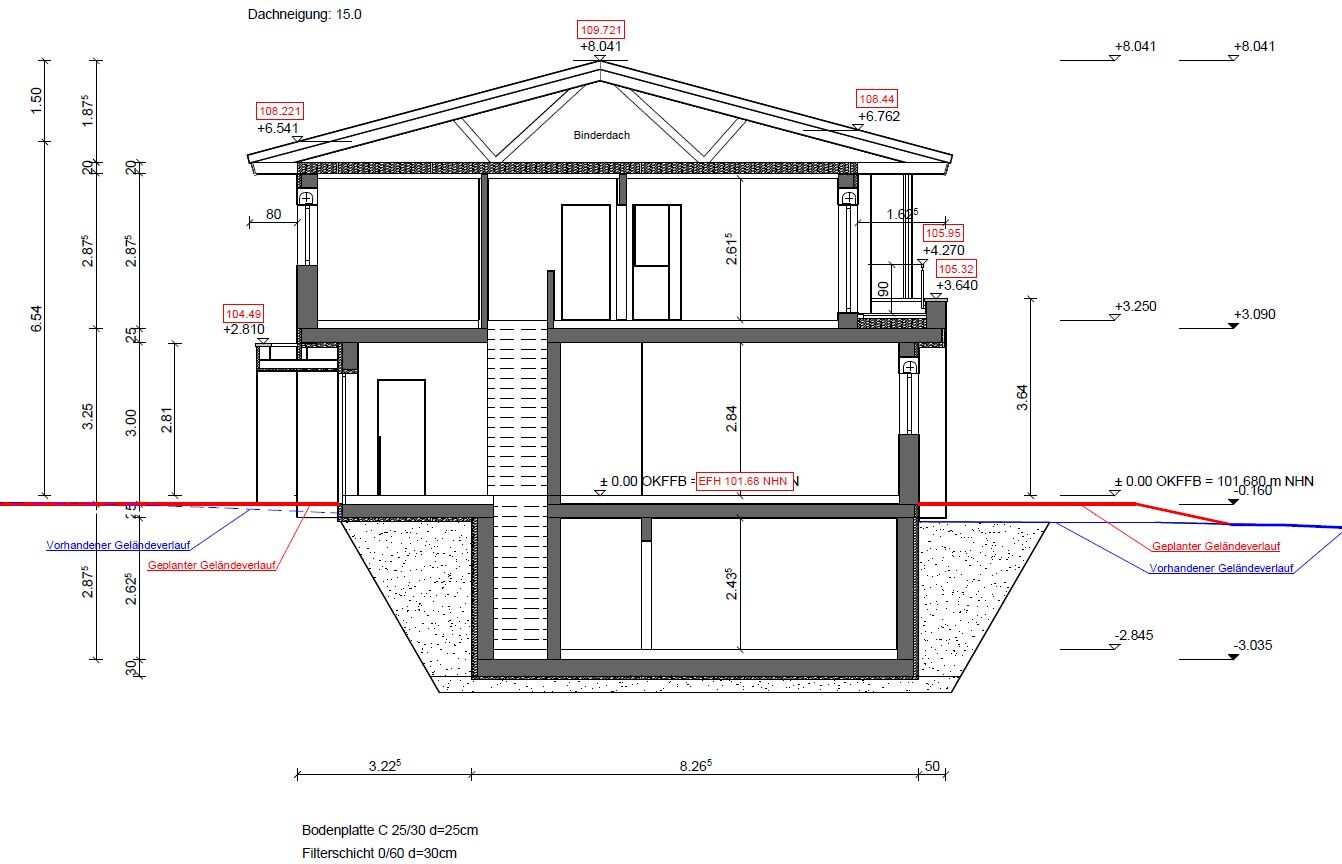

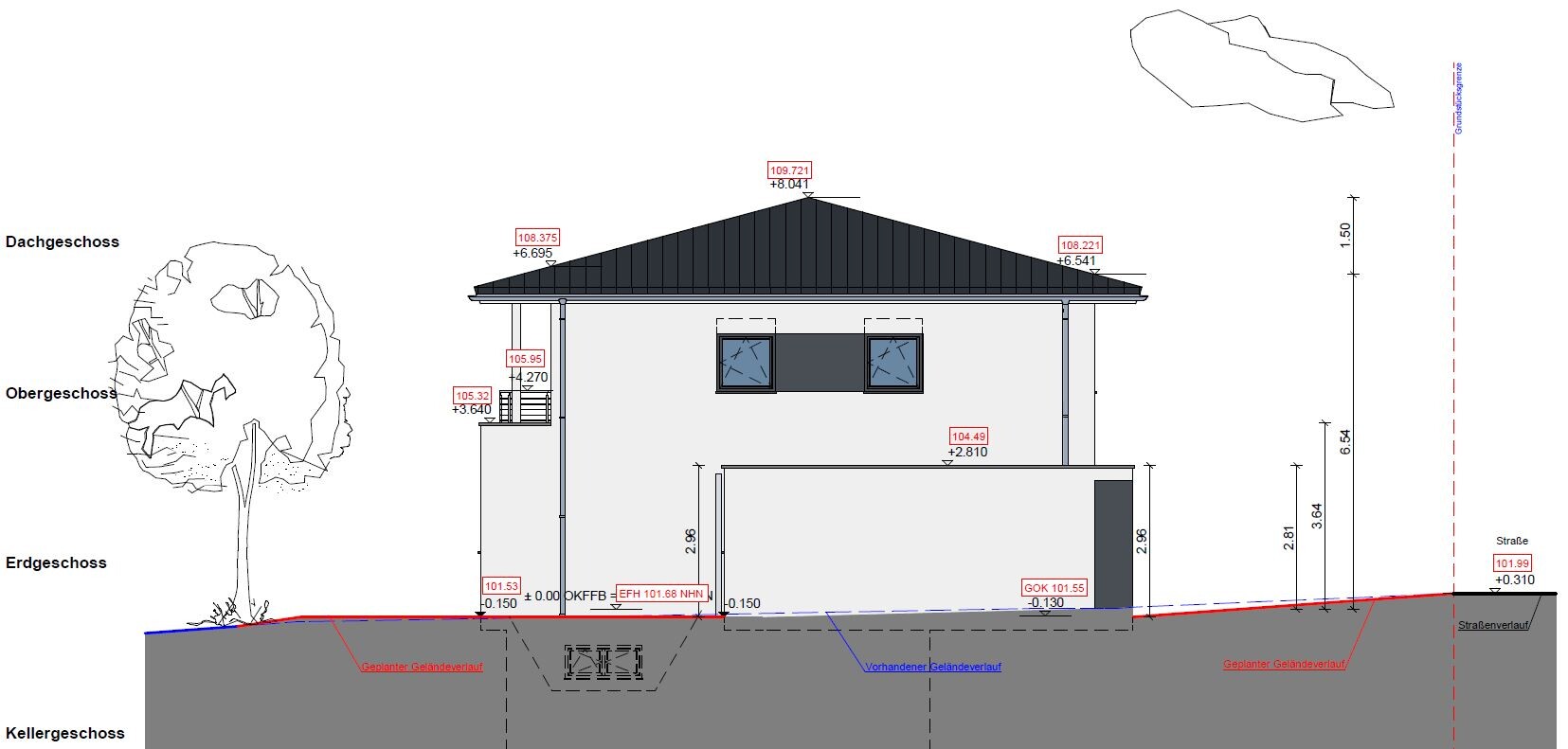
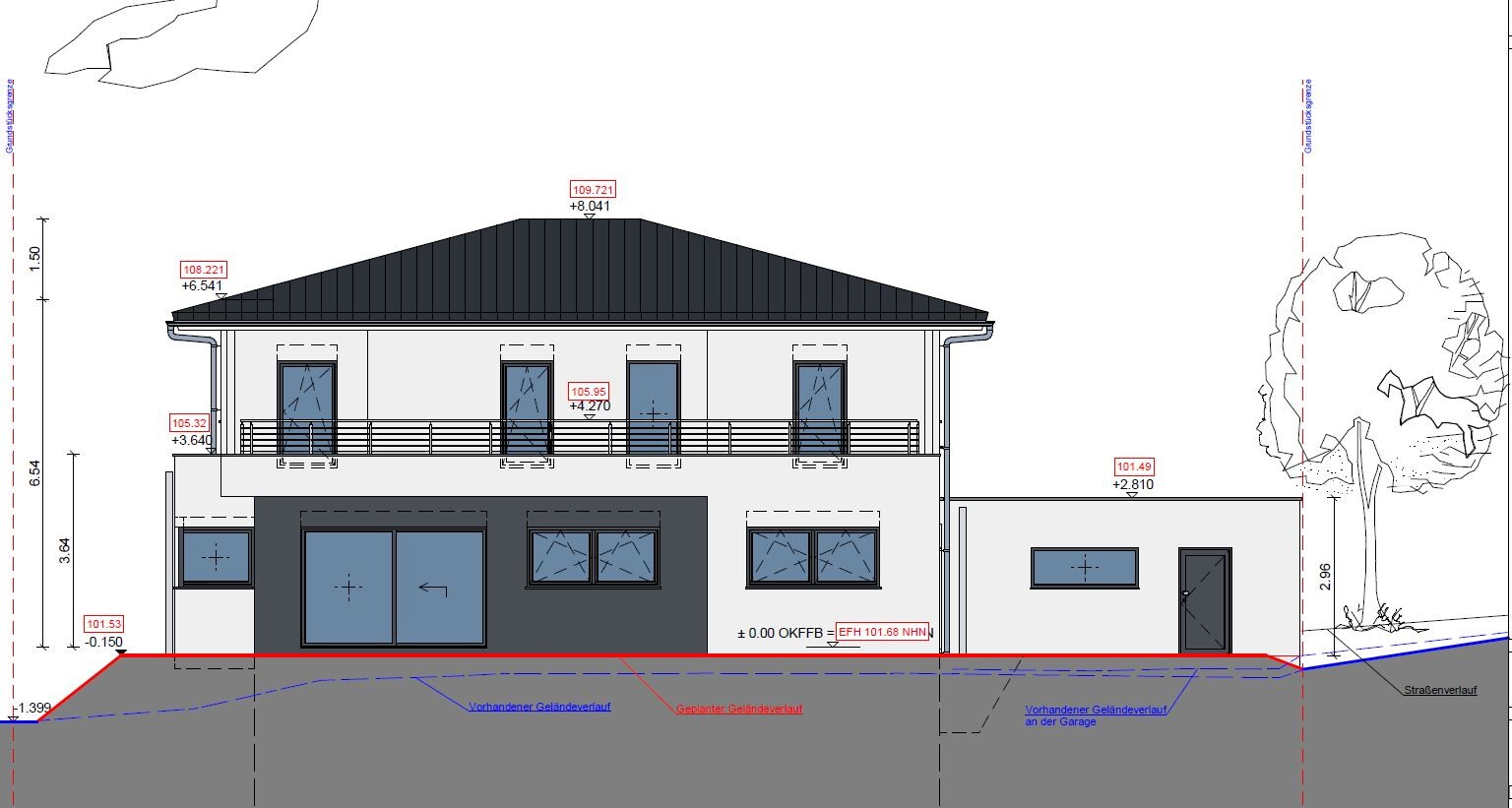
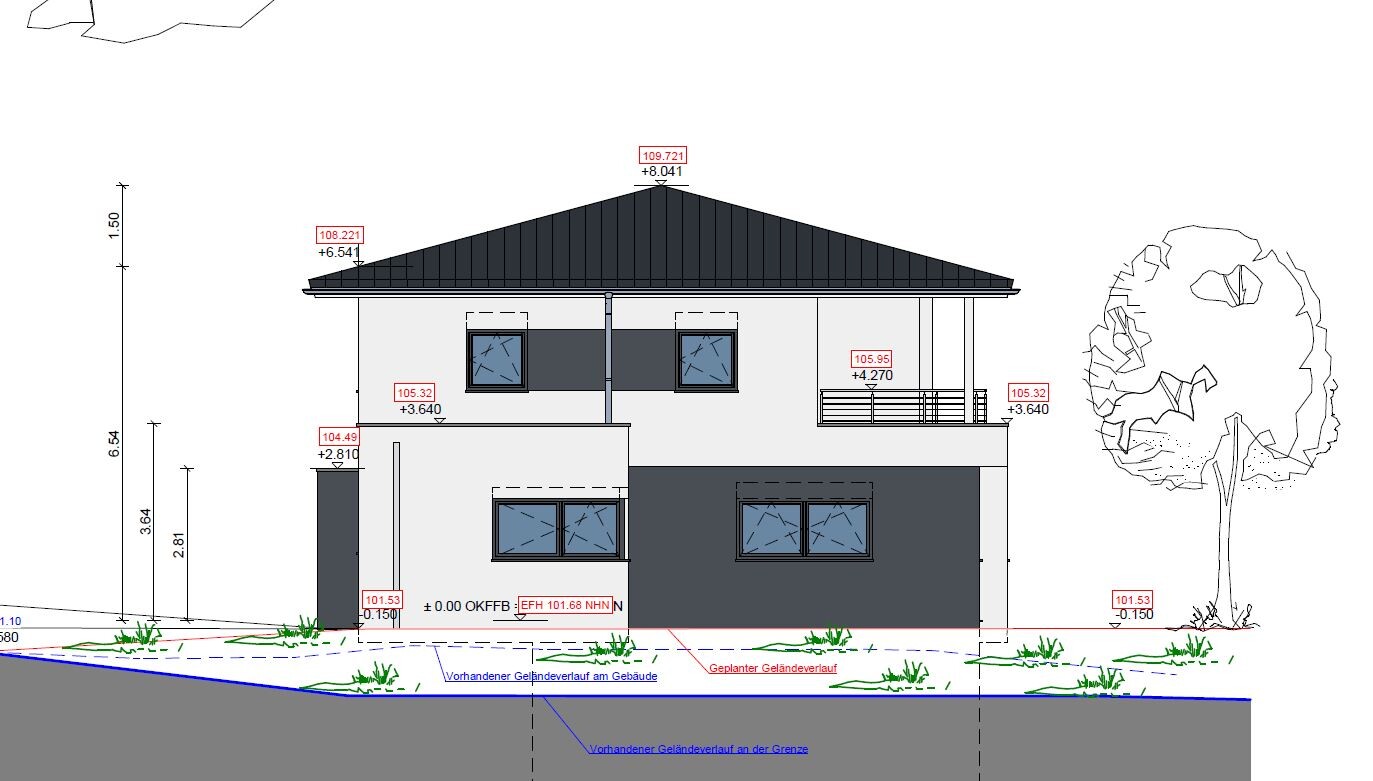
As some users have requested before, I’m now starting a new thread with the current planning of our detached house, which is about to be finalized.
These are the preliminary drawings for the building permit / planning permission application, and I have one last chance to review them and point out any issues.
It still seems to me that there is less than 1.20m (4 feet) of space between the two wardrobes in the dressing room. Or am I seeing this wrong? Apparently, the rooms on the left and right were overlooked and not adjusted accordingly.
Two Velux ceiling spotlights are still planned to illuminate the upper floor hallway.
In the basement, on the right side in the upper room, a window similar to the one on the left basement side is an option.
We still haven’t decided on the T30 fire-rated door to the garage, even though it is shown in the plans. Most likely, for safety reasons and the limited use of the kitchen at the other end of the house, we will eventually forgo it.
User 11ant pointed out that the right window in child’s room 2 is suboptimally positioned. However, this could still be changed after submitting the building permit / planning permission application. Our architect thinks moving the window to the left would negatively affect the house’s exterior appearance. We’ll have to see about that.
R.Hotzenplotz schrieb:
I also find the contract wording ambiguous. They write "hereby" (because of the 201cm (79 inches)?) a 15cm (6 inches) step is created.
Why does a step result from a specific door height?
QUOTE]
1. The 15 cm (6 inches) step likely refers to the requirements of DIN 18195, according to which floor-to-ceiling windows are considered a form of building waterproofing at the property boundary. This step of 15 cm (6 inches) must be constructed — or for barrier-free exits as an exception, a special design with a drainage channel in front of the exit is used, which compensates analogously. The purpose of both is to ensure that the waterproofing is applied high enough to prevent water accumulation and hydrostatic pressure.The logical connection "hereby" in the above wording is incorrect; the correct phrasing would be "with a step of 15 cm (6 inches)."
2. The plan, not the text, should include a legend indicating the reference point for all dimensions or provide related information, often boldly noting that all "structural dimensions must be checked on site."
3. I do not necessarily see this as a design error since construction was carried out as (erroneously) ordered, so target = actual. Unfortunately, however, the client might not have been sufficiently informed about this mistake (a matter for dispute). It is different, though, if this error prevents compliance with other building regulations; then, this would represent a deviation from the recognized technical standards that requires clarification.
4. Assuming there is no design error because the order was incorrectly but freely approved, there is also no defect, and therefore no liability on the general contractor (GC). In an architect’s contract, which does not apply here, the client must accept design errors of their architect, whom they appoint as their vicarious agent, upon approval. How this works with a GC, I have not quickly found out. The planning is on a different side, and the GC is responsible for delivering “one complete, functioning house” — but only “as ordered” (exception: duty to inform, see above).
In short: Check whether a correction is technically still possible and, if in doubt, be prepared to invest money in the correction. A passage height of 184 cm (72 inches) will not be satisfactory.
R
R.Hotzenplotz12 Jun 2018 11:47I just came back from the construction site. There are a lot of updates.
First of all, the biggest concern has been eased—it's actually possible to walk through upright. Despite the low passage height of the window, you really don’t hit your head on the threshold without jumping.
This man is about 4-5 cm (2 inches) taller than I am:
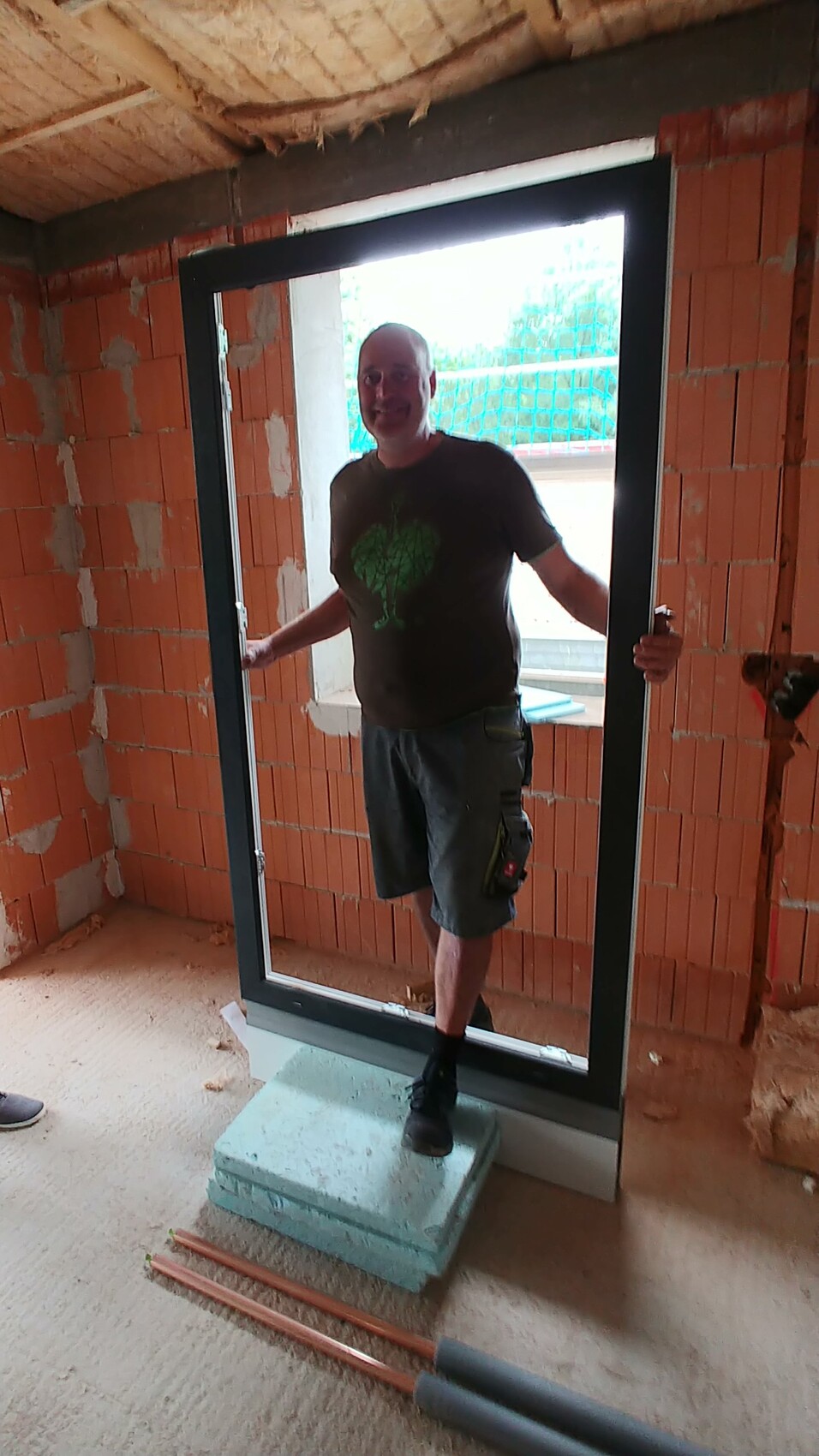
So I think the biggest worry is now resolved.
That said, it’s not exactly aesthetically pleasing.
This is roughly how the space will look later (this is the utility room):
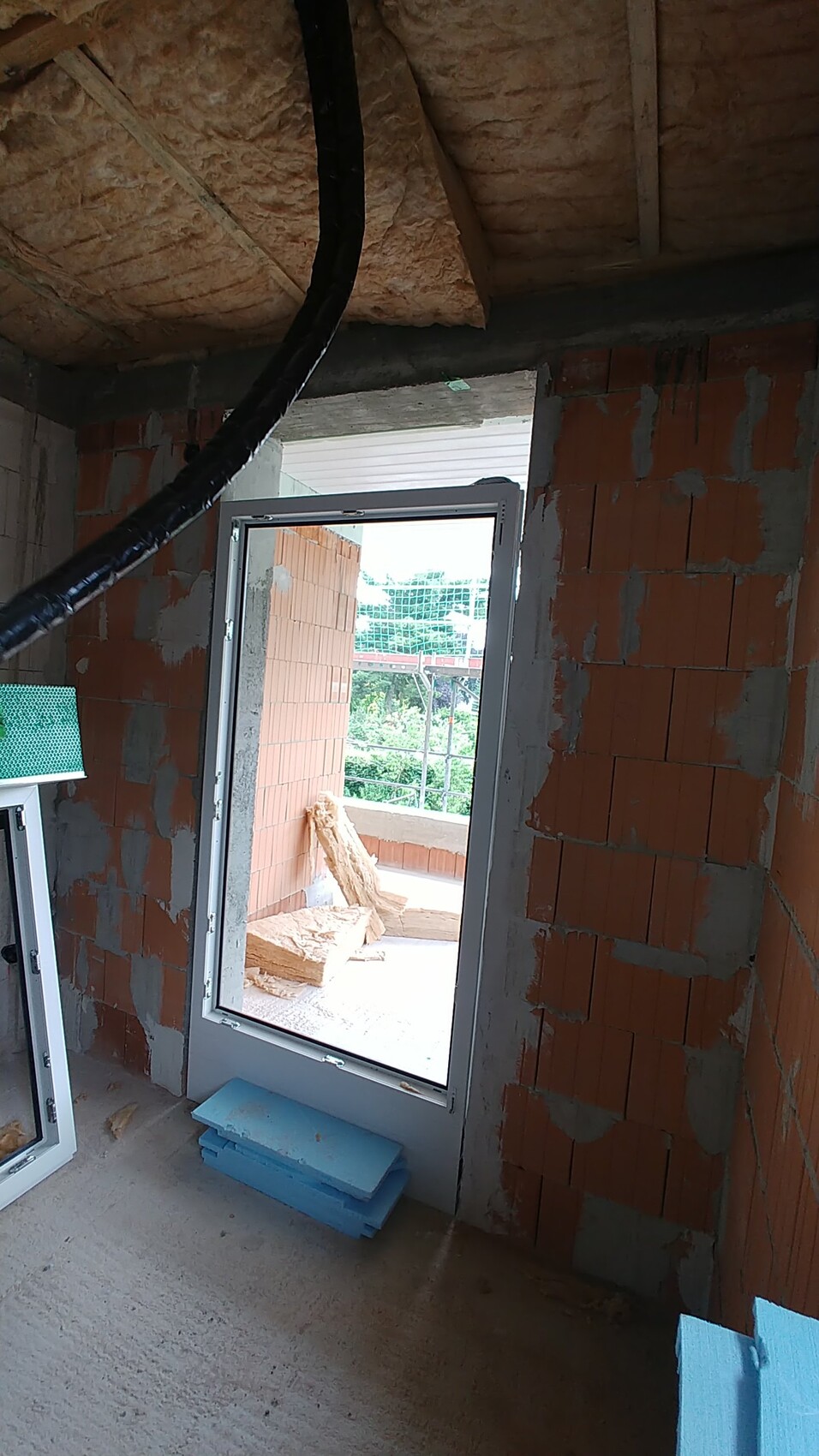
In the top right corner you can see a marking indicating where the ceiling height will be when zooming in (a bit hard to see):
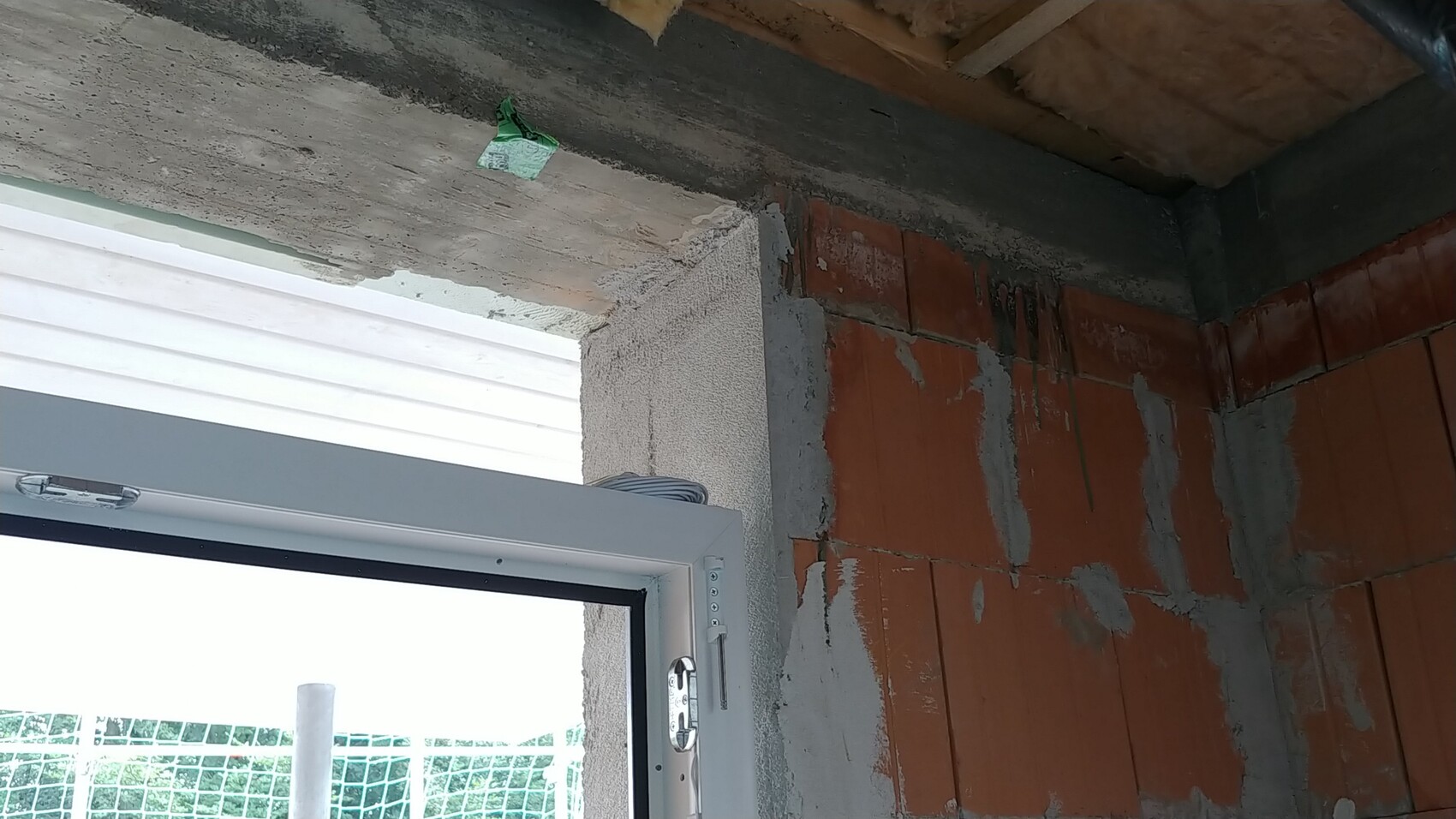
And here are measurements of the window elements:
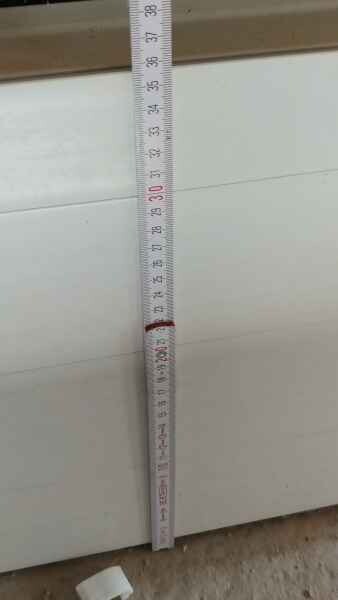
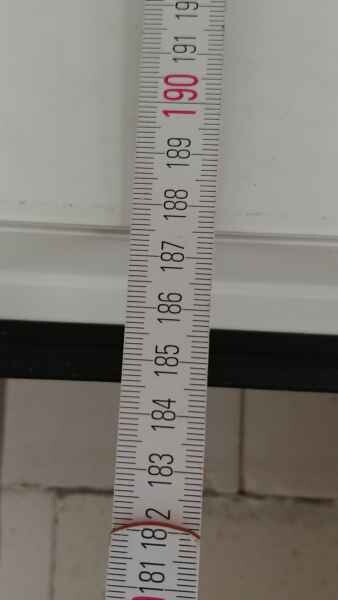
(passage height)
What also surprised me was the parapet height in the walk-in closet area with the fixed window element. According to the construction plans it’s supposed to be 12.5 cm (5 inches), but I measured 27 cm (11 inches) on the shell construction:
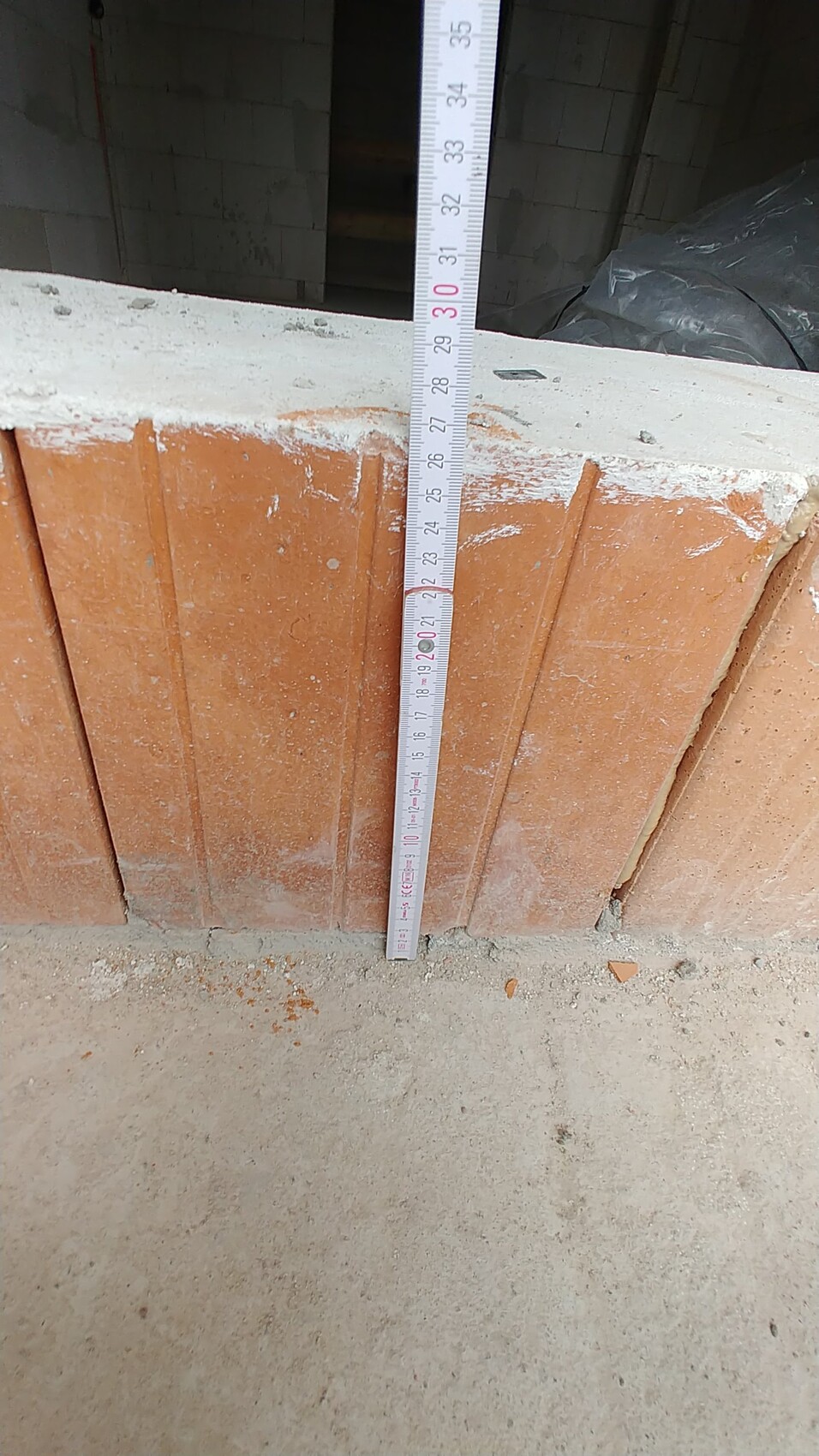
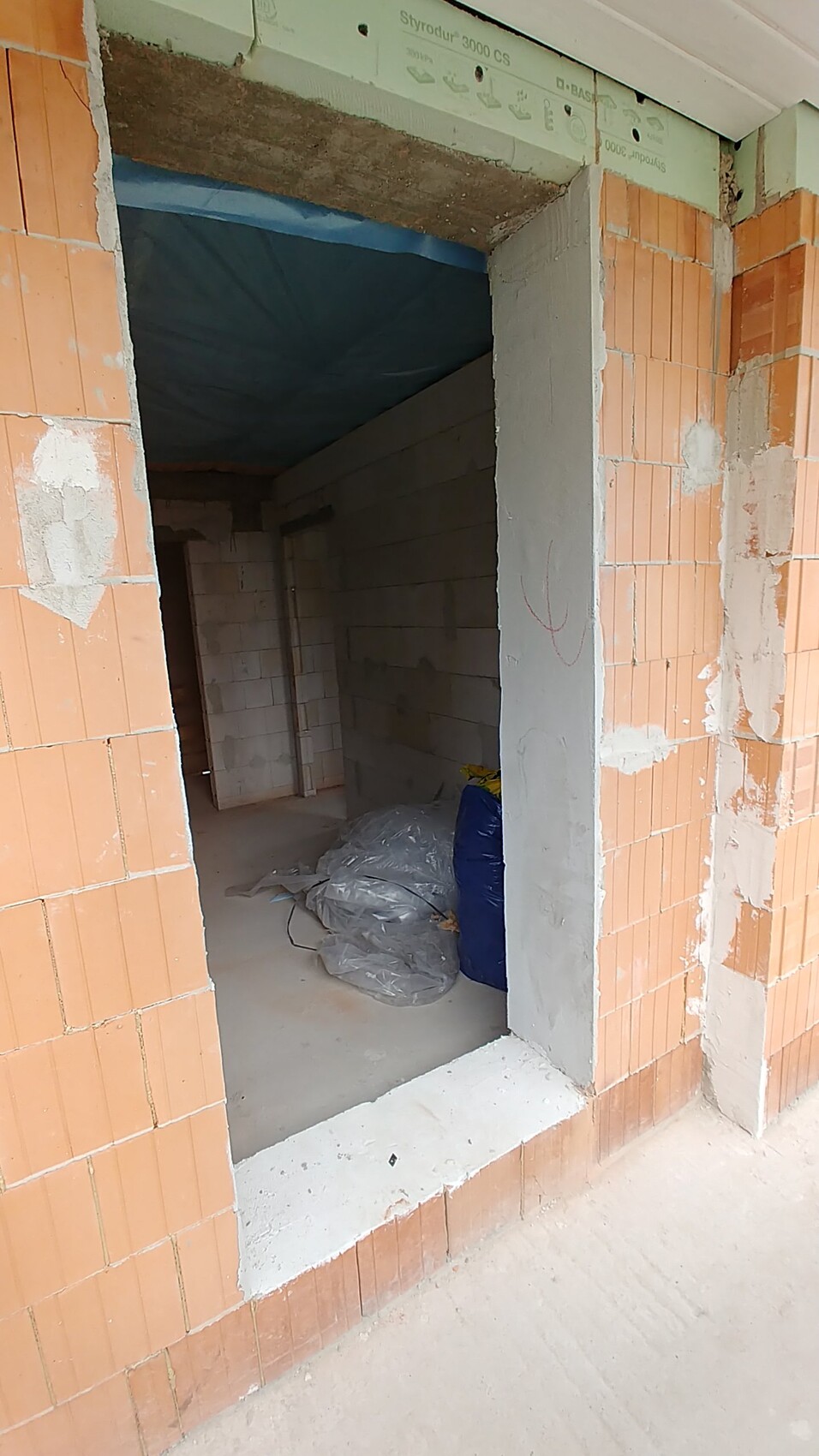
Above the threshold, there are 201 cm (79 inches) to the top.
Here are some more photos of the windows from the house.
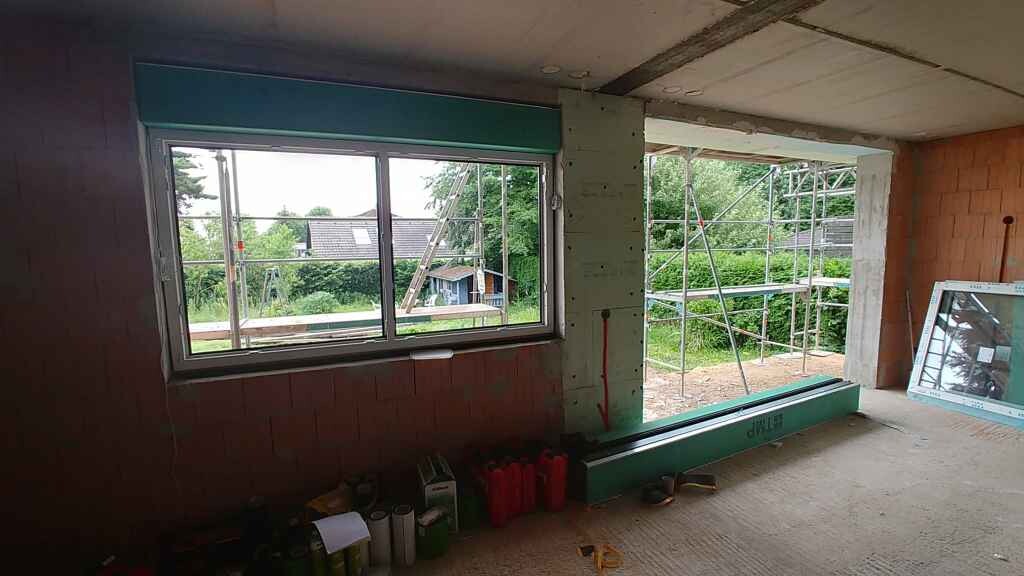
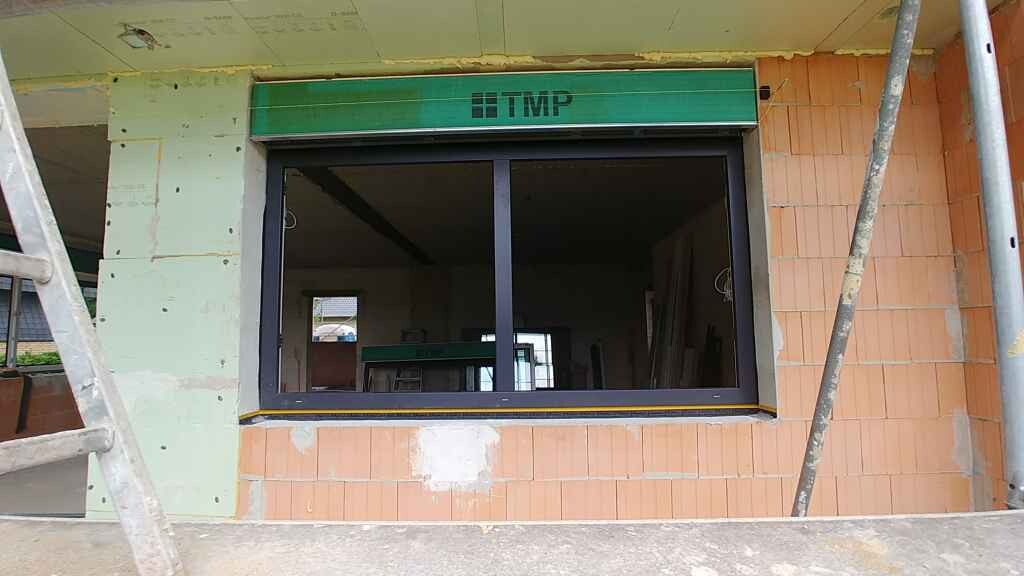

So, what are the options? Difficult! So far, I don’t see any construction done against the contract or the recognized rules of technology. Therefore, a solution would probably have to be an economical and procedural agreement with the general contractor (GC). But that is very challenging.
The unwanted patio doors, while standard sizes, are made with laminated safety glass (VSG), Maco Tronic fittings, RC2 security rating, and enhanced sound insulation class SK III. This is not something the GC can simply use on the next project, and the window manufacturer is unlikely to take this on either. Of course, I could offer that they install all these extras for another builder free of charge and just charge me the corresponding additional costs for the extras on the old windows, plus the additional costs for the new, larger windows—perhaps even with a generous margin for the entire effort. The problem, I think, will be arranging for the use of the old windows. In the first discussion with the GC, they indicated they would try to resolve this if needed, but costs in the five-digit range should be planned. Whether that makes sense, I doubt.
I was also told that taller elements would no longer match the other window lintels. The utility room would actually be the only room where this would be immediately noticeable since it has two windows. Even in the master bathroom, which also has two windows, this would not necessarily be an issue because one window is largely hidden by an interior wall and there is no direct sightline between them. So on that floor, there would be different lintels, but at least the rear facade on the upper floor would be uniform.
All in all, I think I now have to accept it as it is. It would still be possible to change it from a procedural perspective, but certainly only with unreasonable additional costs.
First of all, the biggest concern has been eased—it's actually possible to walk through upright. Despite the low passage height of the window, you really don’t hit your head on the threshold without jumping.
This man is about 4-5 cm (2 inches) taller than I am:
So I think the biggest worry is now resolved.
That said, it’s not exactly aesthetically pleasing.
This is roughly how the space will look later (this is the utility room):
In the top right corner you can see a marking indicating where the ceiling height will be when zooming in (a bit hard to see):
And here are measurements of the window elements:
(passage height)
What also surprised me was the parapet height in the walk-in closet area with the fixed window element. According to the construction plans it’s supposed to be 12.5 cm (5 inches), but I measured 27 cm (11 inches) on the shell construction:
Above the threshold, there are 201 cm (79 inches) to the top.
Here are some more photos of the windows from the house.
So, what are the options? Difficult! So far, I don’t see any construction done against the contract or the recognized rules of technology. Therefore, a solution would probably have to be an economical and procedural agreement with the general contractor (GC). But that is very challenging.
The unwanted patio doors, while standard sizes, are made with laminated safety glass (VSG), Maco Tronic fittings, RC2 security rating, and enhanced sound insulation class SK III. This is not something the GC can simply use on the next project, and the window manufacturer is unlikely to take this on either. Of course, I could offer that they install all these extras for another builder free of charge and just charge me the corresponding additional costs for the extras on the old windows, plus the additional costs for the new, larger windows—perhaps even with a generous margin for the entire effort. The problem, I think, will be arranging for the use of the old windows. In the first discussion with the GC, they indicated they would try to resolve this if needed, but costs in the five-digit range should be planned. Whether that makes sense, I doubt.
I was also told that taller elements would no longer match the other window lintels. The utility room would actually be the only room where this would be immediately noticeable since it has two windows. Even in the master bathroom, which also has two windows, this would not necessarily be an issue because one window is largely hidden by an interior wall and there is no direct sightline between them. So on that floor, there would be different lintels, but at least the rear facade on the upper floor would be uniform.
All in all, I think I now have to accept it as it is. It would still be possible to change it from a procedural perspective, but certainly only with unreasonable additional costs.
R.Hotzenplotz schrieb:
Despite the low headroom of the window, you really don’t hit your head on the sill unless you jump. Well, what kind of exterior surface is planned for the roof terrace?
It will probably also be raised by about 15-20 cm (6-8 inches)—similar to the screed simulation inside using blue EPS foam, as shown in the picture—supported by a wooden substructure, tile battens, or similar.
That way, you’ll be standing higher there as well... and bang.
R
R.Hotzenplotz12 Jun 2018 12:02Some more pictures from the construction site today.
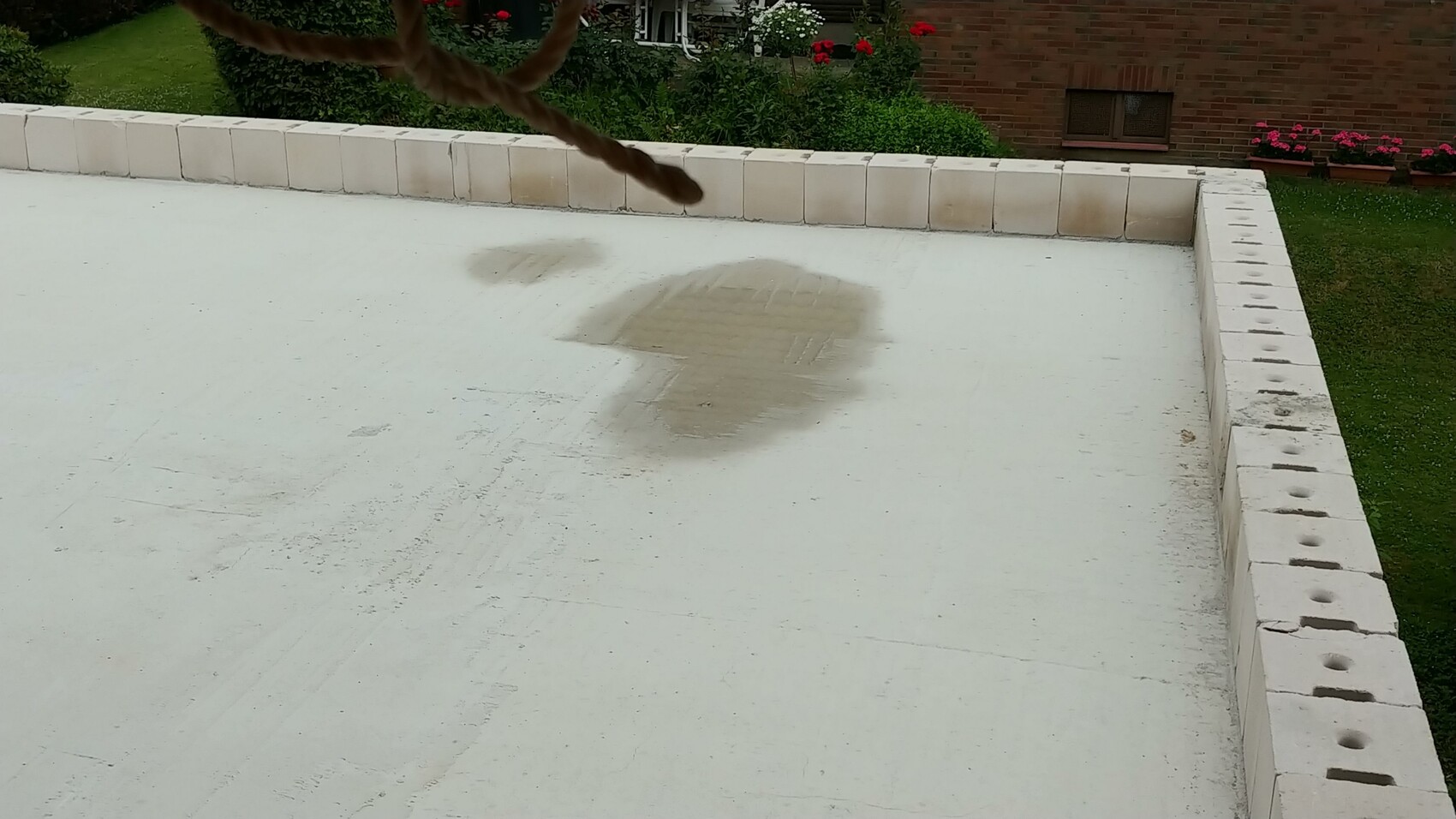
Water on the garage roof. Should action be taken here?
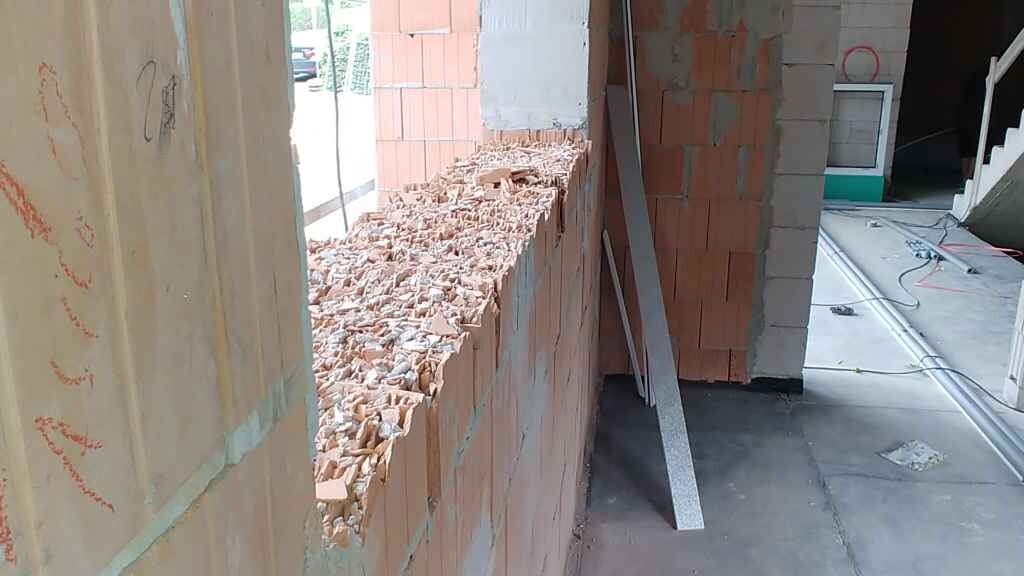
Apparently, they noticed that there is an issue with the parapet height, as it has been asked about several times already.
By the way, here is the photo from the utility room showing the ceiling marking. In this photo, it is not visible.
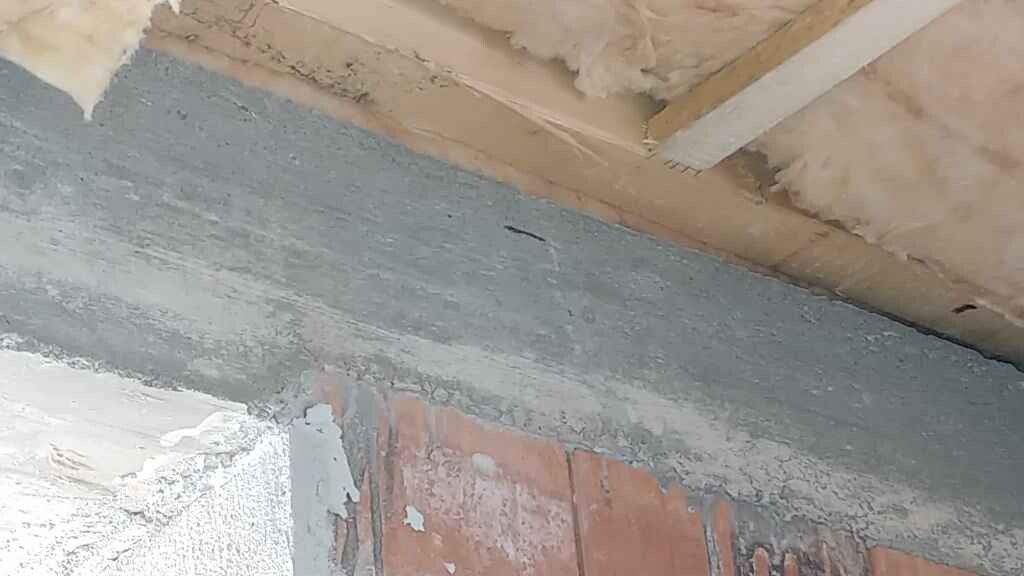
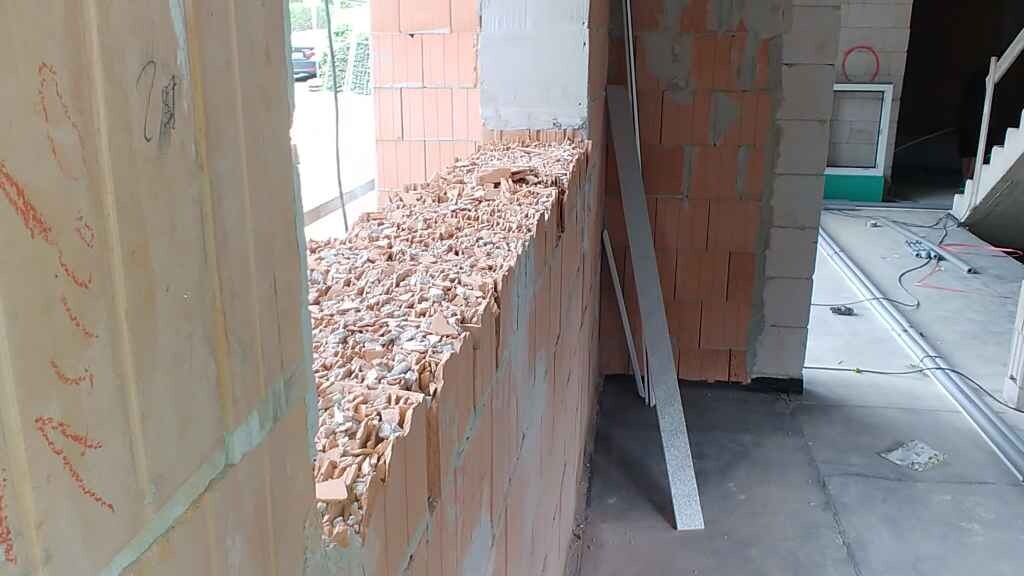
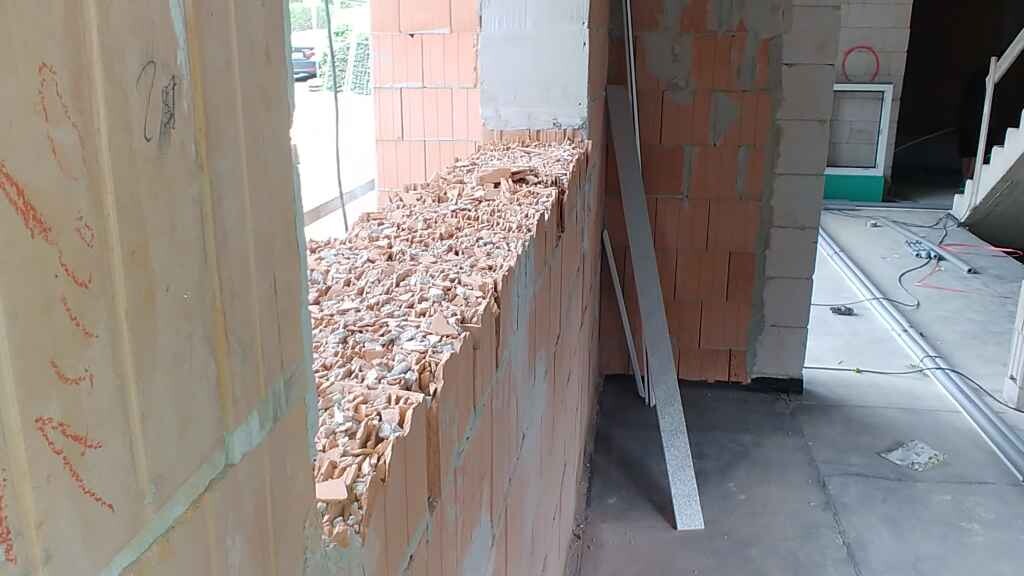
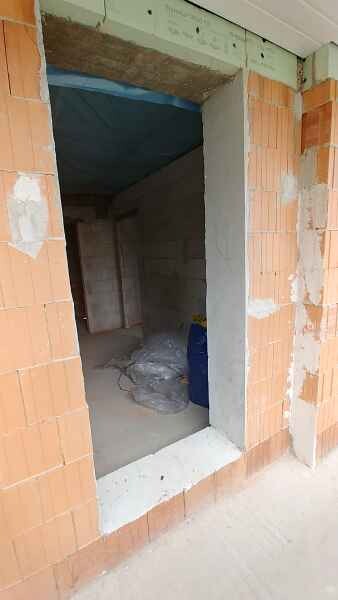
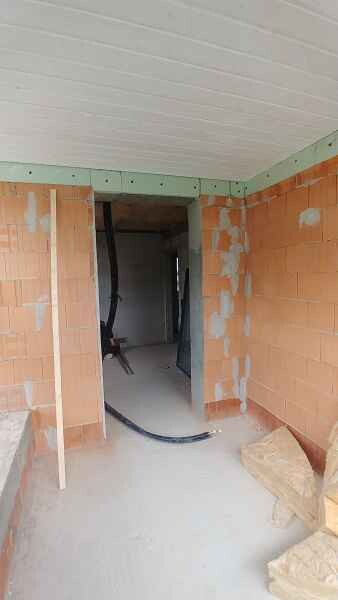
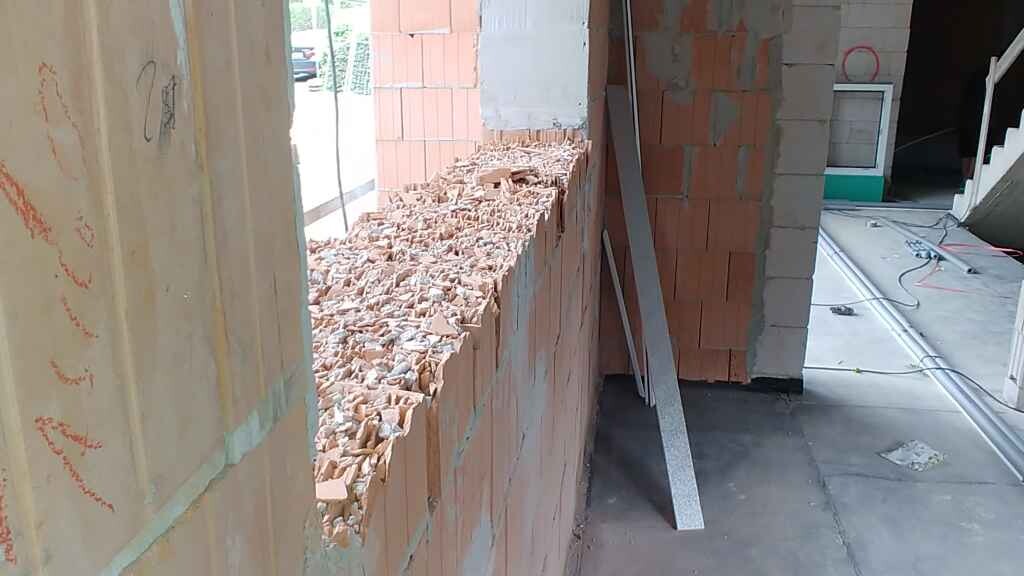
Water on the garage roof. Should action be taken here?
Apparently, they noticed that there is an issue with the parapet height, as it has been asked about several times already.
By the way, here is the photo from the utility room showing the ceiling marking. In this photo, it is not visible.
R
R.Hotzenplotz12 Jun 2018 12:04Otus11 schrieb:
Well, what kind of exterior flooring is planned for the roof terrace? It will definitely be raised, like wood tiles or similar.But will there be a screed layer outside as well? I don’t think so.
The exterior flooring hasn’t been planned yet. Of course, it will be something as flat as possible.
Do you have the floor structure of the roof terrace? Usually, a substantial layer of insulation is applied on top (even with a slope towards the floor drain), along with waterproofing. Then the terrace surface is added, which is laid on pedestals, as Otus already mentioned.
Not much remains of the threshold after that.
For our roof terrace floor structure, we needed about 27cm (11 inches). We used 2cm (0.8 inches) thick terrace slabs on pedestals.
Not much remains of the threshold after that.
For our roof terrace floor structure, we needed about 27cm (11 inches). We used 2cm (0.8 inches) thick terrace slabs on pedestals.
Similar topics