
ᐅ Floor plan design shortly before submitting the building permit application
Created on: 2 Oct 2017 23:25
R
R.Hotzenplotz
Hello everyone!
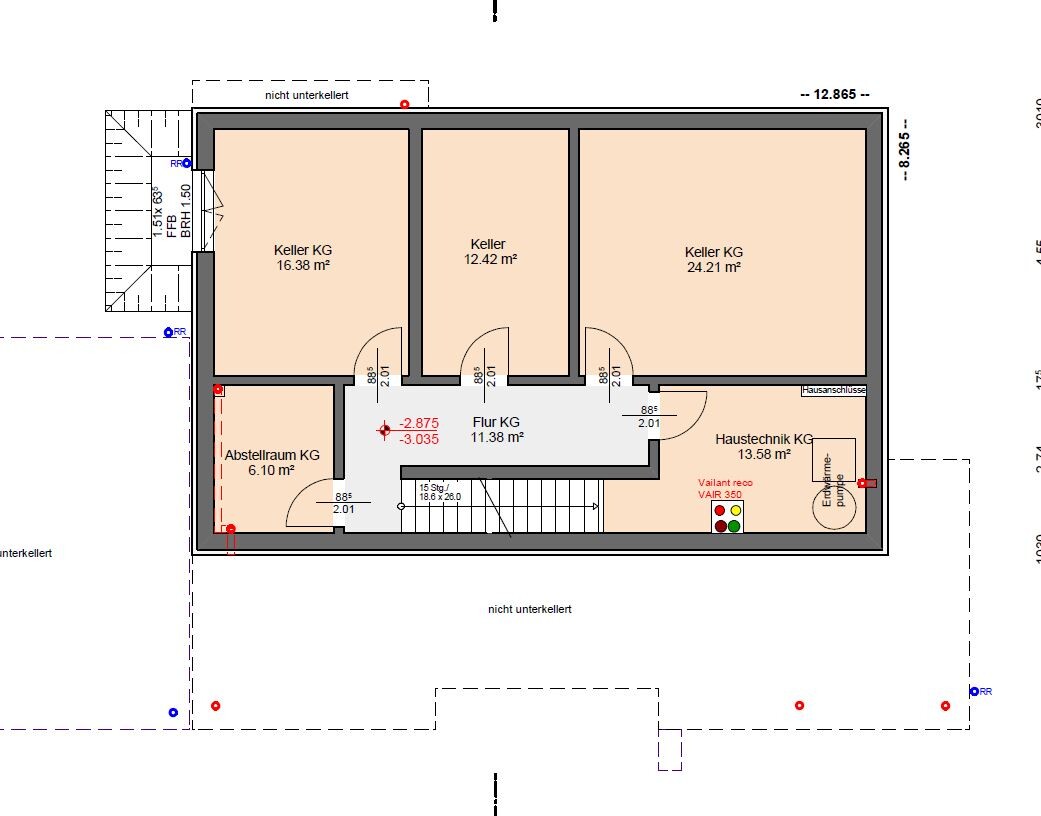
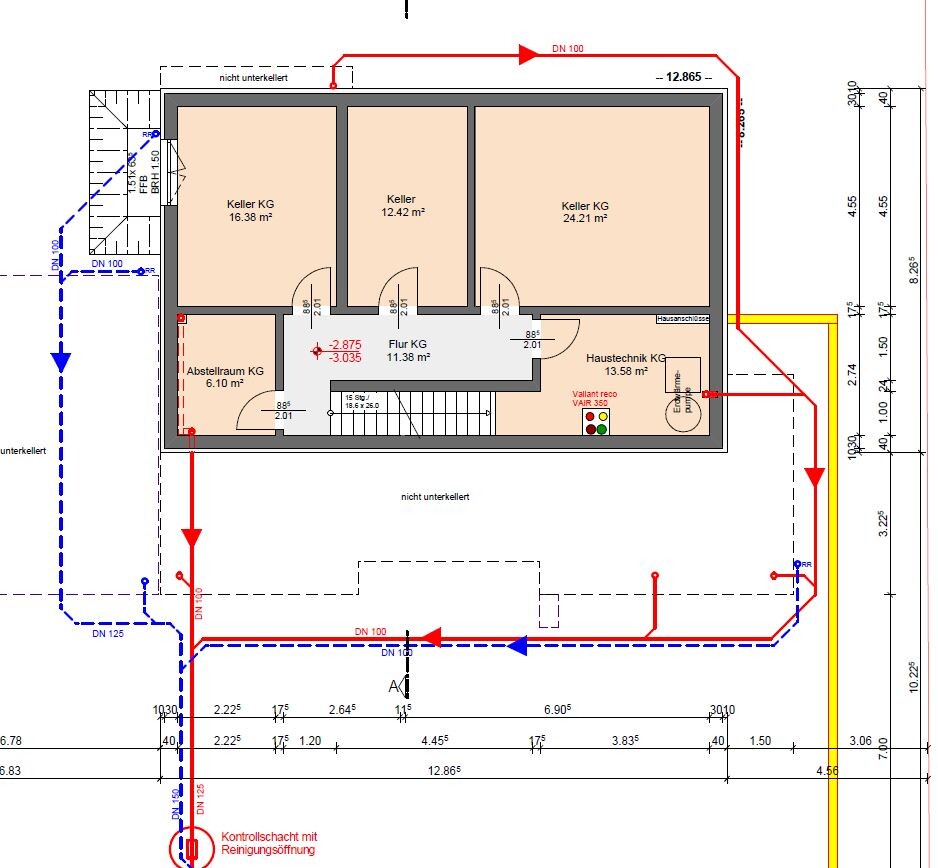
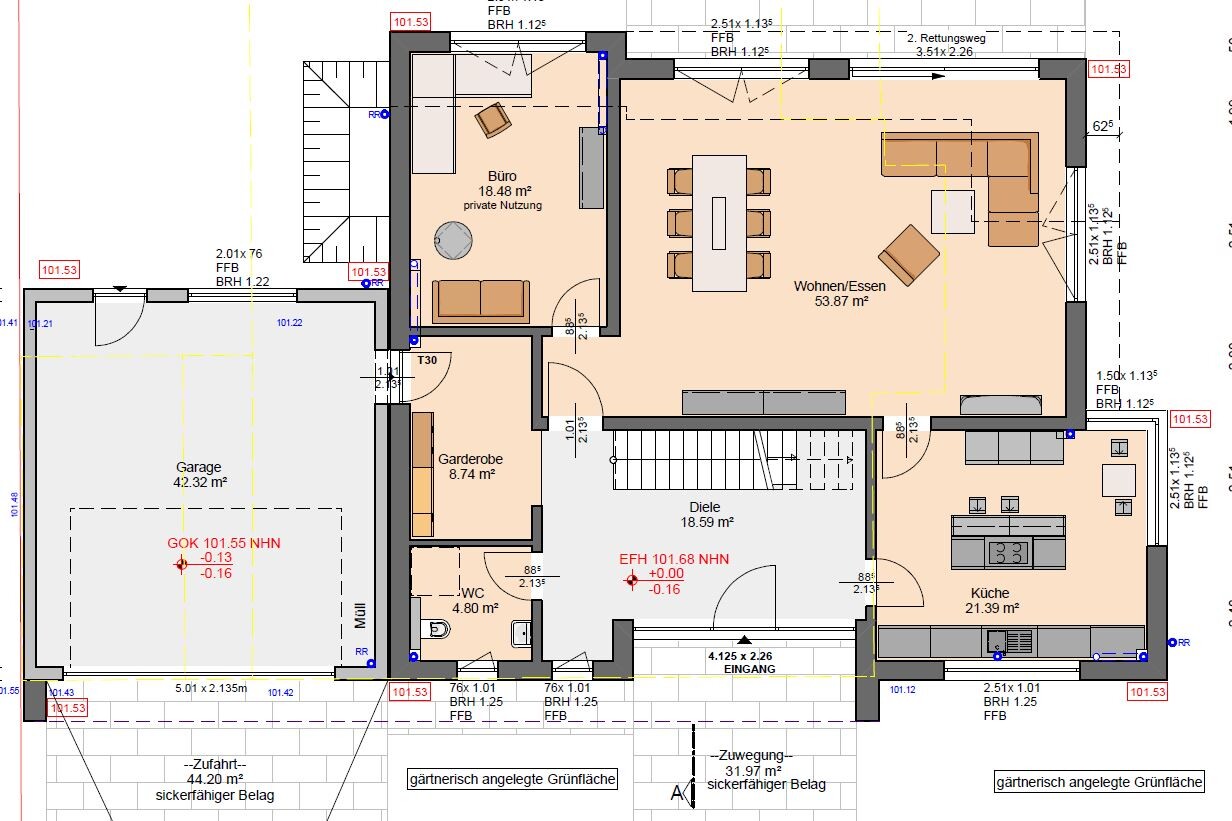
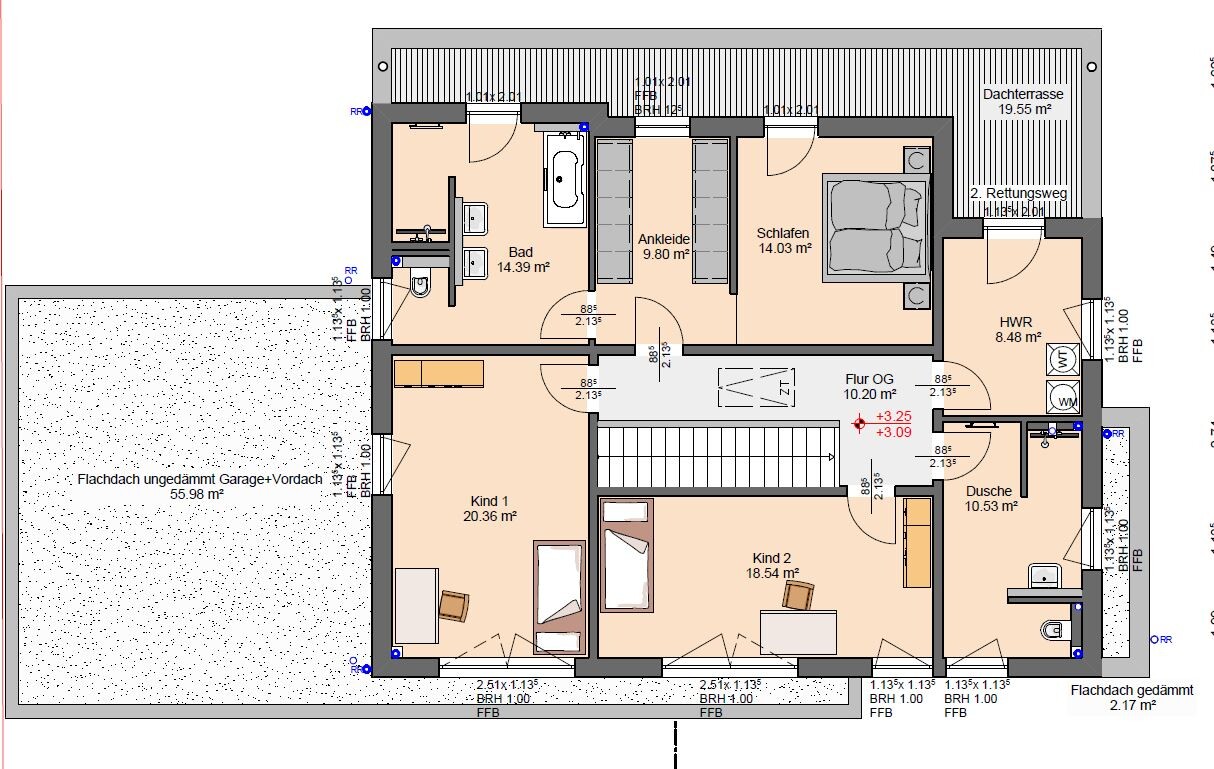
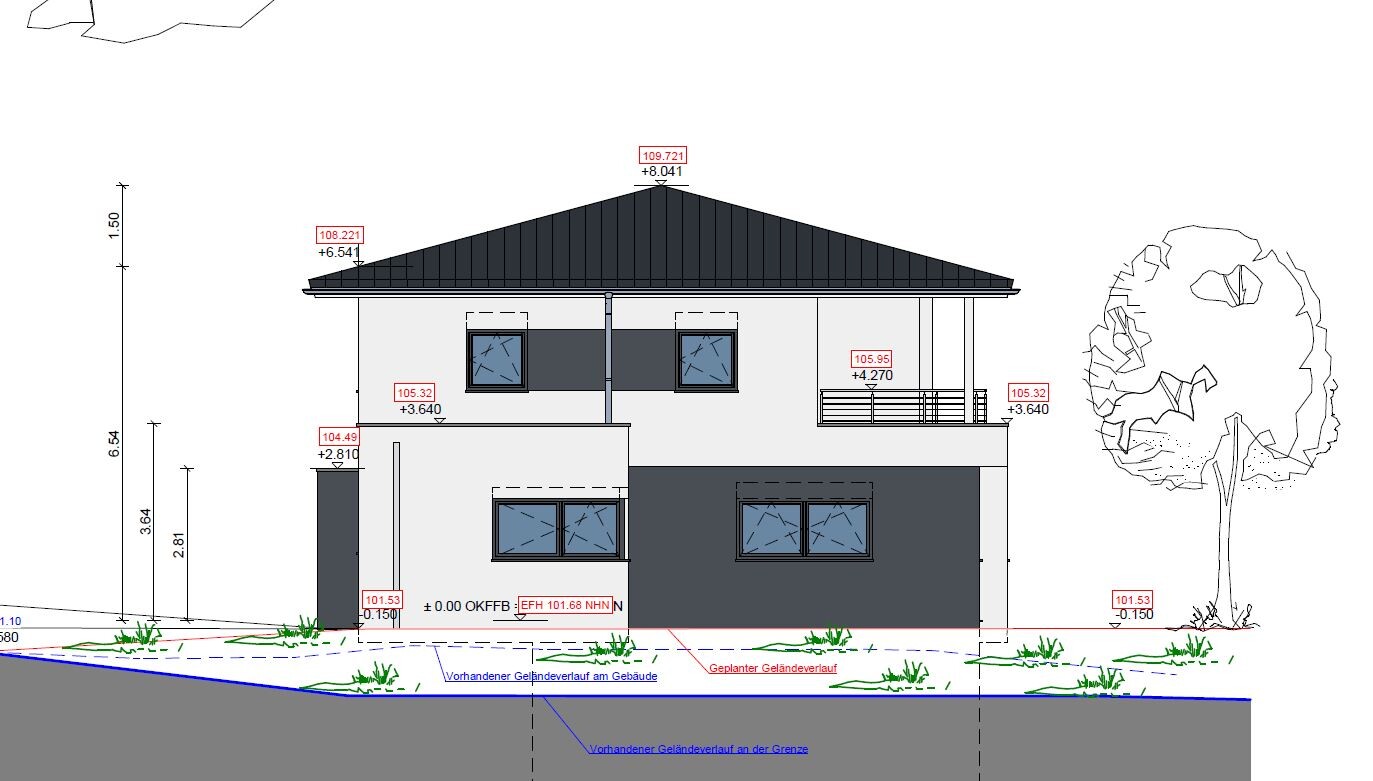
As some users have requested before, I’m now starting a new thread with the current planning of our detached house, which is about to be finalized.
These are the preliminary drawings for the building permit / planning permission application, and I have one last chance to review them and point out any issues.
It still seems to me that there is less than 1.20m (4 feet) of space between the two wardrobes in the dressing room. Or am I seeing this wrong? Apparently, the rooms on the left and right were overlooked and not adjusted accordingly.
Two Velux ceiling spotlights are still planned to illuminate the upper floor hallway.
In the basement, on the right side in the upper room, a window similar to the one on the left basement side is an option.
We still haven’t decided on the T30 fire-rated door to the garage, even though it is shown in the plans. Most likely, for safety reasons and the limited use of the kitchen at the other end of the house, we will eventually forgo it.
User 11ant pointed out that the right window in child’s room 2 is suboptimally positioned. However, this could still be changed after submitting the building permit / planning permission application. Our architect thinks moving the window to the left would negatively affect the house’s exterior appearance. We’ll have to see about that.
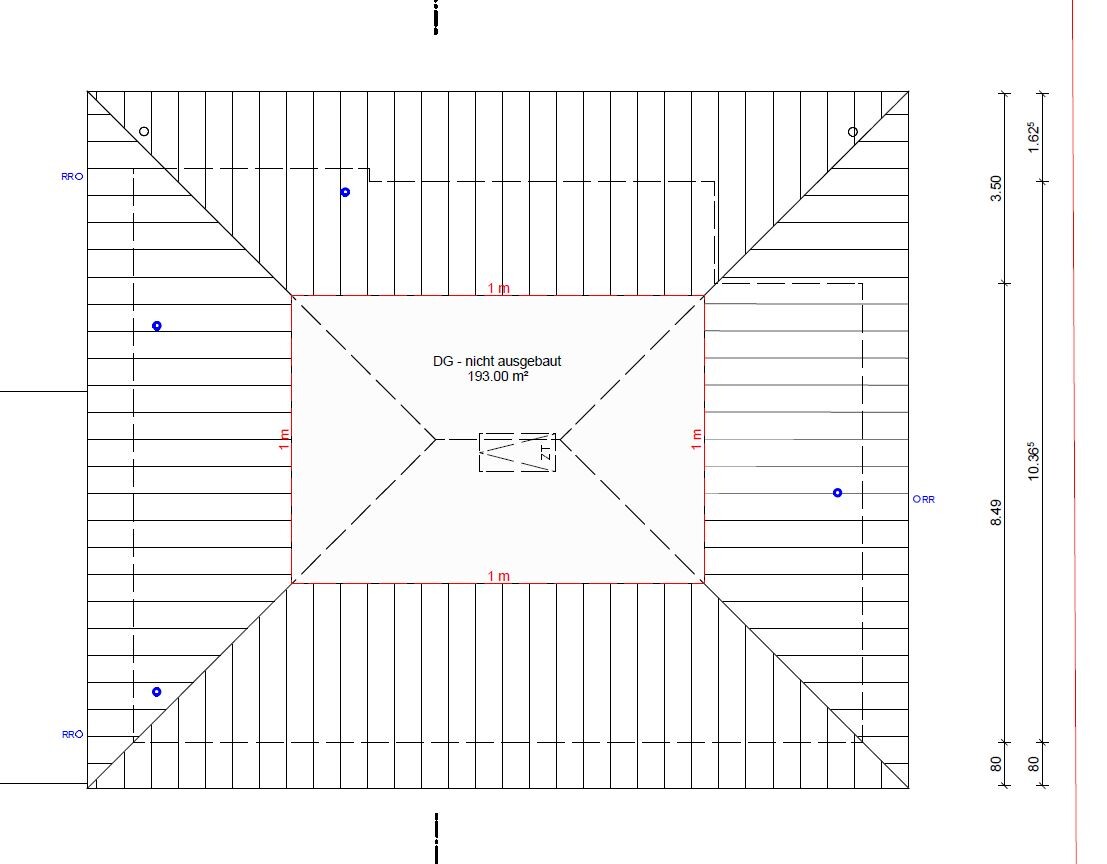
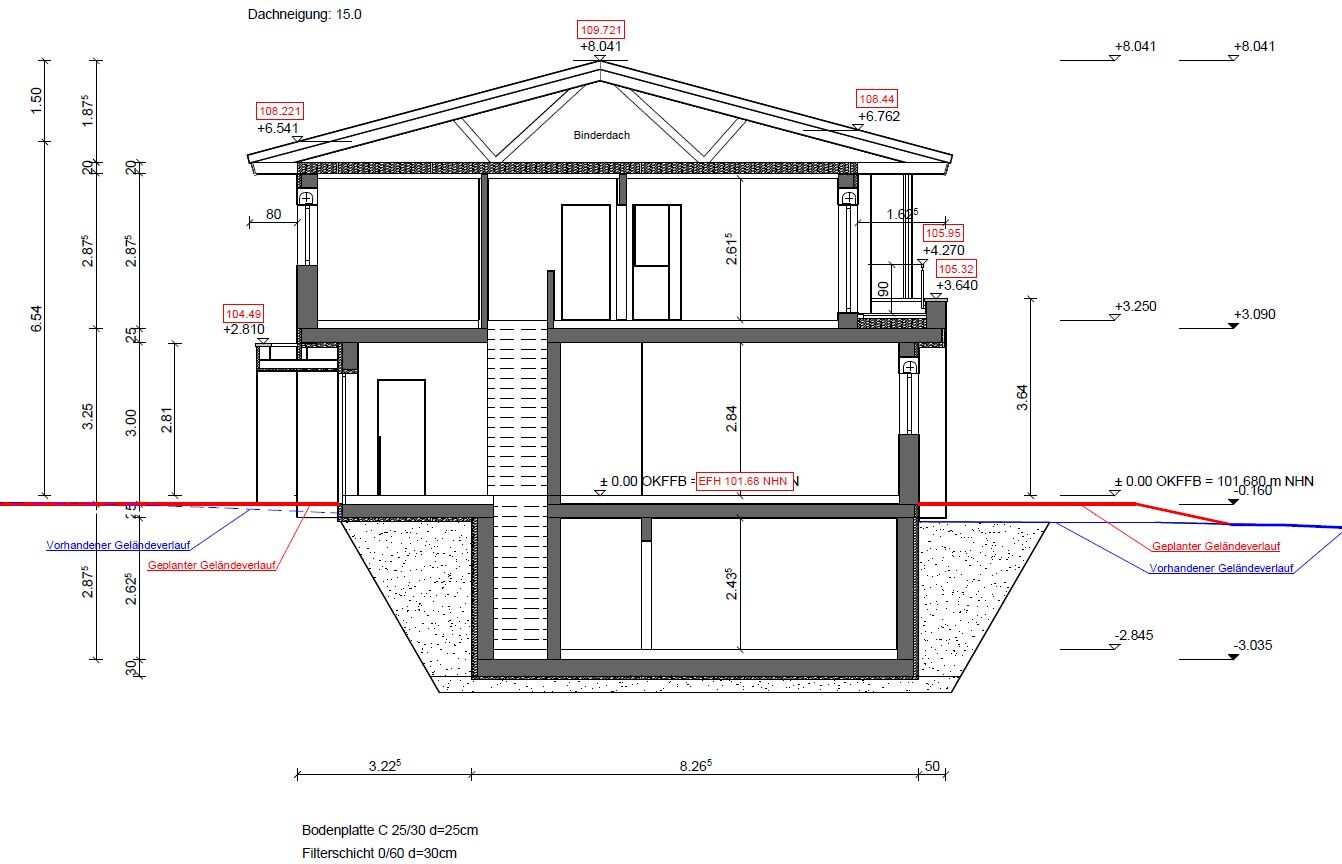

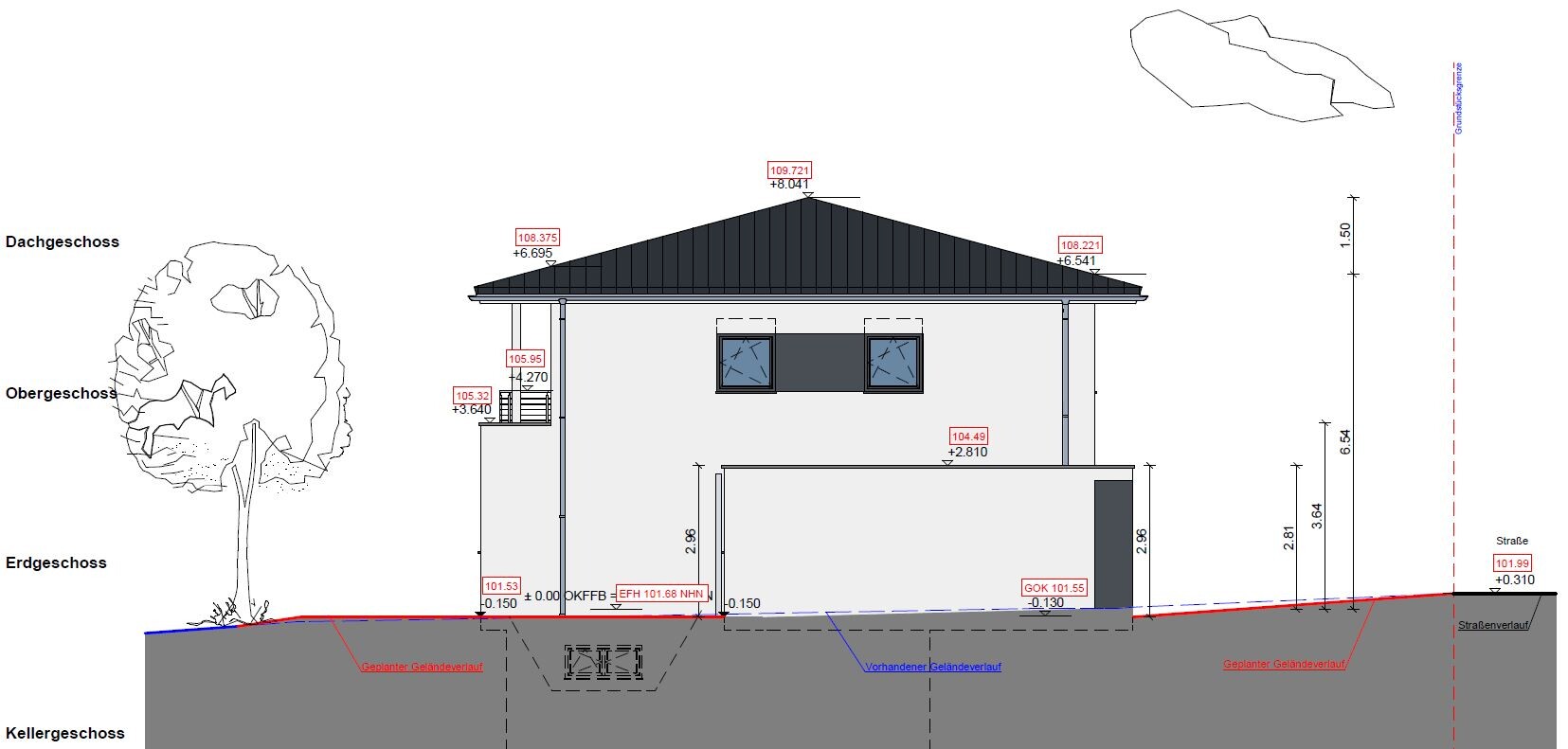
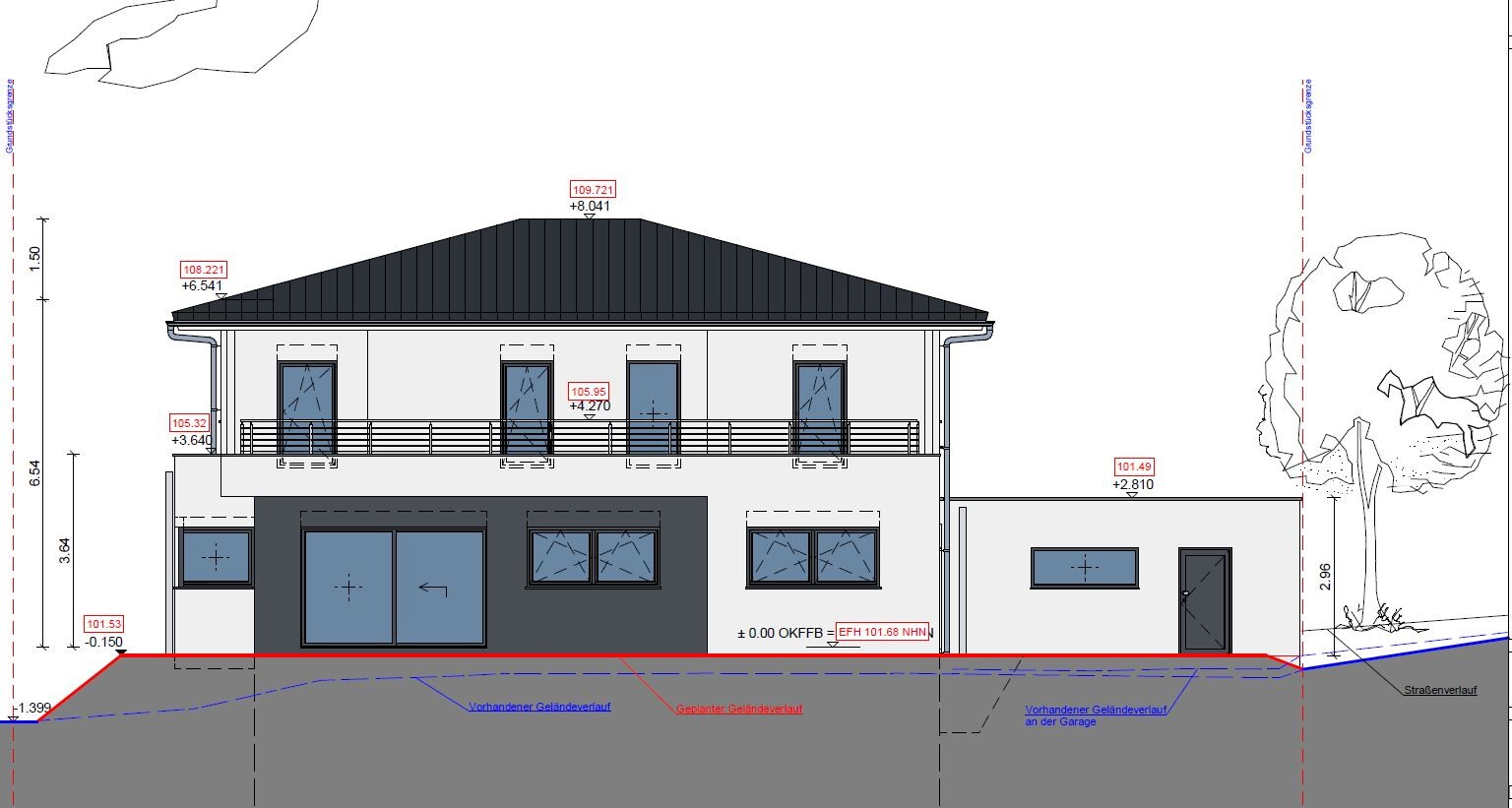
As some users have requested before, I’m now starting a new thread with the current planning of our detached house, which is about to be finalized.
These are the preliminary drawings for the building permit / planning permission application, and I have one last chance to review them and point out any issues.
It still seems to me that there is less than 1.20m (4 feet) of space between the two wardrobes in the dressing room. Or am I seeing this wrong? Apparently, the rooms on the left and right were overlooked and not adjusted accordingly.
Two Velux ceiling spotlights are still planned to illuminate the upper floor hallway.
In the basement, on the right side in the upper room, a window similar to the one on the left basement side is an option.
We still haven’t decided on the T30 fire-rated door to the garage, even though it is shown in the plans. Most likely, for safety reasons and the limited use of the kitchen at the other end of the house, we will eventually forgo it.
User 11ant pointed out that the right window in child’s room 2 is suboptimally positioned. However, this could still be changed after submitting the building permit / planning permission application. Our architect thinks moving the window to the left would negatively affect the house’s exterior appearance. We’ll have to see about that.
R.Hotzenplotz schrieb:
Drywall installations had to be dismantled again,That’s why it’s usually done afterwards.
truce schrieb:
I would have expected better for such an “expensive” house :-/Those two things are mostly unrelated. Lots of corners mean many potential spots for leaks.
So the result is okay and acceptable. It wasn’t supposed to be a 55 variant anyway, right?
ypg schrieb:
That’s why it’s done afterwards.
Those two things are hardly related. Many corners mean many possibilities for leaks.
In that respect, the result is acceptable; it’s manageable. It wasn’t supposed to be a 55, was it?The requirement also comes from the energy saving regulation. 1.5 is the minimum with a ventilation system. Otherwise, it’s an unauthorized construction.
R
R.Hotzenplotz27 Sep 2018 07:35Snowy36 schrieb:
And couldn’t they do more to improve the airtightness?They still need to plaster some areas, which will help a bit. Also, the ventilation system in the cloakroom isn’t finished yet, so that should improve things as well.
On the other hand, the blower door test professional said that for houses with mechanical ventilation systems, he usually records values between 1.2 and 1.3, and that in such cases he finishes his work in 15 minutes. He also mentioned that he often works for this contractor and that their results are usually better. He repeatedly told the site manager that this isn’t typical from them.
I explicitly told them that I will commission my own blower door test for the final inspection and that it would be critical to accept a result of 1.5, because if there are any minor issues later during finishing—like with the drywall ceiling or whatever—then we’re stuck.
Snowy36 schrieb:
Where were the main spots where air was leaking? Vapor barrier or also around electrical installations?No, the electrical work was okay. Air was coming through a cemented-over opening into the garage made by the electrician, because it wasn’t plastered all the way to the floor. Both companies are blaming each other for that, but it’s sealed now. Then there were leaks everywhere behind pipes running through the rooms, as those areas haven’t been plastered yet. They are still applying filler there today—I have to go check that soon. Otherwise, there were numerous and quite large holes in the vapor barrier on the upper floor. All corners in the shower areas behind the drywall were affected. The site manager spent 1.5 hours trying to fix this with adhesive tape. There were also small cracks and areas where the tape was coming loose. I just wonder if the tape coming loose now means it could happen again later.
Air also leaked near some windows, but according to the blower door professional, this is mostly normal. The painter can seal the joints between the window sill and the window later.
Snowy36 schrieb:
It’s really bad that the building energy rating is so high; a 1.5 is like getting a grade 4 in universityHe said that with mechanical ventilation systems, the result usually doesn’t improve a lot because of all the ventilation ductwork.
ypg schrieb:
So the outcome is acceptable, you can live with it. This wasn’t supposed to be a passive house, right?No, this is not a KfW house. It’s a standard house built according to the 2016 German Energy Saving Ordinance (EnEV). Therefore, they won’t spend a lot of effort trying to improve the value further. I will review it again before the final acceptance.
Windows AND painters – whenever I hear that, it drives me crazy. The fact is, the windows are not installed correctly. The painter has nothing to seal. Normally, an airtight tape is installed on the inside at the junction between the window and the windowsill. On the outside, a compression tape is used.
A mechanical ventilation system with heat recovery has nothing to do with humidity. There are no ducts in the exterior walls; the rest is installed in the ceilings. There should be no leaks there.
So the blower door tester seems to be related to the general contractor..
Worse than the leaks are probably the holes in the vapor barrier. That is really unacceptable. You risk significant damage to the building structure in the near future. How on earth do such holes get there?
A mechanical ventilation system with heat recovery has nothing to do with humidity. There are no ducts in the exterior walls; the rest is installed in the ceilings. There should be no leaks there.
So the blower door tester seems to be related to the general contractor..
Worse than the leaks are probably the holes in the vapor barrier. That is really unacceptable. You risk significant damage to the building structure in the near future. How on earth do such holes get there?
R
R.Hotzenplotz27 Sep 2018 09:05Bookstar schrieb:
When I hear "windows AND painter," everything just spins for me. The fact is, the windows were not installed properly. The painter doesn’t have to seal anything. At the junction between the window and the windowsill on the inside, there is normally an airtight tape. On the outside, compressed foam tape is used.I’ll take some photos later.
Bookstar schrieb:
And a controlled residential ventilation system has nothing to do with humidity.I don’t see the connection to humidity here.
Bookstar schrieb:
What’s worse than leaks are the holes in the vapor barrier. That’s really unacceptable. You risk serious damage to the building fabric in the near future. How on earth did such holes get there?Allegedly, the drywall contractor was supposed to inspect everything before the blower door test and cover any holes. The site manager was very upset because this wasn’t done. He then fixed it himself using a kind of heavy-duty tape.
Behind the showers, the wrong spots were taped off somehow. I think the site manager said the expert doing the job taped the drywall board itself instead of the wall or something like that. I’m not sure exactly.
I’m about to call my expert to brief him on what happened and then see if he thinks it still makes sense to come out again.
Similar topics