
ᐅ Floor plan design shortly before submitting the building permit application
Created on: 2 Oct 2017 23:25
R
R.Hotzenplotz
Hello everyone!
As some users have requested before, I’m now starting a new thread with the current planning of our detached house, which is about to be finalized.
These are the preliminary drawings for the building permit / planning permission application, and I have one last chance to review them and point out any issues.
It still seems to me that there is less than 1.20m (4 feet) of space between the two wardrobes in the dressing room. Or am I seeing this wrong? Apparently, the rooms on the left and right were overlooked and not adjusted accordingly.
Two Velux ceiling spotlights are still planned to illuminate the upper floor hallway.
In the basement, on the right side in the upper room, a window similar to the one on the left basement side is an option.
We still haven’t decided on the T30 fire-rated door to the garage, even though it is shown in the plans. Most likely, for safety reasons and the limited use of the kitchen at the other end of the house, we will eventually forgo it.
User 11ant pointed out that the right window in child’s room 2 is suboptimally positioned. However, this could still be changed after submitting the building permit / planning permission application. Our architect thinks moving the window to the left would negatively affect the house’s exterior appearance. We’ll have to see about that.
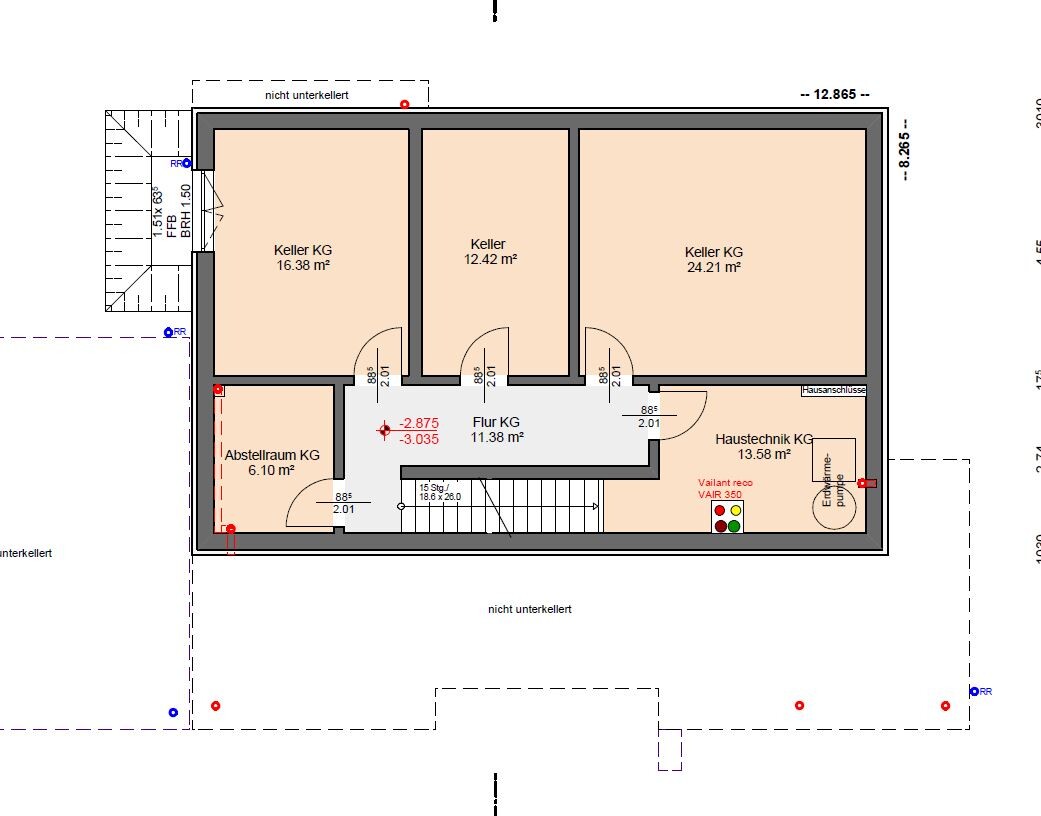
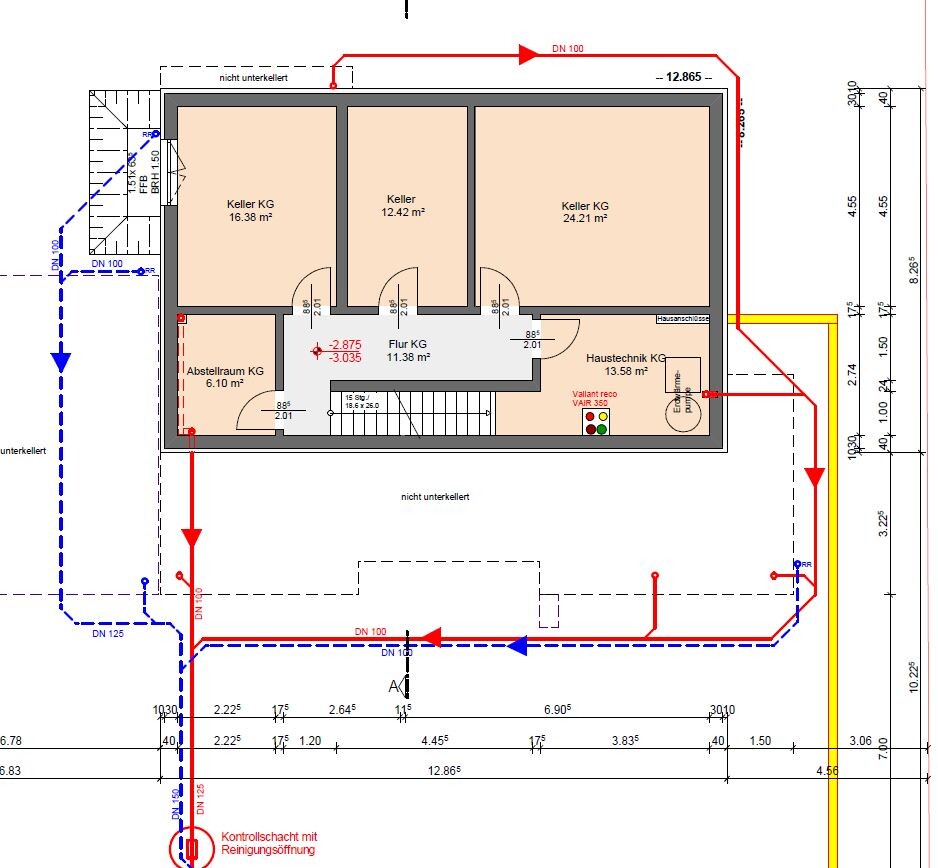
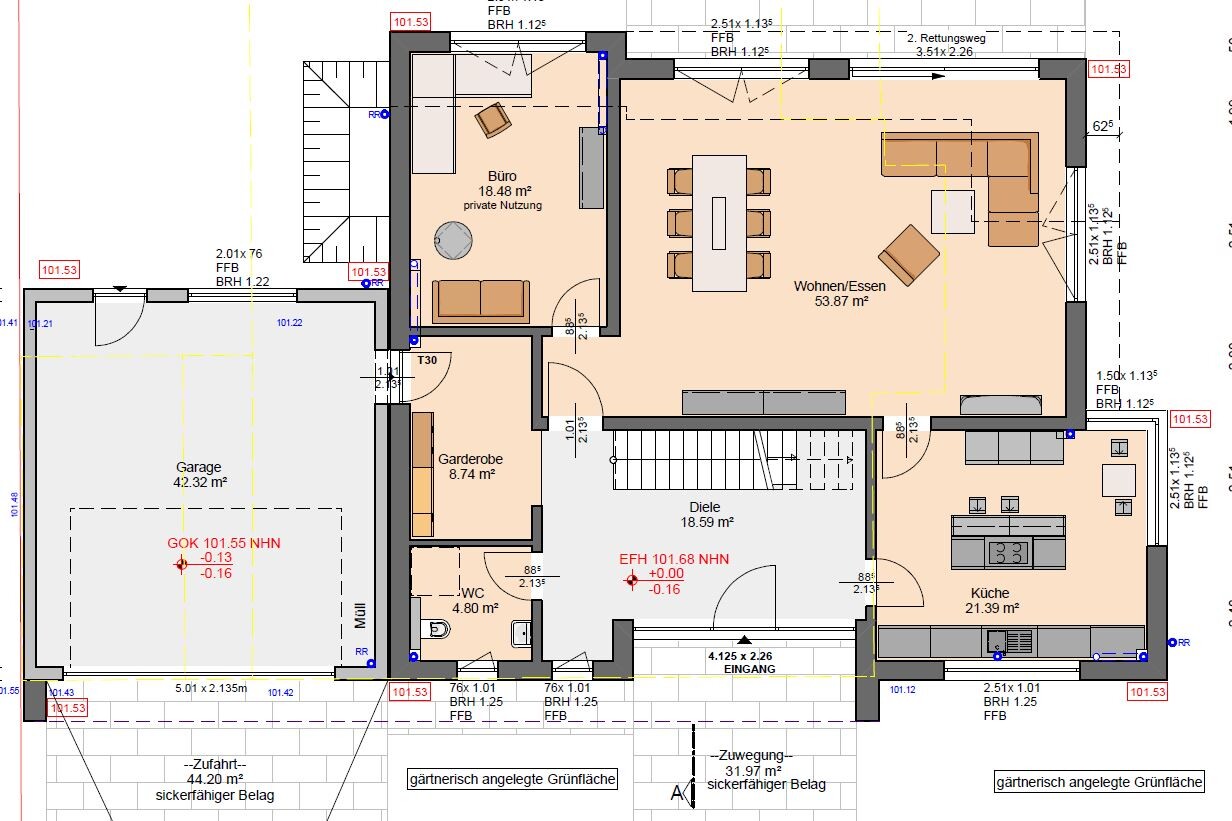
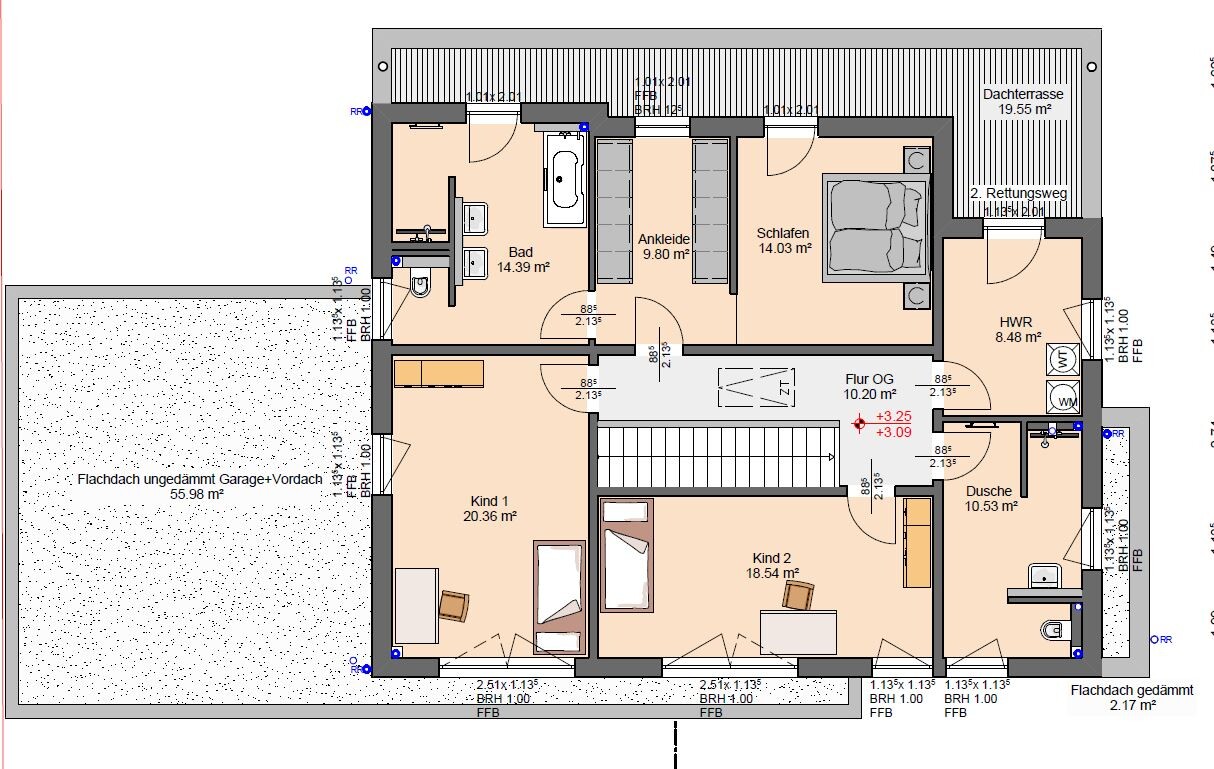
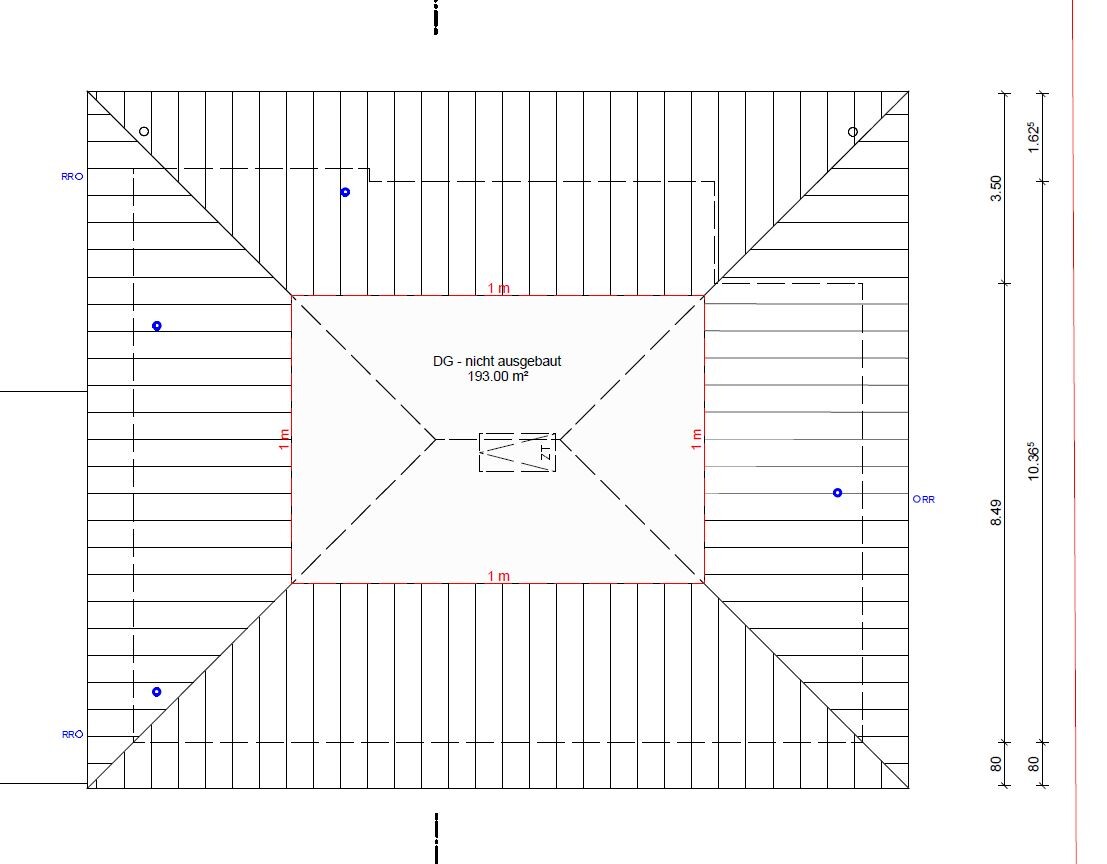
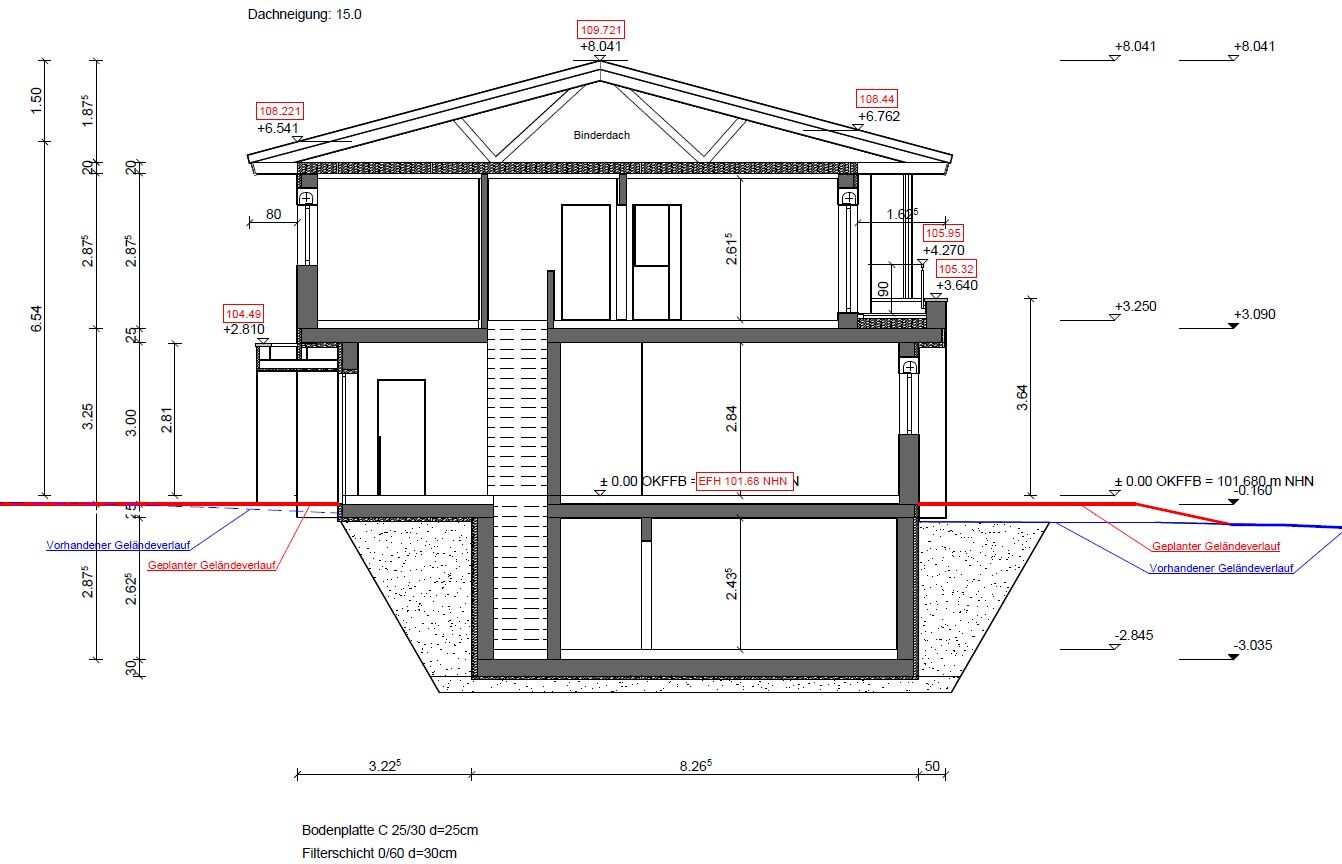

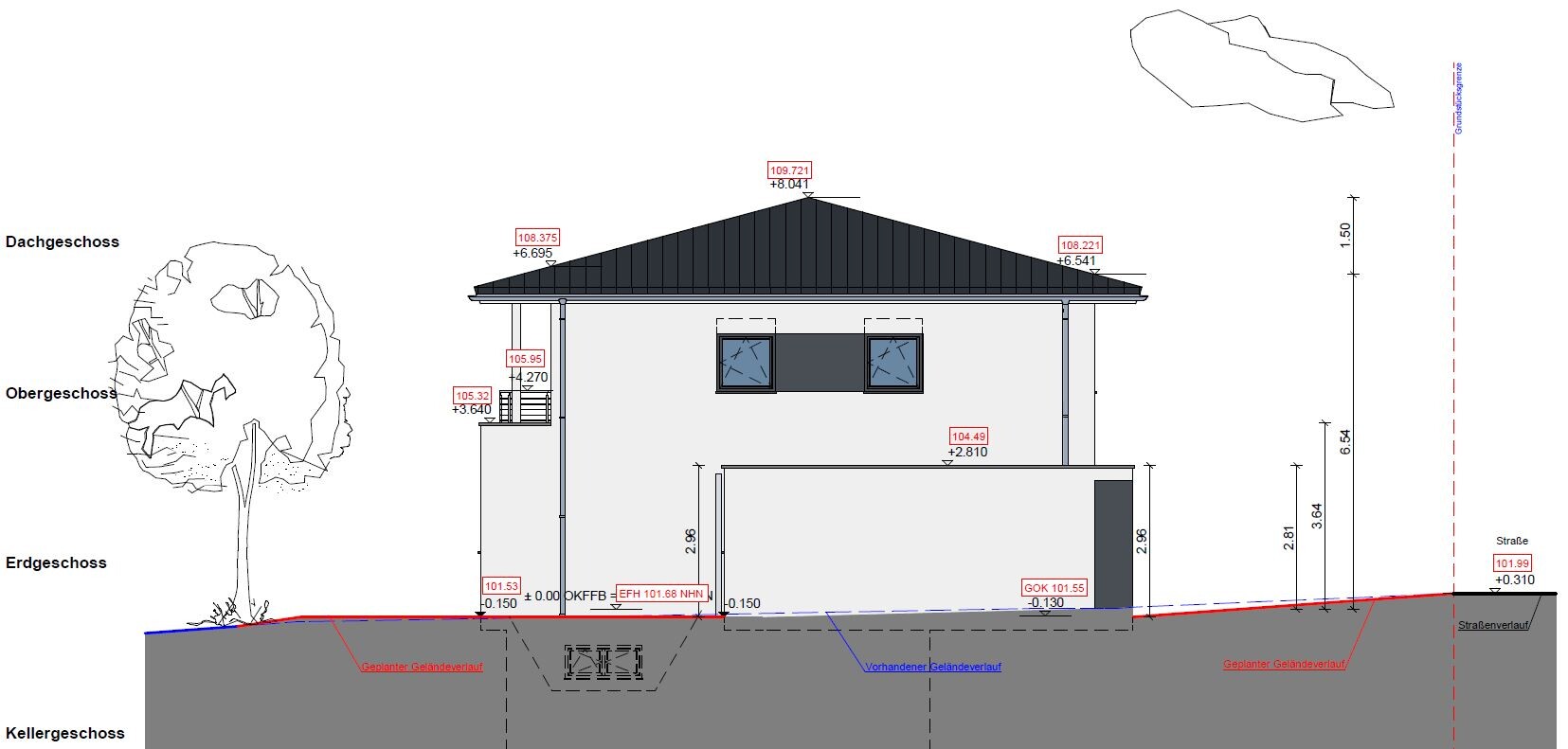
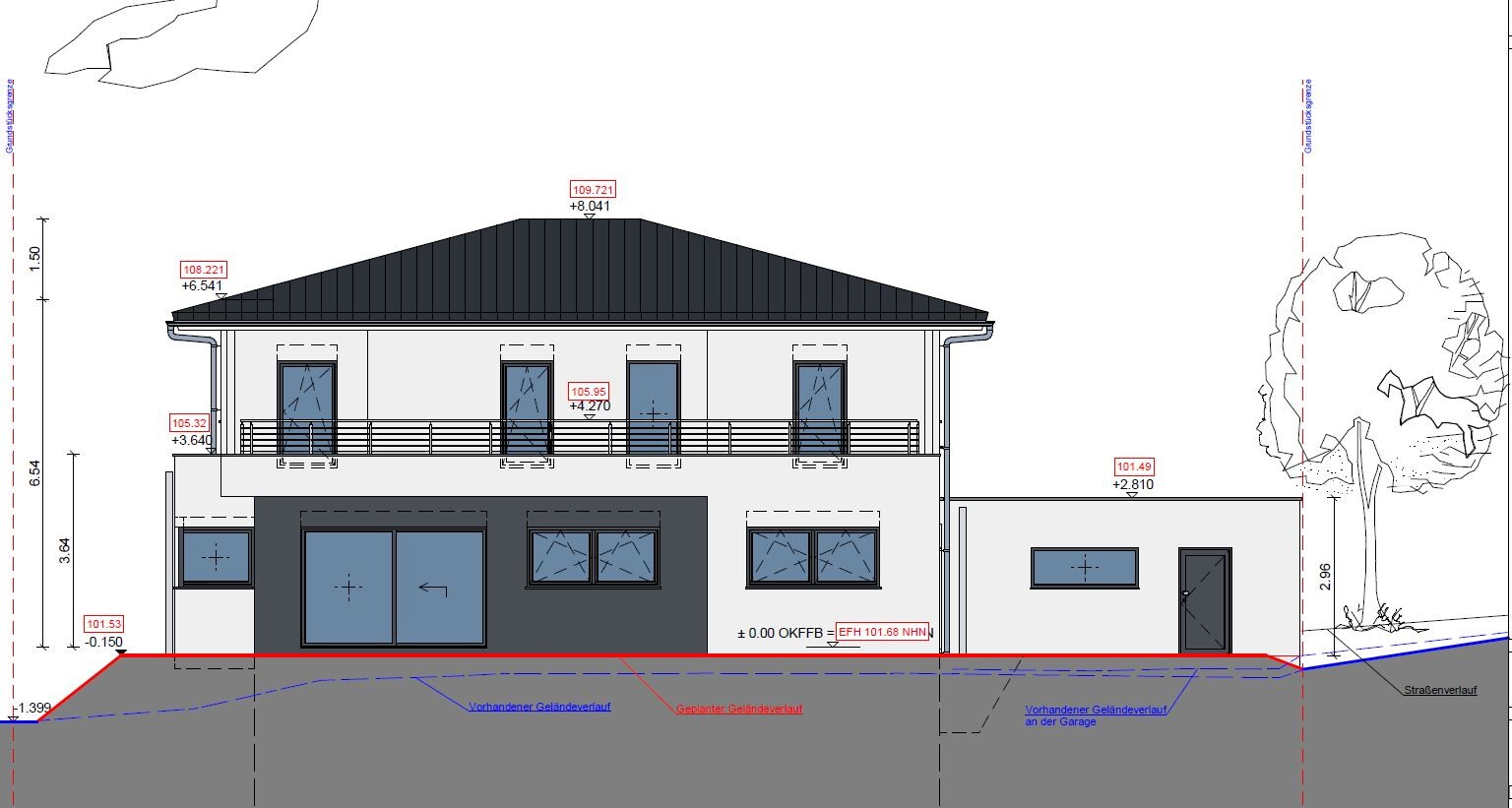
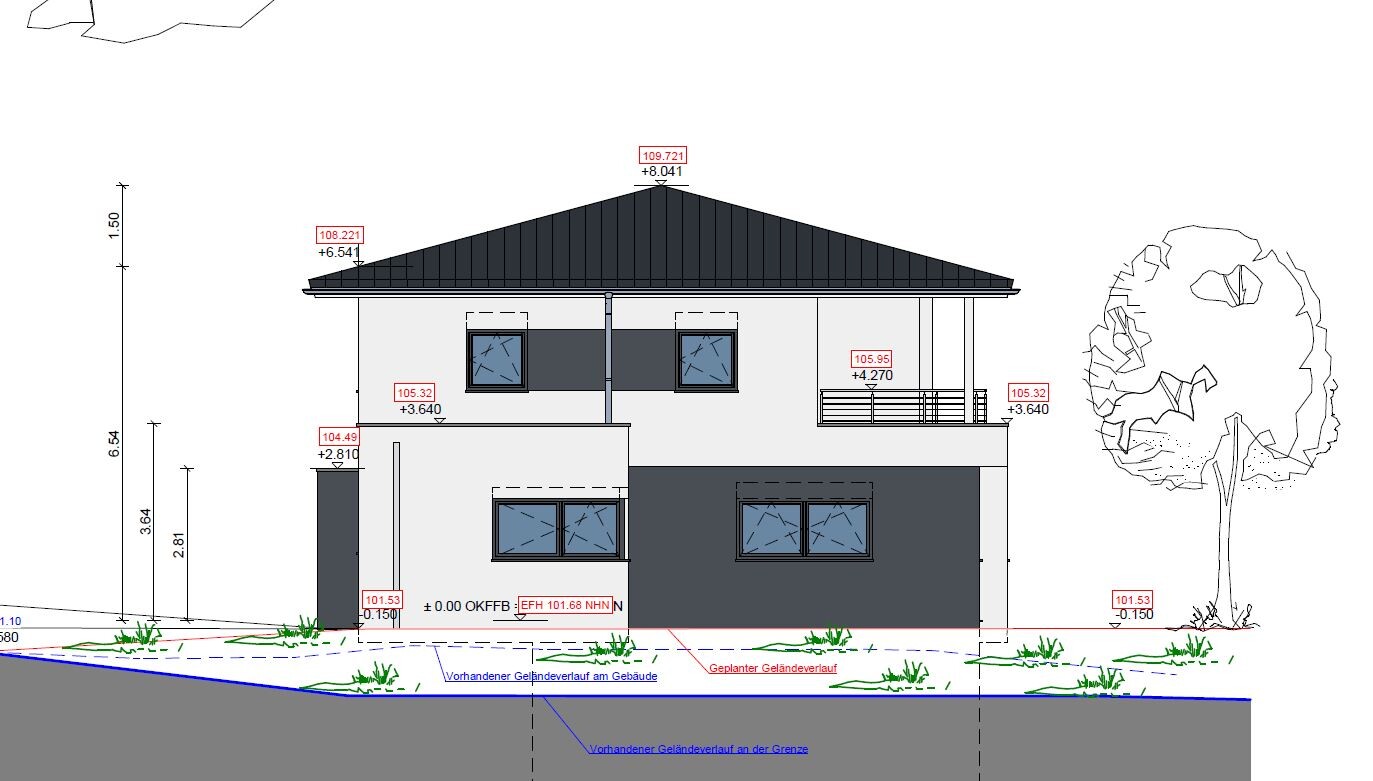
As some users have requested before, I’m now starting a new thread with the current planning of our detached house, which is about to be finalized.
These are the preliminary drawings for the building permit / planning permission application, and I have one last chance to review them and point out any issues.
It still seems to me that there is less than 1.20m (4 feet) of space between the two wardrobes in the dressing room. Or am I seeing this wrong? Apparently, the rooms on the left and right were overlooked and not adjusted accordingly.
Two Velux ceiling spotlights are still planned to illuminate the upper floor hallway.
In the basement, on the right side in the upper room, a window similar to the one on the left basement side is an option.
We still haven’t decided on the T30 fire-rated door to the garage, even though it is shown in the plans. Most likely, for safety reasons and the limited use of the kitchen at the other end of the house, we will eventually forgo it.
User 11ant pointed out that the right window in child’s room 2 is suboptimally positioned. However, this could still be changed after submitting the building permit / planning permission application. Our architect thinks moving the window to the left would negatively affect the house’s exterior appearance. We’ll have to see about that.
R
R.Hotzenplotz10 Sep 2018 14:2411ant schrieb:
So, the plan (I received a bit more detail than the excerpts in the threads via private message) indicates that the garage floor has no slope,I just spoke with the site manager; he said that a slope was implemented. I will have the expert verify this. Regarding the question about the garage door height, he wrote:
“The garage doors were installed according to the plans.
The rear garage door was executed with a large groove, matching the side door, as per the contract.
The front garage door was designed and ordered as a ‘large slat pattern.’
Since the front garage door was contractually agreed to be the large slat design, these slats are bigger than those on the rear door, which explains the dimensional differences.
Everything was therefore executed correctly according to the contract.”
In other words, the homeowner is expected to conclude that different slat designs result in varying door heights, and it is not considered necessary to explicitly point this out. Especially since the rear door was intended solely to allow passage for mini excavators and similar equipment. What motivation would anyone have to install a lower door in this case?

R.Hotzenplotz schrieb:
Especially since the rear gate was intended solely to allow passage for mini excavators and similar equipment. I also wondered how the mini excavator is supposed to adjust its height while passing through the garage.
Your "height" doesn’t change, after all—you’re the same height in the garage as you are inside the house, so I find the door height puzzling.
I don’t understand why the rear should have different cladding than the front. That different cladding results in varying heights, especially when working with whole-number elements—such as a design feature involving wider shadow gaps—may be obvious to a professional but not to a layperson.
With your technical knowledge of construction, creating your own design was an unfortunate starting point and understandably caused complications. But at least you’ll probably like the result better than the house that was there before, or whatever Jupp Schmitz & Son offered in their catalog.
https://www.instagram.com/11antgmxde/
https://www.linkedin.com/company/bauen-jetzt/
R
R.Hotzenplotz10 Sep 2018 15:1811ant schrieb:
I don’t understand why there should be different cladding on the back compared to the front.Originally, the slatted look was planned for the front as well as the back. Most likely, the gate would have been the same height then. However, we wanted the look of large smooth slats at the front, while for cost reasons we decided against this design at the back. It’s hard to imagine if the main gate at the front were that low as well.
This issue isn’t urgent; nevertheless, I will have it inspected and documented during the next expert visit.
11ant schrieb:
With your technical building knowledge, a self-designed plan was an unfavorable starting point and understandably led to complications.That’s true. But it’s still a thousand times better than the Jupp Schmitz & Son house.
What our project lacks from start to finish is proper advice and a guardian who keeps an eye on things like this and at least points them out. That’s unfortunate. I don’t even believe it’s due to bad intentions, but rather lack of expertise and customer focus.
I don’t mean to offend you, but I have a different opinion on this. Given your approach to building, you would have been better off with an architect.
Even if you believe that none of the architects you consulted were suitable, they would have all had one thing in common that you’re missing now: a professional who is involved in the planning process and works for you, NOT for the construction company.
Because that is exactly part of a freelance architect’s job...
Anyway, I’m glad you’re not letting this get you down. Keep your head up. It’s just an unfortunate setback, and there are definitely worse things—like if water were still coming into the house...
Even if you believe that none of the architects you consulted were suitable, they would have all had one thing in common that you’re missing now: a professional who is involved in the planning process and works for you, NOT for the construction company.
R.Hotzenplotz schrieb:
In our project, we’re unfortunately lacking proper advice and a supervisor from start to finish who keeps an eye on these things and at least points them out. That’s a shame. I don’t even think this is due to ill will, but simply ignorance and a lack of customer focus.
Because that is exactly part of a freelance architect’s job...
Anyway, I’m glad you’re not letting this get you down. Keep your head up. It’s just an unfortunate setback, and there are definitely worse things—like if water were still coming into the house...
R
R.Hotzenplotz10 Sep 2018 15:32matte1987 schrieb:
I don’t want to offend you, but I have a different opinion on this.We really see this differently. Even if the (independent) architect was basically hired by the general contractor, the scope of services is still the same, and they are expected to work diligently accordingly. I don’t see why such an architect shouldn’t have the same duty of care as an independent architect.
matte1987 schrieb:
With your idea of building, you would have been better off with an architect.I still disagree. That would have been even more difficult for us because it would have meant getting even more involved — also timewise. Negotiating with every tradesperson individually… all that alongside a six-day workweek of 60 hours or more. But the main reason was also that, as I already explained, we couldn’t find a convincing architect.
matte1987 schrieb:
Because that is exactly part of the task of an independent architect...Not just an independent architect.
matte1987 schrieb:
Anyway. I think it’s good that you don’t let it get you down. Chin up. It’s just a bad gate; there are definitely worse things — like water still coming into the house...You’re right. As I said, we can still address the gate issue with the expert and, if necessary, with a lawyer and bring it up during the final inspection if it can’t be resolved beforehand. I’m not too worried about that. I think I will definitely need a lawyer anyway, because the general contractor assumes the uneven exterior wall in the garden is not a defect, but the expert disagrees completely and says it can’t be fixed by the exterior plaster.
Similar topics