
ᐅ Floor plan design shortly before submitting the building permit application
Created on: 2 Oct 2017 23:25
R
R.Hotzenplotz
Hello everyone!
As some users have requested before, I’m now starting a new thread with the current planning of our detached house, which is about to be finalized.
These are the preliminary drawings for the building permit / planning permission application, and I have one last chance to review them and point out any issues.
It still seems to me that there is less than 1.20m (4 feet) of space between the two wardrobes in the dressing room. Or am I seeing this wrong? Apparently, the rooms on the left and right were overlooked and not adjusted accordingly.
Two Velux ceiling spotlights are still planned to illuminate the upper floor hallway.
In the basement, on the right side in the upper room, a window similar to the one on the left basement side is an option.
We still haven’t decided on the T30 fire-rated door to the garage, even though it is shown in the plans. Most likely, for safety reasons and the limited use of the kitchen at the other end of the house, we will eventually forgo it.
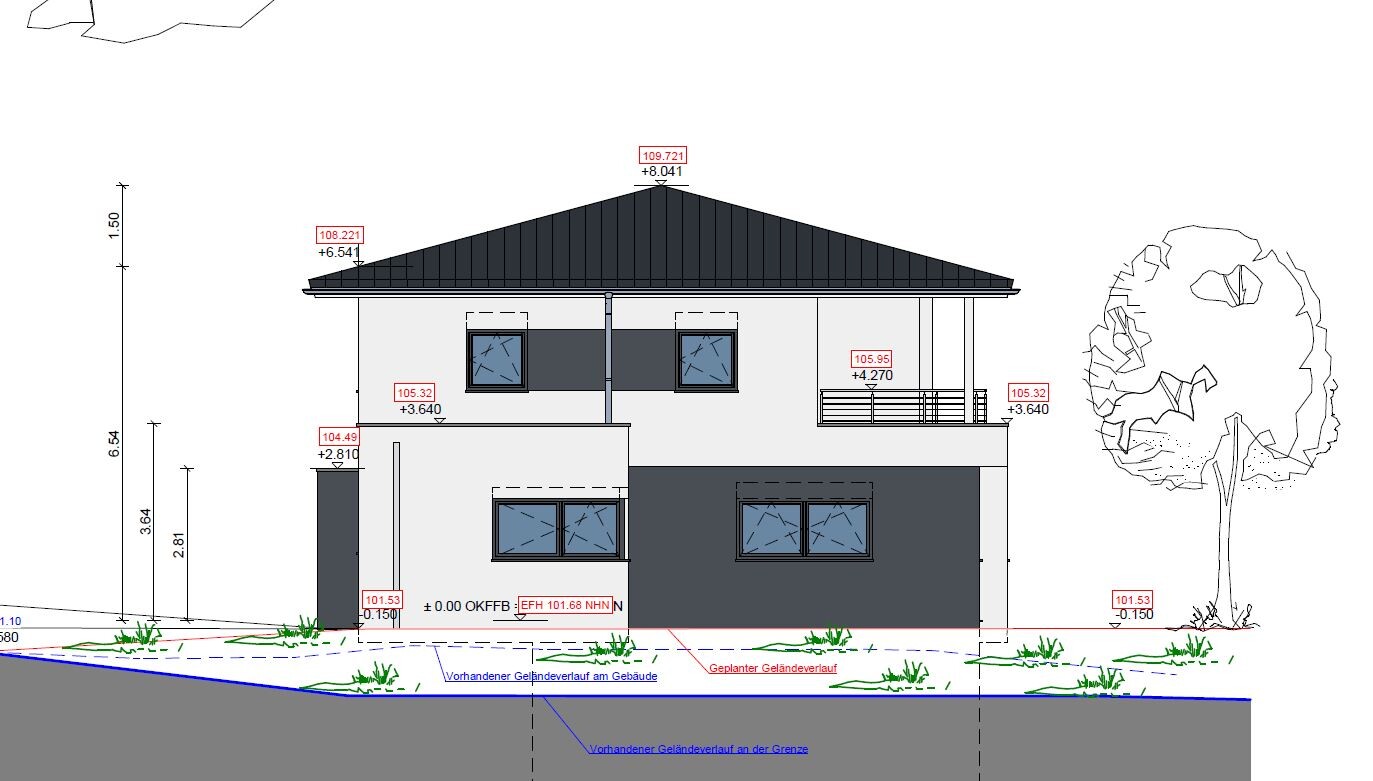
User 11ant pointed out that the right window in child’s room 2 is suboptimally positioned. However, this could still be changed after submitting the building permit / planning permission application. Our architect thinks moving the window to the left would negatively affect the house’s exterior appearance. We’ll have to see about that.
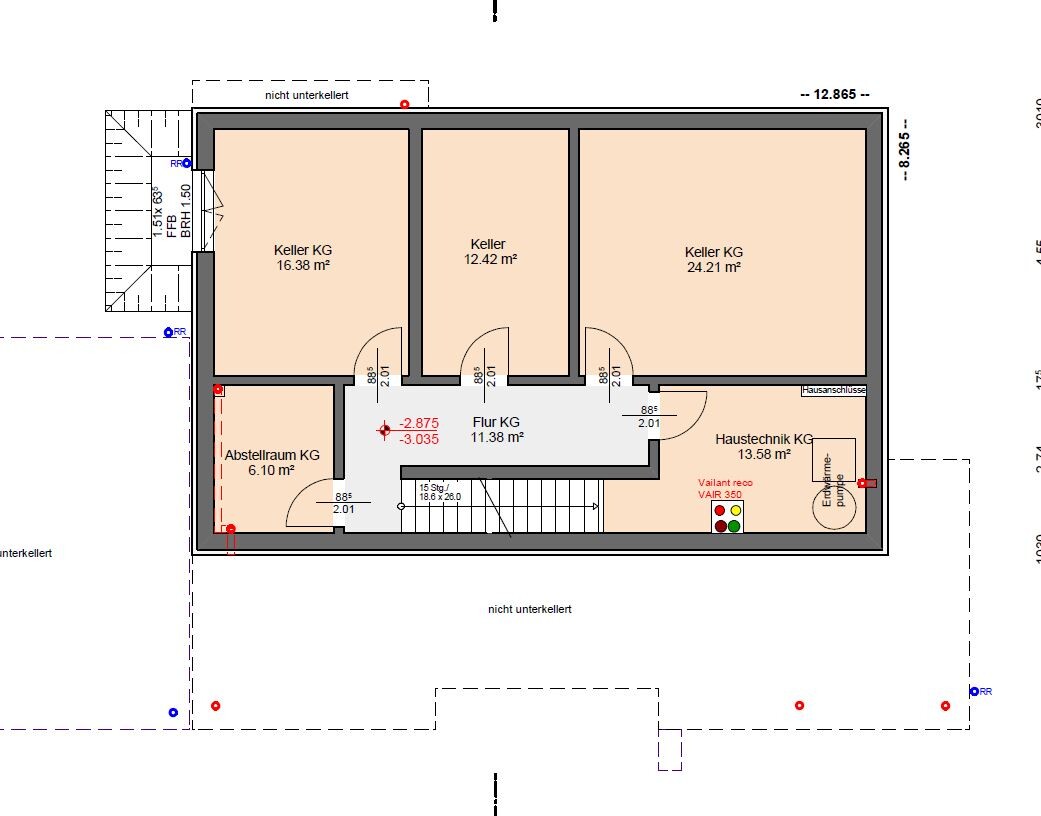
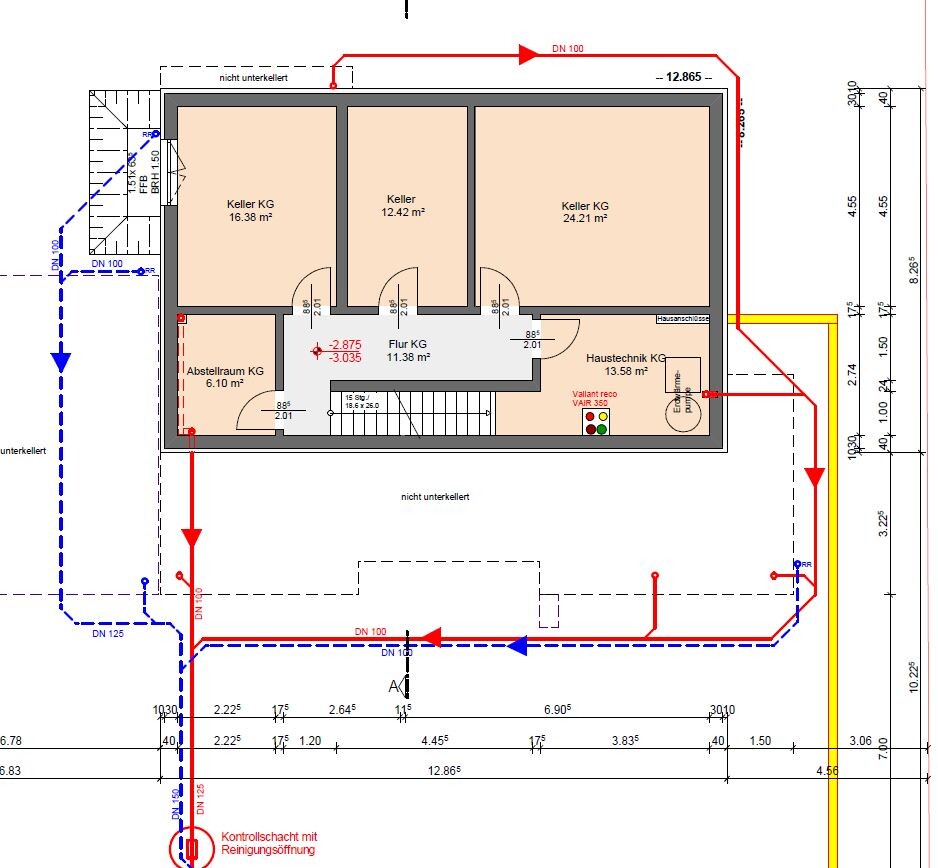
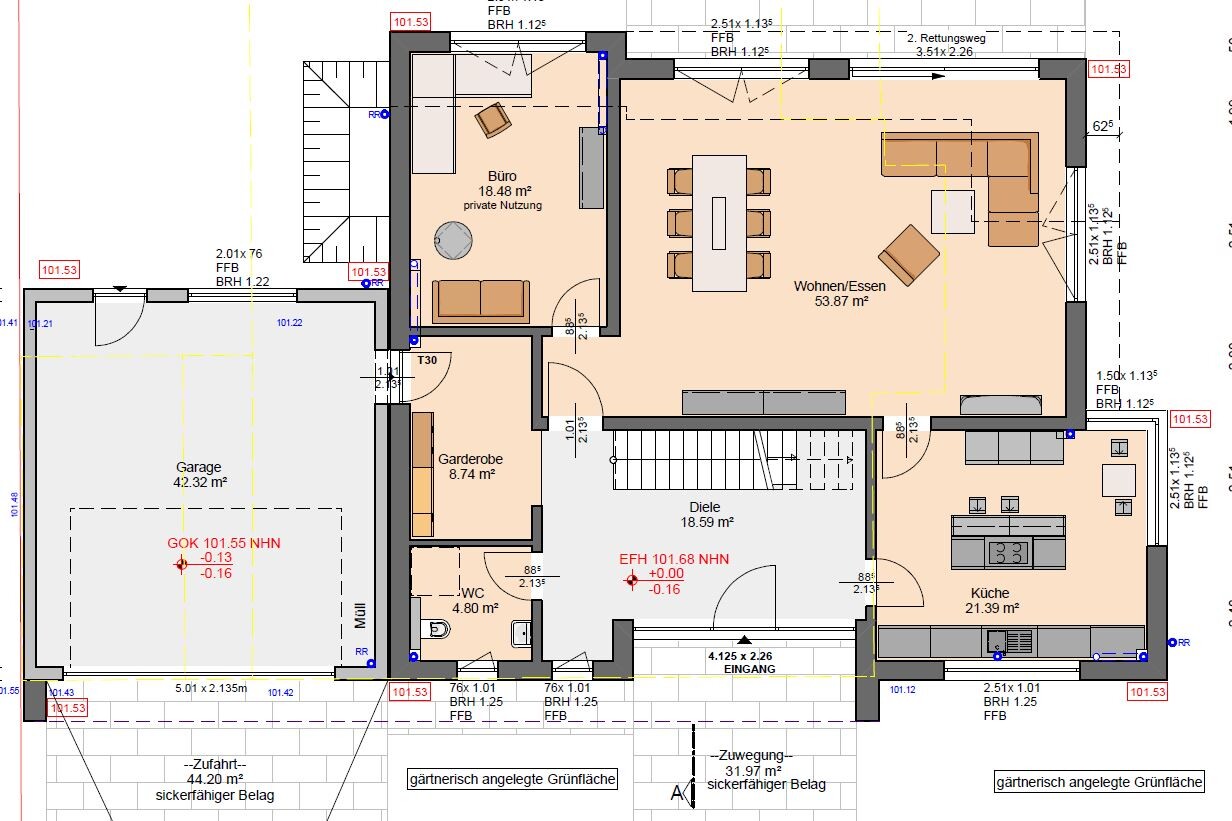
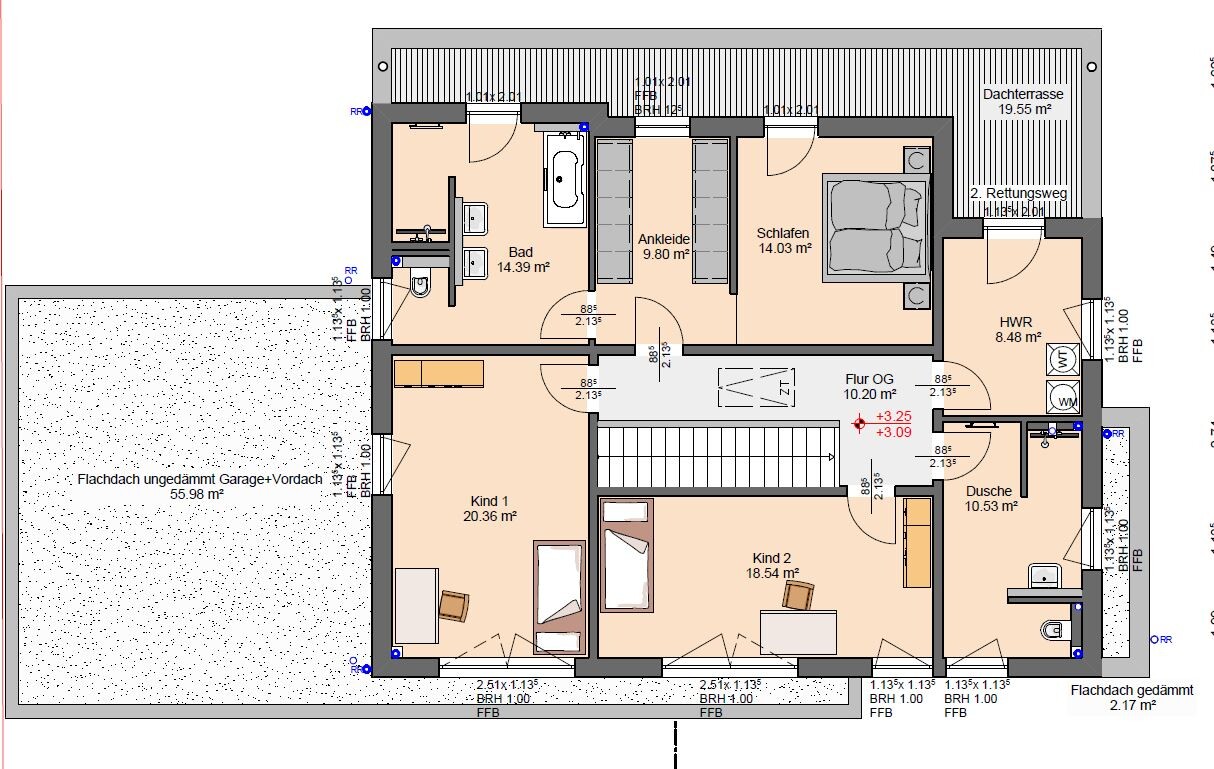
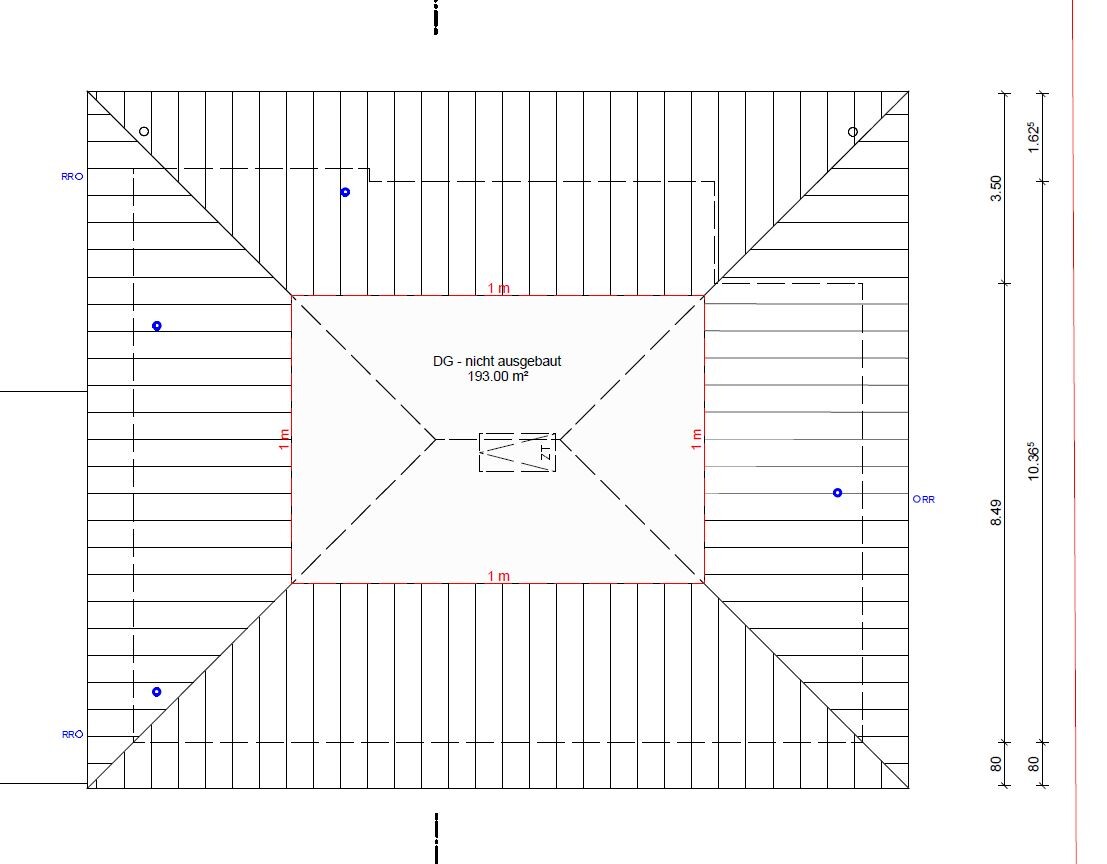
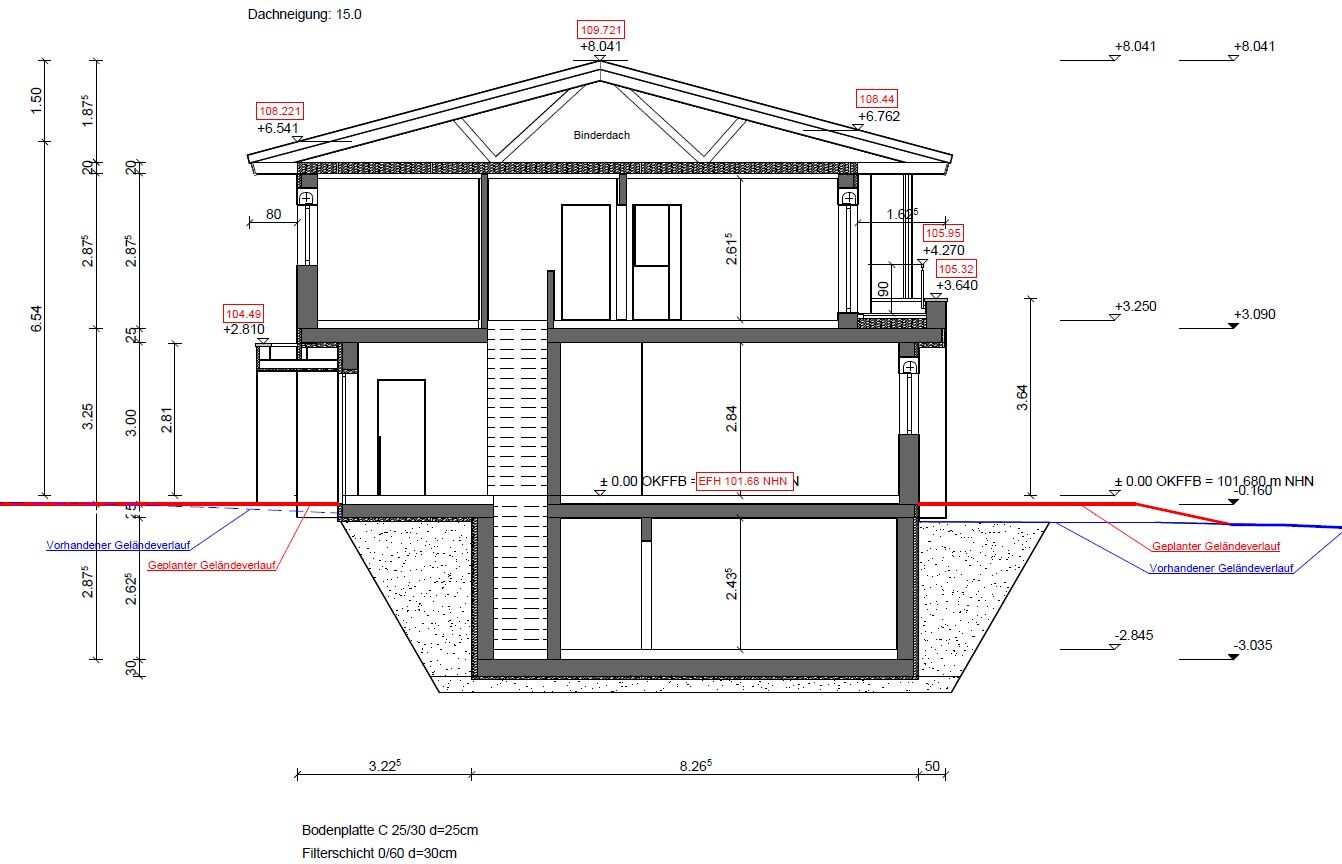

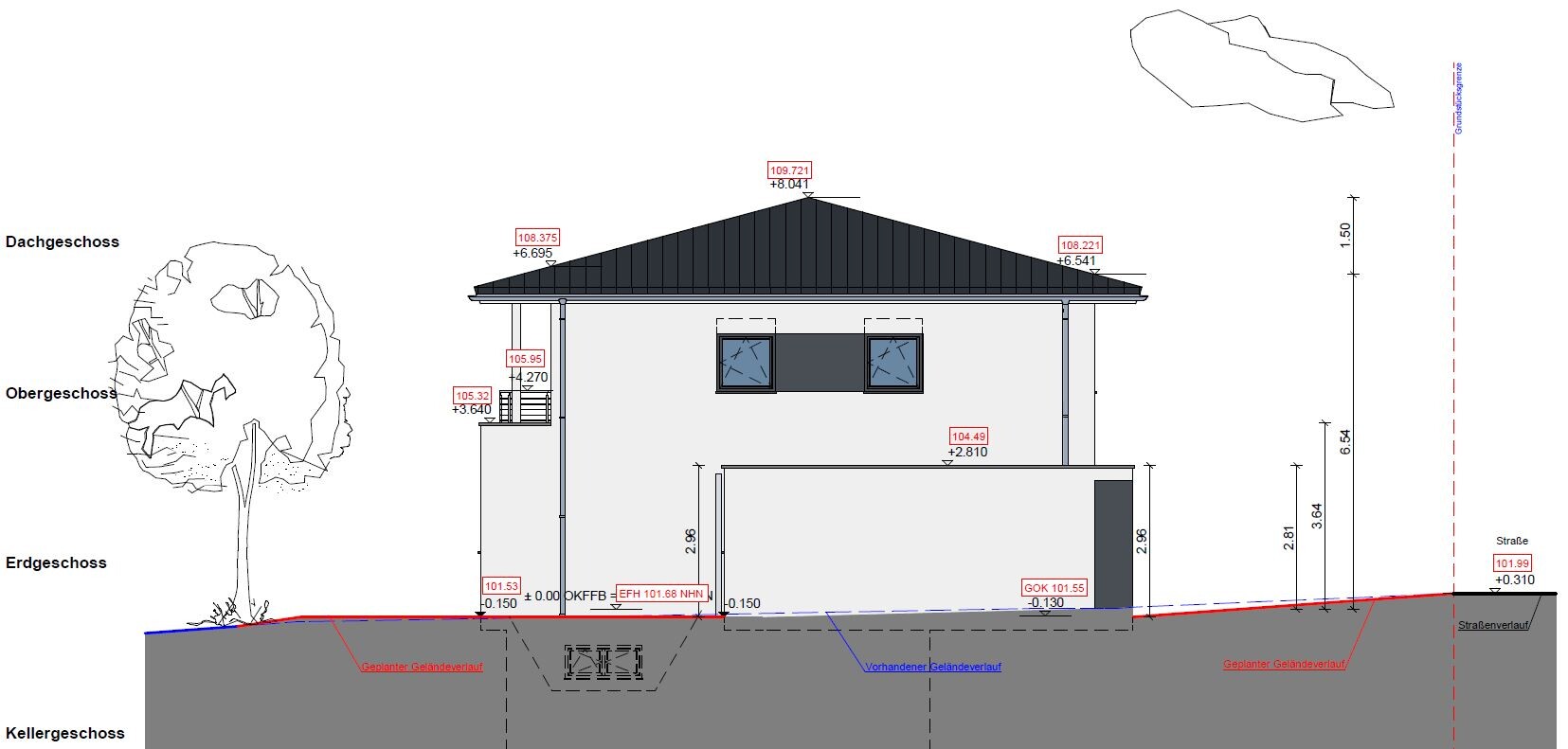
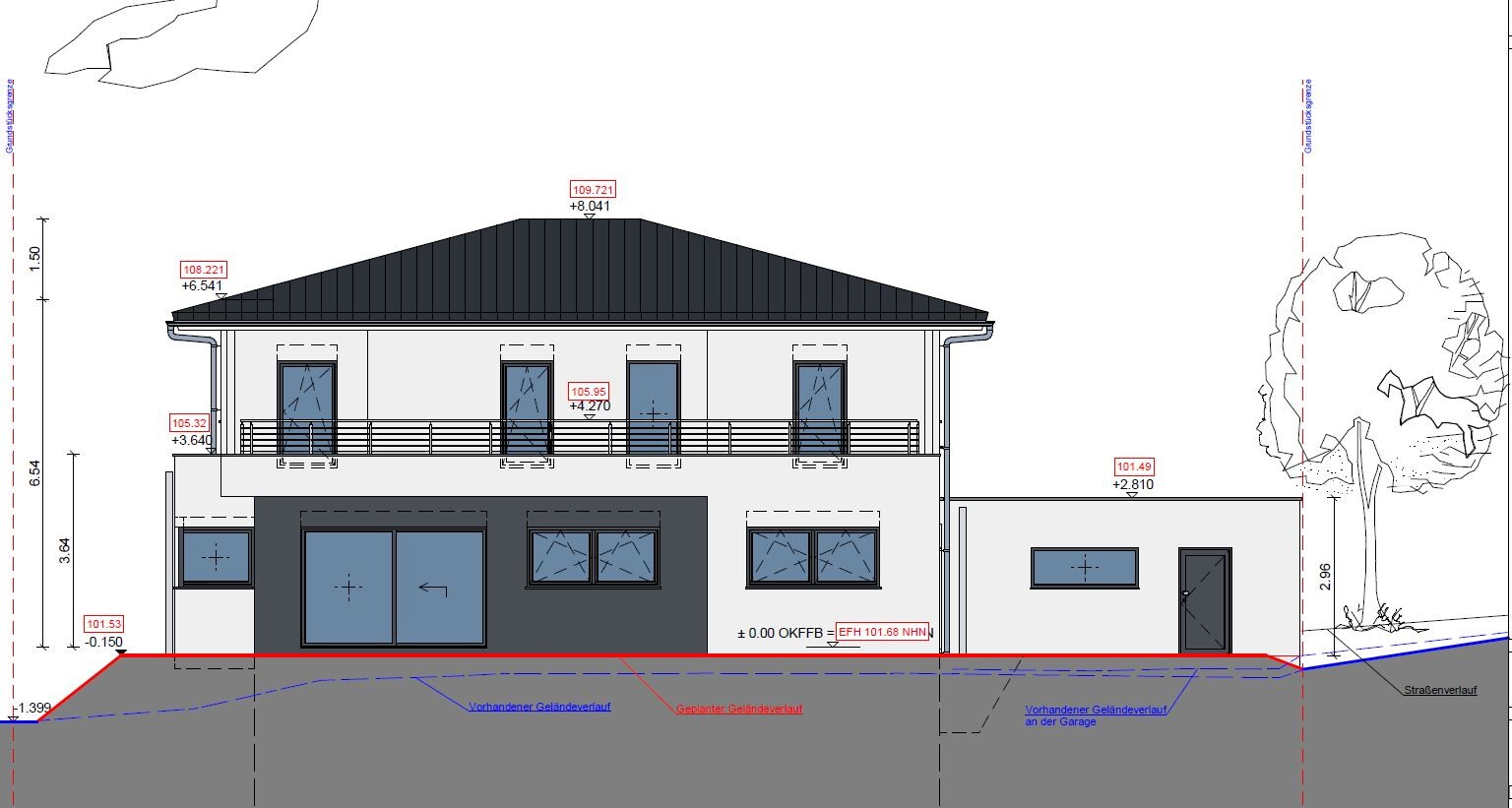
As some users have requested before, I’m now starting a new thread with the current planning of our detached house, which is about to be finalized.
These are the preliminary drawings for the building permit / planning permission application, and I have one last chance to review them and point out any issues.
It still seems to me that there is less than 1.20m (4 feet) of space between the two wardrobes in the dressing room. Or am I seeing this wrong? Apparently, the rooms on the left and right were overlooked and not adjusted accordingly.
Two Velux ceiling spotlights are still planned to illuminate the upper floor hallway.
In the basement, on the right side in the upper room, a window similar to the one on the left basement side is an option.
We still haven’t decided on the T30 fire-rated door to the garage, even though it is shown in the plans. Most likely, for safety reasons and the limited use of the kitchen at the other end of the house, we will eventually forgo it.
User 11ant pointed out that the right window in child’s room 2 is suboptimally positioned. However, this could still be changed after submitting the building permit / planning permission application. Our architect thinks moving the window to the left would negatively affect the house’s exterior appearance. We’ll have to see about that.
R
R.Hotzenplotz12 Jul 2018 13:14We have a response to the expert report. Item 2.4 is undisputed (the expert was simply unaware of it), everything else is contested.
2.1 Situation regarding the base waterproofing:
The base waterproofing deviates from DIN 18533.
As mentioned on site, the variant we chose is commonly used in practice.
There are no disadvantages, as the pressure-resistant Styrodur board, firmly connected to the foundation slab and also used as insulation under heavily loaded slabs, is an equivalent substrate for rendering, comparable to one made of concrete or masonry.
Therefore, there is no defect at this point. This is especially true because damage to the insulation when adding insulation afterwards cannot be ruled out.
2.2 Situation regarding the rear facade:
This was incorrectly summarized by me.
The noted spot shows an inaccuracy of 1.5 cm on an area of 0.8 m² (about 8.6 sq ft), which will not be skimmed off as I initially stated but will instead be evened out with the base coat, since the maximum thickness for the base coat will not be exceeded.
Thus, this is not a defect but an unfinished work that will be properly aligned in the course of the exterior plastering.
2.3 Situation regarding the cable penetration in the garage:
This electrical installation is not part of our scope of work.
2.4 Situation regarding the street-facing canopy:
The constructed lightweight canopy over the front door deviates from the construction specification.
However, according to the planning record dated 01.12.2017, the canopy design was amended from concrete construction to a lightweight structure and agreed upon accordingly (see record dated 01.12.2017).
2.5 Situation regarding the terrace exit doors on the rear of the building on the first floor:
The height from the finished floor level to the exit is 15 cm (6 inches), even though 20 cm (8 inches) is claimed in the report. Further dimensional correction should be noted here, namely, the 2.01 m (6 ft 7 in) measurement is a rough construction dimension, resulting in a finished dimension of 1.99 m (6 ft 6 in).
Regarding the comment on the passage height of the terrace doors, it should be noted that the clear passage height measured from the top of the finished floor to the underside of the frame is 1.97 m (6 ft 5½ in). The exit typically occurs over the threshold onto the walkway surface rather than—as assumed here—by risking damage to the threshold timber and the sealing lip on the window frame. In addition, the support surface of the terrace door frame, approximately 6 cm (2½ inches), does not provide a stable footing. Therefore, such an assumption is unrealistic.
Note: The relationship between floor and interior door heights to the clear passage height of the terrace doors is unclear to us. It is irrelevant whether the clear height of the terrace door is 1.82 m (6 ft) or 1.99 m (6 ft 6 in), since the exit typically happens over the threshold and not by misusing the frame timber as a stepping surface. We have already pointed out the damages resulting from such misuse.
This topic was discussed in detail. The drawbacks of the threshold solution and associated inconveniences were noted and included in the contract under 1.7.10. Given the construction stage, other solutions are not feasible.
It will be interesting to see how the base waterproofing issue develops:
The expert states:
"The sealing defects in the base are not merely a formal defect. There is a risk, for example due to the slope location of your property or potentially increased future rainfall, that water could improperly penetrate your building. Although the base area is generally only expected to be exposed to minimal water stress ‘ground moisture’, which the current waterproofing execution would presumably withstand, it cannot be guaranteed that this will remain the case in the future. Based on the referenced regulations and my professional experience, remedial work or strengthening of the base waterproofing is necessary, especially since the base waterproofing was not executed in accordance with standards."
By the way, the vent pipe is actually a Conel, not a Durgo. Conel Drain can be found online and can probably be used.
2.1 Situation regarding the base waterproofing:
The base waterproofing deviates from DIN 18533.
As mentioned on site, the variant we chose is commonly used in practice.
There are no disadvantages, as the pressure-resistant Styrodur board, firmly connected to the foundation slab and also used as insulation under heavily loaded slabs, is an equivalent substrate for rendering, comparable to one made of concrete or masonry.
Therefore, there is no defect at this point. This is especially true because damage to the insulation when adding insulation afterwards cannot be ruled out.
2.2 Situation regarding the rear facade:
This was incorrectly summarized by me.
The noted spot shows an inaccuracy of 1.5 cm on an area of 0.8 m² (about 8.6 sq ft), which will not be skimmed off as I initially stated but will instead be evened out with the base coat, since the maximum thickness for the base coat will not be exceeded.
Thus, this is not a defect but an unfinished work that will be properly aligned in the course of the exterior plastering.
2.3 Situation regarding the cable penetration in the garage:
This electrical installation is not part of our scope of work.
2.4 Situation regarding the street-facing canopy:
The constructed lightweight canopy over the front door deviates from the construction specification.
However, according to the planning record dated 01.12.2017, the canopy design was amended from concrete construction to a lightweight structure and agreed upon accordingly (see record dated 01.12.2017).
2.5 Situation regarding the terrace exit doors on the rear of the building on the first floor:
The height from the finished floor level to the exit is 15 cm (6 inches), even though 20 cm (8 inches) is claimed in the report. Further dimensional correction should be noted here, namely, the 2.01 m (6 ft 7 in) measurement is a rough construction dimension, resulting in a finished dimension of 1.99 m (6 ft 6 in).
Regarding the comment on the passage height of the terrace doors, it should be noted that the clear passage height measured from the top of the finished floor to the underside of the frame is 1.97 m (6 ft 5½ in). The exit typically occurs over the threshold onto the walkway surface rather than—as assumed here—by risking damage to the threshold timber and the sealing lip on the window frame. In addition, the support surface of the terrace door frame, approximately 6 cm (2½ inches), does not provide a stable footing. Therefore, such an assumption is unrealistic.
Note: The relationship between floor and interior door heights to the clear passage height of the terrace doors is unclear to us. It is irrelevant whether the clear height of the terrace door is 1.82 m (6 ft) or 1.99 m (6 ft 6 in), since the exit typically happens over the threshold and not by misusing the frame timber as a stepping surface. We have already pointed out the damages resulting from such misuse.
This topic was discussed in detail. The drawbacks of the threshold solution and associated inconveniences were noted and included in the contract under 1.7.10. Given the construction stage, other solutions are not feasible.
It will be interesting to see how the base waterproofing issue develops:
The expert states:
"The sealing defects in the base are not merely a formal defect. There is a risk, for example due to the slope location of your property or potentially increased future rainfall, that water could improperly penetrate your building. Although the base area is generally only expected to be exposed to minimal water stress ‘ground moisture’, which the current waterproofing execution would presumably withstand, it cannot be guaranteed that this will remain the case in the future. Based on the referenced regulations and my professional experience, remedial work or strengthening of the base waterproofing is necessary, especially since the base waterproofing was not executed in accordance with standards."
By the way, the vent pipe is actually a Conel, not a Durgo. Conel Drain can be found online and can probably be used.
Sounds quite interesting in parts!
Regarding 2.1.: That could indeed become really important!
Regarding 2.2.: That would be a solution mentioned here as well; if the plastering issue can be resolved, that would be great.
Regarding 2.3.: Who performed the electrical installation? Is it part of their scope of work, and if not, why does the expert criticize it? In that case, you should have pointed this out to the expert.
Regarding 2.4.: Here too, you should probably have informed the expert that this was changed in the planning.
Regarding 2.5.: Which measurement is actually correct in the end could still turn out to be interesting. How does the expert arrive at 20 cm (8 inches) and the others at 15 cm (6 inches)? Generally, this seems to be a topic that was also discussed back and forth during planning. At least the disadvantages of the threshold were pointed out, so I would be more cautious than the lawyer about classifying the height as a planning error. The opposing party could argue that it was discussed but simply not desired.
So 2.1. is certainly the biggest issue, but with 2.3. and 2.5., the question also arises of where exactly the responsible parties can be found.
Regarding 2.1.: That could indeed become really important!
Regarding 2.2.: That would be a solution mentioned here as well; if the plastering issue can be resolved, that would be great.
Regarding 2.3.: Who performed the electrical installation? Is it part of their scope of work, and if not, why does the expert criticize it? In that case, you should have pointed this out to the expert.
Regarding 2.4.: Here too, you should probably have informed the expert that this was changed in the planning.
Regarding 2.5.: Which measurement is actually correct in the end could still turn out to be interesting. How does the expert arrive at 20 cm (8 inches) and the others at 15 cm (6 inches)? Generally, this seems to be a topic that was also discussed back and forth during planning. At least the disadvantages of the threshold were pointed out, so I would be more cautious than the lawyer about classifying the height as a planning error. The opposing party could argue that it was discussed but simply not desired.
So 2.1. is certainly the biggest issue, but with 2.3. and 2.5., the question also arises of where exactly the responsible parties can be found.
R
R.Hotzenplotz12 Jul 2018 13:50cschiko schrieb:
Regarding 2.1: That might actually become interesting!If it was not executed according to regulations, then it was not executed according to regulations. I see no room for interpretation here. I will continue to stand by the opinion of my expert.
cschiko schrieb:
Regarding 2.2: That would be a solution mentioned here as well; if the issue with the plaster can be resolved, that would be great.They are welcome to do so. If it complies with the regulations and does not affect me, that’s perfectly fine.
cschiko schrieb:
Regarding 2.3: Who carried out the electrical installation? Is it part of their scope of work, and if not, why does the expert criticize it, or shouldn’t you have pointed this out?Electrical work was subcontracted separately. The general contractor has nothing to do with it, and I consider that entirely unproblematic.
cschiko schrieb:
Regarding 2.5: Which dimension is ultimately correct could still become interesting. How does the expert arrive at 20cm (8 inches) and they at 15cm (6 inches)? Generally, this also seems to be a topic where there was some back and forth during planning. At least the disadvantages of the threshold were pointed out, so I would be more cautious than the lawyer about classifying the height as a planning error. The opposing side could argue that it was discussed but simply not desired.The expert measured where the door opening starts and then mentally added the finished floor level and screed. You simply can’t get 15cm (6 inches) that way.
The planning stated that there would be a threshold here, and that is also in the contract. That is not disputed. Why a flush finish was not planned and discussed then, I don’t remember. The lawyer says that a layperson should have been informed that everything in the house would be built higher (wall heights, interior doors) or wider (hallways, staircases), and that the terrace doors represent a small, standard measurement in comparison.
Yes, doors and windows were discussed. We even had the general contractor at our home and said we could very well imagine windows like ours. They are about 2.30m (7 feet 7 inches) high, and the regular windows are also significantly larger. But we failed to keep track of the measurements, or we did not know that the construction plans showed rough opening dimensions. Even the specialist attorney for construction and architectural law says it’s unclear to him. If the contract states a height of 201cm (79 inches), that should take precedence, he says. And the working plans also lack a corresponding legend explaining rough opening heights, etc.
In the end, what was said by whom cannot be proven anyway. The lawyer asked if anyone besides my wife was present when we showed our large door and window elements at our home. There wasn’t. The general contractor will have the same issue if he claims to have informed us about this and that. It simply isn’t true that we wanted such small openings or elements. Apart from our stated wishes as described, the window sizes were not discussed at all, only the issue of the threshold.
R.Hotzenplotz schrieb:
We didn’t know that the execution plan includes rough construction dimensions. Even the specialist lawyer for construction and architectural law says it’s not obvious to him. If the contract states a height of 201cm (79 inches), that should be considered the priority for now, he says. And the working drawings also lack a corresponding legend for rough construction height, etc.Honestly, I have yet to come across any working or execution plan that refers to finished dimensions. In my opinion, the consistent use of rough construction dimensions is the current standard, so I would at least view the lawyer’s statements critically. After all, the execution plan should specify the size of the opening where the window or door element will be installed later, not the size of the window sash or door leaf itself. And mixing rough construction and finished dimensions in the same plan is definitely not acceptable.
R.Hotzenplotz schrieb:
It’s simply not true that we wanted such small openings/elements.Well, in a dispute, it’s less about what you wanted and more about what you ordered according to the contract and contract planning, and what you approved by signing off on the working drawings.As much as I wish you a clean resolution here… it will be difficult to hold the construction company responsible in this case.

MayrCh schrieb:
Honestly, I haven’t come across any production or execution plans that refer to finished dimensions. The consistent use of rough construction dimensions is, in my opinion, the current standard. Therefore, I would view the lawyer’s statements at least somewhat critically. The execution plan should specify the size of the opening where the window or door element will be installed later—not the size of the window sash or door leaf. And mixing rough construction and finished dimensions in one plan is absolutely not acceptable. Fully agree.
https://www.instagram.com/11antgmxde/
https://www.linkedin.com/company/bauen-jetzt/
R
R.Hotzenplotz13 Jul 2018 12:41MayrCh schrieb:
The construction plans should specify the size of the opening where the window or door element will be installed later, not the size of the window sash or door leaf. Mixing rough opening dimensions with finished dimensions in one plan is obviously not acceptable.If you understand that... respect...
Neither my expert nor my lawyer can make sense of this, and they therefore doubt the contract-compliant execution. On one hand, a parapet height is marked in the dressing room, along with a “rough opening” dimension similar to the patio doors. So I have to assume that means the parapet height plus the 2.01 m (6 ft 7 in) from the rough opening dimension. On the other hand, the executed work did not include parapet height plus 2.01 m (6 ft 7 in) but rather “the same” 2.01 m (6 ft 7 in) as in the other rooms with patio doors, where no parapet height is indicated.
For the other windows upstairs and downstairs, I do have rough opening dimensions plus the parapet height. So why should it be different on the patio side? But it is. They did not consistently follow their own execution plans and there are contradictions within them.
And if I bring this into context with the contract text specifying a door height of 201 cm (79 inches), I consider it quite possible that a judge might accept that argument.
What about the 15 cm (6 inches) threshold in the construction contract? Obviously, they mean the threshold from outside to inside. But I assumed it meant the threshold from inside to outside. When I read about a threshold, I understand it as the height I have to step over. What sense does it make to simply specify the threshold without fixing which side it refers to, especially when technically a 15 cm (6 inches) threshold inside would also have been possible?
In short: this is just not clearly regulated.
Similar topics