
ᐅ Floor plan design shortly before submitting the building permit application
Created on: 2 Oct 2017 23:25
R
R.Hotzenplotz
Hello everyone!
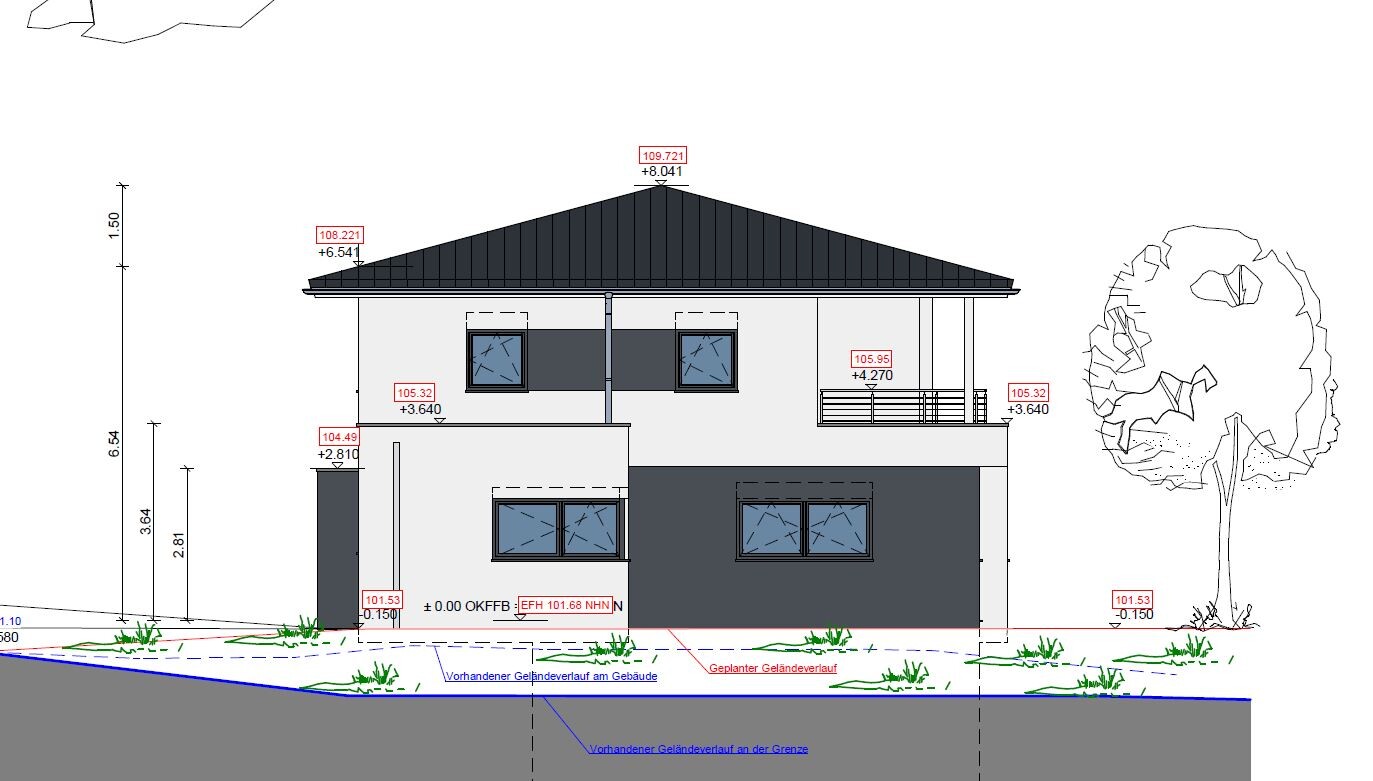
As some users have requested before, I’m now starting a new thread with the current planning of our detached house, which is about to be finalized.
These are the preliminary drawings for the building permit / planning permission application, and I have one last chance to review them and point out any issues.
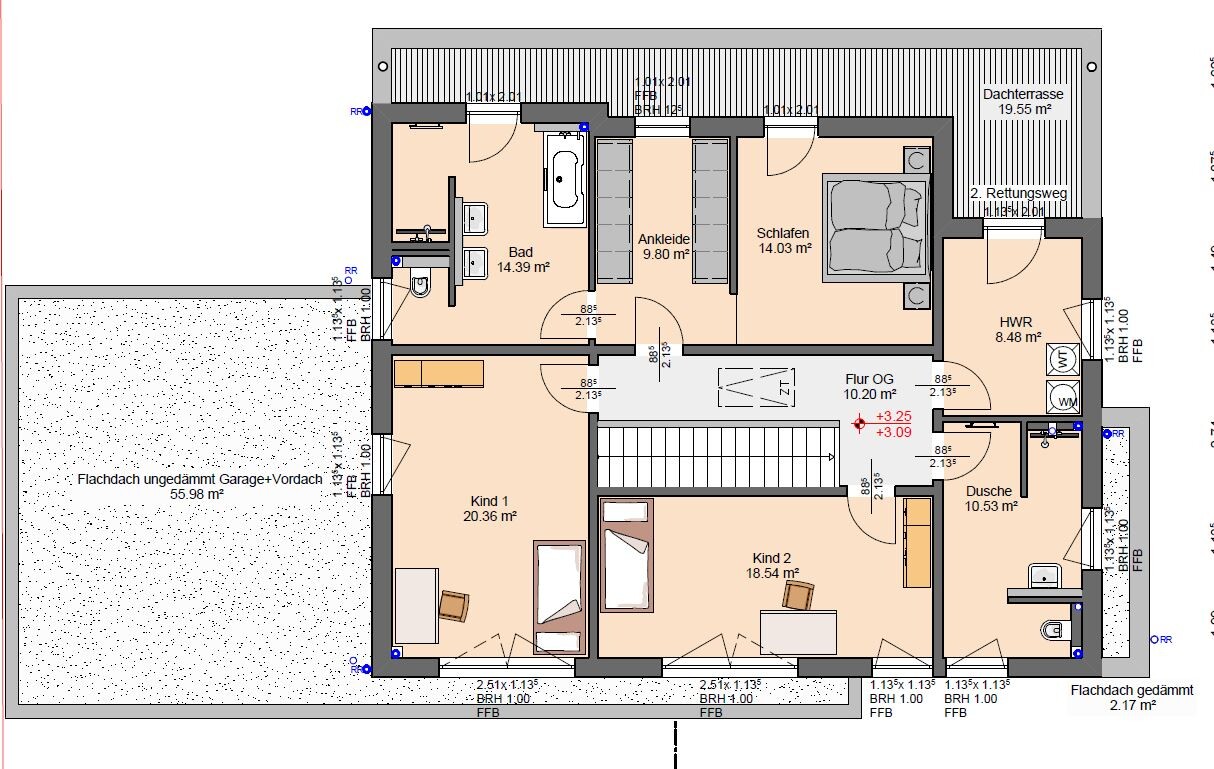
It still seems to me that there is less than 1.20m (4 feet) of space between the two wardrobes in the dressing room. Or am I seeing this wrong? Apparently, the rooms on the left and right were overlooked and not adjusted accordingly.
Two Velux ceiling spotlights are still planned to illuminate the upper floor hallway.
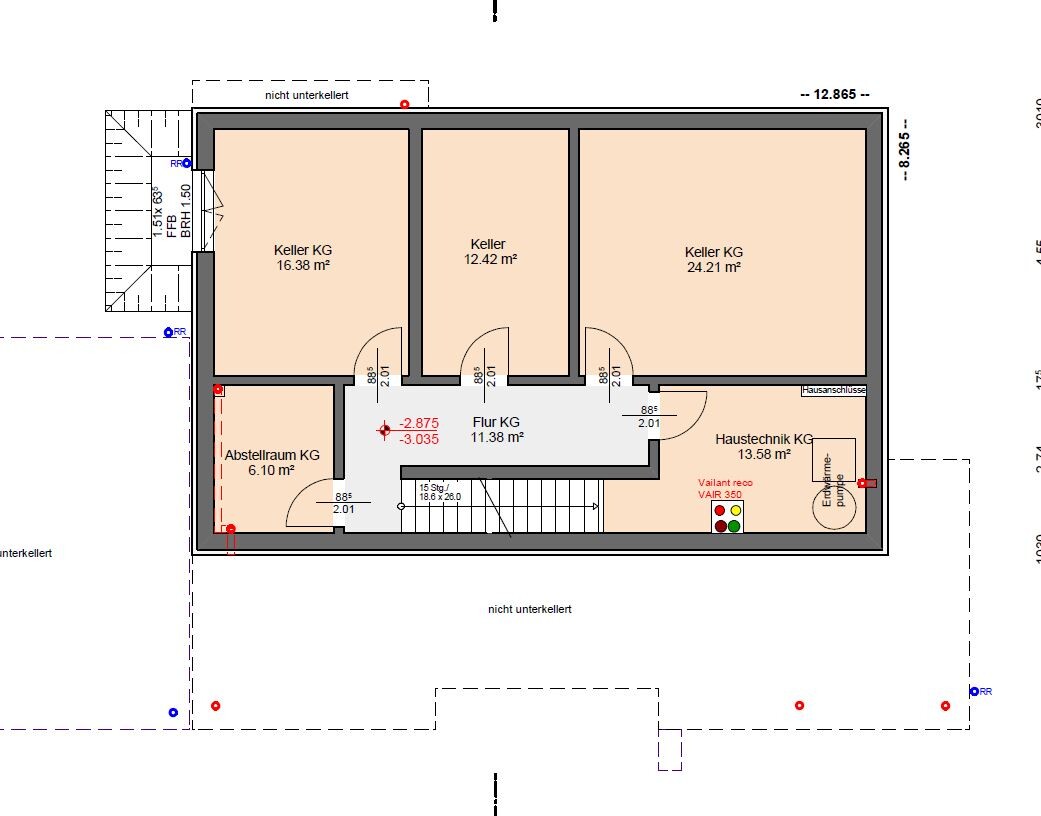
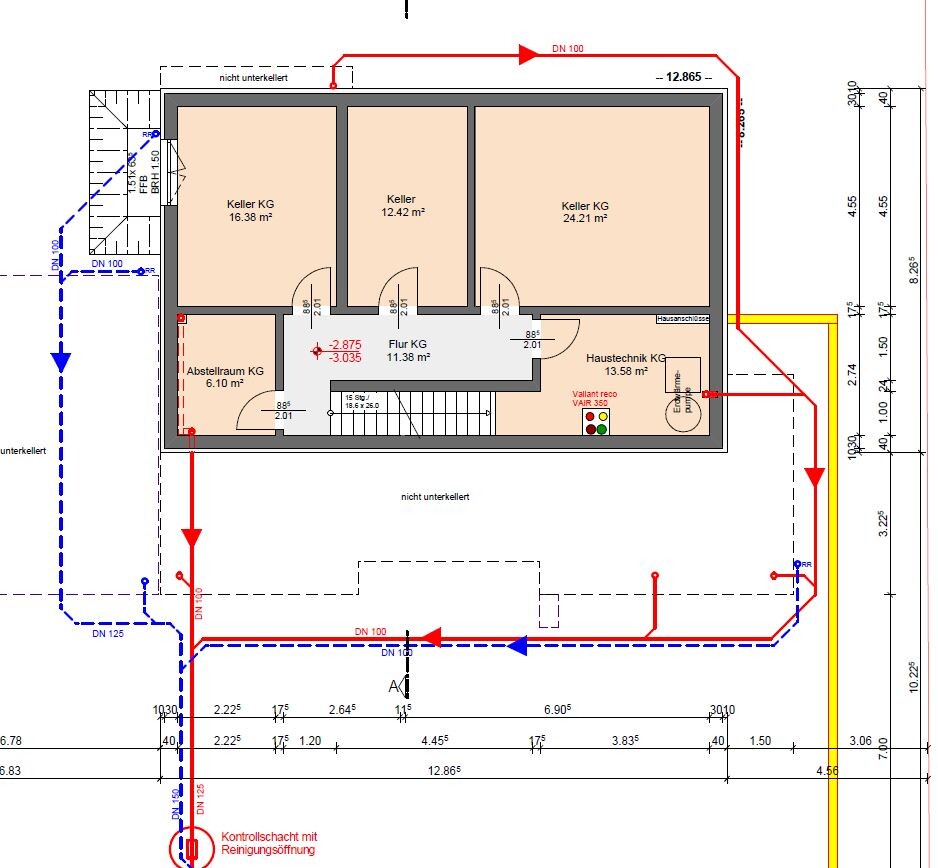
In the basement, on the right side in the upper room, a window similar to the one on the left basement side is an option.
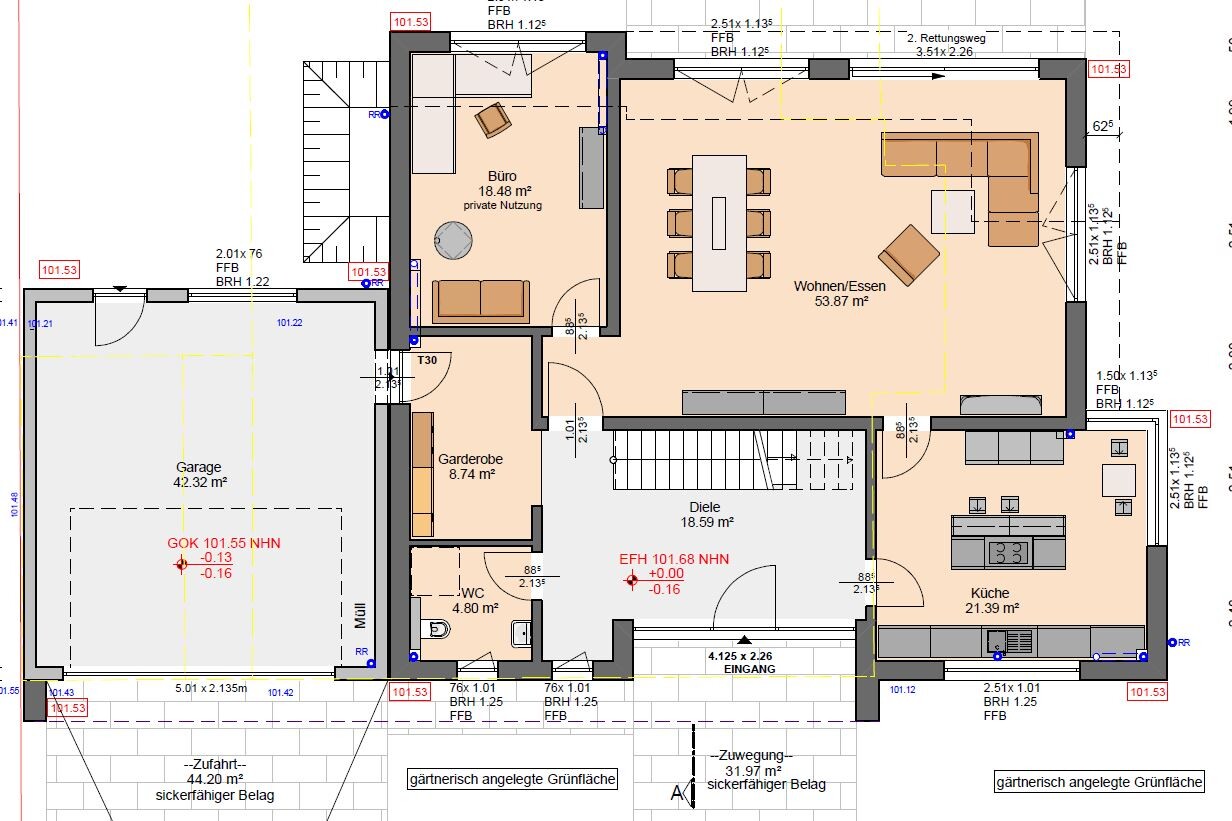
We still haven’t decided on the T30 fire-rated door to the garage, even though it is shown in the plans. Most likely, for safety reasons and the limited use of the kitchen at the other end of the house, we will eventually forgo it.
User 11ant pointed out that the right window in child’s room 2 is suboptimally positioned. However, this could still be changed after submitting the building permit / planning permission application. Our architect thinks moving the window to the left would negatively affect the house’s exterior appearance. We’ll have to see about that.
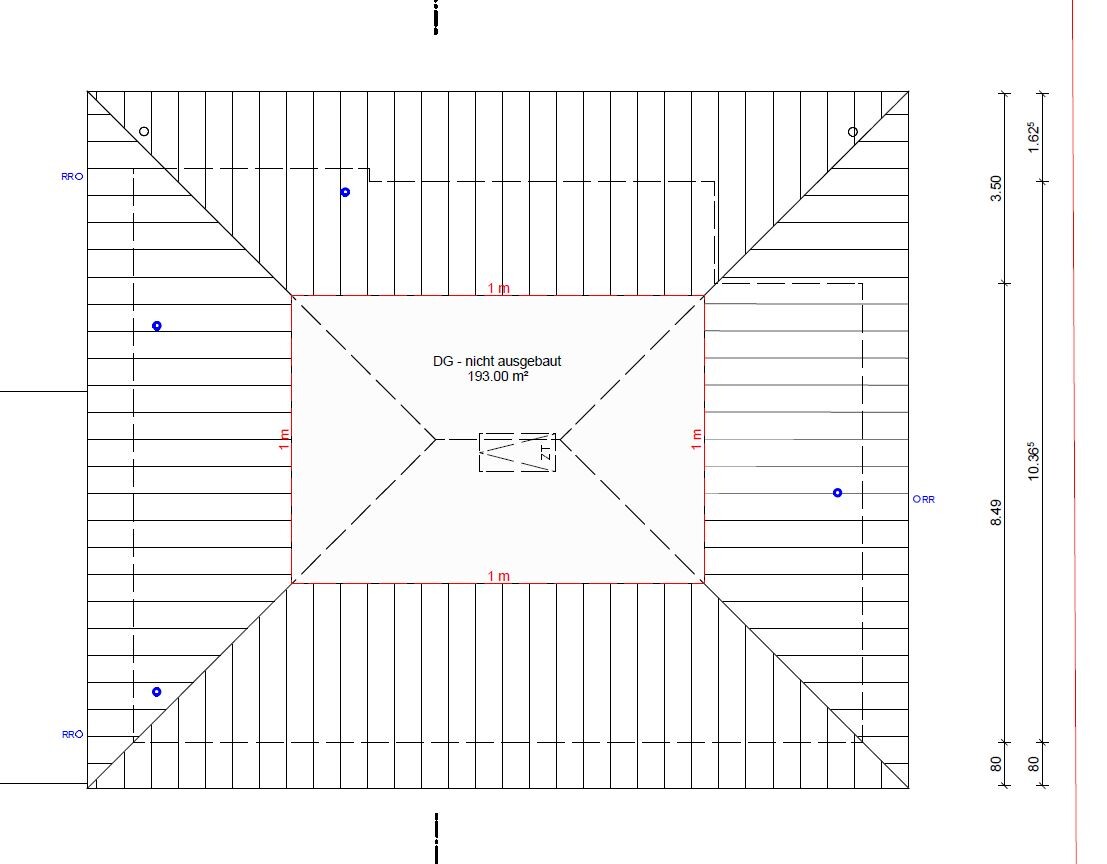
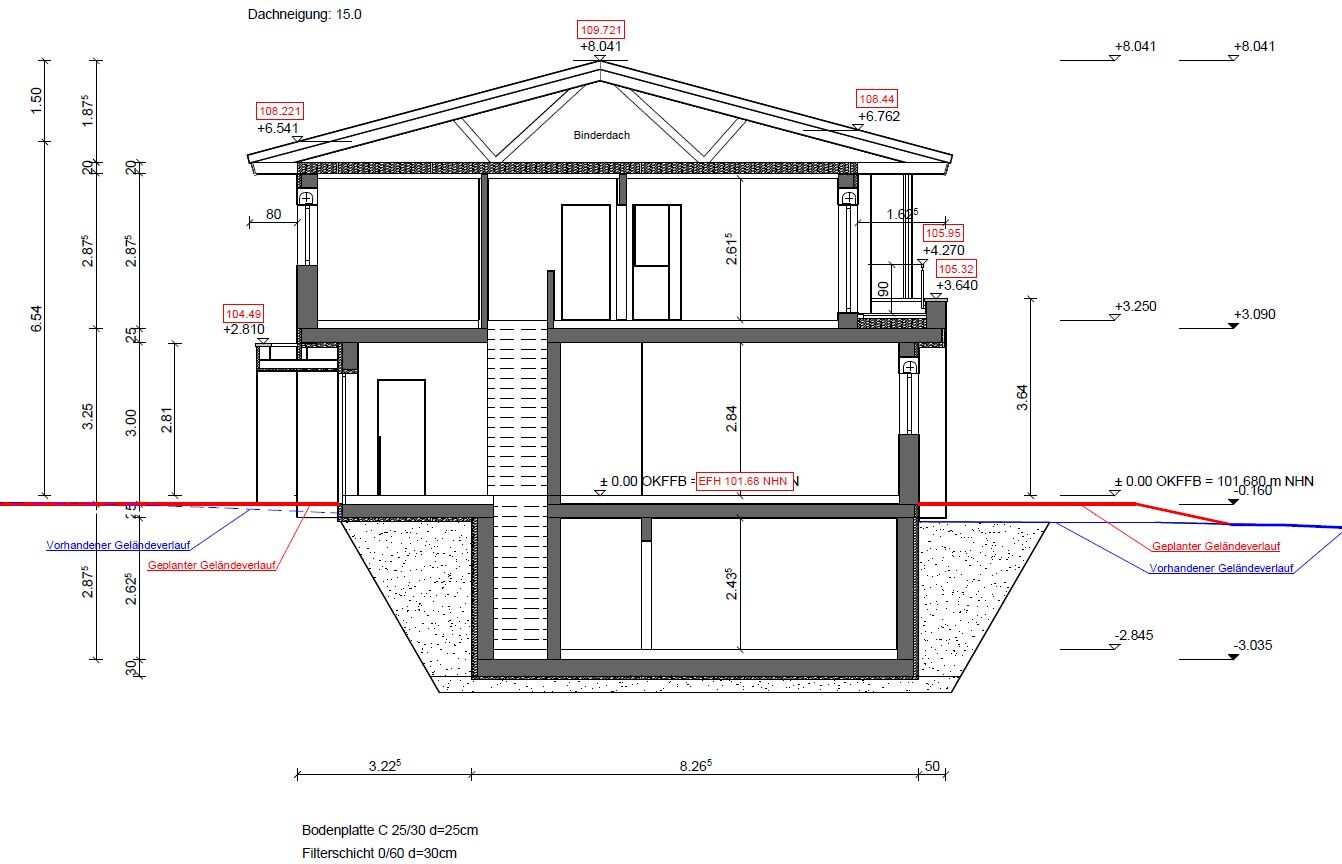

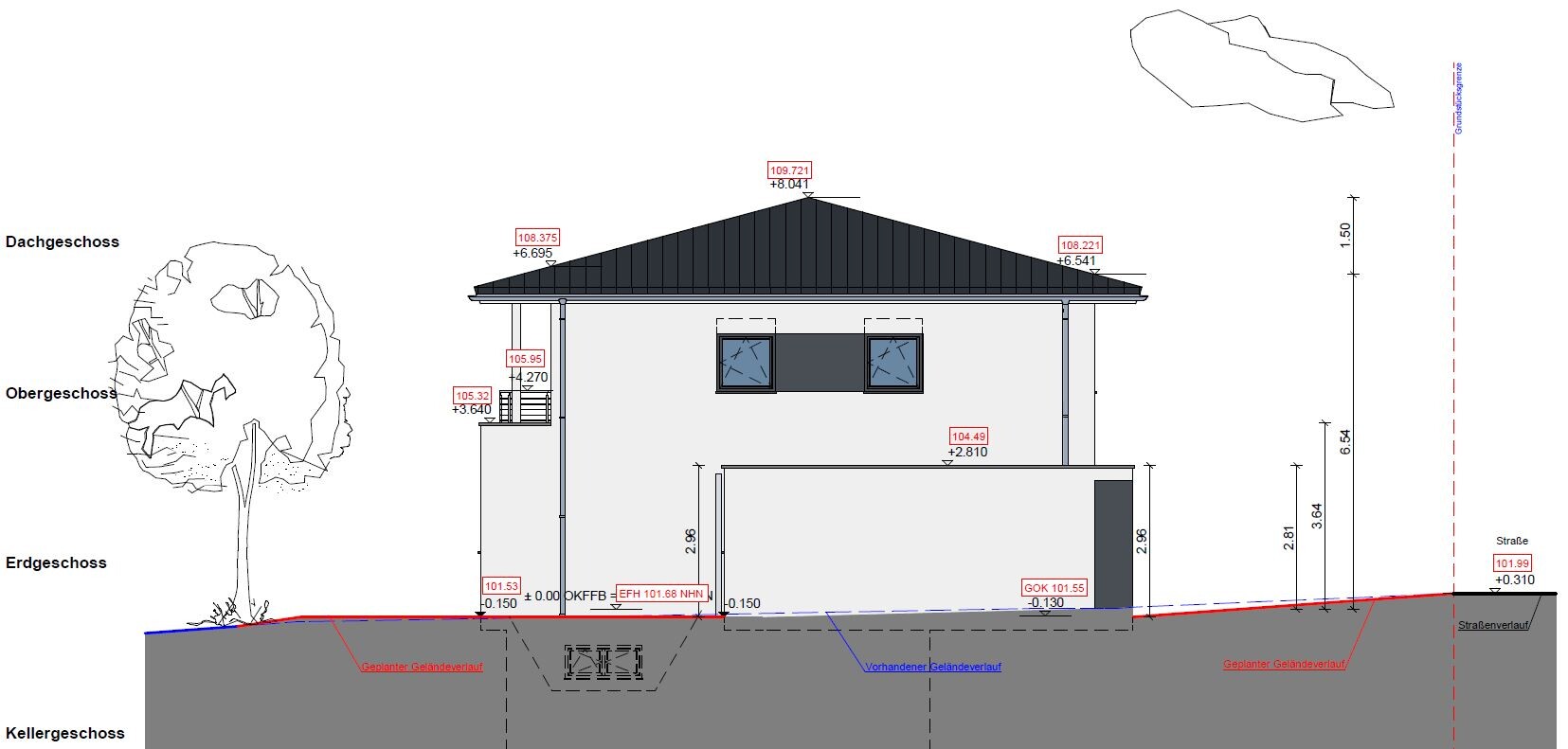
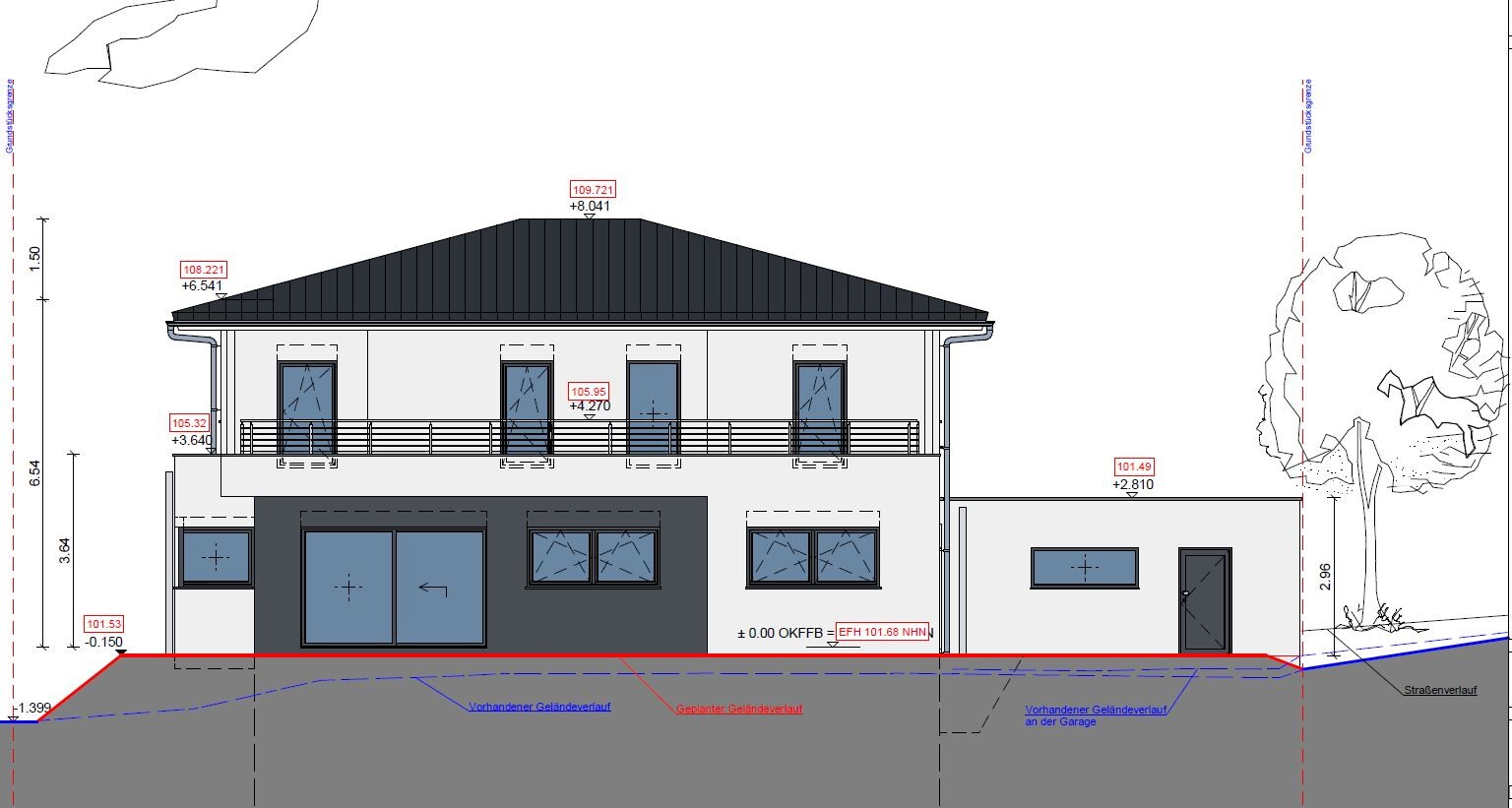
As some users have requested before, I’m now starting a new thread with the current planning of our detached house, which is about to be finalized.
These are the preliminary drawings for the building permit / planning permission application, and I have one last chance to review them and point out any issues.
It still seems to me that there is less than 1.20m (4 feet) of space between the two wardrobes in the dressing room. Or am I seeing this wrong? Apparently, the rooms on the left and right were overlooked and not adjusted accordingly.
Two Velux ceiling spotlights are still planned to illuminate the upper floor hallway.
In the basement, on the right side in the upper room, a window similar to the one on the left basement side is an option.
We still haven’t decided on the T30 fire-rated door to the garage, even though it is shown in the plans. Most likely, for safety reasons and the limited use of the kitchen at the other end of the house, we will eventually forgo it.
User 11ant pointed out that the right window in child’s room 2 is suboptimally positioned. However, this could still be changed after submitting the building permit / planning permission application. Our architect thinks moving the window to the left would negatively affect the house’s exterior appearance. We’ll have to see about that.
So the first option actually looks really good! I would like it a lot that way, and if the spotlights can’t be recessed, you could also include appropriate openings in the suspended ceiling.
The second option, on the other hand, doesn’t seem very successful to me because it looks like something is being hidden again. Option 1, however, doesn’t immediately give the impression that pipes had to be concealed there. Of course, the question remains who will cover the costs for this.
Otherwise, I feel sorry for you with all this nonsense, but don’t get discouraged. Try to finish the house in a way that you like, and then everything else will eventually be forgotten.
The second option, on the other hand, doesn’t seem very successful to me because it looks like something is being hidden again. Option 1, however, doesn’t immediately give the impression that pipes had to be concealed there. Of course, the question remains who will cover the costs for this.
Otherwise, I feel sorry for you with all this nonsense, but don’t get discouraged. Try to finish the house in a way that you like, and then everything else will eventually be forgotten.
R
R.Hotzenplotz10 Jul 2018 10:09cschiko schrieb:
The question, of course, is who will cover the costs for this implementation.According to the contract, the general contractor will only carry out minimal, straightforward boxing-in and will not provide any that the customer chooses for design reasons. Such options always come with additional charges.
R.Hotzenplotz schrieb:
I will post the report as soon as it is available. This was already explained somewhere earlier by the first expert.
Yes, we have a site manager. But as you can read in this thread, things don’t always go smoothly, and the site manager admits that he deviated from the DIN standards, but says it was faster and, from his point of view, equally effective.We can only confirm that; it’s the same situation for us... it has always been done that way, yes, the rules say otherwise, but we always do it like this and never had problems... as a layperson, the problem now is: whom can you trust?
Is the expert exaggerating? Isn’t the site manager the practical person who should know better? We find ourselves in this dilemma over and over...
I think our site manager already regrets taking us on, since we question everything... (-;
R
R.Hotzenplotz10 Jul 2018 10:56Snowy36 schrieb:
We can only confirm that; it’s the same for us... it’s always been done this way, of course the guidelines say otherwise, but we always do it like this and never have any problems... as a layperson, the problem now is: who do you trust?When in doubt, I trust the DIN standards. If these have also been agreed upon, then it is up to the general contractor (GC) to propose an alternative if they want to deviate from them. Ultimately, the client decides whether to accept that or not. The GC usually has less work if they deviate from the DIN, so I would want to negotiate the price accordingly. If I pay for an elaborate DIN-compliant execution, then the GC should deliver the corresponding quality. If less work is advantageous for the GC and does not disadvantage me, I would expect to get a share of the savings.

Curly schrieb:
Don’t you have a site manager? Their job is usually to ensure proper execution according to DIN standards. Unfortunately, "usually" is basically the same as "supposedly"...
R.Hotzenplotz schrieb:
The site manager says he knows he deviated from the DIN standards, but it was faster and, from his perspective, equivalent. That’s nonsense. DIN standards are recognized engineering rules, and there’s generally no alternative authority like DEKRA instead of TÜV or something similar.
Besides, I probably would have lost my temper with him for that statement – because in this context, it’s outrageous to ignore your request regarding the mailbox (not to mention that I find the agreed solution absolutely flawless in the end).
cschiko schrieb:
Well, the first option really looks very good! I would like it that way, and if the spotlights cannot be lowered, you could also leave corresponding openings in the suspended ceiling. Yes, it looks intentional – as if the kitchen’s canopy bracket was deliberately referenced. Extensions can be added to the ceiling fixture boxes if needed to reach the sockets.
Snowy36 schrieb:
Is the expert exaggerating? Isn’t the site manager the practical guy who should know better? That’s the classic excuse of all careless workers that they deviated from the standards based on practical experience (“it always worked out fine”). There are nitpicky experts as well as outdated building regulations that are still valid (during the Nazi era, coal was still stored on balconies for heating stoves; concrete slabs under balconies must still be designed for those loads today; and the Reich garage regulations alone, by name, show how old they are).
Removing one and a half centimeters of wall thickness (in a small area) shouldn’t bring down the whole house – but the brick manufacturer is probably unaware that the general contractor even considered this question. You almost get the impression that it’s not only Hotzenplotz’s first house but also the general contractor’s (or at least their structural builder’s).
https://www.instagram.com/11antgmxde/
https://www.linkedin.com/company/bauen-jetzt/
Similar topics