
ᐅ Floor plan design shortly before submitting the building permit application
Created on: 2 Oct 2017 23:25
R
R.Hotzenplotz
Hello everyone!
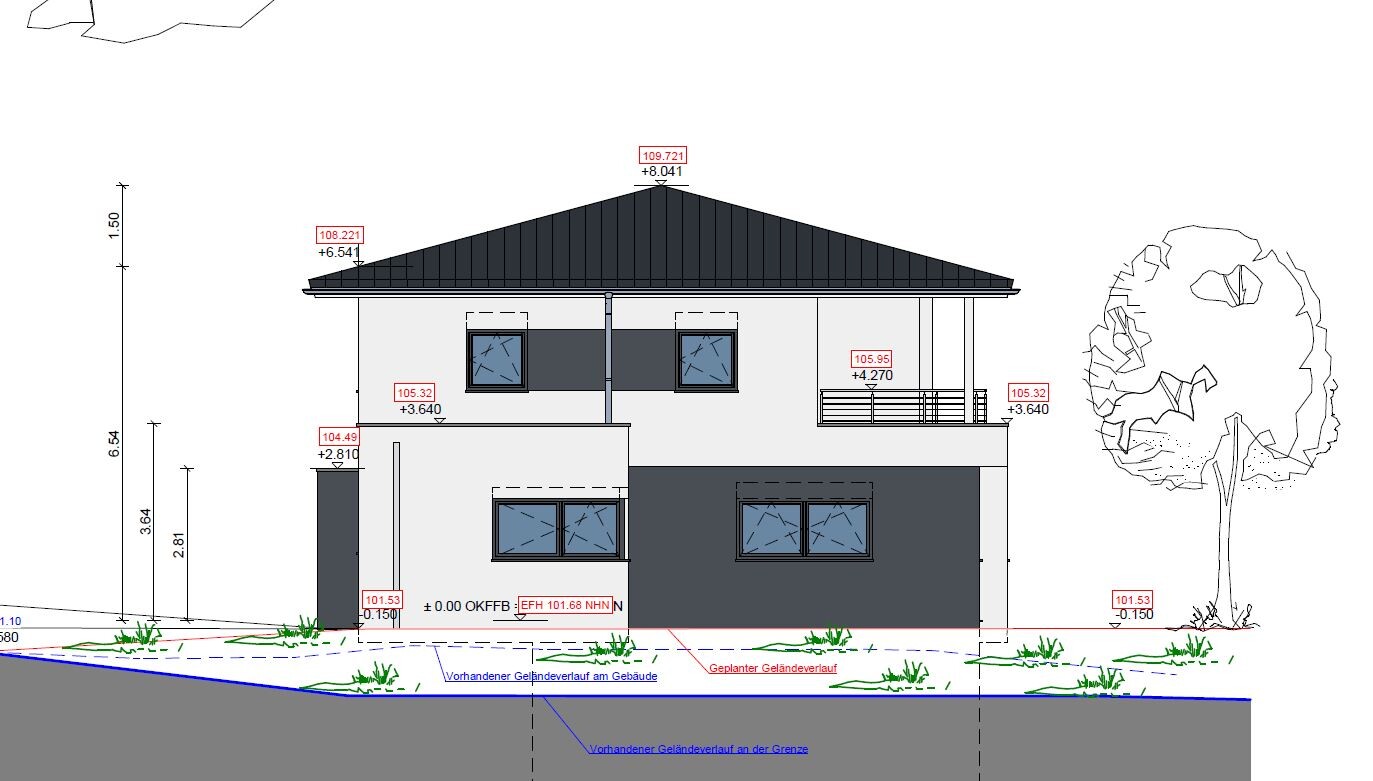
As some users have requested before, I’m now starting a new thread with the current planning of our detached house, which is about to be finalized.
These are the preliminary drawings for the building permit / planning permission application, and I have one last chance to review them and point out any issues.
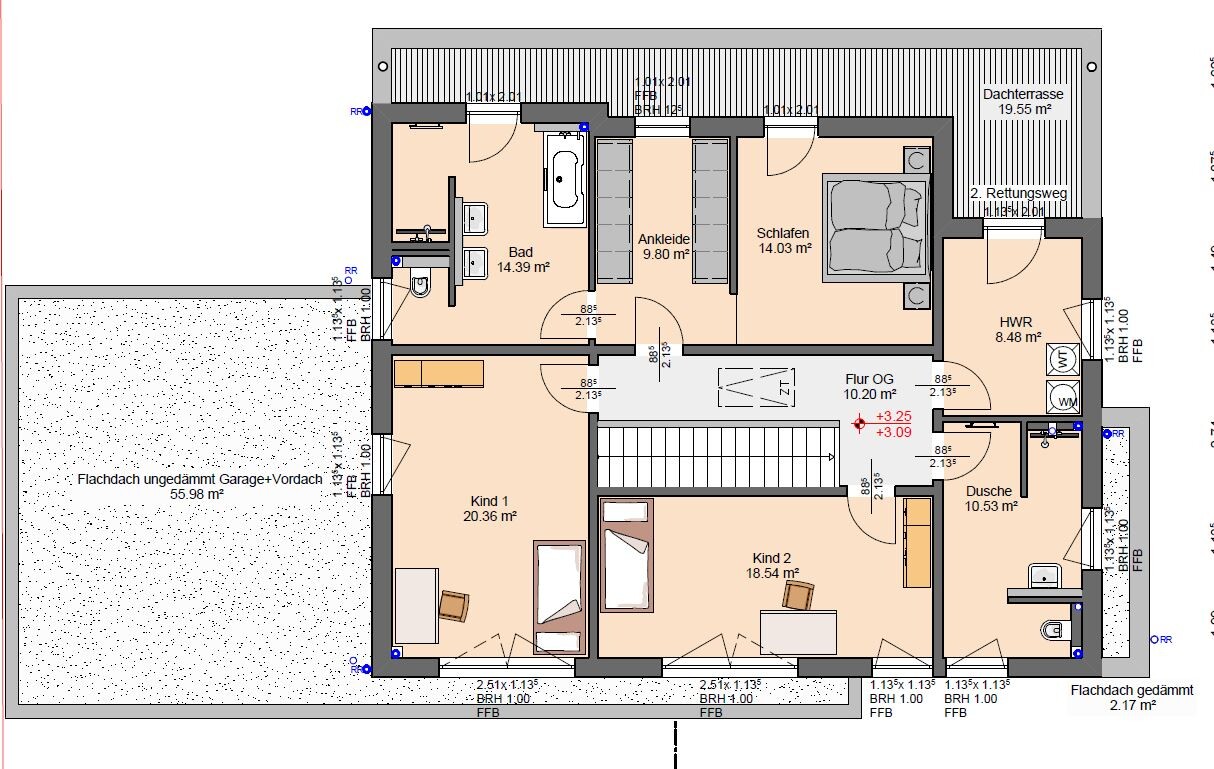
It still seems to me that there is less than 1.20m (4 feet) of space between the two wardrobes in the dressing room. Or am I seeing this wrong? Apparently, the rooms on the left and right were overlooked and not adjusted accordingly.
Two Velux ceiling spotlights are still planned to illuminate the upper floor hallway.
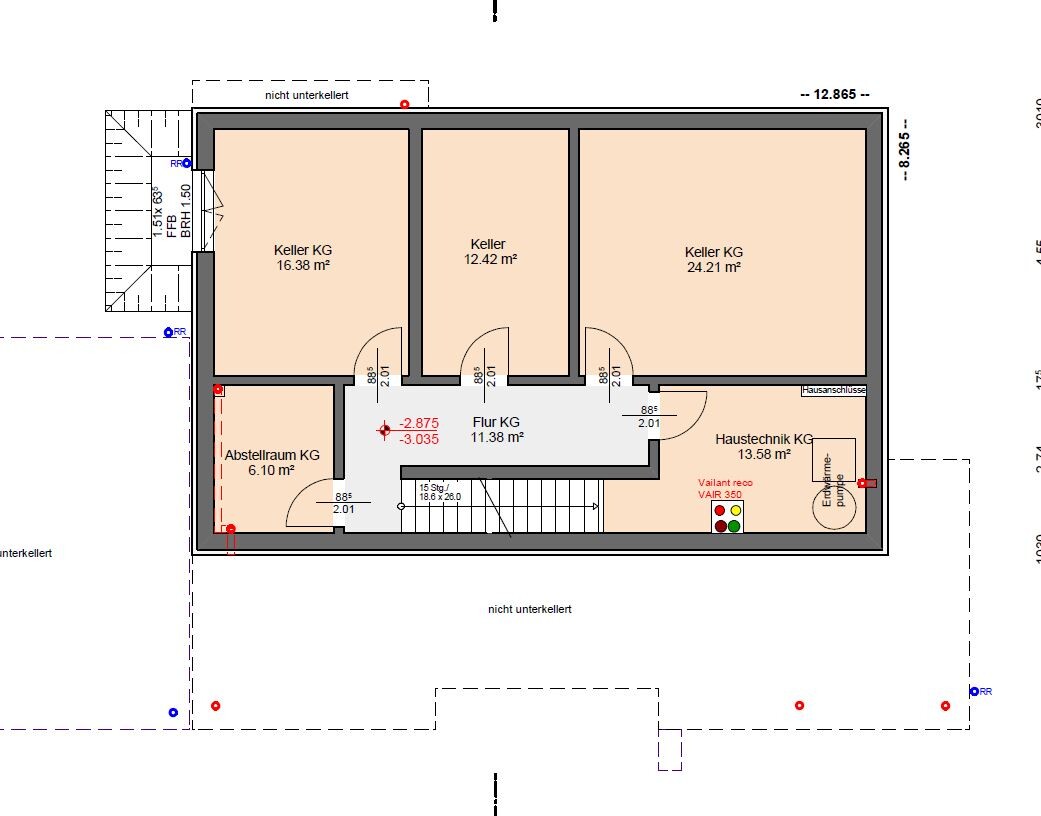
In the basement, on the right side in the upper room, a window similar to the one on the left basement side is an option.
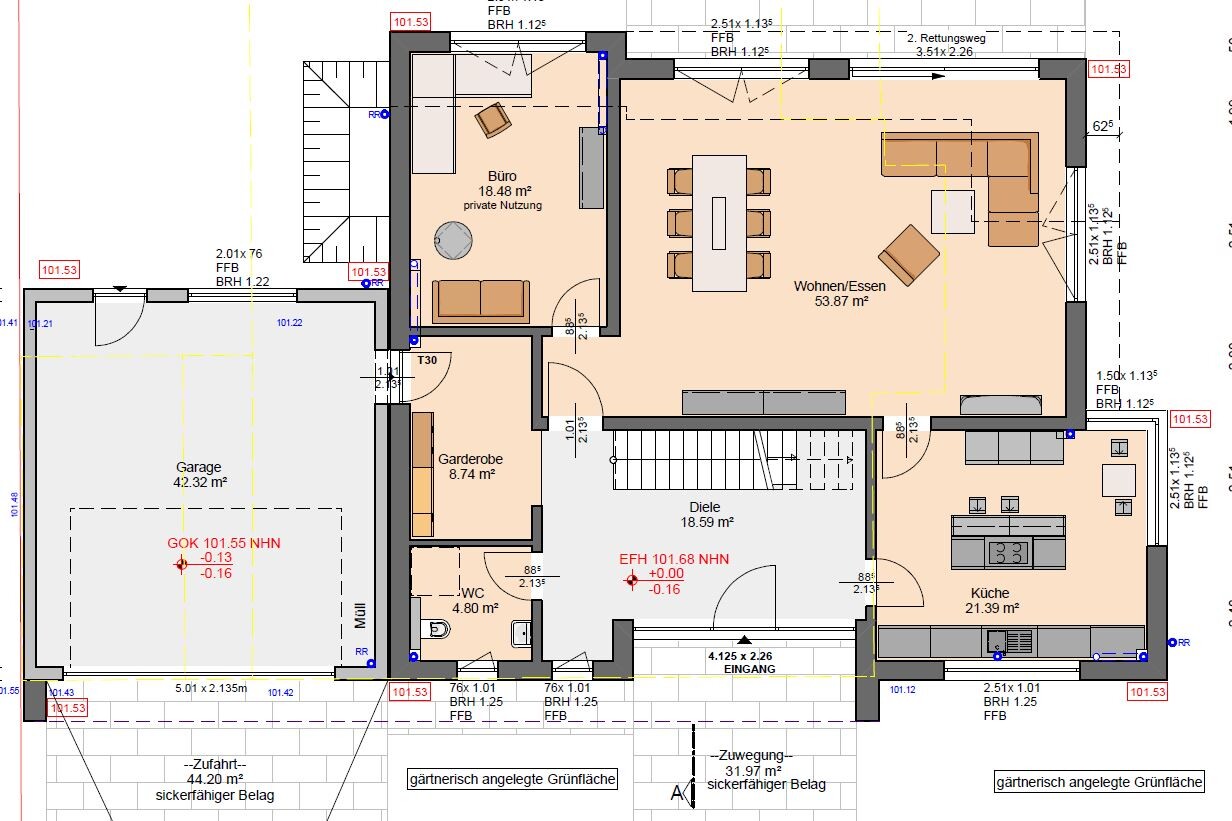
We still haven’t decided on the T30 fire-rated door to the garage, even though it is shown in the plans. Most likely, for safety reasons and the limited use of the kitchen at the other end of the house, we will eventually forgo it.
User 11ant pointed out that the right window in child’s room 2 is suboptimally positioned. However, this could still be changed after submitting the building permit / planning permission application. Our architect thinks moving the window to the left would negatively affect the house’s exterior appearance. We’ll have to see about that.
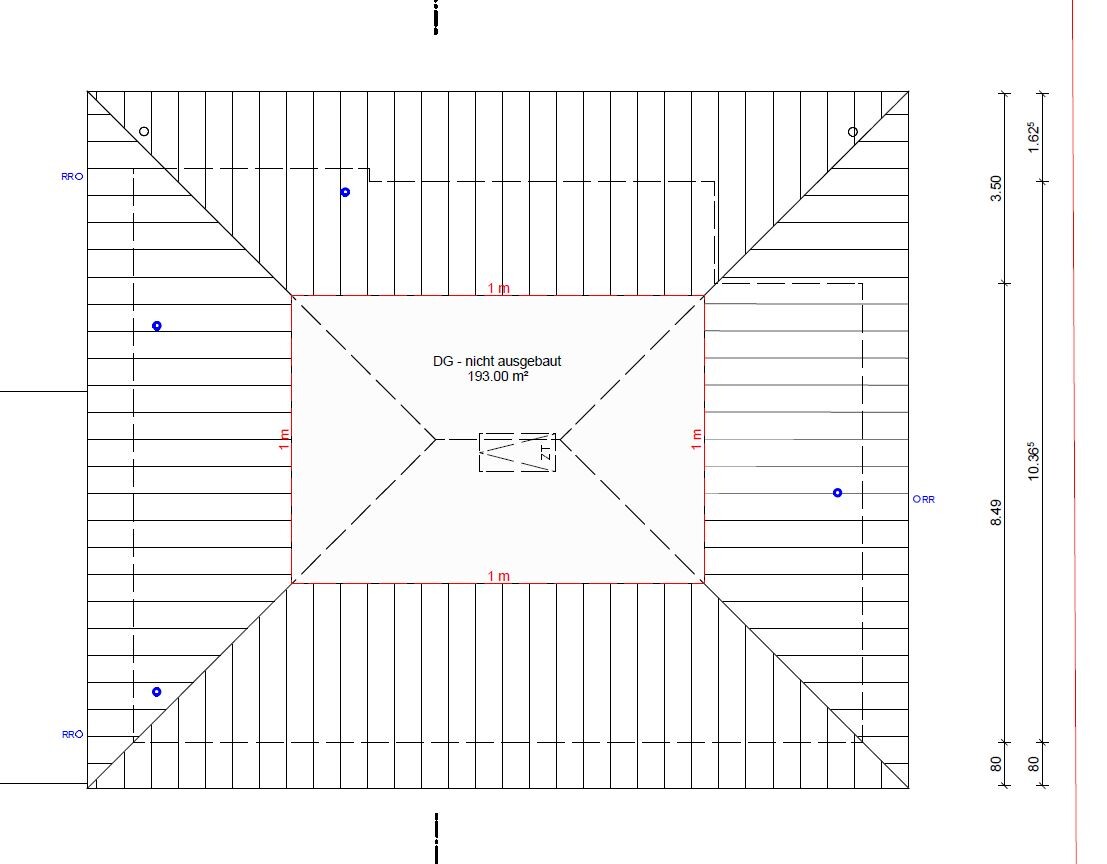
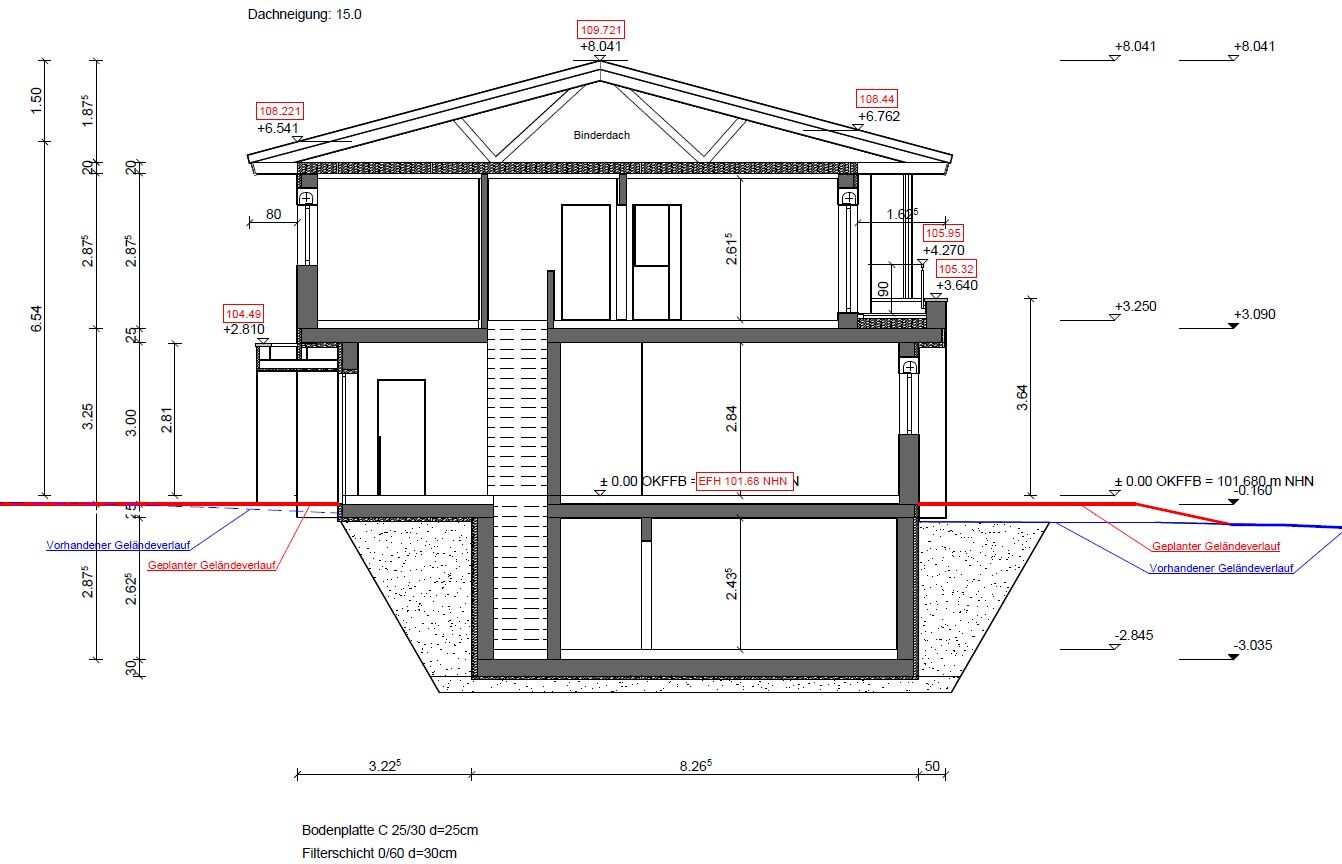

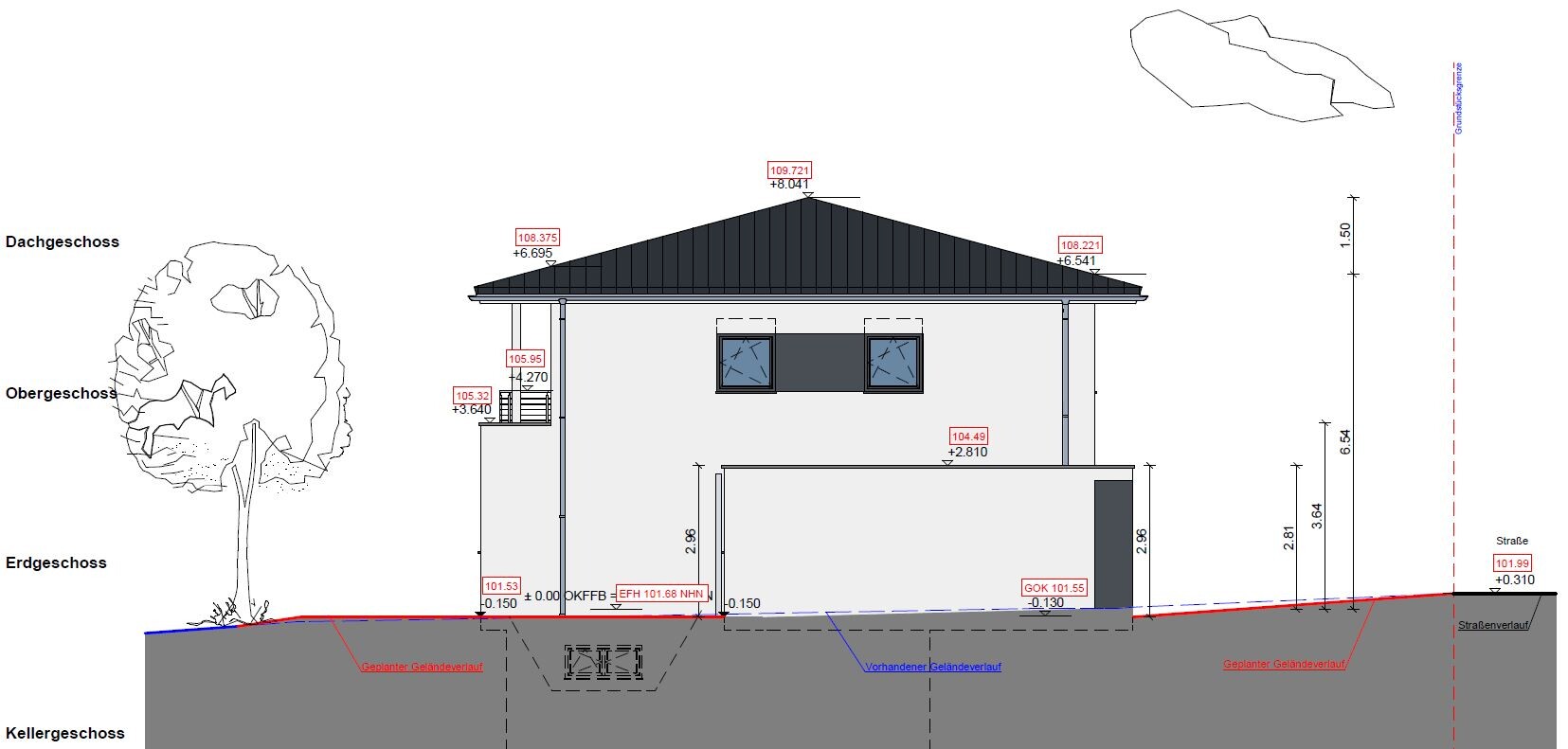
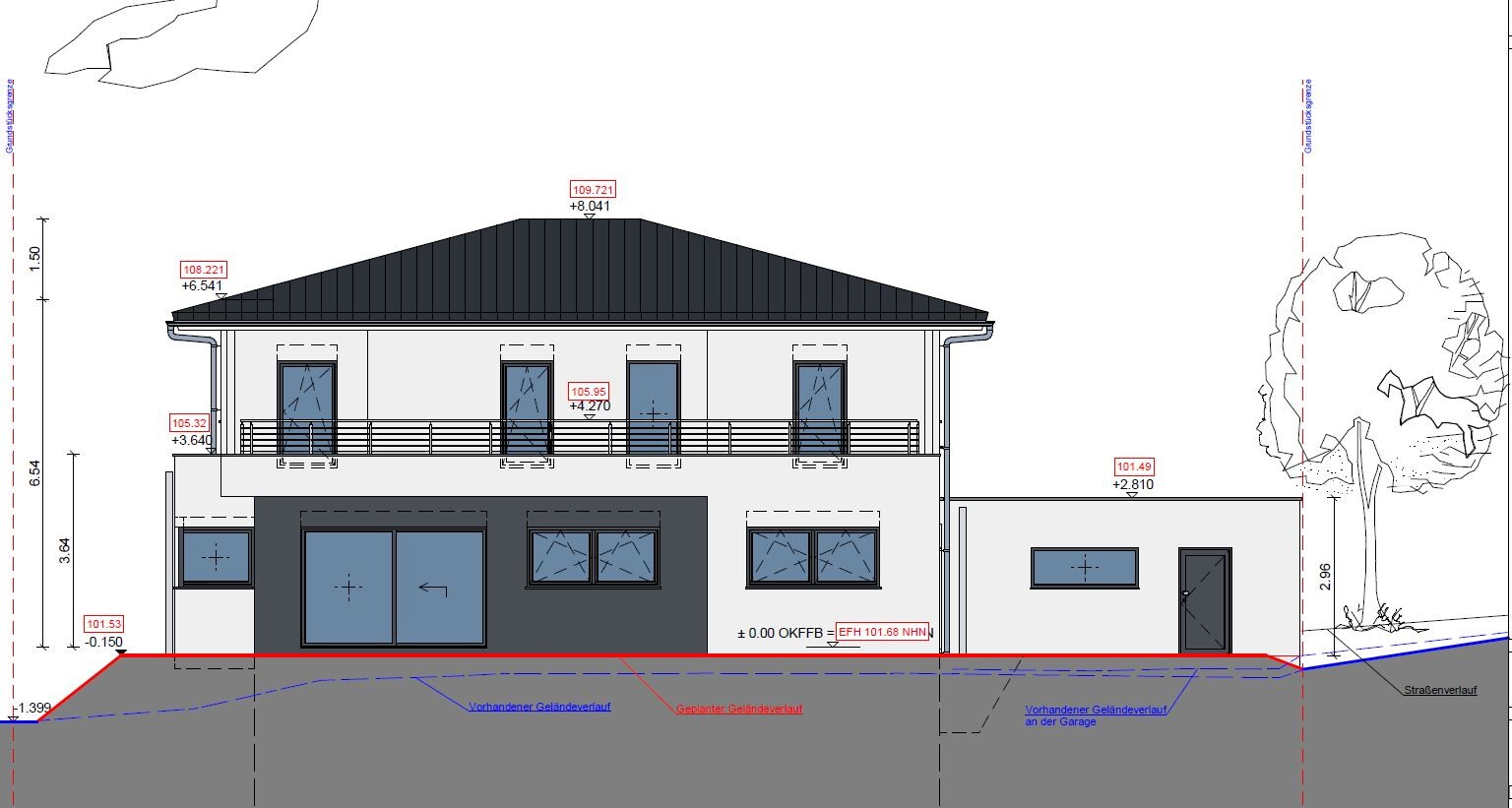
As some users have requested before, I’m now starting a new thread with the current planning of our detached house, which is about to be finalized.
These are the preliminary drawings for the building permit / planning permission application, and I have one last chance to review them and point out any issues.
It still seems to me that there is less than 1.20m (4 feet) of space between the two wardrobes in the dressing room. Or am I seeing this wrong? Apparently, the rooms on the left and right were overlooked and not adjusted accordingly.
Two Velux ceiling spotlights are still planned to illuminate the upper floor hallway.
In the basement, on the right side in the upper room, a window similar to the one on the left basement side is an option.
We still haven’t decided on the T30 fire-rated door to the garage, even though it is shown in the plans. Most likely, for safety reasons and the limited use of the kitchen at the other end of the house, we will eventually forgo it.
User 11ant pointed out that the right window in child’s room 2 is suboptimally positioned. However, this could still be changed after submitting the building permit / planning permission application. Our architect thinks moving the window to the left would negatively affect the house’s exterior appearance. We’ll have to see about that.
Unfortunately, neither the carefully developed bathroom layout nor the kitchen design was included in our factory plans… We also assumed that everything we had painstakingly finalized beforehand would be taken into account.
We had to check, adjust, and monitor everything ourselves…
We had to check, adjust, and monitor everything ourselves…
R
R.Hotzenplotz8 Jul 2018 11:10Bookstar schrieb:
What does he say about it?He says that Poroton blocks are not suitable for embedding pipes. This would damage the building’s insulation. I was not even allowed to center a flush-mounted mailbox with a depth of 10cm (4 inches) to the left of the kitchen near the front door. The mailbox is now installed all the way to the right within the wall cavity.
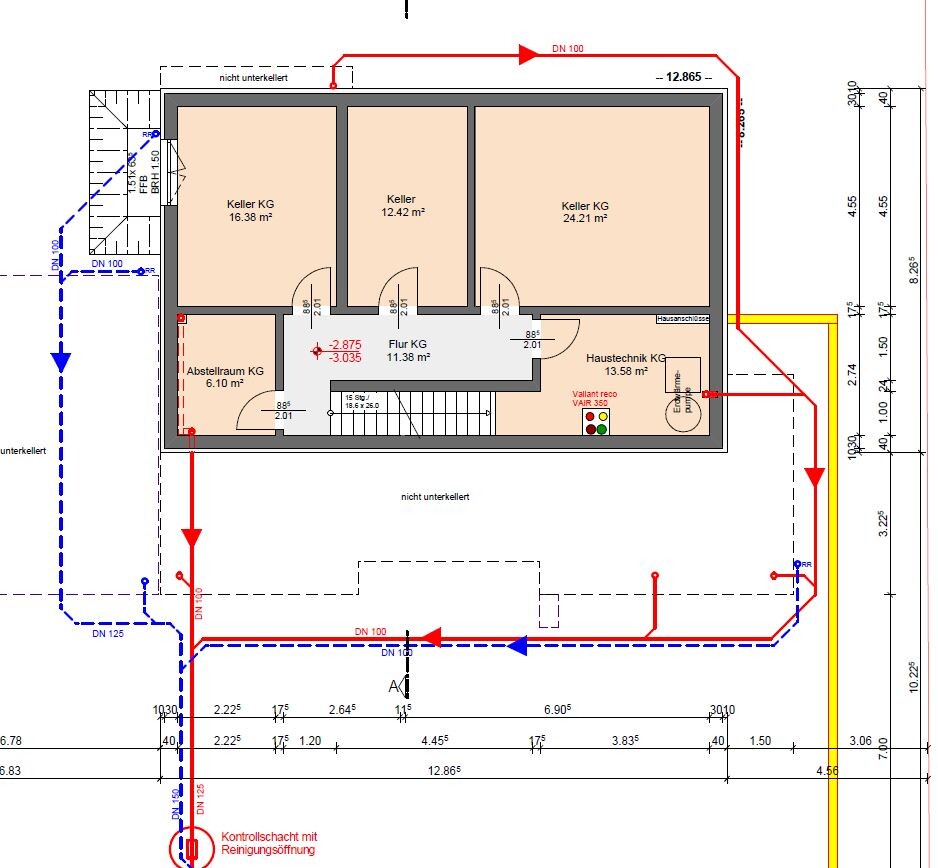
The issue with the pipes runs throughout the entire house. However, experts who have visited the site don’t seem to find it unusual that such pipes run through the middle of the rooms. Perhaps the current energy-saving regulations leave no other option. I don’t know. But I will clarify this once and for all this week.
Um, a clear NO. Of course, such pipes should not be installed in exterior walls, at least not with a 36.5 cm (14.4 inches) masonry wall and a diameter of 100 mm (4 inches).
Any sensible architect plans these kinds of pipes behind showers or inside thick interior walls, where they are energetically negligible since they are within the interior wall and also not visible because they are concealed.
It is not a big issue to route the pipes away from the exterior wall and through the structural floor to reach the interior wall. From there, they continue down to the basement. If you don’t have a basement, the floor slab must have been prepared at the correct position with the necessary openings.
Any sensible architect plans these kinds of pipes behind showers or inside thick interior walls, where they are energetically negligible since they are within the interior wall and also not visible because they are concealed.
It is not a big issue to route the pipes away from the exterior wall and through the structural floor to reach the interior wall. From there, they continue down to the basement. If you don’t have a basement, the floor slab must have been prepared at the correct position with the necessary openings.
I tend to think that the obsession with energy-saving regulations can be taken too far...
Of course, the insulation gets worse and the wall’s U-value increases if I run a pipe through it. So what?
If I have a 100mm (4 inches) pipe, I need a groove about 15cm (6 inches) wide. With a 3m (10 feet) ceiling height on the ground floor, that’s roughly 0.45m² (4.8 ft²) of exterior wall where the insulation is reduced. With a U-value of 0.21 W/m²·K, this then worsens to about 0.36 W/m²·K because of the reduced wall thickness—so a difference of 0.15 W/m²·K.
That means higher heat loss of:
0.15 W/m²·K × 0.45 m² × 35 K (with -15°C (5°F) outside and 20°C (68°F) inside) = 2.3625 W.
Wow. A hamster probably emits more radiant heat...
Of course, the insulation gets worse and the wall’s U-value increases if I run a pipe through it. So what?
If I have a 100mm (4 inches) pipe, I need a groove about 15cm (6 inches) wide. With a 3m (10 feet) ceiling height on the ground floor, that’s roughly 0.45m² (4.8 ft²) of exterior wall where the insulation is reduced. With a U-value of 0.21 W/m²·K, this then worsens to about 0.36 W/m²·K because of the reduced wall thickness—so a difference of 0.15 W/m²·K.
That means higher heat loss of:
0.15 W/m²·K × 0.45 m² × 35 K (with -15°C (5°F) outside and 20°C (68°F) inside) = 2.3625 W.
Wow. A hamster probably emits more radiant heat...
Similar topics