
Hello everyone,
we have received a preliminary design and a quote from our builder. I would like to get your opinion on it.
It is planned as an accessible bungalow (about 131 sqm (1410 sq ft)) with 3 bedrooms and possibly a study room. Previously, instead of the study, there was a slightly larger kitchen and a somewhat bigger living room.
My opinion:
I would make the house a bit narrower on the street side, which would make the bedroom and child’s room 1 slightly smaller. Instead, the living room and kitchen would be extended, allowing the kitchen to be a bit larger (it currently feels too small to me).
On the other side, I have the option to make the carport a bit wider. I am trying to achieve an internal width of 3.5 m (11.5 ft) for the carport (because of wheelchair access).
I will also ask the builder what price difference it would make to have a concrete ceiling with insulation instead of a wooden beam ceiling, a knee wall height of maybe 30 cm (12 inches), and a roof pitch of 40 degrees, so that it would be possible to convert the attic space in the future (maybe after 25–30 years).
I would like to have a carport for two cars parked in tandem with a storage room planned, but I want to handle the construction myself or have it done elsewhere. The builder is asking €14,000 for a single carport with storage, which I think is too expensive.
We would really appreciate your suggestions.
Thank you
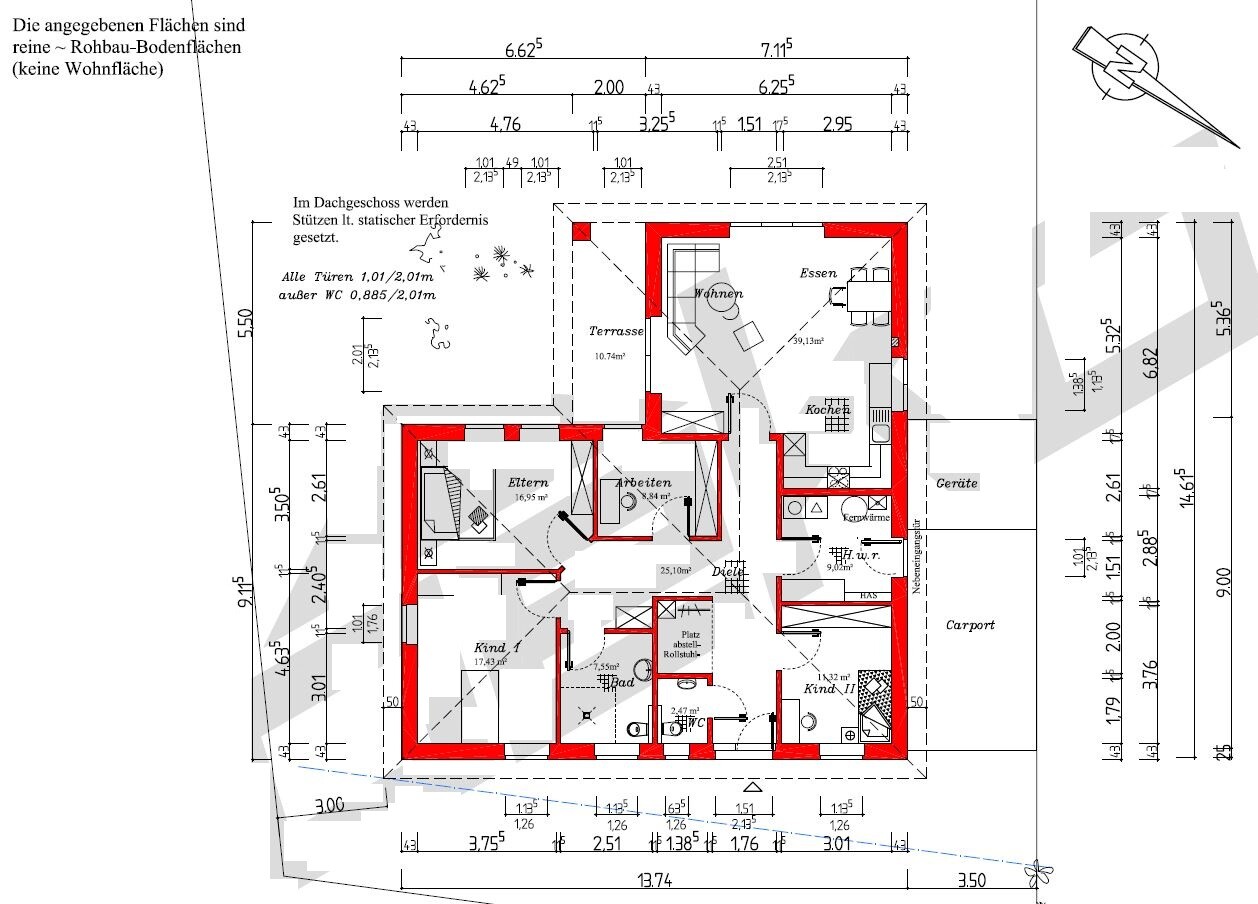


we have received a preliminary design and a quote from our builder. I would like to get your opinion on it.
It is planned as an accessible bungalow (about 131 sqm (1410 sq ft)) with 3 bedrooms and possibly a study room. Previously, instead of the study, there was a slightly larger kitchen and a somewhat bigger living room.
My opinion:
I would make the house a bit narrower on the street side, which would make the bedroom and child’s room 1 slightly smaller. Instead, the living room and kitchen would be extended, allowing the kitchen to be a bit larger (it currently feels too small to me).
On the other side, I have the option to make the carport a bit wider. I am trying to achieve an internal width of 3.5 m (11.5 ft) for the carport (because of wheelchair access).
I will also ask the builder what price difference it would make to have a concrete ceiling with insulation instead of a wooden beam ceiling, a knee wall height of maybe 30 cm (12 inches), and a roof pitch of 40 degrees, so that it would be possible to convert the attic space in the future (maybe after 25–30 years).
I would like to have a carport for two cars parked in tandem with a storage room planned, but I want to handle the construction myself or have it done elsewhere. The builder is asking €14,000 for a single carport with storage, which I think is too expensive.
We would really appreciate your suggestions.
Thank you
Well, here I am again with a different concept.
The house proposal in Post 24 currently has 138 sqm (1,485 sq ft) of living space with 164 sqm (1,765 sq ft) gross floor area.
My suggestion will have 127 sqm (1,367 sq ft) of living space on the ground floor with 156 sqm (1,679 sq ft) gross floor area, which should reduce the cost. Additionally, I’m omitting the bungalow’s angled shape, which should simplify the roof construction and make it even more affordable.
Since I couldn’t tell from the information whether a hipped roof is required, I chose a hipped roof with a 35° pitch; personally, I would probably prefer a gable roof.
Basically, I would plan a space-saving staircase, which means it will have less than ideal riser heights and tread depths.
Another condition: heating and connections in the attic... not sure if that works well, but it’s been mentioned several times before.
On the ground floor, one could have:
If Child 2 eventually moves out, the attic could be used as a guest room, also for Child 2 and possibly their family. It’s also conceivable that Child 1 still lives at home and might want a more grown-up living space. Then (which would be at least 20 years from now), it could be considered to replace the stairs with a home lift like the Climbee mentioned (not a stairlift) and provide Child 1 with a living area in the attic. The bathroom there would have to be adapted so wheelchair use of the toilet is at least possible. But this last stage is very much a distant future scenario.
Overall, I think all the rooms I planned (except the guest toilet, all with 101 cm (40 in) doors, and even 150 cm (59 in) doors to the living area) are easily accessible. The main living area—dining/cooking/living—has clearly defined passageways that are wide enough.
The attic offers space on the north side for additional storage (seasonal decorations, winter/summer equipment, etc.).
The carport is set back slightly, with an extension forming the terrace corner.
In total, you would need an accurate land survey to determine how far the house must be set back from the street. Ideally, only 3 m (10 ft).
Perhaps the current assumptions need to be reconsidered.

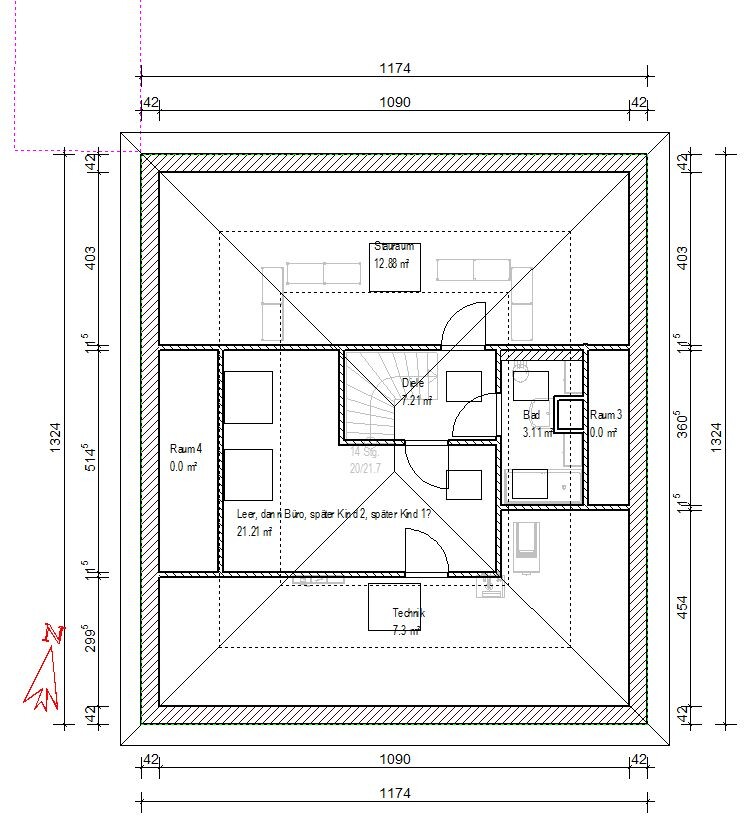
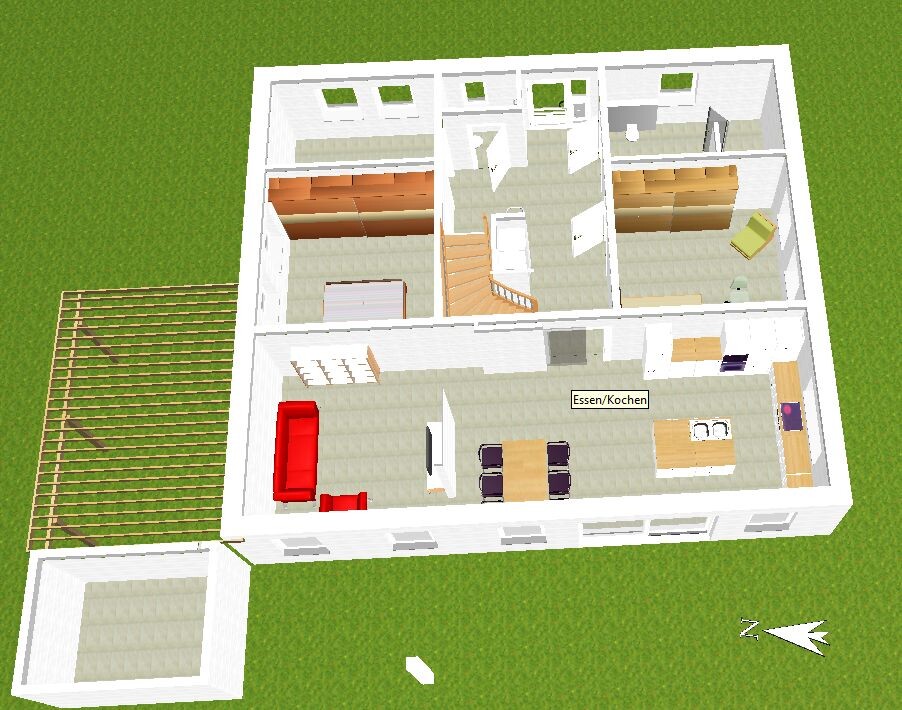
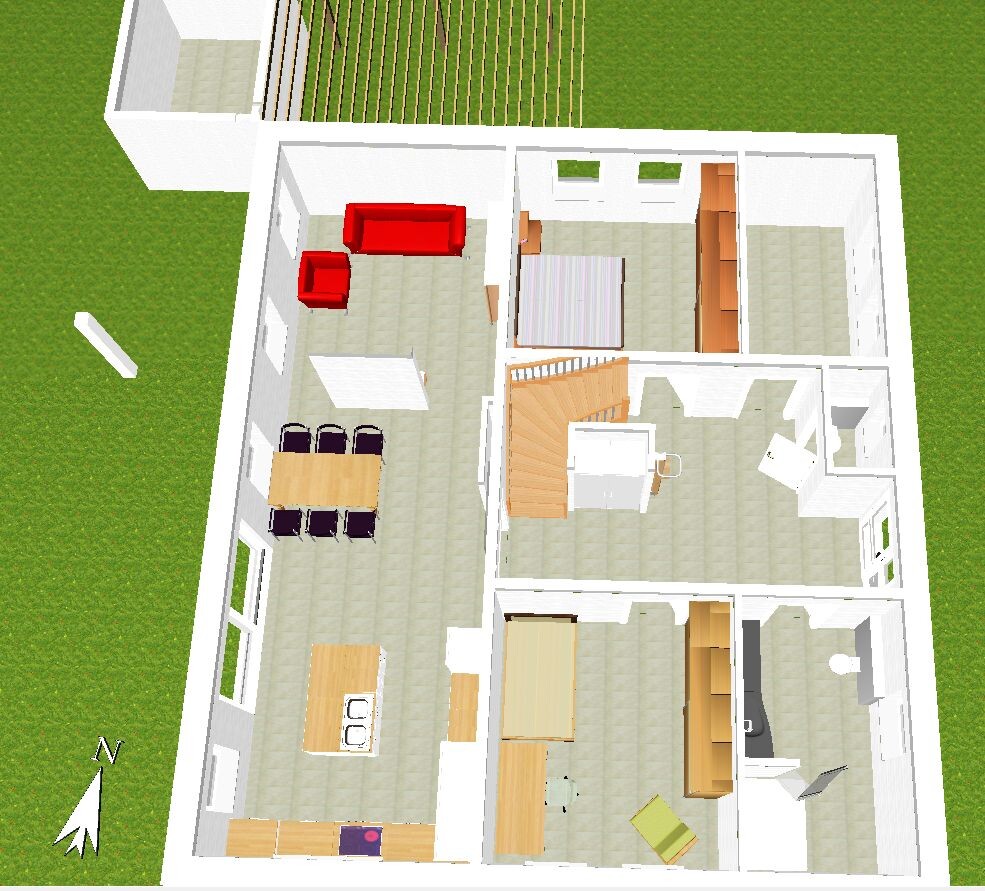
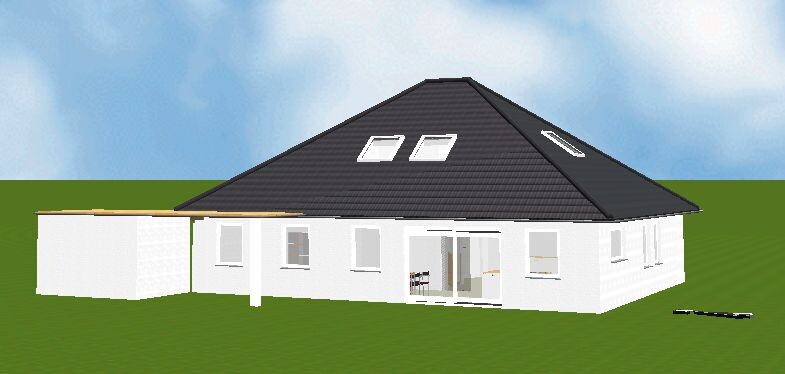
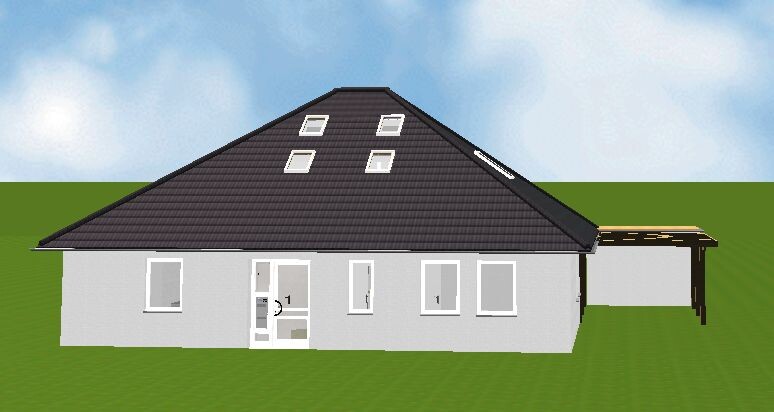
The house proposal in Post 24 currently has 138 sqm (1,485 sq ft) of living space with 164 sqm (1,765 sq ft) gross floor area.
My suggestion will have 127 sqm (1,367 sq ft) of living space on the ground floor with 156 sqm (1,679 sq ft) gross floor area, which should reduce the cost. Additionally, I’m omitting the bungalow’s angled shape, which should simplify the roof construction and make it even more affordable.
Since I couldn’t tell from the information whether a hipped roof is required, I chose a hipped roof with a 35° pitch; personally, I would probably prefer a gable roof.
Basically, I would plan a space-saving staircase, which means it will have less than ideal riser heights and tread depths.
Another condition: heating and connections in the attic... not sure if that works well, but it’s been mentioned several times before.
On the ground floor, one could have:
- Bedroom with space for up to a 4 m (13 ft) wardrobe
- Child 1’s room facing south
- Large bathroom that can also accommodate a washer and dryer
- A spacious, straight-lined living/dining/kitchen area with direct, straight access to the terrace and enough room to maneuver a wheelchair
- Guest toilet
- Wheelchair parking spot under the stairs
- Multifunctional room
- Partitioned storage area
- Partitioned bathroom area with at least a toilet and washbasin planned for now. Possibly a bathtub later on
- Partitioned technical room
- The area around the stairs could initially remain open
If Child 2 eventually moves out, the attic could be used as a guest room, also for Child 2 and possibly their family. It’s also conceivable that Child 1 still lives at home and might want a more grown-up living space. Then (which would be at least 20 years from now), it could be considered to replace the stairs with a home lift like the Climbee mentioned (not a stairlift) and provide Child 1 with a living area in the attic. The bathroom there would have to be adapted so wheelchair use of the toilet is at least possible. But this last stage is very much a distant future scenario.
Overall, I think all the rooms I planned (except the guest toilet, all with 101 cm (40 in) doors, and even 150 cm (59 in) doors to the living area) are easily accessible. The main living area—dining/cooking/living—has clearly defined passageways that are wide enough.
The attic offers space on the north side for additional storage (seasonal decorations, winter/summer equipment, etc.).
The carport is set back slightly, with an extension forming the terrace corner.
In total, you would need an accurate land survey to determine how far the house must be set back from the street. Ideally, only 3 m (10 ft).
Perhaps the current assumptions need to be reconsidered.
The plan looks quite good. Regarding the appearance, I would make the sides of the hip roof steeper so that the roof appears more elongated and less like a pointed dome. The house shouldn’t be too expensive to build. Whether you go all the way on the upper floor right away or start with a small hallway and leave the separation between cold and warm areas for later depends on your budget. Some of the door openings could be discussed, as that is partly a matter of personal preference. Of course, this bungalow has a simpler look, but as they say, you get what you pay for. This model should be buildable for under 200 square meters (2,153 square feet) including stairs and entrance hall upstairs, turnkey, without painting and flooring, but with tiles in the hallway. The price reflects no utility room—the washing machine will have to go in the bathroom, and the technical equipment on the ground floor.
I’ll add ours for comparison. However, it would need to be expanded from 13.5 by 10.00 meters (44 by 33 feet) to 14 by 10.50 meters (46 by 34 feet) to gain more space in the hallway and additional children’s rooms.
Karsten
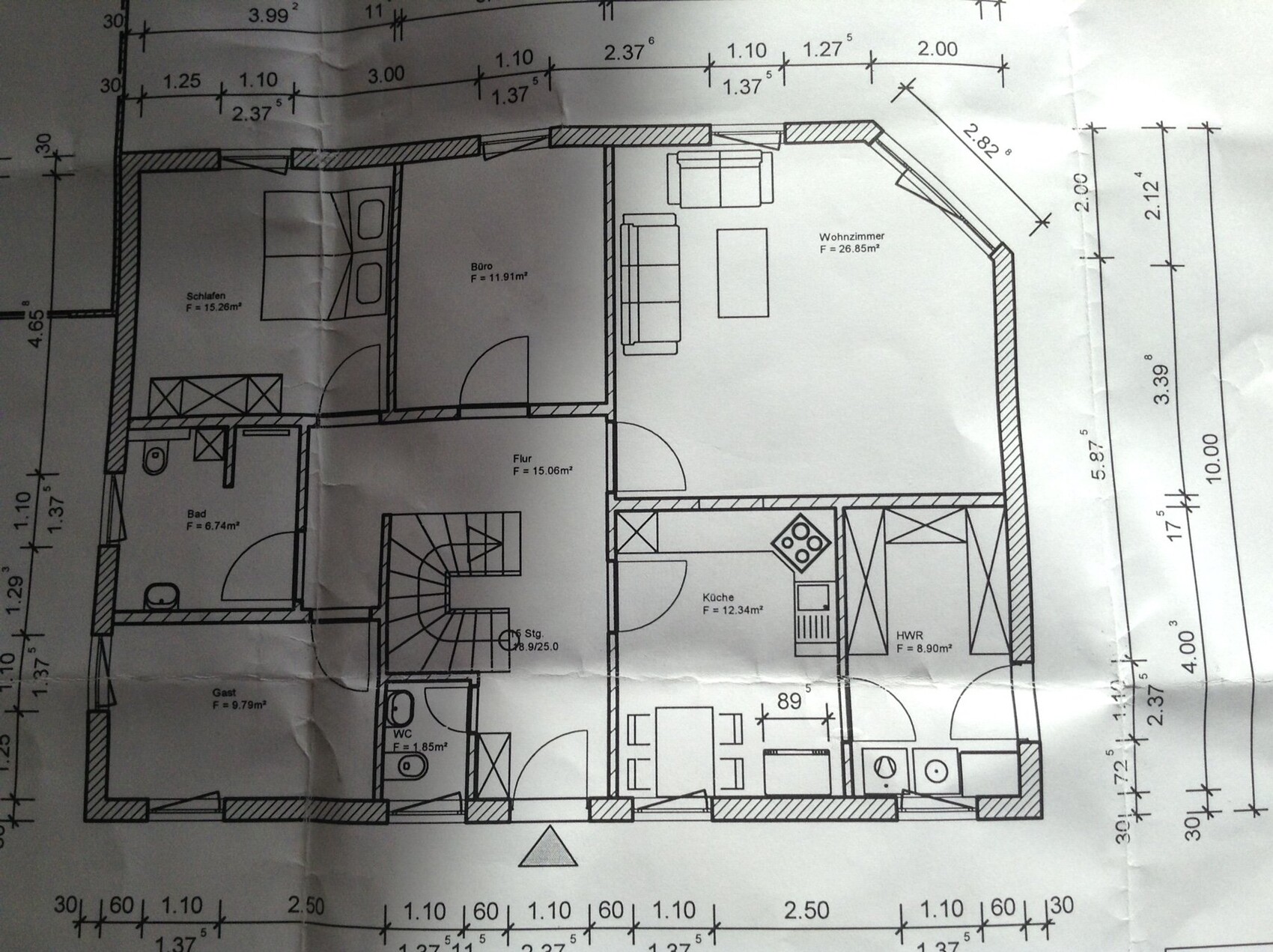
I’ll add ours for comparison. However, it would need to be expanded from 13.5 by 10.00 meters (44 by 33 feet) to 14 by 10.50 meters (46 by 34 feet) to gain more space in the hallway and additional children’s rooms.
Karsten

kbt09 schrieb:
Since the information did not specify whether a hip roof is mandatory, I chose a hip roof with a 35° pitch. Personally, I would probably prefer a gable roof. In the elevations and the attic floor plan, you can clearly see how much steeper the hip roof needs to be to achieve usable floor space on the upper floor despite the slope of the “gable sides.”
https://www.instagram.com/11antgmxde/
https://www.linkedin.com/company/bauen-jetzt/
Similar topics