
ᐅ Single-family house floor plan with basement, 150 sqm, only one single-story level permitted
Created on: 24 Nov 2024 13:20
G
GeraldG
Hello everyone,
we are approaching the final stage of the floor plan design and thought someone might take a look and provide some feedback.
What we wanted:
The house should be about 150-160 sqm (1,615-1,722 sq ft). Also, the attic level (according to the old development plan, i.e. the 2/3 rule in BW) must not count as a full story.
We actually like these Nordic-style houses with a central gable and also brick cladding, although we had to give up on the brick cladding because apparently no one here does it, and if they do, it’s incredibly expensive.
The architect advised us against a central bay window facing the garden because that would place one side of the terrace almost facing north.
Otherwise, we wanted a fairly classic layout:
An open living/kitchen/dining area, plus a shower restroom and an office on the ground floor. The attic should have two children’s bedrooms and a master bedroom. If there is space, also a walk-in closet and a large bathroom. I also wanted the knee wall to be as high as possible.
In the current round, the attached floor plans were developed. We only want to make minor adjustments now, so I thought this would be a good time for others to take a look.
There are several proposals for a laundry chute on WhatsApp.
I would appreciate your feedback.
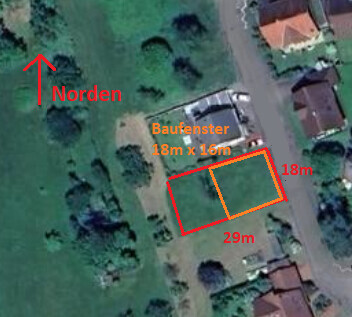
Plot:
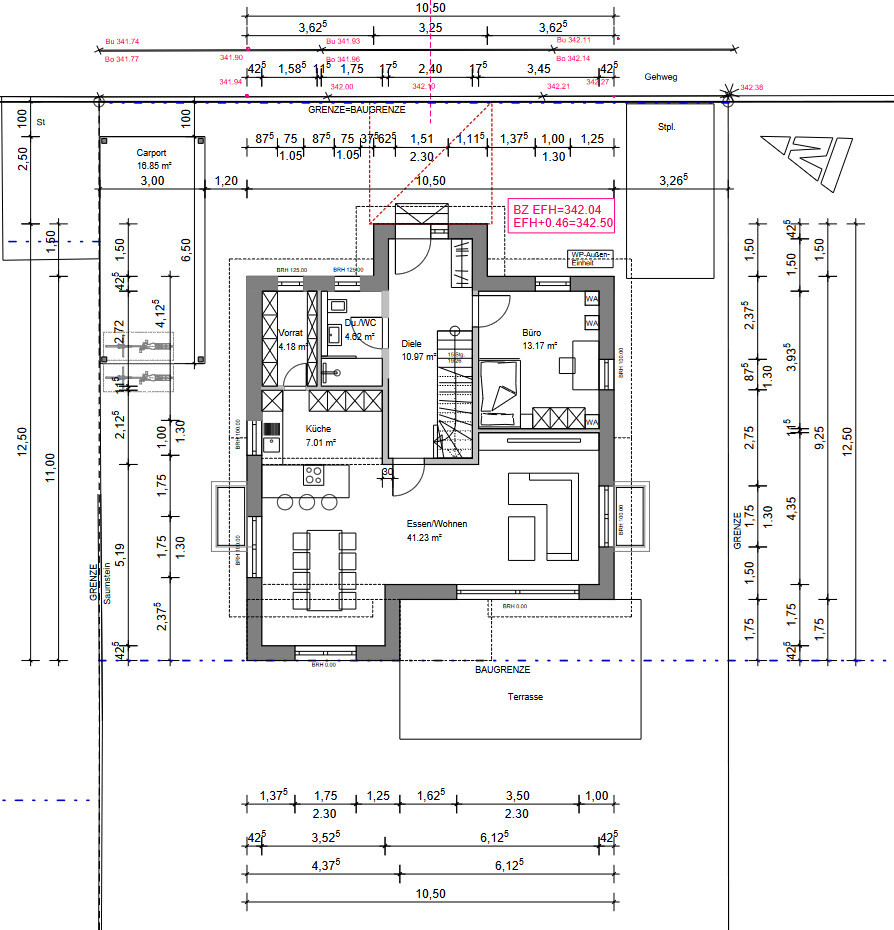
Ground floor:
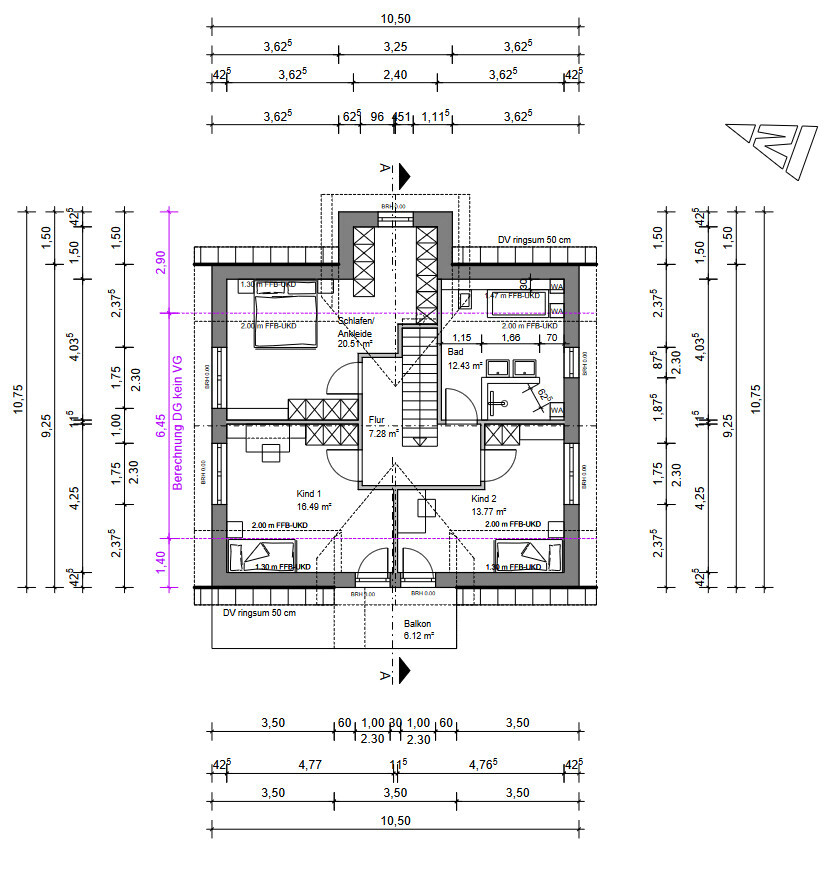
Attic:
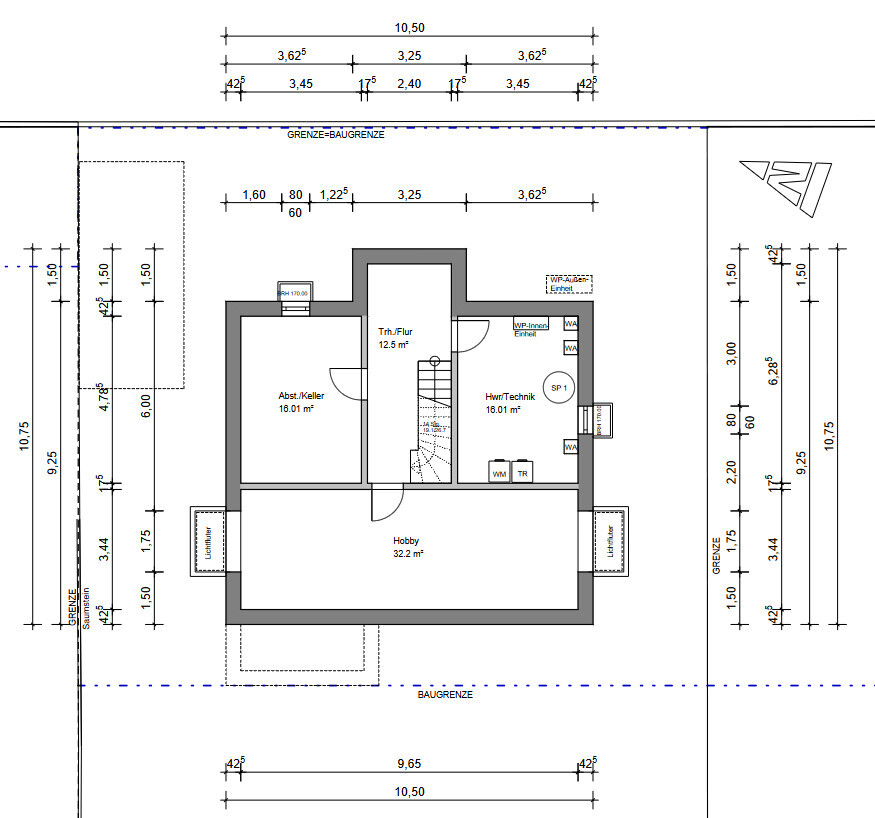
Basement:
3D views:
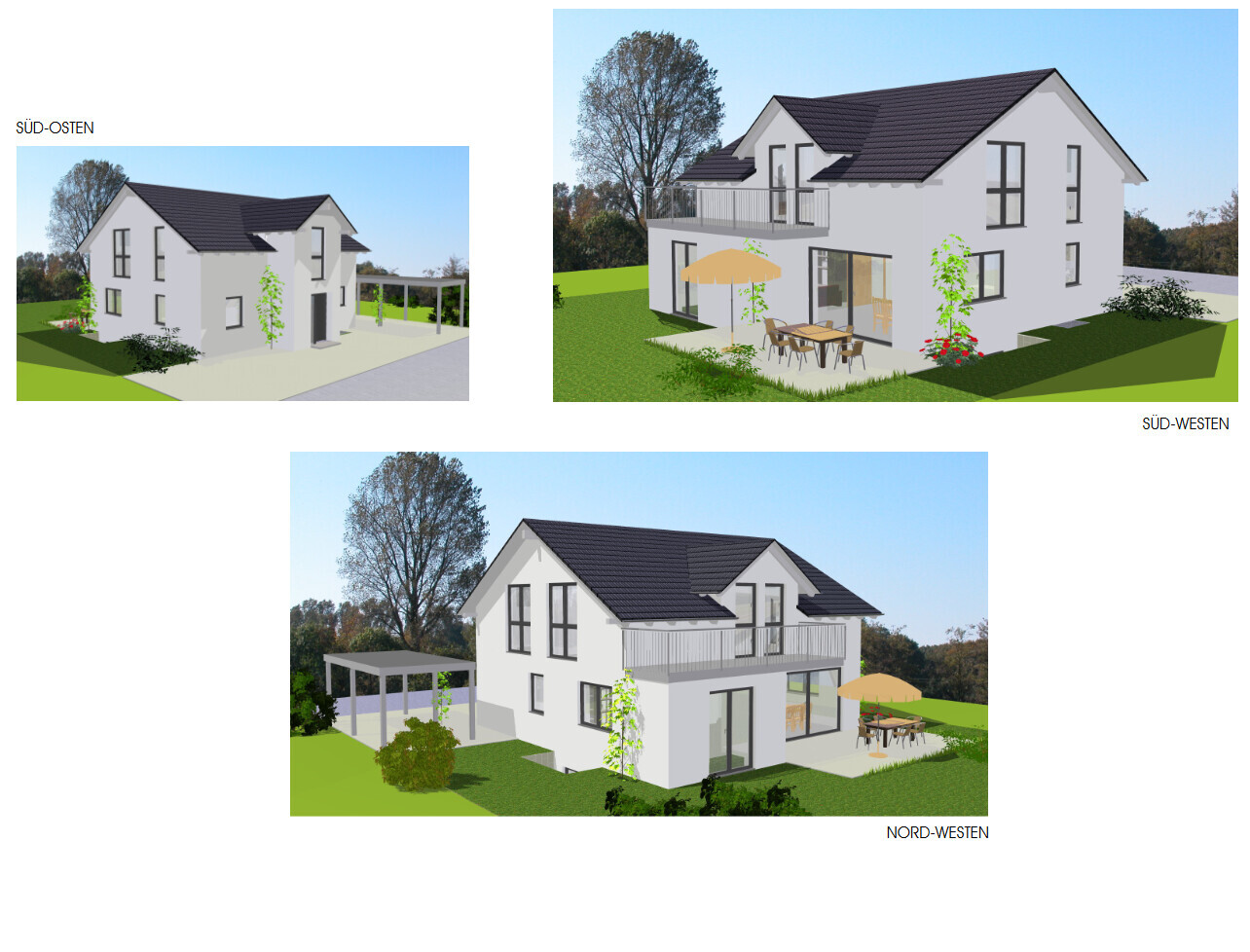
we are approaching the final stage of the floor plan design and thought someone might take a look and provide some feedback.
What we wanted:
The house should be about 150-160 sqm (1,615-1,722 sq ft). Also, the attic level (according to the old development plan, i.e. the 2/3 rule in BW) must not count as a full story.
We actually like these Nordic-style houses with a central gable and also brick cladding, although we had to give up on the brick cladding because apparently no one here does it, and if they do, it’s incredibly expensive.
The architect advised us against a central bay window facing the garden because that would place one side of the terrace almost facing north.
Otherwise, we wanted a fairly classic layout:
An open living/kitchen/dining area, plus a shower restroom and an office on the ground floor. The attic should have two children’s bedrooms and a master bedroom. If there is space, also a walk-in closet and a large bathroom. I also wanted the knee wall to be as high as possible.
In the current round, the attached floor plans were developed. We only want to make minor adjustments now, so I thought this would be a good time for others to take a look.
There are several proposals for a laundry chute on WhatsApp.
I would appreciate your feedback.
Plot:
Ground floor:
Attic:
Basement:
3D views:
GeraldG schrieb:
My parents did the same thing in the same village. The room is heated only at the frost line or not at all. So it is really not a living space. But not according to today’s energy regulations, right? Either it is a storage room outside the building’s thermal envelope, like a bike storage, which would generally be allowed as an outbuilding but could be problematic because of the intermediate door. If it is inside the thermal envelope, it would need to be considered a utility room, which is hard to justify if the utility equipment is planned for the basement.
Also, in Baden-Württemberg you are only allowed 9 meters (29.5 feet) of building length on the boundary line on one side, so 12.5 meters (41 feet) is 3.5 meters (11.5 feet) too much.
Sorry, I misread the plan. But I wonder if you seriously mean the carport is only 4.5 meters (14.8 feet) short when you still want to store something under it.
The room is basically outside the thermal envelope. The door between the kitchen and the storage room must have particularly good thermal insulation, yes. At my parents’ place, it is kept above 5°C (41°F), so apparently a door with thermal performance class 3 is sufficient.
ypg schrieb:Where does the 12.5 m (41 feet) come from? The storage room is 4 m (13 feet) and the carport in front is somewhat shorter than 5 m (16 feet). It has to be shorter because the building site slopes slightly, which is why the 25 m² (269 ft²) are placed in front of the 9 m (30 feet) limit.
However, in Baden-Württemberg you are only allowed 9 meters as the boundary building line on one side, so 12.5 meters exceeds this by 3.5 meters.
GeraldG schrieb:
Bay windows (maximum 5m x 1.5m (16ft x 5ft) protruding from the wall) only need to maintain a 2m (6.5ft) distance.Just to clarify: What is shown in the picture is a bay window.
A bay window is a projection that visibly protrudes from the facade.
What you have in the picture cannot be visually achieved with your planned construction, even though it was intended 10 days ago.
What you are planning is simply an extension attached to a house built right up to the boundary. You will most likely face difficulties with the building authority, especially since you apparently only have a draftsman whose practical experience may lack that of a skilled and experienced architect.
GeraldG schrieb:
Where do the 12.5m (41ft) come from? The storage room is 4m (13ft), and the carport in front is slightly less than 5m (16ft). It has to be somewhat shorter because the plot slopes slightly, which is why the 25sqm (269sqft) are cut off before the 9m (30ft).I already mentioned that I misread that. GeraldG schrieb:
We are subject to the 1968 land use ordinance and the 1972 state building code,What does the old state building code say about parking spaces? A parking space must be 5m (16ft) long. The question is, if the plot slopes, how are you planning to build the parking space?ypg schrieb:
you only have a planner who probably lacks the practical knowledge of a skilled and experienced architect Yes, but there are certainly also experienced planners, and even with architects you need some luck to find someone like that.
ypg schrieb:
I already said that I misread it. Yes, while I was typing, it was still unedited there, no problem.
ypg schrieb:
What does the old regional building code say about parking spaces? A parking space must have a length of 5 meters (16.4 feet). The question is, if the building plot slopes, how do you design the parking space? You can park a car there, the roof may be a bit short. But a parking space doesn’t have to be covered. The site slopes by about 20 centimeters (8 inches) over the length of the carport, not much, but enough to exceed the 25 square meters (269 square feet) of wall area. The 9 meters (29.5 feet) can only be built up to a height of 2.78 meters (9.1 feet). After deducting ceiling thickness and similar, not much height remains. Of course, you could build low enough, then the 9 meters (29.5 feet) would be possible.

GeraldG schrieb:
...And as I said, building like this, and if it’s inconvenient you can easily and cheaply adjust the wall later. The other way around doesn’t work, because once the wall is there, it will naturally be a load-bearing wall. Removing it won’t be quick at all.
Putting aside the trickery with the bike shed boundary construction – the 11cm (4.3 inches) wall there is also incorrect, right? In the end, I wonder if you might actually need the bike shed much more than the pantry. As it is now, you’re flexible with that, and I don’t think that’s a bad thing.
I would also do the kitchen planning now, before the stamp is on the building permit/planning permission. Personally, I’m not a fan of those hidden doors. You always end up with double doors that get in the way, and they’re always too narrow as well.
I’m not going to get into all the back-and-forth discussions about the bay window that’s been labeled a “bicycle pantry” or the too-small carport, etc. To me, this still doesn’t feel like a coherent, JOINT project, but rather an endless tug-of-war where the architect seems to be trying to satisfy every party to some extent; this mutual conflict of your stuck demands can’t have gone unnoticed.
What I still don’t understand is that you were given several really functional and space-efficient floor plans, yet now you seem to be struggling again with entirely unnecessary problems, possibly with your wife and also with people here. This apparently deep-seated desire to finally have a bay window in your life, and now the Tetris-like, supposedly clever shifting of that plus the simultaneous reclassification to a bike room kitchen antechamber—with the smart omission of a drawn wall—still doesn’t make sense to me. Of course, you could build it that way; it’s your house and your money. But you’re creating unnecessary additional conflicts because the underlying issue seems obvious: you and your wife haven’t reached genuine consensus or found a truly mutual and sensible solution, which has already been discussed here.
This isn’t a criticism—how could it be?—but just an observation based on what I’ve read so far. There will be plenty more problems during construction, and without a joint strategy to handle them, it’s going to be difficult. This is especially reflected in this:
Either it is settled, or it isn’t. This persistent tendency toward “just in case” thinking will be the root of later drama. Why not finalize the upper floor completely, including the necessary electrical conduits, bathroom plumbing, shower, furniture, etc.? Because these details can have a significant impact on the room layout. What’s the benefit of leaving it unfinished?
If it’s too large, then it needs to be smaller, which means redesign. Of course, it’s too large when compared to the relatively narrow open-plan living area, but why keep it that way or build something you don’t even like? In a “normal” house, such a large hallway isn’t necessary unless it serves a specific design goal or reflects a clear individual living situation. Here, it just seems like space that has appeared out of nowhere without purpose.
I’ve asked this before: Why is your wife looking forward to this small waiting area in front of the increasingly cramped living space? What exactly excites her about it? Does she want to furnish or use it in a particular way, or is it just like the bay window—something she simply wants to have for its own sake? If the former, this should be clearly detailed with measurements on the plan.
You’re building a new house and already foresee a “pinch point.” Plan for that now—together—or not at all, because you can’t just “easily” add a wall later on in an emergency. Retrofitting a wall costs significantly more than building it from the start, and after the “potential” wall comes the “maybe” double doors. You’ll also need things like light switches positioned correctly, which you won’t have planned without the wall. Then you end up with messy fixes to compensate for earlier incomplete or incorrect planning.
I’m not saying this to sound smart, but because I made these kinds of mistakes with my first house: leaving things out, waiting, and then trying to fix it later. You can do it your way, but it will bring unnecessary problems and drain your budget; at least that’s what my personal experience painfully taught me.
So you’re building an unnecessarily expensive wall with an even more unnecessary double door, just because your parents do it that way? Do you really do everything exactly like your parents, or are you perhaps an individual with different needs? You’ve already mentioned your parents as an example in the bicycle pantry.
In that case, the wall and the door are completely pointless. So why include them in your plan (for later) if, as you say, it makes no sense?
A chest of drawers “could” fit. Do you have one? Do you need one? If yes, which size and is that big enough for your belongings, or is something just placed there because space allows? Clarify your individual needs first, THEN plan accordingly.
Here we go again with the “just in case” approach. Of course, you should decide and at least roughly plan the kitchen now, so you don’t end up with more unnecessary and costly botched solutions later. The kitchen as currently drawn looks like a randomly placed mess, not a sensible or individual concept.
Are you moving away from it or not? Yes or no? Every decision has consequences or opens new possibilities that need to be considered. Both are understandable and feasible, but the decision must be made.
Again, this should be planned first because other things depend on this. Currently, it looks like you’re playing Tetris, just seeing where it could fit.
Ah—hidden. Why hidden, and what do you want to achieve with that? Of course, this is again presented as a just-in-case possibility.
Would you like one, or do you already have it? If the latter, why isn’t it marked on the plan like all the other essential items, so you know exactly where the door needs to go? Why not commit to that?
Why not finish planning the room so that all rooms are gradually fully furnished and it’s clear where the door must go, and what might or might not fit?
We’ve talked about this before, so I hope you’re not feeling attacked and can see some of this with a smile, even though it’s serious advice.
To me, as I mentioned a while ago, it’s clear that you and your wife haven’t found real agreement, and therefore each of you is pulling in different directions to get your own wishes fulfilled. This can lead to everyone getting their “rights,” but the issues might have been entirely avoidable if you’d worked out mutual, sensible solutions in advance.
If you repeatedly receive criticism here, don’t defend it more, but try to engage deeply with it, since people here want to help you, not complicate your build.
Don’t start building too early out of frustration over all the back-and-forth. Wait until you’re both fully satisfied—without weak compromises, endless emergencies, or alternatives, and not just because your parents have always done it that way.
And design your carport so your car actually fits. Everything else would just be foolish.
What I still don’t understand is that you were given several really functional and space-efficient floor plans, yet now you seem to be struggling again with entirely unnecessary problems, possibly with your wife and also with people here. This apparently deep-seated desire to finally have a bay window in your life, and now the Tetris-like, supposedly clever shifting of that plus the simultaneous reclassification to a bike room kitchen antechamber—with the smart omission of a drawn wall—still doesn’t make sense to me. Of course, you could build it that way; it’s your house and your money. But you’re creating unnecessary additional conflicts because the underlying issue seems obvious: you and your wife haven’t reached genuine consensus or found a truly mutual and sensible solution, which has already been discussed here.
This isn’t a criticism—how could it be?—but just an observation based on what I’ve read so far. There will be plenty more problems during construction, and without a joint strategy to handle them, it’s going to be difficult. This is especially reflected in this:
GeraldG schrieb:
Since the upper floor is pretty much settled, we’re currently only planning the ground floor.
Either it is settled, or it isn’t. This persistent tendency toward “just in case” thinking will be the root of later drama. Why not finalize the upper floor completely, including the necessary electrical conduits, bathroom plumbing, shower, furniture, etc.? Because these details can have a significant impact on the room layout. What’s the benefit of leaving it unfinished?
GeraldG schrieb:
The hallway is a bit too large and open for my taste, but my wife is looking forward to it.
If it’s too large, then it needs to be smaller, which means redesign. Of course, it’s too large when compared to the relatively narrow open-plan living area, but why keep it that way or build something you don’t even like? In a “normal” house, such a large hallway isn’t necessary unless it serves a specific design goal or reflects a clear individual living situation. Here, it just seems like space that has appeared out of nowhere without purpose.
I’ve asked this before: Why is your wife looking forward to this small waiting area in front of the increasingly cramped living space? What exactly excites her about it? Does she want to furnish or use it in a particular way, or is it just like the bay window—something she simply wants to have for its own sake? If the former, this should be clearly detailed with measurements on the plan.
GeraldG schrieb:
In a pinch, you could just add a wall there later, maybe with double doors.
You’re building a new house and already foresee a “pinch point.” Plan for that now—together—or not at all, because you can’t just “easily” add a wall later on in an emergency. Retrofitting a wall costs significantly more than building it from the start, and after the “potential” wall comes the “maybe” double doors. You’ll also need things like light switches positioned correctly, which you won’t have planned without the wall. Then you end up with messy fixes to compensate for earlier incomplete or incorrect planning.
I’m not saying this to sound smart, but because I made these kinds of mistakes with my first house: leaving things out, waiting, and then trying to fix it later. You can do it your way, but it will bring unnecessary problems and drain your budget; at least that’s what my personal experience painfully taught me.
GeraldG schrieb:
From experience with my parents, that door hardly ever gets closed.
So you’re building an unnecessarily expensive wall with an even more unnecessary double door, just because your parents do it that way? Do you really do everything exactly like your parents, or are you perhaps an individual with different needs? You’ve already mentioned your parents as an example in the bicycle pantry.
In that case, the wall and the door are completely pointless. So why include them in your plan (for later) if, as you say, it makes no sense?
GeraldG schrieb:
A chest of drawers or similar could fit on the “T-wall” on the right side, between the hallway, office, and living room.
A chest of drawers “could” fit. Do you have one? Do you need one? If yes, which size and is that big enough for your belongings, or is something just placed there because space allows? Clarify your individual needs first, THEN plan accordingly.
GeraldG schrieb:
We haven’t finalized the kitchen yet.
Here we go again with the “just in case” approach. Of course, you should decide and at least roughly plan the kitchen now, so you don’t end up with more unnecessary and costly botched solutions later. The kitchen as currently drawn looks like a randomly placed mess, not a sensible or individual concept.
GeraldG schrieb:
I’m gradually moving away from the kitchen island because I usually find the ventilation solutions for those annoying.
Are you moving away from it or not? Yes or no? Every decision has consequences or opens new possibilities that need to be considered. Both are understandable and feasible, but the decision must be made.
GeraldG schrieb:
It shouldn’t be in front of the window either, so basically it would only go on the wall next to the pantry.
Again, this should be planned first because other things depend on this. Currently, it looks like you’re playing Tetris, just seeing where it could fit.
GeraldG schrieb:
The pantry door might be planned as a “hidden door.”
Ah—hidden. Why hidden, and what do you want to achieve with that? Of course, this is again presented as a just-in-case possibility.
GeraldG schrieb:
Next to the door, I’d like a large American-style fridge.
Would you like one, or do you already have it? If the latter, why isn’t it marked on the plan like all the other essential items, so you know exactly where the door needs to go? Why not commit to that?
GeraldG schrieb:
We’ll plan exactly where that pantry door goes soon, but it can be easily moved.
Why not finish planning the room so that all rooms are gradually fully furnished and it’s clear where the door must go, and what might or might not fit?
We’ve talked about this before, so I hope you’re not feeling attacked and can see some of this with a smile, even though it’s serious advice.
To me, as I mentioned a while ago, it’s clear that you and your wife haven’t found real agreement, and therefore each of you is pulling in different directions to get your own wishes fulfilled. This can lead to everyone getting their “rights,” but the issues might have been entirely avoidable if you’d worked out mutual, sensible solutions in advance.
If you repeatedly receive criticism here, don’t defend it more, but try to engage deeply with it, since people here want to help you, not complicate your build.
Don’t start building too early out of frustration over all the back-and-forth. Wait until you’re both fully satisfied—without weak compromises, endless emergencies, or alternatives, and not just because your parents have always done it that way.
And design your carport so your car actually fits. Everything else would just be foolish.
Similar topics