
Hello,
I have been reading along for some time now and finally dare to share a floor plan here.
First, here is the list of questions:
Zoning Plan / Restrictions
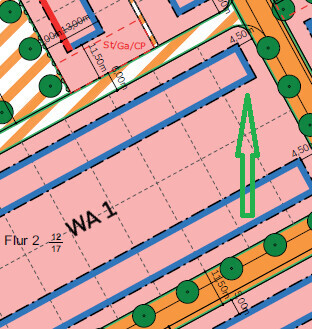
Plot size: 576 sqm (6,200 sq ft)
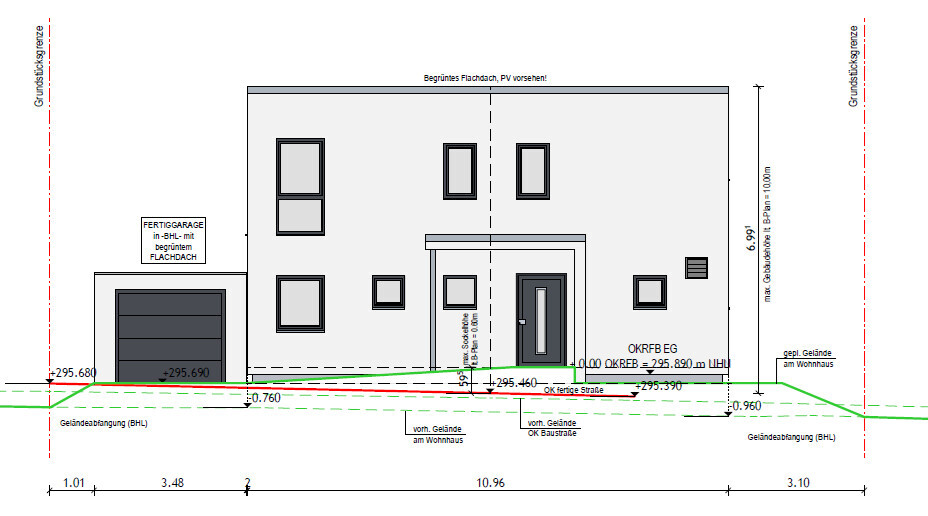
Slope: Yes, slight. According to the site plan, the top "right" corner is at 295.4 meters (970 feet), lower at 293.88 meters (964 feet), left side goes from 295.17 meters (968 feet) to 293.43 meters (963 feet)
Floor area ratio: 0.3
Building envelope, building line and boundary: Applies to house number 16
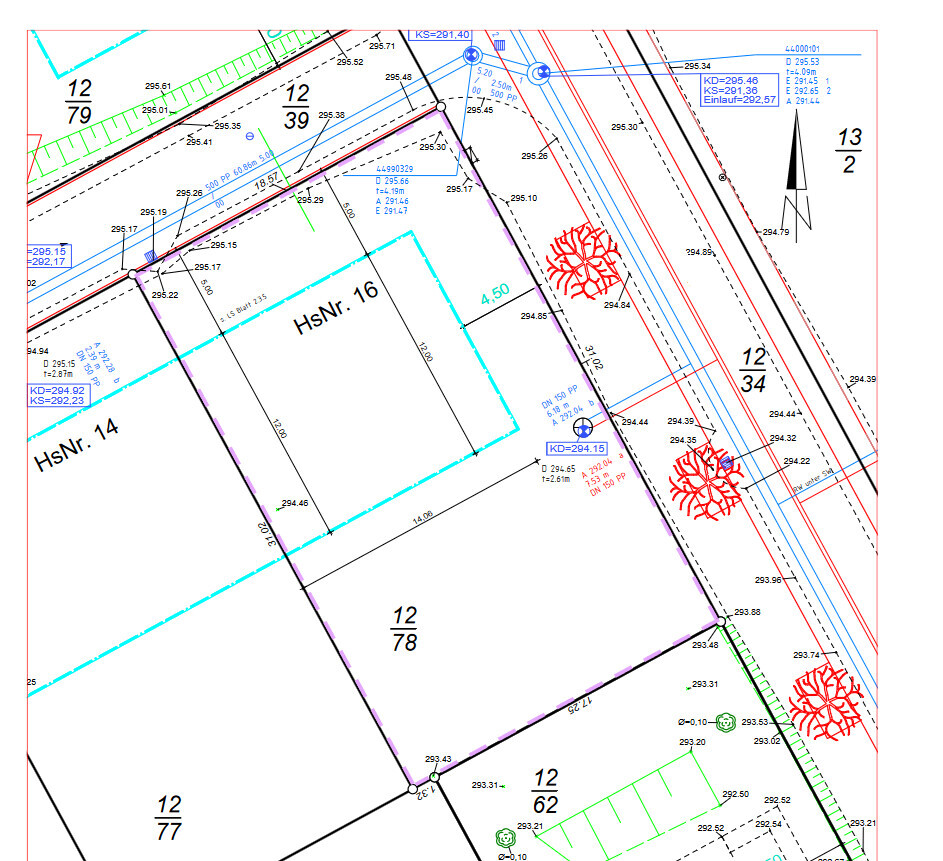
Surrounding buildings
Number of parking spaces: 2
Number of stories: 2 full floors required, plus optional recessed floor (setback floor)
Roof type: Flat roof, max. 5° pitch
Maximum height/limits: Max. 10 m (33 ft) high
Additional requirements: Equipment (heat pump) must be integrated, not external. Maximum of 2 residential units. Specific exterior colors required, rainwater should infiltrate (soil report says this is unlikely). Roofs must be greened. No oil or gas heating allowed.
Client requirements
Style, roof type, building type: Actually, none specified.
Basement, floors: No basement, 2 floors.
Number of occupants, ages: 4 people — 2 adults, 2 children
Ground floor space needs: Daily life (living, kitchen, dining, technical room, guest room)
Upper floor: Family (2 children's rooms, master bedroom, separate bathrooms), home office
Office: Home office, second workspace for occasional use such as a work window sill for example in the bedroom
Guests per year: Currently few.
Open or closed architecture, conservative or modern style: Either is fine.
Open kitchen, kitchen island: We are still considering. Initial wish was separate pantry like in the floor plan. An island would be nice if space allows.
Number of dining seats: Normally 4, rarely up to 8.
Fireplace: None.
Music/stereo wall: Multi-room audio with central unit in technical room.
Balcony, roof terrace: Neither.
Garage, carport: 1 garage
Other wishes: Central vacuum system, laundry chute, smart home (KNX) (I am mostly doing this myself, yes, I am a certified electrician, can program, but will also get additional help)
House design
Who designed the plan:
- Planner from a construction company: Correct, with some input from us. Based on an existing plan.
Price estimate by architect/planner: approx. 485,000 € (euros) for the house, approx. 210,000 € for the plot including basic services (survey, soil report, etc.)
Personal price limit for the house including features: approx. 800,000–850,000 € (including land)
Preferred heating technology: Heat pump
If you had to give up, which details/extra features could you skip:
- Could skip:
- Cannot skip:
Why is the design like it is now? For example:
Standard design by the planner? Yes, with minor wishes from us (wall between study and child’s room 2, T-walls in bathrooms, porch roof, conservatory, pantry)
What do you find especially good or bad about it? So far it seems to fit; apart from possibly the pantry/dining room, we don’t see major issues yet. But that’s why I’m here now.
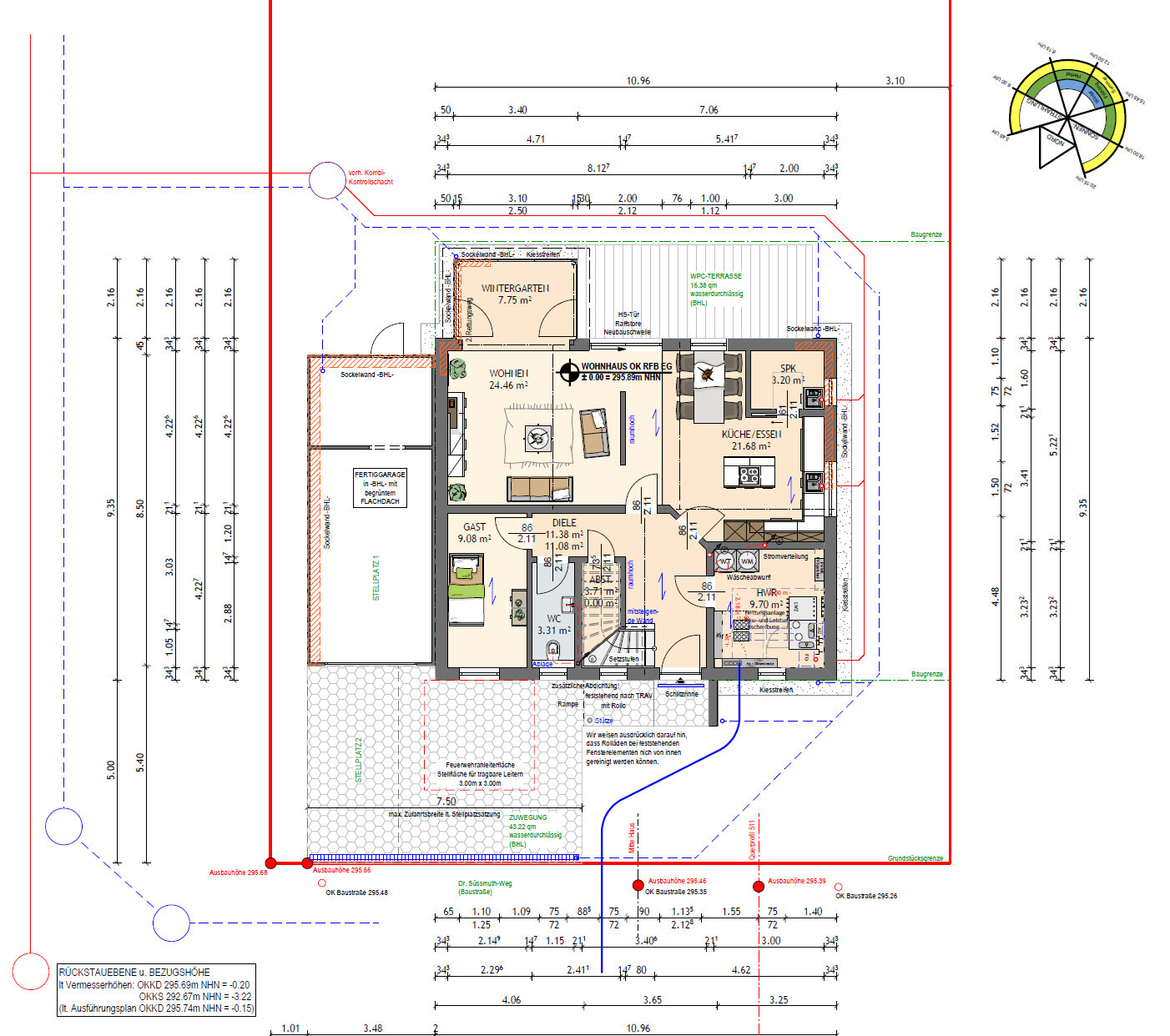
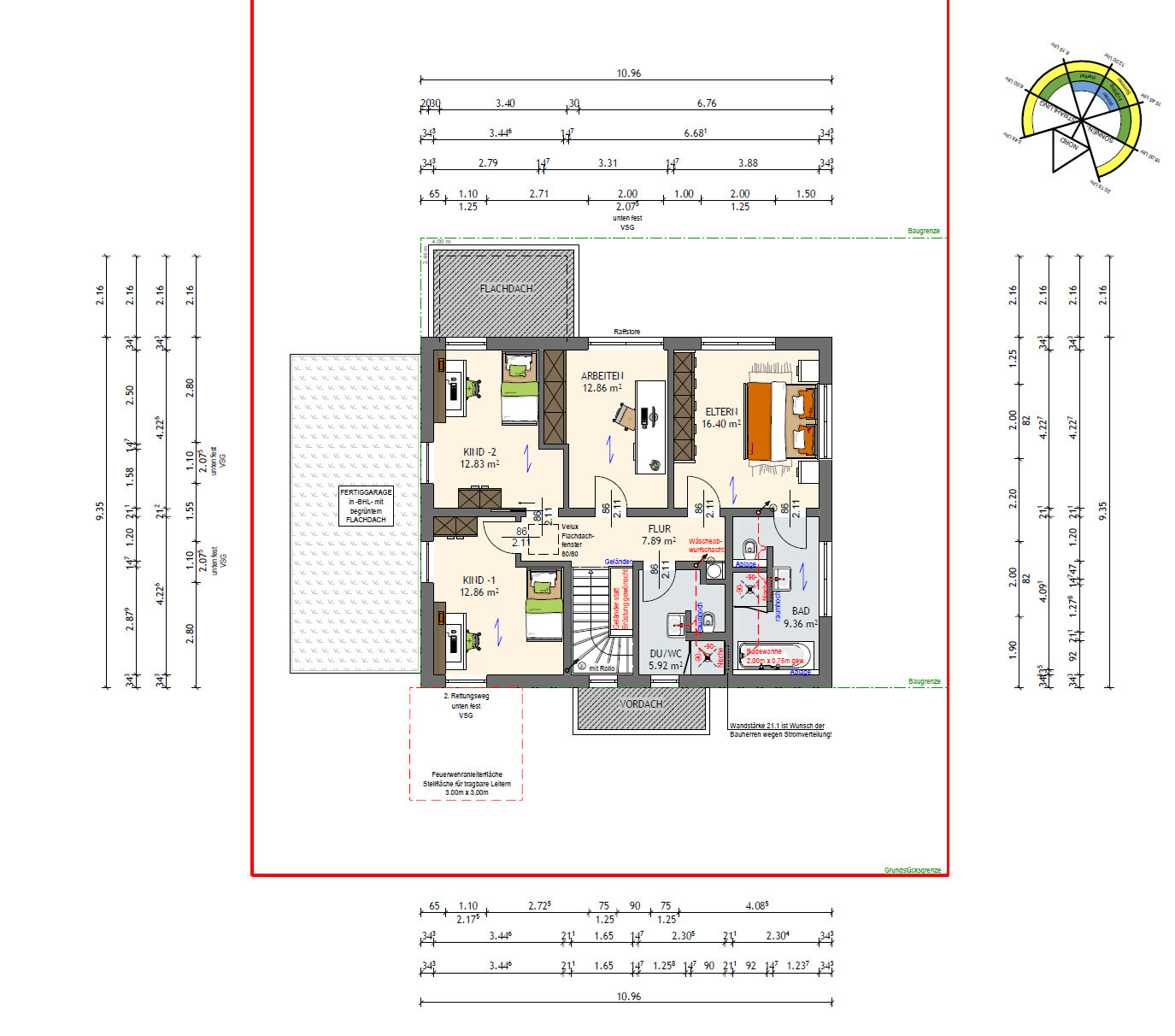
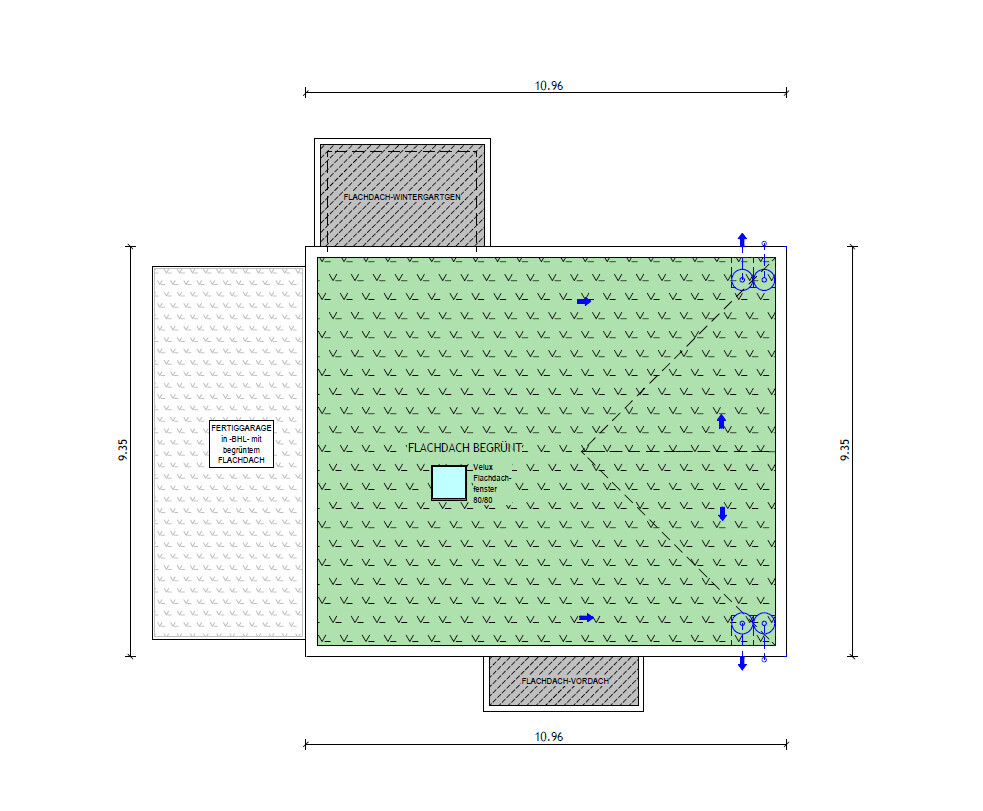
Edit: The furniture shown in the floor plans can be safely ignored. Planners seem to like adding these.
Best regards
Ganneff
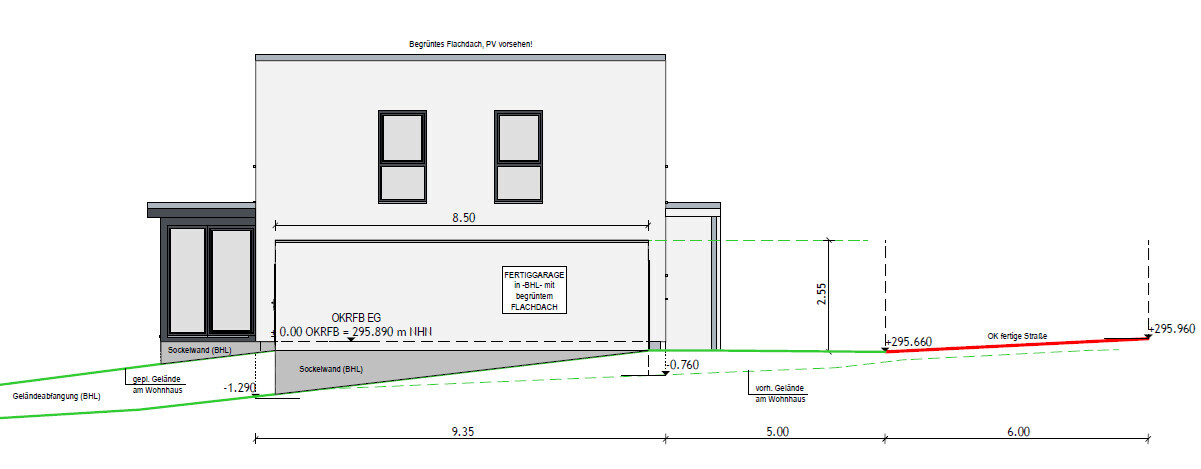
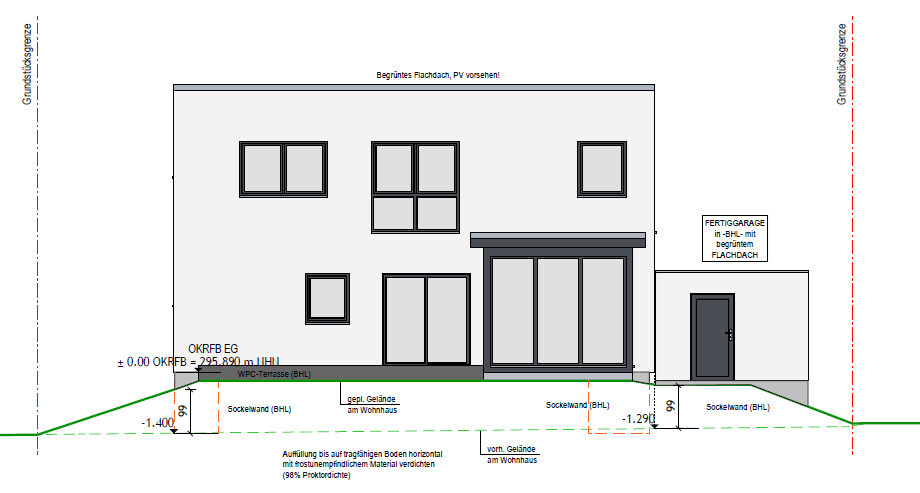
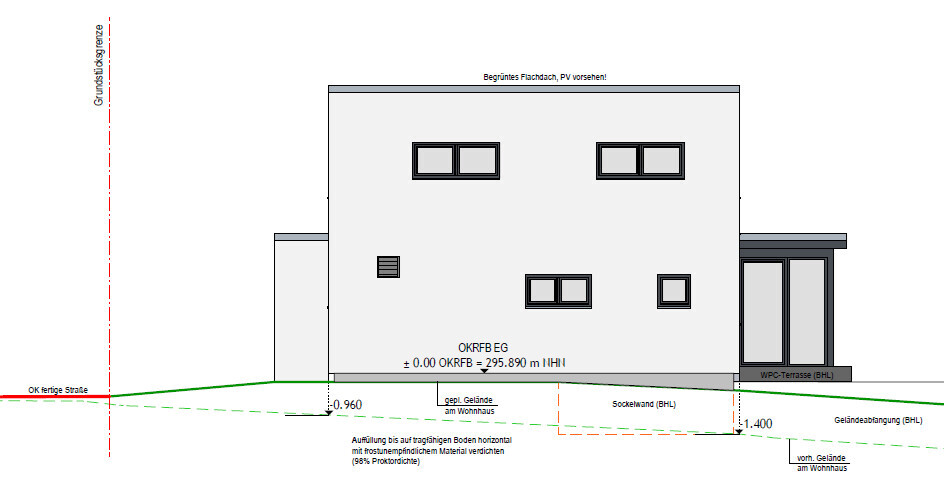
I have been reading along for some time now and finally dare to share a floor plan here.
First, here is the list of questions:
Zoning Plan / Restrictions
Plot size: 576 sqm (6,200 sq ft)
Slope: Yes, slight. According to the site plan, the top "right" corner is at 295.4 meters (970 feet), lower at 293.88 meters (964 feet), left side goes from 295.17 meters (968 feet) to 293.43 meters (963 feet)
Floor area ratio: 0.3
Building envelope, building line and boundary: Applies to house number 16
Surrounding buildings
Number of parking spaces: 2
Number of stories: 2 full floors required, plus optional recessed floor (setback floor)
Roof type: Flat roof, max. 5° pitch
Maximum height/limits: Max. 10 m (33 ft) high
Additional requirements: Equipment (heat pump) must be integrated, not external. Maximum of 2 residential units. Specific exterior colors required, rainwater should infiltrate (soil report says this is unlikely). Roofs must be greened. No oil or gas heating allowed.
Client requirements
Style, roof type, building type: Actually, none specified.
Basement, floors: No basement, 2 floors.
Number of occupants, ages: 4 people — 2 adults, 2 children
Ground floor space needs: Daily life (living, kitchen, dining, technical room, guest room)
Upper floor: Family (2 children's rooms, master bedroom, separate bathrooms), home office
Office: Home office, second workspace for occasional use such as a work window sill for example in the bedroom
Guests per year: Currently few.
Open or closed architecture, conservative or modern style: Either is fine.
Open kitchen, kitchen island: We are still considering. Initial wish was separate pantry like in the floor plan. An island would be nice if space allows.
Number of dining seats: Normally 4, rarely up to 8.
Fireplace: None.
Music/stereo wall: Multi-room audio with central unit in technical room.
Balcony, roof terrace: Neither.
Garage, carport: 1 garage
Other wishes: Central vacuum system, laundry chute, smart home (KNX) (I am mostly doing this myself, yes, I am a certified electrician, can program, but will also get additional help)
House design
Who designed the plan:
- Planner from a construction company: Correct, with some input from us. Based on an existing plan.
Price estimate by architect/planner: approx. 485,000 € (euros) for the house, approx. 210,000 € for the plot including basic services (survey, soil report, etc.)
Personal price limit for the house including features: approx. 800,000–850,000 € (including land)
Preferred heating technology: Heat pump
If you had to give up, which details/extra features could you skip:
- Could skip:
- Cannot skip:
Why is the design like it is now? For example:
Standard design by the planner? Yes, with minor wishes from us (wall between study and child’s room 2, T-walls in bathrooms, porch roof, conservatory, pantry)
What do you find especially good or bad about it? So far it seems to fit; apart from possibly the pantry/dining room, we don’t see major issues yet. But that’s why I’m here now.
Edit: The furniture shown in the floor plans can be safely ignored. Planners seem to like adding these.
Best regards
Ganneff
M
motorradsilke29 Jun 2025 08:16ypg schrieb:
So, in a practical context, you prefer to send the residents of the house outside to the garage behind the car to fetch some storage/clutter/items needed/towels rather than store them behind a cabinet behind the door, because the latter is impractical.
You made my day!Towels were not mentioned, but suitcases and decorations—items used once or twice a year. And I actually bring those in myself. I find it more sensible than wasting expensive space inside the house for these things. Regardless of the door situation, I wouldn’t store that in the living area.
I prefer to use the space behind the door for items I need daily (but without doors).
I think everyone has to figure this out for themselves, but it should be done honestly. For example, we have a dry room added to our carport, but we would never store suitcases, clothes, fabric items (including some decorations), or similar things there. A young family usually already has at least four suitcases (even if smaller), sports bags, winter shoes, specialized sportswear, and much more—items that I personally would not store outside. In every garage (a non-living space), you’ll find insects, cobwebs, and so on, which you don’t want to be in constant contact with.
I have significantly reduced my belongings and get rid of things I no longer need. I’m not a collector and don’t have children, yet adequate space inside the house is still necessary. This applies equally to files, music and electronic equipment, winter clothing, guest supplies, possibly a mattress, and much more.
So, consider carefully. Of course, everything is possible. A garage often smells of oil and gasoline and tends to get dusty. I’m in favor of moving as much as possible out of the living areas, but some things should definitely stay inside. After all, the garage should remain a functional and pleasant space, not a furniture storage room.
I have significantly reduced my belongings and get rid of things I no longer need. I’m not a collector and don’t have children, yet adequate space inside the house is still necessary. This applies equally to files, music and electronic equipment, winter clothing, guest supplies, possibly a mattress, and much more.
So, consider carefully. Of course, everything is possible. A garage often smells of oil and gasoline and tends to get dusty. I’m in favor of moving as much as possible out of the living areas, but some things should definitely stay inside. After all, the garage should remain a functional and pleasant space, not a furniture storage room.
A good design anticipates the needs but does not dictate the furniture layout; instead, it allows for various options—whether you choose open shelving or closed cabinets. The original poster can still decide that for themselves.
I agree with @Arauki11's point about garage storage: there are simply some things you don't want to hand over to spiders and woodlice. For example, anyone who has time to thoroughly clean their gear of mold spots and cobwebs before going on vacation is probably quite lucky in life.
I agree with @Arauki11's point about garage storage: there are simply some things you don't want to hand over to spiders and woodlice. For example, anyone who has time to thoroughly clean their gear of mold spots and cobwebs before going on vacation is probably quite lucky in life.
W
wiltshire29 Jun 2025 11:13ypg schrieb:
For example, if you have time before a holiday to thoroughly clean your stuff from mold spots and spider webs, then you must be pretty lucky in life. The alternative is: less stuff.
We have had good experience with intentionally limited storage space. We do run into limits here and there, but we definitely prefer that over knowing that a large portion of our belongings waits 350 days a year for a chance to be used, simply stored away without serving any purpose.
The small amount of storage forces us into a discipline that ultimately benefits us greatly. Areas where this is particularly helpful:
1. "This is still good, I will need it again someday" items → What is still in good condition is sold or given away when it no longer serves a purpose for us.
2. "This is a keepsake from..." Memories are important. The number of items that serve as reminders quickly becomes too large. Those who prioritize these things may want to build storage space for them. It was beneficial for us to reduce the number of keepsakes during our move. Not an easy process, but ultimately rewarding for us.
3. How much clothing and apparel do you really need? Less storage helps to focus on essentials. It’s not everyone’s preference, but having limited storage is not a drawback either.
4. Seasonal items – some like to acquire new decoration material for every season change and enjoy collecting and using it. That’s fine. Others buy decoration impulsively just because it’s available and appealing at the time. For us, that became a trap until we had to ask ourselves, “Where should all this stuff go?”
wiltshire schrieb:
The alternative is: less hassle.This is about suitcases, for example for holidays. But I admit: alternative, no holidays 😉C
chand198629 Jun 2025 12:00wiltshire schrieb:
How much clothing do you really need? Less storage space helps you focus. This isn’t for everyone, but on the other hand, having limited storage isn’t necessarily a bad thing.This was a question we faced after moving. Before the move, we decluttered thoroughly — 6 large bags of old clothes and a large bag of trash.
Since we initially had no wardrobe and still don’t, everything was kept in boxes. Whatever you needed, you had to search for and dig out. The result: Almost a third of the boxes remain unopened, and the effort to deal with their contents feels too much. Conclusion: We really don’t need that stuff.
What do we need (meaning: us, without children)? Always two sets of bed linen. A third set in reserve is still untouched in one of the boxes. Underwear and socks, about 30 pieces per person, is more than enough. Twelve T-shirts each and half as many sweaters. Three nice shirts for going out and one suit per person. One winter jacket or coat each. Three pairs of shorts per person, five pairs of jeans. Five pairs of shoes each, plus work shoes for gardening. We circulate three belts in total.
This has lasted us into the third year without anything missing. Recently bought: two swim shorts because we lacked those.
I didn’t count towels or bath towels, but there are always enough for a month between washes.
Within easy reach: sports shirts, which rarely see use despite waiting patiently.
By now, I’m only guessing what remains unpacked.
Similar topics