
Hello,
I have been reading along for some time now and finally dare to share a floor plan here.
First, here is the list of questions:
Zoning Plan / Restrictions
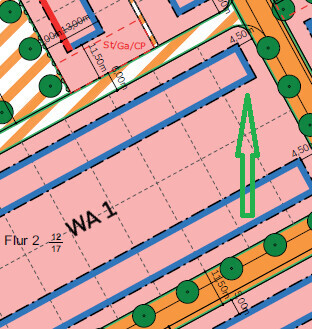
Plot size: 576 sqm (6,200 sq ft)
Slope: Yes, slight. According to the site plan, the top "right" corner is at 295.4 meters (970 feet), lower at 293.88 meters (964 feet), left side goes from 295.17 meters (968 feet) to 293.43 meters (963 feet)
Floor area ratio: 0.3
Building envelope, building line and boundary: Applies to house number 16
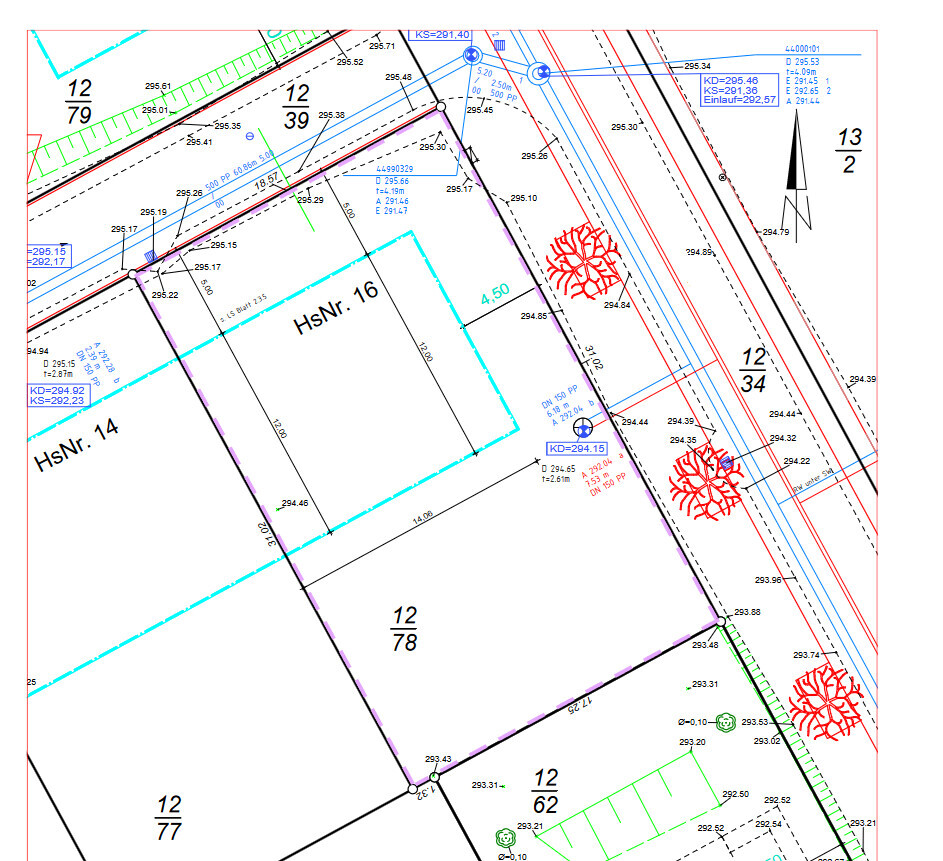
Surrounding buildings
Number of parking spaces: 2
Number of stories: 2 full floors required, plus optional recessed floor (setback floor)
Roof type: Flat roof, max. 5° pitch
Maximum height/limits: Max. 10 m (33 ft) high
Additional requirements: Equipment (heat pump) must be integrated, not external. Maximum of 2 residential units. Specific exterior colors required, rainwater should infiltrate (soil report says this is unlikely). Roofs must be greened. No oil or gas heating allowed.
Client requirements
Style, roof type, building type: Actually, none specified.
Basement, floors: No basement, 2 floors.
Number of occupants, ages: 4 people — 2 adults, 2 children
Ground floor space needs: Daily life (living, kitchen, dining, technical room, guest room)
Upper floor: Family (2 children's rooms, master bedroom, separate bathrooms), home office
Office: Home office, second workspace for occasional use such as a work window sill for example in the bedroom
Guests per year: Currently few.
Open or closed architecture, conservative or modern style: Either is fine.
Open kitchen, kitchen island: We are still considering. Initial wish was separate pantry like in the floor plan. An island would be nice if space allows.
Number of dining seats: Normally 4, rarely up to 8.
Fireplace: None.
Music/stereo wall: Multi-room audio with central unit in technical room.
Balcony, roof terrace: Neither.
Garage, carport: 1 garage
Other wishes: Central vacuum system, laundry chute, smart home (KNX) (I am mostly doing this myself, yes, I am a certified electrician, can program, but will also get additional help)
House design
Who designed the plan:
- Planner from a construction company: Correct, with some input from us. Based on an existing plan.
Price estimate by architect/planner: approx. 485,000 € (euros) for the house, approx. 210,000 € for the plot including basic services (survey, soil report, etc.)
Personal price limit for the house including features: approx. 800,000–850,000 € (including land)
Preferred heating technology: Heat pump
If you had to give up, which details/extra features could you skip:
- Could skip:
- Cannot skip:
Why is the design like it is now? For example:
Standard design by the planner? Yes, with minor wishes from us (wall between study and child’s room 2, T-walls in bathrooms, porch roof, conservatory, pantry)
What do you find especially good or bad about it? So far it seems to fit; apart from possibly the pantry/dining room, we don’t see major issues yet. But that’s why I’m here now.
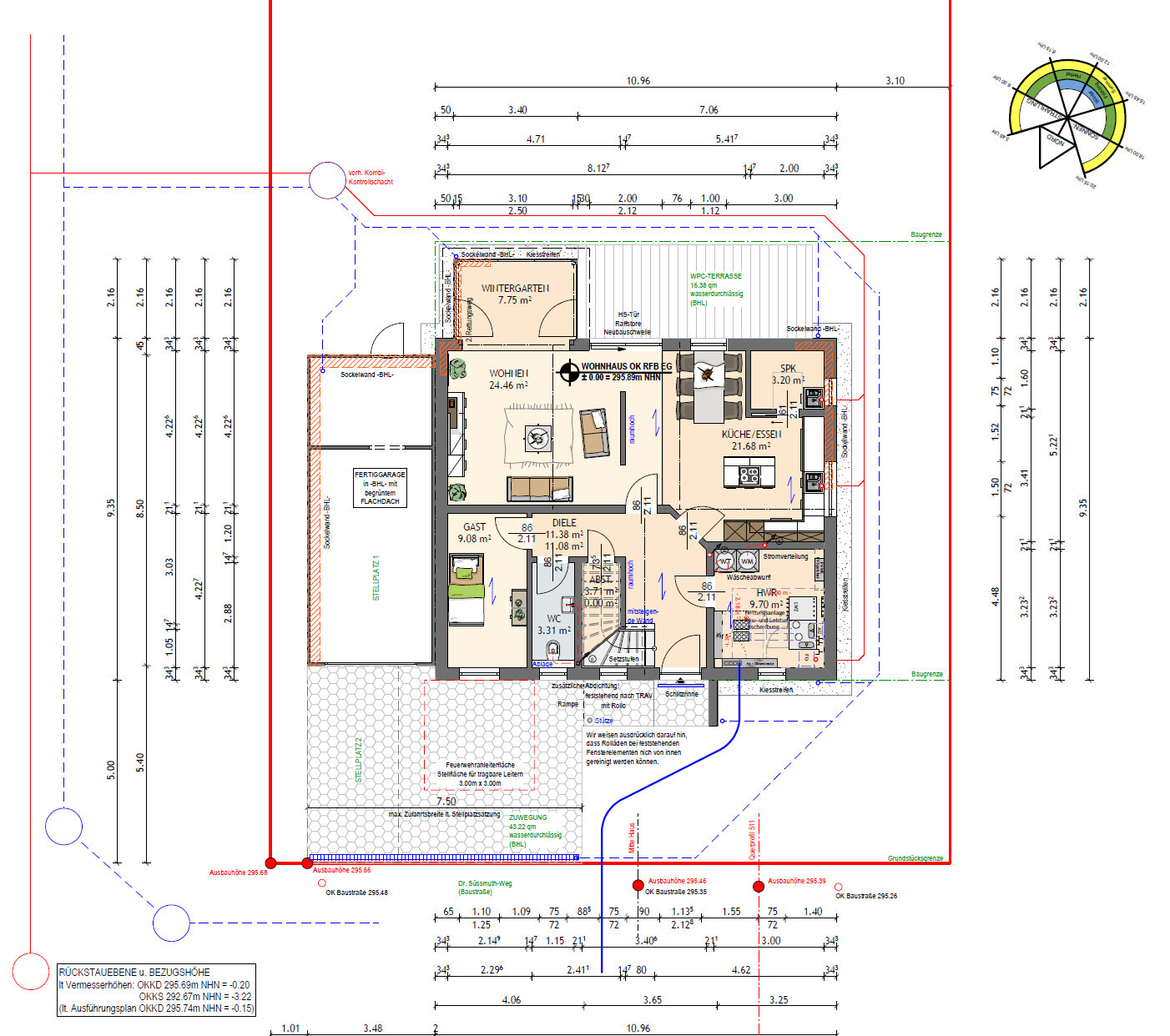
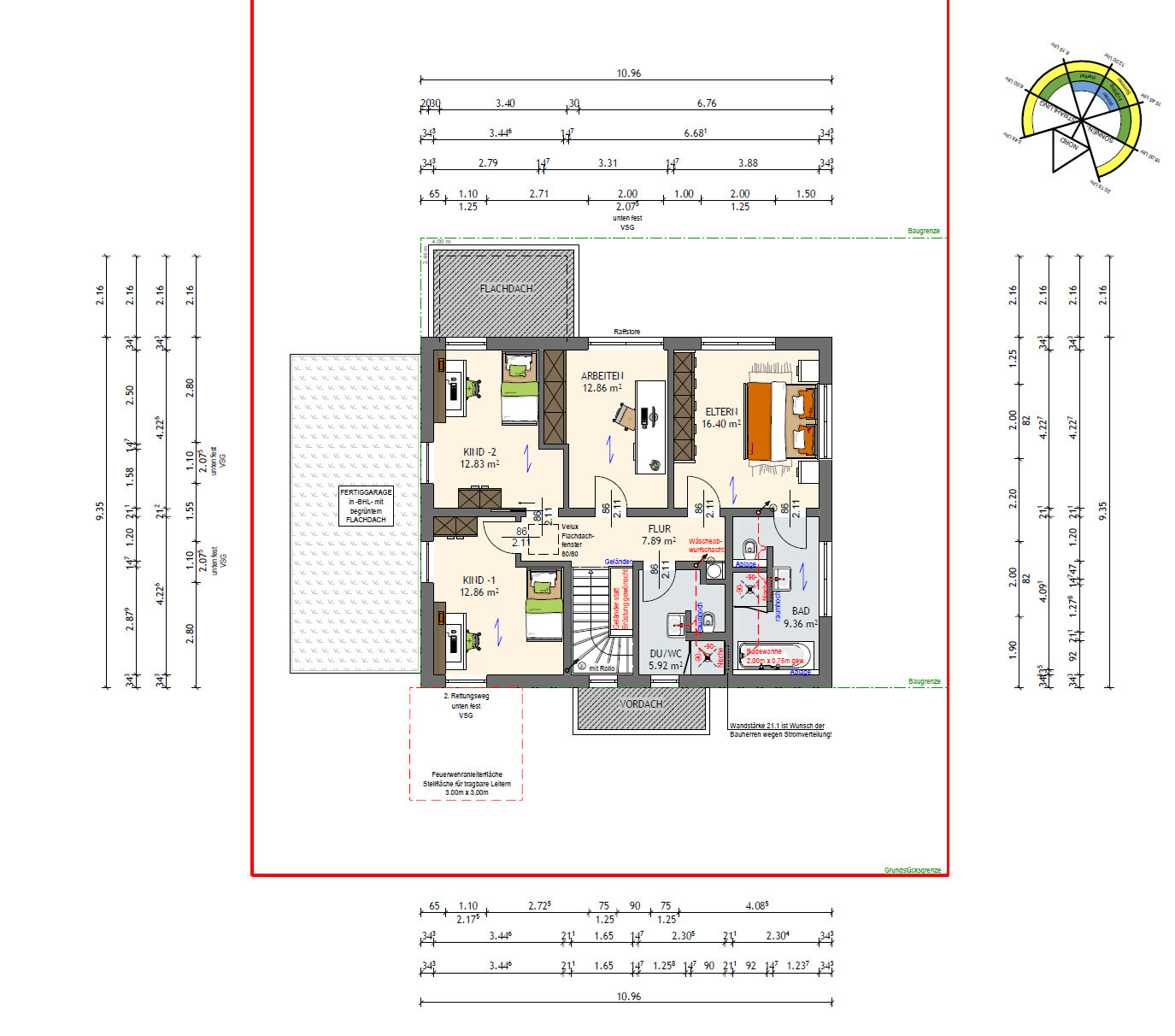
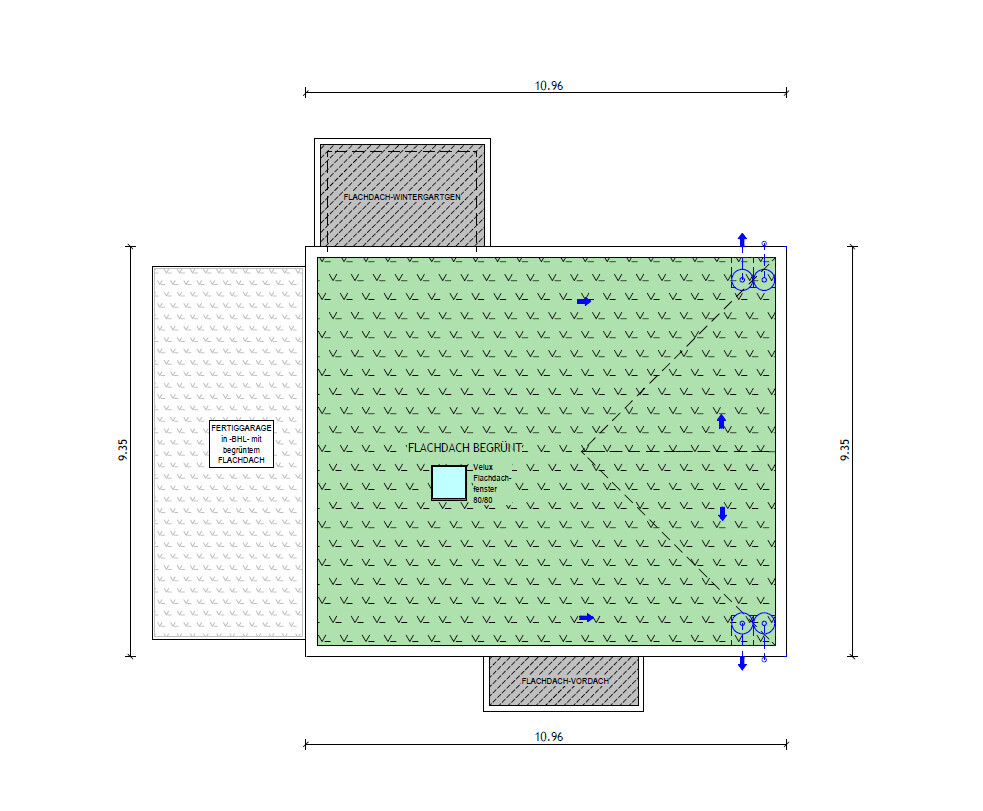
Edit: The furniture shown in the floor plans can be safely ignored. Planners seem to like adding these.
Best regards
Ganneff
I have been reading along for some time now and finally dare to share a floor plan here.
First, here is the list of questions:
Zoning Plan / Restrictions
Plot size: 576 sqm (6,200 sq ft)
Slope: Yes, slight. According to the site plan, the top "right" corner is at 295.4 meters (970 feet), lower at 293.88 meters (964 feet), left side goes from 295.17 meters (968 feet) to 293.43 meters (963 feet)
Floor area ratio: 0.3
Building envelope, building line and boundary: Applies to house number 16
Surrounding buildings
Number of parking spaces: 2
Number of stories: 2 full floors required, plus optional recessed floor (setback floor)
Roof type: Flat roof, max. 5° pitch
Maximum height/limits: Max. 10 m (33 ft) high
Additional requirements: Equipment (heat pump) must be integrated, not external. Maximum of 2 residential units. Specific exterior colors required, rainwater should infiltrate (soil report says this is unlikely). Roofs must be greened. No oil or gas heating allowed.
Client requirements
Style, roof type, building type: Actually, none specified.
Basement, floors: No basement, 2 floors.
Number of occupants, ages: 4 people — 2 adults, 2 children
Ground floor space needs: Daily life (living, kitchen, dining, technical room, guest room)
Upper floor: Family (2 children's rooms, master bedroom, separate bathrooms), home office
Office: Home office, second workspace for occasional use such as a work window sill for example in the bedroom
Guests per year: Currently few.
Open or closed architecture, conservative or modern style: Either is fine.
Open kitchen, kitchen island: We are still considering. Initial wish was separate pantry like in the floor plan. An island would be nice if space allows.
Number of dining seats: Normally 4, rarely up to 8.
Fireplace: None.
Music/stereo wall: Multi-room audio with central unit in technical room.
Balcony, roof terrace: Neither.
Garage, carport: 1 garage
Other wishes: Central vacuum system, laundry chute, smart home (KNX) (I am mostly doing this myself, yes, I am a certified electrician, can program, but will also get additional help)
House design
Who designed the plan:
- Planner from a construction company: Correct, with some input from us. Based on an existing plan.
Price estimate by architect/planner: approx. 485,000 € (euros) for the house, approx. 210,000 € for the plot including basic services (survey, soil report, etc.)
Personal price limit for the house including features: approx. 800,000–850,000 € (including land)
Preferred heating technology: Heat pump
If you had to give up, which details/extra features could you skip:
- Could skip:
- Cannot skip:
Why is the design like it is now? For example:
Standard design by the planner? Yes, with minor wishes from us (wall between study and child’s room 2, T-walls in bathrooms, porch roof, conservatory, pantry)
What do you find especially good or bad about it? So far it seems to fit; apart from possibly the pantry/dining room, we don’t see major issues yet. But that’s why I’m here now.
Edit: The furniture shown in the floor plans can be safely ignored. Planners seem to like adding these.
Best regards
Ganneff

motorradsilke schrieb:
But the same can happen if their electrician makes the plan. I don’t see any difference there either.If it’s regulated by their electrician, then the manufacturer’s insurance covers it, but having a "subcontractor of the client (!) acting as an agent of the contractor" would be legally unprecedented.https://www.instagram.com/11antgmxde/
https://www.linkedin.com/company/bauen-jetzt/
M
motorradsilke26 Jun 2025 22:3511ant schrieb:
Their electrician then regulates this through the manufacturer's insurance, but a "subcontractor of the client (!) acting as an agent of the contractor" would legally be unprecedented. If the company accepts the contract in a way that allows the original poster to plan the electrical work instead of their own electrician (which should be documented in writing), they will also have to take responsibility if something goes wrong.
11ant schrieb:
The manufacturer's insurance is regulated by their electrician, but a "subcontractor of the client (!) acting as an agent of the contractor" would be legally unprecedented. motorradsilke schrieb:
If the company accepts the contract in such a way that the original poster (OP) can plan the electrical work instead of using their own electrician (which should be documented in writing), they will also have to take responsibility if something goes wrong. This is how I see it:
If I deliver poor planning and they carry it out as planned – then it’s my problem and I have to figure out how to fix it.
If I deliver something and they perform it incorrectly (for example, drilling all/some holes in the wrong places) – then it’s their problem and they have to find a solution.
If the electrician I hired does a poor job, then it’s my issue (which can be contractually regulated with that electrician in advance).
And regarding later warranty claims (within the warranty period) – if a component fails that comes from their side and is their responsibility, then it’s their problem. If it’s my responsibility, then it’s mine (or the electrician’s, again depending on the contract with them).
And yes, I’m experienced enough to know that sometimes issues arise in the details between two parties. Then both sides need to be flexible and work towards a solution that is acceptable to everyone involved.
W
wiltshire27 Jun 2025 00:03Ganneff schrieb:
And yes, I am old enough to know that sometimes there can be tight spots between two components in the details. In those cases, both sides just need to be flexible and look for a solution that works for everyone involved. No worries. It’s just a risk assessment, and there are valid reasons to arrive at different conclusions. Of course, it can also work.
Ganneff schrieb:
Regarding the earthworks you still had, see above—I’ll ask at the beginning of the week. Yes, it’s around 110cm (43 inches).I received an offer back today. Of course, it includes items that will ultimately depend on the actual conditions on site, like with the foundation, but now I have a target figure. It’s roughly €12,000 gross (about $12,700). That means combined with the foundation, I’m looking at just under €50,000 (about $53,000) in costs. A basement would probably cost significantly more. (Out of interest, I asked the foundation/sock wall builder for a rough estimate on the difference, since they also do basements, so that should give me a rough idea without too much wasted effort.)
(With the updated plans attached here, I estimate closer to €14,000 (about $14,900), since the garage now extends further and will need more substructure.)
Otherwise, there are new plans. I already have a few comments and I’m curious to hear your feedback.
This is the ground floor. The conservatory ended up at 4.50 x 1.25m (15 x 5 feet). They don’t offer a fully glazed version, which is why the option of flat roof windows is shown if I insist on it. However, they advise against it due to shading and cost, and we’re not keen on it either.
If the conservatory doesn’t appeal, I could have a bay window there instead, which would be cheaper but with significantly less window area. That obviously conflicts with the desire for lots of light, which is why the conservatory is shown for now.
What strikes me first are the (in my opinion) large wall sections that extend inward. I assume they are needed for structural reasons, but it’s something I’ll ask about to see if it can be done differently (or if doing so would lead to bay windows anyway). As a layperson, I’d hope a large steel beam over the top would also work. What do you think about these?
The guest room currently has a window that’s far too small—only 72cm (28 inches) high. The same height as in the kitchen—yay, symmetry. But I don’t really care about that and would prefer a 125cm (49 inches) high window to get enough light into the room. The kitchen window is kept small just to fit a decent sink underneath.
The laundry chute shown there is their suggestion—we had one planned but didn’t update it in our requests. It would exit there. Since that doesn’t make much sense, it’s only shown as a note, but a new proposal is already drawn on the left in the utility room. That has disadvantages upstairs because the space for it ends up in the children’s room. The amount of space is technically okay, but the corner makes it practically impossible to arrange a bed or a wardrobe properly. We will probably leave it out completely. Nice feature but not essential. Laundry bags to the bathrooms, and then drag them to the machines...
The utility/technical room is now nicely sized and has a door to the outside planned. I’d still like to swap the positions of the washing machine/dryer and the sink. The door has a threshold/level difference to the outside, but that should (I think) work without any porch or overhang.
I’m wondering whether to move the rear garage door to the wall facing the terrace?
Here on the upper floor, you can see the possible laundry chute in the children’s room. We’re not happy with that. Given the dimensions and the utility room below, there’s no better location, so it’s out. The hallway wall on the right, where it was before, will be straightened again.
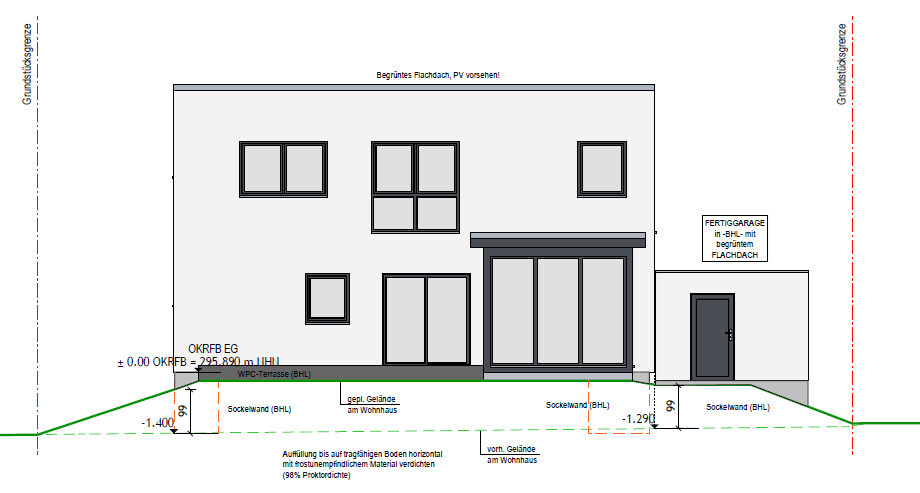
In the office, the window has now moved to the left corner. This has the downside that I can no longer use the corner for built-in shelving, but on the other hand, the desk and other furniture fit well there, and the shelving can go on the wall next to the bedroom. Moving the window also aligns better with the door below, and otherwise there’s no space for a floor-to-ceiling window because of the conservatory below.
The second children's room now also has a floor-to-ceiling window, as the shifted conservatory below no longer blocks it.
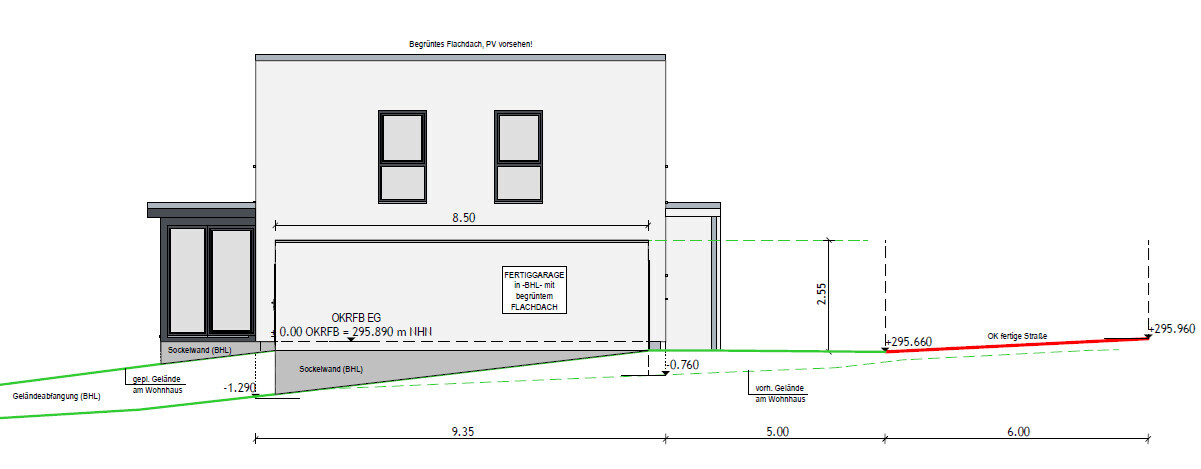
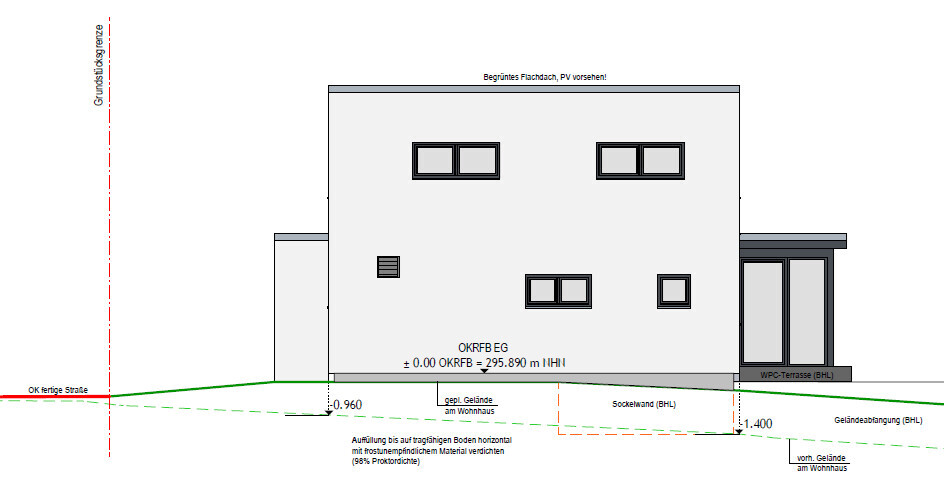
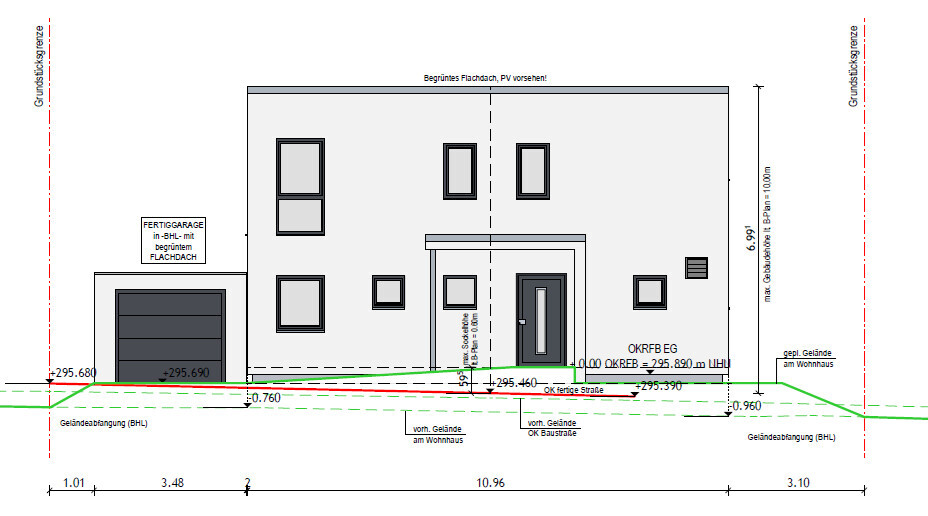
Accordingly, the exterior views have now been updated.
Similar topics