
Hello,
I have been reading along for some time now and finally dare to share a floor plan here.
First, here is the list of questions:
Zoning Plan / Restrictions
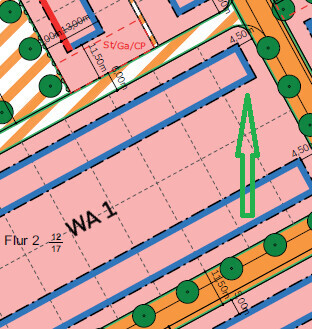
Plot size: 576 sqm (6,200 sq ft)
Slope: Yes, slight. According to the site plan, the top "right" corner is at 295.4 meters (970 feet), lower at 293.88 meters (964 feet), left side goes from 295.17 meters (968 feet) to 293.43 meters (963 feet)
Floor area ratio: 0.3
Building envelope, building line and boundary: Applies to house number 16
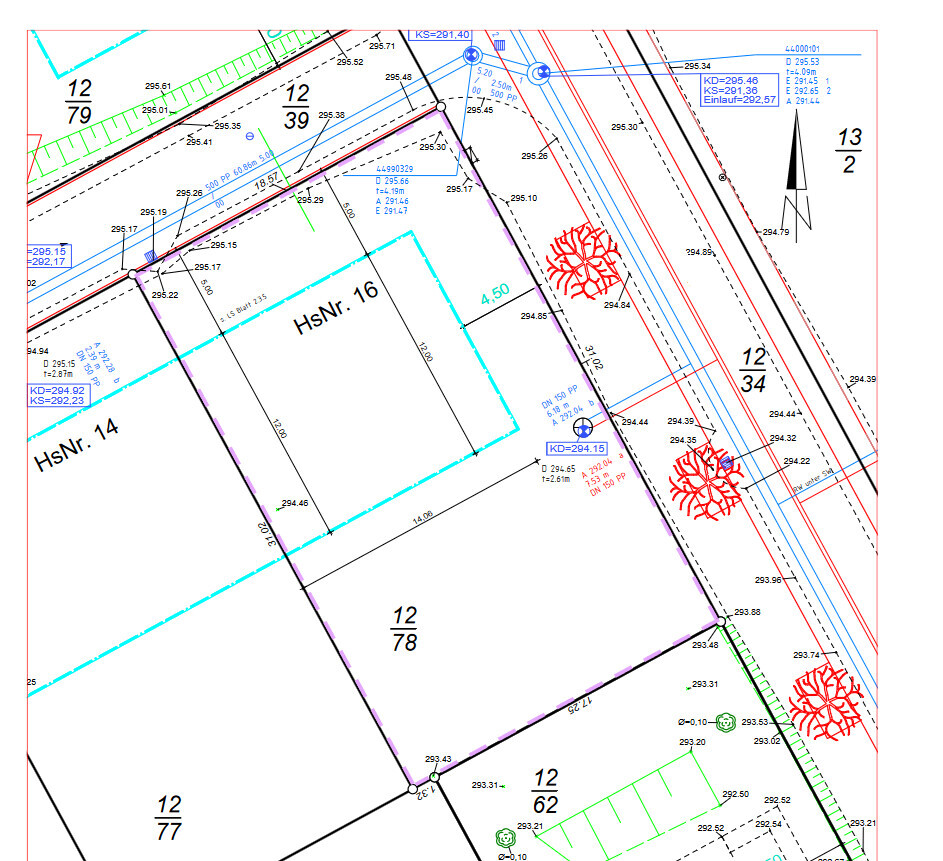
Surrounding buildings
Number of parking spaces: 2
Number of stories: 2 full floors required, plus optional recessed floor (setback floor)
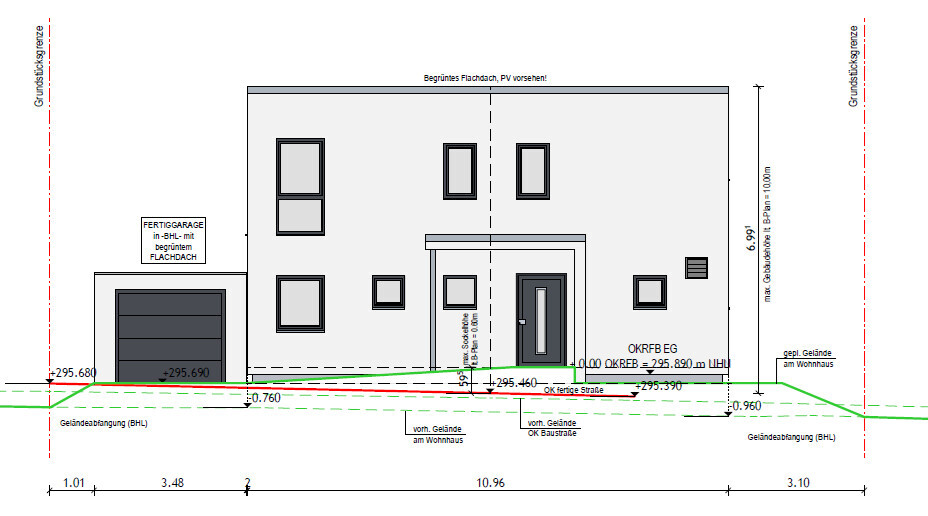
Roof type: Flat roof, max. 5° pitch
Maximum height/limits: Max. 10 m (33 ft) high
Additional requirements: Equipment (heat pump) must be integrated, not external. Maximum of 2 residential units. Specific exterior colors required, rainwater should infiltrate (soil report says this is unlikely). Roofs must be greened. No oil or gas heating allowed.
Client requirements
Style, roof type, building type: Actually, none specified.
Basement, floors: No basement, 2 floors.
Number of occupants, ages: 4 people — 2 adults, 2 children
Ground floor space needs: Daily life (living, kitchen, dining, technical room, guest room)
Upper floor: Family (2 children's rooms, master bedroom, separate bathrooms), home office
Office: Home office, second workspace for occasional use such as a work window sill for example in the bedroom
Guests per year: Currently few.
Open or closed architecture, conservative or modern style: Either is fine.
Open kitchen, kitchen island: We are still considering. Initial wish was separate pantry like in the floor plan. An island would be nice if space allows.
Number of dining seats: Normally 4, rarely up to 8.
Fireplace: None.
Music/stereo wall: Multi-room audio with central unit in technical room.
Balcony, roof terrace: Neither.
Garage, carport: 1 garage
Other wishes: Central vacuum system, laundry chute, smart home (KNX) (I am mostly doing this myself, yes, I am a certified electrician, can program, but will also get additional help)
House design
Who designed the plan:
- Planner from a construction company: Correct, with some input from us. Based on an existing plan.
Price estimate by architect/planner: approx. 485,000 € (euros) for the house, approx. 210,000 € for the plot including basic services (survey, soil report, etc.)
Personal price limit for the house including features: approx. 800,000–850,000 € (including land)
Preferred heating technology: Heat pump
If you had to give up, which details/extra features could you skip:
- Could skip:
- Cannot skip:
Why is the design like it is now? For example:
Standard design by the planner? Yes, with minor wishes from us (wall between study and child’s room 2, T-walls in bathrooms, porch roof, conservatory, pantry)
What do you find especially good or bad about it? So far it seems to fit; apart from possibly the pantry/dining room, we don’t see major issues yet. But that’s why I’m here now.
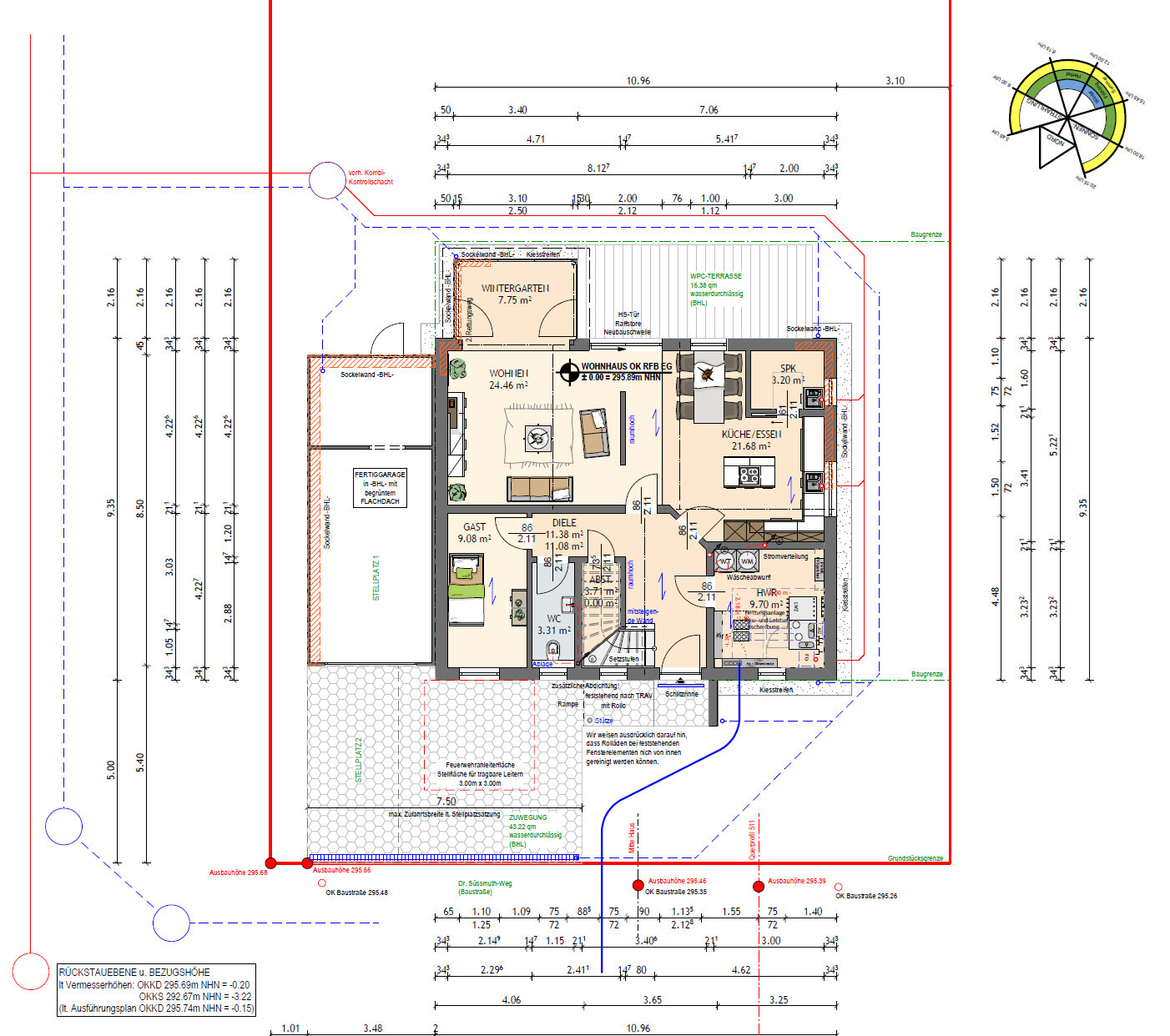
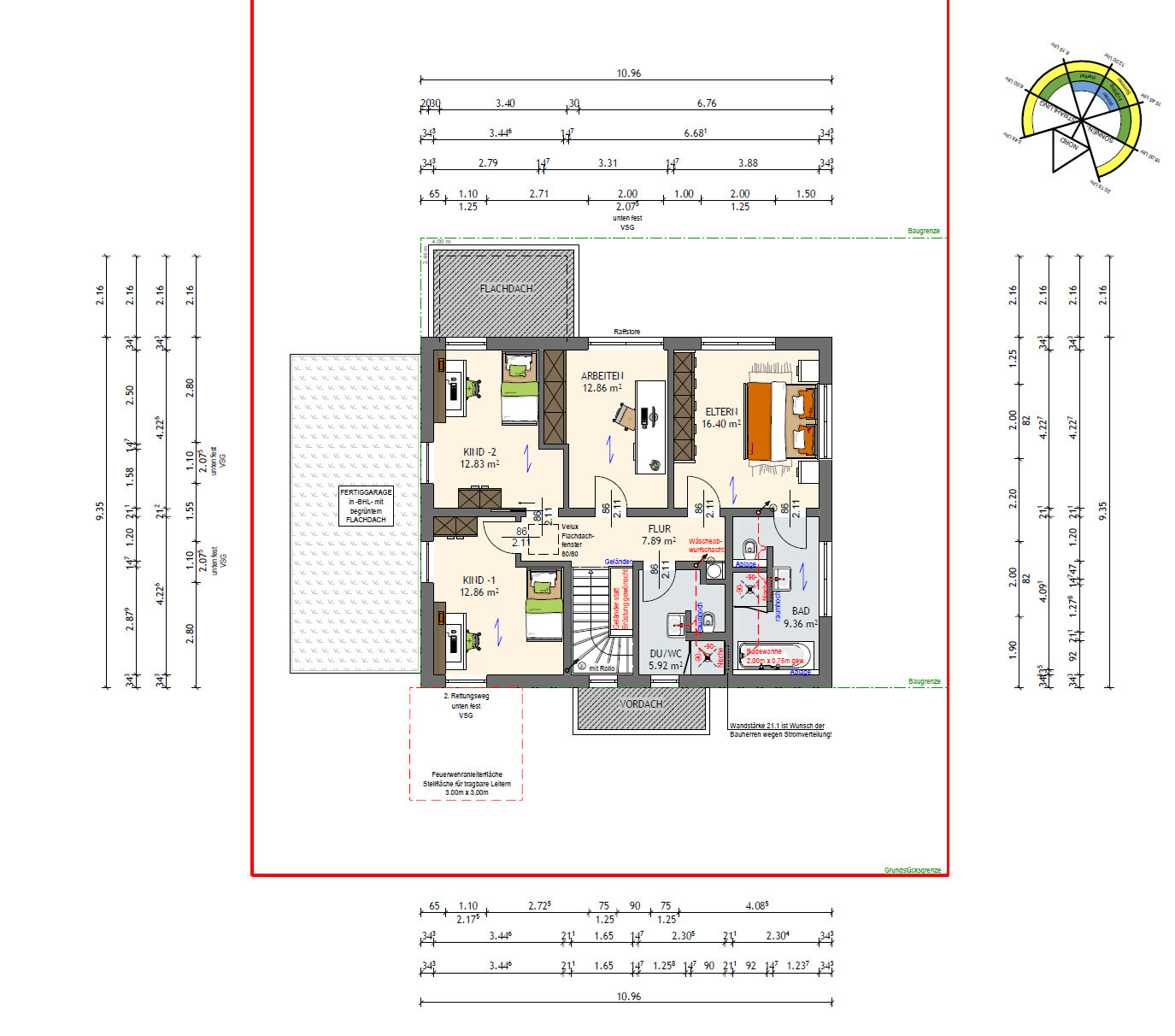
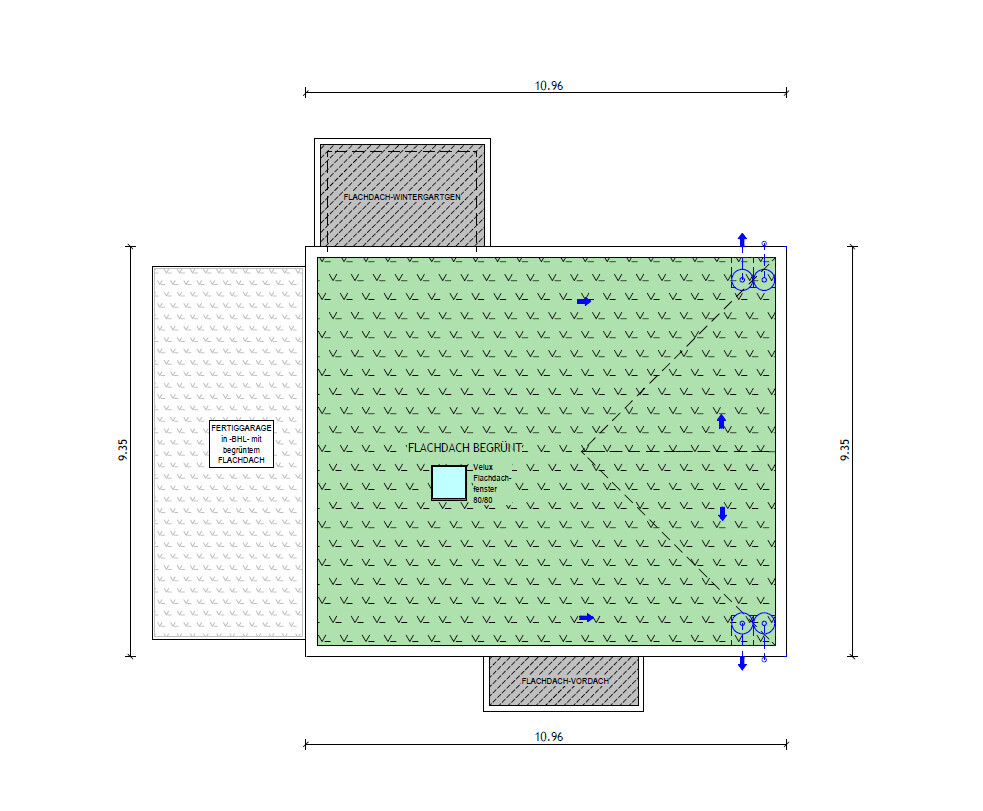
Edit: The furniture shown in the floor plans can be safely ignored. Planners seem to like adding these.
Best regards
Ganneff
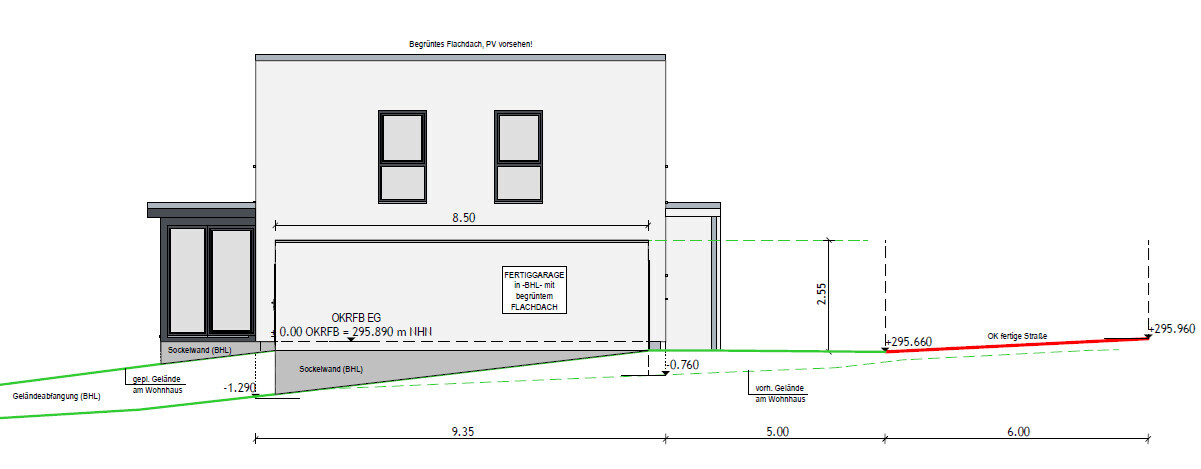
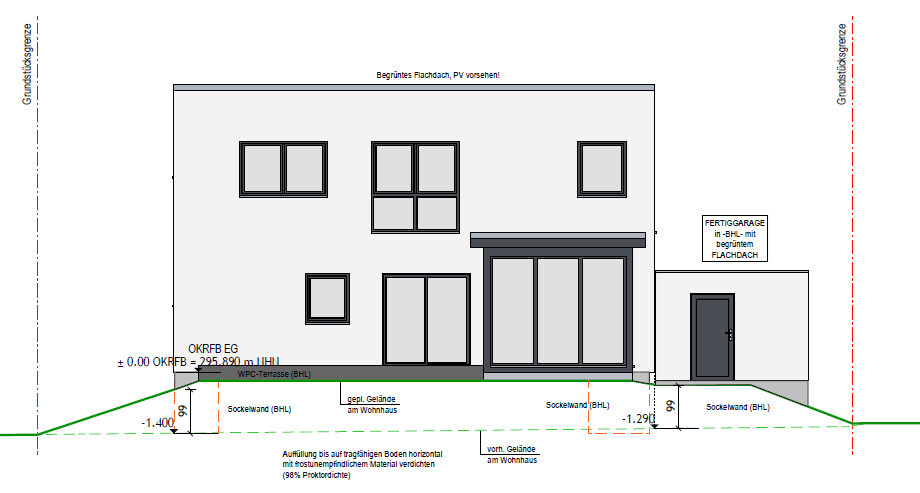
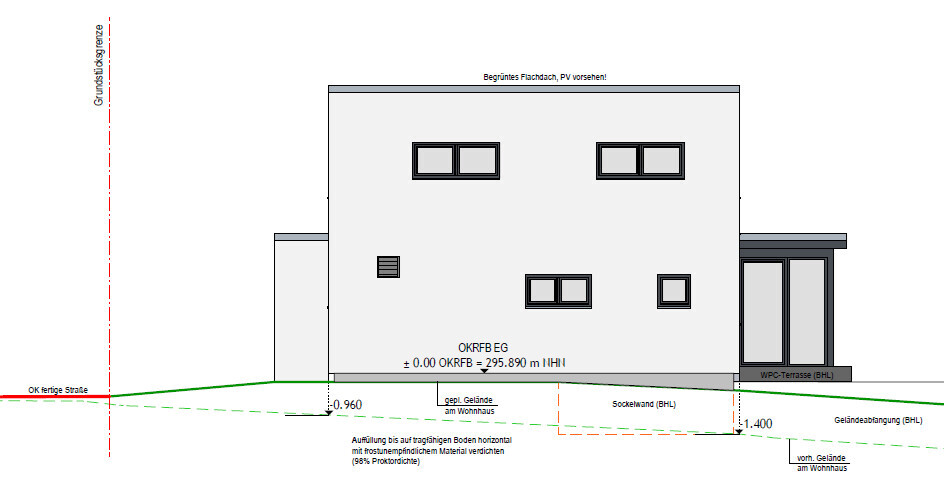
I have been reading along for some time now and finally dare to share a floor plan here.
First, here is the list of questions:
Zoning Plan / Restrictions
Plot size: 576 sqm (6,200 sq ft)
Slope: Yes, slight. According to the site plan, the top "right" corner is at 295.4 meters (970 feet), lower at 293.88 meters (964 feet), left side goes from 295.17 meters (968 feet) to 293.43 meters (963 feet)
Floor area ratio: 0.3
Building envelope, building line and boundary: Applies to house number 16
Surrounding buildings
Number of parking spaces: 2
Number of stories: 2 full floors required, plus optional recessed floor (setback floor)
Roof type: Flat roof, max. 5° pitch
Maximum height/limits: Max. 10 m (33 ft) high
Additional requirements: Equipment (heat pump) must be integrated, not external. Maximum of 2 residential units. Specific exterior colors required, rainwater should infiltrate (soil report says this is unlikely). Roofs must be greened. No oil or gas heating allowed.
Client requirements
Style, roof type, building type: Actually, none specified.
Basement, floors: No basement, 2 floors.
Number of occupants, ages: 4 people — 2 adults, 2 children
Ground floor space needs: Daily life (living, kitchen, dining, technical room, guest room)
Upper floor: Family (2 children's rooms, master bedroom, separate bathrooms), home office
Office: Home office, second workspace for occasional use such as a work window sill for example in the bedroom
Guests per year: Currently few.
Open or closed architecture, conservative or modern style: Either is fine.
Open kitchen, kitchen island: We are still considering. Initial wish was separate pantry like in the floor plan. An island would be nice if space allows.
Number of dining seats: Normally 4, rarely up to 8.
Fireplace: None.
Music/stereo wall: Multi-room audio with central unit in technical room.
Balcony, roof terrace: Neither.
Garage, carport: 1 garage
Other wishes: Central vacuum system, laundry chute, smart home (KNX) (I am mostly doing this myself, yes, I am a certified electrician, can program, but will also get additional help)
House design
Who designed the plan:
- Planner from a construction company: Correct, with some input from us. Based on an existing plan.
Price estimate by architect/planner: approx. 485,000 € (euros) for the house, approx. 210,000 € for the plot including basic services (survey, soil report, etc.)
Personal price limit for the house including features: approx. 800,000–850,000 € (including land)
Preferred heating technology: Heat pump
If you had to give up, which details/extra features could you skip:
- Could skip:
- Cannot skip:
Why is the design like it is now? For example:
Standard design by the planner? Yes, with minor wishes from us (wall between study and child’s room 2, T-walls in bathrooms, porch roof, conservatory, pantry)
What do you find especially good or bad about it? So far it seems to fit; apart from possibly the pantry/dining room, we don’t see major issues yet. But that’s why I’m here now.
Edit: The furniture shown in the floor plans can be safely ignored. Planners seem to like adding these.
Best regards
Ganneff
wiltshire schrieb:
Along with good communication, coordinating the schedule properly is also important. You need to have time set aside for the electrical work exactly when it's due, to avoid delaying the following trades. This can be a bit trickier in practice than you might initially think. The utility lines are installed and connected right after the building framework is erected. This also includes a large part of the electrical installation. Yes. I have already spoken with electricians. Once the plan is finalized and submitted for the building permit / planning permission, I will finalize things with the electricians, and the appropriate timing will be arranged on their behalf. They had no issue with that. Initially, we discussed 5 days for pulling cables, which they considered "tight but doable, 10 days would be better," and they emphasized the importance of knowing the schedule in time for planning. So, the 3 weeks now indicated by Fingerhaus should be manageable. At this stage, it’s mainly about pulling cables, not connecting everything yet.
W
wiltshire25 Jun 2025 12:02Ganneff schrieb:
At first, it's just about pulling the cables, not connecting everything right away.Clear labeling is extremely important and requires concentration that cannot be maintained for unlimited hours per day. This creates a time factor that is often underestimated. Otherwise, there will be frustration when installing the distribution board, the subpanels, and especially the control systems.wiltshire schrieb:
Clear labeling is extremely important and requires concentration, which cannot be maintained for many hours a day. This often creates an underestimated time factor. Otherwise, there will be frustration when building the fuse box, the sub-distributions, and especially the control systems.All well known. I come from this area, and this is the trade I worry about the least (and think about the most). (I definitely *do not* want the distribution panels assembled on site; they are prepared nicely off-site, and the cables are simply connected to the terminals).
We had a rough discussion about the electrical system beforehand – recesses were also pre-milled in the factory. The exact details of what, where, and how many were finalized with the electrician on site.
The home manufacturers have different prefabrication depths in their factories.
The home manufacturers have different prefabrication depths in their factories.

haydee schrieb:
@11ant From the perspective of Fulda, they’re all quite close. With binoculars, I can hardly get the HE/BY state border in clear focus.
Ganneff schrieb:
Whether I do the electrical work or the company that Fingerhaus usually hires, the really important part is the planning—deciding where everything goes. And for that, Fingerhaus needs a detailed plan by deadline X. I can provide that just as well as their electrician.
Then they drill the holes in the walls according to that plan and pull in pull wires that stick out about 5cm (2 inches) at each end.
After the house is erected, I/my electrician have three weeks to turn the pull wires into proper wiring, then they close up the ceilings and work continues as usual with the other trades. You’re lucky. That’s not standard industrial practice—it’s already premium flexible.
wiltshire schrieb:
We built with Schwirten & Klein. The electrical installations were not inside the walls when they were erected.
Later, once the house was completed, we decided where switches and sockets should go and simply marked it on the walls. That way, we also knew where an installation level was needed. This was then prepared by the carpenters and outfitted by the electrician. Do they build traditional timber frame walls on site, or are the walls basically erected with cladding on one side only?
wiltshire schrieb:
Clear labeling is extremely important. It’s best to do it systematically.
https://www.instagram.com/11antgmxde/
https://www.linkedin.com/company/bauen-jetzt/
W
wiltshire25 Jun 2025 12:2411ant schrieb:
Are the walls site-framed, or were they essentially installed with paneling on one side only?The walls were prefabricated in the factory and delivered with paneling on both sides. The cellulose insulation was then blown in on site. The actual wall structure does not contain any service lines. We installed the service layer separately later on.Similar topics