
ᐅ Floor plan for a newly built two-story single-family house, 200 m² (2,150 sq ft)
Created on: 26 Dec 2024 16:14
H
HaseUndIgel
Hello everyone and Merry Christmas,
after I posted a question about the heat pump to be used a few days ago, I now want to continue with the main and fundamental thread regarding the floor plan.
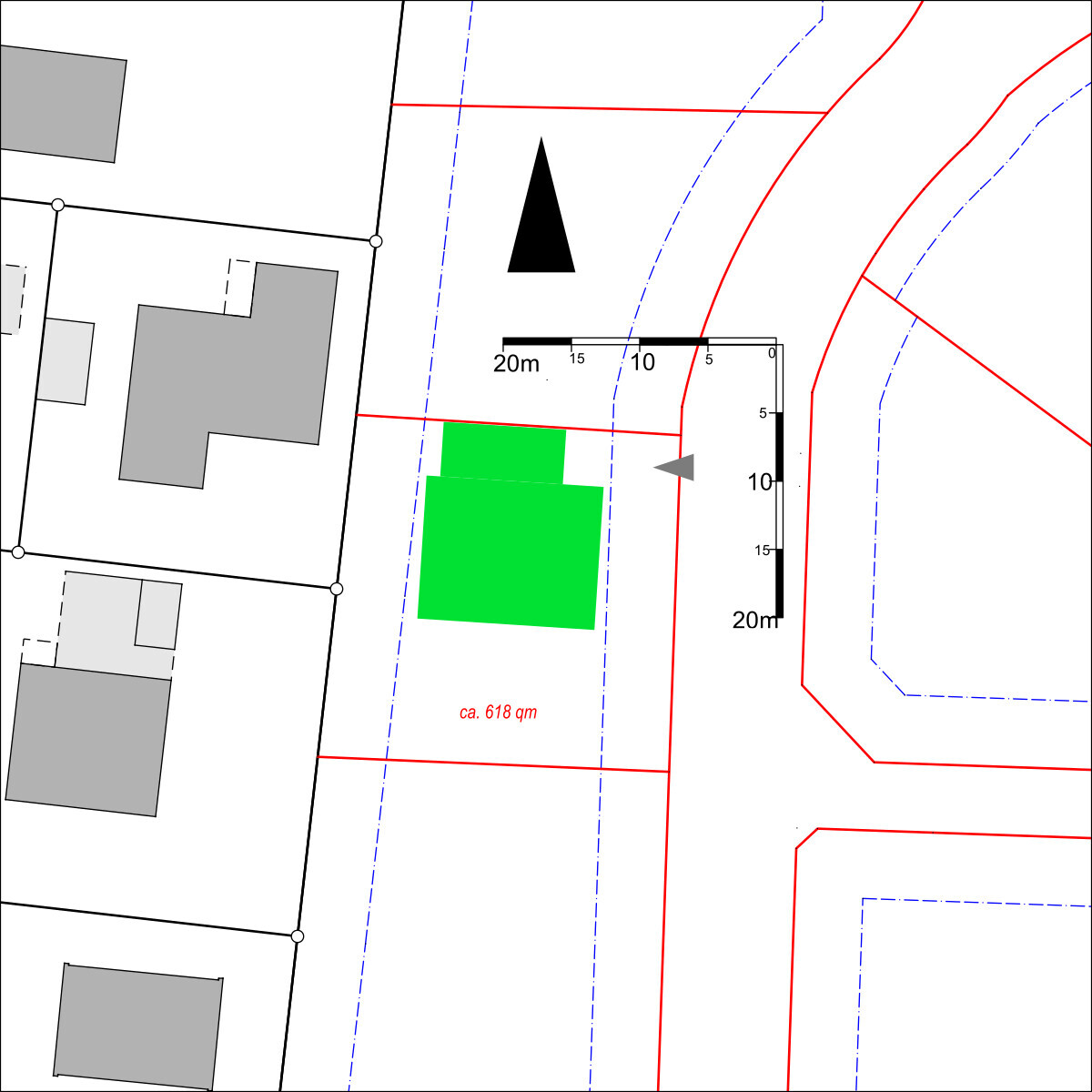
Development Plan / Restrictions
Plot size: 618 m² (6660 sq ft)
Slope: None
Site coverage ratio: 0.4
Floor area ratio: None
Building envelope, building line and boundary: See image
Peripheral development: No
Number of parking spaces: 2
Number of stories: up to 2
Roof shape: All allowed; for hip or gable roofs 25° - 50° pitch
Architectural style: None specified
Orientation: None specified
Maximum height / limits: 9 m ridge height (29.5 ft)
Other requirements: Photovoltaic system covering at least 50% of usable roof surface
Homeowner Requirements
Architectural style, roof type, building type: "Urban villa but Northern German style"
Basement, floors: 2 full stories, no basement
Number of occupants, ages: 4 people, 32, 32, 1, -2 years
Room requirements on ground and upper floors: Study (ground floor), Study/guest room (upper floor)
Office: Family use or home office? 1 office for full-time use, 1 additional as a guest room hybrid
Number of guest stay days per year: approx. 10-15 days, mostly family
Open or closed layout: Open
Conservative or modern construction: More modern
Open kitchen, kitchen island: Open kitchen, with island if it fits, otherwise U- or L-shaped
Number of dining seats: 8
Fireplace: No
Music / stereo wall: No
Balcony, roof terrace: No
Garage, carport: Carport for 1 car
Utility garden, greenhouse: No
Additional wishes / special features / daily routine, also reasons why certain things are wanted or not: Nothing noteworthy
House Design
Who designed the plan: Planner (Architect?) of the general contractor (GC)
What do you particularly like and why?
What do you dislike and why?
Price estimate according to architect/planner: 565,000 EUR
Personal price limit for the house, including fittings: 730,000 EUR (including garden, carport, photovoltaics, kitchen, additional costs)
Preferred heating technology: Heat pump is basically a must (no gas connection)
If you have to give up, which details / extras
Why did the design turn out the way it did?
Three-hour meeting with the architect at the general contractor, starting from a similar model house (this was a 1.5-story house with a gable roof), several iterations on tracing paper, then a week later the digital design was received.
Which wishes were implemented by the architect? Covered entrance and terrace set back under the upper floor, bedroom with dressing room, 2 studies (1 ground floor, 1 upper floor).
What do you think makes the design good or bad? Overall we quite like the whole package.
I’m looking forward to your opinions and am curious about what you think. If we still like the design in January, we will probably proceed with further planning with the general contractor.
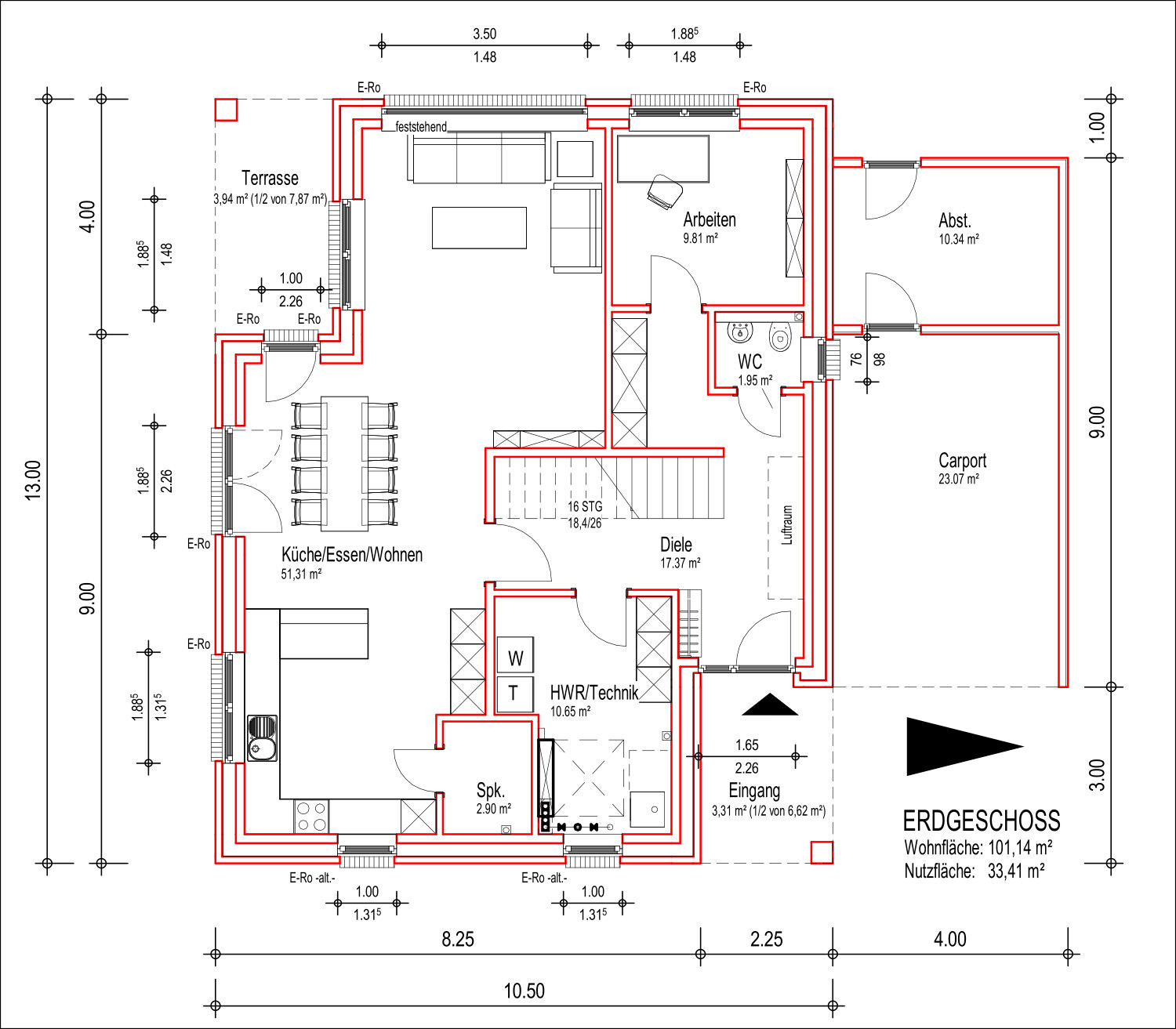
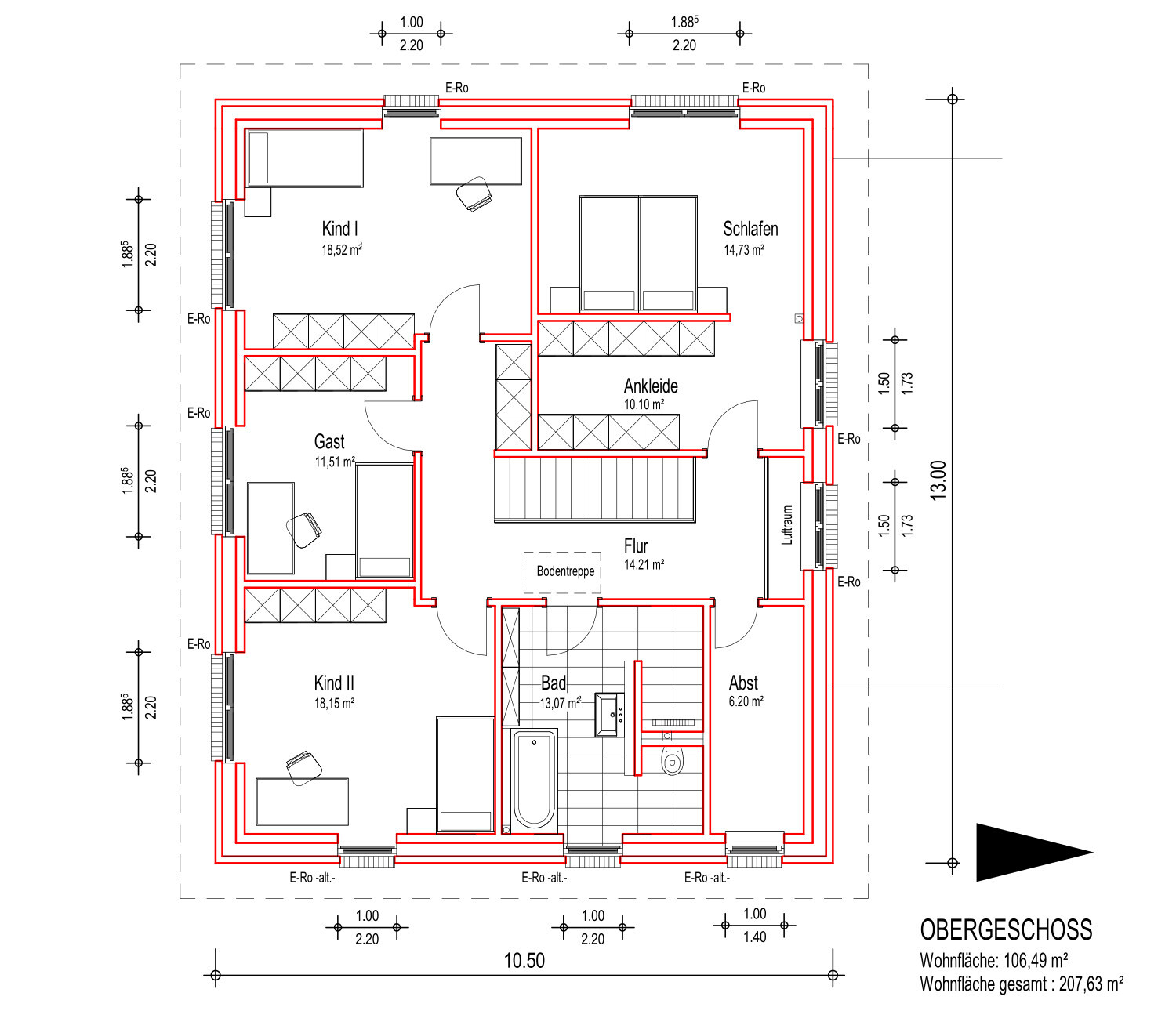
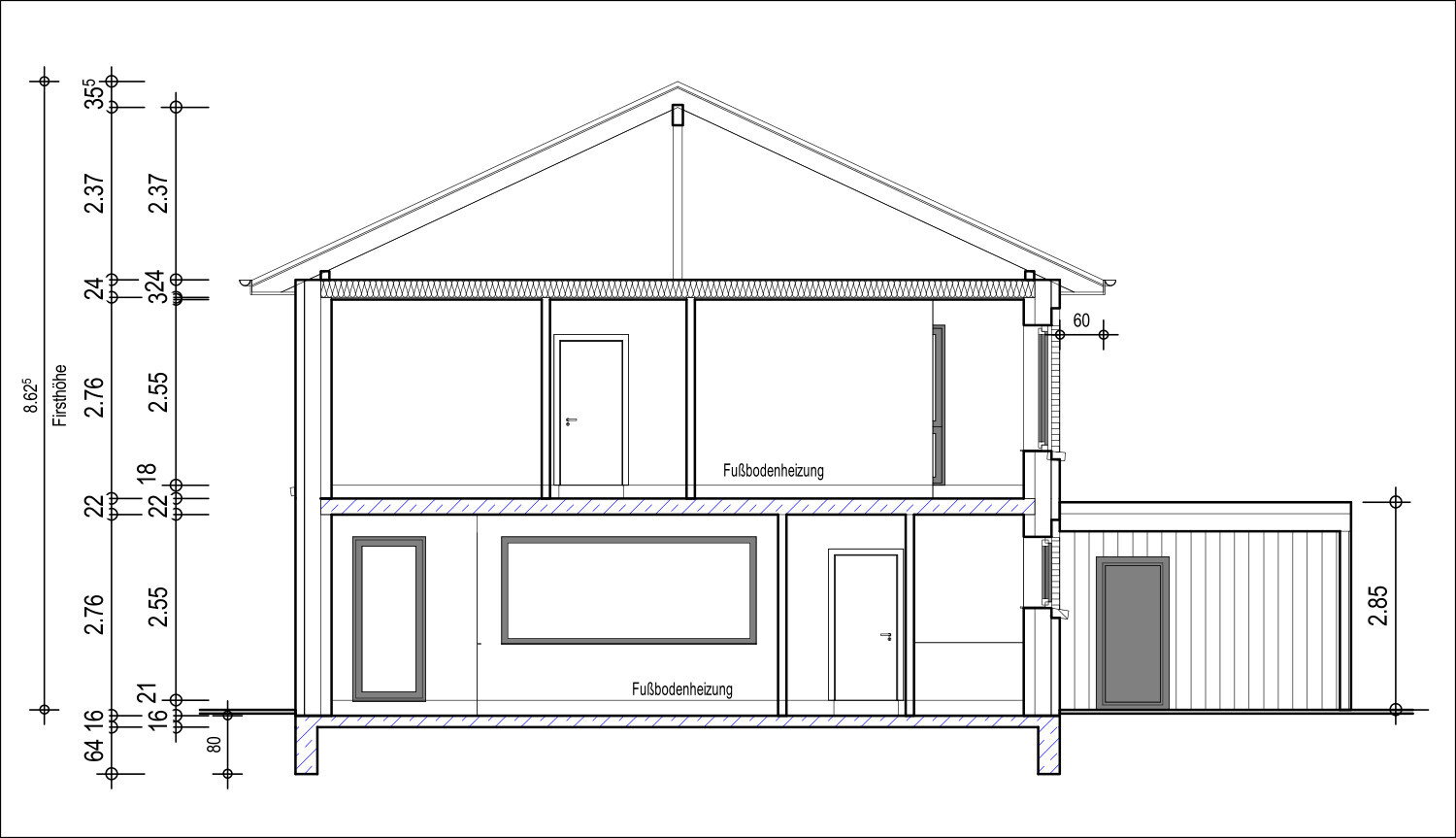
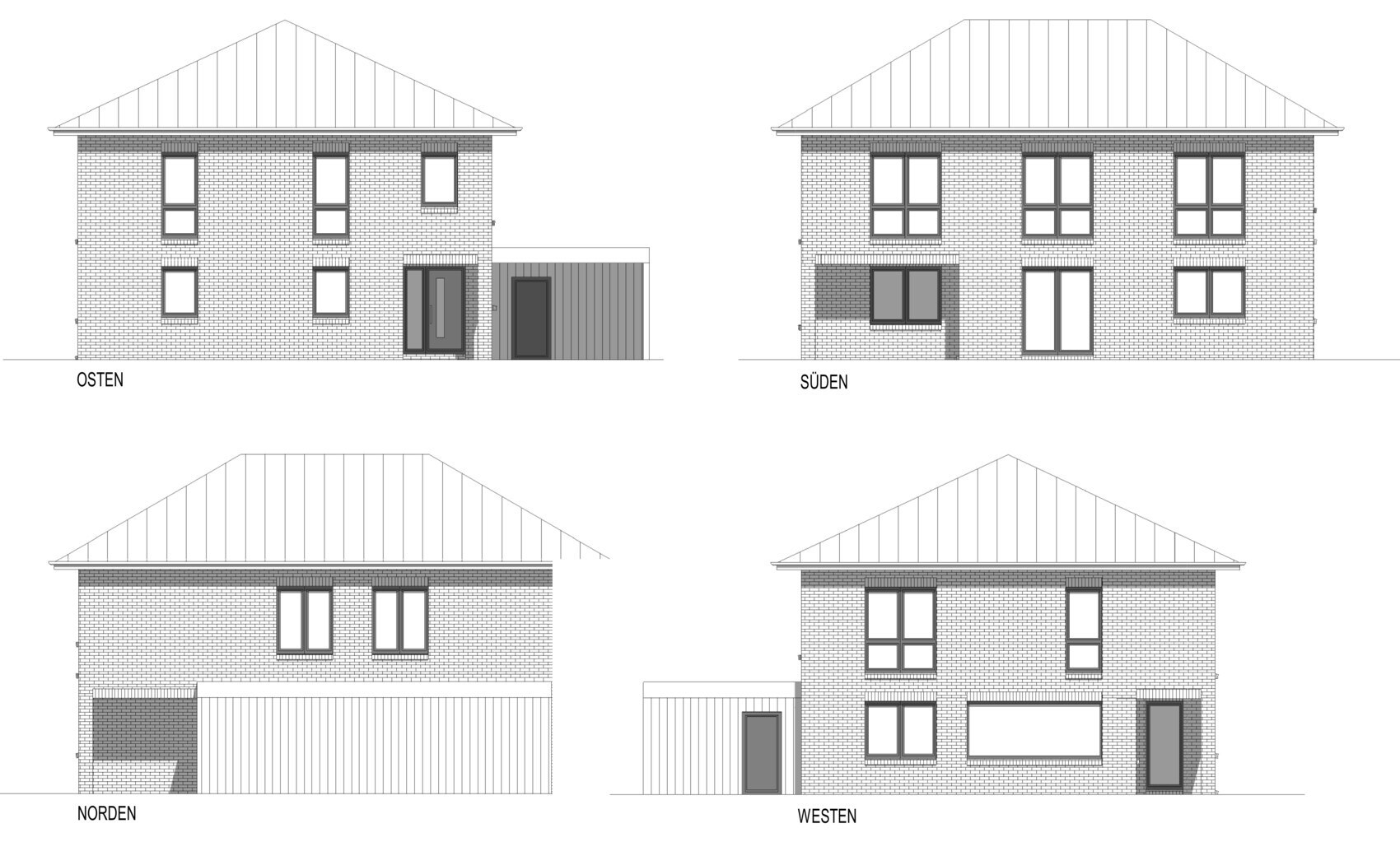
after I posted a question about the heat pump to be used a few days ago, I now want to continue with the main and fundamental thread regarding the floor plan.
Development Plan / Restrictions
Plot size: 618 m² (6660 sq ft)
Slope: None
Site coverage ratio: 0.4
Floor area ratio: None
Building envelope, building line and boundary: See image
Peripheral development: No
Number of parking spaces: 2
Number of stories: up to 2
Roof shape: All allowed; for hip or gable roofs 25° - 50° pitch
Architectural style: None specified
Orientation: None specified
Maximum height / limits: 9 m ridge height (29.5 ft)
Other requirements: Photovoltaic system covering at least 50% of usable roof surface
Homeowner Requirements
Architectural style, roof type, building type: "Urban villa but Northern German style"
Basement, floors: 2 full stories, no basement
Number of occupants, ages: 4 people, 32, 32, 1, -2 years
Room requirements on ground and upper floors: Study (ground floor), Study/guest room (upper floor)
Office: Family use or home office? 1 office for full-time use, 1 additional as a guest room hybrid
Number of guest stay days per year: approx. 10-15 days, mostly family
Open or closed layout: Open
Conservative or modern construction: More modern
Open kitchen, kitchen island: Open kitchen, with island if it fits, otherwise U- or L-shaped
Number of dining seats: 8
Fireplace: No
Music / stereo wall: No
Balcony, roof terrace: No
Garage, carport: Carport for 1 car
Utility garden, greenhouse: No
Additional wishes / special features / daily routine, also reasons why certain things are wanted or not: Nothing noteworthy
House Design
Who designed the plan: Planner (Architect?) of the general contractor (GC)
What do you particularly like and why?
- Straight staircase
- Covered entrance and terrace
- Spacious enough for our needs
What do you dislike and why?
- Ground floor WC probably too small
- Pantry doesn’t make much sense (maybe omit)
- Layout of the bathroom upstairs (we already have alternative ideas)
- Unsure if there is enough light in the living/dining area
- Slightly too big / bulky
- A bit too expensive
Price estimate according to architect/planner: 565,000 EUR
Personal price limit for the house, including fittings: 730,000 EUR (including garden, carport, photovoltaics, kitchen, additional costs)
Preferred heating technology: Heat pump is basically a must (no gas connection)
If you have to give up, which details / extras
- Can be skipped: open atrium, pantry, if necessary the type of covering on entrance and terrace (set back under the upper floor)
- Cannot be skipped: Storage space
Why did the design turn out the way it did?
Three-hour meeting with the architect at the general contractor, starting from a similar model house (this was a 1.5-story house with a gable roof), several iterations on tracing paper, then a week later the digital design was received.
Which wishes were implemented by the architect? Covered entrance and terrace set back under the upper floor, bedroom with dressing room, 2 studies (1 ground floor, 1 upper floor).
What do you think makes the design good or bad? Overall we quite like the whole package.
I’m looking forward to your opinions and am curious about what you think. If we still like the design in January, we will probably proceed with further planning with the general contractor.
 HaseUndIgel27 Dec 2024 14:02
ypg schrieb:
I would prefer a solid wall for a sofa wall, so it wouldn’t reflect anything from the TV. The TV is not used often, and when it is, the exterior roller shutter can be closed. For all other activities in the living room, plenty of natural daylight is nice.
N
nordanney27 Dec 2024 14:06HaseUndIgel schrieb:
That’s why I still don’t know where the optimum would actually be for me. A few years ago, we installed an identical kitchen in our new build. However, the worktop depth was 90cm (35 inches), and the new peninsula was, I believe, 120cm (47 inches). Standard 60cm (24 inches) cabinets were installed on the inside, and 60cm (24 inches) units, which were originally wall cabinets, featured glass fronts on the other side facing the dining area. They were used to store dishes.
But a specialist planner will design that for you.
HaseUndIgel27 Dec 2024 14:23nordanney schrieb:
The worktop depth is 90cm (35 inches) and the new peninsula, I believe, is 120cm (47 inches).Thanks for the input!
nordanney schrieb:
But the specialist planner will handle that for you.Of course, we definitely want to schedule an appointment with them before we finalize the floor plan. Especially regarding the window placement, it needs to fit a practical kitchen layout.HaseUndIgel27 Dec 2024 14:57ypg schrieb:
The thing is: the architect’s job is to plan the optimum solution based on the knowledge gained through their studies. A layperson simply doesn’t have that knowledge. So you or your group are just cruising around the usual repertoire of standard house models and the typical building heroes — but not around the knowledge of individuality. That’s why you end up with facades that are currently messed up and also with an entrance situation that doesn’t work well, especially when you are more repairing and straightening than considering a new build. Laypeople just don’t like to delete. That’s true, I’ll do it differently with the next house.
Although I know ourselves quite well and believe that even with an external architect, we would end up with a very similar design in the end.
There’s nothing that can change
- that the plot of land is what it is
- that the building boundaries are as they are (no carport or storage shed outside these boundaries)
- that the development plan is as it is
- that we want to allocate the rooms across the floors as we have
- that for most rooms we even have specific wishes regarding their orientation to the cardinal directions
- and on top of that, that we insist on extras like a covered terrace (of course only SW), a walk-in closet, and a straight staircase.
Basically, the only thing left to plan according to our requirements is the entrance and hallway. No wonder we got it wrong on the first attempt and now the partly incompatible demands are affecting these connecting spaces.
Any smart design from an architect would have failed with us if the rooms weren’t where they are now. I’m sure my wife and I would have reduced every experienced architect to a “drafting servant,” just like we did with the general contractor’s planner. (I’m serious — for the initial meeting, we brought a ten-page requirements catalog that had more words than some construction specifications.)
And to be honest, I doubt any architect would talk you out of bad ideas with the kind of honesty and clarity you all show here in the forum. So thanks for that in advance.
Ultimately, we already liked the first draft and the second one we like even more. That’s why we won’t be tossing aside any of our many wishes.
And regarding “layperson”: sure, neither my wife nor I come from the construction industry, but we both hold positions where we carry out similar technical tasks in very different contexts. Otherwise, we wouldn’t be bringing such a long list of requirements to the architect. Starting over and discarding ideas is not foreign to us in our work. The problem is more the personal attachment to the design, because you start living in it from the very first line. Letting go of that is the difficult part — it’s not really about lost time, money, or anything like that. That’s why it’s so easy to get attached to a suboptimal design yourself.
N
nordanney27 Dec 2024 15:01HaseUndIgel schrieb:
The problem is more about the personal connection to the design,Exactly. It’s great for you – without knowing what might be even better, more practical, or more cost-effective. Nobody wants to talk you out of it; you’re just too resistant to advice. No offense, but with a “I absolutely want this” mindset, you’re really only standing in your own way.
HaseUndIgel schrieb:
For the initial consultation, we went in with a ten-page list of requirements, which contained more words than some building specifications. That makes me curious about what was included in that list.
Personally, I think it’s important to find a balanced mix of requirements and creative freedom for the architect during planning. Otherwise, you might as well come with a self-drawn floor plan and you’ll never know what options are still possible.
Similar topics