
ᐅ Floor plan: New construction on an existing bungalow basement, one-and-a-half stories
Created on: 19 Dec 2022 01:12
M
Mal Bauen
Hello to all forum members,
We are still relatively early in our building project and have many fundamental questions to clarify. Nevertheless, I would like to introduce the project here.
We recently became owners of a prefabricated bungalow from Streif Haus, built in 1987. It has a full concrete basement (by Betonkemmler).
Our plan is to demolish the bungalow down to the top edge of the basement and build a new house for our family (currently four, eventually five) on top. The existing basement (very solid construction) is to be integrated as a utility basement including a technical room. At the same time, the heating system will be modernized from oil heating to a heat pump.
Currently, we are in contact with both prefabricated house suppliers (Weberhaus, Danwood) and solid construction companies (Denkinger). The property is located in Baden-Württemberg (southern Baden).
Even though the floor plan is only a first draft, I would like to present it here for feedback (summary below).
In particular, I hope to get some thoughts on the following basic questions:
Here is the summary sheet (key points).
Many thanks in advance for your input, comments, and critiques. I will gladly report further developments here in the thread.
Development Plan / Restrictions
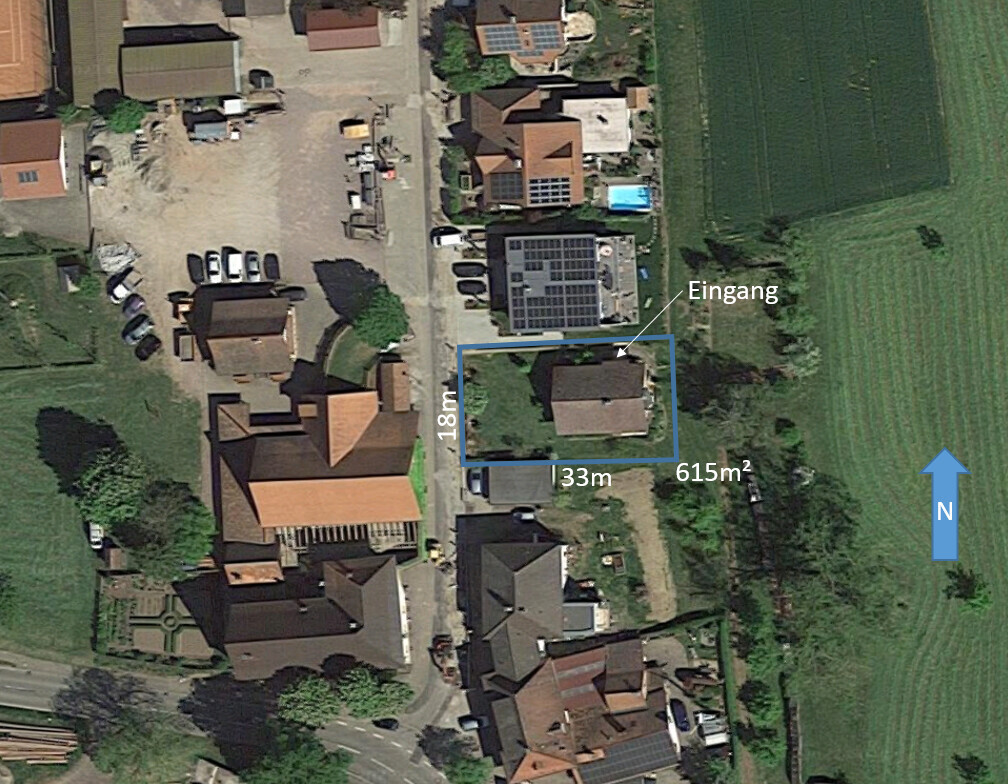
Size of the plot: 615m² (6620 sq ft)
Slope: North/South: <0.5m (1.6 ft) over 18m (59 ft), West-East: approx. 2m (6.6 ft) over 33m (108 ft) (see elevation profile)
Site coverage ratio: No development plan (Section 34 of German Building Code). The immediate neighborhood contains some generously built plots. We do not want to change the building footprint of the existing house but want to add a double garage (not currently present).
Floor area ratio: No development plan (Section 34 of German Building Code)
Building envelope, building line and boundary: No development plan (Section 34 of German Building Code). Property boundaries and existing building shown in aerial photo attached
Edge development: None
Number of parking spaces: None
Number of floors: 1.5 stories
Roof type: Gable roof
Architectural style: Modern detached family house
Orientation: see aerial photo. Entrance (currently): north
Maximum height/limits: No development plan
Immediate neighbors: Northern neighbor: 2 stories with flat roof. Southern: 1.5 stories with hipped roof. Western: 1.5 stories with gable roof.
Client Requirements
Style, roof form, building type: We want to transform the existing bungalow into a classic 1.5-story detached house with a gable roof and possibly shed dormers.
Basement, floors: Utility basement (existing, concrete basement), ground floor (living), upper floor (sleeping)
Number of persons, ages: Our family currently has four members (ages: 32, 30, 2, 0), with another child planned
Space requirements on ground and upper floor:
Ground floor: living room, kitchen (possibly with pantry), room for home office or guest room, guest WC with shower, cloakroom
Upper floor: master bedroom, 3 children’s bedrooms, bathroom
Office: family use or home office: Home office (100% for me)
Overnight guests per year: Few, less than 5 guests/nights
Open or closed architecture: Rather closed. Ability to separate kitchen and living room would be desirable.
Conservative or modern design: Modern
Open kitchen, kitchen island: Kitchen island not mandatory. Partly open kitchen: separation from living room would be good.
Number of dining seats: 5-8
Fireplace: Only if budget allows, not mandatory
Music/ stereo wall: No
Balcony, roof terrace: No
Garage, carport: Double garage
Utility garden, greenhouse: No
Further wishes/special features/daily routine, including reasons for preferences or exclusions: The technical room should be located in the existing basement (e.g., in the former oil heating room). A sensible circulation concept is very important: front door/upper floor stairs/basement stairs. Ideally, short distances between garage and house as well as good accessibility of rooms within the house.
House Design
Designed by: Initial draft from the prefab house supplier after first meeting
What do you especially like? Why?: (Almost) all room requests fulfilled. Good accessibility of upper floor rooms via centrally located landing. Short distances from garage to house thanks to new front door position (west instead of north). Spacious cloakroom area. Living room oriented south/east with a nice view.
What do you not like? Why?: The draft was created after an initial discussion of the project. Some ideas and preferences developed or changed later on by us:
- Existing concrete stairs in the basement will not be used, causing extra costs for upgrading the basement (new stairs, new room layout).
- (Small) pantry for food/storage on the ground floor would be great
- Better separation of kitchen and living room is desirable
Price estimate according to architect/planner: 520,000 € (approx. $560,000), turnkey (including 10kWp photovoltaic system with 10kW storage, fresh air heating with air-to-air heat pump), excluding demolition of existing bungalow, double garage, incidental building costs
Personal price limit for house including fittings: 700,000 € (rough estimate: demolition down to top of basement: 30,000 €, house: 530,000 €, incidental costs including basement statics: 50,000 €, double garage: 30,000 €, kitchen/furniture: 40,000 €, landscaping: 20,000 €)
Preferred heating technology: Heat pump with underfloor heating. If budget allows: ground-source heat pump with deep geothermal drilling. The prefab house supplier prefers fresh air heating.
If you had to give up something, which details or add-ons could you do without: Fireplace, new basement stairs
What can you absolutely not do without: Home office
Why is the design like it is now?
Individualized draft by the prefab supplier adapted to the existing basement footprint after discussing our rough (space) requirements.
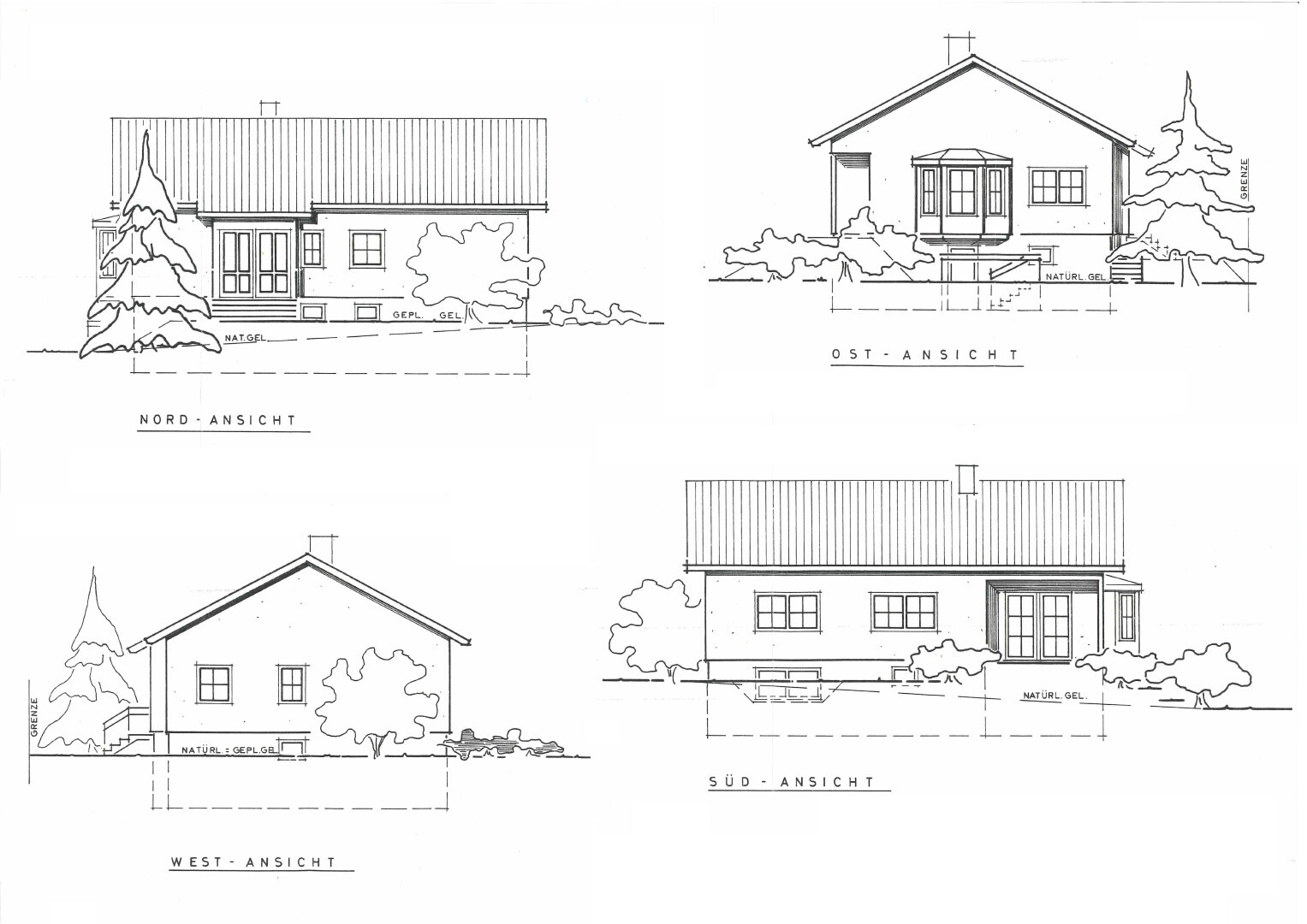
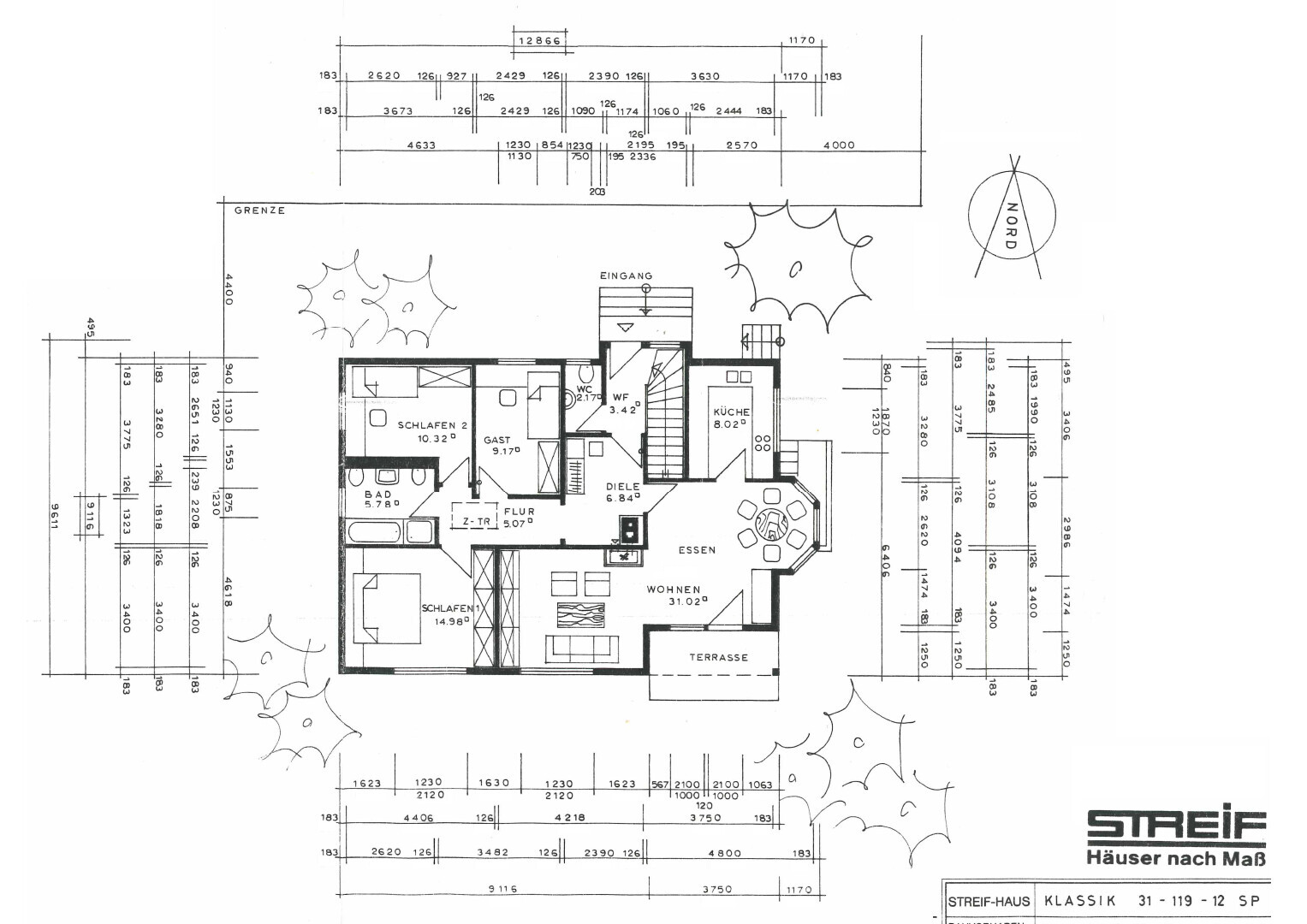
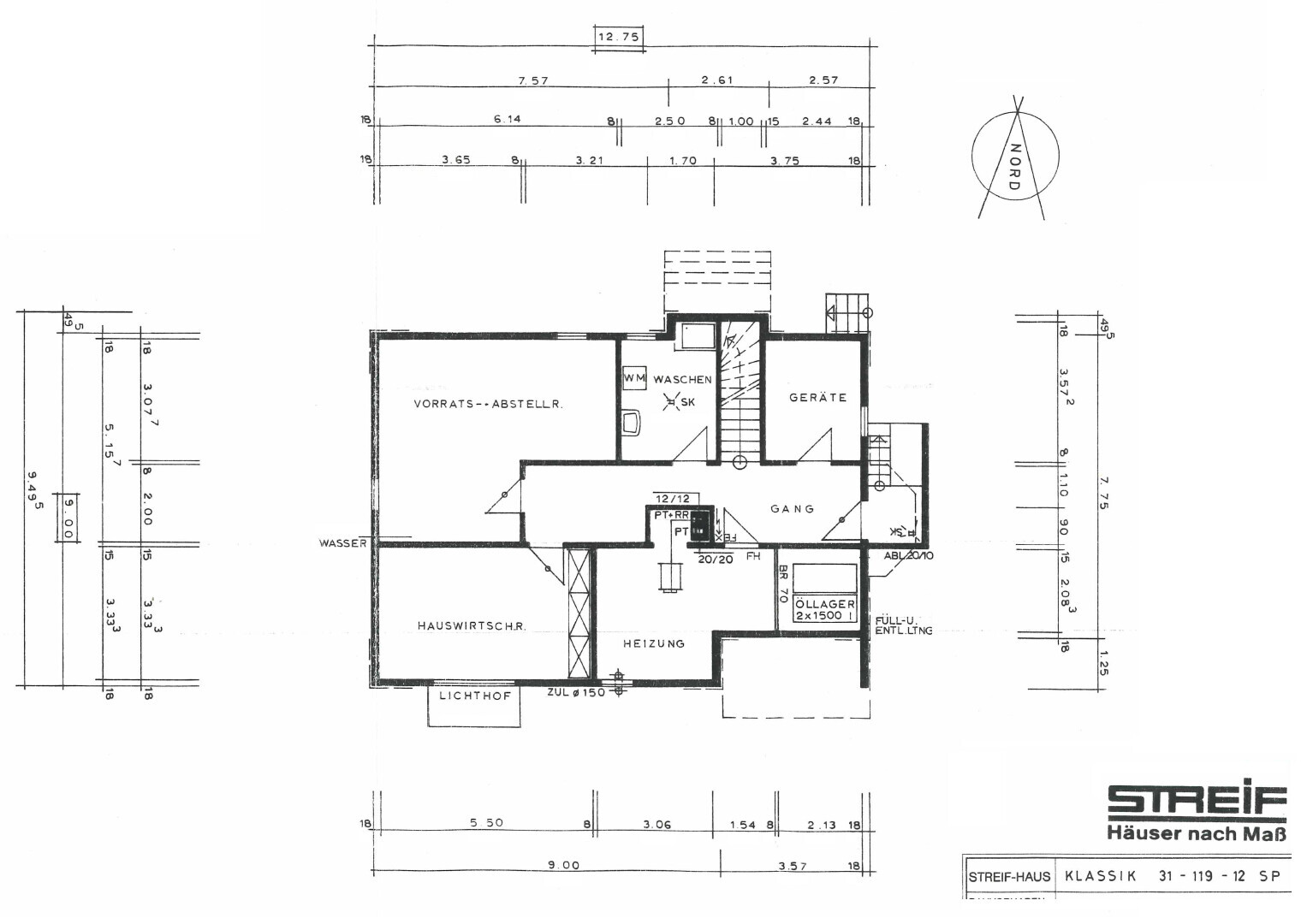
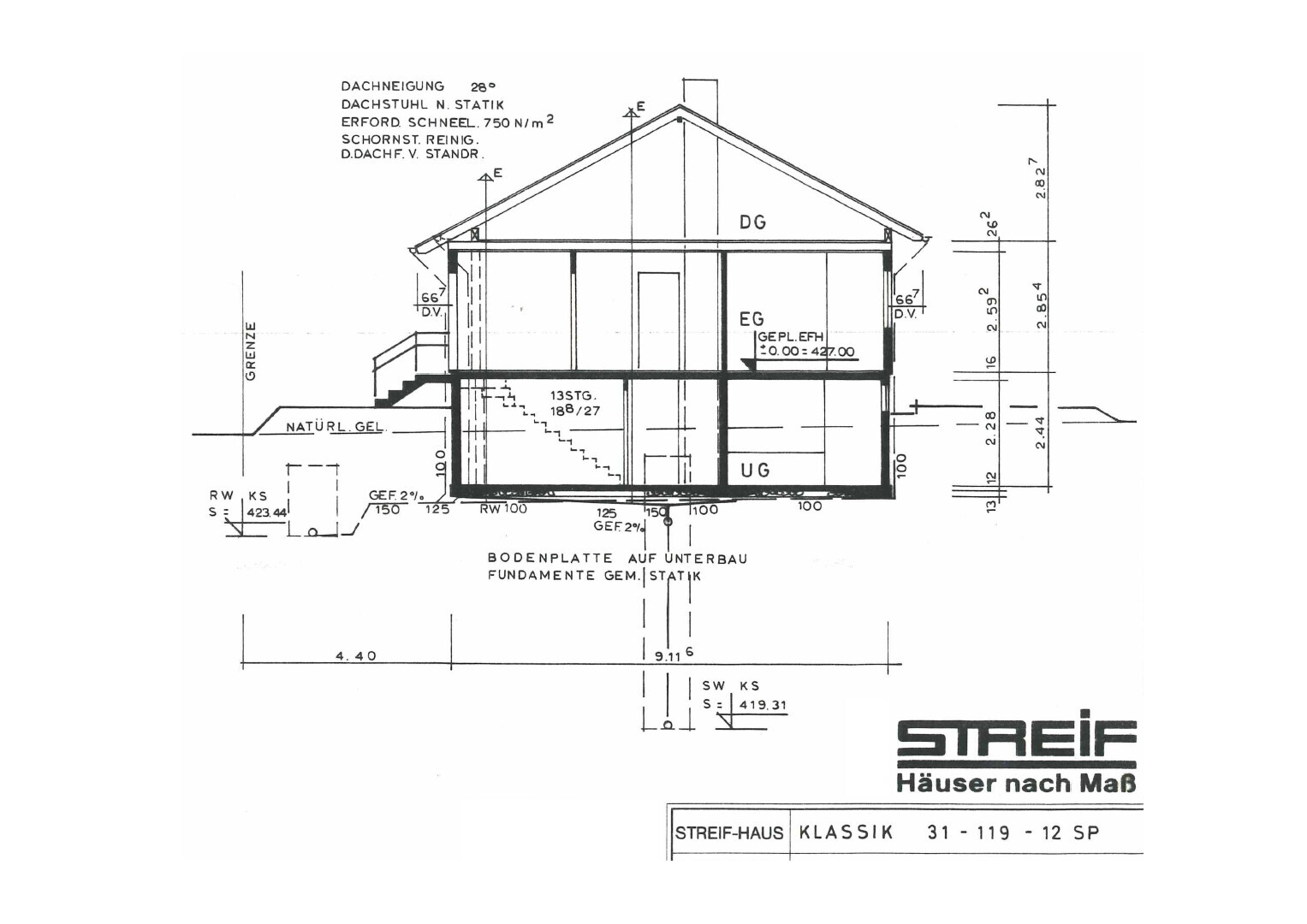
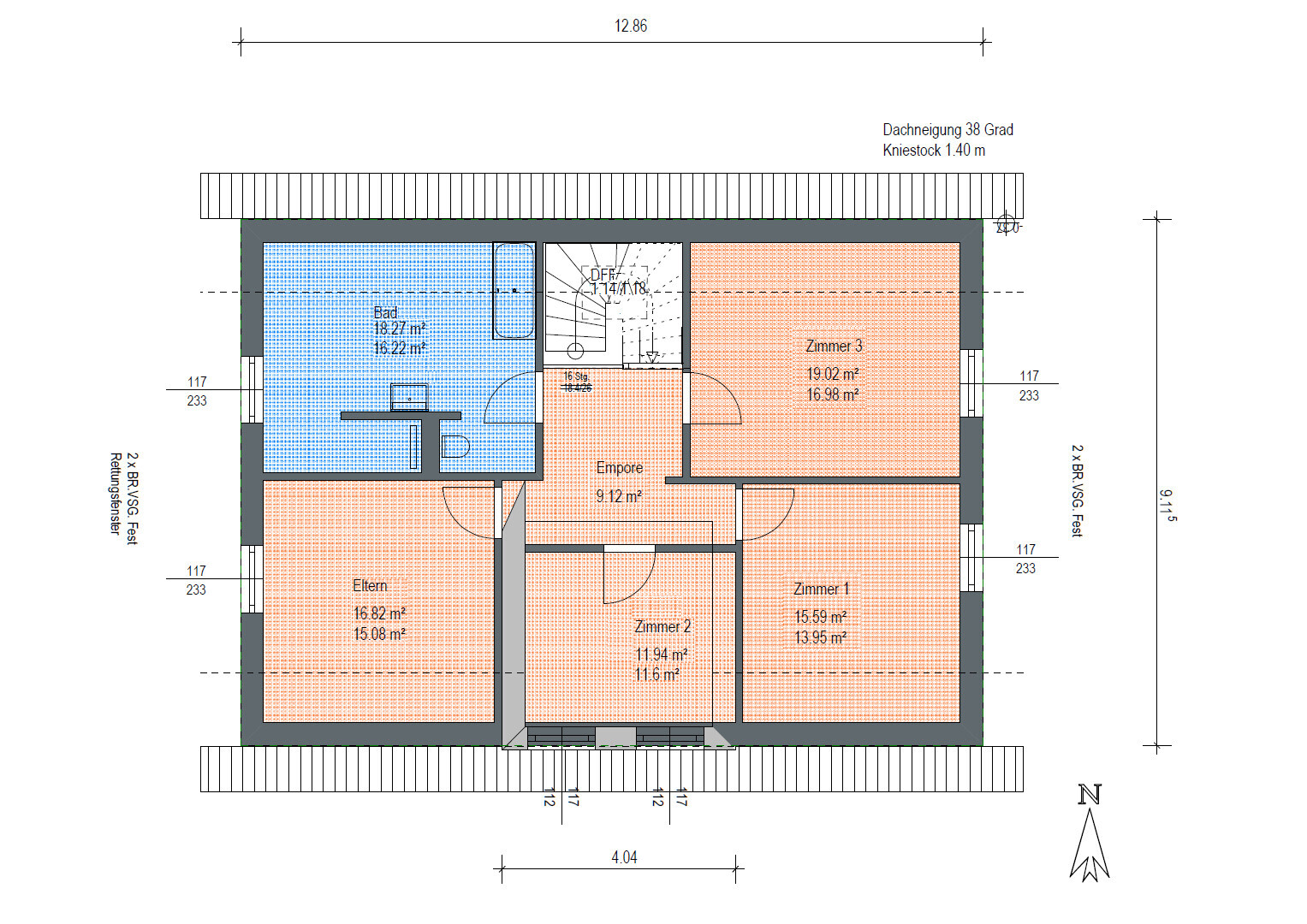
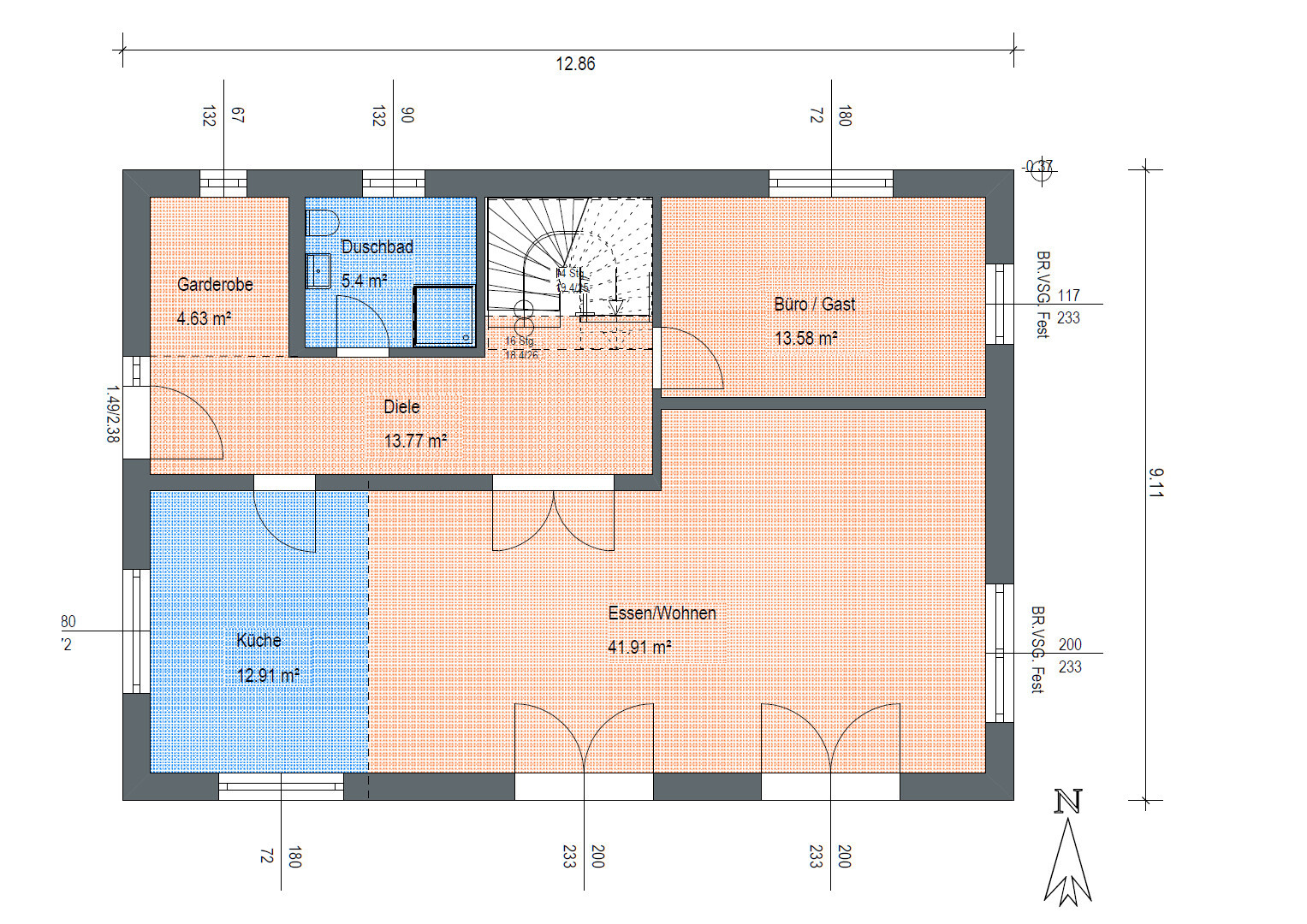
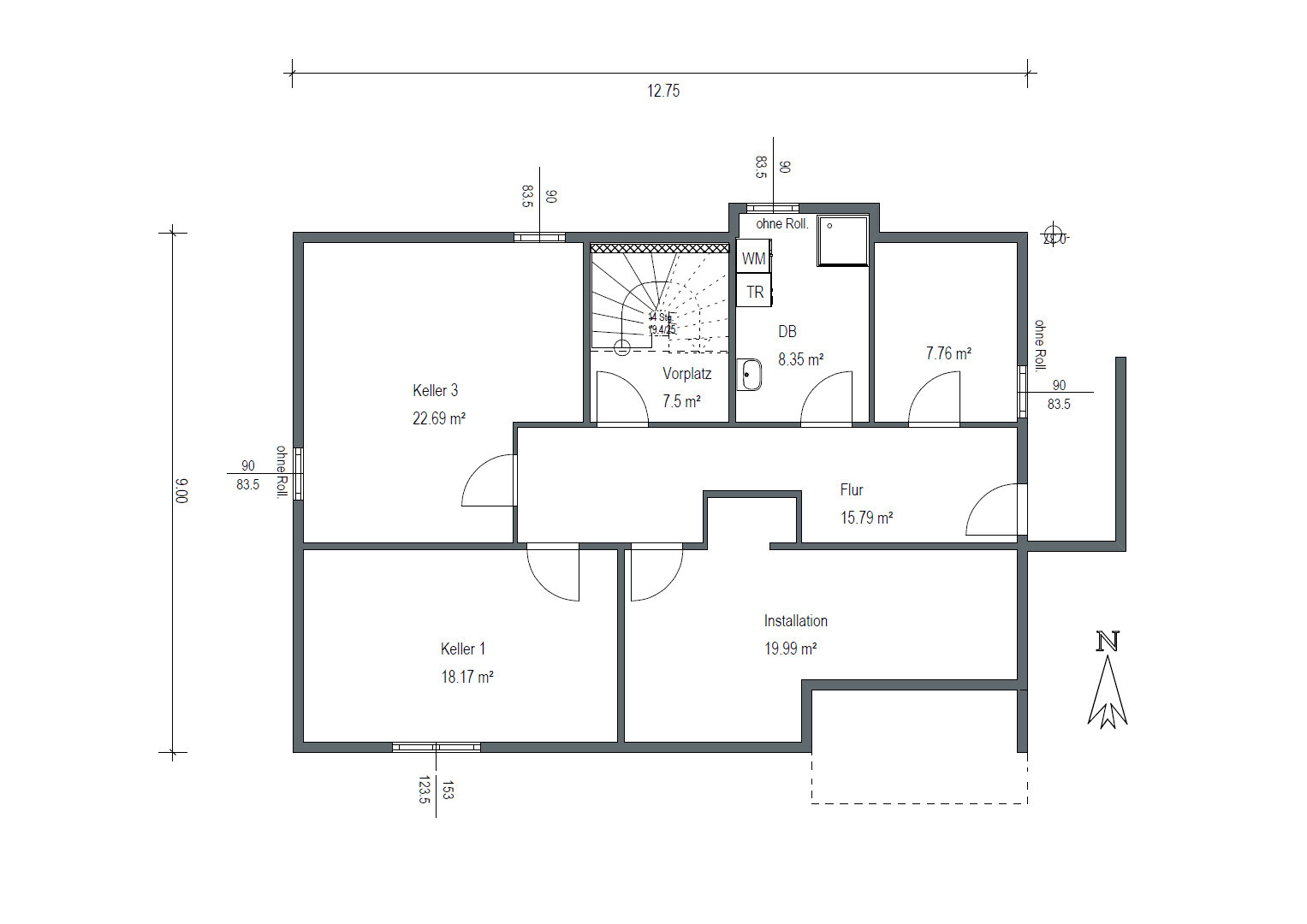
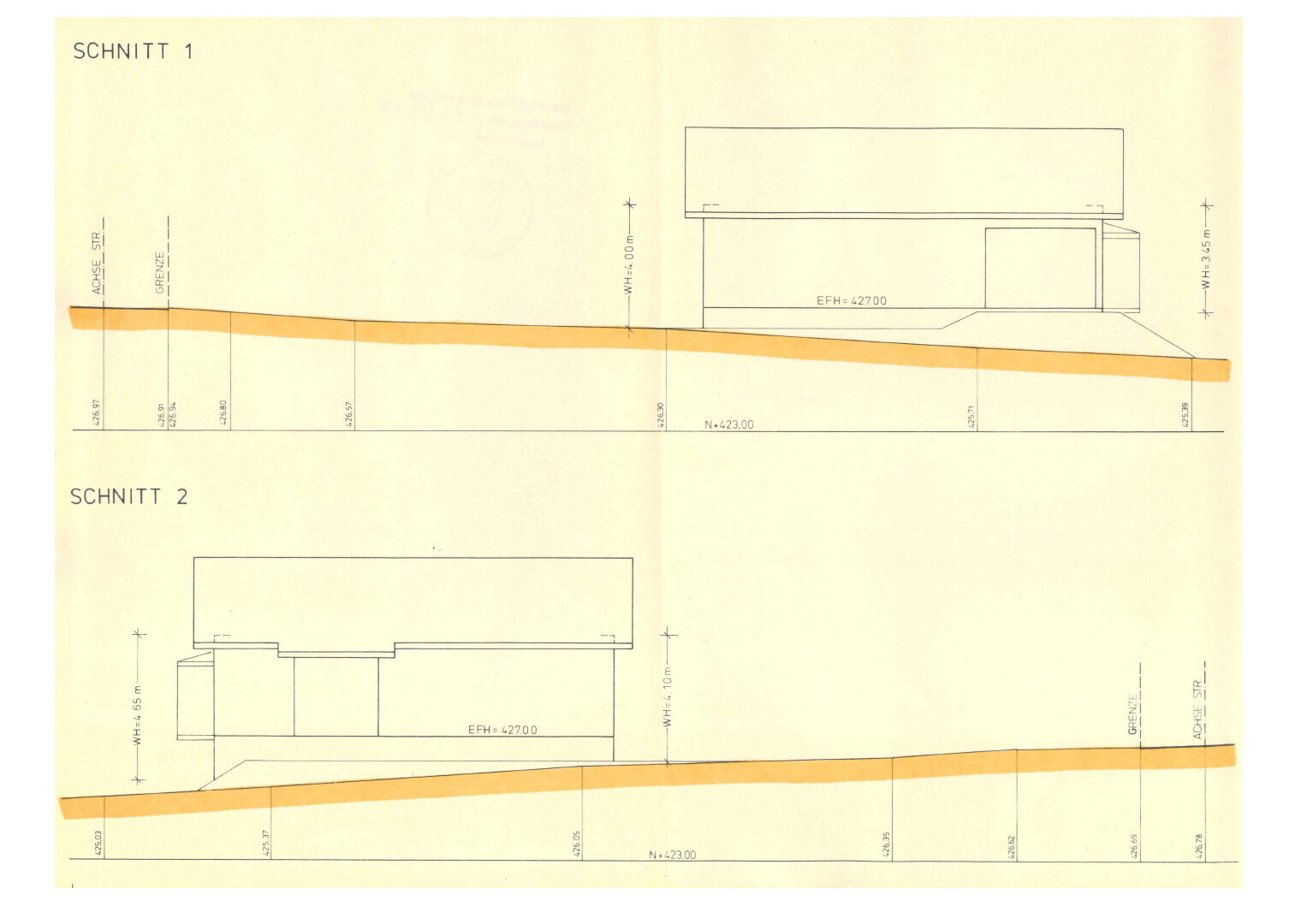
We are still relatively early in our building project and have many fundamental questions to clarify. Nevertheless, I would like to introduce the project here.
We recently became owners of a prefabricated bungalow from Streif Haus, built in 1987. It has a full concrete basement (by Betonkemmler).
Our plan is to demolish the bungalow down to the top edge of the basement and build a new house for our family (currently four, eventually five) on top. The existing basement (very solid construction) is to be integrated as a utility basement including a technical room. At the same time, the heating system will be modernized from oil heating to a heat pump.
Currently, we are in contact with both prefabricated house suppliers (Weberhaus, Danwood) and solid construction companies (Denkinger). The property is located in Baden-Württemberg (southern Baden).
Even though the floor plan is only a first draft, I would like to present it here for feedback (summary below).
In particular, I hope to get some thoughts on the following basic questions:
- Has any forum member gained experience with building on an existing basement?
- Is there generally a preferred construction method for our project? We are still undecided whether to go for a prefab timber frame house or a masonry (brick or block) solid construction.
- So far, we have not discussed a double garage with the builders, but it will be needed. Where does it make more sense: northwest or southwest (directly next to the neighbor’s garage)?
- To what extent can the project be treated as a renovation with partial demolition in terms of building regulations? Background: Are there any possibilities for funding (still) available?
- What we want to achieve with the floor plan is short walking distances inside and around the house. Therefore, the main entrance was moved from the north side to the west side. However, since it is on the short side of the house, this results in more corridor space and longer routes inside (e.g., from the front door to the stairs to the upper floor). But as the saying goes, you have to accept some drawbacks — what is your opinion: front door facing north or west?
Here is the summary sheet (key points).
Many thanks in advance for your input, comments, and critiques. I will gladly report further developments here in the thread.
Development Plan / Restrictions
Size of the plot: 615m² (6620 sq ft)
Slope: North/South: <0.5m (1.6 ft) over 18m (59 ft), West-East: approx. 2m (6.6 ft) over 33m (108 ft) (see elevation profile)
Site coverage ratio: No development plan (Section 34 of German Building Code). The immediate neighborhood contains some generously built plots. We do not want to change the building footprint of the existing house but want to add a double garage (not currently present).
Floor area ratio: No development plan (Section 34 of German Building Code)
Building envelope, building line and boundary: No development plan (Section 34 of German Building Code). Property boundaries and existing building shown in aerial photo attached
Edge development: None
Number of parking spaces: None
Number of floors: 1.5 stories
Roof type: Gable roof
Architectural style: Modern detached family house
Orientation: see aerial photo. Entrance (currently): north
Maximum height/limits: No development plan
Immediate neighbors: Northern neighbor: 2 stories with flat roof. Southern: 1.5 stories with hipped roof. Western: 1.5 stories with gable roof.
Client Requirements
Style, roof form, building type: We want to transform the existing bungalow into a classic 1.5-story detached house with a gable roof and possibly shed dormers.
Basement, floors: Utility basement (existing, concrete basement), ground floor (living), upper floor (sleeping)
Number of persons, ages: Our family currently has four members (ages: 32, 30, 2, 0), with another child planned
Space requirements on ground and upper floor:
Ground floor: living room, kitchen (possibly with pantry), room for home office or guest room, guest WC with shower, cloakroom
Upper floor: master bedroom, 3 children’s bedrooms, bathroom
Office: family use or home office: Home office (100% for me)
Overnight guests per year: Few, less than 5 guests/nights
Open or closed architecture: Rather closed. Ability to separate kitchen and living room would be desirable.
Conservative or modern design: Modern
Open kitchen, kitchen island: Kitchen island not mandatory. Partly open kitchen: separation from living room would be good.
Number of dining seats: 5-8
Fireplace: Only if budget allows, not mandatory
Music/ stereo wall: No
Balcony, roof terrace: No
Garage, carport: Double garage
Utility garden, greenhouse: No
Further wishes/special features/daily routine, including reasons for preferences or exclusions: The technical room should be located in the existing basement (e.g., in the former oil heating room). A sensible circulation concept is very important: front door/upper floor stairs/basement stairs. Ideally, short distances between garage and house as well as good accessibility of rooms within the house.
House Design
Designed by: Initial draft from the prefab house supplier after first meeting
What do you especially like? Why?: (Almost) all room requests fulfilled. Good accessibility of upper floor rooms via centrally located landing. Short distances from garage to house thanks to new front door position (west instead of north). Spacious cloakroom area. Living room oriented south/east with a nice view.
What do you not like? Why?: The draft was created after an initial discussion of the project. Some ideas and preferences developed or changed later on by us:
- Existing concrete stairs in the basement will not be used, causing extra costs for upgrading the basement (new stairs, new room layout).
- (Small) pantry for food/storage on the ground floor would be great
- Better separation of kitchen and living room is desirable
Price estimate according to architect/planner: 520,000 € (approx. $560,000), turnkey (including 10kWp photovoltaic system with 10kW storage, fresh air heating with air-to-air heat pump), excluding demolition of existing bungalow, double garage, incidental building costs
Personal price limit for house including fittings: 700,000 € (rough estimate: demolition down to top of basement: 30,000 €, house: 530,000 €, incidental costs including basement statics: 50,000 €, double garage: 30,000 €, kitchen/furniture: 40,000 €, landscaping: 20,000 €)
Preferred heating technology: Heat pump with underfloor heating. If budget allows: ground-source heat pump with deep geothermal drilling. The prefab house supplier prefers fresh air heating.
If you had to give up something, which details or add-ons could you do without: Fireplace, new basement stairs
What can you absolutely not do without: Home office
Why is the design like it is now?
Individualized draft by the prefab supplier adapted to the existing basement footprint after discussing our rough (space) requirements.
M
Mal Bauen4 Dec 2023 22:46ypg schrieb:
Understood. However, I had to reread everything and essentially “reconstruct” the discussion for myself 😉 The thread is almost a year old now, so thanks for revisiting it!
ypg schrieb:
By the way, I’m well aware of the reason for moving it out of the “family area”… later separation into 2 apartments… Even without that preparation, we generally find the external stair to the upper floor sensible (among other things, more privacy). Unfortunately, the privacy of the guest toilet hasn’t been given much consideration so far.
ypg schrieb:
The guest toilet isn’t really accessible in terms of size anyway, and where are the grandchildren supposed to sleep later or carry out hobbies? At least for the missing space (sleeping/hobbies), a later partitioning of the living room from the open-plan area would be possible. The toilet, however, will probably have to remain that small.
ypg schrieb:
Also, I was a bit confused—I mentally placed the living room on the east side The placement of the kitchen east vs. west was a long debate. For various reasons, the decision was made as it is now (including proximity to the utility room). For the living room, we chose standard windows since the sofa will likely be placed in front of them anyway. On the upper floor (bathroom and children’s rooms), there are floor-to-ceiling windows with fixed glazing at the bottom.
ypg schrieb:
The bathroom window might interfere with the shower enclosure. If K 3 gets a niche under the stairs, I would allow the shower more space and a deeper layout. Good point. We plan to shift the south wall in the bathroom by about 15cm (6 inches), as suggested by @K a t j a, which will likely ease that issue.
ypg schrieb:
I wouldn’t have placed the carport/garage next to the neighbor’s garage, but in the northwest near the street with a short driveway and right turn, at the level of the guest room—with a pergola connecting the garage/carport and the house, creating a cozy, wind-protected spot on the west side for the evening. But maybe the area behind the garage where it is currently planned also makes sense. Yes, with the current placement, we also provide the terrace some visual privacy from the street. We carefully considered both options for a long time.
M
Mal Bauen4 Dec 2023 22:55Harakiri schrieb:
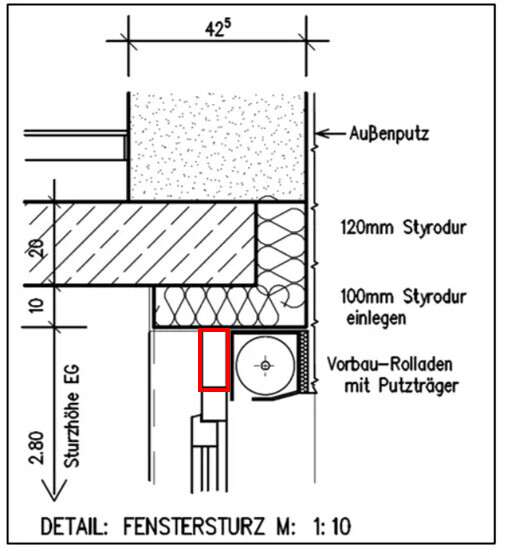
I assume the architect knows what they are planning, but I would at least question the detail of this window lintel (cross-section) more closely – as shown, the ceiling is supposed to rest on Styrodur (and then on the window frames?!). That seems very questionable to me, at least on the left side of the plan – on the right side, a supporting beam is at least planned. The architect also encouraged us to use floor-to-ceiling windows. Due to the very wide cladding at the ceiling (because of the roller shutter/blind box), our windows now still have a kind of "lintel."
There is surely experience here with floor-to-ceiling windows and an "invisible" blind box. For us, with a suspended ceiling, this should actually be easier to implement, right?
Is it possible to prefabricate a concrete lintel with the thickness of the suspended ceiling and place the insulation on the outside of the box?
Mal Bauen schrieb:
@Mal Bauen Is it possible to make a concrete lintel matching the thickness of the suspended ceiling and place the insulation on the outside of the box?
[ATTACH type="full" width="563px"]83149[/ATTACH]If a suspended ceiling is planned, then following the design should actually make it possible to have the windows flush with the ceiling.You definitely don’t want it the way shown in the alternative – that creates a classic thermal bridge. There is a similar solution for ETICS (external thermal insulation composite systems) facades; search for ROKA-SHADOW® 2 WDVS-SA.
M
Mal Bauen6 Dec 2023 00:16Thanks @BobRoss, I’ve now identified the problem. The external insulation obviously doesn’t help if cold air enters the concrete ceiling from below through the open roller shutter box.
However, I’m still confused about how the windows in the planned design are supposed to appear floor-to-ceiling. I’m bothered by the approximately 15cm (6 inches) frame extension (marked in red in the image). Although I have a floor-to-ceiling window opening, the window itself is not floor-to-ceiling. This results in less light entering. I don’t see the advantage compared to a window that isn’t floor-to-ceiling (the classic version with a lintel).
I can only achieve a “true” floor-to-ceiling window by moving the roller shutter box higher up. Consequently, the concrete ceiling would need to be recessed to accommodate insulation between the ceiling and the shutter box. Alternatively, we could use a visually less appealing external box mounted on the facade. Or am I missing something?
The suspended ceiling will be lowered by approximately 10cm (4 inches), as shown in the cross-section.
However, I’m still confused about how the windows in the planned design are supposed to appear floor-to-ceiling. I’m bothered by the approximately 15cm (6 inches) frame extension (marked in red in the image). Although I have a floor-to-ceiling window opening, the window itself is not floor-to-ceiling. This results in less light entering. I don’t see the advantage compared to a window that isn’t floor-to-ceiling (the classic version with a lintel).
I can only achieve a “true” floor-to-ceiling window by moving the roller shutter box higher up. Consequently, the concrete ceiling would need to be recessed to accommodate insulation between the ceiling and the shutter box. Alternatively, we could use a visually less appealing external box mounted on the facade. Or am I missing something?
The suspended ceiling will be lowered by approximately 10cm (4 inches), as shown in the cross-section.
M
Mal Bauen7 Dec 2023 22:51K a t j a schrieb:
Also, I would create an extra hallway to provide additional separation from the guest area so that noise and odors don’t directly reach the dining table. Thanks again for your suggestion.
We’re a bit hesitant about adding an extra hallway with a door. We are currently leaning more towards a “light separation” using a partial wall without a door to break the line of sight. However, we aren’t completely happy with the overall layout yet:
We have also adjusted the layout of the bathroom. We prefer the shower along the exterior wall because it provides a bit more space in the entrance area of the WC/shower.
Advantages:
- No dark narrow hallway
- WC is visually more separated (toilet no longer visible from the dining table)
Disadvantage:
- No improvement in separating odors and noise
Are there any other ideas or opinions?
We also considered having the bathroom door open outwards towards the living area. This would provide more privacy inside the WC and give a bit more space within.

Mal Bauen schrieb:
Are there any more ideas or opinions?
Well, if you are working with lightweight construction on the upper floor, I have this suggestion:
However, if I were you, I would use a slightly higher knee wall. So far, I don’t see why you set the sloped ceilings so low (where exactly are they located?). A common height is 1.30m (4 ft 3 in). This is a typical dimension where the back of most beds fits easily against the wall beneath the slope.
Similar topics