
ᐅ Floor plan, house layout EFW 150 m², basement with granny flat – feedback welcomed
Created on: 29 Dec 2024 00:08
N
njAiiii
Hello dear forum,
we have been quietly following along for some time, knowing that we will eventually build our own home. Thanks in advance to everyone who regularly posts here and shares their knowledge. This is very helpful for laypeople like us. We already appreciate you taking the time to focus on our project and critically review it. The moment is getting closer. The plot is secured. It is located near a protected landscape area with a gentle slope. The soil report indicates occasional hydrostatic pressure.
How will we proceed?
What do we want to build?
Development Plan/Restrictions
Plot size: 650m2 (7000 sq ft approx.)
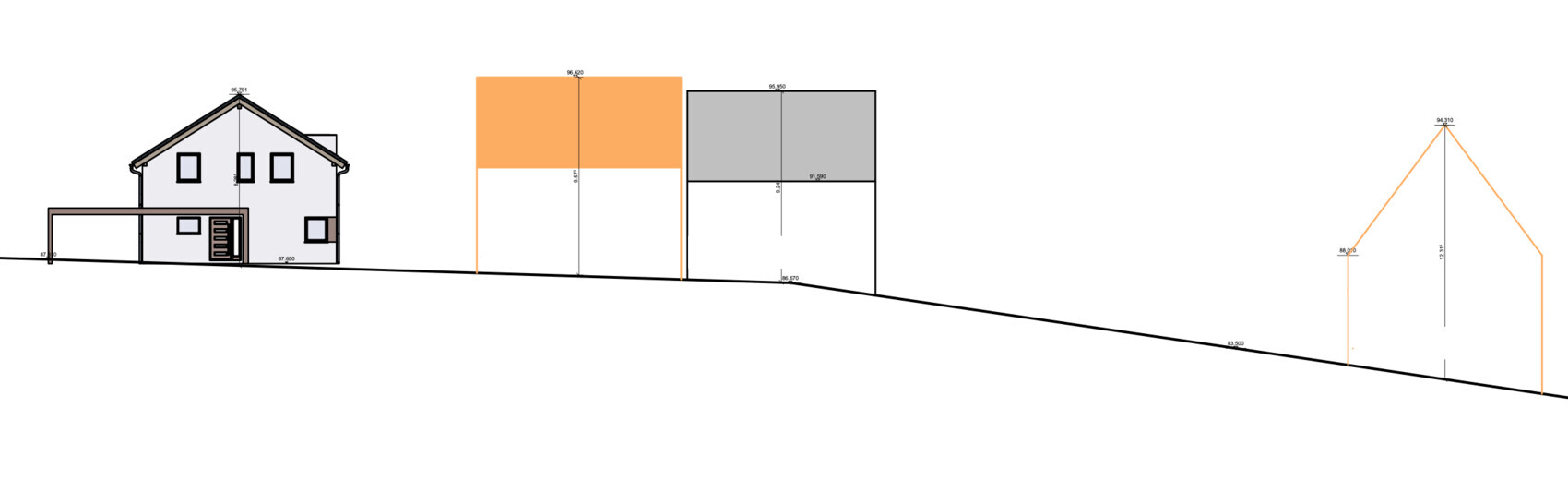
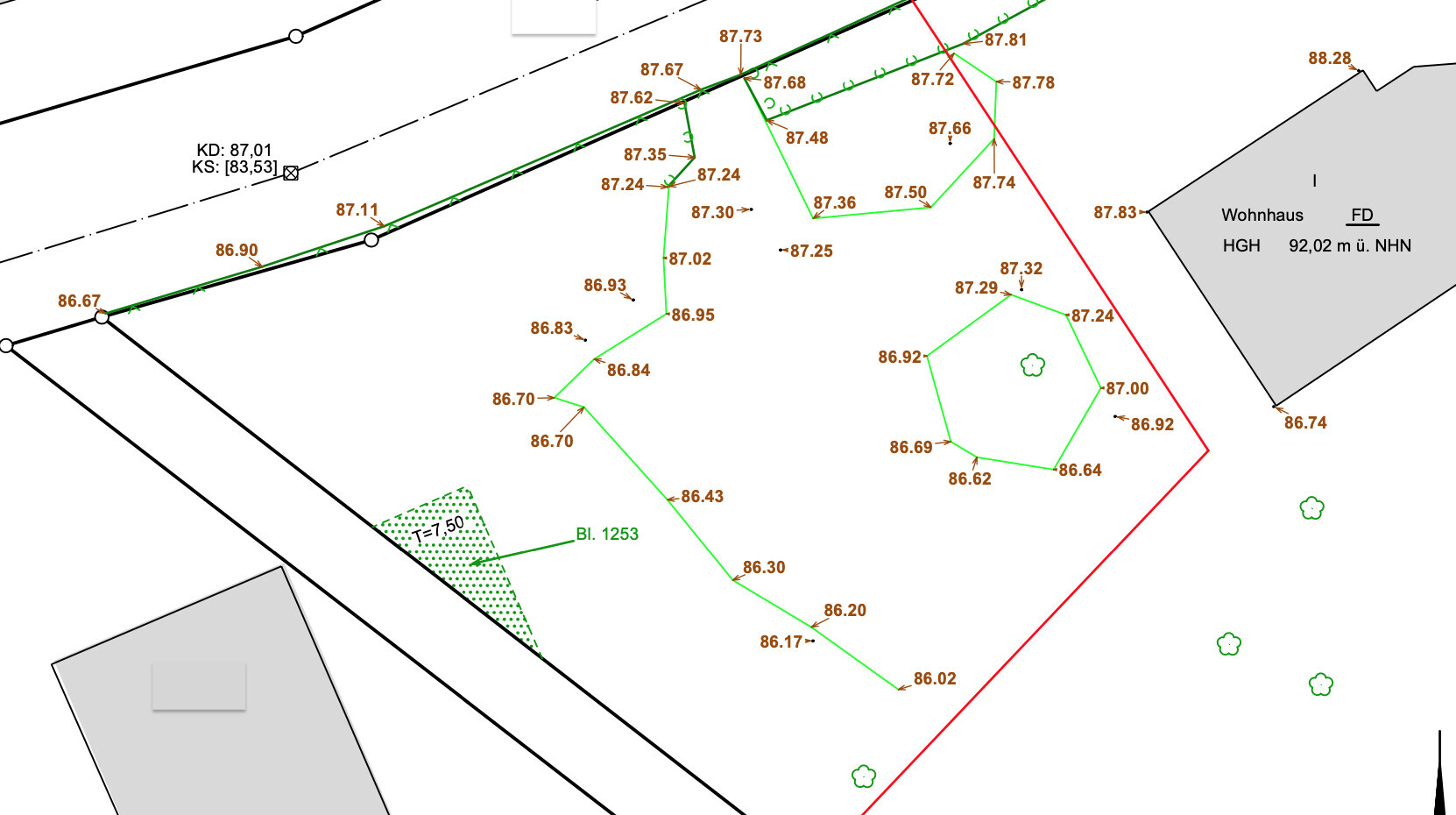
Slope: Yes, gentle (scale 1:250, see elevation in attachment; 1m (3.3 ft) over approx. 10x11m)
Floor area ratio (FAR): No formal development plan, approx. 220m2 (2368 sq ft) floor area possible after approval by building authority
Building coverage ratio: No formal plan, approx. 220m2 (2368 sq ft) floor area possible
Building setback lines and boundaries:
- 5m (16 ft) from the street
- 3m (10 ft) from neighboring properties
Edge building: On both sides and opposite along the street
Number of parking spaces: Probably 3 required (we could move the house back so parking is directly in front)
Number of floors:
- Technically 2 floors,
- But visually aligned with surrounding buildings, so a 1.5-story appearance desired
Roof type: Gable roof with 30-40cm (12-16 inches) overhang
Style: Modern
Orientation: Southeast, but surrounded by many mature historic trees from east to west along the plot boundary
Maximum heights/restrictions: Neighboring buildings, street alignment
Additional requirements: For flat roof, 1m (3.3 ft) setback from street and sides
Homeowners’ Requirements
Style: Modern
Roof pitch:
- Gable roof between 25-33°
- Originally flat roof to the left neighbor, now gable roof preferred for budget, maintenance, and required setbacks
Building type: Single-family house with separate apartment
Basement: Yes
Stories: "1.5"
Knee wall height: 1.90m (6.2 ft) (no official requirement); we want to minimize sloped ceilings
Number of occupants: 4 (2 adults age 40, 2 children aged 4 and 1) + 1 family member for the separate apartment
Space requirements for ground floor (GF) and upper floor (UF):
- Originally 141m2 (1519 sq ft) net usable area without circulation space
GF:
- Open living/dining area with pantry
- Office (possibly bedroom later in life)
- Shower bathroom
- Entrance hall
UF:
- 2 children’s rooms from 13m2 (140 sq ft) each
- Bedroom as small as possible + walk-in closet with standard wardrobes
- Bathroom with T-layout, shower, tub, toilet
- Second workspace
Office: Family use or home office?
- Home office twice a week, about 3-4 days out of 5 at home
Visitors per year: One overnight guest per quarter
Open or closed architecture: Open
Conservative or modern construction: Modern
Open kitchen with island: Yes
Number of dining seats: 4-6, extendable up to 10 (2m (6.5 ft) table extendable to 3m (10 ft))
Fireplace: No
Music/sound system wall: No
Balcony, roof terrace: No
Garage/Carport: Prefabricated garage 3x7m (10x23 ft), possibly 3x9m (10x30 ft)
Utility garden, greenhouse: Yes (vegetables, fruit, cistern)
Additional wishes / special features / daily routine, including reasons why some options are excluded:
House Design
Designer:
What do you particularly like and why?
What do you dislike and why?
Price estimate by architect/planner: $3,300 - $3,500 per m2 (approx. $307 - $325 per sq ft), total approx. $700,000 - $800,000 plus additional costs
Personal maximum budget including fittings: $750,000 plus additional construction costs
Preferred heating technology: sustainable + underfloor heating (comfort); geothermal possible but based on current research not cost-effective
If you had to give up something, which features/finishes?
-cannot give up:
-could give up: probably everything else
Why does the design look like it does now? For example:
Standard plan from designer? No; from architect
- We shared all our ideas and preferences with the architect and discussed them beforehand
- This is the second iteration; earlier option had flat roof dormer with southwest children’s room, which we discarded; roof pitch probably 25° now
Which wishes did the architect implement?
What do you think about it, especially focusing on current pain points:
Due to the maximum number of attachments allowed, we couldn’t add an aerial photo of the tree cover. There are three large deciduous trees directly to the southeast and on the southwest side about two chestnut trees and around 15 pines from the 1950s. We have no worries about summer heat protection 😉 – on the contrary: enlarging the house footprint would cost us garden and especially daylight.
Feel free to ask any questions.
We look forward to your feedback and thank you in advance.
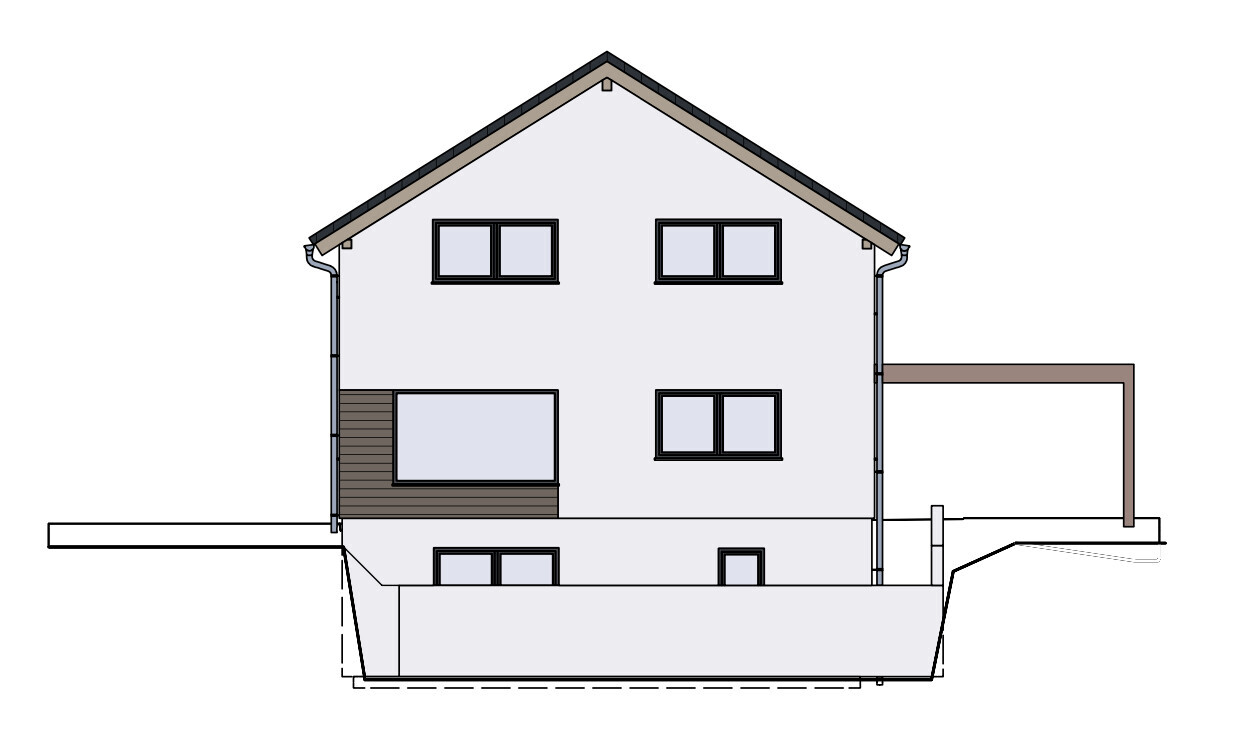
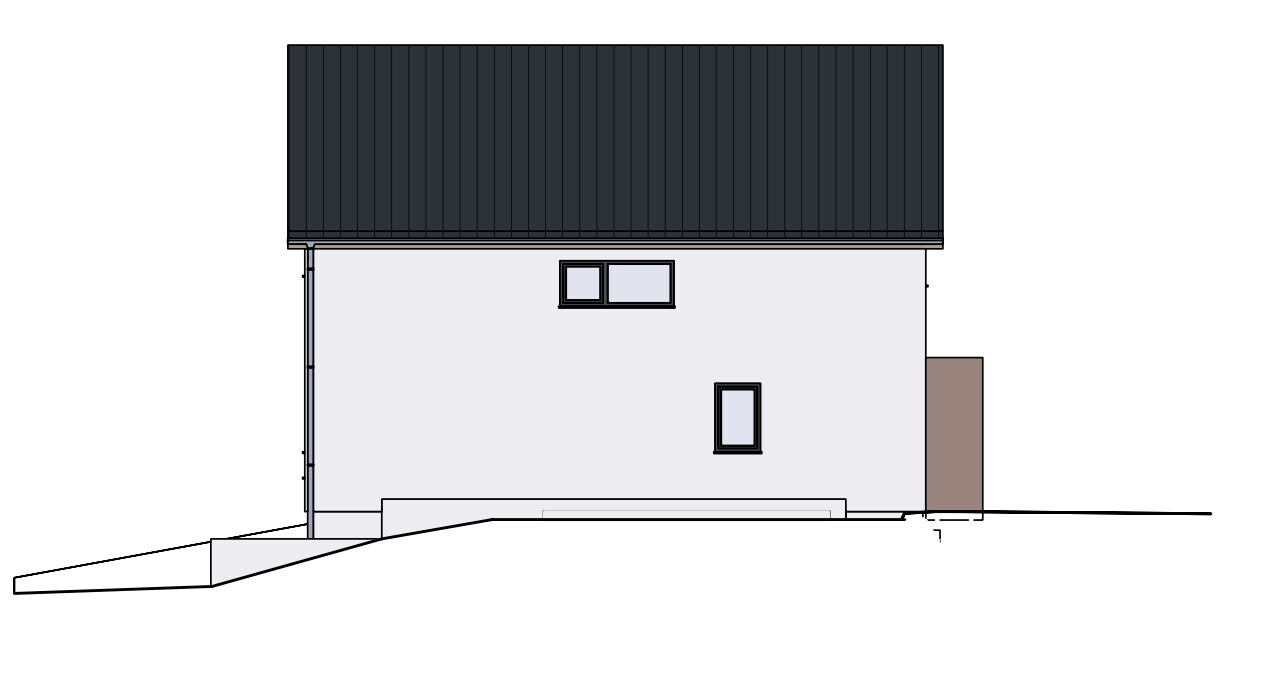
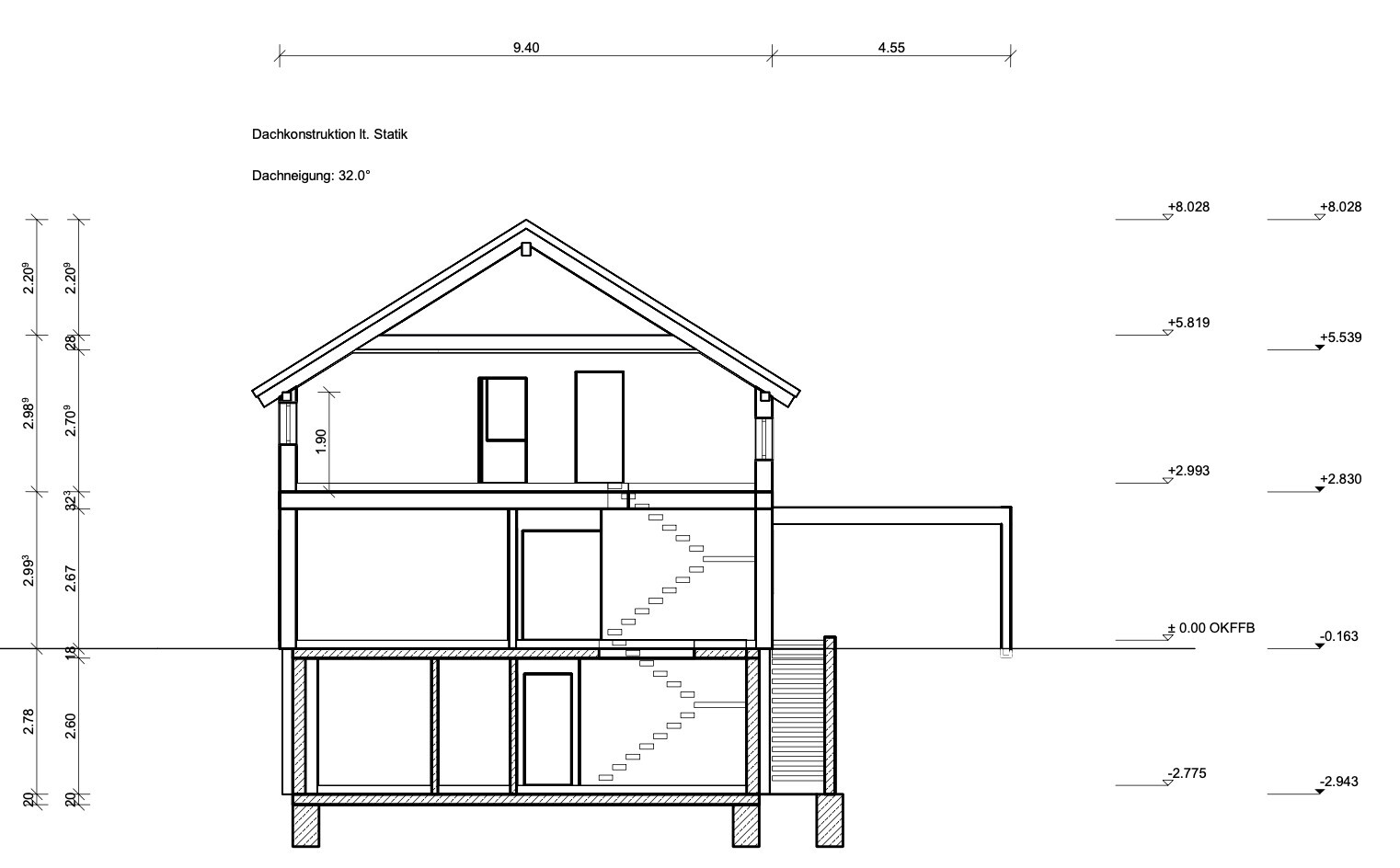
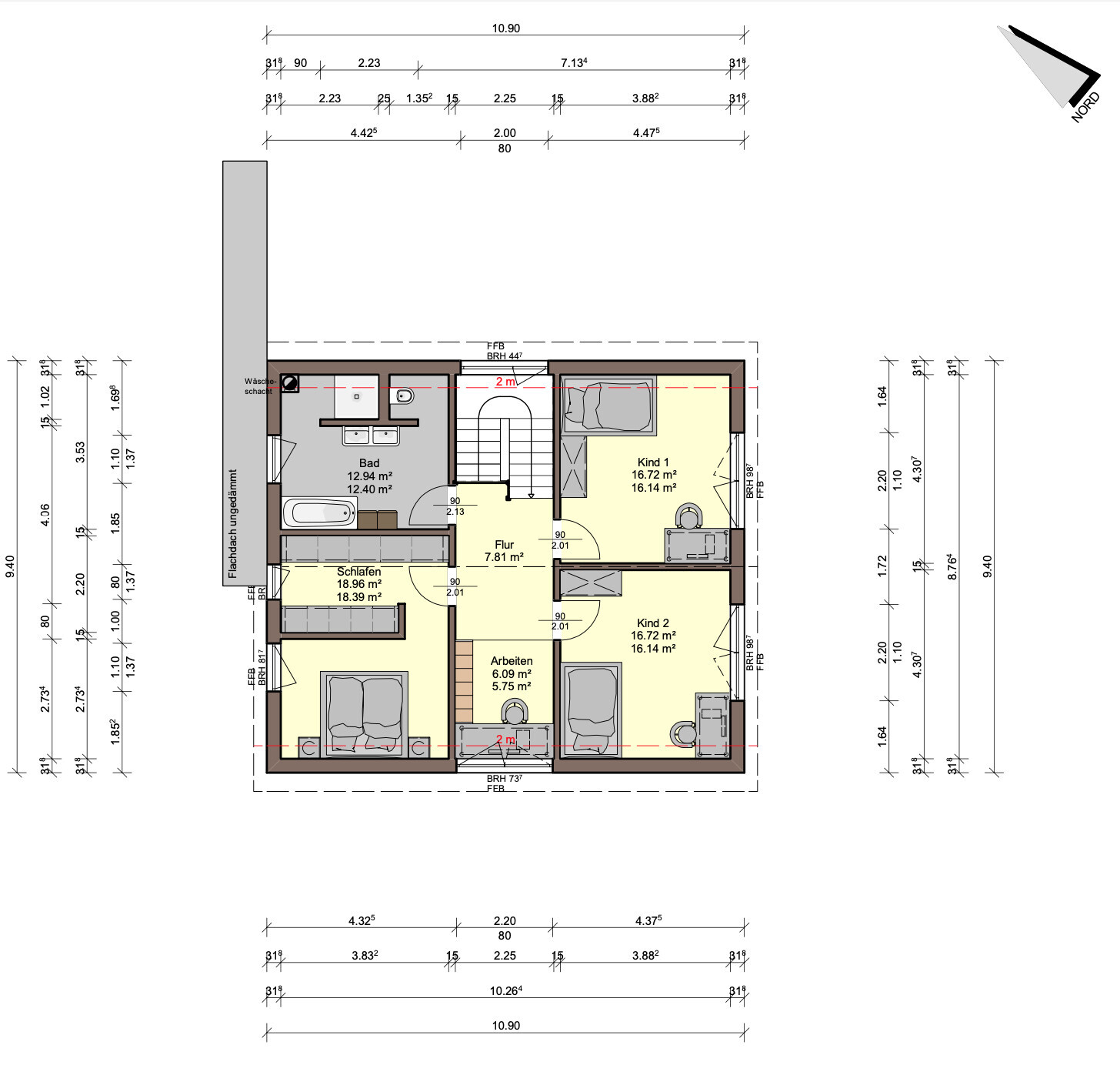
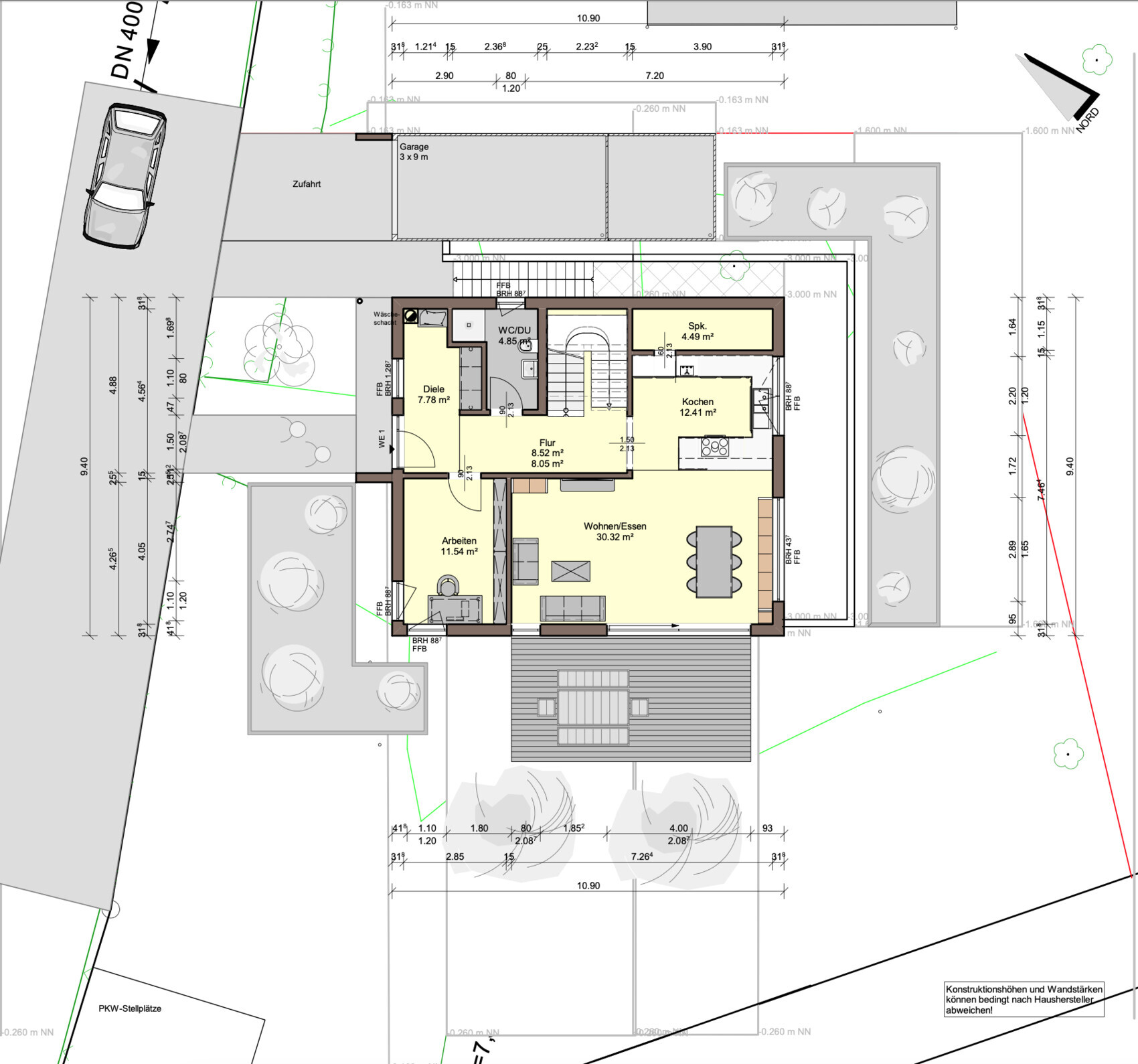
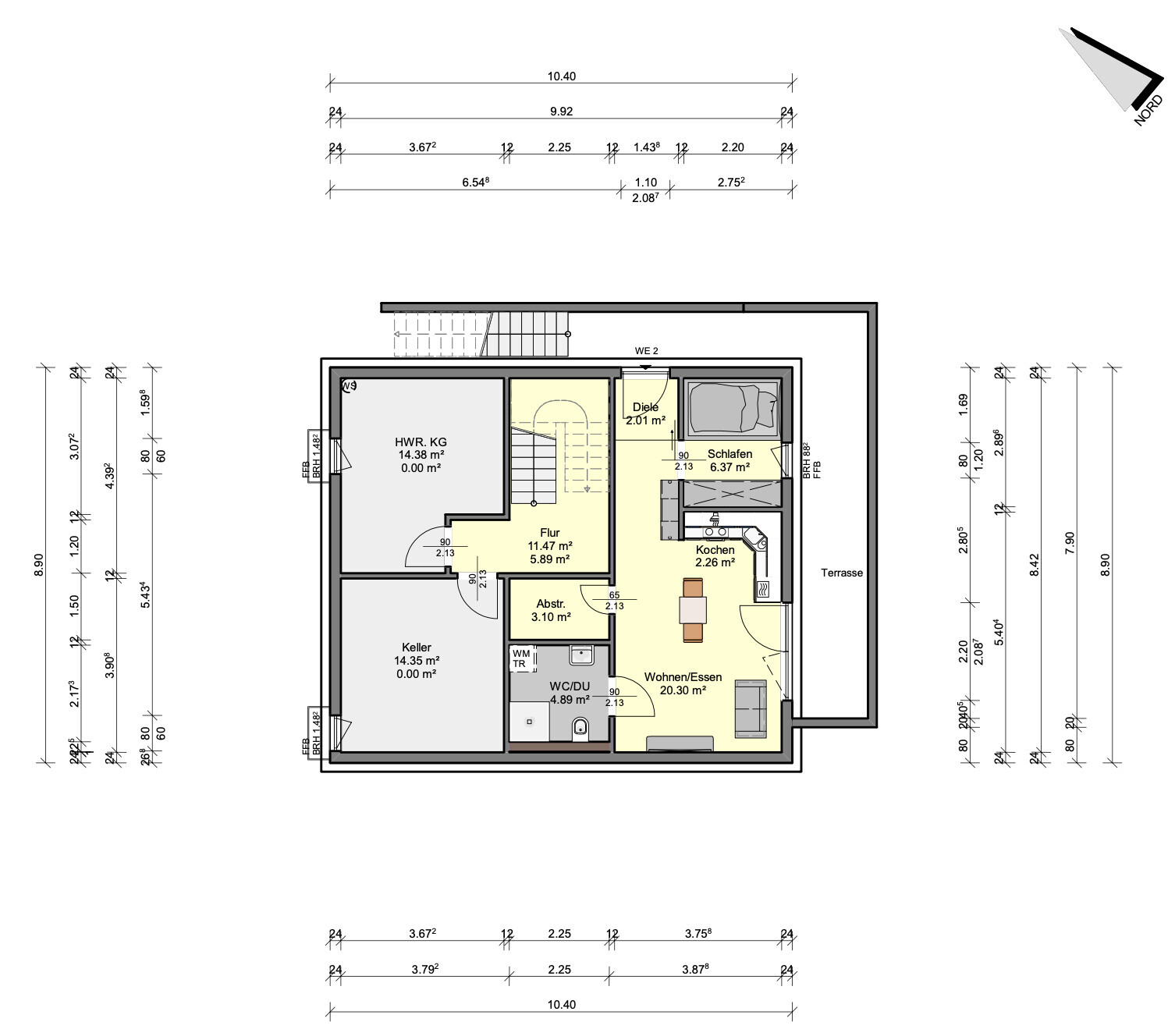
we have been quietly following along for some time, knowing that we will eventually build our own home. Thanks in advance to everyone who regularly posts here and shares their knowledge. This is very helpful for laypeople like us. We already appreciate you taking the time to focus on our project and critically review it. The moment is getting closer. The plot is secured. It is located near a protected landscape area with a gentle slope. The soil report indicates occasional hydrostatic pressure.
How will we proceed?
- Purchase plot, conduct soil survey
- Position and design house on plot with architect (phases 1-3)
- Invitation to bid for general contractor and individual trades for interior work, followed by comparison
- Construction with expert supervision
What do we want to build?
- Single-family house with separate apartment (for family and mainly for tax reasons, especially for the various depreciation options, therefore also with QNG [quality seal for sustainable building])
- Why basement? To maximize garden space, add storage area, and supposedly take advantage of the slope
Development Plan/Restrictions
Plot size: 650m2 (7000 sq ft approx.)
Slope: Yes, gentle (scale 1:250, see elevation in attachment; 1m (3.3 ft) over approx. 10x11m)
Floor area ratio (FAR): No formal development plan, approx. 220m2 (2368 sq ft) floor area possible after approval by building authority
Building coverage ratio: No formal plan, approx. 220m2 (2368 sq ft) floor area possible
Building setback lines and boundaries:
- 5m (16 ft) from the street
- 3m (10 ft) from neighboring properties
Edge building: On both sides and opposite along the street
Number of parking spaces: Probably 3 required (we could move the house back so parking is directly in front)
Number of floors:
- Technically 2 floors,
- But visually aligned with surrounding buildings, so a 1.5-story appearance desired
Roof type: Gable roof with 30-40cm (12-16 inches) overhang
Style: Modern
Orientation: Southeast, but surrounded by many mature historic trees from east to west along the plot boundary
Maximum heights/restrictions: Neighboring buildings, street alignment
Additional requirements: For flat roof, 1m (3.3 ft) setback from street and sides
Homeowners’ Requirements
Style: Modern
Roof pitch:
- Gable roof between 25-33°
- Originally flat roof to the left neighbor, now gable roof preferred for budget, maintenance, and required setbacks
Building type: Single-family house with separate apartment
Basement: Yes
Stories: "1.5"
Knee wall height: 1.90m (6.2 ft) (no official requirement); we want to minimize sloped ceilings
Number of occupants: 4 (2 adults age 40, 2 children aged 4 and 1) + 1 family member for the separate apartment
Space requirements for ground floor (GF) and upper floor (UF):
- Originally 141m2 (1519 sq ft) net usable area without circulation space
GF:
- Open living/dining area with pantry
- Office (possibly bedroom later in life)
- Shower bathroom
- Entrance hall
UF:
- 2 children’s rooms from 13m2 (140 sq ft) each
- Bedroom as small as possible + walk-in closet with standard wardrobes
- Bathroom with T-layout, shower, tub, toilet
- Second workspace
Office: Family use or home office?
- Home office twice a week, about 3-4 days out of 5 at home
Visitors per year: One overnight guest per quarter
Open or closed architecture: Open
Conservative or modern construction: Modern
Open kitchen with island: Yes
Number of dining seats: 4-6, extendable up to 10 (2m (6.5 ft) table extendable to 3m (10 ft))
Fireplace: No
Music/sound system wall: No
Balcony, roof terrace: No
Garage/Carport: Prefabricated garage 3x7m (10x23 ft), possibly 3x9m (10x30 ft)
Utility garden, greenhouse: Yes (vegetables, fruit, cistern)
Additional wishes / special features / daily routine, including reasons why some options are excluded:
- We are an early riser (Larch + Owl), so with two kids (maybe 3 someday), a second shower bathroom is essential
- Open living/dining area as the heart of the home: We cook a lot and enjoy it; this is the social center
- Standard sizes where possible (wardrobe widths, doors, windows, house shape, etc.)
- If reasonable, include basement
- Covered walkway from house entrance to garage (still discussing presentation; garage likely needs attic height >3m (10 ft), which may require an easement on the boundary)
- We will very likely install a “glass awning” on the terrace afterwards
- Photovoltaic system
- Air-to-water heat pump
- Ventilation system
- Open living-dining area (L-shaped)
- Light-filled rooms
- Maximum knee wall height
- Maximized ceiling height on GF/UF
- Living/dining area with floor-to-ceiling windows
- Daylight bathrooms
- Dining table 2m (6.5 ft) long (extendable to 3m (10 ft))
- Modern look with individual accents
- Low roof pitch
- Interior doors at least 1m (3.3 ft) wide
- Shower bathroom on the ground floor
- Walk-in closet
- Pantry also as storage room
- Staircase not directly at entrance door (airlock/dirty corridor)
- Office potentially usable as bedroom
- Kitchen island at least 2m (6.5 ft) wide
- Flat roof dormer and/or bay window
- Second workspace (bedroom, landing, or similar)
- Bathroom with T-layout
- Daylight in landing
- Basement apartment
- Separate entrance to basement apartment
- Lift-and-slide door
- Maximize southwest garden area
- Partially covered terrace
- View axis from hallway to garden
- Daylight in walk-in closet
- External access to basement
- Laundry chute
- Window seat
- Basic smart home features
House Design
Designer:
- Architect, phases 1-3
What do you particularly like and why?
- The ground floor overall; many wishes fulfilled, some highlights
- Bedroom and walk-in closet; probably adding a door in between later
- Landing staircase, view axis, kitchen windows, entrance hall
What do you dislike and why?
- GF office faces southwest instead of east or southeast
- GF living room: fixed glazing towards southwest too small
- GF living room: lift-and-slide door too large, couch doesn’t fit well
- GF living room: considering glazing the entire wall
- GF corridor quite long
- UF sizes depend on GF; rooms (except bedroom and closet) are rather large
- UF bedroom faces southwest instead of north
- UF considering all windows floor-to-ceiling except stair and landing for light and appearance
- Garage not directly attached to house due to access to separate apartment
- Separate apartment quite complex
- Initially we drafted an "L-shaped" house similar to post here, but could not solve circulation areas properly; currently seeing them as a “necessary evil.”
Price estimate by architect/planner: $3,300 - $3,500 per m2 (approx. $307 - $325 per sq ft), total approx. $700,000 - $800,000 plus additional costs
Personal maximum budget including fittings: $750,000 plus additional construction costs
Preferred heating technology: sustainable + underfloor heating (comfort); geothermal possible but based on current research not cost-effective
If you had to give up something, which features/finishes?
-cannot give up:
- Separate apartment (for family and tax benefits)
- Office (need a dedicated setup at least for one person; also for guests and as retreat)
- Two children’s rooms
-could give up: probably everything else
Why does the design look like it does now? For example:
Standard plan from designer? No; from architect
- We shared all our ideas and preferences with the architect and discussed them beforehand
- This is the second iteration; earlier option had flat roof dormer with southwest children’s room, which we discarded; roof pitch probably 25° now
Which wishes did the architect implement?
- Most of them, but not all possible
What do you think about it, especially focusing on current pain points:
- Actually, our space requirements are smaller, but we cannot fit that on the ground floor to align with upstairs (difference about 10-15 m2 (110-160 sq ft)); kids’ rooms and circulation spaces including landing could be smaller
- Window area not yet optimal in living/dining, office, and large upstairs living area; considering 1.10m (3.6 ft) fixed glazing and 2.50m (8.2 ft) lift-and-slide door
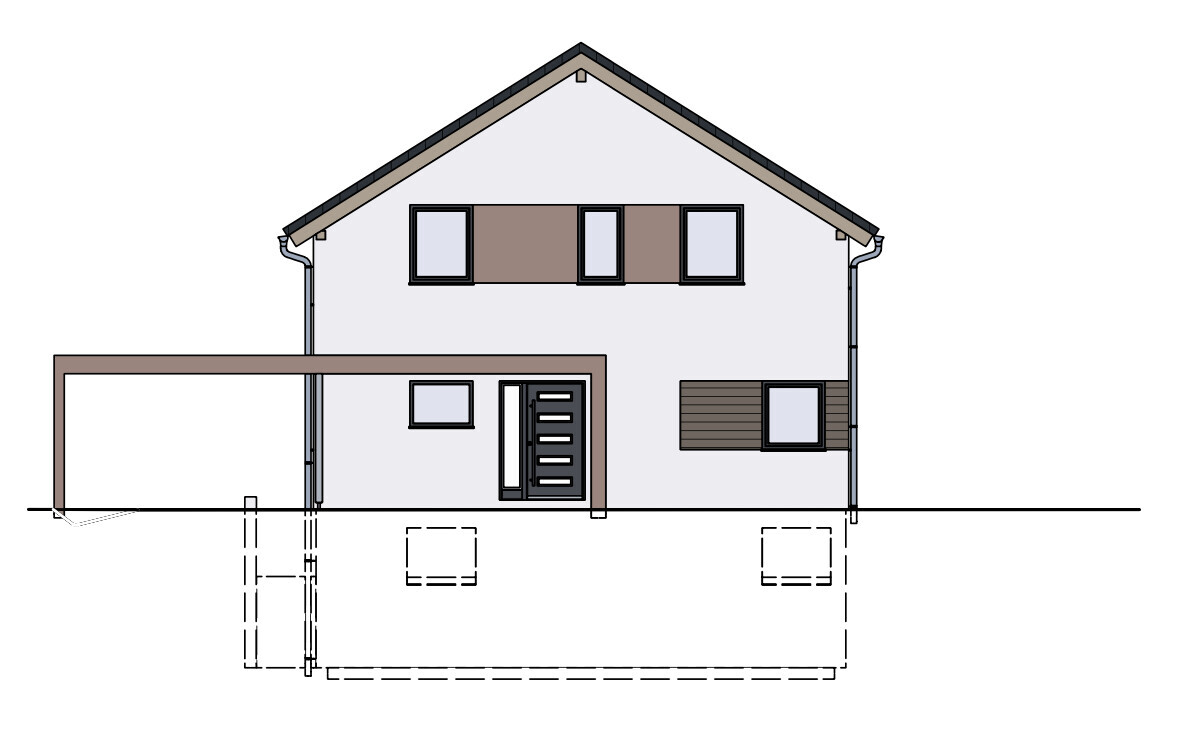
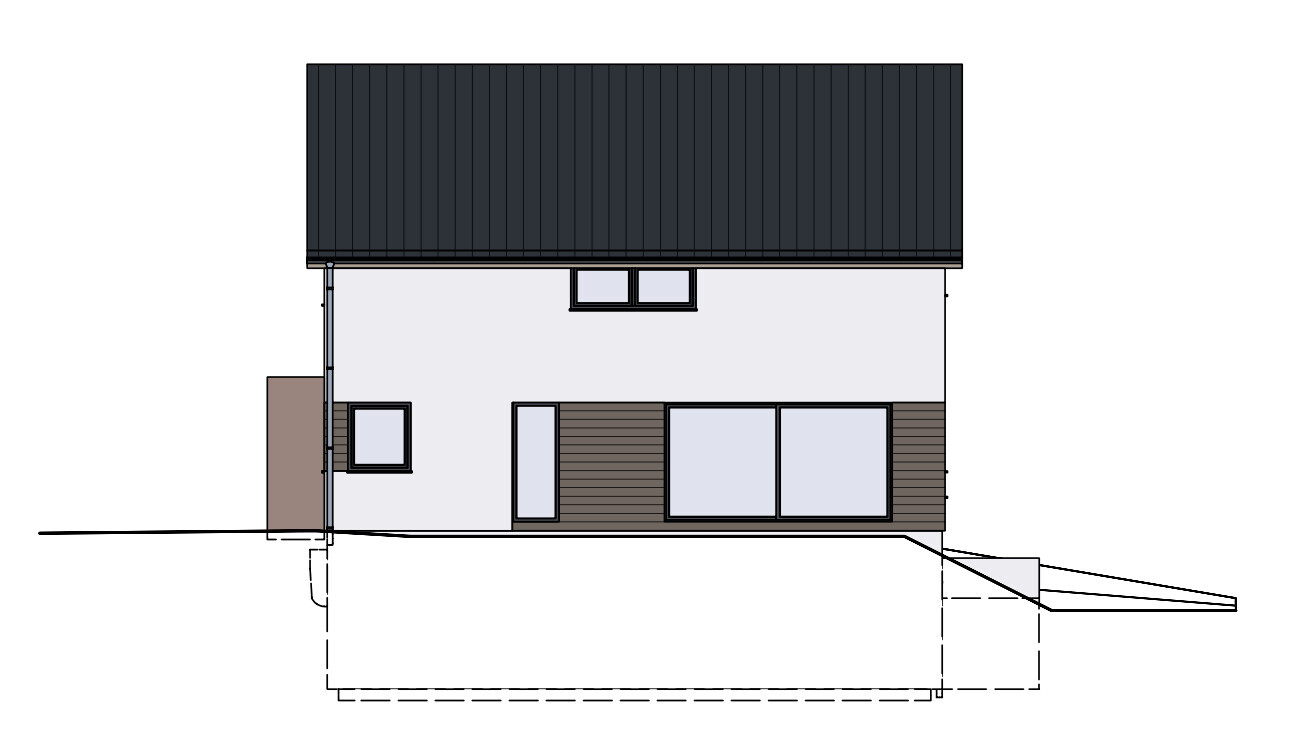
- House feels somewhat "buried"; considering raising overall or at least GF + UF by 40-80cm (16-32 inches) above ground level
- The whole topic of “house/garage connection,” earthworks, and plot landscaping is very complex and time-consuming
- No external blinds (raffstores) possible on landing due to knee wall and roof
- Separate “dirty corridor” and staircase; could be a minor disadvantage for aging, might make separate UF rental impossible in future
Due to the maximum number of attachments allowed, we couldn’t add an aerial photo of the tree cover. There are three large deciduous trees directly to the southeast and on the southwest side about two chestnut trees and around 15 pines from the 1950s. We have no worries about summer heat protection 😉 – on the contrary: enlarging the house footprint would cost us garden and especially daylight.
Feel free to ask any questions.
We look forward to your feedback and thank you in advance.
H
hanghaus202331 Dec 2024 09:46You don’t have a slope where you are building, so the basement will only add costs. If it is supposed to become a living floor, it will require especially high ceilings, as we have already noted. Therefore, my suggestion is to build without a basement. If you absolutely want to keep the current design, it will get expensive.
A 12 by 12 meter (39 by 39 feet) house works. I don’t see any violation of the distance to the neighbor. The 7.5-meter (25 feet) building easement is already marked.
Build a nice house without a basement, and you’ll be under 3,000 euros per square meter (about $280 per square foot). You can go up instead. A flat roof with a recessed top floor is definitely possible. That’s where the architect’s expertise is needed. In my opinion, you have restricted them too much in developing a good design.
A 12 by 12 meter (39 by 39 feet) house works. I don’t see any violation of the distance to the neighbor. The 7.5-meter (25 feet) building easement is already marked.
Build a nice house without a basement, and you’ll be under 3,000 euros per square meter (about $280 per square foot). You can go up instead. A flat roof with a recessed top floor is definitely possible. That’s where the architect’s expertise is needed. In my opinion, you have restricted them too much in developing a good design.
H
hanghaus202331 Dec 2024 12:30@K a t j a I think the idea is very good. In my opinion, it is still quite comfortable this way.
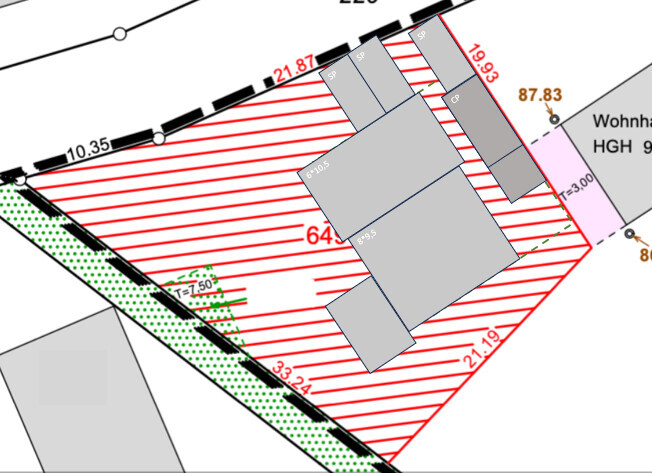
The slightly larger area benefits the granny flat and the master bedroom. The living and children's areas can be a bit smaller.
The offset should be the width of one brick.
That way, your design will look the same in reality.
I might also recess the terrace a bit so that at least 50% of it is covered.
The slightly larger area benefits the granny flat and the master bedroom. The living and children's areas can be a bit smaller.
The offset should be the width of one brick.
That way, your design will look the same in reality.
I might also recess the terrace a bit so that at least 50% of it is covered.
njAiiii schrieb:
If I interpret this correctly, the living area is now in the basement level, where previously there was major criticism of the granny flat. This means the best southwest-facing side goes to the bedroom and office. We don’t want that. The best side is relative... but whatever.
njAiiii schrieb:
Thanks again for sketching it out virtually.
..
Unfortunately, we don’t like the design visually at all. Then just try to identify the ideas behind both proposals and mentally work with them.
Katja and I independently came up with the idea of a front-positioned granny flat. It actually offers advantages for everything—not just for seniors, but in general for any granny flat. Katja’s style is (almost) always the townhouse look, though the software used can be a bit misleading—just like with my tool.
If something isn’t appealing, you can try to incorporate the good aspects of the floorplan into a different building structure. In the end, these are only suggestions to help think in other directions rather than sticking rigidly to the existing design, which isn’t necessary. It’s all just planning and draft stage for now.
I understand the sketch. I’m only doing a rough estimation based on it. I also get the concept of the split-level approach.
The north side is at 87.50 meters (287 feet), the east side at about 86.70 meters (285 feet), south at 86.30 meters (283 feet), and west at 86.9 meters (285 feet).
The neighboring building ends at 86.74 meters (285 feet) and is completely protruding. It is also raised by 3 steps.
Yes, that fits. It was late yesterday.
Well, easy to say in hindsight. I don’t know who here is an architect. Apart from one or two exceptions, the design is dismissed as a "botched plan." And apparently, it’s our requests to blame? That’s when I would expect the architect’s necessary advisory role.
The separate apartment doesn’t need to be more than 50 square meters (540 square feet). People nearby have consciously downsized in old age. Their ground floor apartments are all between 35 and 50 square meters (375 and 540 square feet). Anything larger than that is a matter of comfort.
Visually okay, but who’s going to pay for that?
I’ll try to sketch something myself tomorrow. My basic idea is to use the north-east facade and integrate the garden behind the garage.
Another thought: Does anyone here have a northwest orientation? It’s just as dark until 4 p.m. In winter, the sun sometimes never reaches it at all. Also, the entire apartment faces the street. Views of greenery are very limited. With this layout, I see more disadvantages than advantages, even though the floor plan of the separate apartment is clearly nicer.
hanghaus2023 schrieb:
You don’t have a slope where the building is planned.
The north side is at 87.50 meters (287 feet), the east side at about 86.70 meters (285 feet), south at 86.30 meters (283 feet), and west at 86.9 meters (285 feet).
The neighboring building ends at 86.74 meters (285 feet) and is completely protruding. It is also raised by 3 steps.
hanghaus2023 schrieb:
The 12 by 12 meter (39 by 39 feet) house works. I don’t see any setback violations against the neighbor. The 7.5 meter (25 feet) building easement is marked.
Yes, that fits. It was late yesterday.
hanghaus2023 schrieb:
That’s where the architect is needed. In my opinion, you have constrained them far too much in developing a good design.
Well, easy to say in hindsight. I don’t know who here is an architect. Apart from one or two exceptions, the design is dismissed as a "botched plan." And apparently, it’s our requests to blame? That’s when I would expect the architect’s necessary advisory role.
hanghaus2023 schrieb:
@K a t j a I think the idea is very good. In my opinion, it’s still quite comfortable like this.
The separate apartment and the parents’ area benefit from the slightly larger space. The living and children’s areas can be a bit smaller.
The separate apartment doesn’t need to be more than 50 square meters (540 square feet). People nearby have consciously downsized in old age. Their ground floor apartments are all between 35 and 50 square meters (375 and 540 square feet). Anything larger than that is a matter of comfort.
hanghaus2023 schrieb:
The offset should be the width of one brick.
Visually okay, but who’s going to pay for that?
ypg schrieb:
Then just try to identify the ideas behind both proposals and imagine how they could be combined.
I’ll try to sketch something myself tomorrow. My basic idea is to use the north-east facade and integrate the garden behind the garage.
Another thought: Does anyone here have a northwest orientation? It’s just as dark until 4 p.m. In winter, the sun sometimes never reaches it at all. Also, the entire apartment faces the street. Views of greenery are very limited. With this layout, I see more disadvantages than advantages, even though the floor plan of the separate apartment is clearly nicer.

Yvonne somehow gave me the idea with her comment in #45.
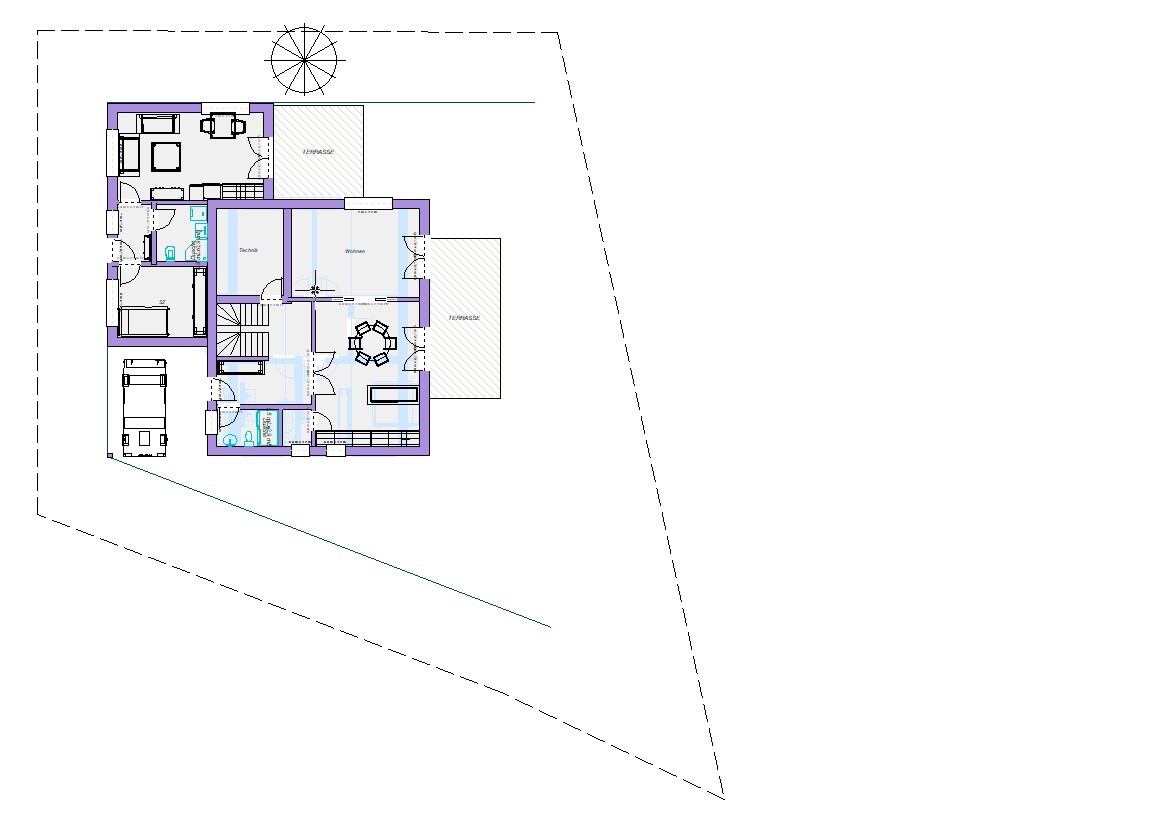
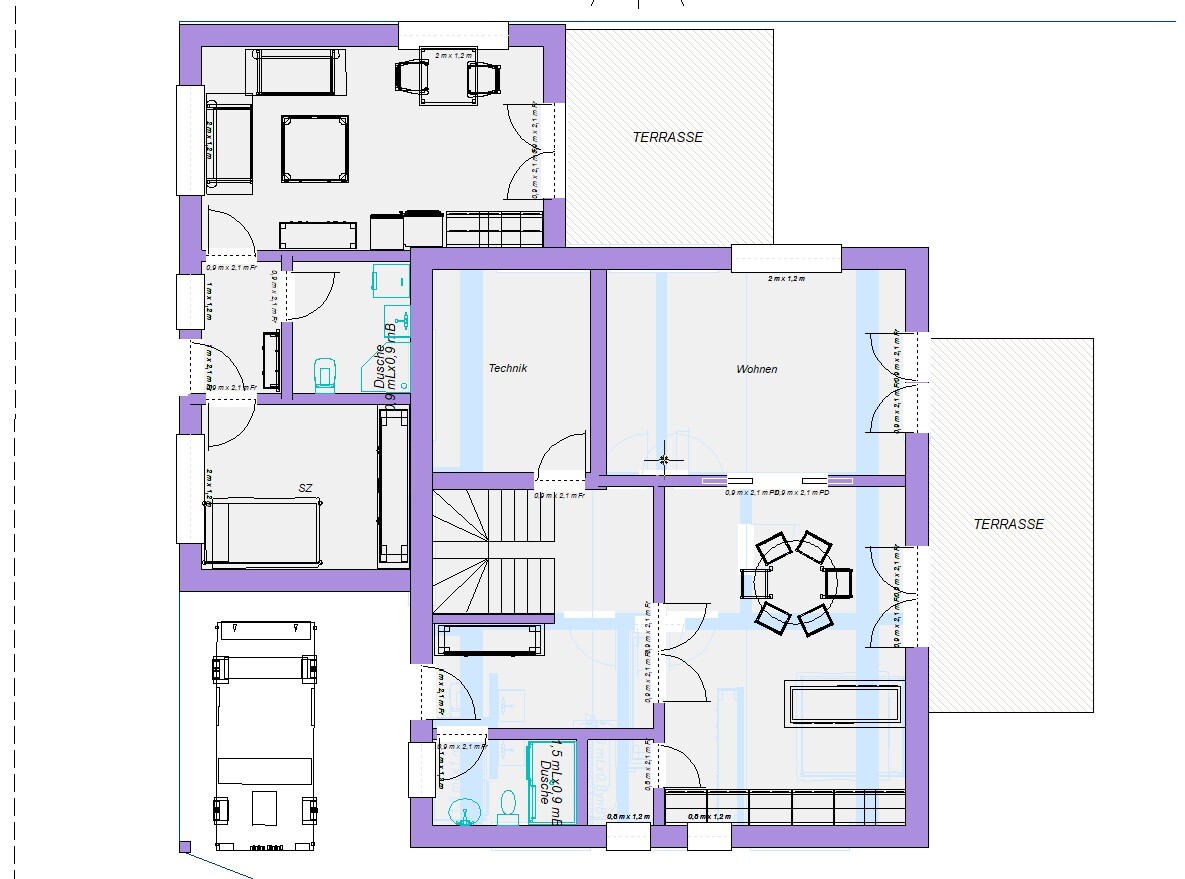
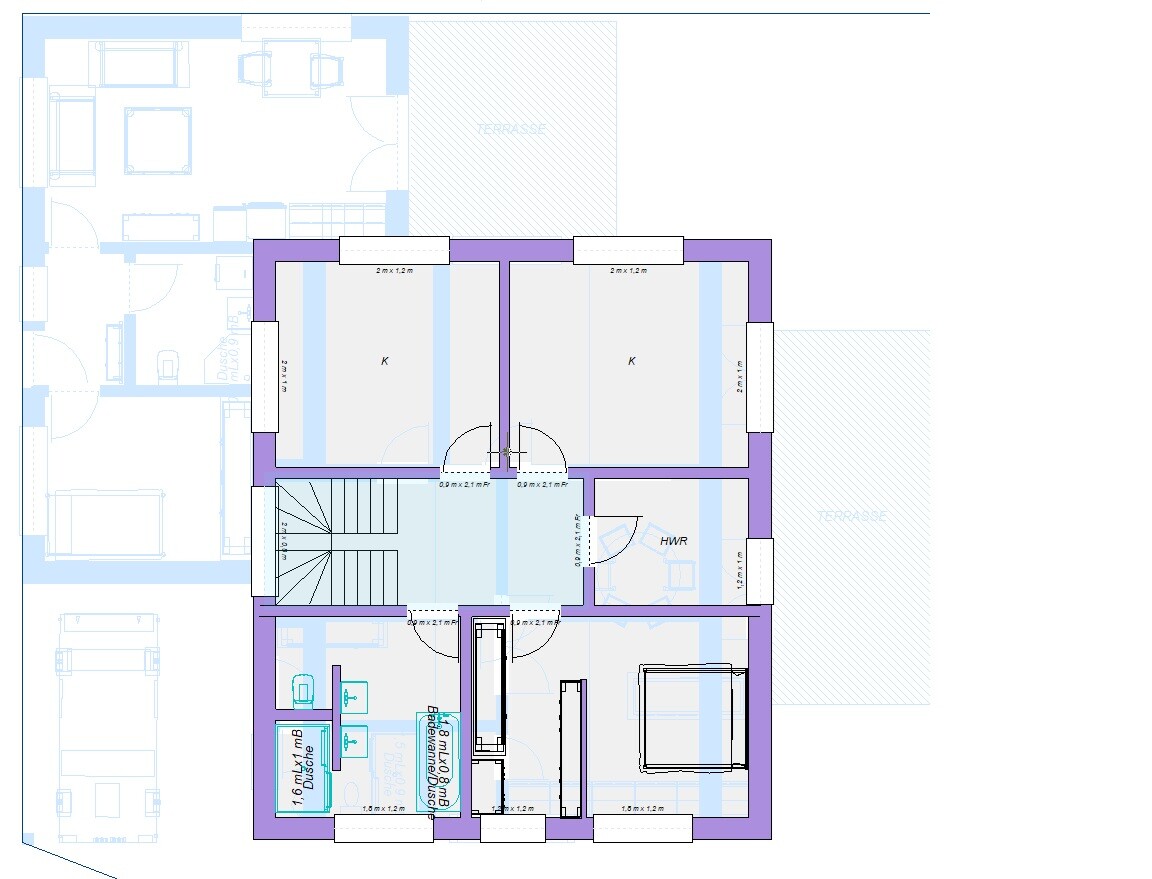
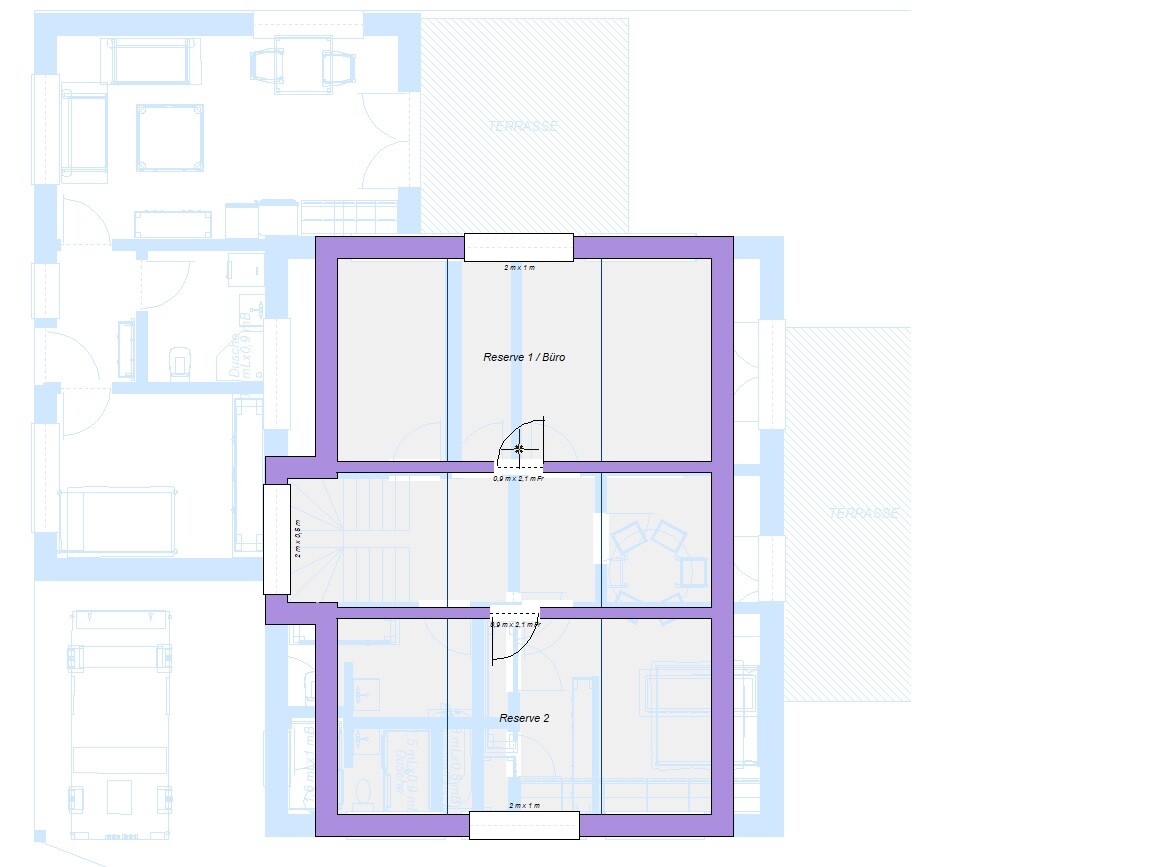
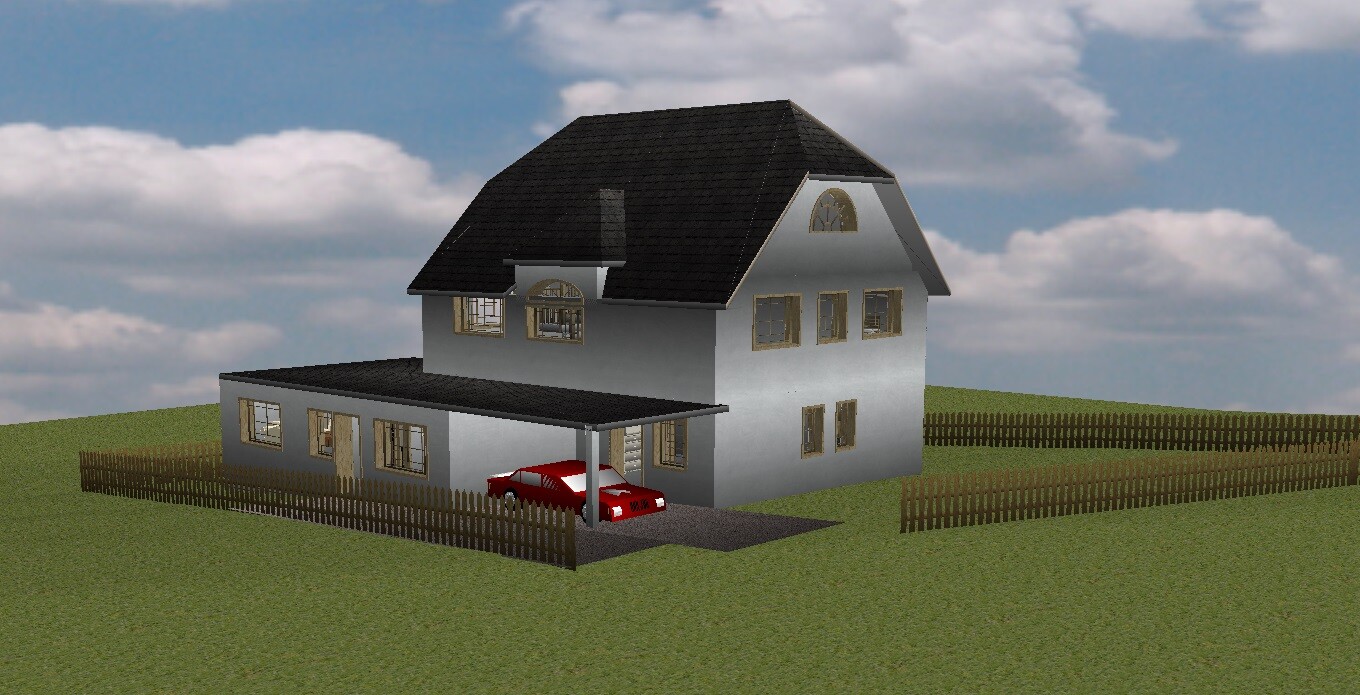
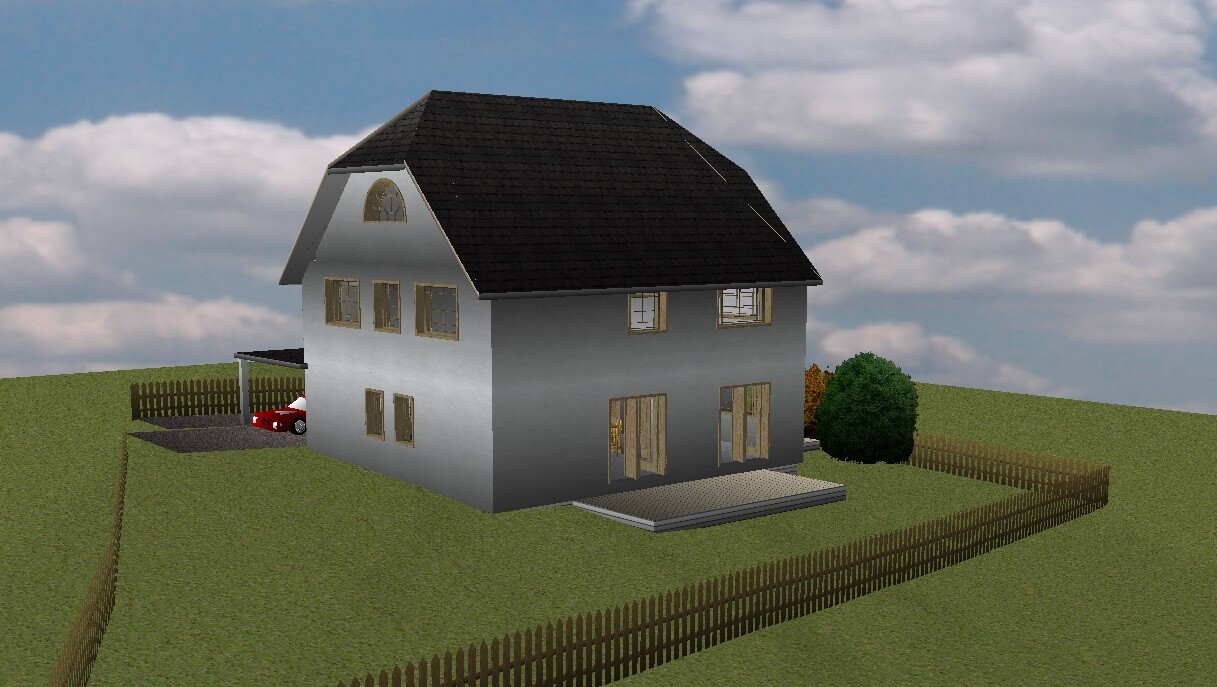
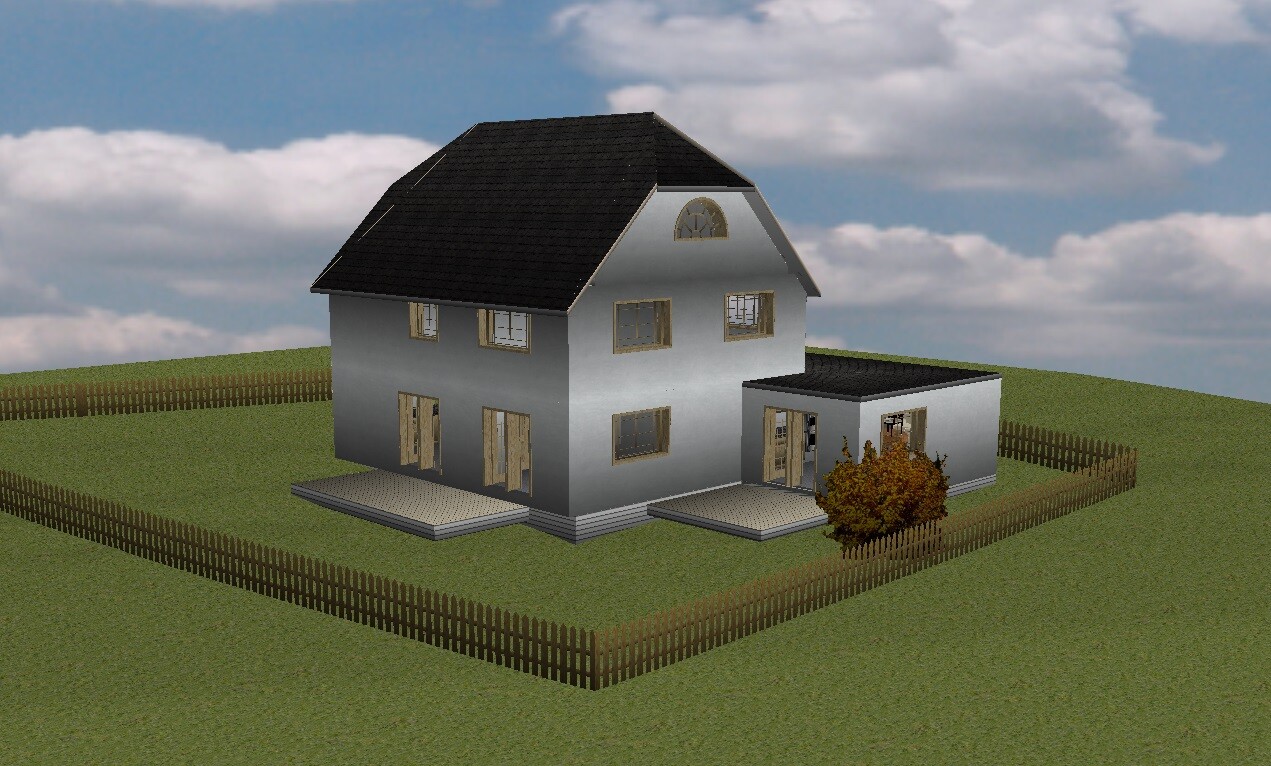
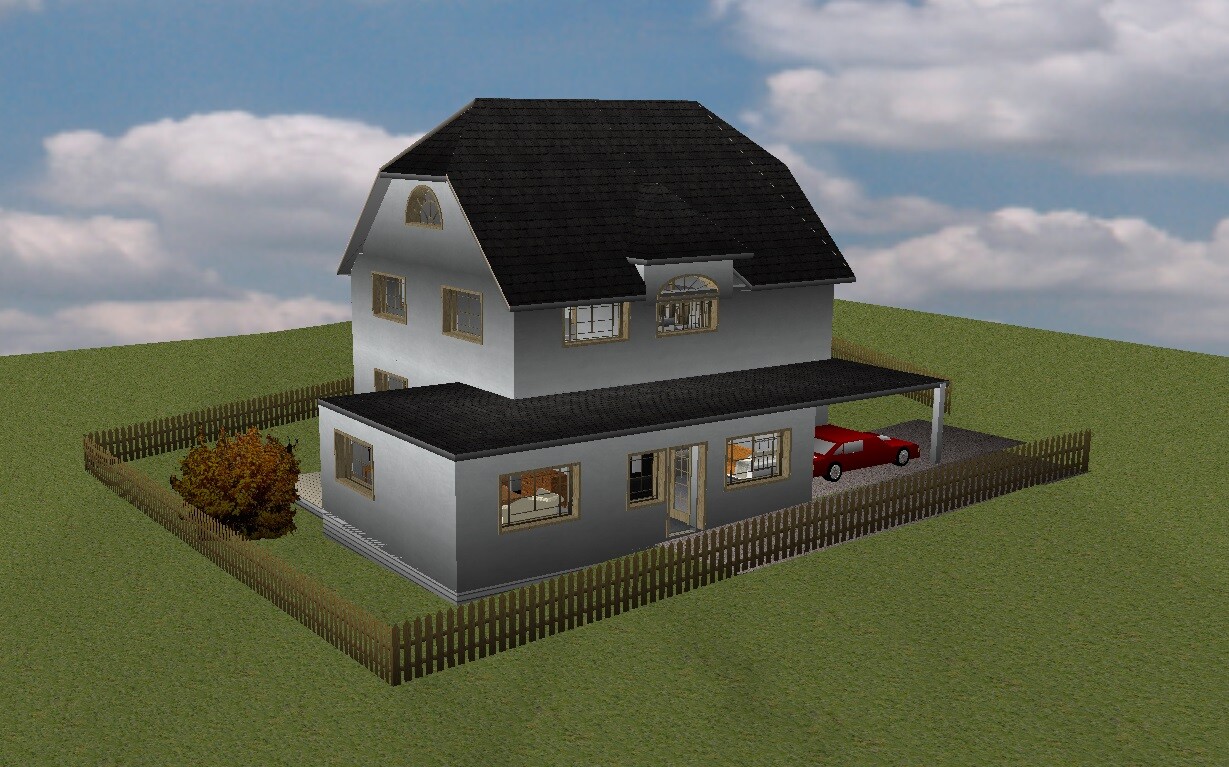
I hope the original poster doesn’t immediately complain that they don’t like the clipped hip roof or that the windows aren’t nice enough. The main building has exactly your 10.90m x 9.40m (36 ft x 31 ft). The only difference is that the space for the technical room had to be integrated on the ground floor. Otherwise, it’s very similar. If the office should be placed in the same spot again, the house might need to be stretched slightly. But I think that should also be possible. I would activate the attic space as a reserve, provided the local authorities allow it. I’m no longer quite sure about the height restrictions. The drawing shows the standard 45° roof pitch with 2m (6 ft 6 in) knee wall height on the upper floor.
The core idea is the arrangement of the separate apartment as an extension on the east side, adjustable to any desired height level. There, it has been really shrunk down to a very small size and could probably also be built later as an addition. This costs you some garden space, as the building stands more centrally, but you still have important southern and western sunlight in the main house, and the apartment also benefits from southern sun with its own garden access. All of this without any excavation or holes where one could fall or where water could collect like a flood.
I hope the original poster doesn’t immediately complain that they don’t like the clipped hip roof or that the windows aren’t nice enough. The main building has exactly your 10.90m x 9.40m (36 ft x 31 ft). The only difference is that the space for the technical room had to be integrated on the ground floor. Otherwise, it’s very similar. If the office should be placed in the same spot again, the house might need to be stretched slightly. But I think that should also be possible. I would activate the attic space as a reserve, provided the local authorities allow it. I’m no longer quite sure about the height restrictions. The drawing shows the standard 45° roof pitch with 2m (6 ft 6 in) knee wall height on the upper floor.
The core idea is the arrangement of the separate apartment as an extension on the east side, adjustable to any desired height level. There, it has been really shrunk down to a very small size and could probably also be built later as an addition. This costs you some garden space, as the building stands more centrally, but you still have important southern and western sunlight in the main house, and the apartment also benefits from southern sun with its own garden access. All of this without any excavation or holes where one could fall or where water could collect like a flood.
njAiiii schrieb:
Anything beyond that is comfort. Yes, a house with a granny flat is simply comfort. And when you equip 150 m² (1,615 sq ft), which is not excessive in size, with an additional attractive apartment, it corresponds to that living comfort. I don’t think you as landlords benefit from adding a dead zone of living space.
njAiiii schrieb:
We have people nearby who have consciously downsized in old age. The ground floor apartments there are all 35-50 m² (375-540 sq ft). What interests me here: have you inspected all possible houses with granny flats? Or do you just want to believe what you’ve been told?
njAiiii schrieb:
Does anyone live with a northwest orientation? My next house would at least have a northwest terrace. But that doesn’t mean you would want the same. And it doesn’t mean we are unhappy with our current orientation. It is always a symbiosis of the possibilities you have.
Also, the discussion about switching the kitchen and living room: that basically stems from the old design, which makes that change obvious. But there are plenty of houses with terraces completely facing north—and that orientation also has its justified value, as it clearly offers different advantages.
njAiiii schrieb:
It’s just as dark until 4 pm. In winter, sometimes the sun never reaches there at all. It doesn’t have to. Do you live in an apartment? Do you often just lounge on the sofa and enjoy the sun there?
If you have a garden, on nice days you do very different things than just sitting on the sofa looking outside.
We have a north-facing bathroom. It’s bright enough because it has a window, and in summer, since the sun rises in the northeast and sets in the northwest, there is still sunlight through the north window when we use it.
I’ll link a post of mine from elsewhere:
ypg schrieb:
Everyone here now has shading on their south-facing terrace.
You have to clearly say again that south-facing terraces don’t have sun in the evening.
Terraces are not for sunbathing in the garden like on holiday. First, people like to have their lawn or a spot in another corner of the garden for that. Second, in daily life, you often don’t want the sun there because it can disturb you during your work.
When planning, I like to separate windows and terrace use: windows preferably face south to bring light and warmth into the house from October to Easter; terraces preferably face west or north to get some evening sun during summer in everyday life.
Each person should see how they organize their daily routines.
If you often plan to host grandparents for coffee, you should have a terrace that stays somewhat shaded. Those who have free time during the day and like sunbathing will place the lounger somewhere else than the dining and barbecue area.
If I were to build again, I would plan a small south terrace but focus more on west/northwest.
West has the disadvantage of wind, but that can be managed with planting and structural elements. I don’t know anyone who hasn’t planted around their terrace at a detached house to make it cozier. njAiiii schrieb:
Also, the entire apartment faces the street. The view onto greenery is limited as well. With that layout, I see more disadvantages than advantages, even though the granny flat’s floor plan is clearly nicer. Well, you can plant greenery yourself. That’s your responsibility. The same applies to neighbors; you take care of green boundary plantings, hedges, and such, so you’re not disturbed at each other’s driveway.
What disadvantages do you see? Usually, instead of a granny flat, half the rooms face the street. I think you get tangled up too often in your argumentation.
About the slope: I can’t say much. Sometimes it seems a basement makes sense, then again it doesn’t. 1.20 m (4 ft) is not a reason for a basement.
K a t j a schrieb:
I hope the original poster doesn’t immediately complain that they don’t like a half-hipped roof. I was a bit shocked too. However, I find the approach with the granny flat location interesting, but personally, I might be a bit too frugal with the plot for that.
Similar topics