
Development Plan / Restrictions
Plot size: 434m² (4670 ft²)
Slope: no
Site coverage ratio: 0.4
Floor area ratio:
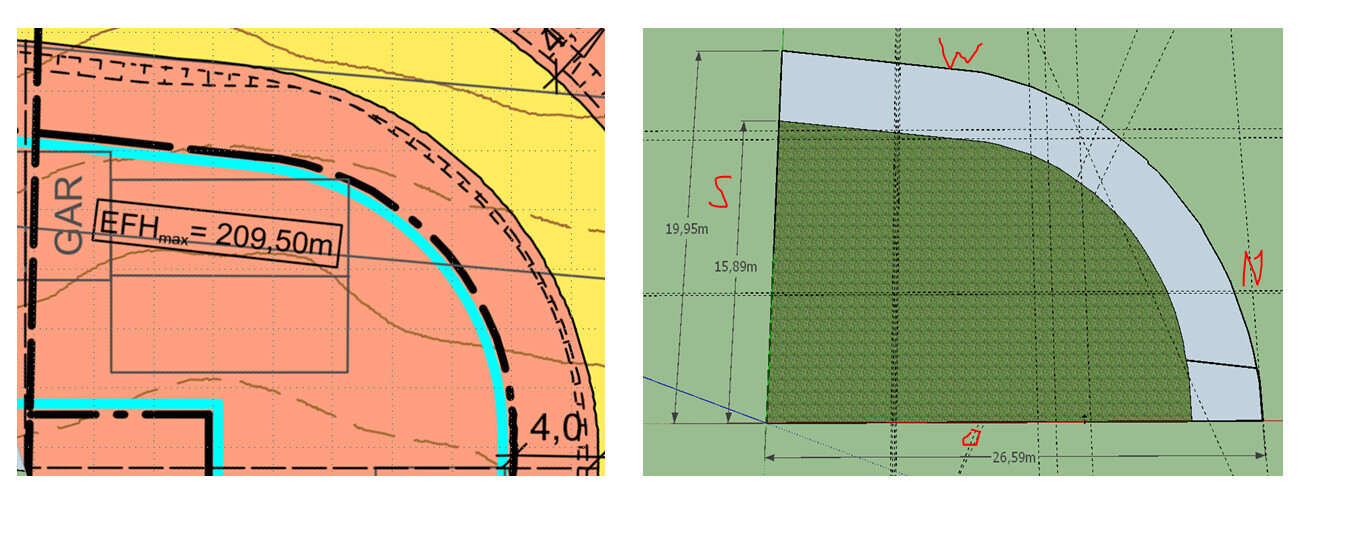
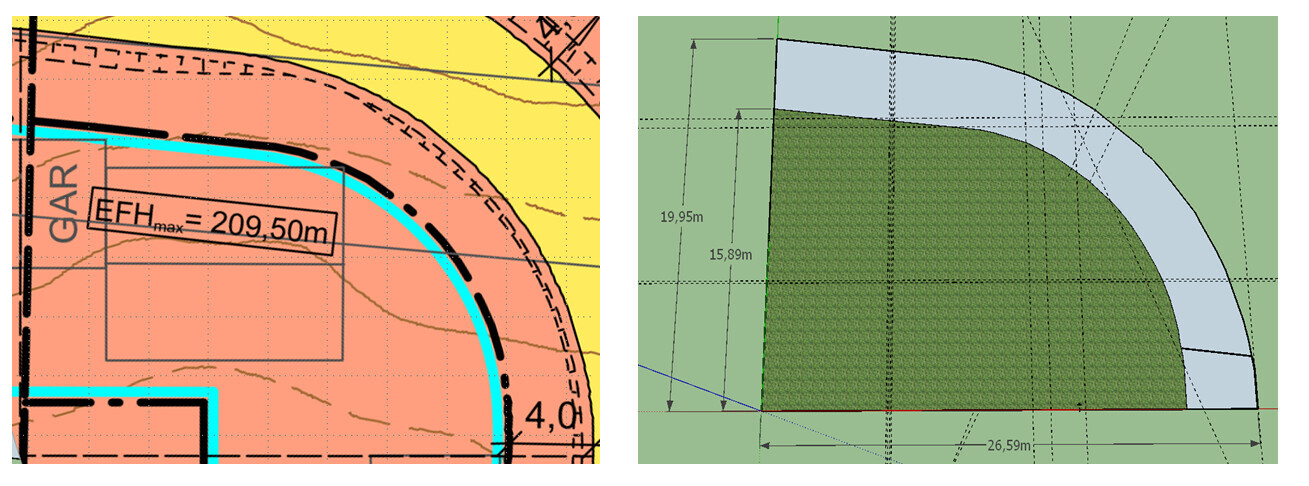
Building envelope, building line, and boundary: see below
Edge development: garage allowed, house minimum 2.5m (8.2 ft) from boundary
Number of storeys: 2
Roof type: shed roof
Orientation: terrace faces south, garage entrance north
Maximum heights / limits: 8m (26 ft) ridge height
Other:
Client Requirements
Style, roof type, building type: modern
Basement, storeys: fully basemented
Number of occupants, age: 3
Room requirements: living-dining-kitchen, bedroom 1, bedroom 2, bathroom, guest bathroom, entrance
Office: none
Number of guests per year: 10
Open or closed architecture:
Conservative or modern construction: modern
Open kitchen, kitchen island: yes
Number of dining seats: minimum 6
Fireplace: no
Music/stereo wall: no
Balcony, roof terrace: no
Garage size: 6x9m (20x30 ft)
Utility garden, greenhouse: no
House Design
Planner: myself
What do you like most? Why?: direct access from dining and living area to the south-facing terrace
What do you dislike? Why?: distance to garage entrance, bathroom layout, ...
Cost estimate by architect/planner: 330,000 € including exterior works and kitchen
Personal budget limit for house, including fittings: 550,000 €
Preferred heating system: gas
If you have to compromise, on which details/features
-can you compromise on: size of bedroom 1
-can you not compromise on: large open dining and living area directly connected to the south terrace
Why does the design look as it does now?
For example:
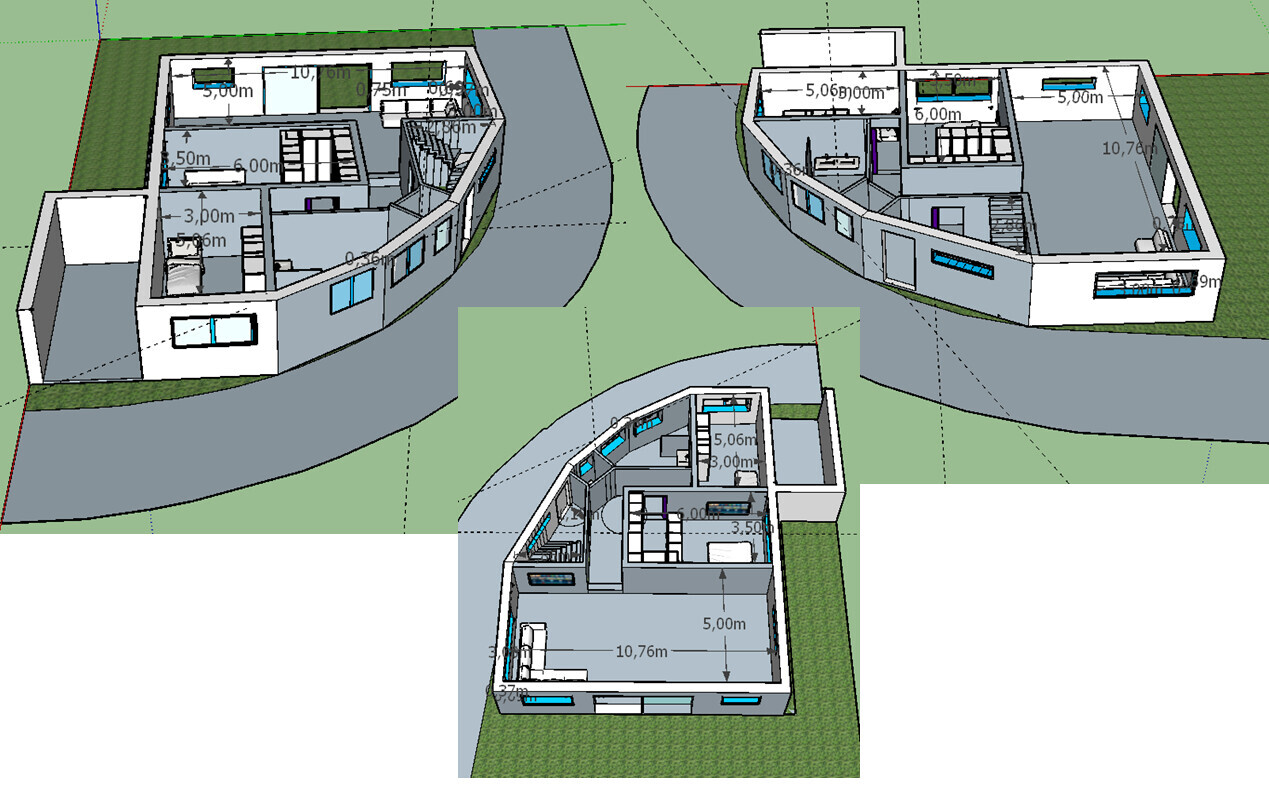
I started with the buildable house geometry, how the house can or must be positioned on the plot so that the terrace faces south. A large dining and living area directly opens onto the terrace. The corridor must lead into the center of the large room.
What is the most important/fundamental question about the floor plan summarized in 130 characters?
What would you change and why? Do you see any deal-breakers? Are there other house geometries that would make sense? (The building authority does not allow exceptions at the boundaries.)
Many thanks in advance and best regards

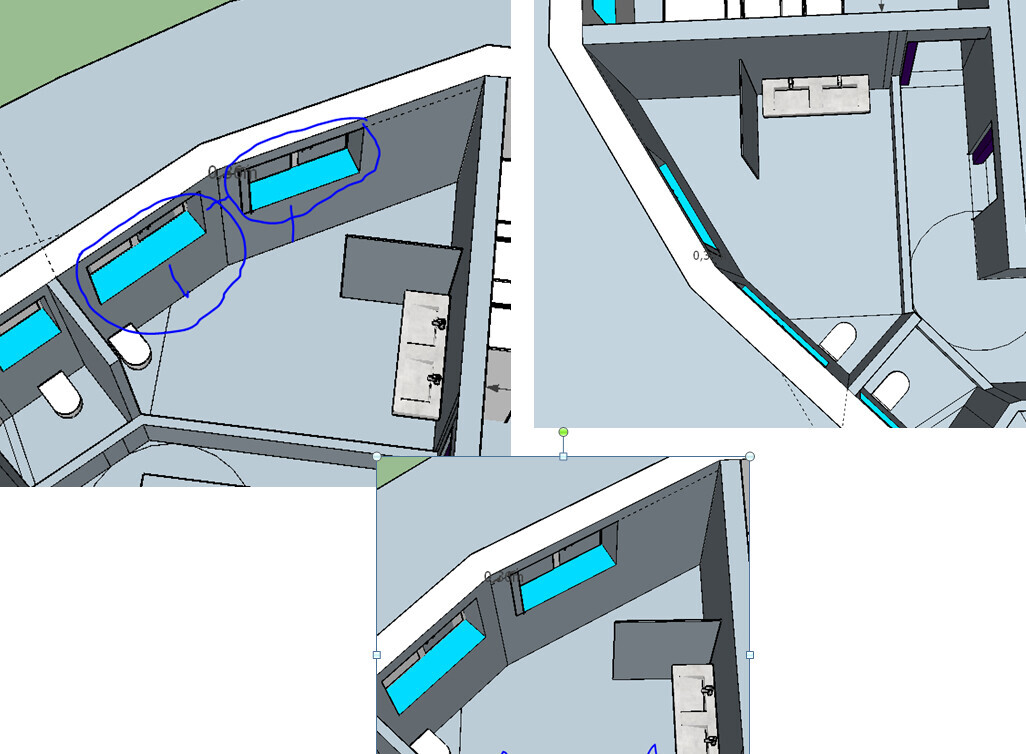
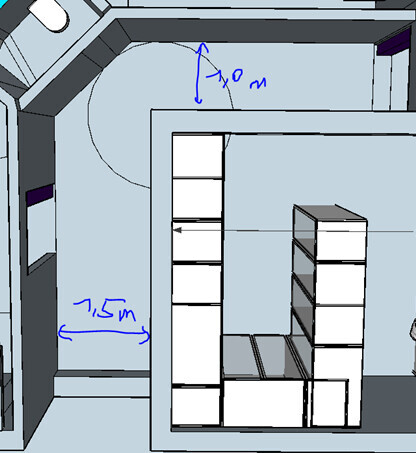
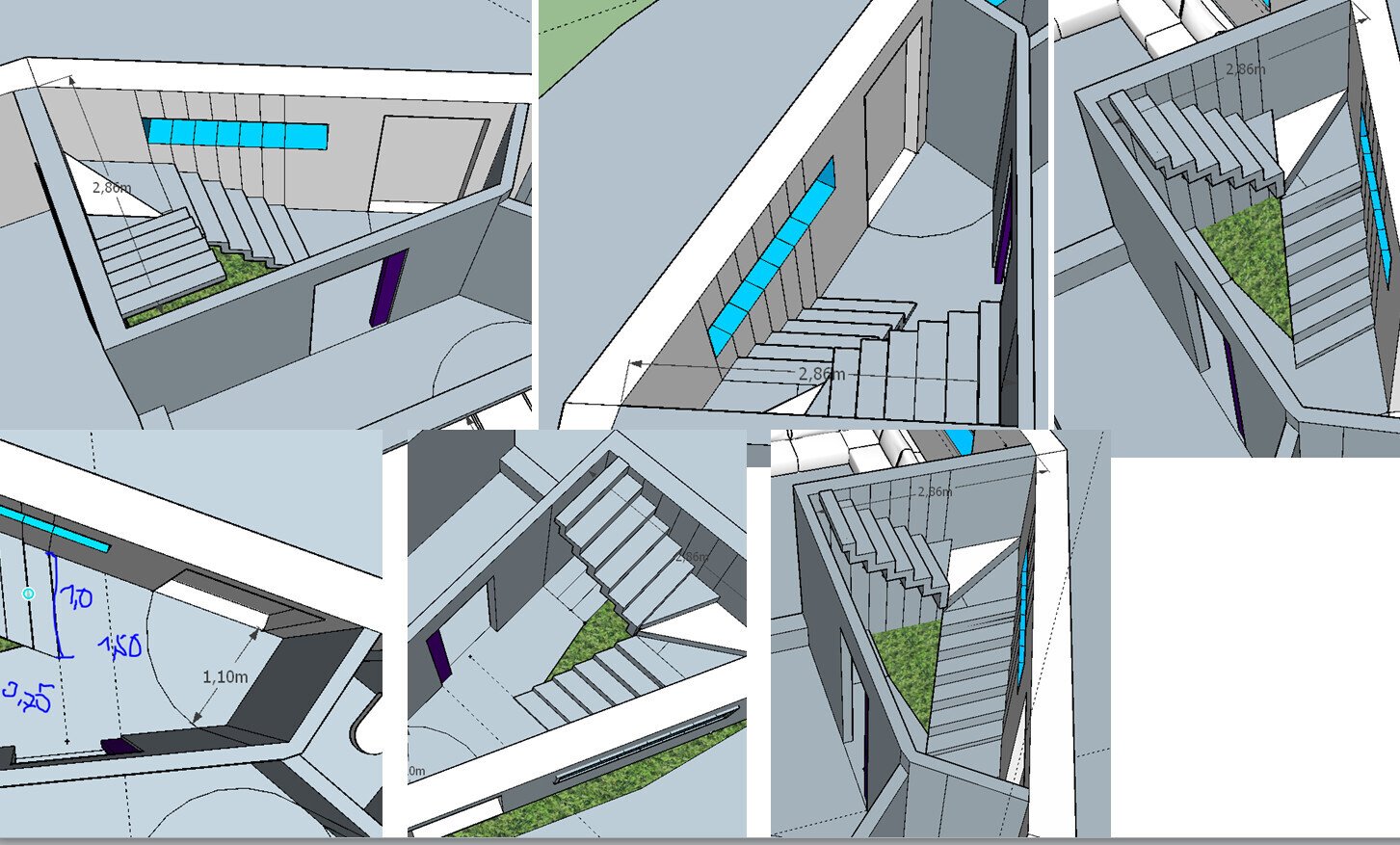
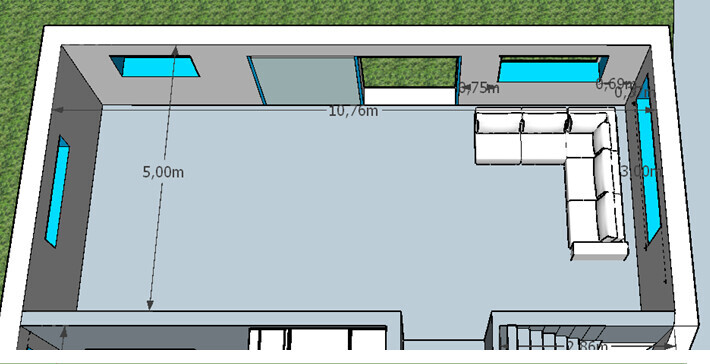
Plot size: 434m² (4670 ft²)
Slope: no
Site coverage ratio: 0.4
Floor area ratio:
Building envelope, building line, and boundary: see below
Edge development: garage allowed, house minimum 2.5m (8.2 ft) from boundary
Number of storeys: 2
Roof type: shed roof
Orientation: terrace faces south, garage entrance north
Maximum heights / limits: 8m (26 ft) ridge height
Other:
Client Requirements
Style, roof type, building type: modern
Basement, storeys: fully basemented
Number of occupants, age: 3
Room requirements: living-dining-kitchen, bedroom 1, bedroom 2, bathroom, guest bathroom, entrance
Office: none
Number of guests per year: 10
Open or closed architecture:
Conservative or modern construction: modern
Open kitchen, kitchen island: yes
Number of dining seats: minimum 6
Fireplace: no
Music/stereo wall: no
Balcony, roof terrace: no
Garage size: 6x9m (20x30 ft)
Utility garden, greenhouse: no
House Design
Planner: myself
What do you like most? Why?: direct access from dining and living area to the south-facing terrace
What do you dislike? Why?: distance to garage entrance, bathroom layout, ...
Cost estimate by architect/planner: 330,000 € including exterior works and kitchen
Personal budget limit for house, including fittings: 550,000 €
Preferred heating system: gas
If you have to compromise, on which details/features
-can you compromise on: size of bedroom 1
-can you not compromise on: large open dining and living area directly connected to the south terrace
Why does the design look as it does now?
For example:
I started with the buildable house geometry, how the house can or must be positioned on the plot so that the terrace faces south. A large dining and living area directly opens onto the terrace. The corridor must lead into the center of the large room.
What is the most important/fundamental question about the floor plan summarized in 130 characters?
What would you change and why? Do you see any deal-breakers? Are there other house geometries that would make sense? (The building authority does not allow exceptions at the boundaries.)
Many thanks in advance and best regards

I think it’s about time to fill out the questionnaire. Otherwise, we’ll end up asking all the open questions one by one. Maybe you should start a new thread and link from here, so the questionnaire appears at the beginning of the thread.
https://www.hausbau-forum.de/threads/grundrissplanung-unbedingt-vor-Beitrag-Erstellung-lesen.11714/
Building a curved structure like that can be refreshing, but do you even have the budget for it? You can’t build a roof like that with temporary workers from Romania, and with Massa Haus or Living Haus, you probably won’t find that option in their standard plans. Living Haus tends to build rather standard designs.
https://www.hausbau-forum.de/threads/grundrissplanung-unbedingt-vor-Beitrag-Erstellung-lesen.11714/
Building a curved structure like that can be refreshing, but do you even have the budget for it? You can’t build a roof like that with temporary workers from Romania, and with Massa Haus or Living Haus, you probably won’t find that option in their standard plans. Living Haus tends to build rather standard designs.
H
hampshire15 Oct 2019 10:31Rounded roof goes with thatch...
I still believe that a small plot with a large house calls for a roof terrace – and discreetly designed with a shed roof look.
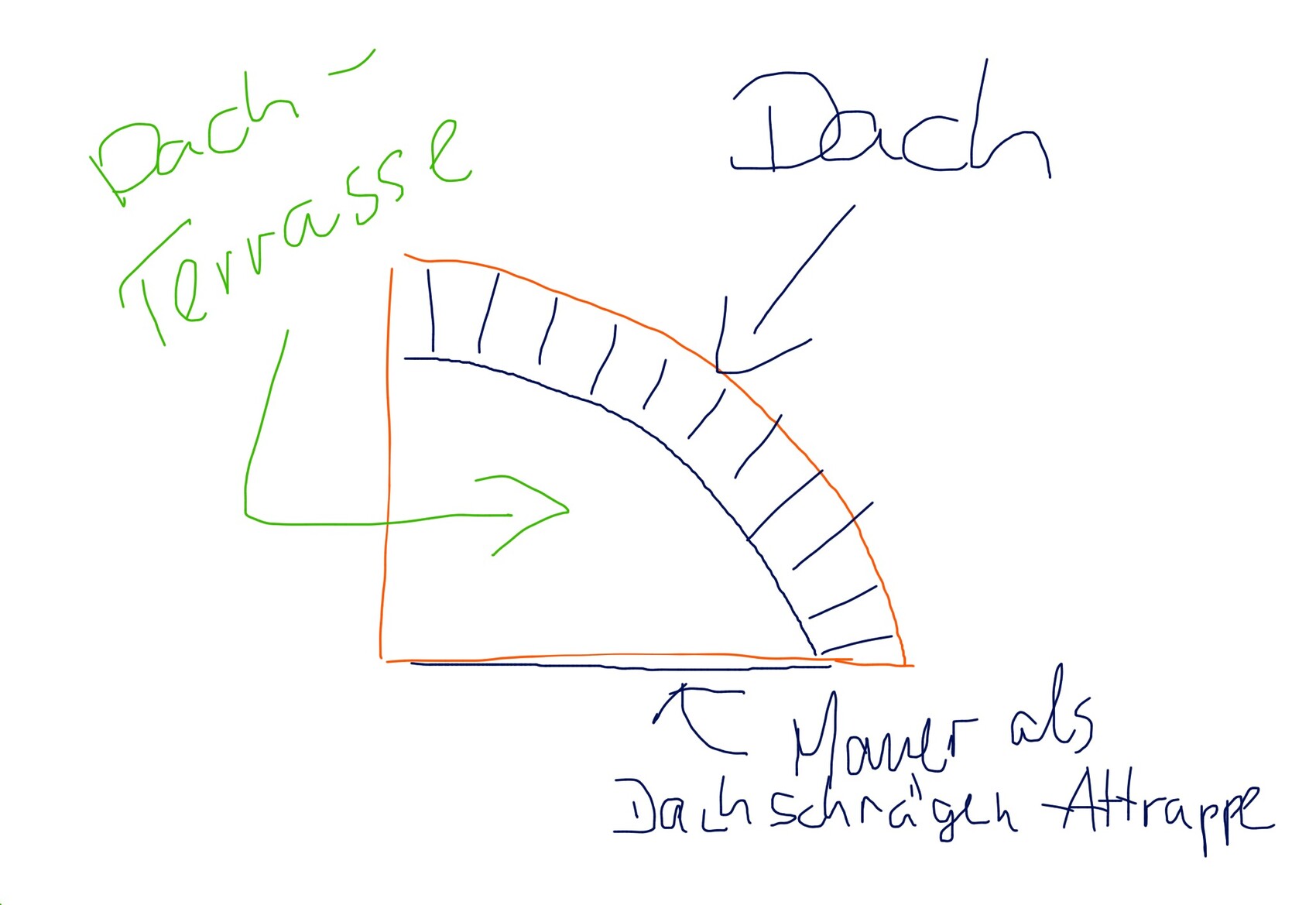
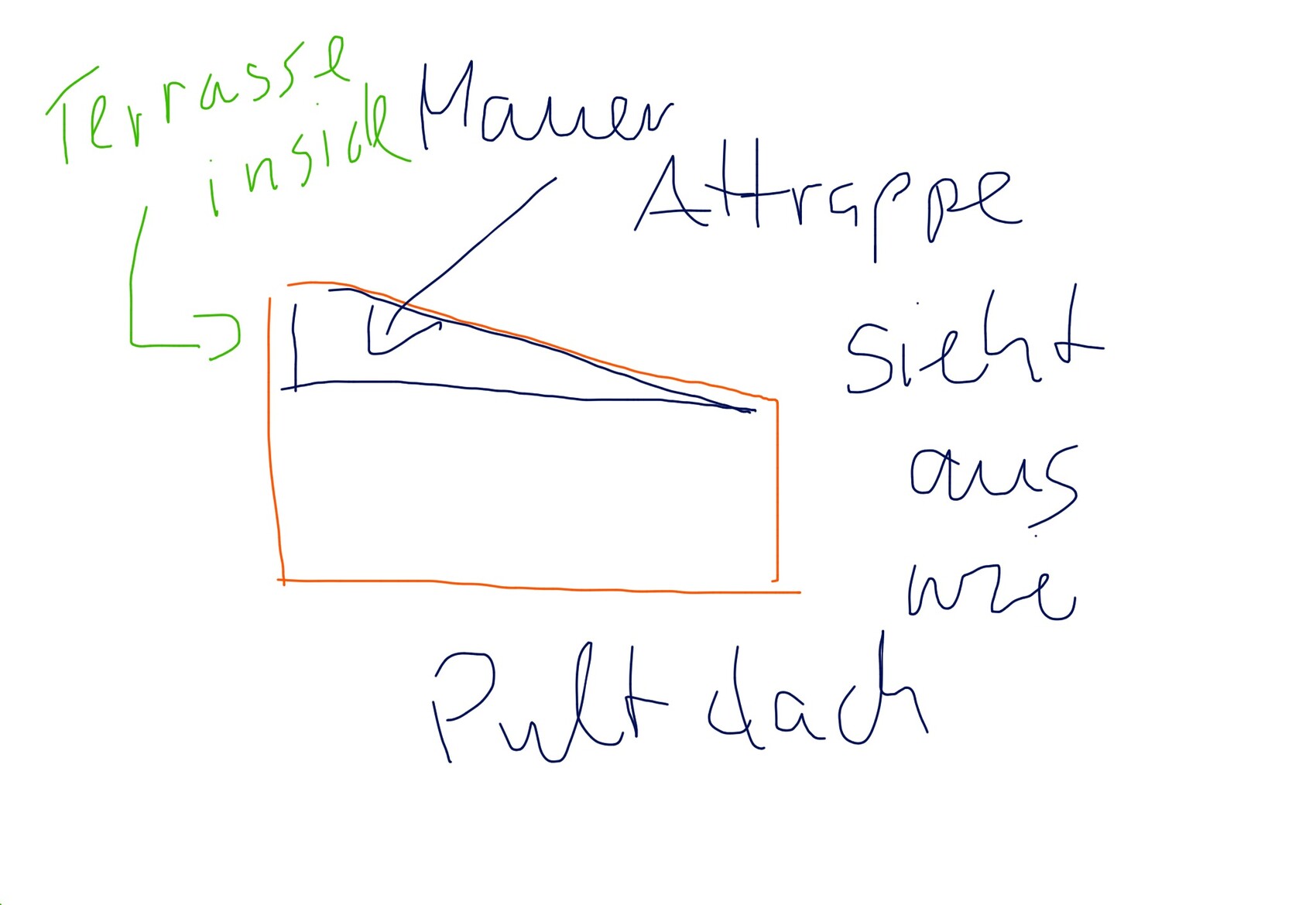 I’ve just doodled a bit.
I still believe that a small plot with a large house calls for a roof terrace – and discreetly designed with a shed roof look.
F
fach1werk31 Oct 2019 08:11Reducing hallway space does not mean making hallways narrower. It means analyzing the movement patterns within a house and organizing the sequence of rooms accordingly. Individual hallway sections can be incorporated into a room as circulation space by rearranging the order of the rooms. In your case, there are interior hallways; if you want to keep them, I would suggest considering light wells. The installation is straightforward, and you should roughly expect a cost in the four-digit range starting with a one per unit.
Hopefully, you enjoy the work of Le Corbusier! However, I would like to point out that if you design everything yourself, it is unlikely you will progress much beyond an introductory level. The house still needs to be built at some point. You would greatly benefit from an architect who can apply existing knowledge to your requirements.
Best wishes, Gabriele
Hopefully, you enjoy the work of Le Corbusier! However, I would like to point out that if you design everything yourself, it is unlikely you will progress much beyond an introductory level. The house still needs to be built at some point. You would greatly benefit from an architect who can apply existing knowledge to your requirements.
Best wishes, Gabriele
Serdar88 schrieb:
Hello Katja,
is this sufficient?
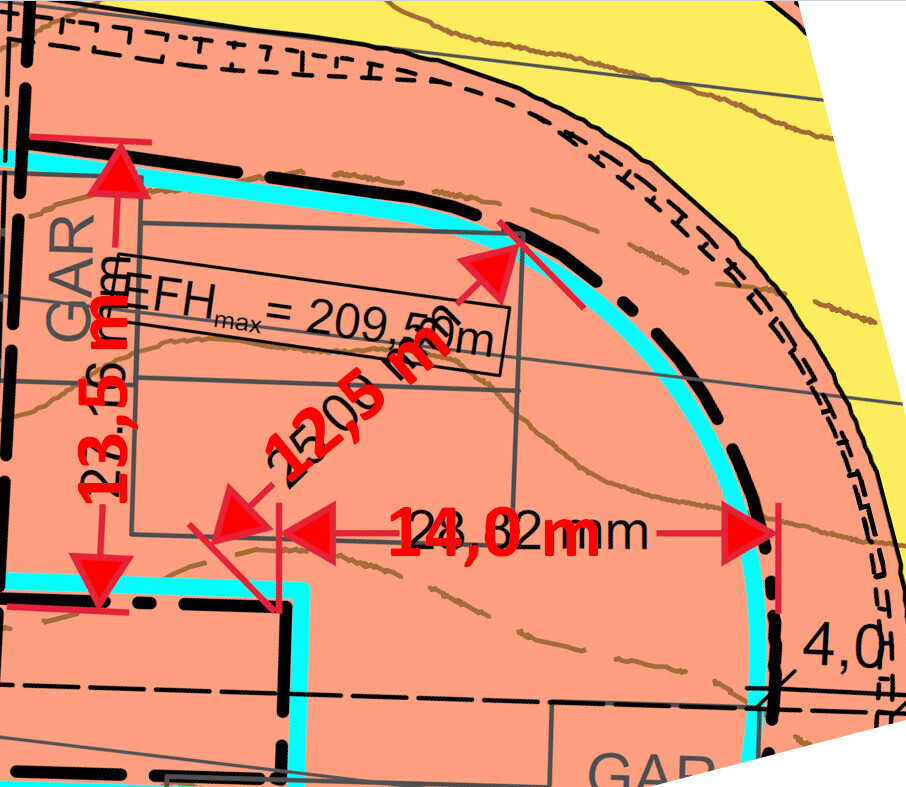
Thanks in advance and best regards To be honest, I don’t find this sufficient.
I definitely miss clear property boundaries. Why are you so reluctant to share information regarding the plan? Also, it looks like contour lines are drawn in. These must not be ignored.
Serdar88 schrieb:
Hi,
what could be included in such a curve?
Also the north side and the street side.
I’ll have to create a 2D drawing tonight ;D
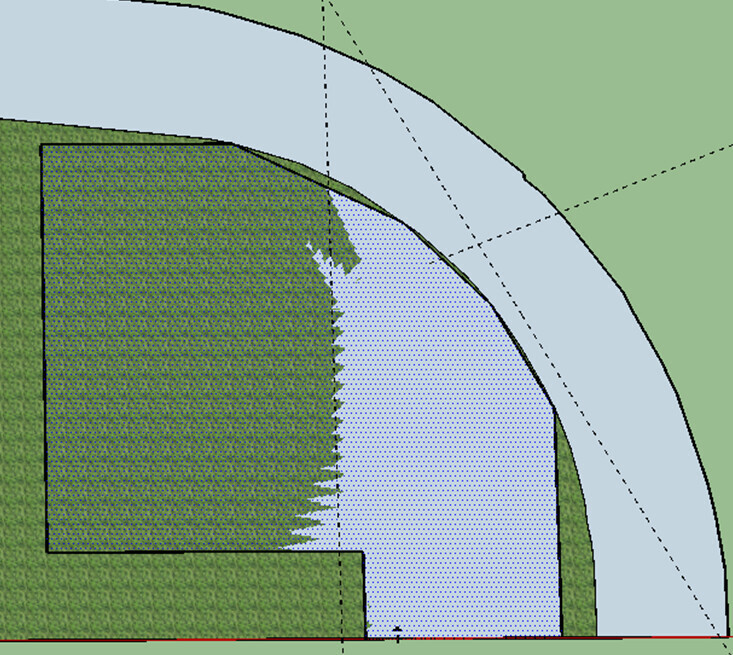
Best regards and many thanks It doesn’t seem necessary to incorporate the curve into the house design.
The reality is, you have to be able to afford something like that. You won’t find something like this off the shelf, only from an architect. By the way, the architect acts as an intermediary between the client and the building authority and makes the most of the development plan. I mean a licensed architect, not a €1999 flat-fee planner working part-time.
Holding on to stubborn attitudes usually does not serve your best interest.
Serdar88 schrieb:
Why crossed out = 2 doors lead into the bathroom Exactly... odd idea. Delete it, don’t keep it!
By the way, I see no reason to put a house with two residential units and a basement on a small, awkwardly shaped corner lot.
Since the plot is not meant as a means to argue with the building authority, but rather the building authority’s role is only to ensure the house doesn’t create any unauthorized negative peculiarities, I would now focus on something realistic.
There is still missing information about the property to make an assessment.

fach1werk schrieb:
Hopefully you enjoy Le Corbusier’s work! What makes you think of him here right now?
ypg schrieb:
Also, it looks like contour lines are drawn there. You can’t ignore those. That’s true, although here it’s probably only about one to one and a half meters in the building area (I assume the dashed lines indicate half-meter intervals). But what’s crucial isn’t visible in the excerpt: whether the slope goes uphill or downhill.
ypg schrieb:
It doesn’t seem necessary to incorporate the curve into the house design. I guess the intention is to maximize garden area at the upper edge of the plan or to keep the non-garden usable part of the undeveloped lot as small as possible — which logically leads to following the lot’s boundary line in other areas. However, this conclusion only seems obvious as long as you disregard the fact that it might backfire. I see that as applicable here, specifically in the sense that these “wasted areas” are brought into the house itself, particularly in the hallway and staircase.
Therefore, I agree with the suggestion for a paradigm shift: choosing a house shape with a more conventional footprint and accepting to “sacrifice” a few nominal square meters in order to gain more usable living space.
https://www.instagram.com/11antgmxde/
https://www.linkedin.com/company/bauen-jetzt/
F
fach1werk31 Oct 2019 22:46Why choose Corbusier? He often based his designs on human measurements. I find this approach very instructive when it comes to dimensioning rooms. You don’t have to like living machines, but you can clearly see in his small buildings how and why he arranged things the way he did. I believe there is still a lot to learn from that. Much of his work fascinates me, and luckily I’m not too far from the Weissenhof Estate.
Best regards
Gabriele
Best regards
Gabriele
Similar topics