
ᐅ Floor Plan for Age-Appropriate Living (New Construction) in a Historic Courtyard Complex
Created on: 23 Jun 2022 23:29
K
karl.jonas
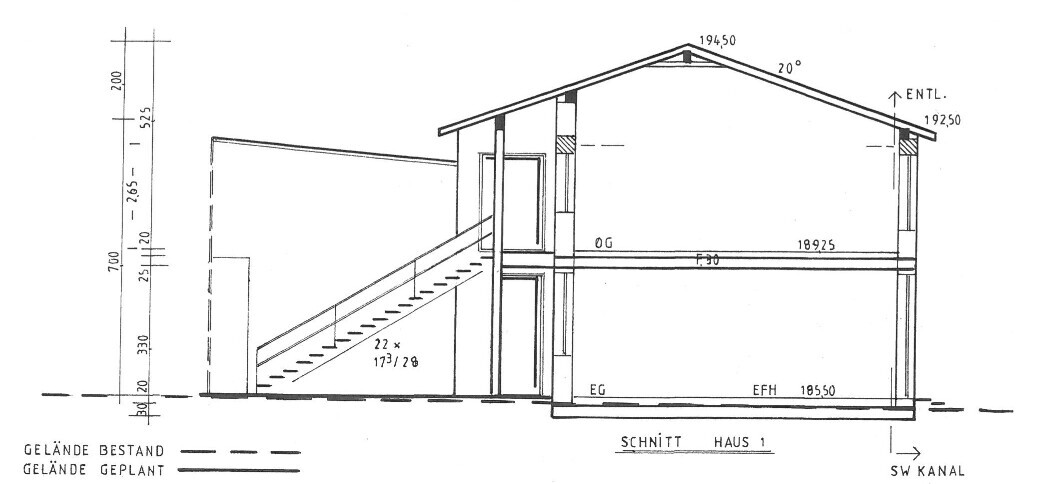
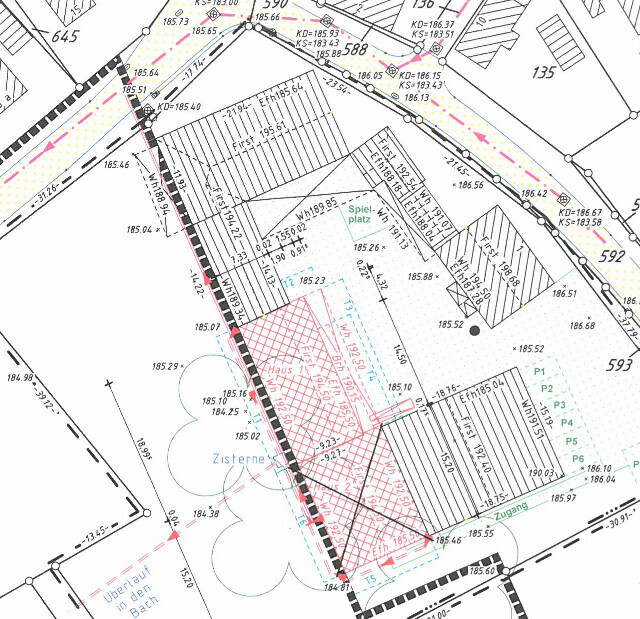
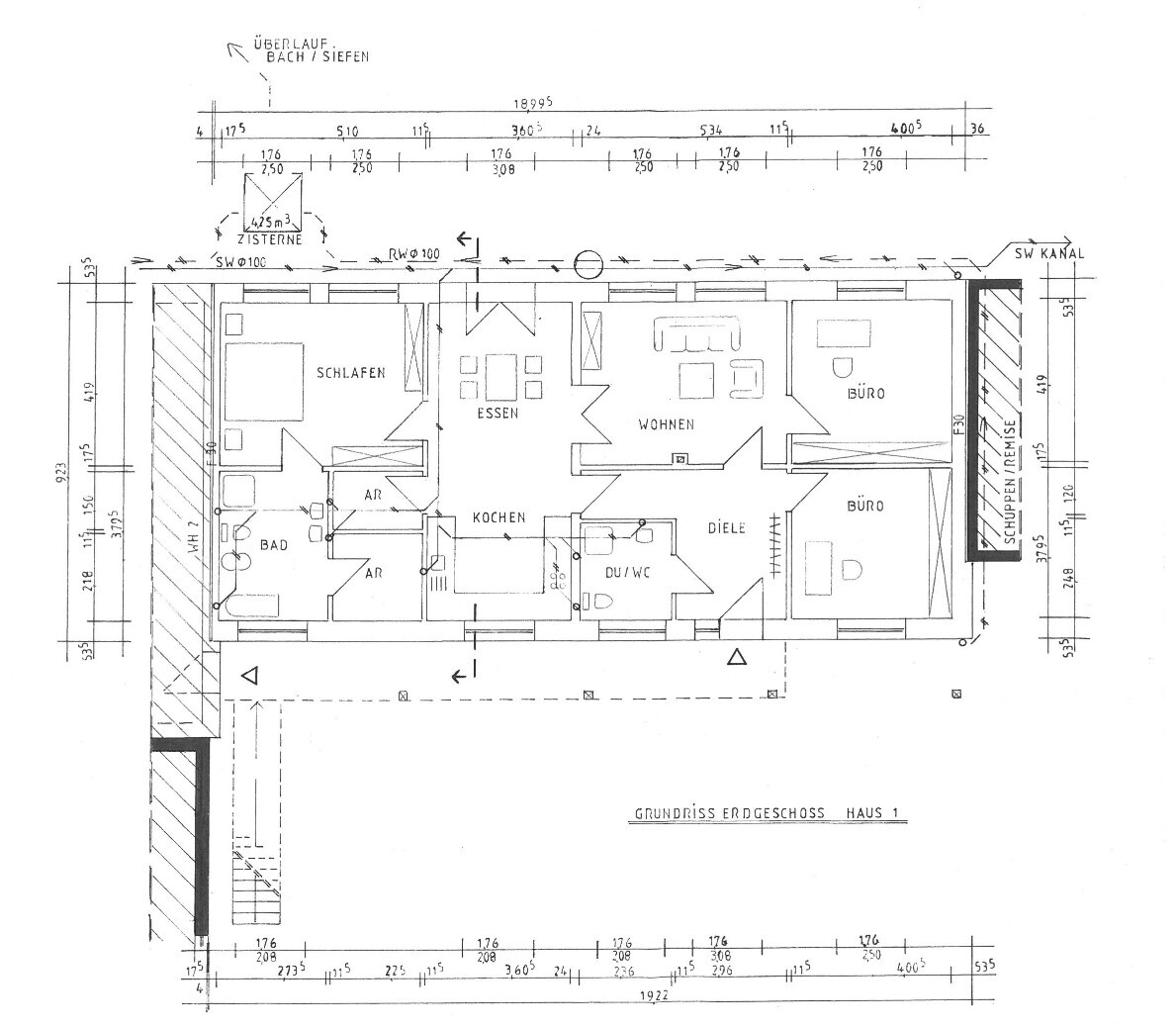
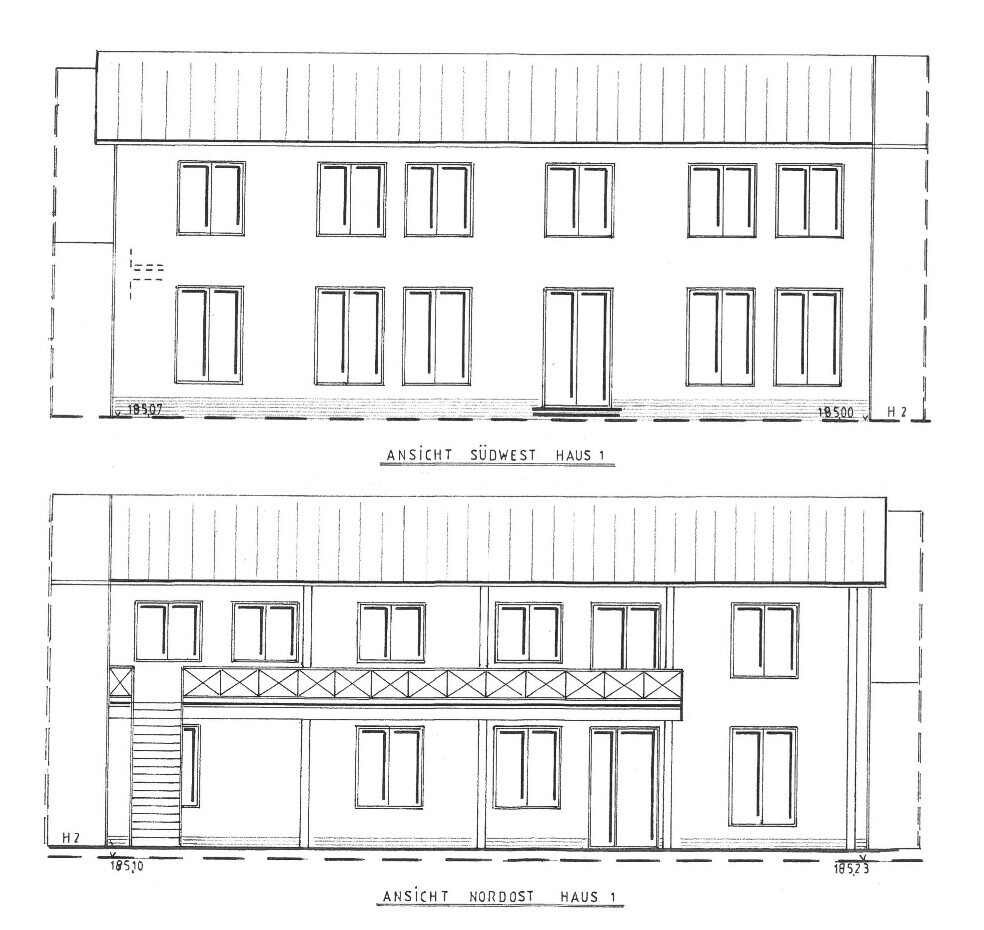
I want to replace two sheds in an existing courtyard complex (four-sided farmstead, brick) with two houses. Each house will have one apartment on the ground floor and one on the upper floor. Access will be from above via an external staircase / gallery, with the option to retrofit an outdoor elevator. The outer building boundary is defined by the existing courtyard complex and will not be expanded. Here, I first present the floor plan for the first apartment (ground floor, house 1) for discussion, which I plan to move into myself. I look forward to your comments.
Development Plan / Restrictions
Slope: no
Building window, building line, and boundary: within the existing courtyard
Edge development: no
Maximum heights / limits: surrounding buildings
Client Requirements
Style, roof type, building type: adapted to the existing courtyard complex; gable roof; two-family house
Basement, floors: no basement, ground floor, upper floor
Number of people, age: 2, over 60
Space requirements: sleeping, living, dining, cooking, plus 2 rooms for office/guests
Office: family use
Guest stays per year: multiple, sometimes simultaneous
Closed architecture
Conservative construction
Open kitchen: yes
Number of dining seats: 6
Fireplace: optional
Garage, carport: no
Additional wishes: very bright living rooms; senior-friendly
House Design
Planned by: architect
What do you like particularly? Why? High rooms with tall windows (-> lots of light); symmetrical exterior appearance (aesthetics)
What do you not like? Why? Uncertainty regarding usable space. Note: there is unlimited additional usable space available in the courtyard
Estimated cost according to architect/planner: 650,000
Preferred heating system: underfloor heating, heat pump; wood as desired
Why is the design as it is now? Family planning, consultation with friends, consultation with construction manager, implementation by the architect (two cycles)
What makes it particularly good or bad in your opinion? Fits well with the surrounding existing buildings; two additional rooms; very bright
What is the most important/basic question about the floor plan summarized in 130 characters? Where can the floor plan still be optimized?
Development Plan / Restrictions
Slope: no
Building window, building line, and boundary: within the existing courtyard
Edge development: no
Maximum heights / limits: surrounding buildings
Client Requirements
Style, roof type, building type: adapted to the existing courtyard complex; gable roof; two-family house
Basement, floors: no basement, ground floor, upper floor
Number of people, age: 2, over 60
Space requirements: sleeping, living, dining, cooking, plus 2 rooms for office/guests
Office: family use
Guest stays per year: multiple, sometimes simultaneous
Closed architecture
Conservative construction
Open kitchen: yes
Number of dining seats: 6
Fireplace: optional
Garage, carport: no
Additional wishes: very bright living rooms; senior-friendly
House Design
Planned by: architect
What do you like particularly? Why? High rooms with tall windows (-> lots of light); symmetrical exterior appearance (aesthetics)
What do you not like? Why? Uncertainty regarding usable space. Note: there is unlimited additional usable space available in the courtyard
Estimated cost according to architect/planner: 650,000
Preferred heating system: underfloor heating, heat pump; wood as desired
Why is the design as it is now? Family planning, consultation with friends, consultation with construction manager, implementation by the architect (two cycles)
What makes it particularly good or bad in your opinion? Fits well with the surrounding existing buildings; two additional rooms; very bright
What is the most important/basic question about the floor plan summarized in 130 characters? Where can the floor plan still be optimized?
M
Myrna_Loy25 Jun 2022 10:24allstar83 schrieb:
Also, check out the "Guideline for Barrier-Free Construction" on Google or other official standards. There's no need to reinvent the wheel.Exactly. The basics are solid, but there are still some areas that need improvement.K
karl.jonas25 Jun 2022 12:28haydee schrieb:
I find the floor plan too convoluted for the requirements.
Actually, it would be good to build like in many castles—large, wide doors aligned in a row. That’s exactly what we tried (and shifted around quite a bit):
- From the entrance, you walk straight into the living room
- The doors for bedroom, dining, living room, and office are aligned in a row
- The doors for storage, kitchen, hallway, and office are aligned in a row
- Between dining and living rooms, there is the large, wide door (as a compromise between "wall or no wall")
What would you still improve about it?
haydee schrieb:
Furnish the floor plan with all the furniture you have or want at scale, then check if there is a turning radius of at least 1.5m everywhere. Yes, that is definitely a very good idea. I will do that. Although the 1.5m (wheelchair radius) is not necessarily required. Here, I will probably have to make a compromise between "planning ahead" and "available space." If it comes to that, furniture can be arranged differently.
haydee schrieb:
The deep windows are difficult to furnish around. Why? You can also place a chest of drawers in front of a window. Of course, this must be considered in the window layout, so the upper part can still be opened. That means the lower part would be fixed (which is mandatory on the upper floor anyway if you don’t want grilles).
haydee schrieb:
Why not include patio doors in the bedroom and living room? Exactly for this reason (see above): because then you can’t place anything in front of them.
haydee schrieb:
Swap entrance and WC so it’s near the guest rooms. 🙂 You wouldn’t believe how often we tried that in the sketches 🙂. The deciding factor was the alignment of entrance and living room doors; if we had done that, the living room doors in this corner would have clashed (or would have required further redesign). And after all, the WC and office (aka guest room) are not that far apart. It’s also possible that the door between hallway and living room will be bricked up to increase usable wall space.
allstar83 schrieb:
Also check the "Guide to Barrier-Free Building" on Google or other official standards. You don’t always have to reinvent the wheel. Yes, I will. Thanks for the tip.
The hallway-living room corridor is unnecessary. So is the bedroom-office. You have enough space. Families often build with a smaller living area.
There are too many corners.
Why not use the traditional window arrangement? A wide window with enough space underneath for a dresser or sofa, and a balcony door next to it.
The dining table always has to be moved when someone with a walker needs to go outside. The living room only has small wall sections.
You can achieve a wheelchair-friendly floor plan without compromises. The space allows for it. Almost nobody will notice. So far, exactly one person has noticed in our case.
Remove the short wall between living and dining area and add a large, nearly threshold-free sliding door.
Windows at sofa height with a sill. Remove the door between living room and hallway.
I don’t like the two storage rooms.
Swap the entrance and bathroom.
Possibly also swap the utility room and bedroom. Most likely, the utility room will be next door, otherwise, how would light get in? This could disturb your sleep later, as you want or need to rest while children next door are playing.
There are too many corners.
Why not use the traditional window arrangement? A wide window with enough space underneath for a dresser or sofa, and a balcony door next to it.
The dining table always has to be moved when someone with a walker needs to go outside. The living room only has small wall sections.
You can achieve a wheelchair-friendly floor plan without compromises. The space allows for it. Almost nobody will notice. So far, exactly one person has noticed in our case.
Remove the short wall between living and dining area and add a large, nearly threshold-free sliding door.
Windows at sofa height with a sill. Remove the door between living room and hallway.
I don’t like the two storage rooms.
Swap the entrance and bathroom.
Possibly also swap the utility room and bedroom. Most likely, the utility room will be next door, otherwise, how would light get in? This could disturb your sleep later, as you want or need to rest while children next door are playing.
Before considering all the details of accessible design for people over 60 (just to clarify: my husband is over 60 too), I would first make sure that if a hospital bed is planned, there is a second bedroom for the partner.
This is the key issue: the bedridden person should ideally have a room separate from the main family bathroom (which would be ideal), because they won’t be able to use it anymore. Therefore, the bedroom should serve as a retreat for the more active occupant. I’m also not sure if it’s realistic to plan for moving the bedridden person—who generally needs more rest than sun on the terrace—back and forth, instead of simply including them in daily life. In that case, the living room or office with a sliding door would be a better option.
This is just my opinion: before I build a home or apartment with low light switches while still healthy, my life would have to include many episodes of illness or physical limitations. Personally, I would just build a clear floor plan without small, awkward storage rooms and with wide doors. At over 60, one can still live normally for another 20 years. My guiding principle at any age is: plan for your next 20 years. In 20 years, changes can be made. Of course, this can be kept in mind during the initial build. But planning for illness while still healthy is like planning for a couple to live separately on the ground floor and upper floor during family planning, even though they’re still 20 to 25 years away from that stage.
This is the key issue: the bedridden person should ideally have a room separate from the main family bathroom (which would be ideal), because they won’t be able to use it anymore. Therefore, the bedroom should serve as a retreat for the more active occupant. I’m also not sure if it’s realistic to plan for moving the bedridden person—who generally needs more rest than sun on the terrace—back and forth, instead of simply including them in daily life. In that case, the living room or office with a sliding door would be a better option.
This is just my opinion: before I build a home or apartment with low light switches while still healthy, my life would have to include many episodes of illness or physical limitations. Personally, I would just build a clear floor plan without small, awkward storage rooms and with wide doors. At over 60, one can still live normally for another 20 years. My guiding principle at any age is: plan for your next 20 years. In 20 years, changes can be made. Of course, this can be kept in mind during the initial build. But planning for illness while still healthy is like planning for a couple to live separately on the ground floor and upper floor during family planning, even though they’re still 20 to 25 years away from that stage.
haydee schrieb:
Who knows what will happen in 20 yearsExactly for that reason, I would only plan like that, but not build that way!Similar topics