
ᐅ Floor Plan for Age-Appropriate Living (New Construction) in a Historic Courtyard Complex
Created on: 23 Jun 2022 23:29
K
karl.jonas
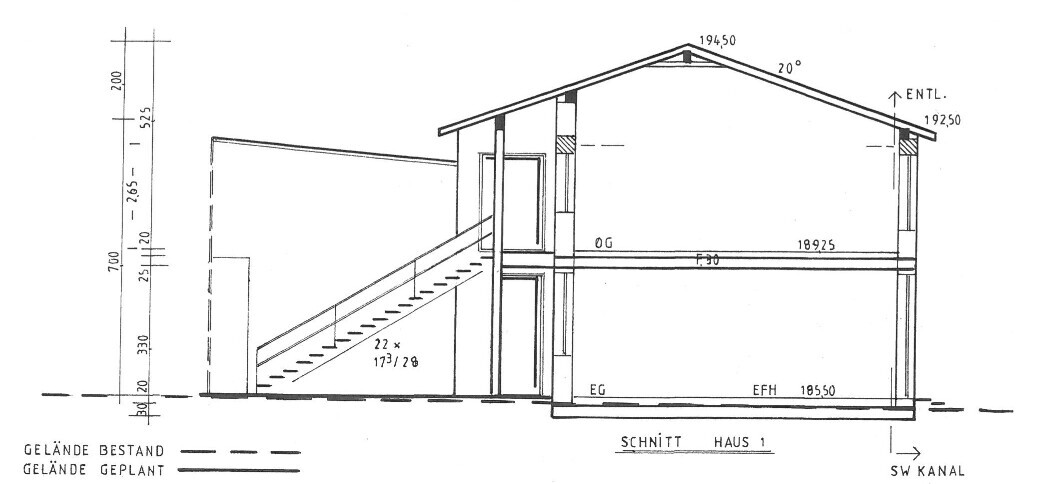
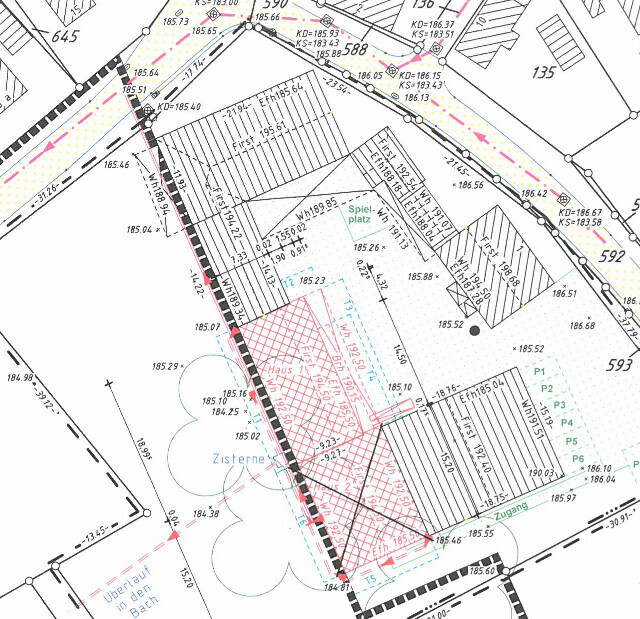
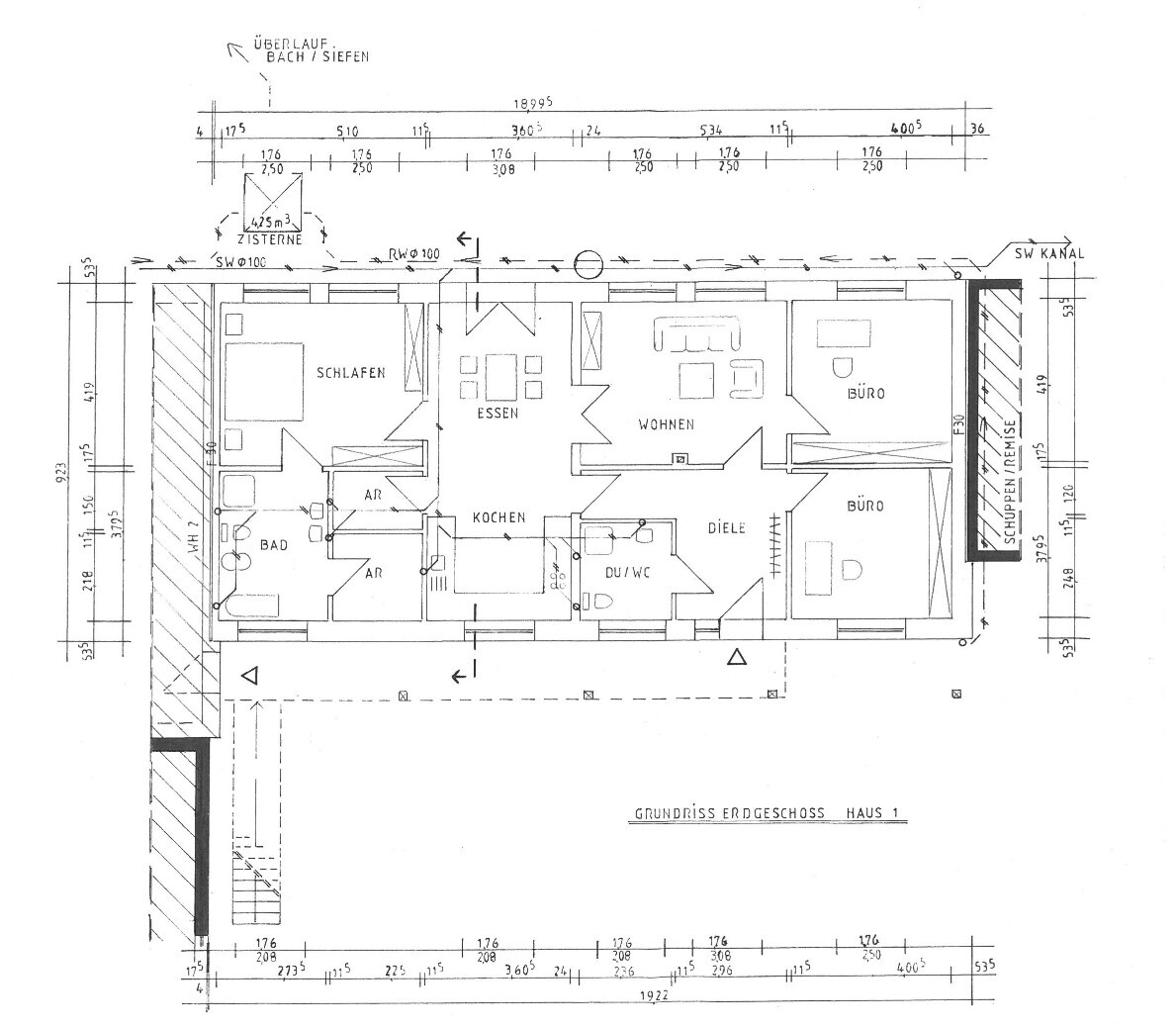
I want to replace two sheds in an existing courtyard complex (four-sided farmstead, brick) with two houses. Each house will have one apartment on the ground floor and one on the upper floor. Access will be from above via an external staircase / gallery, with the option to retrofit an outdoor elevator. The outer building boundary is defined by the existing courtyard complex and will not be expanded. Here, I first present the floor plan for the first apartment (ground floor, house 1) for discussion, which I plan to move into myself. I look forward to your comments.
Development Plan / Restrictions
Slope: no
Building window, building line, and boundary: within the existing courtyard
Edge development: no
Maximum heights / limits: surrounding buildings
Client Requirements
Style, roof type, building type: adapted to the existing courtyard complex; gable roof; two-family house
Basement, floors: no basement, ground floor, upper floor
Number of people, age: 2, over 60
Space requirements: sleeping, living, dining, cooking, plus 2 rooms for office/guests
Office: family use
Guest stays per year: multiple, sometimes simultaneous
Closed architecture
Conservative construction
Open kitchen: yes
Number of dining seats: 6
Fireplace: optional
Garage, carport: no
Additional wishes: very bright living rooms; senior-friendly
House Design
Planned by: architect
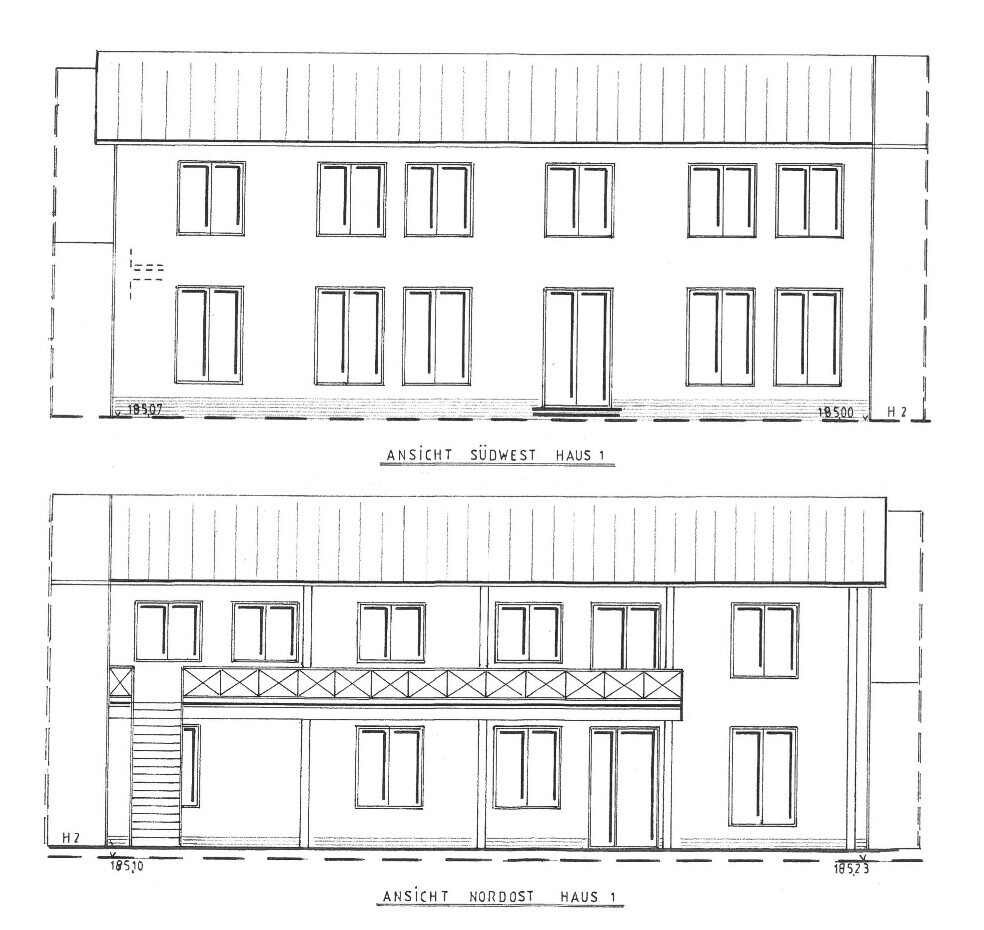
What do you like particularly? Why? High rooms with tall windows (-> lots of light); symmetrical exterior appearance (aesthetics)
What do you not like? Why? Uncertainty regarding usable space. Note: there is unlimited additional usable space available in the courtyard
Estimated cost according to architect/planner: 650,000
Preferred heating system: underfloor heating, heat pump; wood as desired
Why is the design as it is now? Family planning, consultation with friends, consultation with construction manager, implementation by the architect (two cycles)
What makes it particularly good or bad in your opinion? Fits well with the surrounding existing buildings; two additional rooms; very bright
What is the most important/basic question about the floor plan summarized in 130 characters? Where can the floor plan still be optimized?
Development Plan / Restrictions
Slope: no
Building window, building line, and boundary: within the existing courtyard
Edge development: no
Maximum heights / limits: surrounding buildings
Client Requirements
Style, roof type, building type: adapted to the existing courtyard complex; gable roof; two-family house
Basement, floors: no basement, ground floor, upper floor
Number of people, age: 2, over 60
Space requirements: sleeping, living, dining, cooking, plus 2 rooms for office/guests
Office: family use
Guest stays per year: multiple, sometimes simultaneous
Closed architecture
Conservative construction
Open kitchen: yes
Number of dining seats: 6
Fireplace: optional
Garage, carport: no
Additional wishes: very bright living rooms; senior-friendly
House Design
Planned by: architect
What do you like particularly? Why? High rooms with tall windows (-> lots of light); symmetrical exterior appearance (aesthetics)
What do you not like? Why? Uncertainty regarding usable space. Note: there is unlimited additional usable space available in the courtyard
Estimated cost according to architect/planner: 650,000
Preferred heating system: underfloor heating, heat pump; wood as desired
Why is the design as it is now? Family planning, consultation with friends, consultation with construction manager, implementation by the architect (two cycles)
What makes it particularly good or bad in your opinion? Fits well with the surrounding existing buildings; two additional rooms; very bright
What is the most important/basic question about the floor plan summarized in 130 characters? Where can the floor plan still be optimized?
For an age-friendly design, there are too many doors and rooms. The accessible bathroom(s) could be combined. The bedroom planned where the terrace is—facing south—could present a barrier. Instead of two offices, I would consider planning an additional spare bedroom with bathroom access in case separate spaces are needed due to illness.
M
Myrna_Loy24 Jun 2022 09:17I can only agree with the previous comments. Both bathrooms and the bedroom are not suitable for aging in place. This is not a barrier-free design. Has the architect seriously considered this issue? There are plenty of guidelines on how to implement the various steps and what is required.
The doors block passageways, the shower has no space for a seat or an assistant, the distances between the furniture and the walls or other furniture are too narrow to move around even with a walker, the same applies to the hallways, and the U-shaped kitchen layout is also not ideal, and so on.
In principle, the floor plan can be furnished to be barrier-free, but this is not yet evident from the current design. If your intention is to allow for barrier-free or accessible living only at a later stage, then it might be acceptable.
Unfortunately, I find the façade design very uninspired unless extremely sophisticated materials are used. It reminds me of cheaply built yet expensive duplex houses, like the ones commonly found in new developments in the southern regions here. There is definitely room for improvement.
The doors block passageways, the shower has no space for a seat or an assistant, the distances between the furniture and the walls or other furniture are too narrow to move around even with a walker, the same applies to the hallways, and the U-shaped kitchen layout is also not ideal, and so on.
In principle, the floor plan can be furnished to be barrier-free, but this is not yet evident from the current design. If your intention is to allow for barrier-free or accessible living only at a later stage, then it might be acceptable.
Unfortunately, I find the façade design very uninspired unless extremely sophisticated materials are used. It reminds me of cheaply built yet expensive duplex houses, like the ones commonly found in new developments in the southern regions here. There is definitely room for improvement.
K
karl.jonas25 Jun 2022 00:28Thank you for the feedback.
So far, there are no disabilities, so this is mainly precautionary and based on what we have observed with relatives and friends. We have mainly considered the following:
The planned doors are not only “barrier-free” (clear width 80 cm (31.5 inches)), but even “wheelchair accessible” (90 cm (35.5 inches)). The bedroom door would need to be wider if a care bed is to fit through (at least 100 cm (39.5 inches)). Have we missed anything regarding the floor plan (light switches etc. will be added later)?
I wanted to discuss the floor plan. The fittings, for example in the bathroom, were "just sketched in" by the architect, so that is actually still completely open (and could be addressed later).
Could you please explain what you mean here? I find the symmetry quite good. “Sophisticated materials” are not planned, but there will be contrasting bricks (e.g., between floors and around the windows), as is often seen in brick buildings. I am attaching a picture of another (unrelated) facade that I really like.
Yes, the apartment upstairs looks almost the same. The second house is also already planned. However, I don’t want to discuss multiple apartments at the same time here, so I haven’t posted it yet. But the window issue is definitely correct.
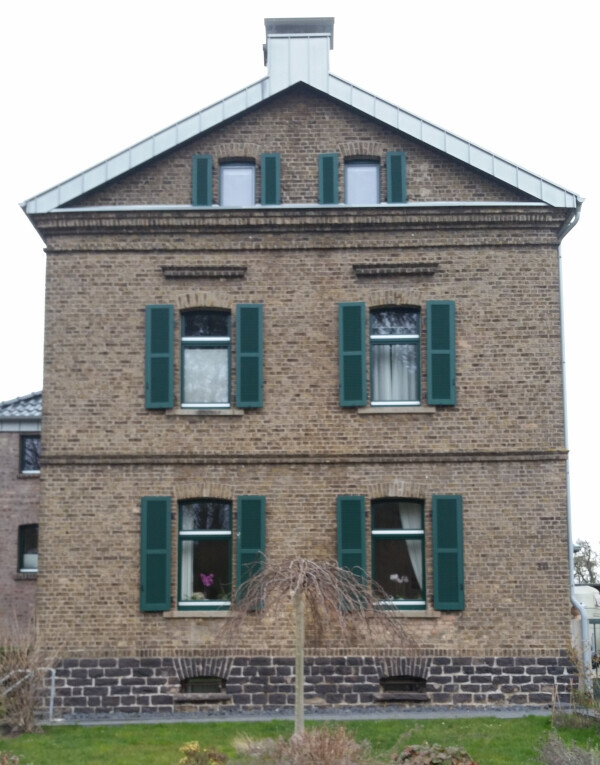
haydee schrieb:
What do you mean by age-appropriate, or up to which level of disability do you plan to live in the apartment?
So far, there are no disabilities, so this is mainly precautionary and based on what we have observed with relatives and friends. We have mainly considered the following:
- no stairs;
- doorways suitable for walkers;
- preferably: a care bed can be moved from the bedroom (through the dining area) onto the terrace;
- deep windows also in the bedroom;
- no or very low thresholds at entrances and in the shower;
- bathroom door opens outward;
The planned doors are not only “barrier-free” (clear width 80 cm (31.5 inches)), but even “wheelchair accessible” (90 cm (35.5 inches)). The bedroom door would need to be wider if a care bed is to fit through (at least 100 cm (39.5 inches)). Have we missed anything regarding the floor plan (light switches etc. will be added later)?
Myrna_Loy schrieb:
The two bathrooms and the bedroom are not age-appropriate.
I wanted to discuss the floor plan. The fittings, for example in the bathroom, were "just sketched in" by the architect, so that is actually still completely open (and could be addressed later).
Myrna_Loy schrieb:
Unfortunately, I find the facade design very uninspired, unless highly sophisticated materials are used. It reminds me of cheaply built, expensive semi-detached houses that are common here in new residential areas in the south. There is certainly more potential.
Could you please explain what you mean here? I find the symmetry quite good. “Sophisticated materials” are not planned, but there will be contrasting bricks (e.g., between floors and around the windows), as is often seen in brick buildings. I am attaching a picture of another (unrelated) facade that I really like.
haydee schrieb:
Is the other house already planned? It will be difficult to allow windows with only two exterior walls.
What will the apartment on the upper floor be like?
The same as downstairs?
Yes, the apartment upstairs looks almost the same. The second house is also already planned. However, I don’t want to discuss multiple apartments at the same time here, so I haven’t posted it yet. But the window issue is definitely correct.
I find the floor plan too convoluted for the requirements.
It would actually be better to build like many castles, with large, wide doors aligned in a straight line.
Every corner is difficult.
Try furnishing the entire floor plan with all the furniture you have and want, to scale, then check if there is a clear turning circle of at least 1.5 m (5 feet) everywhere.
I’m not sure about the care bed—check information on barrier-free design.
Google “Hanse Haus Bungalow 133.” It is wheelchair accessible, with a very good bedroom and bathroom layout.
Place electrical outlets higher, reinforce the wall in front of the toilet for grab bar installations, and plan an outlet near the toilet.
The deep-set windows are hard to furnish around. I wouldn’t make all the windows that deep. Why not add patio doors in the bedroom and living room?
For the size, I find the apartment quite convoluted.
Switch the entrance and the guest toilet so it’s closer to the guest rooms.
Remove at least two doors from the living room and definitely furnish it realistically, then see if a wheelchair can actually pass through. Despite the size, it might be difficult as planned.
The dining area definitely doesn’t work for wheelchair access, let alone for pushing a care bed through.
I would remove some walls and doors.
I would have planned the other house first. This one is difficult, with its size and two walls without natural light. It might help to reduce your apartment by 2 or 3 m (6.5 or 10 feet).
It would actually be better to build like many castles, with large, wide doors aligned in a straight line.
Every corner is difficult.
Try furnishing the entire floor plan with all the furniture you have and want, to scale, then check if there is a clear turning circle of at least 1.5 m (5 feet) everywhere.
I’m not sure about the care bed—check information on barrier-free design.
Google “Hanse Haus Bungalow 133.” It is wheelchair accessible, with a very good bedroom and bathroom layout.
Place electrical outlets higher, reinforce the wall in front of the toilet for grab bar installations, and plan an outlet near the toilet.
The deep-set windows are hard to furnish around. I wouldn’t make all the windows that deep. Why not add patio doors in the bedroom and living room?
For the size, I find the apartment quite convoluted.
Switch the entrance and the guest toilet so it’s closer to the guest rooms.
Remove at least two doors from the living room and definitely furnish it realistically, then see if a wheelchair can actually pass through. Despite the size, it might be difficult as planned.
The dining area definitely doesn’t work for wheelchair access, let alone for pushing a care bed through.
I would remove some walls and doors.
I would have planned the other house first. This one is difficult, with its size and two walls without natural light. It might help to reduce your apartment by 2 or 3 m (6.5 or 10 feet).
A
allstar8325 Jun 2022 08:23Also, check the "Barrier-Free Building Guide" on Google or other official standards. There's no need to reinvent the wheel every time.
Similar topics