
ᐅ Floor plan for a single-family house with 200 m² living area, including a 75 m² granny flat / accessory apartment, a 140 m² basement, and a 56 m² garage
Created on: 12 Sep 2022 17:07
K
Koehler
Hello everyone,
I am planning to build a house. I might receive a share of the plot from my mother if she gets her own apartment (accessory dwelling unit) on the property (our relationship is excellent so far). In any case, there should be two separate units on one plot. (Yes, financing might be challenging…)
Zoning Plan/Restrictions (Requests from the Building Authority as there is no zoning plan)
Plot size: approx. 1050 m² (given in exchange for mandatory accessory dwelling unit on the plot)
Slope: no
Site coverage ratio: no zoning plan
Floor area ratio: no zoning plan
Building setback lines, building line, property boundary: no zoning plan, but the building authority requests at least 3 meters (10 feet) setback from the street
Edge construction: maximum 9.0 m (30 feet) for garages up to 3.0 m (10 feet) height
Number of parking spaces: 2
Number of storeys: one-story with a converted attic (2/3 of the lower floor may be max. 2.30 m (7.5 feet) high)
Roof type: building inquiry was for a gable roof with two small dormers
Architectural style: no specifications
Orientation: no specifications
Maximum height/limits: 9.0 m (30 feet)
Other requirements: residential building should not be larger
Homeowners’ Requirements
Architectural style, roof type, building type: hipped roof up to 2.3 m (7.5 feet) line at approx. 35°, above 2.3 m (7.5 feet) line between 10° and 22°
Basement, storeys: one-story with finished attic (wish: basement with bathtub)
Number of people, ages: currently 1+1 persons, 34 (me) and mother 58 (in the accessory dwelling)
Room requirements on ground floor, upper floor: main apartment 200 m² (2150 sq. ft.) + accessory dwelling 75 m² (807 sq. ft.)
Office: family use or home office? both home offices
Overnight guests per year: sometimes 2 adults + 2 children
Open or closed architecture: open plan
Traditional or modern design: rather modern design
Open kitchen, kitchen island: both units with open kitchen and kitchen island
Number of dining seats: 6 in main unit + 4 in accessory dwelling
Fireplace: yes, in both units
Sound/music wall: no
Balcony, roof terrace: not necessary
Garage, carport: (optional) garage only; no garage or carport for accessory dwelling
Utility garden, greenhouse: none
Other wishes/special features/daily routine, including reasons for certain choices:
House Design
Who designed the plan: do-it-yourself (myself)
What do you especially like? Why? Most walls overlap each other
What do you dislike? Why? Utility room and living room in the accessory dwelling because the living room is too small and the utility room too large
Estimated cost according to architect/planner: not yet available
Personal maximum budget for the house, including equipment: (total) 700,000 plus significant own work and family involvement
Preferred heating technology: fireplace and natural gas (available in the street)
If you had to give up, which details/extensions
-you can give up: 1. fully finished basement 2. garage 3. basement rough construction 4. pantry 5. kitchen island 6. indoor sauna 7. completed children’s room with bathroom 8. full upper floor finish
-you cannot give up: fireplace in both apartments
Why did the design turn out the way it did? For example:
Standard design from the architect? No
Which wishes were implemented by the architect?
My apartment:
Accessory apartment:
Additional wishes:
A mix of ideas from various magazines…
What do you think is particularly good or bad about it?
Good: bedroom and laundry room upstairs so laundry does not have to be carried through the entire apartment, no costly skylights
All bathrooms have windows
Bad: utility room is too large and living room in accessory apartment too small
What is the most important/basic question about the floor plan, summed up in 130 characters?
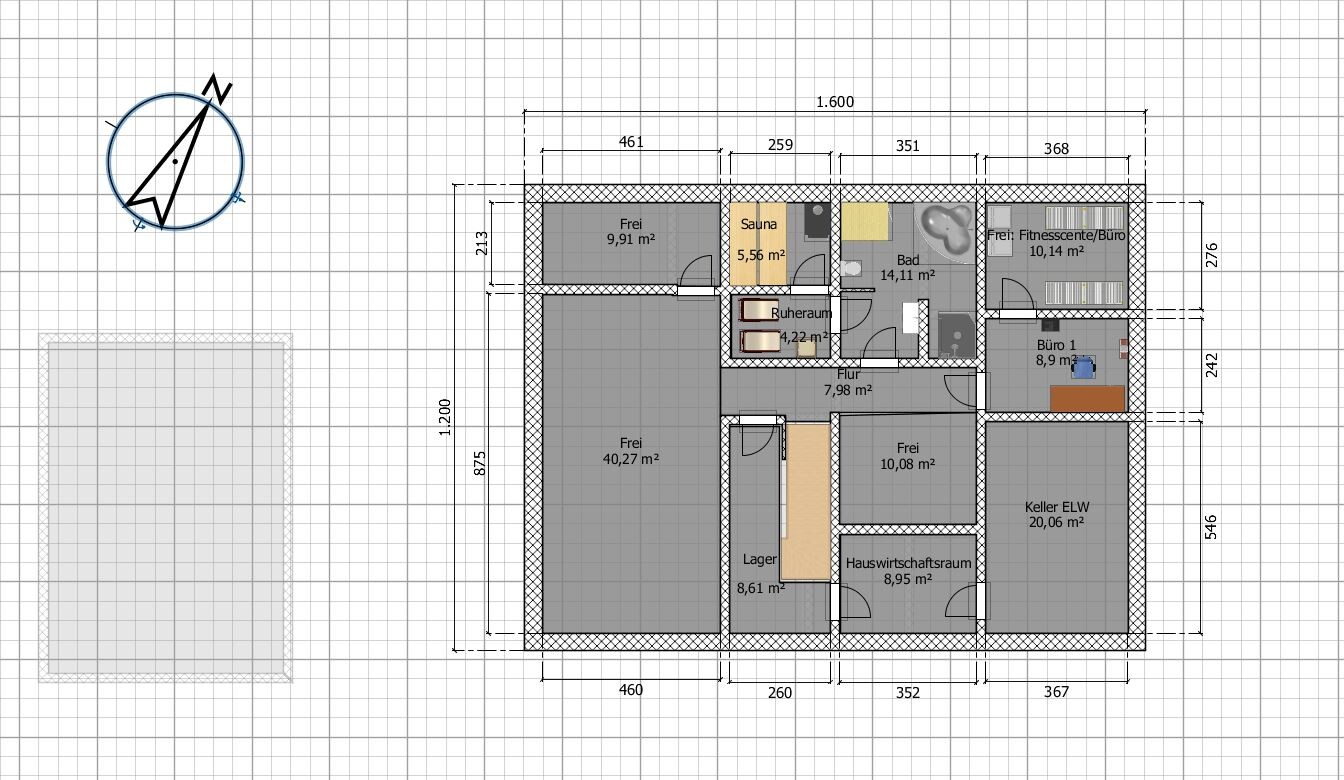
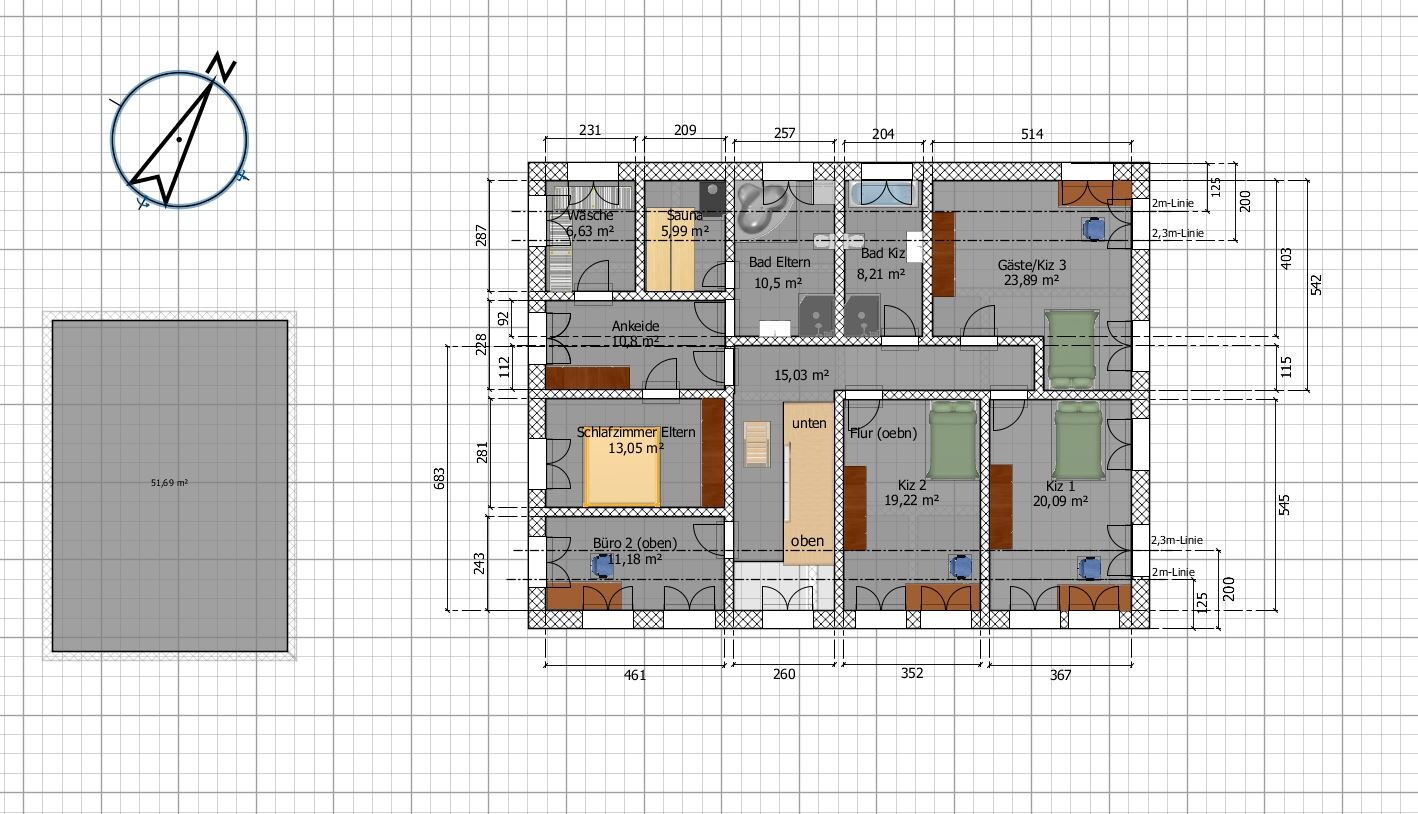
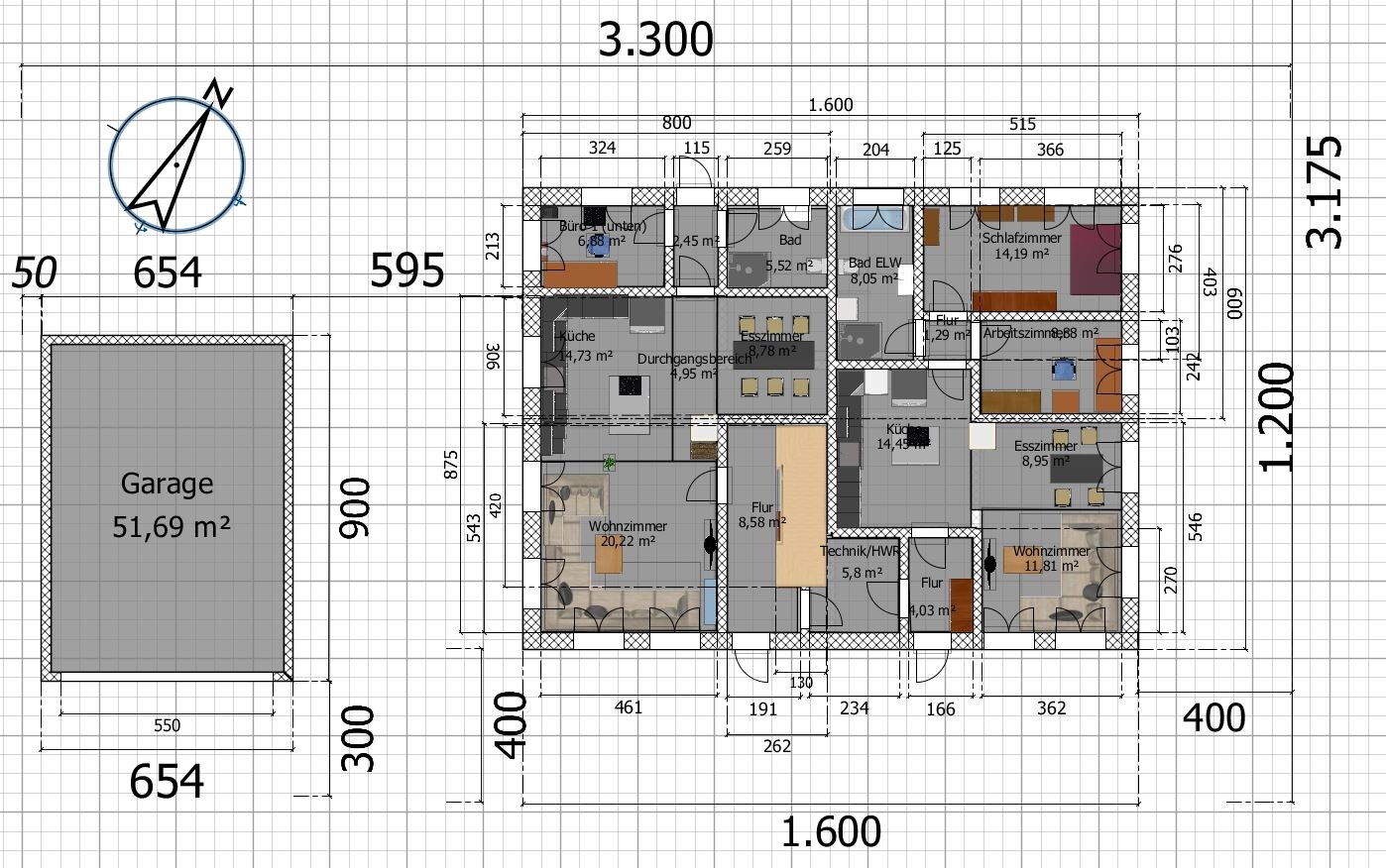
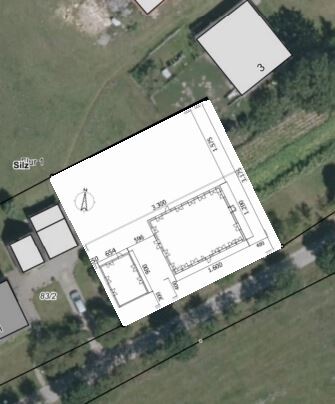
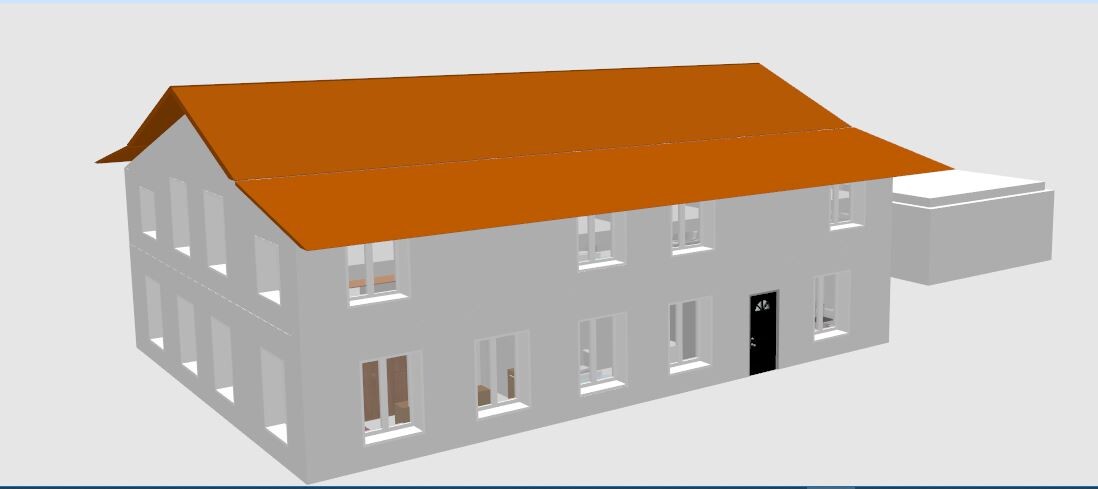
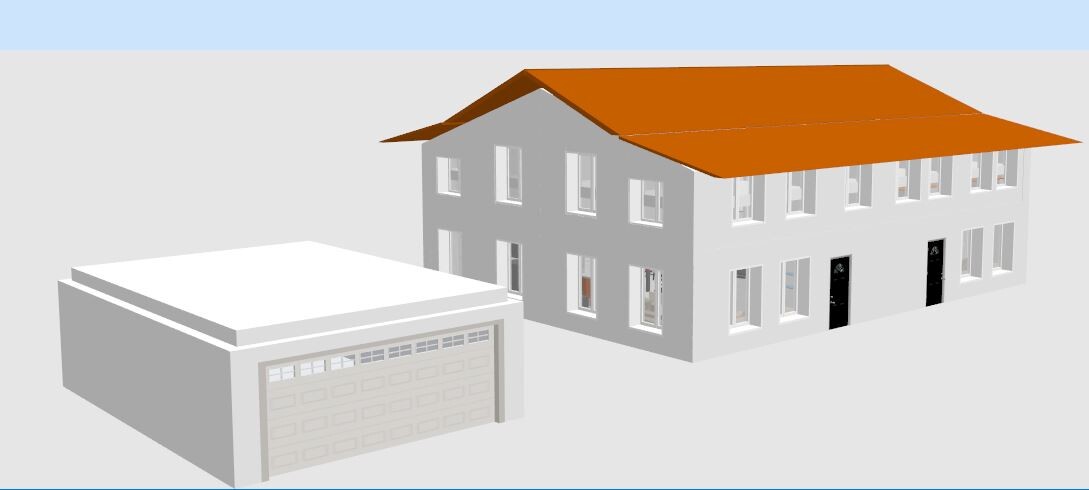
I am planning to build a house. I might receive a share of the plot from my mother if she gets her own apartment (accessory dwelling unit) on the property (our relationship is excellent so far). In any case, there should be two separate units on one plot. (Yes, financing might be challenging…)
Zoning Plan/Restrictions (Requests from the Building Authority as there is no zoning plan)
Plot size: approx. 1050 m² (given in exchange for mandatory accessory dwelling unit on the plot)
Slope: no
Site coverage ratio: no zoning plan
Floor area ratio: no zoning plan
Building setback lines, building line, property boundary: no zoning plan, but the building authority requests at least 3 meters (10 feet) setback from the street
Edge construction: maximum 9.0 m (30 feet) for garages up to 3.0 m (10 feet) height
Number of parking spaces: 2
Number of storeys: one-story with a converted attic (2/3 of the lower floor may be max. 2.30 m (7.5 feet) high)
Roof type: building inquiry was for a gable roof with two small dormers
Architectural style: no specifications
Orientation: no specifications
Maximum height/limits: 9.0 m (30 feet)
Other requirements: residential building should not be larger
Homeowners’ Requirements
Architectural style, roof type, building type: hipped roof up to 2.3 m (7.5 feet) line at approx. 35°, above 2.3 m (7.5 feet) line between 10° and 22°
Basement, storeys: one-story with finished attic (wish: basement with bathtub)
Number of people, ages: currently 1+1 persons, 34 (me) and mother 58 (in the accessory dwelling)
Room requirements on ground floor, upper floor: main apartment 200 m² (2150 sq. ft.) + accessory dwelling 75 m² (807 sq. ft.)
Office: family use or home office? both home offices
Overnight guests per year: sometimes 2 adults + 2 children
Open or closed architecture: open plan
Traditional or modern design: rather modern design
Open kitchen, kitchen island: both units with open kitchen and kitchen island
Number of dining seats: 6 in main unit + 4 in accessory dwelling
Fireplace: yes, in both units
Sound/music wall: no
Balcony, roof terrace: not necessary
Garage, carport: (optional) garage only; no garage or carport for accessory dwelling
Utility garden, greenhouse: none
Other wishes/special features/daily routine, including reasons for certain choices:
- No skylights
- Solar panels later
House Design
Who designed the plan: do-it-yourself (myself)
What do you especially like? Why? Most walls overlap each other
What do you dislike? Why? Utility room and living room in the accessory dwelling because the living room is too small and the utility room too large
Estimated cost according to architect/planner: not yet available
Personal maximum budget for the house, including equipment: (total) 700,000 plus significant own work and family involvement
Preferred heating technology: fireplace and natural gas (available in the street)
If you had to give up, which details/extensions
-you can give up: 1. fully finished basement 2. garage 3. basement rough construction 4. pantry 5. kitchen island 6. indoor sauna 7. completed children’s room with bathroom 8. full upper floor finish
-you cannot give up: fireplace in both apartments
Why did the design turn out the way it did? For example:
Standard design from the architect? No
Which wishes were implemented by the architect?
My apartment:
- Parents’ bedroom (one door only) + dressing room + private bathroom (shower + [optional large bathtub])
- 3 children’s rooms (min. 15 m² (160 sq. ft.)) each with separate bathroom (shower + [optional bathtub])
- 2 offices
- Living room (min. 20 m² (215 sq. ft.)) with fireplace
- Kitchen (min. 15 m² (160 sq. ft.)) + [optional kitchen island]
- Dining room for 5 people
- Bathroom downstairs + [optional shower]
- 1 sauna inside (or outside)
Accessory apartment:
- Standard layout with office
Additional wishes:
- An extra room/hallway must be located between bathroom and living spaces
- All rooms with windows (at least the bathrooms)
- Laundry room (upstairs)
- Garden access (north side)
- More light/open space in entrance area
- Pantry
A mix of ideas from various magazines…
What do you think is particularly good or bad about it?
Good: bedroom and laundry room upstairs so laundry does not have to be carried through the entire apartment, no costly skylights
All bathrooms have windows
Bad: utility room is too large and living room in accessory apartment too small
What is the most important/basic question about the floor plan, summed up in 130 characters?
- Any fundamental mistakes in the plan?
- Can the utility room be moved to the attic (not the converted attic)?
- Garage directly on the property line?
- Is (partial) basement with bathtub and/or garage financially feasible?
@Koehler
You only need a space program for your architect.
It will look something like this for you. (Here are a few example sentences I suggest)
“My mother would like an accessible granny flat or basement apartment, but with a small office or similar. She is providing the land and should therefore have a comfortable apartment on the ground floor, not a tiny living space.
I am single but want a house where a family of five can feel comfortable. Preferably with a sauna and hobby room. Due to budget constraints, I might have to skip the basement, but it would be good if I can live alone on the ground floor first (the office would be my bedroom). I could finish the attic conversion later by myself, but the design should already include three children's rooms or three rooms plus a bedroom, etc. The utilities can be shared with the granny flat, but laundry and terrace should be separate from my mother, as my future wife might have issues with her.”
Once you have a design from an architect, come back.
I will link you a parallel current thread for weekend reading, it is a two-story house, but also about 3 children plus a granny flat.
https://www.hausbau-forum.de/threads/Grundriss-haus-mit-elw-verbesserungsvorschlaege.44068/
You only need a space program for your architect.
It will look something like this for you. (Here are a few example sentences I suggest)
“My mother would like an accessible granny flat or basement apartment, but with a small office or similar. She is providing the land and should therefore have a comfortable apartment on the ground floor, not a tiny living space.
I am single but want a house where a family of five can feel comfortable. Preferably with a sauna and hobby room. Due to budget constraints, I might have to skip the basement, but it would be good if I can live alone on the ground floor first (the office would be my bedroom). I could finish the attic conversion later by myself, but the design should already include three children's rooms or three rooms plus a bedroom, etc. The utilities can be shared with the granny flat, but laundry and terrace should be separate from my mother, as my future wife might have issues with her.”
Once you have a design from an architect, come back.
I will link you a parallel current thread for weekend reading, it is a two-story house, but also about 3 children plus a granny flat.
https://www.hausbau-forum.de/threads/Grundriss-haus-mit-elw-verbesserungsvorschlaege.44068/

Koehler schrieb:
"Full stories are those floors whose ceiling upper edge on average extends more than 1.40 m (4.6 feet) above ground level and which have a clear height of at least 2.30 m (7.5 feet) over at least two-thirds of their floor area. Cavities between the top ceiling and the roof structure, where living spaces are not possible, do not count as stories." That is certainly a valuable note for readers if your regional building code views this differently. As far as I know, the majority of regional building regulations refer to the floor below.
Koehler schrieb:
The drafter requested a template, so I will provide one. No, definitely not!
Koehler schrieb:
I am here for floor plan design, or what else is this subthread for? This section is intended for the community to advise those asking questions — not to prepare the questioners to in turn advise their planners (or to try “training” draftsmen to become architects).
Koehler schrieb:
A lot has been written here so far, but two questions remain unresolved. To me, floor plan design includes what is needed?
- What should be located upstairs and downstairs? For example, the utility room could be in the attic.
- How large a room should be. The utility room in the attic could be bigger.
- Where to position the house and/or garage, for example, should the garage be directly on the boundary line or half a meter (20 inches) away.
For room sizes, there are two good sources of inspiration: first, existing floor plans from “well-selling” catalog homes, and second, your own living experience. Too many prospective builders look far afield when the solution is close by: draw your current home, marking tight spots or places that could be improved. Then compare your wishes with these constraints to see whether you can answer the “deli counter” question with yes.
Usually, people move from a flat (more or less a one-level apartment) to a multistory layout. Then the room program needs to be divided among the floors. Start with a simple table as a concept, and then begin the detailed layout on the upper floor (“top down”), see “The upper floor takes priority” (search externally, including quotation marks).
The placement of buildings on the plot and within the building envelope has been discussed in at least a hundred and seventy-seven threads here, even without scrolling back more than a year ;-)
Ysop*** schrieb:
A user had attached a granny flat to their regular house. I thought that was charming — you still have the layout of a normal house but also a self-contained apartment on the ground floor. Your plot isn’t small anyway. You probably mean @KingSong, see: https://www.hausbau-forum.de/threads/grundrissideen-fuer-ein-modernes-efh-mit-ca-150m-ohne-keller.31506/page-2#post-331722
https://www.instagram.com/11antgmxde/
https://www.linkedin.com/company/bauen-jetzt/
No templates ever
you only provide guidelines. As outlined above.
In addition, there are the points that differ from the standard in your household and your mother’s.
For example, the shoe collection, the 1000 books, the model train, the projection screen, the space for the ancestral farmhouse cabinet passed down for generations, and so on.
you only provide guidelines. As outlined above.
In addition, there are the points that differ from the standard in your household and your mother’s.
For example, the shoe collection, the 1000 books, the model train, the projection screen, the space for the ancestral farmhouse cabinet passed down for generations, and so on.
The mother’s apartment is marketed as being minimally accessible. However, it does not meet the requirements for seniors with disabilities.
Take a look at nullbarriere.
There are so many construction issues in your living area, it's better to let a professional handle it.
I think the idea of a single-family house with a small attached bungalow for the mother is not bad. Check out Allkauf Haus. They offer various multi-generational homes.
Take a look at nullbarriere.
There are so many construction issues in your living area, it's better to let a professional handle it.
I think the idea of a single-family house with a small attached bungalow for the mother is not bad. Check out Allkauf Haus. They offer various multi-generational homes.
A
Aloha_Lars15 Sep 2022 09:13Koehler schrieb:
Personal budget limit for the house, including fittings: (total) 700,000 + a lot of self-labor and with family For me, discussing details of the floor plan here doesn’t help. The original poster needs to start over completely— the budget dictates the house, not the other way around. Also, it must be clearly defined what “a lot of self-labor” means and what is realistically feasible. Dear original poster, don’t rely on friends or family either. Before construction starts, willingness to help is high, but it decreases exponentially after the first time. Define how you want to live, define your budget and your own contributions, then consult an architect. And throw your floor plan away ;-) Sometimes people get so attached to their own work and want to justify it that they lose perspective. Architects know exactly where to focus.
Ysop*** schrieb:
Besides finding it unfortunate to possibly take away any say from the future wife —
a user attached a granny flat to their regular house. I thought it was charming because you still have the floor plan of a normal house but also a separate apartment on the ground floor. Your plot isn’t small, after all. I see it differently; there are plenty of things the wife can still have a say in: garden, furnishings, design, colors. But as I said, that’s just my approach.
WilderSueden schrieb:
I had something similar in mind once. (Is that from the Schwörer house catalog?) Luckily, a sales rep talked me out of it. You can only see inside through the windows, not out. That only works if you prioritize the external look. If you want something practical, either build a full additional floor or invest the money in roof windows. I would love to build a two-story house, but that probably isn’t possible. Because the two residential barns (to the north and east) are not considered. In the end, only three buildings were compared, and the next large residential building is three… other large buildings as well are not.
ypg schrieb:
“My mother would like a granny flat, barrier-free but with a small office or similar. She is providing the land and should therefore have a comfortable apartment on the ground floor, not a cramped living space.
I am single but want a house where a family of five would feel comfortable. Preferably with a sauna and a hobby room. Due to budget constraints, I would probably skip the basement but would like to live alone on the ground floor at first (the office would then be my bedroom). I could later do the attic conversion myself, but the design should already include three children’s rooms or three rooms plus a bedroom, etc.
Technical rooms can be shared with the granny flat; laundry and terrace should be separate from my mother because the future wife might be a little difficult regarding my mother.” Wow, thank you very much; this is exactly what I needed for the next step.
Dear Sir or Madam,
My mother and I want to build a house together on one plot.
My mother’s apartment should be barrier-free but include a small office. The kitchen, dining area, and living room should not be arranged in a linear layout. The living room should have a fireplace. About one-third of the plot will belong to the granny flat.
I am single but want a house where a family of five feels comfortable. Preferably with a sauna (sized for two people to lie down) and two small home offices. Due to an overall budget of approximately 700,000€ (about 750,000 USD), I will probably skip the basement but would appreciate being able to live alone on the ground floor at first (the office would then be my bedroom). The attic conversion I could do later, but the design should already include three children’s rooms or three rooms plus a master bedroom, etc., plus the two small offices.
A garage or carport for two cars is also desired.
Technical installations can be combined with the granny flat, but access to the apartment, laundry, and terrace should be separated from the granny flat.
The living room should have a fireplace. The kitchen should be open plan and preferably include a kitchen island.
Best regards
Can I really write this so simply? In my field, I would get a rough reply back because nothing is specified: at least I thought I’d have to say how large each room should be, whether it should have a bathtub or not. It reminds me strongly of:
Do you submit the previous documents from the building authority as well? The site plan? The answered questions from the building authority? Or do you just describe the plot as it is and how large it is?
Thanks again for the help so far.
ypg schrieb:
When you have a design from an architect, come back again.
I’m linking another current parallel thread as weekend reading, though it’s a two-story house, but also about three children plus a granny flat. I only found the double staircase inconvenient; I had already started reading that report.
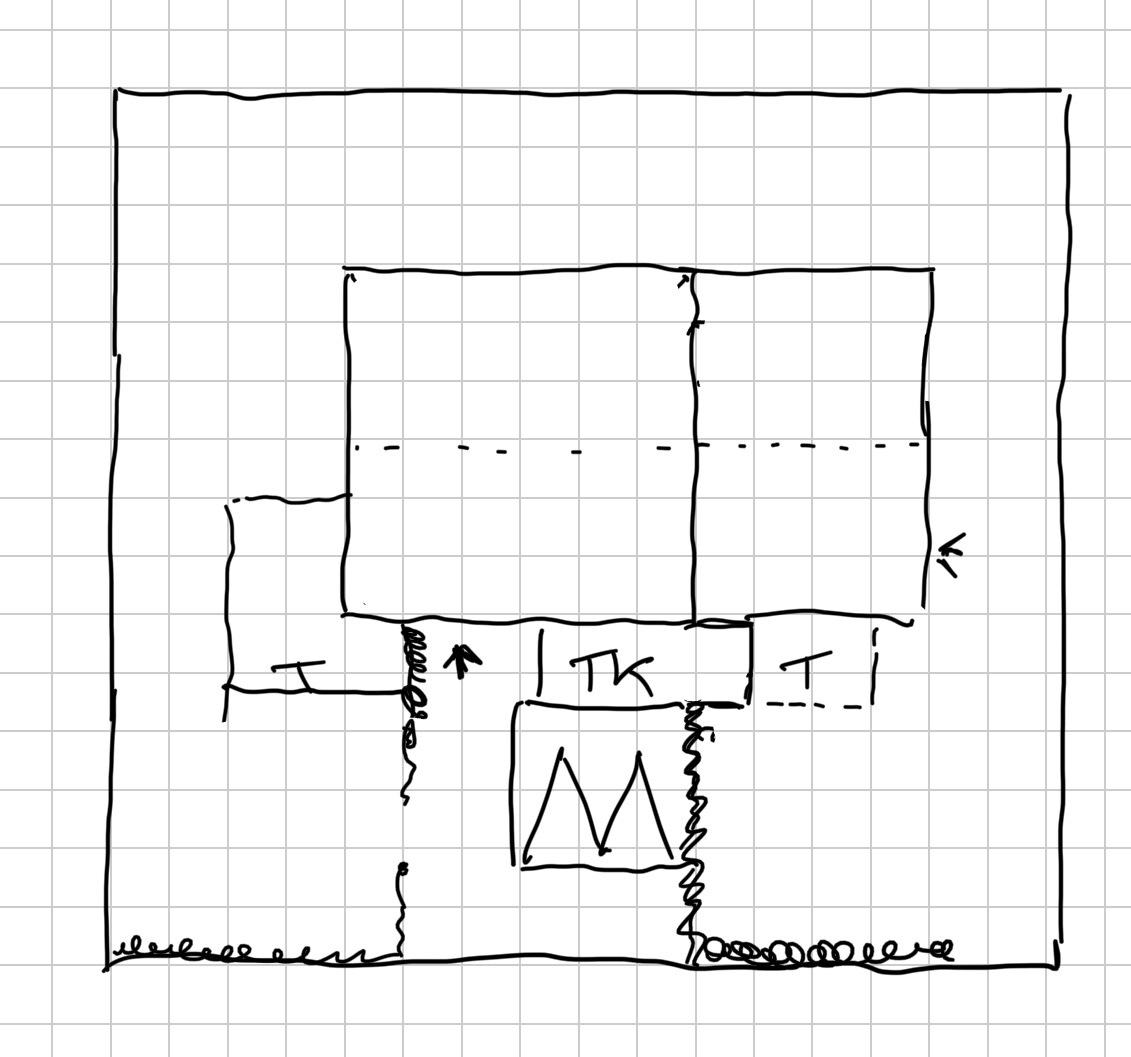
Unfortunately, I can’t make any sense of your drawing — what does “TK” and “M” mean? TK = technical? M = mobility?
11ant schrieb:
That’s a valuable note to other readers if your regional building code views it differently. To my knowledge, most regional building codes refer to the floor underneath. What a pain, I thought it was the same everywhere except the two-thirds or three-quarters rule differs.
Do companies know at what height the roof must start? Because I found nothing.
My ideas were a gable roof at 10° or a hip gable roof with 60° and 10° starting at the 2.3m (7.5 ft) line (I know 22° is recommended everywhere).
haydee schrieb:
My mother’s apartment is only minimally barrier-free in marketing terms. It does not meet the requirements for seniors with disabilities.
Check out “zero barrier” (nullbarriere). If she has a senior disability, she needs to go somewhere else, and she knows that. Hopefully, she can live reasonably there on the rent.
haydee schrieb:
I think the idea of a single-family house with an attached small bungalow for the mother isn’t bad. Check out Allkauf Haus. They have various multigenerational houses. Thanks, I will check out Allkauf Haus and then contact three companies.
Similar topics